

U1010 on 2005-2012 Nissan Frontier: CAN Communication Fault Causes and Fixes
Code U1010 on a 2005-2012 Nissan Frontier indicates a network communication failure. The most common causes are corroded body or ECM ground connections, or a faulty Intelligent Power Distribution Module (IPDM), especially on 2005-2006 models. Cleaning grounds is a near-zero cost fix, while a new IPDM costs around $150-$300.
- U1010 is a network code; do not immediately replace the module that stored the code.
- Your first and most important diagnostic step is to inspect and clean the main battery and body ground connections, especially the one on the passenger-side inner fender.
- If you have a 2005-2006 model with a no-start or stalling issue, the IPDM (especially a white-colored one) is a primary suspect.
- A weak battery can cause these codes; always test the battery before beginning complex diagnostics.
- If the transmission is acting up severely, investigate the possibility of coolant contamination from a failed radiator (SMOD) damaging the internal TCM.
What's Unique About the 2005-2012 Nissan FRONTIER

On the second-generation (D40) Frontier, this code is frequently traced back to one of two well-documented weak points. First, poor ground connections, especially the main body ground on the passenger-side inner fender, are known to corrode and cause a host of electrical issues, including CAN failures. Second, the early-model (2005-2006) white-colored Intelligent Power Distribution Module (IPDM) contains an ECM relay that is prone to failure, which can bring down the entire network; Nissan later released an updated black-colored IPDM to resolve this. A recall (NHTSA Campaign ID 10V517000) was issued for the 2005-2006 models to address the faulty ECM relay inside the IPDM, which could cause stalling at low speeds.
Diagnostic Flowchart
Tap your situation to follow the diagnostic path that matches what you're seeing on this vehicle.
Symptoms You May Notice

- Check Engine Light is on
- Vehicle will not start or stalls intermittently
- Transmission may be stuck in one gear (limp mode) or shift harshly
- ABS, VDC, and/or Slip warning lights may illuminate
- Erratic behavior from electrical components (lights flickering, wipers or horn acting up)
- Scan tool cannot communicate with one or more control modules
- Cooling fans run constantly or not at all
- Replacing the first control module that reports a U1010 code. The module logging the fault is often just reporting that it can't hear from another module; it is rarely the one that is actually broken.
- Replacing the fuel pump for a no-start condition without first checking for power at the pump, which is controlled by the ECM relay within the IPDM.
Most Likely Causes

- Corroded or Loose Ground Connections 🔴 High Probability Nissan TSB NTB06-009a specifically addresses this for U1000/U1010 on the Frontier. The main body ground on the passenger fender uses a 'strip-and-clip' design that is susceptible to moisture and corrosion, creating high resistance. Other problematic grounds are located behind the dashboard, particularly one behind the glovebox that is known to become loose.
How to confirm: Perform a voltage drop test on the main ground points. With the engine running and accessories on, connect a voltmeter from the negative battery terminal to the chassis and engine block. A reading above 0.2 volts indicates a poor ground. Visually inspect ground points for rust or looseness.
Typical fix: Disconnect, thoroughly clean all contact surfaces (body, terminal, and bolt) with a wire brush until shiny, and re-tighten securely. Applying dielectric grease can help prevent future corrosion.
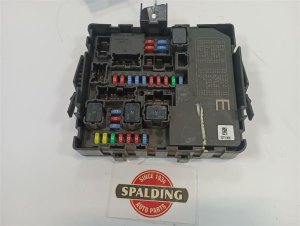
Est. part cost: $0-$10 - Faulty Intelligent Power Distribution Module (IPDM) 🔴 High Probability The internal ECM power relay on the original white-colored IPDM (common on 2005-2006 models) is a known failure point, addressed by NHTSA recall 10V517000. This relay powers the ECM, and its failure disrupts CAN communication, often causing a no-start or stalling. The updated, more reliable IPDM is black.
How to confirm: If the truck won't start, listen for a 'click' from the IPDM when the key is turned to 'ON'. You can also run the IPDM's built-in self-test (Auto Active Test) by pressing the driver's door jamb switch 10 times with the key on. 🎬 See how to perform the IPDM built-in self-test Swapping the ECM relay with another similar relay (like the fog lamp relay) can be a temporary diagnostic step. If the truck starts, the relay is bad.
Typical fix: On early models with a white IPDM, Nissan issued a separate replacement ECM relay (Part # 284B7-CW29E). However, the official long-term repair is often to replace the entire IPDM with the updated black-colored unit (Part # 284B7-ZE03B 🎬 Watch: Diagnostic tips for testing the IPDM and engine relay or 284B6-ZE03B), which comes with new relays and fuses.
Est. part cost: $20 (relay only) - $300 (full IPDM) - Damaged CAN Bus Wiring Harness 🟡 Medium Probability
How to confirm: Visually inspect the harness for cuts, abrasions, or corrosion, especially near the transmission and behind the engine. With the battery disconnected, use a multimeter to check for ~60 ohms of resistance across the CAN High and CAN Low pins (usually 6 and 14) at the OBD-II port. A reading of 120 ohms suggests an open circuit or a failed terminating module, while a reading near 0 ohms indicates a short between the two lines.
Typical fix: Repair the damaged section of wiring. This involves soldering the broken wires and protecting the repair with heat-shrink tubing.
Est. part cost: $5-$25 - Weak or Failing Battery ⚪ Low Probability
How to confirm: Test the battery with a digital multimeter or a load tester. A healthy battery should show ~12.6V with the engine off and maintain voltage above 10V during cranking. Low system voltage can cause unpredictable communication errors between modules.
Typical fix: Charge or replace the battery.
Est. part cost: $150-$250
Rare But Worth Checking
- Failed Transmission Control Module (TCM) due to 'SMOD': On models with automatic transmissions, the radiator has an integrated transmission cooler that can fail internally. This allows coolant to mix with the transmission fluid (creating a 'Strawberry Milkshake of Death'), which then floods the valve body and shorts out the internally-mounted TCM. This will cause communication loss (U1010, U0101) and transmission failure codes. A preventative measure is to bypass the radiator's cooler and install an external transmission cooler.
- Failed Control Module (ECM, BCM, ABS): While less common than wiring or power issues, any module on the CAN network can fail internally and disrupt communication. Diagnosis involves systematically unplugging modules one by one to see if communication is restored to the rest of the network. A faulty TCM, for example, can cause a U0101 code alongside the U1010.
Diagnosis Steps
- Check Battery Health: Ensure the battery has at least 12.4 volts and that the terminals are clean and tight. A weak battery is a common cause of communication codes.
- Scan All Modules: Use a professional-grade scan tool to perform a full system scan. Note which modules are reporting the U1010 code and which modules, if any, are not communicating at all.
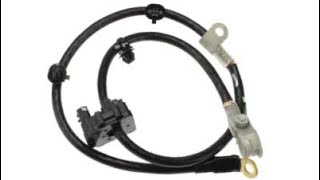
- Inspect and Clean Grounds: Locate the main body ground on the passenger-side inner fender panel. Disconnect the negative battery cable, then unbolt the ground strap. Clean the strap terminal, the body contact point, and the bolt with a wire brush until all surfaces are bright metal. Reassemble securely. 🎬 Watch: How to replace a corroded battery ground cable
- Inspect and Test the IPDM: Locate the IPDM (fuse box near the battery). If it is a white-colored module, its internal ECM relay is suspect. Perform the 'Auto Active Test' by turning the key to ON, opening the driver's door, and pressing the door jamb switch 10 times within 20 seconds. If the vehicle has a no-start condition, try swapping the ECM relay with the fog light relay as a quick test.
- Check CAN Bus Resistance: Disconnect the negative battery cable. Set a multimeter to Ohms and measure the resistance between Pin 6 (CAN High) and Pin 14 (CAN Low) on the OBD-II port. A reading of approximately 60 Ω indicates the main CAN circuit and terminating resistors are likely intact. A reading of 120 Ω points to an open circuit or a problem with one of the two terminating modules.
- Visual Harness Inspection: Carefully inspect the main wiring harness for any signs of physical damage, chafing, or corrosion, paying close attention to the area around the transmission and behind the engine.
- Isolate Modules: If the cause is still not found, the final step is to disconnect modules one by one from the CAN network and re-check resistance/communication until the faulty module or wiring section is isolated. This is best left to a professional.
Parts You'll Likely Need
- Intelligent Power Distribution Module (IPDM)
(OEM #284B7-ZE03B, 284B6-ZE03B)— The original white IPDM in 2005-2006 models is a common failure point, particularly the internal ECM relay. Replacing the entire unit with the updated black version is the most reliable fix.
Related Codes That Often Appear With This One
- U1000 — U1000 is the general CAN Communication Circuit Malfunction code. U1010 is a more specific variant, and they are almost always diagnosed together following the same procedures outlined in Nissan TSBs.
- P07xx or P17xx series — If the Transmission Control Module (TCM) is the module that has lost communication, various transmission-specific fault codes will often appear alongside the U1010 code.
- U0101 — This code specifically means 'Lost Communication with TCM'. If you see this with U1010, the problem is almost certainly related to the transmission control module, its wiring, or its power/ground source.
Technical Service Bulletins (TSBs) & Recalls
- NTB06-009a - Addresses U1000/U1010 caused by poor ground connections.
- NTB10-066A - General service information for diagnosing CAN communication codes.
- NHTSA Campaign ID 10V517000 - Recall for faulty ECM relay inside the IPDM on 2005-2006 Frontier, Xterra, and Pathfinder models.
Platform-Specific Known Issues
- The 'strip-and-clip' body ground on the passenger fender is a known corrosion point that can cause widespread electrical faults, including U1010.
- The original white IPDM used in 2005-2006 models is known to fail due to an internal ECM relay issue, causing stalling and communication codes.
- The Transmission Control Module (TCM) is located inside the transmission on the valve body, making it vulnerable to damage from contaminated fluid if the radiator's internal cooler fails ('SMOD').
Mechanic-Grade Diagnostic Values
- CAN Bus Network Resistance — expected: ~60 Ω. Failure: 120 Ω indicates an open circuit or missing terminator; ~0 Ω indicates a short between CAN High and Low lines.
- CAN High Voltage to Ground — expected: 2.5V - 3.0V. Failure: Significant deviation from this range suggests a fault on the CAN High line.
- CAN Low Voltage to Ground — expected: 2.0V - 2.5V. Failure: Significant deviation from this range suggests a fault on the CAN Low line.
- Body Ground Voltage Drop — expected: < 0.2V. Failure: A reading above 0.2V (some sources say up to 0.5V is acceptable) indicates high resistance in the ground circuit.
Scan Tool Commands That Help
- Manual Procedure (No Scan Tool): IPDM E/R Auto Active Test — This built-in self-test confirms if the IPDM's CPU is operational and can communicate with the BCM to command various components (wipers, lights, horn, etc.). If the test runs, it confirms the CAN communication line between the BCM and IPDM is likely okay. The procedure is: Key ON, within 20 seconds press the driver's door jamb switch 10 times, Key OFF, then Key ON again. A horn chirp confirms activation.
- Nissan CONSULT-III plus: CAN Diag Support Monitor — The dealer-level scan tool can monitor the transmit/receive status of CAN communications in real-time, helping to pinpoint which module is not responding.
- Nissan CONSULT-III plus: Active Test — Allows a technician to individually command components controlled by the IPDM to verify their operation, which helps isolate whether a fault is in the component, its wiring, or the IPDM itself.
Wiring & Ground Locations
- E15 & E24 — Right front of the engine compartment.. These are primary engine and chassis ground points. Corrosion or looseness here is a very common cause of CAN communication faults on the D40 Frontier platform.
- OBD-II Connector (DLC) — Under the driver's side dashboard.. This is the primary access point for testing the CAN network. Pin 6 is CAN High and Pin 14 is CAN Low. Resistance and voltage tests are performed here.
- IPDM E/R — Intelligent Power Distribution Module Engine Room, located in the fuse box assembly near the battery on the passenger side.. This module contains the ECM relay and starter relay (which is non-serviceable on later black units) and is a central hub for power distribution. A failure here cuts power to other modules, causing network codes.
- Fusible Link Holder — Attached to the positive battery terminal.. This block contains main fuses that supply power to multiple modules, including the ECM and BCM. A blown fuse here can cause a widespread loss of communication that mimics a network failure.
Real Owner Repair Stories
- YouTube user 'FixItPhillip' (2006 Nissan Frontier 4.0L V6) — No crank, no start, no communication with ECM, ABS, or BCM.
❌ Tried (didn't work) Initial diagnosis pointed towards a major network or module failure.
✅ What actually fixed it A blown 40A fuse in the fusible link holder on the positive battery terminal. Replacing the fuse block restored communication and allowed the vehicle to start. - YouTube user 'John freeze' (2011 Nissan Frontier SV) — No start, no crank. Dash lights come on, but only a small click is heard. Multiple codes including U1000.
❌ Tried (didn't work) Searching for a separate starter relay, which does not exist on this model.
✅ What actually fixed it The starter relay is integrated into the IPDM. The owner inspected the IPDM circuit board and found visible solder burn marks. Replacing the entire (black, updated style) IPDM resolved the no-start condition. This story is valuable because it confirms the updated black IPDM can also fail. - Reddit user 'bangbangtangwangfang' (Nissan Titan (similar platform)) — Random glitching, loss of power, crank but no start, and cooling fan running at full blast.
❌ Tried (didn't work) Initially replaced the IPDM with the revised black unit, which did not solve the issue. Then replaced the ECM with a used unit, which allowed scanner communication but still resulted in a no-start.
✅ What actually fixed it After replacing the ECM, the immobilizer system (NATS) had to be reprogrammed to the existing key. Once the key was reprogrammed, the truck started and ran correctly.
OEM Part Supersession History
284B6-ZE03A→284B6-ZE03B— The original white-colored IPDM was prone to internal relay failures. The updated part is black and considered more robust, though it can still fail.
Heads up: No programming is required when swapping the IPDM, but you must ensure the part number is correct for your vehicle's specific model and options.N/A→284B7-CW29E— This is the part number for the serviceable ECM relay that was available as a separate fix for the early white IPDMs before the full module replacement became the standard repair.
Heads up: This relay only fits the early-style white IPDM. The later black IPDMs have integrated, non-serviceable relays.
Model Year Variations Within This Range
- 2005-2006: These early models were typically equipped with a white-colored IPDM which had a high failure rate of its internal, but replaceable, ECM relay. This was the subject of NHTSA recall 10V517000.
- 2007-2012: These later models came with an updated, black-colored IPDM. While more reliable, the critical relays (like the starter relay) are integrated into the circuit board and are not separately serviceable, requiring replacement of the entire IPDM if they fail.
Helpful Videos

We Have This Part in Stock



The information in this article is provided for general reference and educational purposes only. Vehicle specifications, procedures, and part compatibility can vary by production date, trim level, and region. Always consult your vehicle's factory service manual and verify part numbers before purchasing or performing repairs. Safety-critical components such as airbags, seat belts, and braking systems should be installed by a qualified professional.
- Nissan FRONTIER:
- 🎬 Helpful Videos
- 🛍️ Shop This Part
- What's Unique About the 2005-2012 Nissan FRONTIER
- Diagnostic Flowchart
- Symptoms You May Notice
- Most Likely Causes
- Rare But Worth Checking
- Diagnosis Steps
- Parts You'll Likely Need
- Related Codes That Often Appear With This One
- Technical Service Bulletins (TSBs) & Recalls
- Platform-Specific Known Issues
- Mechanic-Grade Diagnostic Values
- Scan Tool Commands That Help
- Wiring & Ground Locations
- Real Owner Repair Stories
- OEM Part Supersession History
- Model Year Variations Within This Range
- 🎟️ Get 5% Off