

U1010 on 2005-2012 Nissan Armada: Internal Module Error Causes and Fixes
The U1010 code on a Nissan Armada specifically indicates a control module has an internal error preventing it from communicating. However, before replacing any expensive modules, it is critical to rule out more common issues like low battery voltage, bad grounds, or a failing Intelligent Power Distribution Module (IPDM), which is a known weak point on this platform and can mimic a U1010 fault.
- U1010 on a 2005-2012 Nissan Armada means a control module has an internal failure.
- Despite the definition, you must first rule out simpler, more common problems like a weak battery, bad grounds, blown fuses, or damaged wiring before replacing any module.
- Symptoms are often serious, including no-start conditions, limp mode, and transmission shifting problems.
- Diagnosing this code is complex and best left to a professional with experience in automotive network diagnostics.
- If a module needs to be replaced, it will almost certainly require programming to the vehicle, adding to the repair cost.
What's Unique About the 2005-2012 Nissan ARMADA
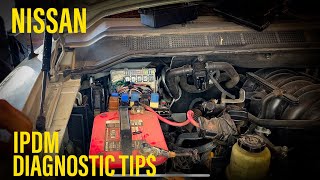
The 2005-2012 Armada belongs to the first generation (TA60) built on the F-Alpha platform, shared with the Titan and QX56. While the U1010 code points directly to an internal module failure, this platform is notorious for failures of the Intelligent Power Distribution Module (IPDM). A faulty IPDM can cause widespread electrical chaos, including communication dropouts that are often misdiagnosed as a failed BCM or TCM. Therefore, a thorough diagnosis of the CAN bus wiring, power, grounds, and especially the IPDM itself is essential 🎬 Watch: Diagnostic tips for troubleshooting the Nissan IPDM and relays on the Armada before condemning any other expensive control unit.
Diagnostic Flowchart
Tap your situation to follow the diagnostic path that matches what you're seeing on this vehicle.
Symptoms You May Notice
- Multiple warning lights on the dashboard (VDC OFF, SLIP, Check Engine, etc.)
- Engine cranks but will not start, or intermittent no-crank no-start
- Engine stalls while driving, sometimes after hitting a bump
- Vehicle enters 'limp mode' with significantly reduced engine power
- Transmission shifts harshly, erratically, or not at all
- Vehicle is stuck in a single gear
- Gear position indicator on the dash is blank or incorrect
- Scan tool fails to communicate with one or more control modules
- Replacing the TCM or BCM when the actual fault lies within the much more common and failure-prone IPDM.
- Replacing a control module without first verifying its power, ground, and CAN connections are good. A simple wiring or ground issue is far more common and cheaper to fix than a module replacement.
Most Likely Causes
- Faulty Intelligent Power Distribution Module (IPDM) 🔴 High Probability The IPDM on the F-Alpha platform is a well-documented point of failure. It contains internal relays and a processor that can fail from heat, vibration, or moisture, causing a wide array of electrical problems, including stalling, no-start conditions, and communication codes like U1010.
How to confirm: Symptoms are a strong indicator. A vehicle that cranks but won't start, or stalls intermittently, points to the IPDM. Technicians can perform an IPDM self-test. 🎬 See how to perform a Nissan IPDM self-test If a scan tool cannot communicate with multiple modules, the IPDM is a prime suspect as it powers them. Swapping the ECM relay with another relay (like the fog lamp relay) can be a temporary diagnostic step to see if the vehicle starts.
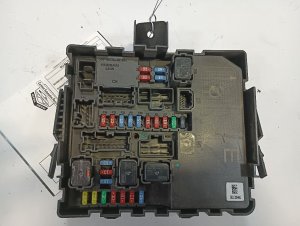
Typical fix: Replace the IPDM. This is a plug-and-play module located in the engine bay near the battery. It is crucial to order the correct part number for the vehicle's year and model.
Est. part cost: $250-$500 - Low Battery Voltage or Faulty Charging System 🟡 Medium Probability Control modules require a stable voltage to communicate. An aging battery or failing alternator can cause voltage to drop, leading to intermittent communication failures.
How to confirm: With the engine off, check the battery voltage using a multimeter; it should be above 12.4V. With the engine running, it should be between 13.7V and 14.7V.
Typical fix: Recharge or replace the battery. If the charging voltage is low, diagnose and replace the alternator.
Est. part cost: $150-$400 - Poor Power or Ground Connections 🟡 Medium Probability Over time, ground straps and power connections can corrode or loosen, creating high resistance that starves a module of the power it needs to operate and communicate. The main ground point G100 on the passenger side is a location to check.
How to confirm: Locate the main ground points on the chassis and engine block and inspect for corrosion or looseness. At the suspect module's connector, use a multimeter to verify it is receiving full battery voltage and has a solid ground connection (less than 0.1V between the ground pin and chassis).
Typical fix: Clean the corroded ground points with a wire brush and secure them tightly. Repair any damaged wiring in the power or ground circuit.
Est. part cost: $5-$50 - Damaged CAN Bus Wiring or Connectors 🟡 Medium Probability The CAN wiring harness runs throughout the vehicle and can be susceptible to chafing, rodent damage, or corrosion, especially in connectors exposed to the elements.
How to confirm: Visually inspect the wiring harness for any signs of damage. Disconnect the battery and measure the resistance between the CAN High and CAN Low pins at the DLC; it should be ~60 ohms. A reading of ~120 ohms indicates a break in the circuit or a problem with a terminating module, while ~0 ohms indicates a short.
Typical fix: Repair the damaged section of the wiring harness. Clean or replace corroded connectors.
Est. part cost: $20-$200 - Faulty Transmission Control Module (TCM) 🟡 Medium Probability The TCM is located inside the transmission valve body (on the RE5R05A transmission), where it is subjected to heat and vibration, which can lead to internal failure. If the TCM fails, it will set a U1010 internally and other modules will log a U0101 (Lost Communication with TCM).
How to confirm: This is a process of elimination. If the IPDM, battery, and wiring have been ruled out, and the primary symptoms are transmission-related (limp mode, no shifting), the TCM is the likely culprit. A scan tool that can communicate with the TCM is needed for definitive diagnosis.
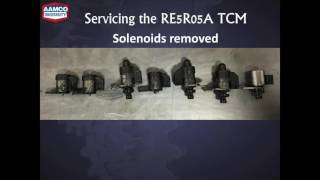
Typical fix: Replace the TCM, which is often sold as part of the complete valve body assembly. 🎬 Watch: How to replace the TCM on RE5R05A transmissions The new module must be programmed to the vehicle's VIN.
Est. part cost: $400-$1500
Rare But Worth Checking
- Internal ECM Relay Failure in IPDM:
Diagnosis Steps
- Check and record all stored DTCs from all available modules. Per TSB NTB10-066B, diagnose communication codes first.
- Verify the battery is fully charged and the charging system is working correctly. Voltage should be stable and within 12.4V+ (off) and 13.7-14.7V (running).
- Inspect the IPDM. Check for any signs of water intrusion or corrosion. Listen for clicking sounds. On a no-crank vehicle, try swapping the ECM relay with the fog lamp relay to see if it starts.
- Inspect all relevant fuses for the non-communicating module (e.g., TCM, BCM, ECM). Check fuse boxes in the engine bay (IPDM) and cabin.
- Perform a thorough visual inspection of the wiring harness leading to the suspect module, looking for any signs of physical damage, chafing, or corrosion.
- Disconnect the battery. Measure the resistance between Pin 6 (CAN-H) and Pin 14 (CAN-L) at the Data Link Connector (DLC). A healthy network will read approximately 60 Ω.
- If resistance is incorrect, begin disconnecting modules from the CAN bus one at a time (starting with the IPDM and TCM) to isolate the source of the fault.
- If network resistance is good, reconnect the battery. At the connector for the non-communicating module, test for proper power and ground using a multimeter.
- If power, ground, and CAN wiring to the module are all confirmed to be good, the module itself has likely failed and requires replacement.
Parts You'll Likely Need
- Intelligent Power Distribution Module (IPDM)
(OEM #284B7-ZE03A (early models), 284B6-ZE03B (later models, supersedes 284B6-ZE03A))— This is the most common failure point on the F-Alpha platform that causes U1010 and related communication issues, often manifesting as a crank/no-start or stalling. Part numbers must be matched to the vehicle's VIN.
Trusted brands: Nissan OE
OEM price range: $270-$450
Aftermarket price range: $150-$300
Related Codes That Often Appear With This One
- U1000 — U1000 is a general CAN communication error code. It is often logged by other modules on the network when they cannot communicate with the module that is setting the U1010.
- U0101 — If the module with the internal U1010 fault is the Transmission Control Module (TCM), other modules will log U0101 (Lost Communication with TCM). This is a very common pairing.
Technical Service Bulletins (TSBs) & Recalls
- NTB10-066B - CAN COMMUNICATION CODES – DIAGNOSTIC TIPS & GUIDELINES. This TSB provides the definition for U1010 as a module internal error and gives general diagnostic procedures for Nissan CAN bus systems, emphasizing that communication codes must be diagnosed first.
- NTB10-145A - ABS/VDC CAN DIAGNOSIS INFORMATION. This bulletin, while focused on ABS/VDC, references NTB10-066 for general CAN diagnosis, reinforcing the standardized procedure for U-codes.
Platform-Specific Known Issues
- Prevalent IPDM Failure: The IPDM on the 2005-2012 Armada and its platform mates (Titan, QX56) is a known high-failure item. Internal relay or circuit board failure leads to symptoms like the engine cranking but not starting, sudden stalling while driving, and a host of communication DTCs including U1010 and U1000. Owners often report that the vehicle may start after a cool-down period, only to fail again later. Due to its prevalence, the IPDM should be one of the first components suspected when these symptoms appear, before condemning more expensive modules like the TCM or BCM.
Mechanic-Grade Diagnostic Values
- CAN Bus Network Resistance — expected: ~60 Ω. Failure: A reading of ~120 Ω suggests a break in the circuit or a faulty terminating resistor/module. A reading near 0 Ω indicates a short between the CAN High and CAN Low wires.
- TCM Power Supply Voltage (Ignition On) — expected: 12.0V - 12.6V. Failure: Significantly lower voltage indicates a problem with the power supply wire, fuse, or the source (e.g., IPDM).
- TCM Ground Circuit Resistance — expected: Below 0.5 Ω. Failure: Higher resistance indicates a corroded or loose ground connection, which can starve the module of power.
- HECU (ABS/VDC) Valve Relay Voltage — expected: Between 0.1 * Battery Voltage and 0.8 * Battery Voltage. Failure: A voltage outside this range can trigger a U1010 fault within the HECU, indicating an electrical feedback mismatch.
Hidden / Shadow Codes Worth Checking
- U1010 (Internal): U1010 is often set internally within the failing module and may not be visible to generic OBD-II scanners. The module performs a self-diagnosis and flags its own internal error. Other modules on the network will typically report a U1000 (General CAN Failure) or a U0xxx code pointing to the specific module that is offline (e.g., U0101 for TCM). (see via A Nissan-specific scan tool like CONSULT-II or CONSULT-III is required to perform a self-diagnosis on individual control units to see the internally-set U1010.)
Scan Tool Commands That Help
- No Scan Tool Required: IPDM E/R Auto Active Test (Self-Test) — This is a crucial first step when suspecting an IPDM issue without using a scan tool. It confirms if the IPDM's CPU can command its outputs (wipers, lights, A/C clutch, fans). To activate: turn ignition ON, press and release the driver's door jamb switch 10 times within 10 seconds, turn ignition OFF, then turn ignition ON again. A single horn honk confirms entry into test mode.
- Nissan CONSULT-III plus: CAN DIAG SUPPORT MNTR — Use this function to see a live list of all control units on the CAN bus and their communication status ('OK' or 'UNG' for unknown/unresponsive). This quickly identifies which module is not communicating with the rest of the network.
- Nissan CONSULT-III plus: Self Diagnosis — After identifying the non-communicating module, this function is used to directly query that specific module. If the module reports 'U1010' during its own self-test, it confirms an internal failure.
- Nissan CONSULT-III plus: TCM Work Support / Configuration — This is required after replacing the TCM or valve body. The new module must be configured with the vehicle's specific data to function correctly.
Wiring & Ground Locations
- IPDM E/R Cowl Drain — Located in the cowl area underneath the plastic trim, near the battery.. This drain frequently clogs with leaves and debris. When it does, rainwater overflows directly onto the IPDM and its connectors, causing corrosion and electrical failures that lead to communication codes like U1010.
- E24, E126 — Engine control ground points, located on the left side of the engine compartment.. These are primary grounds for the engine control harness, which includes grounds for the ECM and TCM. Corrosion here can interrupt power to critical modules.
- E9, E15 — Engine control ground points, located on the right side of the engine compartment.. Shared ground points for various engine room components. A bad connection can cause erratic behavior across multiple systems.
- B7, B117 — Main harness ground points located under the driver's seat (B7) and front passenger's seat (B117).. These ground various in-cabin electronics. While less likely to be the primary cause for a U1010, they should be checked if multiple seemingly unrelated interior electronic issues are also present.
Real Owner Repair Stories
- TitanTalk Forum User (Nissan Titan (shared F-Alpha platform), had old 'white' IPDM) — Random glitching, loss of power, crank but no start, and engine fan running at full blast.
❌ Tried (didn't work) Multiple start attempts over several days, Checking battery
✅ What actually fixed it Swapping the IPDM's internal ECM relay with the fog light relay as a test. The truck started immediately, confirming the relay was the point of failure. - MBWorld.org Forums User (on a different vehicle, but illustrates a key diagnostic principle) (Mercedes GL-Class) — Crank but no start, especially when warm after towing. Code U0101 (Lost Communication with TCM) was present.
❌ Tried (didn't work) Focusing solely on the communication code and suspecting the TCM.
✅ What actually fixed it Replacing the fuel pump. The pump was running but not generating sufficient pressure. The communication code was a symptom of the engine failing to start, not the root cause.
When the Usual Fixes Don't Work
- In one documented case, a vehicle presented with a crank-no-start condition and a U0101 communication code, pointing towards a complex network or module fault. The owner chased electrical issues based on the code. The actual root cause was a failing fuel pump that could not build adequate pressure. This serves as a critical reminder that communication codes can sometimes be a secondary symptom of a more fundamental mechanical or electrical failure, not the cause itself.
OEM Part Supersession History
Various 'White' IPDM units→Various 'Black' IPDM units (e.g., 284B7-ZE03B)— The original white-cased IPDM units were known for internal relay failures. The updated black-cased units are considered more reliable.
Heads up: While a black unit is an upgrade, the specific part number must still match the vehicle's VIN and options for full functionality.
Model Year Variations Within This Range
- 2004-2007: These models use a different alternator than 2008 and newer models. A failing alternator can cause low/unstable voltage, triggering communication faults.
- 2005-~2007: More likely to be equipped with the original, failure-prone 'white' IPDM that was subject to TSBs regarding internal ECM relay failure.
- ~2009-2012: Typically equipped with later IPDM part numbers, such as 284B7-ZE03B. While more reliable, they are not immune to failure.
Helpful Videos

We Have This Part in Stock



The information in this article is provided for general reference and educational purposes only. Vehicle specifications, procedures, and part compatibility can vary by production date, trim level, and region. Always consult your vehicle's factory service manual and verify part numbers before purchasing or performing repairs. Safety-critical components such as airbags, seat belts, and braking systems should be installed by a qualified professional.
- Nissan ARMADA:
- 🎬 Helpful Videos
- 🛍️ Shop This Part
- What's Unique About the 2005-2012 Nissan ARMADA
- Diagnostic Flowchart
- Symptoms You May Notice
- Most Likely Causes
- Rare But Worth Checking
- Diagnosis Steps
- Parts You'll Likely Need
- Related Codes That Often Appear With This One
- Technical Service Bulletins (TSBs) & Recalls
- Platform-Specific Known Issues
- Mechanic-Grade Diagnostic Values
- Hidden / Shadow Codes Worth Checking
- Scan Tool Commands That Help
- Wiring & Ground Locations
- Real Owner Repair Stories
- When the Usual Fixes Don't Work
- OEM Part Supersession History
- Model Year Variations Within This Range
- 🎟️ Get 5% Off