

U1010 on 2013-2015 Nissan Altima: Causes and Fixes for Internal Module Errors
The U1010 code on a 2013-2015 Nissan Altima means a control module has an internal failure. However, before replacing an expensive module like the TCM or ABS unit, always check for simpler causes like a weak battery, blown fuses (specifically the 10A TCM fuse inside), or bad ground connections (especially point E15 in the engine bay), as these are common triggers for this code.
- U1010 on your Altima means a module has an internal fault, but the cause is often an external electrical issue.
- Always start diagnosis by testing the battery and cleaning all major ground connections before considering any part replacement.
- An advanced scan tool is necessary to see which module is reporting the U1010 code.
- Do not replace any control module unless power, ground, and related wiring have been thoroughly checked and confirmed to be good.
- This is a complex electrical issue; professional diagnosis is strongly recommended to avoid costly mistakes.
What's Unique About the 2013-2015 Nissan ALTIMA
For the 2013-2015 Altima (L33 generation), this code requires careful diagnosis. While Nissan's official definition points to replacing the module that sets the code, real-world experience and even Nissan's own service bulletins show that external electrical issues are frequently the root cause. Problems like poor ground connections at specific points (like E15 in the engine bay) and unstable battery voltage are known to cause modules on this platform to malfunction and falsely report an internal U1010 error. Ignoring these basic checks can lead to the unnecessary replacement of an expensive, and likely functional, control module.
Diagnostic Flowchart
Tap your situation to follow the diagnostic path that matches what you're seeing on this vehicle.
Symptoms You May Notice
- Check Engine Light is on
- ABS, Traction Control (VDC), or other warning lights are illuminated
- Transmission may be stuck in one gear or enter 'limp mode'
- Harsh or erratic shifting, especially when moving from Park to Drive
- Vehicle may not start or may stall intermittently
- Gauges or other electronics behaving erratically
- Inability to shift out of Park
- Whining or humming noises from the transmission area
- Immediately replacing the control module that stored the U1010 code without first testing the battery, grounds, and fuses. This is an expensive mistake, as the module is often just a victim of an external electrical problem.
Most Likely Causes
- Low Battery Voltage or Failing Alternator 🔴 High Probability Modern control modules are highly sensitive to voltage. A weak battery or poor charging system can cause temporary malfunctions that are logged as permanent communication codes. Nissan's own TSBs note that in a low voltage situation, modules will begin to drop off the network.
How to confirm: Test the battery voltage with the engine off (should be ~12.4-12.6V). Test it again with the engine running to check the alternator (should be ~13.7-14.7V). A load test is the most definitive way to confirm battery health.
Typical fix: Recharge or replace the battery. Ensure battery terminals are clean and tight.
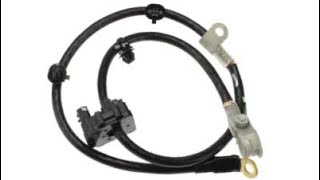
Est. part cost: $150-$300 - Poor Ground Connections 🔴 High Probability Nissan has documented issues with ground connections causing communication codes. For the 2013-2015 Altima, key locations to inspect are the main ground from the negative battery terminal to the chassis, 🎬 See how to replace a corroded Nissan battery ground cable. the ground strap from the engine/transmission to the firewall, and specifically ground point E15 in the lower-left engine bay, which serves multiple components.
How to confirm: Visually inspect the main ground straps for corrosion or looseness. Use a multimeter to perform a voltage drop test between the battery negative post and the chassis/engine block (should be less than 0.1V). Unbolt, sand to bare metal, and re-secure connections.
Typical fix: Remove, clean, and tighten all relevant ground connections until they are on bare, shiny metal. Apply dielectric grease to prevent future corrosion.
Est. part cost: $0-$20 - Blown Fuse 🟡 Medium Probability A fuse can blow due to a momentary short or age, cutting power to a critical module. On the Altima, the TCM is protected by a specific 10-amp micro fuse in the interior fuse box that is a known failure point.
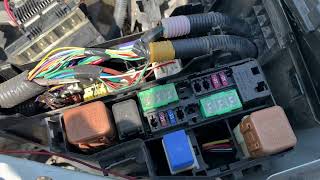
How to confirm: Consult the owner's manual or fuse box diagram. Specifically locate and test the 10A TCM fuse 🎬 Watch: How to find all fuse box locations on this Altima. in the interior panel. Visually inspect all other fuses related to the BCM, ECM, and ABS systems.
Typical fix: Replace the blown fuse. If it blows again, a short circuit exists that must be diagnosed.
Est. part cost: $1-$10 - Damaged Wiring or Connectors 🟡 Medium Probability Wiring harnesses can be damaged by vibration, chafing against other components, or water intrusion, leading to an open or short circuit in the CAN bus or module power supply. The pins inside connectors can also become corroded or bent.
How to confirm: Visually inspect the wiring harness and connectors going to the module that is setting the U1010 code. Look for chafed wires, corrosion in connectors, or signs of water damage. A multimeter can be used to check for continuity and shorts.
Typical fix: Repair the damaged section of the wiring harness or clean/replace the affected connector.
Est. part cost: $10-$150 - Failed Control Module (TCM, ABS, BCM, etc.) ⚪ Low Probability While this is the direct definition of the code, actual module failure is less common than the external issues listed above. The ABS and TCM are the most common modules to fail and set this code. The module should only be condemned after all other possibilities are exhausted.
How to confirm: This is confirmed by exclusion. If the module has verified good power, good ground, and the CAN network wiring tests correctly (approx. 60 ohms between CAN-H and CAN-L pins with battery disconnected), the module itself is faulty.
Typical fix: Replace the failed control module. This often requires programming or configuration with a dealer-level scan tool. Using a used module with an identical part number may avoid the need for programming. Alternatively, sending the original module to a repair service can be a cost-effective option.
Est. part cost: $250-$1500 (Repair service vs. new OEM)
Rare But Worth Checking
- Aftermarket Electronics: Poorly installed aftermarket accessories (remote starters, alarms, stereos) can interfere with the CAN bus network by introducing electrical noise or improper connections, causing communication codes. Disconnecting them is a wise diagnostic step.
Diagnosis Steps
- Connect an advanced scan tool capable of reading manufacturer-specific codes from all modules.
- Identify which specific control module has stored the U1010 code (e.g., ABS, TCM, BCM).
- Check for and diagnose any other communication codes (like U1000) first, as per Nissan TSB NTB10-066A. 🎬 Watch: A basic explanation of Nissan U1000 and U1010 codes.
- Test the battery's state of charge and the alternator's output. A voltage below 12.4V (engine off) or outside 13.7-14.7V (engine on) indicates a problem.
- Inspect, clean, and tighten all main ground connections: battery negative to chassis, chassis to engine, and specifically ground point E15 in the lower-left engine bay.
- Check all fuses related to the ECM, BCM, and ABS modules, paying special attention to the 10-amp micro fuse for the TCM located in the interior fuse panel.
- Visually inspect the wiring harness and connectors for the identified module. Look for any signs of physical damage, corrosion, or moisture.
- If wiring looks good, disconnect the battery and the connector at the suspect module. Measure the resistance between the CAN-H and CAN-L pins at the module's connector. A healthy network should read approximately 60 ohms.
- If all external checks for power, ground, and network integrity pass, the module that set the U1010 code is the likely point of failure. Consider sending the module for repair as a cost-effective first step.
Parts You'll Likely Need
- Battery — A weak or failing battery is a primary cause of various communication fault codes on modern vehicles.
Trusted brands: Interstate, DieHard, Duralast
OEM price range: $200-$350
Aftermarket price range: $150-$250 - Transmission Control Module (TCM)
(OEM #31036-3TA0D, 31036-3TA0A)— If the code is accompanied by transmission symptoms and all external electrical checks pass, the TCM may have an internal failure. It is a common module to set this code on the Altima.
Trusted brands: Hitachi, Nissan OE
OEM price range: $800-$1200
Aftermarket price range: $400-$700 (Remanufactured) - ABS Control Module / Actuator
(OEM #47660-3TA0B (superseded by 47660-9HM0B))— If ABS/VDC lights are on and the U1010 is stored by the ABS unit, the module itself may have failed. This is sold as an assembly with the hydraulic pump.
Trusted brands: Nissan OE, Bosch (OEM supplier)
OEM price range: $1100-$1400
Aftermarket price range: $500-$800 (Remanufactured)
Related Codes That Often Appear With This One
- U1000 — U1000 is a general CAN communication failure code. It often appears alongside U1010, where U1000 indicates the network is down, and U1010 is the specific module reporting its own resulting internal fault. TSBs advise diagnosing U1000 first.
- U0101 — This code means 'Lost Communication with TCM'. If the Transmission Control Module (TCM) is the unit that has failed and set the U1010, other modules on the network will log U0101 because they can no longer hear from it.
Technical Service Bulletins (TSBs) & Recalls
- NTB10-066A / NTB10-066B: This bulletin provides general diagnostic guidelines for CAN codes U1000, U1001, U1002, and U1010. It confirms U1010 means 'Module has internal errors' and stresses diagnosing communication codes first. Crucially, it advises technicians to always confirm good power, ground, and CAN resistance (approx. 60 ohms) at the suspect module's connector before replacement.
- NTB13-027C: This TSB offers a detailed diagnostic flowchart for CAN network issues. It provides helpful tips, noting that in low voltage situations (under 10V), different modules will stop communicating at different times, and that high-level fuses power multiple modules.
Platform-Specific Known Issues
- TCM Power Fuse Location: A common and simple point of failure that can mimic a dead TCM is a blown 10-amp 'micro' fuse located in the interior fuse panel (J/B). This fuse provides power to the TCM, and if it fails, the module will go offline, causing harsh engagement and communication codes. Always check this fuse before condemning the TCM.
- ABS/TCM Grounding Point: According to wiring diagrams, a key grounding point for both the ABS actuator and the Transmission Control Module (TCM) is located at E15, which is on the lower left side of the engine compartment. Corrosion or looseness at this specific point can disrupt both systems and trigger a U1010 code from either module.
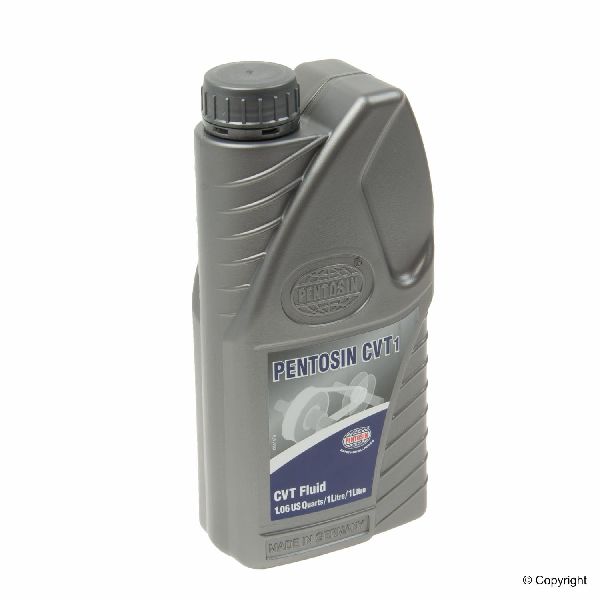
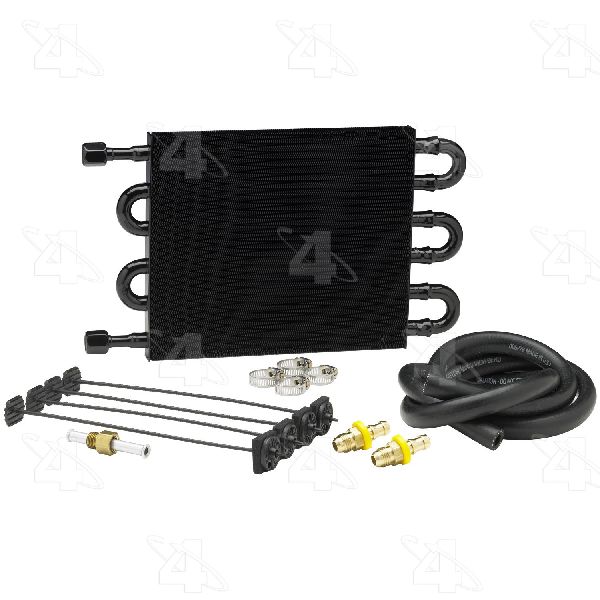
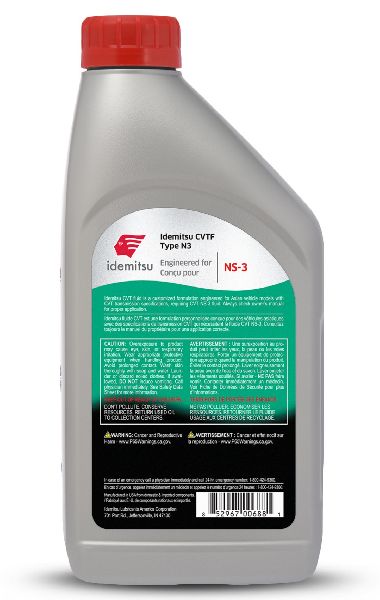
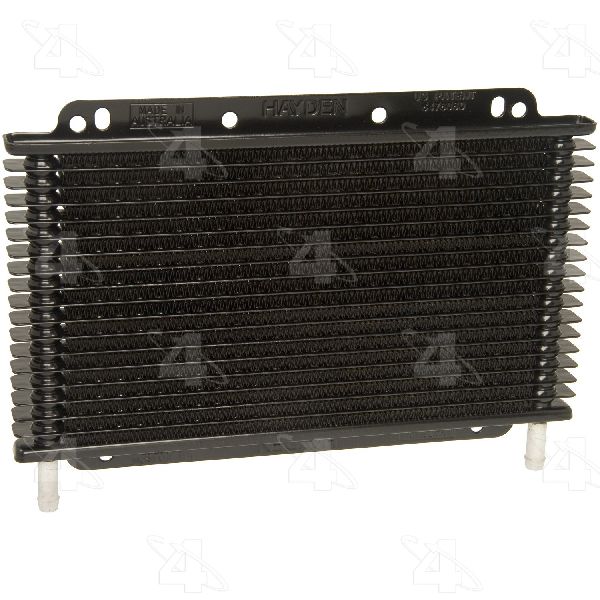
- CVT Transmission Issues: The L33 Altima is well-known for issues with its Continuously Variable Transmission (CVT). While a U1010 code is electrical, it can appear alongside symptoms of a failing CVT, such as jerking, shuddering, and whining noises. It's important to distinguish between a primary electronic fault (like a bad TCM) and an internal mechanical failure of the CVT itself, though the two can be related.
Mechanic-Grade Diagnostic Values
- CAN Bus Network Resistance — expected: ~60 Ω. Failure: A reading of ~120 Ω indicates an open circuit or missing terminating resistor. A reading significantly below 60 Ω suggests a short between CAN lines or an extra resistor on the network.
- CAN Bus Voltage (Key On, Engine Off, Active Communication) — expected: CAN High (Pin 6 at DLC): 2.5V - 3.5V. CAN Low (Pin 14 at DLC): 1.5V - 2.5V.. Failure: Voltages outside these ranges, or a bus that is stuck high or low, indicates a wiring fault or a faulty module pulling the bus voltage down.
- Ground Circuit Voltage Drop — expected: < 0.1 V. Failure: A reading higher than 0.1V between the negative battery post and the module's ground point (on the chassis or engine block) indicates excessive resistance in the ground path, which can starve the module of a proper ground.
Hidden / Shadow Codes Worth Checking
- U1010 (Internal Fault): The U1010 code is often set internally by the failing module's self-diagnostic routine. A generic OBD-II scanner may only see the resulting U1000 (general network failure), while the specific U1010 is only visible when directly communicating with the individual module (e.g., TCM, ABS). (see via A Nissan-specific scan tool like the CONSULT-II or CONSULT-III plus is required to perform a 'Self Diagnostic Result' on each control unit to see which one has internally flagged the U1010 fault.)
Scan Tool Commands That Help
- Nissan CONSULT-III plus: CAN Diag Support Monitor / V-CAN Diagram — This is the primary diagnostic starting point for any 'U' code. It creates a visual map of the CAN network, showing which modules are online (green), which have current faults (red), and which have internal errors (pink), immediately helping to isolate the problem area.
- Nissan CONSULT-III plus: READ/WRITE IP CHARA - REPLACEMENT TCM — This is a mandatory procedure when replacing the Transmission Control Module (TCM). The 'READ' function must be used on the OLD module before removal to save its unique calibration data. The 'WRITE' function is then used on the NEW module after installation to transfer this data, ensuring the transmission operates correctly.
Wiring & Ground Locations
- E15 & E9 — Located in the lower left side of the engine compartment.. These are primary ground points in the engine bay. The Pass 2 data identifies E15 as a critical ground for the ABS and TCM. Poor contact at these points can cause floating grounds and unpredictable behavior in control modules, leading them to set communication codes like U1010.
- Interior Fuse Box (J/B) — Located behind a cover below and to the left of the steering wheel.. This fuse box contains the 10-amp fuse for the Transmission Control Module (TCM), which is a known failure point that can cause the TCM to lose power and trigger communication faults.
OEM Part Supersession History
47660-3TA0B→47660-9HM0B— Manufacturer revision for improved reliability or component change.
Heads up: The new part number (47660-9HM0B) replaces the original for 2013-2015 Altima 2.5L models and should be used for service replacement.
Helpful Videos

Used OEM Parts in Stock


New Aftermarket Parts Available

The information in this article is provided for general reference and educational purposes only. Vehicle specifications, procedures, and part compatibility can vary by production date, trim level, and region. Always consult your vehicle's factory service manual and verify part numbers before purchasing or performing repairs. Safety-critical components such as airbags, seat belts, and braking systems should be installed by a qualified professional.
- Nissan ALTIMA:
- 🎬 Helpful Videos
- 🛍️ Shop This Part
- What's Unique About the 2013-2015 Nissan ALTIMA
- Diagnostic Flowchart
- Symptoms You May Notice
- Most Likely Causes
- Rare But Worth Checking
- Diagnosis Steps
- Parts You'll Likely Need
- Related Codes That Often Appear With This One
- Technical Service Bulletins (TSBs) & Recalls
- Platform-Specific Known Issues
- Mechanic-Grade Diagnostic Values
- Hidden / Shadow Codes Worth Checking
- Scan Tool Commands That Help
- Wiring & Ground Locations
- OEM Part Supersession History
- 🎟️ Get 5% Off