

U1010 on 2005-2012 Nissan Altima: Internal Module Error Causes and Fixes
Code U1010 on a Nissan Altima means a control module has detected an internal error. It's often triggered by network-wide issues like bad grounds or low battery voltage. Diagnose all other communication codes (like U1000) first before replacing any expensive modules.
- U1010 means a module thinks it has an internal failure, but the cause is often external.
- Always diagnose and fix other communication codes (like U1000) and any battery/charging system issues first.
- The most common and cheapest fixes involve cleaning ground connections and checking battery health.
- Do not replace any control modules until all other possibilities have been professionally ruled out.
- This code requires advanced electrical diagnosis; it is not recommended for beginners.
What's Unique About the 2005-2012 Nissan ALTIMA
For the 2005-2012 Altima, the U1010 code is part of a family of communication faults that are frequently caused by underlying electrical system issues rather than an actual failed module. These Altimas can be sensitive to poor ground connections and voltage drops. Owners often find U1010 appears alongside a U1000 code, which points to a broader network communication problem that must be fixed first. 🎬 Watch: How to diagnose and fix the Nissan U1000 code. Ignoring the root cause and replacing the module reporting U1010 can be an expensive misdiagnosis. Another TSB, NTB06-009a, specifically addresses cleaning ground connections to resolve U1000 and U1010 codes on 2002-2006 Altimas.
Diagnostic Flowchart
Tap your situation to follow the diagnostic path that matches what you're seeing on this vehicle.
Generation note: This range covers the end of the third generation (L31, 2002-2006) and the full fourth generation (L32, 2007-2012) Altima. While the U1010 definition is consistent, the location of control modules and wiring harnesses differs. For example, on some 4th-gen models, the TCM is located in front of the battery, whereas other modules might be behind the glove box. The BCM is located behind the instrument cluster on 4th-gen models. Always refer to a service manual for your specific model year. The L31 generation was specifically cited in TSBs for ground cleaning to fix this code.
Symptoms You May Notice
- Check Engine Light is on
- Intermittent no-start or long crank times
- Engine may stall while driving
- Erratic gauge behavior
- Warning lights for other systems (ABS, Traction Control, etc.) may illuminate
- Transmission may enter limp mode if the TCM is the affected module
- Dimming headlights or interior lights
- Slow operation of power windows or locks
- Replacing a control module without first checking for bad grounds, low battery voltage, or wiring damage. The U1010 code is often a symptom of another problem, not the root cause.
Most Likely Causes
- Poor Ground Connections 🔴 High Probability Corrosion can build up on chassis and engine ground points over time, creating resistance that disrupts sensitive module communications. This is a well-documented issue for this Altima generation.
How to confirm: Locate the main engine and chassis ground points (e.g., from the negative battery terminal to the body, and from the body to the transmission). Disconnect, clean all contact surfaces with a wire brush until shiny, and re-secure them tightly. 🎬 See this guide on how to properly clean ground connections. TSB NTB06-009a specifically outlines this procedure for the L31 Altima to fix U1000/U1010 codes.
Typical fix: Cleaning or replacing ground straps and ensuring clean, tight connections.
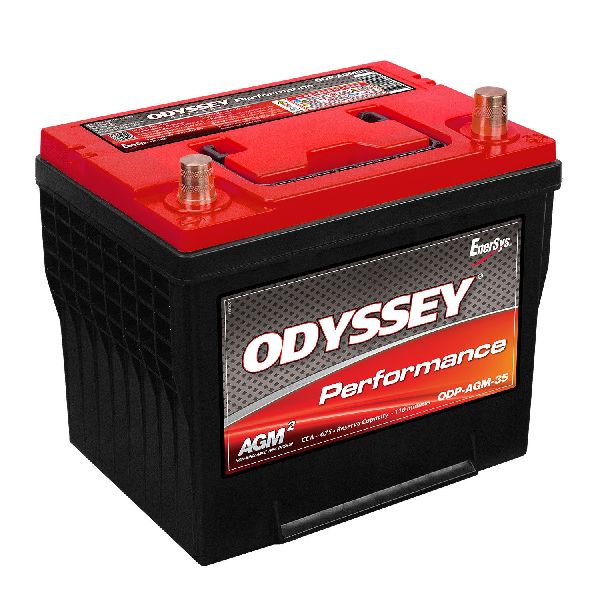
Est. part cost: $5-$25 - Low Battery Voltage or Failing Alternator 🟡 Medium Probability Control modules require a stable voltage to operate. A weak battery or faulty alternator can cause voltage drops that lead to communication errors and other electrical gremlins.
How to confirm: Test the battery voltage with the engine off (should be ~12.4-12.6V). Then, test it with the engine running (should be ~13.7-14.7V). If voltages are low, the battery or charging system is at fault. Slow cranking is a key symptom.
Typical fix: Recharge or replace the battery; replace the alternator if it's not charging correctly.
Est. part cost: $150-$400 - CAN Bus Wiring Issues (Open/Short) 🟡 Medium Probability Wiring harnesses can become damaged from vibrations, improper repairs, or corrosion, especially in the engine bay or under the vehicle. A video of a newer Altima showed a melted harness behind the radio causing U1000 codes.
How to confirm: Visually inspect wiring harnesses connected to the ECM, BCM, and TCM for damage. Use a multimeter to check for continuity and resistance on the CAN H and CAN L wires (typically pins 6 and 14 at the OBD-II port). The resistance between them should be approximately 60 ohms with the battery disconnected.
Typical fix: Repairing the damaged section of the wiring harness.
Est. part cost: $10-$100 - Faulty Control Module (ECM, BCM, TCM, etc.) ⚪ Low Probability While possible, an actual internal module failure is less common than the wiring and power supply issues that trigger the code. The U1010 code specifically points to an internal module error, but this is often a false flag caused by external network problems.
How to confirm: This is the last step after confirming all power, grounds, and wiring are perfect. A Nissan-specific scan tool (like CONSULT) is needed to confirm if the module is still reporting an internal error after all other network faults are cleared.
Typical fix: Replacing the faulty module and programming the new one to the vehicle. Note that BCM replacement is not plug-and-play and requires key reprogramming.
Est. part cost: $200-$1200
Rare But Worth Checking
- Blown Fuse: A fuse that powers a specific control module (e.g., TCM, BCM) may have blown, causing it to drop off the network and potentially trigger this code. Always check fuses for the ECM, TCM, and BCM.
- Aftermarket Electronics: Improperly installed remote starters, alarms, or audio equipment can interfere with the CAN bus network and cause communication faults.
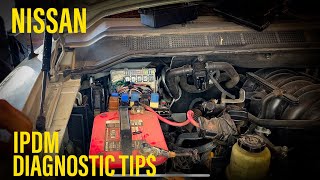
- Faulty Intelligent Power Distribution Module (IPDM): The IPDM is a smart fuse/relay box that powers many other modules. An internal failure, such as a bad ECM relay within the IPDM, can cut power to critical modules and cause network-wide communication codes. 🎬 Watch: How to perform a Nissan IPDM self-test.
Diagnosis Steps
- Connect a scan tool. Document all codes and pay close attention to any other 'U' codes, especially U1000.
- Address any non-communication codes first (e.g., engine, ABS codes).
- As per TSB NTB10-066a, diagnose U1000 or other general communication codes before focusing on U1010.
- Check battery voltage and the charging system. Ensure the battery is fully charged and the alternator is functioning correctly.
- Inspect and clean all major ground connections from the battery to the chassis and from the chassis to the engine/transmission. This is a very common fix.
- Check all fuses related to the main control modules (ECM, TCM, BCM) and high-level fuses like 'Ignition 1' and 'Ignition 2'.
- Visually inspect the wiring harnesses for any signs of damage, corrosion, or loose connections, particularly around the main modules.
- If you have an advanced scan tool, try to communicate with each module individually to see which one is offline or reporting the error.
- If all wiring, power, and grounds are confirmed to be good and the U1010 code persists for a specific module, that module is the likely cause of the fault and should be replaced.
Parts You'll Likely Need
- Battery Ground Cable/Strap
(OEM #24080-JA10A (4th Gen V6), 24080-JA00A (4th Gen 2.5L), 24080-8J000 (3rd Gen 2.5L))— A corroded or broken ground strap is a very common cause of network communication issues on these vehicles.
Trusted brands: Nissan OE
OEM price range: $40-$140
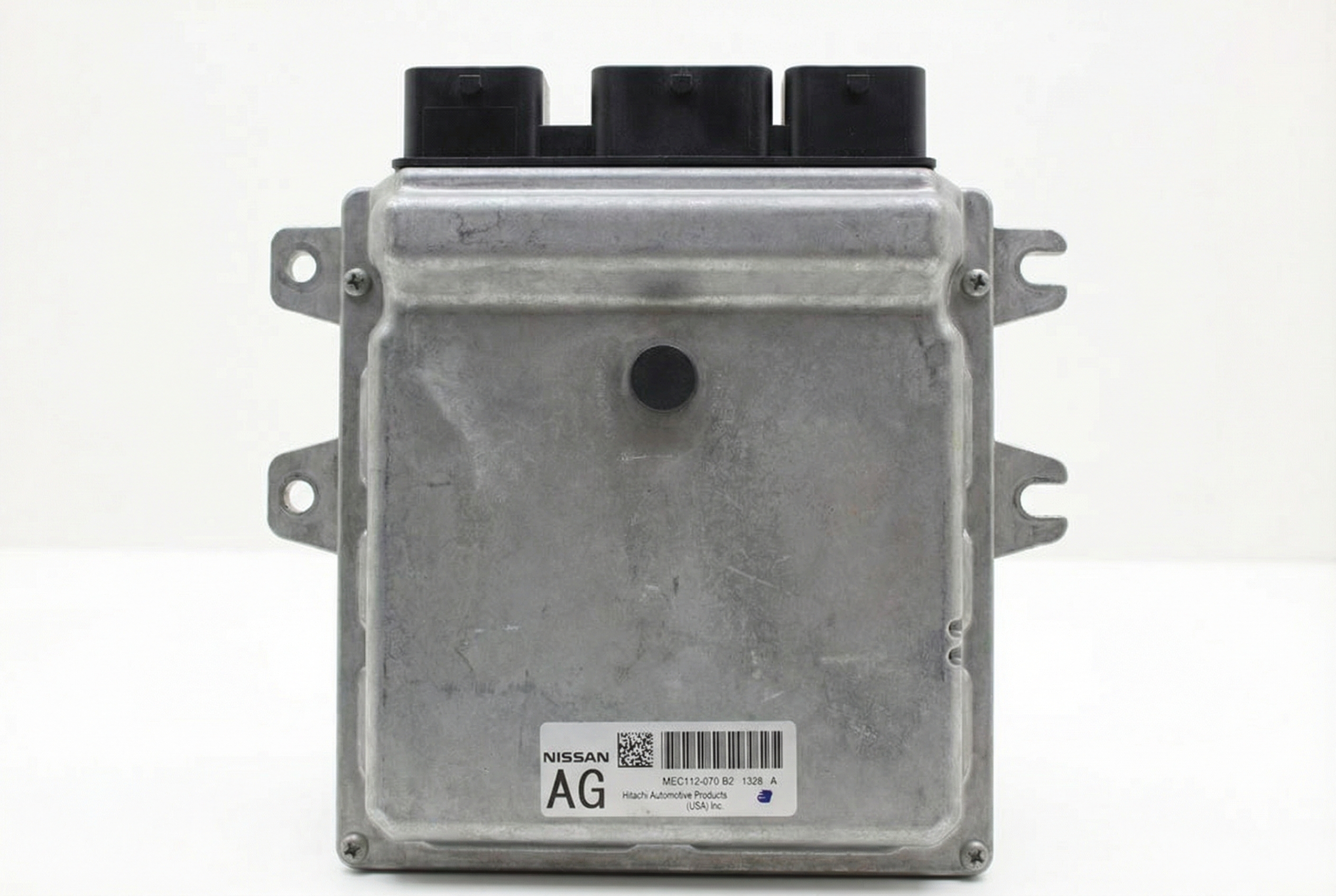
Aftermarket price range: $15-$30 - Engine Control Module (ECM) — If all other diagnostics fail and the ECM is the module reporting the U1010 code, it may have an internal failure.
Trusted brands: Nissan OE, Hitachi
OEM price range: $800-$1200
Aftermarket price range: $300-$600 (Remanufactured) - Body Control Module (BCM)
(OEM #284B1-JA00A, 284B1-JA01A, 284B1-JA02A (for 2007 Altima, numbers supersede each other))— If all other diagnostics fail and the BCM is the module reporting the U1010 code, it may have an internal failure. This module controls many body and security functions.
Trusted brands: Nissan OE
OEM price range: $400-$700
Aftermarket price range: $200-$400 (Remanufactured)
Related Codes That Often Appear With This One
- U1000 — U1000 indicates a general CAN communication circuit failure. U1010 often appears with it, where U1000 points to the network problem and U1010 is the resulting internal error reported by a module affected by that problem.
- U0101 — This code means 'Lost Communication with TCM'. If the U1010 code is being reported by the Transmission Control Module, you will likely see a U0101 code as well, indicating other modules cannot communicate with it.
Technical Service Bulletins (TSBs) & Recalls
- NTB10-066a: Provides diagnostic tips for CAN communication codes U1000, U1001, U1002, and U1010. Defines U1010 as a module with internal errors and stresses diagnosing other communication codes first.
- NTB06-009a: Specifically for 2002-2006 Altimas (and other models), this TSB details the procedure for cleaning ECM and battery ground connections to resolve MIL ON with U1000 or U1010 codes when no drivability issues are present.
- NTB10-145B: While focused on
Platform-Specific Known Issues
- Corroded Negative Battery Cable: The factory negative battery cable on both 3rd and 4th gen Altimas is prone to corrosion not just at the terminal, but also at the body and transmission ground points. This creates high resistance and is a primary cause of U1000/U1010 codes. Simply cleaning the terminal is often not enough; the entire cable assembly and its connection points must be inspected and cleaned.
Mechanic-Grade Diagnostic Values
- CAN Bus Resistance (Battery Disconnected) — expected: ~60 Ω between CAN_H (Pin 6) and CAN_L (Pin 14) at the DLC.. Failure: A reading of ~120 Ω indicates an open circuit or a missing terminating resistor. A reading near 0 Ω indicates a short between the CAN H and L lines.
- CAN Bus Voltage (Key ON, Engine OFF) — expected: CAN_H to Ground: ~2.7V. CAN_L to Ground: ~2.3V.. Failure: Significant deviation, such as 0V or battery voltage on either line, indicates a short to ground or power.
- CAN Bus Resistance at Terminating Module — expected: ~120 Ω (e.g., at ECM or IPDM connector with it unplugged).. Failure: An open circuit (OL) or a reading significantly different from 120 Ω indicates a problem with the module's internal terminating resistor.
Hidden / Shadow Codes Worth Checking
- Module Highlighted in Pink (V-CAN Diagram): On the Nissan CONSULT scan tool, if a module is highlighted in pink on the V-CAN diagram after all other network communication errors (red or orange highlights) are resolved, it indicates an internal error within that specific module. (see via Nissan CONSULT-III plus scan tool)
Scan Tool Commands That Help
- Nissan CONSULT-III plus: CAN Diag Support Monitor / V-CAN Diagram — This is the primary function to visualize the entire CAN network, see which modules are communicating (green), which have current errors (red), past errors (orange), or internal faults (pink). It's the starting point for any 'U' code diagnosis.
- Nissan IPDM E/R (Intelligent Power Distribution Module Engine Room): Auto Active Test (Self-Test) — This test is initiated by a specific sequence of door switch presses. It makes the IPDM cycle its outputs (wipers, lights, A/C clutch relay, etc.) for 5-second intervals. This helps confirm if the IPDM itself is functional and capable of powering other components, which is critical as the IPDM is often a terminating module on the CAN bus.
Wiring & Ground Locations
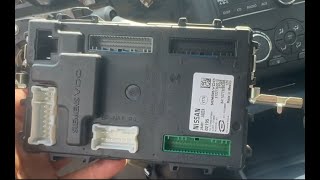
- BCM (Body Control Module) — Behind the instrument cluster/speedometer. Requires removing the dash trim around and below the steering wheel to access.. The BCM is a central hub for many functions and a terminating module on the CAN bus. A fault here can cause widespread issues. Its difficult-to-access location can lead to misdiagnosis.
- Ground Points E15, E9 — Lower left side of the engine compartment.. These are primary engine compartment ground points. Corrosion here due to proximity to the battery and elements is a common cause of CAN communication faults.
- Ground Point M57 — Behind the left end of the dashboard.. This is a key interior ground point for various modules and switches. A loose connection here can cause intermittent communication errors.
- TCM (Transmission Control Module) — On 2010 models, it is located in the engine bay, in front of the battery.. If the TCM is the module setting the U1010, knowing its location is key. Its exposed position in the engine bay makes its harness susceptible to damage.
Real Owner Repair Stories
- Nissan Forum User (Nissan with CAN bus communication failure) — Multiple modules not communicating, no-start condition.
❌ Tried (didn't work) Confirmed 60 Ohm resistance on CAN bus., Confirmed 120 Ohm resistance when unplugging terminating modules (ECM, IPDM)., Checked for shorts to power and ground on the CAN bus., Checked power and ground to each non-communicating module., Replaced engine room and front wiring harnesses with used parts.
✅ What actually fixed it The suggested fix, after all standard wiring checks passed, was to inspect the fusible links and contacts on the positive battery terminal 'card'. A failure in one of these high-level links can disable power to a whole section of the vehicle's network, causing a communication breakdown that standard wiring tests won't catch.
OEM Part Supersession History
284B1-JA00A→284B1-JA01A, then 284B1-JA02A— Part revision and update by the manufacturer.
Heads up: While these parts supersede each other for the specified years, using a VIN to verify the latest correct part number is critical, as other similar numbers like 284B1-JA02B exist for the same model years.
Model Year Variations Within This Range
- 2007-2009 vs 2010-2012: The earlier models of the 4th generation (2007-2009) had more reported issues, including problems with the CVT transmission, compared to the post-refresh 2010-2012 models.
Helpful Videos



Used OEM Parts in Stock



New Aftermarket Parts Available


The information in this article is provided for general reference and educational purposes only. Vehicle specifications, procedures, and part compatibility can vary by production date, trim level, and region. Always consult your vehicle's factory service manual and verify part numbers before purchasing or performing repairs. Safety-critical components such as airbags, seat belts, and braking systems should be installed by a qualified professional.
- Nissan ALTIMA:
- 🎬 Helpful Videos
- 🛍️ Shop This Part
- What's Unique About the 2005-2012 Nissan ALTIMA
- Diagnostic Flowchart
- Symptoms You May Notice
- Most Likely Causes
- Rare But Worth Checking
- Diagnosis Steps
- Parts You'll Likely Need
- Related Codes That Often Appear With This One
- Technical Service Bulletins (TSBs) & Recalls
- Platform-Specific Known Issues
- Mechanic-Grade Diagnostic Values
- Hidden / Shadow Codes Worth Checking
- Scan Tool Commands That Help
- Wiring & Ground Locations
- Real Owner Repair Stories
- OEM Part Supersession History
- Model Year Variations Within This Range
- 🎟️ Get 5% Off