

OBD-II Code U1007: Lost Communication With Battery Monitoring Sensor
What U1007 means, why it triggers, and how to fix it
- Code U1007 triggers when the Body Control Module loses its single-wire LIN bus connection to the Battery Monitoring Sensor.
- Check the 3A or 5A BMS fuse located directly on the positive battery terminal before buying any parts, as corrosion frequently blows this hidden fuse.
- The vehicle immediately disables the automatic engine start/stop system and defaults to a fixed 13.8V charging strategy to prevent battery damage.
- You must perform a BMS Reset with a bidirectional scan tool after installing a new battery, or the U1007 code will return within 50 miles.
What Does U1007 Mean?

The U1007 code means the main computer (BCM or PCM) lost connection with the Battery Monitoring Sensor (BMS). This small sensor, clamped to a battery terminal, measures voltage, current, and temperature to ensure efficient charging. Without this data, the computer logs the code, disables Auto Start/Stop, and forces the alternator into a fixed, less efficient charging mode.
Technical definition: The official SAE/OBD-II definition is "Lost Communication With Battery Monitoring Sensor 'A'". This indicates the Body Control Module (BCM) failed to receive expected data from the Battery Monitoring Sensor over the single-wire Local Interconnect Network (LIN) bus for a specified duration.
Can I Drive With U1007?

Yes, But With Caution. Yes, but it is strongly discouraged. The U1007 code disables the smart charging system, which leads to a dead battery and leaves you stranded. Continuing to drive strains the alternator and shortens the life of other electronics due to unstable voltage. On specific EVs like the Hyundai Ioniq 5 and Kia EV6, this code signals a critical ICCU fault that results in a complete loss of motive power within 20-45 minutes.
Common Causes

- Corroded or Loose Battery Terminals and Grounds (Very Common) — White, blue, or green powder on the battery posts creates high resistance that blocks the sensitive LIN bus signal. A corroded chassis ground connection is equally responsible, especially on 2012-2018 Ford Focus models.
- Blown Battery Monitoring Sensor (BMS) Fuse (Very Common) — Many vehicles use a dedicated 3A, 5A, or 7.5A fuse for the BMS, located in a plastic holder directly on the positive battery terminal. Moisture easily enters this holder, corroding and blowing the fuse.
- Failing or Weak 12V Battery (Common) — A battery dropping below 12.2 volts cannot sustain module communication. This triggers U1007 alongside low-voltage codes like P0562.
- Skipped BMS Reset After Battery Replacement (Common) — Failing to perform a digital BMS reset after installing a new battery causes the computer to use outdated charging parameters, triggering the code and ruining the new battery.
- Faulty Battery Monitoring Sensor (BMS) (Less Common) — The sensor fails internally due to age, vibration, or acid exposure. On some vehicles, the sensor is permanently integrated into the battery cable, requiring full cable replacement.
- Damaged Wiring or Connector (Less Common) — The three wires leading to the BMS (power, ground, and LIN bus) break or corrode at the connector, creating an open circuit.
- Alternator AC Ripple or Electrical Interference (Uncommon) — Failing alternator diodes leak AC voltage into the DC system. This electrical noise disrupts the LIN bus network. Improperly wired aftermarket amplifiers or alarms cause identical interference.
- Outdated Module Software (Uncommon) — Overly sensitive BCM software triggers false U1007 codes. Manufacturers resolve this via Technical Service Bulletins (TSBs) requiring a dealership software flash.
Symptoms

- Auto Start/Stop System Disabled — The vehicle immediately disables the fuel-saving start/stop feature because it lacks the battery health data required to safely restart the engine.
- Check Engine or Battery Warning Light On — A general check engine light or a specific battery icon illuminates. Honda models display a 'CHECK BATTERY SENSOR' message on the instrument cluster.
- Erratic Electrical Functions — Unstable voltage causes flickering headlights, radio resets, and random dashboard warning lights.
- Reduced Engine Power — The vehicle enters a limp mode with sluggish throttle response to conserve electrical energy.
Diagnostic Flowchart

Tap your situation to follow the diagnostic path that matches what you're seeing on this code.
Common Fixes & Costs
- Cleaning Battery Terminals and Ground Points — Parts: $0-$10, Labor: $0-$75, ~0.5 hr book time (DIY)
- Replacing the BMS Fuse — Parts: $1-$10, Labor: $0-$50, ~0.3 hr book time (DIY)
- Replacing the 12V Battery and Performing BMS Reset — Parts: $150-$300, Labor: $50-$150, ~0.8 hr book time (DIY)
- Replacing the Battery Monitoring Sensor
— Parts: $50-$250, Labor: $75-$200, ~0.7 hr book time
(Intermediate)
: OEM GK2Z10C679B (Alt: {"brand": "Dorman", "part_number": "956-135"}, {"brand": "Standard Motor Products", "part_number": "BSC9"})
: OEM PE05-18-8A1 (Alt: {"brand": "Standard Motor Products", "part_number": "BSC99"}, {"brand": "Dorman", "part_number": "601-019"})
: OEM 38920-T2A-A04 (Alt: {"brand": "Dorman", "part_number": "956-399"}) - Repairing Damaged Wiring or Connector — Parts: $10-$50, Labor: $150-$600, ~2.5 hr book time (Professional)
- Replacing and Programming the Body Control Module (BCM) — Parts: $400-$1000, Labor: $250-$600, ~2 hr book time (Professional)
DIY vs Professional
- Cleaning Battery Terminals and Ground Points — Beginner: Yes
Tools: Wrench set, wire brush, baking soda, water, terminal protector spray. - Replacing the BMS Fuse — Beginner: Yes
Tools: Pliers or a fuse puller. - Replacing the 12V Battery and Performing BMS Reset — Beginner: Yes
Tools: Wrench set, terminal cleaner, OBD-II scan tool with BMS reset function. - Replacing the Battery Monitoring Sensor — Beginner: No, intermediate skill recommended.
Tools: Wrench set, socket set. - Repairing Damaged Wiring or Connector — Beginner: No.
Tools: Multimeter, wiring diagrams, wire strippers, crimpers, heat shrink tubing, soldering iron. - Replacing and Programming the Body Control Module (BCM) — Beginner: No.
Tools: Professional diagnostic scan tool with programming capabilities.
Used vs. New Parts: Buying Guide
When a used part is worth it: Buying a used Battery Monitoring Sensor is a bad idea. The savings are minimal, and used sensors carry hidden internal corrosion.
Donor-vehicle mileage cap: roughly under 50000 miles for the part to have meaningful remaining life.
Donor quality checklist:
- Reject sensors from salt-belt vehicles.
- Match the part number exactly; slight variations prevent communication.
- Reject any connector showing green or white powder.
Decision logic:
- If The cost of a new OEM or reputable aftermarket sensor is under $150 → Always buy new. The warranty outweighs the small savings of a used part.
- If The sensor is integrated into a $300+ battery cable assembly → A used assembly from a low-mileage, non-corroded donor vehicle is acceptable.
Warranty tradeoff: Used salvage parts offer a 30-day warranty. New aftermarket parts include a 1-year to limited lifetime warranty.
Worst-case if a used part fails: $100-$200 if a used sensor fails after 30 days, requiring a second replacement.
What Happens If You Wait — Timeline
- 0-1 month: Code is set, Check Engine Light illuminates, and Auto Start/Stop is disabled. The charging system reverts to a fixed 13.8V mode. (MPG impact: 0%% · Added cost: $0)
- 1-3 months: The 12V battery degrades due to improper charging. You experience a no-start event requiring a jump start. (MPG impact: 0%% · Added cost: $50-$200 (for a tow/service call))
- 3-9 months: The 12V battery is permanently damaged and requires replacement. The alternator is under constant strain. (MPG impact: 0-1%% · Added cost: $150-$300 (for a new battery))
- 9+ months: Continued operation with unregulated voltage damages the alternator's internal regulator and fries sensitive control modules. (MPG impact: 1-2%% · Added cost: $500-$2000+ (for alternator and/or control module replacement))
Cost of Not Fixing It
- 0-1 month: Disabled Auto Start/Stop and a high risk of being stranded. The charging system operates in a default mode that drains the battery. (Added cost: $0 - $200 (for a tow or jump start))
- 1-6 months: Premature 12V battery failure. Unregulated charging voltage permanently destroys the battery's internal cells. (Added cost: $150 - $300 (for a new battery))
- 6+ months: Alternator failure. The alternator works at maximum capacity constantly, and unstable voltage fries sensitive control modules. (Added cost: $500 - $1500+ (for alternator and/or module replacement))
Diagnosis Steps
- Visually Inspect Battery and Connections
Look for white or blue powder on the battery posts and cable clamps. Verify the clamps cannot be moved by hand. Trace the negative battery cable to the chassis and ensure the bolt is tight and rust-free.
Tools: None (Beginner) - Check the BMS Fuse
Locate the 3A, 5A, or 7.5A BMS fuse. On Fords, Mazdas, and Hondas, this sits in a small plastic holder clipped to the positive battery terminal. Pull the fuse and verify the internal metal strip is intact.
Tools: Pliers or fuse puller (Beginner) - Test the 12V Battery
Measure battery voltage with the engine off. It must read at least 12.4 volts. Have a helper start the car; if voltage drops below 10 volts during cranking, replace the battery.
Tools: Multimeter (Beginner) - Check Power and Ground at the BMS Connector
Disconnect the BMS plug. Turn the ignition ON (engine off). Probe the harness pins. One pin must show battery voltage (~12V) and another must show less than 0.5 ohms of resistance to the negative battery post.
Tools: Multimeter, vehicle-specific wiring diagram (Intermediate) - [ADVANCED] Check Scan Tool PIDs
Connect a professional scan tool and view Body Control Module (BCM) live data. Monitor 'Battery Voltage', 'Battery Current', and 'Battery State of Charge'. If these values are blank or frozen, the communication link is dead.
Tools: Professional OBD-II Scan Tool (Advanced) - [PRO TIP] Check the LIN Bus Signal Voltage
With the BMS disconnected and ignition ON, probe the LIN bus signal wire (e.g., Blue/Orange on Fords). You must measure between 4.7 and 5.1 volts. Lower voltage indicates a short to ground or a failed BCM.
Tools: Multimeter, vehicle-specific wiring diagram (Advanced) - [PRO TIP] Check for Alternator AC Ripple Voltage
Set your multimeter to AC volts. With the engine running at 1500 RPM and headlights on, measure across the battery terminals. A reading above 0.5V (500mV) proves failing alternator diodes are disrupting the network.
Tools: Multimeter with AC Voltage setting (Advanced) - Perform a Parasitic Draw Test
Disconnect the negative battery cable and connect a multimeter in series (10A setting). Let the car sleep for 45 minutes. Draw must be under 85 milliamps. If higher, unplug the BMS; if draw drops, the sensor is internally shorted.
Tools: Multimeter with 10A setting (Advanced) - [PRO TIP] Analyze LIN Bus Waveform
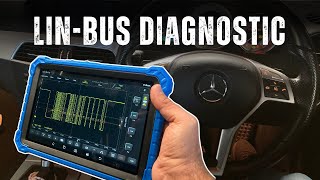
Back-probe the LIN bus wire with an oscilloscope. A healthy signal is a square wave switching between 12V and 0V. A flatline confirms a wiring break or dead BCM.
Tools: Oscilloscope, vehicle-specific wiring diagram (Professional)
When This Code Triggers (Freeze-Frame Conditions)
- Time Since Engine Start: > 2 minutes (The fault sets after an initial boot-up period when the BCM expects to see continuous messages.)
- Battery Voltage: 11.8V - 14.8V (Sets when communication is lost due to low voltage (weak battery) or unstable voltage (bad alternator).)
- RPM: 700 - 2500 (Triggers at idle or steady cruise while the BCM continuously monitors the LIN bus.)
- Vehicle Speed: 0 - 65 mph (Occurs at any speed, including when stopped at a traffic light with the engine running.)
Related Codes
- P0562 — System Voltage Low. P0562 is the cause, and U1007 is the effect. Low voltage from a weak battery forces the BMS offline. Test the battery and alternator first.
- U0140 — Lost Communication With Body Control Module. If U0140 is present, the BCM is completely offline. Diagnose the BCM's power and grounds; fixing the BCM resolves the U1007.
- U1000 — General CAN Communication Failure. U1007 is specific to the BMS, while U1000 indicates a wider network crash. This points to a dead battery or severed main ground.
- P159F — Battery Monitor Sensor Disabled. An informational Ford code indicating the smart charging system deactivated due to the U1007 communication failure.
Climate & Environmental Factors
- High Humidity: Accelerates battery terminal corrosion. Moisture traps acidic battery gases, creating a film that destroys metal terminals and causes high resistance.
- Cold Weather: Reduces a battery's effective capacity. A weak battery experiences severe voltage drops during cold starts, forcing the BMS to shut down and log communication codes.
- Salt Belt Regions: Road salt destroys chassis ground connections, wiring harnesses, and the BMS fuse holder, guaranteeing communication failures if left uncleaned.
- High Heat: Increases internal chemical reactions, releasing excess hydrogen gas. This gas reacts with metal terminals and rapidly accelerates corrosion.
How to Talk to a Mechanic About This Code
Say this: "I have a U1007 code and disabled auto start/stop. Please inspect the battery terminals for corrosion, load test the 12V battery, and check the dedicated BMS fuse on the positive terminal clamp before quoting any modules."
This signals to the shop that you've done your research and guides them to check the most common, inexpensive failure points first. It prevents them from immediately quoting a new sensor or BCM.
Avoid saying:
- 'Just fix whatever's wrong'
- 'My check engine light is on, can you look at it?'
- 'Whatever you recommend'
Questions to ask before authorizing the repair:
- What were the results of the battery load test?
- Did you find the dedicated fuse for the sensor, and was it intact and free of corrosion?
- If you're recommending a new sensor, did you verify it has good power and ground at the connector?
- If the code came back after a new battery, was a BMS reset procedure performed?
Where to Take It: Dealer vs Independent vs Chain
- Dealer:
Necessary for the EV recall; otherwise, only recommended for warranty work or as a last resort for complex electrical issues.
Best for: Hyundai/Kia EV models with this code (due to the ICCU safety recall)., Vehicles still under the bumper-to-bumper or extended warranty., Complex cases where a BCM replacement and programming are required.
Downsides: Highest labor rates (1.5-2x independent shops)., Technicians often replace expensive modules instead of repairing simple wiring faults. (Typical cost: +50% vs. baseline) - Independent Shop:
Best fit for most situations. A competent independent mechanic efficiently diagnoses and fixes the common causes of U1007 without the high dealer cost.
Best for: Most out-of-warranty gasoline vehicles., Diagnosing common issues like corrosion, bad fuses, and faulty batteries., Performing a BMS reset with a professional scan tool.
Downsides: Diagnostic skill varies widely., Many lack the $3,000+ bidirectional scanners required to program a new BCM. (Typical cost: +0% vs. baseline) - Chain Shop:
Acceptable for a free battery test, but AVOID for diagnosing the U1007 code itself. There is a high risk of misdiagnosis and unnecessary parts replacement.
Best for: Free battery testing and installation., Simple battery terminal cleaning.
Downsides: Technicians lack diagnostic training., High pressure to upsell batteries when only a $5 fuse is needed., They cannot perform mandatory BMS resets. (Typical cost: -10% vs. baseline)
When to Walk Away From the Repair
Sell or trade the vehicle if the repair estimate exceeds 50% of its Kelley Blue Book private-party value.
- Car worth $3000, fix is $1500: Walk away. A worst-case BCM replacement costs more than half the car's value. Sell as a 'mechanic special' or scrap.
- Car worth $8000, fix is $800: Fix it. Even a more involved repair like a new alternator is well below the threshold.
- Car worth $5000, fix is $2200: Borderline. Get a second opinion. If the diagnosis is confirmed as a BCM, it's likely not worth fixing.
What Scan Tool You Need for This Code
Minimum: A tool that can read codes from the BCM and perform a BMS (Battery Management System) reset.
A basic $20 code reader cannot perform the essential BMS reset function required after replacing the battery. Skipping the reset causes the U1007 code to return immediately.
Budget: BlueDriver Pro Scan Tool (~$100) — Reads codes, provides live data from the BCM, and includes a Battery Registration/Reset function for many makes. This is enough for a skilled DIYer to complete the repair correctly.
Mid-range: Foxwell NT510 Elite (~$180) — Offers manufacturer-specific diagnostics, allowing deeper access to BCM data. It has a robust battery registration function and codes new battery types (e.g., AGM vs standard).
Professional: Autel MaxiCOM MK808 / MK808S (~$500) — Provides full bidirectional control to test components, comprehensive live data, and all OEM-level service functions including BMS reset, battery coding, and BCM programming.
Rent vs buy: Buy if you plan to do your own maintenance. A tool with BMS reset is essential for modern car ownership. Free rental scanners at auto parts stores cannot perform a BMS reset.
How to Clear the Code After You Fix It
- Reconnect battery (negative terminal last)
- Perform BMS reset procedure using a scan tool or manual pedal sequence
- Use an OBD-II scan tool to clear the U1007 code
- Perform a complete drive cycle to set readiness monitors
Drive cycle (~20 minutes): Cold start the engine and idle for 3 minutes. Drive in mixed city/highway conditions for 15-20 minutes. Turn the ignition off and let the vehicle sit for 10 minutes.
Readiness monitors affected: Comprehensive Component Monitor, Misfire Monitor, Fuel System Monitor
Before emissions retest: drive at least 50 miles to fully set monitors.
Watch out for:
- Forgetting to perform the BMS reset after battery replacement guarantees the code returns.
- Clearing the code without fixing the blown fuse results in immediate code reappearance.
- Going for an emissions test immediately after clearing codes results in an automatic 'Not Ready' failure.
Will This Fail Emissions / State Inspection?
Yes — this code typically fails an OBD-II emissions inspection.
- California: An illuminated Check Engine Light is an automatic failure. You must complete a drive cycle after the repair before testing.
- New York: A U1007 code with the Check Engine Light on results in an automatic failure of the OBD-II scan.
- Texas: In emissions counties, an active U1007 code is an automatic fail. You cannot pass by simply clearing the code.
Most Commonly Affected Vehicles
- Ford F-150, Escape, Focus, Fiesta, C-Max (2011-2018) — Extremely common, often with suffix U1007:31 ('No Signal'). The cause is almost always a corroded 3A or 5A fuse in a holder on the positive battery terminal.
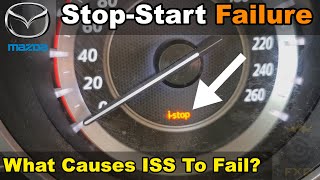
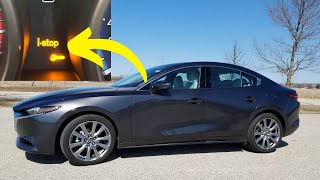
- Mazda 3, 6, CX-5 with SKYACTIV engines (2012-2019) — Designated as U1007:00. Disables the i-stop system without triggering a check engine light. A mandatory BMS reset is required after battery replacement.
- Honda / Acura Accord, Civic, CR-V, MDX, RDX (2013-2020) — Triggers a 'CHECK BATTERY SENSOR' message. The cause is frequently a blown 7.5A fuse labeled 'BMS' or a failed sensor (P/N 38920-T2A-A04).
- General Motors (Chevrolet/GMC) Silverado, Sierra, Equinox, Malibu (2014-2020) — Triggers from a failing battery or poor ground connections. The LIN bus signal toggles voltage visibly on a standard multimeter.
- Hyundai / Kia (EV Models) Ioniq 5, EV6, Genesis GV60 (2022-2024) — A critical symptom of a safety recall (NHTSA 24V204) for a faulty Integrated Charging Control Unit (ICCU) that causes total power loss while driving.
- Nissan Rogue, Sentra, Altima, Murano (2013-2021) — Highly sensitive to low voltage. U1007 appears alongside U1000 (CAN Communication Circuit), indicating a system-wide ground or battery failure.
- Chrysler / Dodge / Ram Ram 1500, Charger, Journey, Grand Caravan (2013-2019) — The sensor is called an Intelligent Battery Sensor (IBS). U1007 is caused by a weak battery or internal IBS module failure.
- Subaru / Volkswagen Various Models with Start/Stop (2015-2024) — Communication issues stem from weak batteries or improperly installed aftermarket accessories disrupting the LIN bus.
Manufacturer-Specific Notes
- Ford: The code appears as U1007:31 ('No Signal'). The root cause is almost always a hidden 3A or 5A fuse on the positive battery terminal clamp.
- Mazda: The code appears as U1007:00. It disables the i-stop system but rarely illuminates the check engine light. A scan tool reset is mandatory after battery swaps.
- Nissan: U1007 pairs with U1000 (CAN Communication Circuit), indicating a severe voltage drop rather than a localized sensor failure.
- General Motors: GM refers to the BMS as the Battery Sensor Module. The LIN bus signal is easily diagnosed by checking for a toggling voltage on a multimeter.
- Hyundai/Kia (EVs): On the Ioniq 5 and EV6, U1007 signals a failing Integrated Charging Control Unit (ICCU). This is a major safety recall (NHTSA 24V204) requiring immediate dealer service.
Real Owner Stories
2016 Ford Fiesta ST - The Hidden Fuse
Check Engine Light came on, accompanied by sluggish throttle response and disabled Auto Start/Stop. Positive battery terminal was heavily corroded.
What they tried:
- Initially suspected a bad battery or alternator.
- Discovered forum posts about a hidden fuse after cleaning the terminals didn't solve the issue.
Outcome: Found a corroded in-line fuse holder on the positive battery terminal containing a blown 3A fuse. Replaced the fuse holder and fuse for under $10. The U1007 code cleared permanently.
Lesson: On Ford models, always check the small BMS fuse on the positive terminal before replacing expensive parts. Corrosion wicks into this holder and blows the fuse.
2018 Mazda CX-5 - The Misdiagnosis
i-Stop system stopped working and the amber i-Stop warning light flashed. No Check Engine Light was on. The battery was replaced a month prior.
What they tried:
- Owner assumed the new battery was faulty and had it tested, but it was healthy.
- Took the car to a dealer who immediately identified the cause.
Outcome: The technician performed a BMS relearn procedure using the Mazda diagnostic tool. The procedure took 15 minutes and cost $75. The i-Stop system began working normally immediately.
Lesson: Swapping the battery is not enough. The system must be told a new battery is installed via a BMS reset, otherwise it disables features like i-Stop.
2014 Ford Escape - The Recurring Code
U1007 code returned every few days, even after cleaning terminals.
What they tried:
- Replaced the Battery Monitoring Sensor.
- Replaced the pigtail connector for the sensor.
- Code returned after 5 minutes of driving.
Outcome: Advanced diagnosis revealed the alternator produced excessive AC ripple voltage (over 800mV). This electrical noise disrupted the LIN bus. Replacing the alternator ($450) resolved the code permanently.
Lesson: If the code persists after checking the battery and fuse, a failing alternator introducing electrical noise is the likely root cause. Perform an AC ripple test.
2022 Hyundai Ioniq 5 - The Critical EV Fault
Vehicle displayed a 'Stop vehicle and check power supply' warning, the 12V battery light came on, and the car entered limp mode.
What they tried:
- Owner towed the vehicle to the dealership, suspecting a 12V battery failure.
Outcome: The dealership diagnosed a failed Integrated Charging Control Unit (ICCU). The ICCU and its fuse were replaced under safety recall NHTSA 24V204.
Lesson: On specific EVs like the Ioniq 5 and Kia EV6, U1007 is a critical symptom of a known ICCU failure that causes power loss while driving. Address this at a dealer immediately.
How to Prevent This Code From Triggering
- Clean Battery Terminals and Ground Connections Annually (Once per year, or every oil change in salt-belt regions) — Prevents the buildup of insulating corrosion that creates high resistance, which is the #1 cause of the U1007 code.
- Apply a Terminal Protector Spray or Grease (After every cleaning) — Creates a physical barrier that seals metal terminals from acidic fumes and moisture, dramatically slowing future corrosion.
- Ensure Regular, Sufficient Drive Times (Weekly habit) — Driving for at least 20-30 minutes allows the alternator to fully recharge the battery, preventing low-voltage communication faults.
- Test Battery Health Every 6-12 Months (Every 6-12 months) — A professional load test identifies a weakening battery before it fails completely, preventing U1007 codes and stranding.
Frequently Asked Questions
What is the little box on my battery terminal?
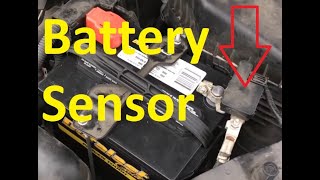
That is the Battery Monitoring Sensor (BMS). It constantly measures battery voltage, current, and temperature. It sends this data to the main computer to regulate the alternator and control features like auto start/stop.
Why did the U1007 code come back after I replaced the battery?
Modern vehicles require a 'BMS Reset' procedure after installing a new battery. This tells the computer to reset its charging strategy for a healthy battery. Skipping this step causes the computer to overcharge the new battery and trigger the U1007 code again.
What are the most common misdiagnosis mistakes for U1007?
The biggest mistake is replacing the BMS without testing its power, ground, and fuse. A blown 5A fuse or corroded ground wire is the actual culprit in most cases. Always verify the wiring before condemning the sensor or the Body Control Module.
I have a U1007 code and EVAP codes. Are they related?
No, the systems operate independently. However, if both appear simultaneously, a weak battery or bad main ground is causing widespread electrical failure. Diagnose the U1007 first to restore stable voltage.
Can a bad alternator cause a U1007 code?
Yes. A failing alternator produces excessive AC ripple voltage that creates electrical noise. This noise disrupts the sensitive LIN bus communication network, causing the BMS to drop offline and trigger the code.
I cleaned my battery terminals but the code is still there. What's next?
Check the small, dedicated fuse for the sensor. On many Fords and Mazdas, this 3A or 5A fuse sits in a plastic holder directly on the positive battery terminal clamp and frequently blows due to hidden corrosion.
Is this repair covered under a recall?
For most gasoline cars, this is standard maintenance. However, for 2022-2024 Hyundai, Kia, and Genesis EVs, this code is a key symptom of a faulty ICCU covered by safety recall NHTSA 24V204.
What does the U1007:31 suffix mean on my Ford?
The ':31' suffix means 'No Signal'. The Body Control Module is receiving zero data from the sensor, which strongly points to a blown fuse, disconnected plug, or broken wire rather than a software glitch.
Key Takeaways
- Code U1007 triggers when the Body Control Module loses its single-wire LIN bus connection to the Battery Monitoring Sensor.
- Check the 3A or 5A BMS fuse located directly on the positive battery terminal before buying any parts, as corrosion frequently blows this hidden fuse.
- The vehicle immediately disables the automatic engine start/stop system and defaults to a fixed 13.8V charging strategy to prevent battery damage.
- You must perform a BMS Reset with a bidirectional scan tool after installing a new battery, or the U1007 code will return within 50 miles.
Helpful Videos
![Avoid Expensive Shop Repairs: DIY Reset the Ford Vehicle Battery Monitoring System [BMS]](https://img.youtube.com/vi/QTtb7rKaZTE/mqdefault.jpg)



The information in this article is provided for general reference and educational purposes only. Vehicle specifications, procedures, and part compatibility can vary by production date, trim level, and region. Always consult your vehicle's factory service manual and verify part numbers before purchasing or performing repairs. Safety-critical components such as airbags, seat belts, and braking systems should be installed by a qualified professional.
- 🎬 Helpful Videos
- What Does U1007 Mean?
- Can I Drive With U1007?
- Common Causes
- Symptoms
- Diagnostic Flowchart
- Common Fixes & Costs
- DIY vs Professional
- Used vs. New Parts: Buying Guide
- What Happens If You Wait — Timeline
- Cost of Not Fixing It
- Diagnosis Steps
- When This Code Triggers (Freeze-Frame Conditions)
- Related Codes
- Climate & Environmental Factors
- How to Talk to a Mechanic About This Code
- Where to Take It: Dealer vs Independent vs Chain
- When to Walk Away From the Repair
- What Scan Tool You Need for This Code
- How to Clear the Code After You Fix It
- Will This Fail Emissions / State Inspection?
- Most Commonly Affected Vehicles
- Manufacturer-Specific Notes
- Real Owner Stories
- 2016 Ford Fiesta ST - The Hidden Fuse
- 2018 Mazda CX-5 - The Misdiagnosis
- 2014 Ford Escape - The Recurring Code
- 2022 Hyundai Ioniq 5 - The Critical EV Fault
- How to Prevent This Code From Triggering
- Frequently Asked Questions
- What is the little box on my battery terminal?
- Why did the U1007 code come back after I replaced the battery?
- What are the most common misdiagnosis mistakes for U1007?
- I have a U1007 code and EVAP codes. Are they related?
- Can a bad alternator cause a U1007 code?
- I cleaned my battery terminals but the code is still there. What's next?
- Is this repair covered under a recall?
- What does the U1007:31 suffix mean on my Ford?
- Key Takeaways
- 🎟️ Get 5% Off