

U1002 on 2005-2012 Nissan XTERRA: CAN Communication Failure Causes and Fixes
This code indicates a loss of communication on the vehicle's data network (CAN bus). The most common causes are poor ground connections, a failing Intelligent Power Distribution Module (IPDM)—specifically the internal ECM relay—or low battery voltage. Start by cleaning battery terminals and chassis grounds and consider testing or replacing the IPDM's ECM relay before suspecting more complex issues.
- U1002 is a network communication code. Do not immediately replace expensive modules like the ECM or TCM.
- Always start with the basics: check the battery's health and clean all battery and chassis ground connections thoroughly.
- The Intelligent Power Distribution Module (IPDM) is a very common point of failure on this vehicle and should be a primary suspect.
- Diagnosing the CAN bus wiring itself is complex and best left to a professional if simple fixes don't resolve the issue.
- Nissan Technical Service Bulletins emphasize diagnosing communication codes like U1002 before any other stored codes.
What's Unique About the 2005-2012 Nissan XTERRA
On the second-generation Nissan XTERRA and its platform mates (Frontier, Pathfinder), electrical issues are frequently traced back to two main areas: corroded ground points and the Intelligent Power Distribution Module (IPDM). The IPDM, a smart fuse and relay box located in the engine bay, contains a non-serviceable internal ECM power relay that is a notorious weak point, especially on earlier models. This single relay's failure can cause a no-start condition and bring down the entire CAN network, triggering a U1002 code. Owners often report that seemingly unrelated electrical gremlins, including CAN communication codes, are resolved by addressing poor grounds or replacing the IPDM's ECM relay.
Diagnostic Flowchart
Tap your situation to follow the diagnostic path that matches what you're seeing on this vehicle.
Symptoms You May Notice
- Check Engine Light is on
- VDC OFF and SLIP lights are illuminated
- Vehicle may enter limp mode with reduced power
- Erratic or no shifting from the automatic transmission
- Crank but no start condition
- Cooling fans running constantly at full speed
- Flashing battery and brake lights on the dashboard
- Sudden engine stalling while driving
- OBD-II scanner cannot communicate with the ECM
- Replacing individual sensors (like Camshaft or Crankshaft Position Sensors) without diagnosing the network first. While sensor failures can cause similar symptoms (like crank-no-start), the U1002 code points specifically to a communication problem 🎬 Watch: How to diagnose and fix Nissan CAN communication signal faults. that should be addressed first.
- Replacing the ECM or TCM without confirming they have proper power and ground, and without testing the CAN wiring first. These modules are expensive and often misdiagnosed when the actual fault is a bad ground or a $20 IPDM relay.
Most Likely Causes
- Poor Ground Connections 🔴 High Probability Corrosion on the main battery ground cable, chassis grounds, and grounding points is a well-documented issue on this platform. Key areas include the negative battery cable connection to the body, smaller ground wires on the inner fenders in the engine bay, and grounds behind the interior kick panels.
How to confirm: Visually inspect the negative battery cable and where it bolts to the chassis. Check for corrosion (green or white powder) at all major ground points. Perform a voltage drop test on the ground circuit with a multimeter. A reading of more than a few tenths of a volt indicates a problem.
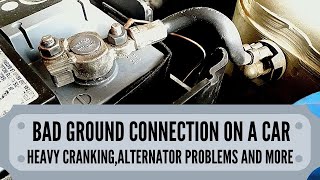
Typical fix: Disconnect, clean all contact points (wire terminal and chassis) with a wire brush until shiny, apply dielectric grease to prevent future corrosion 🎬 See how to properly clean and restore your car's ground connections., and re-secure the connections tightly. In severe cases, the ground strap or battery cable may need replacement.
Est. part cost: $5-$50 - Failing Intelligent Power Distribution Module (IPDM) 🔴 High Probability Early second-generation Xterras were known for issues with the internal, non-serviceable ECM relay within the IPDM, which can cause stalling and communication problems. This module controls power to many other vehicle modules, and its failure is a primary cause of the U1002 code.
How to confirm: Perform the IPDM self-test (auto active test) 🎬 Watch: Step-by-step guide to performing the IPDM auto active test. by opening the driver's door, inserting the key, and pressing the driver's door jamb switch 10 times in 20 seconds, then turning the key to 'ON'. The wipers, lights, and fans should cycle. If the test fails, the IPDM is suspect. A common diagnostic step is to swap the blue ECM relay with an identical relay from a non-critical circuit (like fog lamps) to see if the issue resolves.
Typical fix: For many models, the faulty ECM relay can be replaced individually with an updated part (Nissan P/N: 284B7-CW29E). If the IPDM board itself is damaged or corroded, the entire assembly must be replaced. Example P/N: 284B7-EA00B (always confirm with VIN).
Est. part cost: $15-$30 (Relay only), $150-$400 (Full IPDM assembly) - Low Battery Voltage or Failing Battery 🟡 Medium Probability Nissan Technical Service Bulletins explicitly state that low battery voltage (under 10V) can cause various modules to stop communicating and set CAN codes as they shut down at different voltage thresholds.
How to confirm: Test the battery voltage with a multimeter. A healthy, fully charged battery should read approximately 12.6V with the engine off and 13.7-14.7V with the engine running. Have the battery load tested at an auto parts store, as a battery can show good voltage but fail under load.
Typical fix: Charge or replace the battery. Clean the battery terminals and connectors of any corrosion.
Est. part cost: $150-$300 - CAN Bus Wiring Harness Issue ⚪ Low Probability Wiring can become damaged from chafing, corroded at connectors, or shorted over time. While not specific to the Xterra, it's a possibility on any modern vehicle, especially one used off-road.
How to confirm: This requires advanced diagnostics. With the battery disconnected, measure the resistance between CAN-High (Pin 6) and CAN-Low (Pin 14) at the OBD-II port. A healthy network should read approximately 60 ohms. A reading of 120 ohms suggests a break in the circuit or a faulty terminating module (like the ECM or IPDM). A reading near 0 ohms indicates a short between the two CAN wires.
Typical fix: Locate and repair the damaged section of wiring or clean/replace the corroded connector. This often requires tracing wires and inspecting harness sections where they pass through the firewall or near sharp metal edges.
Est. part cost: $10-$100 (for supplies)
Rare But Worth Checking
- Faulty Control Module (ECM, TCM, BCM): While less common than wiring or power issues, any module on the CAN network can fail internally and disrupt communication. According to Nissan TSBs, a module that stores a U1010 code is a strong indicator of an internal failure within that specific module.
Diagnosis Steps
- Check Battery Health: Ensure the battery is fully charged (12.6V+) and the terminals are clean and tight. Have it load tested. Low voltage is a common cause of CAN codes per Nissan TSBs.
- Scan for All Codes: Use a capable OBD-II scanner to read codes from all modules (ECM, TCM, ABS, BCM). Note which modules are not communicating. An inability to connect to any module points to a core network or power/ground issue.
- Inspect Grounds: Visually inspect and physically test the main battery-to-chassis ground strap and other major ground points in the engine bay and behind interior kick panels. Disconnect, clean, and re-tighten them even if they look okay.
- Perform IPDM Self-Test: With the key out of the ignition, open the driver's door and press the door jamb switch rapidly 10 times. Insert the key and turn it to the 'ON' position. Observe for system checks (wipers, fans, lights will cycle). Failure to initiate or complete this test points to a faulty IPDM.
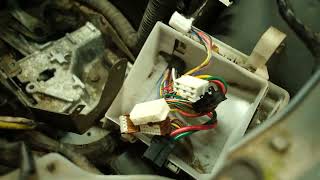
- Inspect IPDM and ECM Relay: Open the IPDM cover in the engine bay. Visually inspect for corrosion or water intrusion. Swap the blue ECM relay (check diagram on cover) with an identical relay from a non-essential system (e.g., fog lights) and see if the vehicle starts or the code clears. If it does, the relay is bad.
- Check CAN Bus Resistance: If the above steps fail, disconnect the negative battery terminal. Measure the resistance between Pin 6 (CAN-H) and Pin 14 (CAN-L) on the OBD-II port. The reading should be ~60 ohms. If it's 120 ohms, there's an open circuit or a problem with a terminating resistor (usually in the ECM or IPDM). If it's near 0 ohms, there's a short circuit between the CAN wires.
- Isolate the Fault: If the resistance is incorrect, you must disconnect modules one by one (starting with the ECM and IPDM) and re-measure resistance to find the one causing the issue or the section of harness that is damaged. This is an advanced step and professional help is recommended.
Parts You'll Likely Need
- IPDM ECM Relay
(OEM #284B7-CW29E) - Intelligent Power Distribution Module (IPDM)
(OEM #284B7-EA00B (example, must verify by VIN)) - Battery Ground Cable
Related Codes That Often Appear With This One
- U1000 — Both are CAN communication failure codes. U1002 has a tighter timing specification for setting the fault, but they point to the same underlying network problem and are diagnosed identically.
- U1001 — This is also a CAN communication code, often indicating the ECM has lost communication with another module. It frequently appears alongside U1000 and U1002.
- P0XXX codes — If the ECM cannot communicate with other modules, it may trigger various powertrain codes because it's not receiving necessary data from sensors or other controllers. These are often 'ghost' codes that will clear once the communication issue is resolved.
Technical Service Bulletins (TSBs) & Recalls
- NTB10-066A: CAN COMMUNICATION CODES - DIAGNOSTIC TIPS & GUIDELINES
- NTB13-027C: CAN COMMUNICATION – NETWORK DIAGNOSTIC FLOW CHART
Platform-Specific Known Issues
- The IPDM ECM Relay Trap: Many owners and even professional shops have wasted significant time and money replacing expensive components like the ECM, fuel pump, or various sensors when the root cause was the inexpensive ECM relay located inside the IPDM. Symptoms like a sudden stall, crank-no-start, and multiple communication codes (U1000, U1002) all point towards this relay as a primary suspect. Swapping this relay with an identical one from a less critical system in the same box is a zero-cost diagnostic step that should be performed early.
- Grounds That Look Good But Aren't: A common report from Xterra owners is that the main ground connections, particularly the negative battery cable to the chassis, can look visually clean but be internally corroded or have high resistance. Simply looking at the ground is not enough. It must be unbolted, and both the terminal and the chassis mating surface must be cleaned to bare metal to ensure a proper connection.
Mechanic-Grade Diagnostic Values
- CAN Bus Resistance (at DLC Pins 6 & 14, battery disconnected) — expected: ~60 Ω. Failure: 120 Ω indicates an open circuit or faulty terminating module; ~0 Ω indicates a short between CAN H and CAN L wires.
- CAN Bus Voltage (Key ON, Engine OFF) — expected: CAN-H (Pin 6 to Gnd): ~2.7V; CAN-L (Pin 14 to Gnd): ~2.3V.. Failure: Significant deviation, such as 0V or battery voltage, indicates a short or open. A short between CAN lines may show both at ~2.5V.
- ECM Power Supply (at Mass Airflow Sensor) — expected: Within 0.5V of battery voltage on the brown wire with key ON.. Failure: A low voltage reading, such as 5-6V, can be a strong indicator of a failing ECM relay inside the IPDM.
Hidden / Shadow Codes Worth Checking
- U1010: While not a hidden code, Nissan TSBs consistently state that if a module reports a U1010, it indicates an internal failure within that specific module, making it the primary suspect. (see via Standard professional scan tool capable of reading codes from all vehicle modules.)
Scan Tool Commands That Help
- Nissan CONSULT-III plus: CAN Diagnosis Support Monitor — This is the primary diagnostic screen used by Nissan technicians. It displays a network map showing which control units are communicating and which have dropped off, immediately focusing diagnosis on the problematic part of the network.
- No Tool Required: IPDM E/R Auto Active Test — Use as a first step to confirm if the IPDM's logic and output circuits are functioning. With the key ON, press the driver's door jamb switch 10 times in under 20 seconds, turn key OFF, then ON again. The horn will honk and wipers, lights, and fans will cycle. If the test doesn't run or components fail to activate, the IPDM is highly suspect.
Wiring & Ground Locations
- IPDM E/R — Engine compartment, passenger side, in the black box assembly near the firewall and battery.. The IPDM is the central power distribution hub and a terminating module for the CAN bus. It houses the failure-prone ECM relay, a primary cause of U1002.
- E14 / E126 — On the left side of the engine compartment, typically on the inner fender or frame rail.. These are primary engine compartment ground points. Corrosion here can disrupt power to multiple modules, including the ECM and IPDM, causing communication failures.
- E24 — On the right front of the engine compartment.. Another critical engine bay ground point. Its integrity is essential for stable module operation.
- M14 / M68 — Behind the left (M14) and right (M68) interior kick panels, respectively.. These are main cabin ground points for modules like the BCM. A loose or corroded connection here can cause widespread electrical issues and CAN codes.
Real Owner Repair Stories
- Reddit user on r/XTerra (2007 Nissan Xterra) — Sudden loss of power while driving, chugging, flashing brake and battery lights, followed by a crank-but-no-start condition.
❌ Tried (didn't work) Replacing Camshaft Position Sensors, Replacing Crankshaft Position Sensor, Replacing the ECM relay (likely a single relay, not the entire IPDM)
✅ What actually fixed it The final diagnosis pointed to the entire IPDM assembly. A commenter with a Nissan Titan on the same platform confirmed that swapping the IPDM's internal ECM relay fixed his identical crank-no-start and fans-on-full-blast symptoms. - Reddit user on r/MechanicAdvice (2019 Nissan Rogue SV AWD (different model, but relevant edge case)) — Check engine light on with code U1002. Vehicle operated normally.
❌ Tried (didn't work) The owner was advised by a shop that the IPDM needed to be replaced based on the code.
✅ What actually fixed it The actual cause was a faulty tire pressure (TPMS) sensor. Once the sensor was replaced, the U1002 code and check engine light cleared.
When the Usual Fixes Don't Work
- While the IPDM and grounds are the most common culprits for U1002, do not assume they are the only cause. In one documented case on a similar Nissan platform, a U1002 code was ultimately traced to a faulty TPMS sensor. After the owner was told they needed an expensive IPDM replacement, changing the unrelated TPMS sensor resolved the communication code entirely. This highlights the importance of a full network scan, as any module on the CAN bus can theoretically cause a system-wide communication fault.
OEM Part Supersession History
Various (IPDM with a white-colored housing)→Various (IPDM with a black-colored housing)— The original white IPDM units, particularly on 2005-2006 models, were prone to internal ECM relay failure causing stalling and no-start conditions. The black units are the updated, more reliable design.
Heads up: Multiple IPDM part numbers exist even within the same model year due to mid-production changes. The correct IPDM must be ordered using the vehicle's VIN.N/A (Relay was considered non-serviceable)→284B7-CW29E— Due to widespread failures of the ECM relay within the IPDM, Nissan released this part number specifically to service the relay without replacing the entire IPDM.
Heads up: This relay is a direct fix for the common ECM power issue but will not fix other potential IPDM board failures like corrosion or other faulty relays.
Model Year Variations Within This Range
- 2005-2006: These early model years are most commonly affected by the faulty ECM relay within the original white-cased IPDM, as specifically mentioned in Nissan service bulletins. While later years can still have IPDM failures, the specific relay issue was a known defect in this early range.
- 2005-2012: The full IPDM assembly part number changed multiple times throughout the generation. For example, several different part numbers were used in 2006 alone based on the month of production. This makes it critical to verify the correct part number with a VIN before ordering a replacement IPDM.
Helpful Videos



Used OEM Parts in Stock


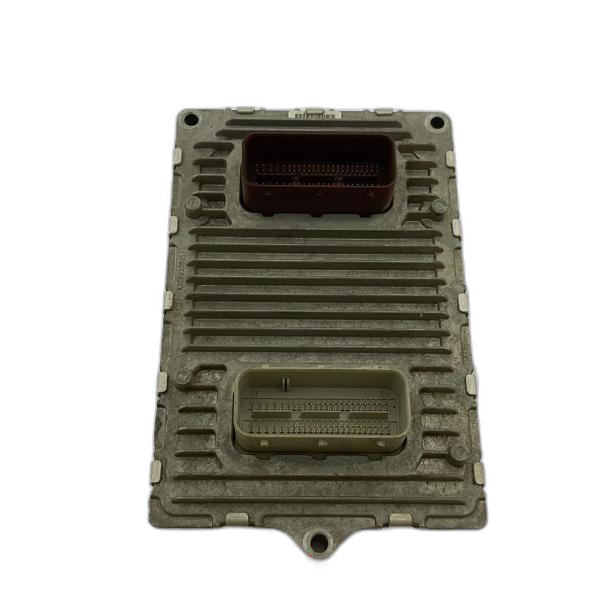


New Aftermarket Parts Available


The information in this article is provided for general reference and educational purposes only. Vehicle specifications, procedures, and part compatibility can vary by production date, trim level, and region. Always consult your vehicle's factory service manual and verify part numbers before purchasing or performing repairs. Safety-critical components such as airbags, seat belts, and braking systems should be installed by a qualified professional.
- Nissan XTERRA:
- 🎬 Helpful Videos
- 🛍️ Shop This Part
- What's Unique About the 2005-2012 Nissan XTERRA
- Diagnostic Flowchart
- Symptoms You May Notice
- Most Likely Causes
- Rare But Worth Checking
- Diagnosis Steps
- Parts You'll Likely Need
- Related Codes That Often Appear With This One
- Technical Service Bulletins (TSBs) & Recalls
- Platform-Specific Known Issues
- Mechanic-Grade Diagnostic Values
- Hidden / Shadow Codes Worth Checking
- Scan Tool Commands That Help
- Wiring & Ground Locations
- Real Owner Repair Stories
- When the Usual Fixes Don't Work
- OEM Part Supersession History
- Model Year Variations Within This Range
- 🎟️ Get 5% Off