

U1002 on 2008-2014 Nissan Rogue: CAN Communication Failure Causes and Fixes
U1002 on a 2008-2014 Nissan Rogue indicates a CAN communication network failure. The most common causes are a weak battery, poor ground connections (especially the one on the transmission), or corroded wiring, not a failed expensive module. Start by checking the battery and cleaning all major ground points before attempting more complex diagnostics.
- U1002 is a network communication code, not a specific component failure code.
- Always start diagnostics with the simplest and most common causes: check the battery and all main ground connections.
- Do not replace expensive modules like the ECM or TCM unless you have definitively proven they are the point of failure through methodical testing.
- Symptoms can be widespread and seem unrelated, such as transmission issues and warning lights for other systems.
- Diagnosing this code requires a logical approach, starting with the electrical foundation of the vehicle before moving to complex network analysis.
What's Unique About the 2008-2014 Nissan ROGUE

For the first-generation Nissan Rogue, this code often points to systemic issues rather than a single failed part. The vehicle's wiring, particularly ground straps and connectors exposed to the elements, can degrade over time. The ground strap on the transmission case is a notoriously common failure point. Unlike some vehicles where a specific module is a known weak point, the Rogue's U1002 code is more frequently a result of issues in the foundational electrical system, such as low battery voltage or high resistance in ground paths. It's a code that rewards methodical, basic electrical checks before suspecting expensive components.
Diagnostic Flowchart

Tap your situation to follow the diagnostic path that matches what you're seeing on this vehicle.
Symptoms You May Notice
- Check Engine Light is on
- ABS, VDC, or AWD warning lights on the dashboard
- Transmission may not shift correctly or may go into a 'fail-safe' mode
- Speedometer may not work
- Issues with power windows or other electronic accessories
- Engine may crank but not start
- Cooling fans run at high speed even when the engine is off or cold
- Replacing an expensive control module (like the TCM or ECM) without first thoroughly checking the battery, grounds, and wiring. These basic electrical issues are far more common causes for this code.
Most Likely Causes

- Low Battery Voltage or Poor Battery Connections 🔴 High Probability Modern vehicles are highly sensitive to voltage. A weak or dying battery can cause modules to stop communicating properly as voltage drops below 10V, triggering CAN codes.
How to confirm: Test the battery with a multimeter. A healthy, resting battery should be at or above 12.5 volts. Perform a load test to check its true health. Inspect battery terminals for corrosion and ensure connections are tight.
Typical fix: Clean the battery terminals and cable ends. If the battery fails a load test, replace it.
Est. part cost: $150-$250 - Corroded or Loose Ground Wires 🔴 High Probability Ground straps from the engine and transmission to the chassis are exposed to weather and can corrode over time, creating high resistance and causing widespread electrical issues. The ground strap located on the transmission housing is a particularly common point of failure on this platform.
How to confirm: Visually inspect all major ground points, especially the main engine-to-chassis and transmission-to-chassis ground straps. Use a multimeter to perform a voltage drop test on the ground side of the circuit. A reading of more than a few tenths of a volt indicates a poor ground.
Typical fix: Remove, clean, and secure the ground connections. This involves wire brushing the contact points on the chassis and the terminal itself to ensure a clean, metal-to-metal connection. In severe cases, the ground strap must be replaced.
Est. part cost: $15-$40 - Damaged or Corroded Wiring Harness/Connectors 🟡 Medium Probability Connectors for modules located in less-protected areas are susceptible to moisture and corrosion. On the Rogue, the TCM is located between the battery and airbox, and its connector can be a source of issues. The harness bundle near the IPDM (engine bay fuse/relay box) is another known trouble spot where wiggling the wires can often reproduce the fault.
How to confirm: Visually inspect the wiring harnesses leading to the ECM, TCM, and ABS modules for any signs of chafing, rodent damage, or corrosion at the connectors. Disconnect connectors (with the battery disconnected) and check for green or white corrosion on the pins. Perform a 'wiggle test' on the harness near the IPDM and TCM with the key on to see if symptoms change.
Typical fix: Clean corroded pins carefully with an electrical contact cleaner and a small brush. Repair any damaged wires using solder and heat shrink tubing. Replace the connector if it is too damaged.
Est. part cost: $5-$50 for repair materials - Faulty Control Module ⚪ Low Probability While less common than wiring or ground issues, a control module (like the TCM, ECM, or IPDM) can fail internally and either stop communicating or flood the CAN network with erroneous data, bringing down the whole system.
How to confirm: This is difficult to confirm without an advanced scan tool that can identify which modules are offline. A common diagnostic technique is to disconnect modules one by one to see if communication is restored. Measuring the CAN bus resistance is also key; it should be 60 ohms. A reading of 120 ohms suggests a terminating resistor (often in the ECM or IPDM) or the module itself is offline.
Typical fix: Replace the faulty module. This often requires programming the new module to the vehicle.
Est. part cost: $200-$1000+
Rare But Worth Checking
- Faulty Intelligent Power Distribution Module (IPDM):
- Faulty ABS Actuator/Module:
Diagnosis Steps
- Check Battery Health: Ensure the battery has a full charge (12.5V+) and passes a load test. Clean any corrosion from the terminals. Low voltage is a primary cause of CAN faults.
- Inspect Fuses: Check all fuses related to the ECM, TCM, IPDM, and other control modules in both the engine bay and interior fuse panels.
- Inspect Grounds: Locate, remove, and clean the main ground connections. Prioritize the battery-to-chassis ground and the transmission-to-chassis ground strap, which is a known failure point.
- Visual Wiring Inspection: Carefully inspect the wiring harnesses connected to the ECM, TCM (between battery and airbox), and ABS module for any signs of physical damage, chafing, or corrosion.
- Perform a 'Wiggle Test': With the ignition on, carefully wiggle the wiring harness near the IPDM (engine bay fuse box) and the TCM connector. A change in symptoms (e.g., warning lights flicker, communication is restored) strongly points to a wiring or connection issue.
- Check CAN Bus Resistance: Disconnect the negative battery terminal. Use a multimeter to measure the resistance between Pin 6 (CAN High) and Pin 14 (CAN Low) at the OBD-II port. A healthy network should read approximately 60 ohms. A reading of 120 ohms suggests an issue with a terminating resistor or a break in the circuit.
- Isolate Modules: If you have an advanced scan tool, identify which modules are not communicating. If not, as a last resort, you can try disconnecting modules one by one (with the battery disconnected each time) to see if the 60-ohm resistance returns, which can help isolate a faulty module.
- Consult a Professional: If the above steps do not reveal the problem, a professional technician with an oscilloscope and advanced diagnostic tools may be needed to trace the fault in the wiring harness or confirm a failed module.
Parts You'll Likely Need
- Battery — A weak battery is a primary cause of communication codes due to low voltage.
Trusted brands: Bosch, Interstate, DieHard
OEM price range: $200-$300
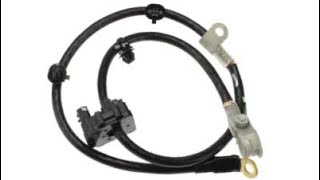
Aftermarket price range: $150-$250 - Ground Strap
(OEM #24080-JA00B (example, verify for specific application))— The original ground straps, especially the one on the transmission, can corrode, creating high resistance. Replacing a corroded strap is often easier 🎬 Watch a mechanic replace a Nissan battery ground cable step-by-step. than trying to clean it.
Trusted brands: Standard Motor Products, Dorman, Nissan OEM
OEM price range: $25-$50
Aftermarket price range: $10-$30
Related Codes That Often Appear With This One
- U1000 — U1000 is a general CAN communication failure code. U1002 is a more specific version with a stricter timing requirement, and they often appear together. 🎬 See this guide on diagnosing and fixing Nissan U1000 communication codes.
- U0101 — This code specifically indicates 'Lost Communication with TCM'. If the TCM is the module that has dropped off the network, you will likely see this code alongside the more general U1002.
- U0121 — This code means 'Lost Communication With Anti-Lock Brake System (ABS) Control Module'. If the ABS module is the culprit, this code will often be present with U1002.
- C1103, C1145 — These are ABS-related codes. If the ABS module is the source of the communication breakdown, you may see these codes stored in addition to the U1002.
Technical Service Bulletins (TSBs) & Recalls
- NTB10-066A: Defines U1002 as a CAN communication code with a tighter timing spec than U1000 and advises diagnosing communication codes first before any other DTCs.
- NTB13-027C: Provides a detailed diagnostic flowchart for CAN communication issues on most Nissan vehicles. It emphasizes checking for low voltage, inspecting fuses, and testing CAN resistance.
- NTB10-145B: Specifically addresses diagnosing the ABS/VDC system when a U1000 code is present. It provides a repair flow chart and warns against replacing the ABS actuator unless diagnosis supports it.
Platform-Specific Known Issues
- Transmission Ground Strap Corrosion: The ground strap that connects the transmission case to the vehicle's chassis is highly exposed to road salt and moisture. Over time, it corrodes, creating high electrical resistance. This poor ground can cause the TCM and other modules to lose communication, setting a U1002 code. Cleaning or replacing this specific ground is one of the most common and effective fixes for this code on the Rogue.
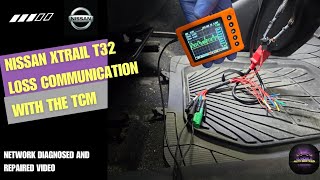
- Wiring Harness Fault Near IPDM: A technician documented a case on a Nissan X-Trail (Rogue platform mate) where the U1002 code and loss of communication with the TCM was traced to a faulty wire in the harness bundle near the IPDM in the engine bay. Simply shaking or wiggling this harness would cause the fault to appear and disappear. This indicates that chafing or internal breaks in the CAN bus wires in this area can be the root cause, rather than a failed module.
Mechanic-Grade Diagnostic Values
- CAN Bus Resistance — expected: ~60 Ω (Ohms). Failure: A reading of ~120 Ω indicates one of the two terminating resistors is offline or there's a break in the circuit. A reading significantly less than 60 Ω suggests a short circuit between the CAN High and Low lines.
- CAN High Voltage to Ground (Key On) — expected: 2.5V to 3.0V DC. Failure: Voltage outside this range, or 0V, indicates a short or open on the CAN High line.
- CAN Low Voltage to Ground (Key On) — expected: 2.0V to 2.5V DC. Failure: Voltage outside this range, or 0V, indicates a short or open on the CAN Low line.
- Resistance at Terminating Modules (e.g., ECM, IPDM) — expected: ~120 Ω (Ohms). Failure: A reading far from 120 Ω when a terminating module is disconnected from the network and tested directly indicates a faulty internal terminating resistor.
Scan Tool Commands That Help
- Nissan CONSULT: CAN Diag Support Monitor — This function is the primary diagnostic tool for CAN codes. It displays a network diagram showing which modules are communicating (shown in green) and which are not (shown in red), immediately pointing the technician to the source of the communication loss.
- Nissan CONSULT: IPDM Auto Active Test — If the IPDM is suspected of causing the U1002 by not powering other modules, this bidirectional test can be used to command the IPDM to turn various outputs (like lights, wipers, fuel pump) on and off, verifying its basic functionality.
Wiring & Ground Locations

- TCM Connector — In the engine bay, located between the battery and the air filter housing. It's often necessary to remove the air intake ducting to gain clear access.. This connector is a common point for corrosion or loose pins that can cause the TCM to lose communication, triggering a U1002. A 'wiggle test' on this connector is a key diagnostic step.
- Transmission Ground Strap — A braided metal strap connecting the transmission case to the vehicle's chassis/frame rail, typically on the driver's side of the engine bay.. This is arguably the most common failure point for this code on the Rogue. Corrosion builds up on the strap and its connection points, creating high resistance and disrupting the ground path for multiple electronic modules, leading to network errors.
- OBD-II DLC Pins — The Data Link Connector under the driver's side dashboard.. Pins 6 (CAN High) and 14 (CAN Low) are used for all CAN bus resistance and voltage tests with a multimeter. Pin 4 is Chassis Ground, Pin 5 is Signal Ground, and Pin 16 is Battery Positive.
- IPDM E/R (Intelligent Power Distribution Module Engine Room) — The main fuse and relay box located in the engine compartment, usually near the passenger side firewall.. The IPDM contains the terminating resistor for one end of the CAN bus on some configurations and powers other modules. A failure inside the IPDM can take down the entire network.
Real Owner Repair Stories
- Reddit user in r/MechanicAdvice (2012 Nissan Rogue SL) — Crank no start, especially on cold mornings. Would start with a jump-start, but battery and alternator tested good.
❌ Tried (didn't work) Replacing the battery, Cleaning battery terminals, Replacing spark plugs, Oil change and fuel system cleaner
✅ What actually fixed it The issue was traced to a poor ground connection. Although not explicitly stated as the transmission ground, this scenario (good battery, no start without a jump) is a classic symptom of a high-resistance ground path that can't handle the starter's current draw, which also disrupts module communication.
Model Year Variations Within This Range
- 2011-2014: The 2011 model year received a significant facelift which included new technology options like a navigation system, RearView Monitor, and Nissan Intelligent Key on more trims. These additional electronic modules create more nodes on the CAN network, slightly increasing the complexity of diagnosing a communication failure compared to the 2008-2010 models.
Helpful Videos

We Have This Part in Stock


The information in this article is provided for general reference and educational purposes only. Vehicle specifications, procedures, and part compatibility can vary by production date, trim level, and region. Always consult your vehicle's factory service manual and verify part numbers before purchasing or performing repairs. Safety-critical components such as airbags, seat belts, and braking systems should be installed by a qualified professional.
- Nissan ROGUE:
- 🎬 Helpful Videos
- 🛍️ Shop This Part
- What's Unique About the 2008-2014 Nissan ROGUE
- Diagnostic Flowchart
- Symptoms You May Notice
- Most Likely Causes
- Rare But Worth Checking
- Diagnosis Steps
- Parts You'll Likely Need
- Related Codes That Often Appear With This One
- Technical Service Bulletins (TSBs) & Recalls
- Platform-Specific Known Issues
- Mechanic-Grade Diagnostic Values
- Scan Tool Commands That Help
- Wiring & Ground Locations
- Real Owner Repair Stories
- Model Year Variations Within This Range
- 🎟️ Get 5% Off