

U1002 on 2012-2014 Nissan NV: CAN Communication Failure Causes and Fixes
U1002 on a Nissan NV signifies a CAN network communication failure. The most common causes are a weak battery, corroded ground straps, or a faulty IPDM (engine bay fuse box). Before replacing any expensive modules, fully charge and test the battery and clean all major ground connections, particularly the main negative cable's connection to the chassis.
- U1002 is a network communication code, not a specific part failure. Do not replace expensive modules without proper diagnosis.
- Always start by checking the simplest and most common causes: test the battery and clean all main power and ground connections.
- The Intelligent Power Distribution Module (IPDM) in the engine bay is a common point of failure on these vehicles and should be a primary suspect if power and grounds are good.
- Diagnosing this code is a process of elimination and is difficult without an advanced scan tool that can show which modules are communicating.
- Symptoms can be widespread and seem unrelated, such as transmission problems and various warning lights appearing at once.
What's Unique About the 2012-2014 Nissan NV
Like many Nissans from this era built on the F-Alpha platform (such as the Titan and Armada), the NV is susceptible to electrical issues stemming from its foundational systems. The U1002 code is frequently caused by high resistance in the electrical system due to corroded ground straps, particularly the main battery negative cable where it bolts to the chassis and any straps from the engine/transmission to the frame. Another common point of failure is the Intelligent Power Distribution Module (IPDM), which is more than a simple fuse box; it's a control module that can fail internally and disrupt power and communication to other modules on the network. On platform mates like the Titan, water intrusion into the IPDM is a known cause of failure. Owners often find the fix is a simple, low-cost electrical repair rather than a complex module replacement.
Diagnostic Flowchart
Tap your situation to follow the diagnostic path that matches what you're seeing on this vehicle.
Symptoms You May Notice
- Check Engine Light is on
- Erratic or non-functional gauges (speedometer, tachometer)
- Harsh or incorrect transmission shifting
- Intermittent no-start or stalling condition
- Warning lights for other systems (ABS, VDC, etc.) may illuminate
- Malfunction warnings on the information display
- Cooling fans run at high speed even when the engine is cold or off
- Replacing the control module that stored the U1002 code. That module is typically the one reporting the problem, not the cause of it.
- Replacing the fuel pump for a no-start condition when the actual fault is the IPDM failing to power the fuel pump relay.
Most Likely Causes
- Poor or Corroded Ground Connections 🔴 High Probability Ground straps, especially those connecting the engine/transmission to the chassis and the main battery ground, are exposed to moisture and road salt, leading to corrosion. This increases electrical resistance and disrupts sensitive module communications, a very common issue on Nissan trucks and vans of this era.
How to confirm: Visually inspect the main ground straps from the battery negative terminal to the chassis and from the engine/transmission to the chassis. They are often braided, unprotected copper straps. Perform a voltage drop test across the ground connections; a reading of more than 0.2 volts indicates high resistance. Unbolt the connections and check for rust, paint, or dirt on the mating surfaces.
Typical fix: Remove, clean, and re-secure the ground connections. This involves using sandpaper or a wire brush on the cable terminal and the contact point on the chassis/engine to ensure a clean, bare metal-to-metal connection. Applying a thin layer of dielectric grease before reassembly can help prevent future corrosion. In cases of severe corrosion, the ground strap itself must be replaced.
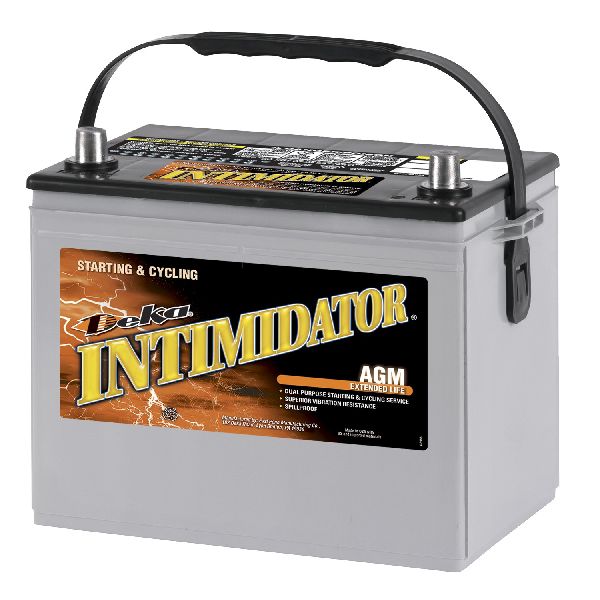
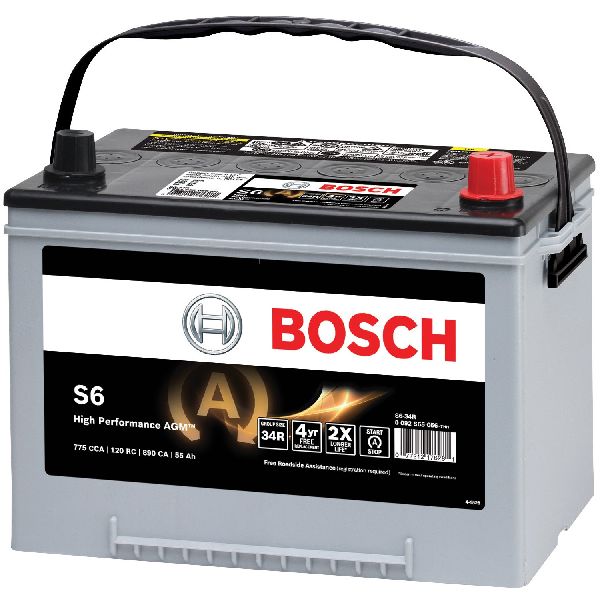
Est. part cost: $5-$80 - Low Battery Voltage or Failing Battery 🟡 Medium Probability Modern vehicle electronics are highly sensitive to voltage. Nissan TSB NTB13-027C notes that when system voltage drops below 10V, modules can stop communicating properly, triggering U-codes.
How to confirm: Test the battery with a digital multimeter or a dedicated battery load tester. A healthy, fully charged battery should read approximately 12.6V at rest and should not drop below 10V while cranking the engine.
Typical fix: Recharge or replace the battery. Ensure battery terminals are clean and tight.
Est. part cost: $150-$300 - Faulty Intelligent Power Distribution Module (IPDM) 🟡 Medium Probability The IPDM is a known failure point on many Nissan models, including platform mates like the Titan. It's a 'smart' fuse and relay box with internal logic and non-serviceable relays that can fail, cutting power to other modules and causing a network-wide communication breakdown. Water intrusion from a leaky cowl seal is a known failure mode on related platforms.
How to confirm: Diagnosis can be complex. A technician may use an advanced scan tool to check for communication with the IPDM itself. A common diagnostic step is to perform the IPDM's self-test. On many Nissans, this is done by turning the ignition on (engine off), closing the doors, and pressing the driver's door switch 10 times in 20 seconds. The IPDM should then cycle components like wipers and lights, confirming its basic operation.
Typical fix: Replacement of the IPDM unit. This is typically a plug-and-play part, but the correct part number must be used.
Est. part cost: $200-$500 - Damaged CAN Bus Wiring Harness ⚪ Low Probability
How to confirm: Visually inspect the wiring harnesses, especially around the ECM, TCM, and IPDM, for signs of chafing, rodent damage, or corrosion at connectors. A technician would use a multimeter to check for continuity and for the correct resistance (approximately 60 ohms) across the CAN High and CAN Low lines (Pins 6 and 14) at the DLC with the battery disconnected. A reading of 120 ohms suggests a break in the circuit or an issue with one of the two terminating resistors.
Typical fix: Repair the damaged section of the wiring harness or clean/replace the corroded connector.
Est. part cost: $10-$100
Rare But Worth Checking
- Failing Control Module (ECM, TCM, BCM): While possible, a module failure is less common than wiring or power/ground issues. The module setting the U1002 code is usually not the one that has failed. A thorough diagnosis is required to condemn an expensive control unit. Before replacing any module, power, ground, and CAN resistance should be checked directly at its connector.
Diagnosis Steps
- Check Battery Health: Ensure the battery is fully charged (12.6V+) and test it under load. Clean any corrosion from the battery terminals. 🎬 See how cleaning battery terminals can resolve communication codes. A voltage drop below 10V during cranking can trigger this code.
- Inspect and Clean Grounds: Visually inspect and clean the main battery-to-chassis and engine/transmission-to-chassis ground connections. Unbolt them, sand the contact surfaces to bare metal, and re-tighten. This is the most common fix.
- Read All Codes: Use an advanced scan tool to read codes from ALL modules (ECM, TCM, BCM, ABS, etc.). Note which modules are storing the U1002 code and which, if any, are not communicating at all.
- Perform IPDM Self-Test: With the ignition ON and doors closed, press the driver's door switch 10 times within 20 seconds. Listen and watch for components like wipers, horn, and lights to cycle. This provides a basic check of the IPDM's health.
- Check Fuses: Inspect all fuses related to the various control modules, particularly in the IPDM (engine bay fuse box) and interior fuse panel.
- Check CAN Bus Resistance: With the battery disconnected, measure the resistance between Pin 6 (CAN-H) and Pin 14 (CAN-L) on the OBD-II port. A healthy network should read approximately 60 ohms. A reading of 120 ohms points to an open in the circuit or a faulty terminating resistor. A reading near 0 ohms indicates a short between the CAN lines.
- Visual Harness Inspection: Carefully inspect visible sections of the wiring harness for any signs of physical damage, chafing, or corrosion near connectors.
- Advanced Diagnostics: If the above steps do not reveal the issue, further diagnosis with an oscilloscope to check the CAN signal waveform or isolating individual modules by disconnecting them one by one may be necessary.
Parts You'll Likely Need
- Battery Ground Cable / Strap
(OEM #24080-1PE0A)— Corrosion of the main ground straps is a very common cause of high resistance that disrupts CAN communication. This specific part is listed for the 4.0L V6 NV van.
Trusted brands: Nissan OE
OEM price range: $70-$110
Aftermarket price range: $15-$50 - Intelligent Power Distribution Module (IPDM)
(OEM #284B7-1PA0A)— The IPDM is a known failure point on this platform, responsible for powering multiple control modules. Internal relay failures can cause widespread communication loss. This part number is specific to the NV2500.
Trusted brands: Nissan OE
OEM price range: $300-$500
Aftermarket price range: $150-$350
Related Codes That Often Appear With This One
- U1000 — U1000 is a general CAN communication failure code. U1002 is a more specific version with a stricter timing requirement, and they often appear together as part of the same underlying network issue.
- U0100 — This code means 'Lost Communication with ECM/PCM'. It can appear with U1002 if the IPDM fails and cuts power to the Engine Control Module, or if the ECM itself is the source of the network problem.
- U0101 — This code indicates 'Lost Communication with TCM'. If the Transmission Control Module is the one that has dropped off the network, you will likely see this code alongside the more general U1002.
Technical Service Bulletins (TSBs) & Recalls
- NTB10-066A — CAN Communication Codes - Diagnostic Tips and Guidelines — This is the primary TSB for CAN codes on all Nissan vehicles. It confirms that U1002 is a stricter version of U1000 and advises technicians to always diagnose communication codes first. It states the module reporting the code is usually working correctly. It also notes that low battery voltage can cause CAN DTCs and provides normal resistance values (60 ohms at a module, 120 ohms at a terminating module). (2014-06-24)
- NTB13-027C — CAN Diagnosis — This bulletin provides helpful diagnostic tips, reinforcing that CAN codes (U1000, U1001, U1002) should be diagnosed first. It explicitly states that in a low voltage situation (less than 10V), modules will stop communicating. It also describes the IPDM as a 'smart relay and fuse box' that powers other modules, highlighting its central role. (2013-08-22)
Mechanic-Grade Diagnostic Values
- CAN Bus Resistance at OBD-II Port — expected: ~60 Ω (Ohms) with battery disconnected and network asleep.. Failure: A reading of ~120 Ω indicates an open circuit or a problem with one of the two terminating resistors. A reading near 0 Ω indicates a short between the CAN High and CAN Low wires.
- CAN Bus Resistance at Terminating Module — expected: ~120 Ω (Ohms) when measured directly at a disconnected terminating module (e.g., ECM, IPDM).. Failure: A reading significantly different from 120 Ω suggests an internal failure of the terminating resistor within that specific module.
- CAN High Voltage to Ground (Key On) — expected: 2.5V to 3.0V DC.. Failure: Voltage outside this range, or 0V, indicates a short or open on the CAN High line.
- CAN Low Voltage to Ground (Key On) — expected: 2.0V to 2.5V DC.. Failure: Voltage outside this range, or 0V, indicates a short or open on the CAN Low line.
- Ground Point Voltage Drop — expected: < 0.2 Volts. Failure: A reading higher than 0.2V between the negative battery terminal and a ground point on the chassis or engine block indicates high resistance in the ground circuit.
Scan Tool Commands That Help
- Nissan CONSULT-III / CONSULT-III plus: CAN Diag Support Monitor — This is a primary diagnostic function used to get a live status of all modules on the CAN network. It shows which modules are currently communicating ('OK') and which are not ('NG' - No Good), quickly identifying the module that has dropped off the network and is causing the U-code.
- Nissan CONSULT-III / CONSULT-III plus: IPDM Auto Active Test — This test commands the IPDM to cycle various components (wipers, lights, horn, etc.). It's a quick functional check to see if the IPDM's internal logic and relays are responding to commands, which helps rule in or out the IPDM as the source of the problem.
Wiring & Ground Locations
- Data Link Connector (OBD-II Port) — Under the driver's side dashboard, to the left of the steering column.. This is the primary point for all network diagnostics. Pin 6 (CAN High) and Pin 14 (CAN Low) are used for resistance and voltage tests of the entire CAN bus. Pin 4 is chassis ground and Pin 16 is battery positive.
- IPDM E/R (Intelligent Power Distribution Module Engine Room) — Located in the engine compartment, typically on the passenger side near the battery.. The IPDM is a common failure point and often a terminating module for the CAN bus. It powers other critical modules, so a failure here can cause a network-wide outage. Its connectors (e.g., E122, E124) are key points for checking power and ground integrity.
- Permissible Ground Locations — The Nissan Body Builder's Guide for the NV shows several M8 x 1.25 weld nut locations on the upper bulkhead and pillars (B, C, D) designated for adding accessory grounds.. While these are for accessories, their presence indicates factory-approved grounding points. More importantly, the guide warns against grounding accessories directly to the battery negative terminal, as it can interfere with the vehicle's charging control system, which could itself lead to low voltage conditions that trigger U-codes.
Real Owner Repair Stories
- Reddit user in r/MechanicAdvice (2019 Nissan Rogue (similar platform and issue)) — Check engine light, front collision malfunction warning after driving in an ice storm. Code U1002 stored in ABS module, pointing to IPDM replacement.
❌ Tried (didn't work) The user was unable to initiate the IPDM self-test despite multiple attempts following online instructions.
✅ What actually fixed it The user did not post a final resolution, but the symptoms appearing after extreme weather (ice storm) strongly suggest water intrusion or a corrosion-related fault, aligning with common causes like a faulty IPDM or bad grounds.
OEM Part Supersession History
284B7-3LM0A→284B7-4AJ0A— Part revision/update by Nissan.
Heads up: This supersession is for the related Nissan NV200, but demonstrates that IPDM part numbers are frequently updated. Always verify the correct part number for the specific vehicle's VIN, as using an incompatible IPDM can cause further electrical issues.
Helpful Videos

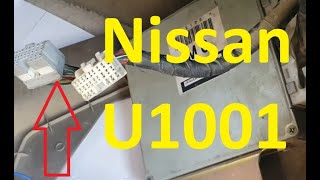
Used OEM Parts in Stock

New Aftermarket Parts Available


The information in this article is provided for general reference and educational purposes only. Vehicle specifications, procedures, and part compatibility can vary by production date, trim level, and region. Always consult your vehicle's factory service manual and verify part numbers before purchasing or performing repairs. Safety-critical components such as airbags, seat belts, and braking systems should be installed by a qualified professional.
- Nissan NV:
- 🎬 Helpful Videos
- 🛍️ Shop This Part
- What's Unique About the 2012-2014 Nissan NV
- Diagnostic Flowchart
- Symptoms You May Notice
- Most Likely Causes
- Rare But Worth Checking
- Diagnosis Steps
- Parts You'll Likely Need
- Related Codes That Often Appear With This One
- Technical Service Bulletins (TSBs) & Recalls
- Mechanic-Grade Diagnostic Values
- Scan Tool Commands That Help
- Wiring & Ground Locations
- Real Owner Repair Stories
- OEM Part Supersession History
- 🎟️ Get 5% Off