

U1002 on 2011-2014 Nissan JUKE: CAN Communication Failure Causes and Fixes
U1002 on a Nissan Juke indicates a network communication failure. The most common causes are a weak battery or poor/corroded ground connections, especially the strap from the transmission to the chassis. Before considering expensive module replacements, always start by load testing the battery and cleaning all main ground points in the engine bay.
- U1002 is a network communication error, not a failure of a specific part. It means modules are not talking to each other.
- Always start diagnosis with the simplest and most common causes: test the battery and thoroughly clean all main ground connections in the engine bay.
- Do not replace expensive modules like the ECM, TCM, or ABS unit unless you have definitively proven they are the point of failure through methodical testing.
- Diagnosing this code correctly requires tools that can read codes from all modules and test the CAN network, making professional service highly recommended.
What's Unique About the 2011-2014 Nissan JUKE
For the first-generation Nissan Juke, like many Nissans from this era, the U1002 code is frequently a symptom of a weak foundational electrical system rather than a failure of an expensive control module. Corroded ground straps, particularly the one on the transmission housing, and poor battery health are very common culprits that can cause a flood of communication codes. While individual modules like the ABS or TCM can fail, the diagnostic process should always begin with the basics: battery, fuses, and grounds.
Diagnostic Flowchart
Tap your situation to follow the diagnostic path that matches what you're seeing on this vehicle.
Symptoms You May Notice
- Multiple warning lights on the dashboard (Check Engine, ABS, VDC, etc.)
- Transmission may enter 'limp mode' with harsh shifting
- Engine may crank but not start
- Intermittent stalling
- Erratic or non-functional gauges
- Problems with electrical components like power windows or locks
- Cooling fans run at high speed, even with a cold engine
- Replacing the ECM or TCM without proper diagnosis. The module reporting the U1002 code is often working correctly; it is simply reporting that it lost communication with another module on the network.
Most Likely Causes
- Weak Battery or Poor Connections 🔴 High Probability Low voltage (below 10V) is a primary cause of CAN communication faults, as different modules stop communicating at different voltage thresholds. Corrosion on battery terminals is common and can create high resistance.
How to confirm: Ensure the battery voltage is above 12.4V with the engine off. Perform a load test to confirm its health, as a battery can show good voltage but fail under load. Visually inspect and thoroughly clean the battery terminals and cable ends.
Typical fix: Clean battery terminals and posts with a wire brush or replace the battery if it fails a load test.
Est. part cost: $5-$250 - Corroded or Loose Ground Wires 🔴 High Probability The main ground straps connecting the engine/transmission to the vehicle chassis are exposed to the elements and are a known failure point on many Nissan models, leading to high resistance and network errors. The strap on the transmission is a particularly common culprit.
How to confirm: Locate, remove, clean, and tighten the main ground connections. Key locations are the negative battery cable to the chassis, and the braided strap from the transmission housing to the chassis/frame rail. Perform a voltage drop test from the negative battery post to the chassis 🎬 Watch: How to locate and test your car's ground connections and engine block; a reading over 0.2V indicates a bad ground.
Typical fix: Clean the contact points of the ground strap and chassis with a wire brush until shiny. It is critical to remove any paint or corrosion. Replace the ground strap if it is frayed or heavily corroded. OEM part numbers include 24085-1KC0B and 24085BV81A.
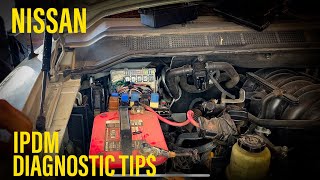
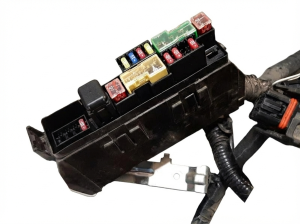
Est. part cost: $15-$50 - Faulty Intelligent Power Distribution Module (IPDM) 🟡 Medium Probability The IPDM, which is the 'smart' fuse and relay box in the engine bay, contains internal, non-serviceable relays that can fail. This can cut power to critical modules like the ECM or fuel pump, causing a network-wide communication loss 🎬 See a Juke crank-no-start diagnostic and ground wire fix and often a crank-no-start symptom.
How to confirm: A professional scan tool can check for communication with the IPDM. A built-in self-test can be initiated on many Nissans: with the key off, turn the ignition on (don't start), and within 20 seconds, press the driver's door jamb switch 10 times. The IPDM should then cycle various components (wipers, lights, etc.) for a few minutes. Failure to initiate or pass this test points to a faulty IPDM.
Typical fix: Replacement of the IPDM unit. It is critical to match the part number exactly. Common part numbers for the Juke include 284B7-1KJ1G and 284B7-1KJ0F.
Est. part cost: $200-$600 - Damaged CAN Wiring Harness ⚪ Low Probability Wiring can be damaged by chafing against vehicle components, previous repairs, or rodent activity.
How to confirm: With the battery disconnected, measure the resistance between Pin 6 (CAN High) and Pin 14 (CAN Low) at the OBD-II port. A healthy network should read approximately 60 ohms. A reading of 120 ohms points to a break in the wiring or a problem with a terminating module. A reading near 0 ohms indicates a short circuit between the CAN wires.
Typical fix: Repair the damaged section of the wiring harness. This may involve soldering broken wires or replacing connector pins.
Est. part cost: $0-$100
Rare But Worth Checking
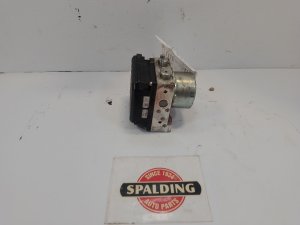
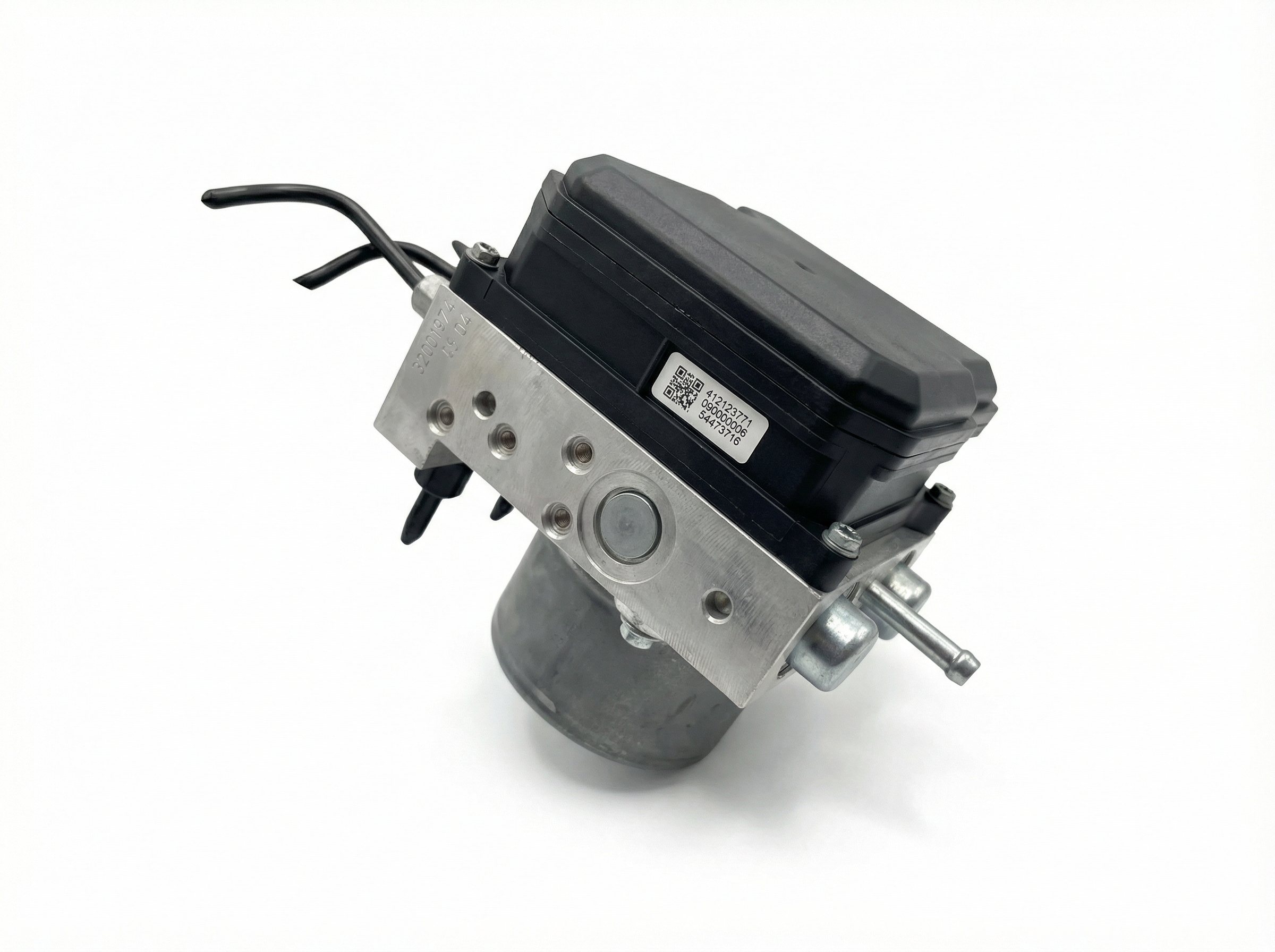
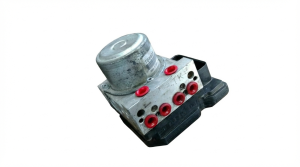
- Faulty ABS Actuator/Module: The ABS module is a terminating module on the CAN bus. If it fails internally or loses power/ground, it can bring down the entire network, causing a U1002 code. A replacement for a 2012-2014 Juke may be part number 47660-1KF4B.
- Faulty TPMS Module: In some documented cases, an internal fault in the Tire Pressure Monitoring System (TPMS) module has been found to disrupt the CAN bus and trigger a U1002 code, even without other TPMS warnings being active.
- Aftermarket Electronics: Poorly installed aftermarket devices like remote starters, alarms, or audio equipment can interfere with the CAN bus and cause communication errors.
Diagnosis Steps
- Use an advanced scan tool (like Nissan CONSULT) to perform a full network scan ('CAN Diag Support Monitor') and identify which modules are reporting communication loss and which are completely offline.
- Check battery voltage and perform a load test. Ensure voltage is above 12.4V at rest and does not drop below 10V during cranking.
- Thoroughly inspect, clean, and tighten all battery terminals and primary ground connections. Pay special attention to the negative cable-to-chassis point and the braided ground strap from the transmission to the frame rail.
- Inspect all fuses related to the control modules, especially in the IPDM (engine bay fuse box) and interior fuse panel.
- Perform the IPDM self-test by pressing the driver's door switch 10 times within 10 seconds of turning the ignition on. Observe if components cycle correctly.
- With the battery disconnected, measure the resistance between Pin 6 (CAN-H) and Pin 14 (CAN-L) at the OBD-II port. A healthy network should read ~60 ohms.
- If resistance is incorrect (e.g., 120 ohms or open), inspect the CAN wiring harness for visible damage, paying close attention to connectors and areas where it might rub against the chassis.
- If wiring, power, and grounds are good, the issue may be an internal fault in one of the control modules. This is confirmed by disconnecting modules one by one (starting with suspected culprits like the ABS or TCM) to see if the 60-ohm resistance reading is restored.
Parts You'll Likely Need
- Battery — A weak or failing battery is one of the most common causes of network communication codes on Nissan vehicles.
Trusted brands: Interstate, DieHard, Duralast
OEM price range: $180-$250
Aftermarket price range: $150-$220 - Ground Strap (Engine/Transmission to Chassis)
(OEM #24085-1KC0B or 24085BV81A)— These straps are prone to corrosion, which creates high resistance and disrupts the ground path for multiple electronic modules, leading to network errors like U1002.
Trusted brands: Nissan OE, Dorman
OEM price range: $25-$50
Aftermarket price range: $15-$30 - Intelligent Power Distribution Module (IPDM)
(OEM #284B7-1KJ1G or 284B7-1KJ0F)— Internal relay failure within the IPDM can cut power to essential modules, causing them to drop off the CAN network. This is a widely documented failure on this platform.
Trusted brands: Nissan OE, Hitachi
OEM price range: $400-$600
Aftermarket price range: $200-$400 - ABS Actuator / Module
(OEM #47660-1KF4B)
Related Codes That Often Appear With This One
- U1000 — U1000 is a general CAN communication failure code. U1002 is a more specific version with a stricter timing requirement, so they often appear together as part of the same network event.
- U0100 — This code means 'Lost Communication with ECM/PCM'. It will often be present if the IPDM fails and cuts power to the Engine Control Module.
- U0121 — This code means 'Lost Communication With Anti-Lock Brake System (ABS) Control Module'. If the U1002 is being caused by a faulty ABS module, U0121 will likely be present as well.
Technical Service Bulletins (TSBs) & Recalls
- NTB10-066A: This bulletin provides diagnostic tips for CAN codes U1000, U1001, U1002, and U1010, noting that U1002 has a 'tighter timing spec' than U1000. It advises technicians to always diagnose communication codes first.
- NTB13-027C: This bulletin provides a detailed diagnostic flow chart for troubleshooting CAN network issues, emphasizing checking power, grounds, and using the CONSULT scan tool to identify offline modules.
Platform-Specific Known Issues
- The 2011-2014 Juke is noted to have general electrical issues, including battery drain problems and sensitivity to low voltage that readily triggers CAN faults.
- The transmission-to-chassis ground strap is a specific weak point that is highly susceptible to corrosion and should be one of the first items checked when a U1002 code appears.
- The IPDM has a built-in self-diagnostic test that can be triggered by the driver's door switch, which is a useful, vehicle-specific trick to help confirm if the module is functional without a scan tool.
Mechanic-Grade Diagnostic Values
- CAN Bus Resistance at OBD-II Port — expected: ~60 Ω between Pin 6 (CAN-H) and Pin 14 (CAN-L) with battery disconnected.. Failure: A reading of ~120 Ω indicates an open circuit or an issue with one of the two terminating modules. A reading near 0 Ω indicates a short between the CAN-H and CAN-L wires.
- CAN Bus Voltage (Key On, Engine Off) — expected: CAN-H (Pin 6 to Ground) should be ~2.5–3.5 V. CAN-L (Pin 14 to Ground) should be ~1.5–2.5 V. Both lines rest at ~2.5V.. Failure: Voltages outside these ranges, such as 0V or 5V, indicate a short to ground or a short to power on the respective line.
- Voltage Drop Test on Main Grounds — expected: < 0.2 V. Failure: A reading over 0.2 volts between the negative battery post and the chassis or engine block (while under load) indicates excessive resistance in the ground path.
- TCM Power and Ground Pins (at TCM connector) — expected: Battery voltage at Pins 45 & 46 (Power). ~0V (good ground) at Pins 41 & 42 (Grounds).. Failure: Lack of voltage or high resistance on ground pins indicates a wiring issue to the TCM, not necessarily a failed TCM itself.
Scan Tool Commands That Help
- Nissan CONSULT: CAN Diag Support Monitor — This is the primary and most efficient first step when diagnosing a U1002. It performs a network-wide health check and displays which specific control modules are communicating ('OK') and which are not ('NG' - No Good), immediately pointing the technician toward the source of the communication loss.
- Manual Procedure (No Tool Required): IPDM E/R Auto Active Test — Use this built-in self-test to verify the IPDM's ability to control various components (wipers, lights, fans, A/C clutch). If the test runs successfully, it confirms the IPDM is receiving commands via the CAN bus and its internal logic is likely functioning, making it a less probable cause. If the test fails to start or components do not activate, it strongly suggests an IPDM fault.
Wiring & Ground Locations
- Main Transmission Ground — A braided ground strap connecting the transmission housing to the vehicle's chassis/frame rail, often near the battery tray area.. This is a notoriously common failure point on many Nissan platforms. Corrosion at this exposed point creates high resistance, disrupting the ground path for critical modules like the TCM and ECM, leading directly to U1002 and other communication codes.
- TCM Connector — The Transmission Control Module (TCM) is located in the engine bay. Its connector pins for power are 45 and 46; ground pins are 41 and 42.. If the TCM is suspected, verifying it has proper power and ground at these specific pins is essential before condemning the module. A diagnostic video showed these pins being tested to isolate a faulty TCM that had good power and ground but was corrupting the CAN signal.
- OBD-II DLC Connector — Under the driver's side dashboard.. Pins 6 (CAN-H) and 14 (CAN-L) are used for all CAN bus diagnostic measurements, including resistance and voltage tests. Pin 4 is chassis ground and Pin 16 is battery power.
Real Owner Repair Stories
- Automotive Diagnostics & Programming YouTube Channel (Nissan Juke (year not specified, but first generation)) — U1000 code stored in the ECM, intermittent CAN bus signal corruption visible on an oscilloscope.
❌ Tried (didn't work) Initial visual inspection did not reveal the fault.
✅ What actually fixed it After verifying good power and ground to the Transmission Control Module (TCM) at pins 45, 46 (power) and 41, 42 (ground), the technician concluded the TCM itself was internally faulty and causing the dirty data signal on the network. Replacing the TCM resolved the issue.
OEM Part Supersession History
284B7-1KJ1G→284B7-1KJ3G— Part revision or update by the manufacturer.
Heads up: The original part 284B7-1KJ1G is listed as discontinued. The superseding part should be used.
Model Year Variations Within This Range
- 2011-2013: The IPDM part number 284B7-1KJ1E is specified for 2011-2013 Juke models with automatic transmission and keyless ignition. This highlights that different IPDM part numbers exist depending on model year and options, and matching the part number is critical when replacing.
- 2014: The 2014 model year was part of a facelift for the Juke (for the 2015 model year release), which included revised lighting and bumpers. While major CAN architecture remained similar, wiring harnesses and connector locations for components like lights could differ from earlier models.
Helpful Videos
Used OEM Parts in Stock


New Aftermarket Parts Available

The information in this article is provided for general reference and educational purposes only. Vehicle specifications, procedures, and part compatibility can vary by production date, trim level, and region. Always consult your vehicle's factory service manual and verify part numbers before purchasing or performing repairs. Safety-critical components such as airbags, seat belts, and braking systems should be installed by a qualified professional.
- Nissan JUKE:
- 🎬 Helpful Videos
- 🛍️ Shop This Part
- What's Unique About the 2011-2014 Nissan JUKE
- Diagnostic Flowchart
- Symptoms You May Notice
- Most Likely Causes
- Rare But Worth Checking
- Diagnosis Steps
- Parts You'll Likely Need
- Related Codes That Often Appear With This One
- Technical Service Bulletins (TSBs) & Recalls
- Platform-Specific Known Issues
- Mechanic-Grade Diagnostic Values
- Scan Tool Commands That Help
- Wiring & Ground Locations
- Real Owner Repair Stories
- OEM Part Supersession History
- Model Year Variations Within This Range
- 🎟️ Get 5% Off