

U1002 on 2009-2015 Nissan 370Z: CAN Communication Failure Causes and Fixes
Code U1002 on a 370Z means there's a communication breakdown between the car's computer modules. Before suspecting expensive components, the most common and cheapest fixes are checking for a weak battery and cleaning all major chassis and engine ground connections. This issue is also common on its platform-mate, the Infiniti G37.
- U1002 is a network communication error, not an error with a specific sensor.
- Always start diagnosis with the simplest and most common causes: check the battery's health and clean all major ground connections.
- Do not replace expensive modules like the ECM or BCM until all power, ground, and wiring issues have been professionally ruled out.
- Diagnosing the exact source of the network failure typically requires a professional scan tool that can identify which specific modules are offline.
- This code often appears with other warning lights like ABS, VDC, and SLIP, as these systems rely on the CAN network to function.
What's Unique About the 2009-2015 Nissan 370Z
Like many modern Nissans, the 370Z's complex network of electronics is highly sensitive to system voltage and electrical grounding. While the code indicates a generic network failure, owner experiences with the 350Z/370Z/G37 platform frequently point towards poor or corroded ground straps as the hidden culprit behind intermittent and hard-to-diagnose CAN bus errors. These grounding issues can create electrical noise that disrupts communication between modules, triggering the U1002 code without any single module actually being faulty.
Diagnostic Flowchart
Tap your situation to follow the diagnostic path that matches what you're seeing on this vehicle.
Generation note: The 2009-2015 model years all fall within the Z34 generation of the Nissan 370Z. A minor facelift occurred in 2013, but the core electrical architecture and potential causes for this code remain consistent across this year range. The issue is also prevalent on the Infiniti G37, which shares the same platform.
Symptoms You May Notice
- Check Engine Light is on
- VDC OFF and/or SLIP warning lights are illuminated
- ABS light is on
- Vehicle may not start or is hard to start
- Engine starts and then immediately stalls
- Erratic or non-functional gauges (speedometer, tachometer)
- Trip computer and MPG display resetting with every start
- Other seemingly unrelated electrical issues, like the horn not working
- Replacing a single control module (like the ECM or ABS unit) without first verifying that the battery, grounds, and wiring are all in perfect condition. The U1002 code is most often a problem with the network's foundation, not a single component.
- Assuming the VDC/SLIP light is caused by low brake fluid without checking for codes. While low fluid can trigger these lights, if U1002 is present, the root cause is electrical.
Most Likely Causes
- Weak Battery or Low System Voltage 🔴 High Probability Nissan TSBs frequently cite low battery voltage (below 10V-12V) as a primary cause for setting CAN communication DTCs. During engine cranking, a weak battery's voltage can drop low enough for some modules to temporarily shut down, causing a communication timeout.
How to confirm: Test the battery with a multimeter or a load tester. A healthy, resting battery should be at ~12.6V. With the engine running, voltage should be ~13.7-14.7V. If voltage is low or drops significantly during a load test, the battery is suspect.
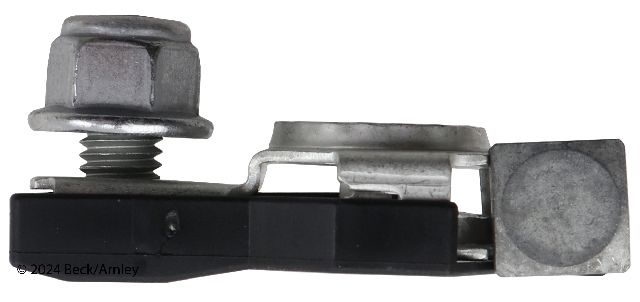
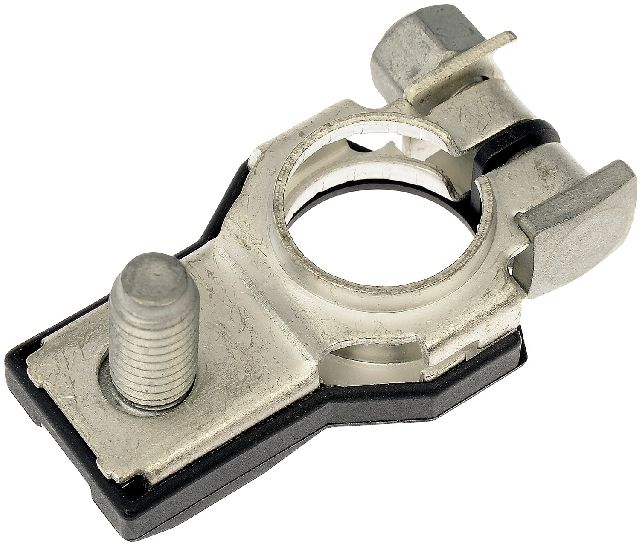
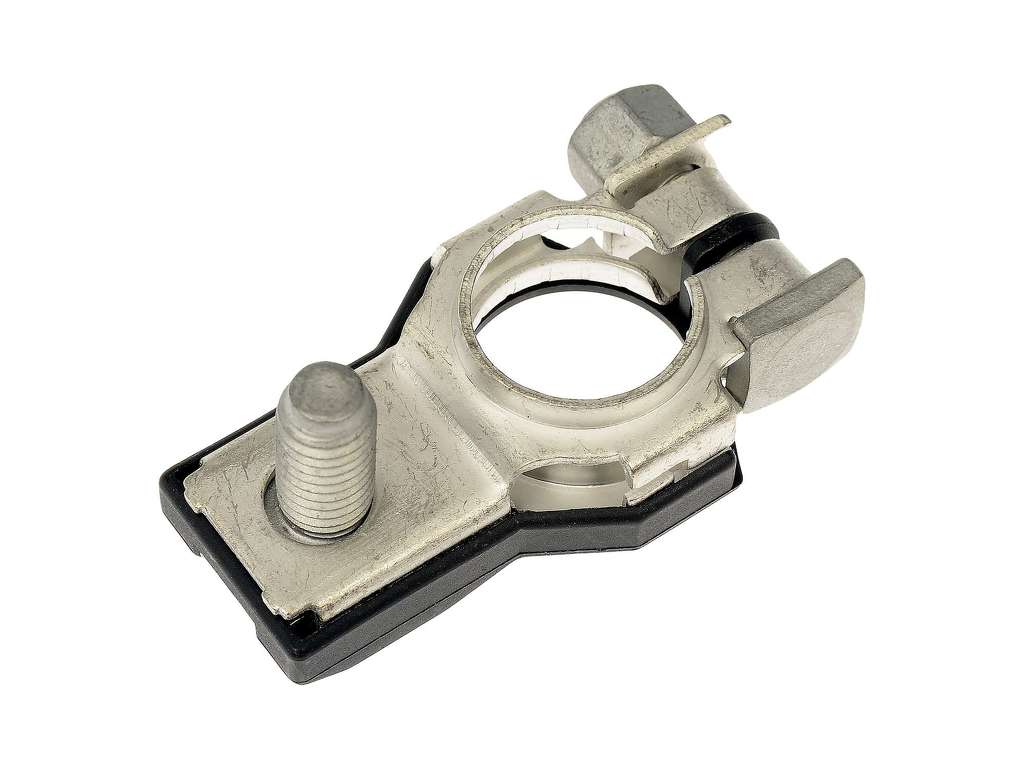
Typical fix: Recharge or replace the battery. Ensure battery terminals are clean and tight. After replacement, ensure the Intelligent Key terminals have not been bent, which can cause separate issues.
Est. part cost: $150-$300 - Poor Ground Connections 🔴 High Probability Corrosion and loosening of ground straps between the battery, engine, and chassis are common issues that create electrical resistance and disrupt sensitive module communications. Forum users on MY350Z.com and other platforms frequently report fixing U1000-series codes by cleaning grounds.
How to confirm: Visually inspect the main ground connections: the negative battery terminal to chassis (OEM P/N 24080-1EA0A), the chassis to engine block (OEM P/N 24083-JL00A), and smaller grounds in the engine bay and behind interior kick panels. Look for corrosion, looseness, or fraying. Perform a voltage drop test on the ground side for a more definitive diagnosis.
Typical fix: Remove, clean, and securely re-fasten all corroded or loose ground connections. This may involve using a wire brush or sandpaper to ensure a clean metal-to-metal contact. Replace any damaged ground straps.
Est. part cost: $0-$50 - Wiring Harness Damage 🟡 Medium Probability Wiring can be damaged from previous repairs, accidents, rodent activity, or chafing against chassis components. A user on MyG37.com traced their U1000/U1001 codes to wires damaged while hardwiring a radar detector.
How to confirm: Visually inspect the wiring harnesses, particularly the main harness in the engine bay and under the dash. Look for any signs of physical damage. A more advanced check involves testing the CAN bus wiring for continuity and shorts using a multimeter.
Typical fix: Repair the damaged section of the wiring harness. This may involve soldering broken wires and protecting them with heat shrink tubing, or replacing a connector.
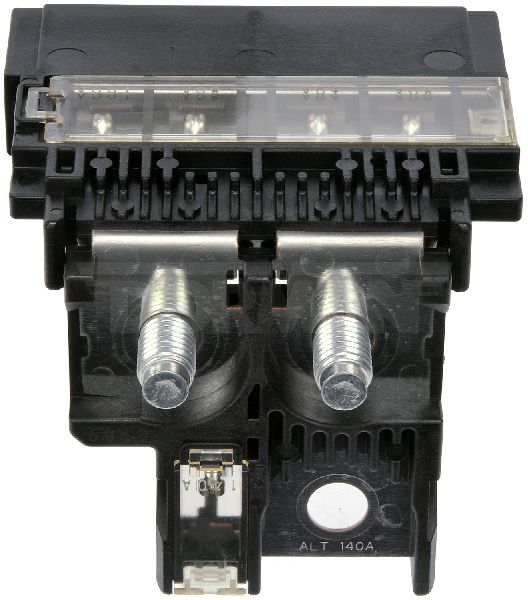
Est. part cost: $10-$500 - Faulty Intelligent Power Distribution Module (IPDM) ⚪ Low Probability The IPDM (P/N starts with 284B7) is a smart fuse and relay box that powers many of the vehicle's control modules. An internal failure, often of a non-serviceable, soldered-in relay like the fuel pump relay, can cut power to one or more modules, causing them to drop off the CAN network and trigger U1002.
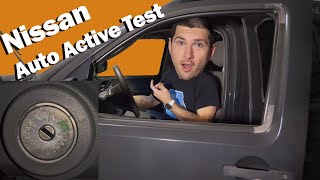
How to confirm: This is difficult to confirm without a professional scan tool that can show which modules are not receiving power. A technician would check for power and ground at the modules that are offline before condemning the IPDM. An IPDM self-test can be initiated 🎬 See how to perform a Nissan IPDM auto active test to check its functions.
Typical fix: Replace the IPDM. A new unit requires programming to the vehicle. A used unit is a gamble as it may have the same internal wear. Some specialists can perform a board-level repair, replacing the faulty internal relay.
Est. part cost: $200-$700 - Failed Control Module ⚪ Low Probability Any module on the network (ECM, BCM, ABS, etc.) can fail internally, causing it to either stop communicating or flood the network with corrupt data.
How to confirm: This is a process of elimination. After confirming power, ground, and wiring are good, a technician would use a scan tool to identify the non-communicating module. Disconnecting the suspect module should restore communication between the remaining modules.
Typical fix: Replace the faulty control module. Note that some modules require programming by the dealer after installation.
Est. part cost: $300-$1500+
Rare But Worth Checking
- Steering Angle Sensor (SAS) Needs Reset:
Diagnosis Steps
- Check Battery Health: Start by testing the battery. Ensure it is fully charged (12.6V+) and passes a load test. Clean any corrosion from the terminals and ensure they are tight. A weak battery is a top cause noted in Nissan TSBs.
- Inspect Fuses: Check all fuses related to control modules, including those in the cabin fuse box and the IPDM in the engine bay. Look for fuses labeled ECM, BCM, TCM, ABS, etc. Some fuses on the G37/370Z platform are located in a panel next to the battery that requires battery removal to access.
- Inspect Grounds: This is a critical step for the 370Z. Locate, remove, clean, and reinstall the main ground points. Pay special attention to the negative battery cable-to-chassis ground and the main engine-to-chassis ground strap. There are also smaller, but important, ground points in the engine bay and behind the interior kick panels.
- Perform CAN Resistance Check (Advanced): With the battery disconnected, use a multimeter to measure the resistance between Pin 6 (CAN High) and Pin 14 (CAN Low) at the OBD-II port. A healthy network should read approximately 60 Ω. A reading of 120 Ω indicates a problem with one of the terminating resistors (often in the ECM or BCM) or the wiring to it. A reading near 0 Ω indicates a short circuit between the CAN lines.
- Identify Non-Communicating Modules (Professional): Use a professional-grade scan tool (like Nissan's CONSULT) to run a full network scan. The tool will show which modules are online (Green) and which are not responding (Red/Pink). This is the most effective way to narrow down the location of the fault.
Parts You'll Likely Need
- Battery — A weak or failing battery is a leading cause of intermittent CAN communication codes on modern vehicles.
Trusted brands: Interstate, DieHard, Bosch - Engine to Chassis Ground Strap
(OEM #24083-JL00A)— This ground strap is prone to corrosion and failure, leading to a poor ground path for the engine and its many sensors and modules.
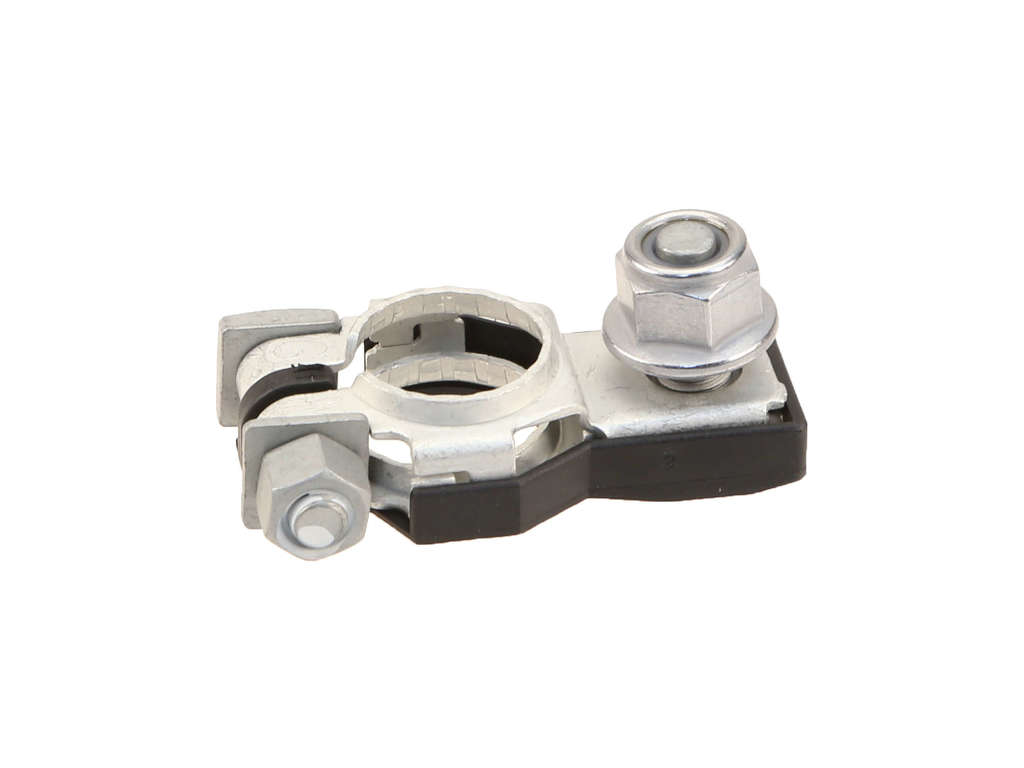
Trusted brands: Nissan OEM - Negative Battery Ground Cable
(OEM #24080-1EA0A)— The main battery ground connection to the chassis is a critical point that can corrode and cause widespread electrical issues, including CAN faults.
Trusted brands: Nissan OEM, Z1 Motorsports
Related Codes That Often Appear With This One
- U1000 — U1000 is the general CAN communication error code. U1002 is a variant with a stricter detection time, so they often relate to the same underlying network faults.
- P0340 / P0345 — A CAN bus failure can sometimes manifest with other codes. For example, if the ECM loses reliable communication, it might falsely report errors from sensors it can no longer hear from properly, such as a camshaft position sensor.
- U1001 — Another CAN communication code, often pointing to the same family of network, power, or ground issues as U1000 and U1002.
Technical Service Bulletins (TSBs) & Recalls
- NTB10-066A / NTB10-066B: CAN Communication Codes - Diagnostic Tips and Guidelines
- NTB13-027C: CAN Diagnosis Guidelines
- NTB10-145B: ABS/VDC CAN Diagnosis Information
- NPSB-16-602: Collision Position Statement - Steering Angle Sensor (SAS) Reset
Mechanic-Grade Diagnostic Values
- CAN Bus Resistance — expected: ~60 Ω between Pin 6 (CAN-H) and Pin 14 (CAN-L) at the OBD-II port with the battery disconnected.. Failure: A reading of ~120 Ω suggests an open circuit or a problem with one of the two terminating resistors. A reading near 0 Ω indicates a short between the CAN-H and CAN-L wires.
- CAN Bus Voltage (Key On, Engine Off) — expected: CAN-H (Pin 6) should be ~2.5–3.5 V. CAN-L (Pin 14) should be ~1.5–2.5 V. Both wires rest at ~2.5V.. Failure: Voltages outside these ranges, such as 0V or 5V, indicate a short to ground or a short to power on the respective line.
Scan Tool Commands That Help
- Manual Procedure (No Tool Required): IPDM E/R Auto Active Test — This built-in self-test helps confirm if the IPDM can properly control various body electrical components (wipers, lights, A/C clutch, fans). It's a crucial first step before condemning the IPDM itself. To activate: Turn ignition ON, and within 20 seconds, press the driver's door switch 10 times, then turn ignition OFF. Turn ignition back ON within 10 seconds. A horn chirp confirms the test has started.
- Nissan CONSULT or compatible advanced scanner: CAN Diagnosis Support Monitor — This function performs a network-wide health check, showing which control modules are communicating and which are not. It is the most efficient way to isolate the source of a U1002 code by identifying the specific module that is offline.
- Manual Procedure (No Tool Required): Accelerator Pedal Released Position Learning & Throttle Valve Closed Position Learning — If work was recently performed on the throttle body or accelerator pedal, or if these components were replaced, these relearn procedures are necessary. A failure to recalibrate can cause CAN communication errors. The procedure involves a specific sequence of turning the ignition on/off and depressing the accelerator pedal.
Wiring & Ground Locations
- Main Terminating Resistors — There are two 120 Ω terminating resistors in the CAN network. One is located within the Engine Control Module (ECM) and the other is typically in the Body Control Module (BCM) or IPDM.. The parallel combination of these two resistors creates the 60 Ω resistance seen across a healthy CAN bus. If one resistor fails or its module loses power/ground, the total network resistance will jump to 120 Ω, causing signal integrity issues and communication codes.
- Ground Points G302, G402 — Wiring diagrams indicate important ground points below the center console (G302) and in the left rear wheel well area (G402).. These are chassis ground locations for various electronic modules. Corrosion or looseness at these points can interrupt communication and trigger network codes.
- Fuse/Relay Box by Battery — In addition to the main IPDM, there is a critical fuse panel located next to the battery that requires battery removal for full access.. This panel contains main fuses that power multiple control units. A single blown fuse in this hidden location can take several modules offline, causing a U1000/U1002 code.
Real Owner Repair Stories
- YouTube user 'less expensive fix' (Infiniti G35 (platform-mate to 370Z)) — Persistent U1000 and U1001 codes.
❌ Tried (didn't work) Initial checks of battery and fluids did not resolve the issue.
✅ What actually fixed it The owner had replaced the accelerator pedal and disconnected the throttle body for other work. The codes were only resolved after performing the complete throttle body relearn procedure, which includes 'Accelerator Pedal Released Position Learning,' 'Throttle Valve Closed Position Learning,' and 'Idle Air Volume Learning.' This recalibrated the components to the ECU, restoring proper communication. - MyG37.com forum user (2009 Infiniti G37x Coupe) — VDC OFF and SLIP lights on, trip computer resetting on every start, U1000 & U1001 codes present.
❌ Tried (didn't work) Checking brake fluid, disconnecting battery.
✅ What actually fixed it The owner had previously hardwired a radar detector by tapping into the wiring for the auto-dimming mirror. A short circuit in this aftermarket wiring was causing the CAN bus disruption. The issue was resolved by disconnecting the radar detector and properly repairing the factory wiring.
OEM Part Supersession History
284B7-1BN6A→284B7-1BN6B (2012), 284B7-1EA6B (2013+)— Model year updates and potential revisions to address reliability issues.
Heads up: The IPDM part numbers are specific to year ranges. Using an incorrect year part may result in functionality issues. For example, 2009-2011 models use one part, 2012 has a specific part, and 2013+ models use another.
Model Year Variations Within This Range
- 2009-2012 (Pre-facelift): These early models are known to have issues with the steering column lock mechanism failing and oil gallery gaskets, which are less related to U1002 but part of the early model year problems. They also used a different IPDM part number than 2013+ models.
- 2013-2015 (Post-facelift): The 2013 facelift brought aesthetic updates (bumper, DRLs) and some technical improvements like a factory oil-to-water cooler and a pressurized coolant reservoir. The IPDM part number was also changed for these model years.
Helpful Videos

We Have This Part in Stock


The information in this article is provided for general reference and educational purposes only. Vehicle specifications, procedures, and part compatibility can vary by production date, trim level, and region. Always consult your vehicle's factory service manual and verify part numbers before purchasing or performing repairs. Safety-critical components such as airbags, seat belts, and braking systems should be installed by a qualified professional.
- Nissan 370Z:
- 🎬 Helpful Videos
- 🛍️ Shop This Part
- What's Unique About the 2009-2015 Nissan 370Z
- Diagnostic Flowchart
- Symptoms You May Notice
- Most Likely Causes
- Rare But Worth Checking
- Diagnosis Steps
- Parts You'll Likely Need
- Related Codes That Often Appear With This One
- Technical Service Bulletins (TSBs) & Recalls
- Mechanic-Grade Diagnostic Values
- Scan Tool Commands That Help
- Wiring & Ground Locations
- Real Owner Repair Stories
- OEM Part Supersession History
- Model Year Variations Within This Range
- 🎟️ Get 5% Off