

U1001 on 2005-2009 Nissan Quest: CAN Communication Failure Causes and Fixes
The U1001 code on a 2005-2009 Nissan Quest indicates a CAN communication network failure. The most common causes are poor or corroded ground wires, a weak battery, or a blown fuse. Start by cleaning and tightening all main ground connections, particularly the negative battery cable and its attachment points to the chassis and engine, before suspecting more complex issues.
- U1001 is a network communication code, not a specific part failure. Do not replace expensive modules without confirming the fault.
- The most likely cause on a 2005-2009 Quest is a bad ground connection. Thoroughly clean and tighten all main battery and engine grounds first.
- A weak or dying battery is the second most common cause. Have your battery and charging system tested.
- Diagnosis can be complex and may require professional tools to identify the exact point of failure in the network.
- Driving with this code is risky, as it can affect the operation of critical systems like the transmission and ABS brakes.
What's Unique About the 2005-2009 Nissan QUEST
On this generation of Nissan Quest (V42), like many Nissans from this era, electrical ground integrity is a common weak point. The primary engine and chassis grounds are highly susceptible to corrosion over time, which can introduce electrical noise and voltage drops that disrupt the sensitive CAN network. The negative battery cable itself is a frequent failure point. Before suspecting expensive control modules, owners often find success by thoroughly inspecting, cleaning, and sometimes replacing these ground points.
Diagnostic Flowchart
Tap your situation to follow the diagnostic path that matches what you're seeing on this vehicle.
Symptoms You May Notice
- Multiple warning lights on the dashboard (Check Engine, ABS, TCS, SLIP).
- Engine cranks but will not start.
- Engine stalls, especially at low speeds.
- Erratic or non-functional instrument cluster gauges (speedometer, tachometer).
- Transmission shifting problems or being stuck in one gear (limp mode).
- Power windows, door locks, or other body electronics stop working.
- Cooling fans running at full speed even when the engine is not hot.
- Security light stays on or blinks.
- Replacing the ECM or another control module without proper diagnosis. The TSB NTB10-066A specifically notes that when a module reports a communication code, it is often operating normally and the fault lies elsewhere on the network.
- Replacing sensors like crank or cam sensors when the root cause is a network failure preventing the ECM from seeing their signals.
Most Likely Causes
- Loose, Corroded, or Broken Ground Wires 🔴 High Probability Nissans of this era are notorious for having ground points that corrode, especially the main battery-to-chassis and engine-to-firewall grounds. The negative battery cable assembly is a very common point of failure.
How to confirm: Visually inspect the main ground straps for corrosion (green/white powder), swelling, or looseness. Key locations are the negative battery terminal, where the cable bolts to the chassis, and the strap from the engine to the firewall. Use a multimeter to check for voltage drop between the battery negative post and the chassis/engine block; it should be less than 0.1 volts.
Typical fix: Disconnect, sand the contact points to bare metal, clean the terminals, and securely reattach the ground wires. 🎬 See how to properly clean and fix car ground connections. In cases of severe corrosion, the entire ground cable assembly should be replaced. The OEM part number for the negative battery cable is often cited as 24080-8Y100 or 24080-8Y000.
Est. part cost: $20-$60 - Low Battery Voltage or Failing Alternator 🟡 Medium Probability When system voltage drops below a certain threshold (often around 10V), control modules can stop communicating properly, triggering CAN codes. Nissan TSB NTB10-066A specifically lists low battery voltage as a potential cause for CAN DTCs.
How to confirm: Test the battery voltage with a multimeter. It should be ~12.6V with the engine off and 13.7V-14.7V while running. Most auto parts stores can perform a load test on the battery and alternator.
Typical fix: Replace the battery if it fails a load test. If the charging voltage is low, the alternator likely needs replacement.
Est. part cost: $150-$350 - Damaged CAN Bus Wiring ⚪ Low Probability Wiring can be damaged by rodents, previous improper repairs, or chafing against chassis components. Water intrusion, especially near clogged body drains or the firewall, can also corrode harness connectors.
How to confirm: Visually inspect the wiring harnesses, particularly around the engine bay, IPDM, and under the dashboard, for any signs of damage. An advanced diagnostic step involves checking for 60 ohms of resistance across the CAN High (Pin 6) and CAN Low (Pin 14) pins at the DLC with the battery disconnected. 🎬 Watch: How to test CAN bus resistance with a multimeter.
Typical fix: Repair the broken or shorted section of the wire. If a connector is corroded, it may need to be cleaned or replaced.
Est. part cost: $10-$100 - Failed Control Module ⚪ Low Probability Any module on the CAN network (ECM, TCM, BCM, ABS, etc.) can fail internally and either stop communicating or 'shout' on the network, disrupting all communication. On some Nissans, a failing ABS module is a known cause for U1001. 🎬 Watch: A guide to diagnosing Nissan U1001 communication codes.
How to confirm: This is difficult without an advanced scan tool that can identify which modules are offline. A common diagnostic trick is to unplug a suspect module to see if communication is restored to the others. Before replacing a module, always check its power and ground connections first.
Typical fix: Replace the failed module. This often requires programming the new module to the vehicle.
Est. part cost: $200-$1500+
Rare But Worth Checking
- Faulty Intelligent Power Distribution Module (IPDM): The IPDM is a smart fuse/relay box that powers many other modules. An internal failure, particularly of the integrated ECM relay, can cut power to a section of the CAN network, causing communication codes, stalling, or a crank-no-start condition. Some models had faulty 'white' IPDMs, though swapping the ECM relay with another identical relay (like the fog lamp relay) can sometimes be a temporary diagnostic step.
- Improperly Installed Aftermarket Electronics: Tapping into the wrong wires (especially CAN lines) for aftermarket stereos, alarms, or remote starters can interfere with the CAN bus and trigger communication faults. This can cause persistent or intermittent U-codes.
Diagnosis Steps
- Check and record any other stored trouble codes. Always diagnose U-codes first, as they can cause other codes to set.
- Check the battery voltage. Ensure it is above 12.4V with the engine off and charging correctly (13.7-14.7V) when running. A weak battery is a known cause of CAN codes.
- Inspect the battery terminals and main ground connections. Focus on the negative cable assembly, its connection to the chassis, and the ground strap from the engine to the body. Disconnect, clean all contact surfaces to bare metal, and tighten securely.
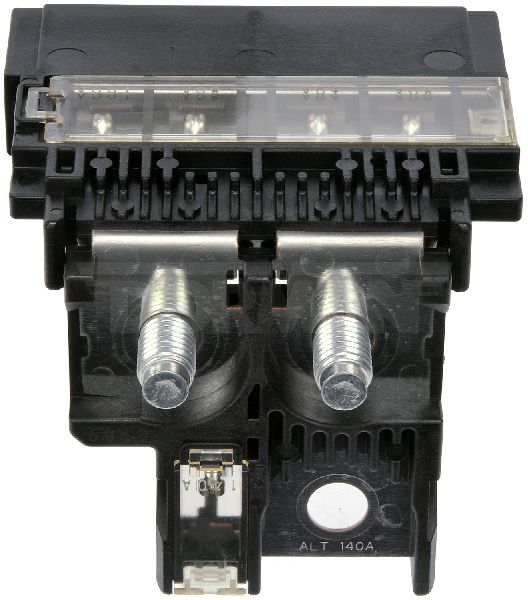
- Inspect all related fuses in the IPDM (engine bay fuse box) and interior fuse panel. Look for fuses labeled 'IGN', 'Elec Parts', or specific module names like 'TCM' or 'BCM'.
- If the above steps do not resolve the issue, a more advanced diagnosis is needed. Disconnect the battery.
- Measure the resistance between Pin 6 (CAN-H) and Pin 14 (CAN-L) on the OBD-II port. A healthy network should read approximately 60 ohms. This reading confirms the integrity of the two 120-ohm terminating resistors in the network.
- If the resistance is 120 ohms, one of the terminating resistors (or the module containing it, often the ECM or IPDM) is offline. If it's near 0 ohms, the CAN High and Low wires are shorted together.
- If a specific module is suspected, unplug it and re-measure the CAN bus resistance. If the reading returns to normal, that module is likely the cause of the problem. Always check power and ground at the module's connector before condemning the module.
Parts You'll Likely Need
- Battery Ground Cable
(OEM #24080-8Y100, 24080-8Y000)— The original ground cables are prone to internal and external corrosion, which is a leading cause of intermittent electrical and communication issues on these vehicles.
Trusted brands: Nissan OE, Standard Motor Products, Duralast
OEM price range: $40-$60
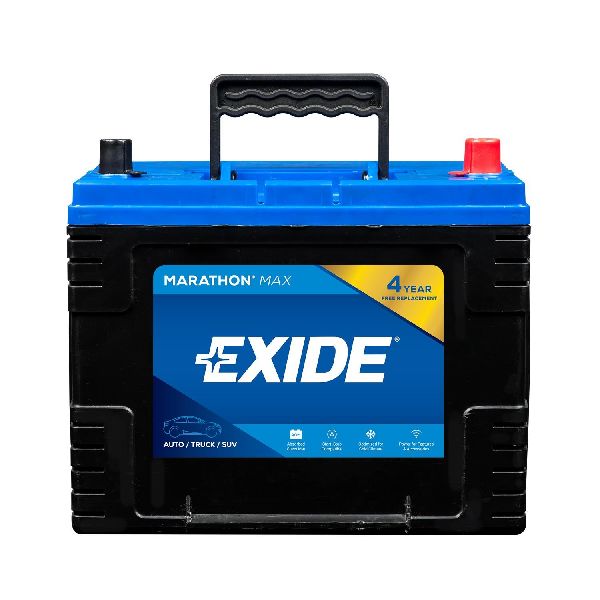
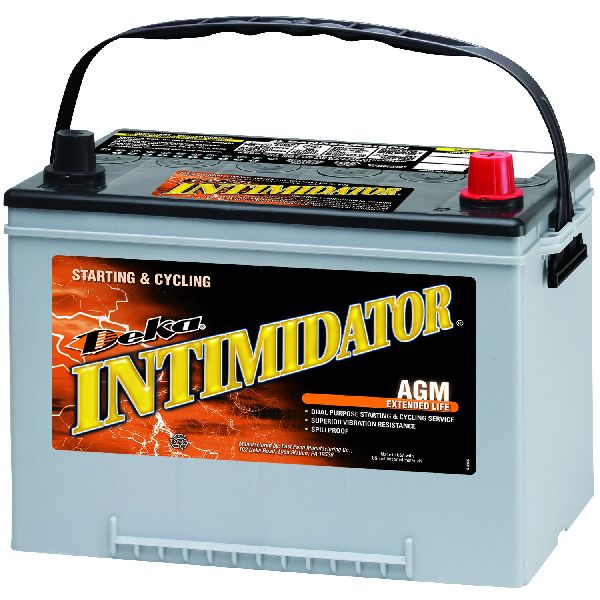
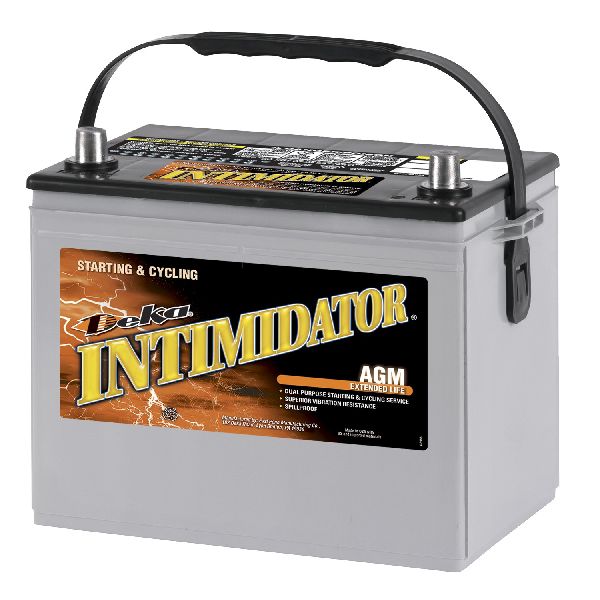
Aftermarket price range: $20-$40 - Battery — A weak battery is a very common cause of low voltage conditions that trigger CAN communication faults.
Trusted brands: Interstate, DieHard, Duralast
OEM price range: $200-$300
Aftermarket price range: $150-$250
Related Codes That Often Appear With This One
- U1000 — U1000 is a general CAN communication failure code. U1001 is often a more specific version of the same fault, and they frequently appear together.
- C1XXX codes (e.g., C1130) — If the ABS or Vehicle Dynamic Control (VDC) module loses communication, it will set chassis-related codes and illuminate the ABS, SLIP, and VDC warning lights.
- P1212, P1574 — These codes can be triggered when the ECM loses communication with the TCM, indicating a network problem is affecting the powertrain control systems. This was reported by a 2004 Quest owner.
Technical Service Bulletins (TSBs) & Recalls
- NTB10-066A - States that communication codes like U1001 should always be diagnosed first and that a module reporting the code is often not the one that has failed. It also lists low battery voltage as a possible cause and details the 60-ohm resistance check.
- NTB10-046 - While not directly about U1001, this TSB applies to the 2004-2009 Quest VQ35 engine and shows the shared mechanical platform with the Altima and Maxima, reinforcing the concept of shared issues across these models.
Platform-Specific Known Issues
- Crank-No-Start and Multiple Codes: A 2004 Quest owner on RepairPal reported U1000, U1001, P1212, and P1574 codes appearing simultaneously. The advice given was to diagnose the U-codes first, as the loss of communication between the ECM and TCM was the likely root cause. This highlights how a network fault can cascade into powertrain codes.
- Intermittent Limp Mode: On the Carjunky Forum, a 2006 Quest owner experienced intermittent limp mode, especially under acceleration, with a communication code (suspected U1001 or U1010) between the ECM and TCM. The issue would reset after restarting the vehicle. This points to an intermittent open or short in the CAN wiring or a failing module/connection that is sensitive to engine vibration or load.
- Failed ECM after Ground Check: A user on 2CarPros with a crank-no-start condition and a persistent U1001 code on a 2006 Murano (a platform mate) had already double-checked all ground cables. Even after replacing and reprogramming the ECM, the code remained, indicating the fault was still present on the CAN bus itself, not necessarily the replaced module. This shows that even with a new module, an underlying wiring or network issue will prevent a fix.
Mechanic-Grade Diagnostic Values
- CAN Bus Resistance (at DLC) — expected: ~60 Ω (with battery disconnected). Failure: 120 Ω indicates a missing terminating resistor/module. ~0 Ω indicates a short between CAN lines. 40-45 Ω may indicate an extra terminating resistor or a failing module.
- CAN High Voltage (Pin 6 to Ground) — expected: 2.5V - 3.0V (fluctuating). Failure: Voltage stuck high, low, or at 0V indicates a short or open circuit.
- CAN Low Voltage (Pin 14 to Ground) — expected: 2.5V - 2.0V (fluctuating). Failure: Voltage stuck high, low, or at 0V indicates a short or open circuit.
- Resistance at Terminating Module Connector — expected: ~120 Ω (e.g., at ECM or IPDM, with module unplugged). Failure: An open or shorted reading indicates a failure of the internal terminating resistor.
- System Voltage (Battery Test) — expected: 13.7V - 14.7V (engine running). Failure: Voltage below 10V can cause random modules to stop communicating.
Scan Tool Commands That Help
- Nissan CONSULT-II / CONSULT-III plus: CAN Diag Support Monitor / V-CAN screen — This is the primary function to diagnose U1001. It polls all modules on the CAN network and displays which ones are communicating ('OK') and which are not ('NG'), immediately pointing the technician to the source of the communication loss.
- Nissan CONSULT-II / CONSULT-III plus: Self-Diagnostic Results — Used to retrieve all DTCs from all modules. It's critical to see which module is logging the U1001 code and what other codes are present across the network.
- Manual Procedure (No Scan Tool): IPDM E/R Auto Active Test (Self-Test) — This test checks if the IPDM's internal CPU is functional. It's initiated by turning the ignition on and pressing the driver's door switch 10 times in 10 seconds. The IPDM will then cycle various outputs (wipers, lights, horn). If this test runs, it confirms the IPDM has basic functionality, though it doesn't test the ECM relay specifically.
Wiring & Ground Locations
- IPDM E/R — Right side of the engine compartment. It is the 'intelligent power distribution module' or smart fuse/relay box.. It is a terminating module for the CAN bus and contains the ECM power relay. An internal failure is a known, though less common, cause of U1001.
- ECM — At the right rear of the engine compartment.. The Engine Control Module is a primary terminating module on the CAN bus. U1001 specifically relates to a communication issue seen by the ECM.
- Ground M79 — Behind the right end of the dashboard.. This is a major interior ground point for multiple modules, including the BCM and Data Link Connector. Corrosion or looseness here can disrupt communication.
- Ground M57 — Behind the left end of the dashboard.. This is another key interior ground point. Verifying its integrity is part of a thorough electrical diagnosis.
- ABS Actuator & Electric Unit — At the right rear of the engine compartment.. This module is on the CAN bus. An internal failure can bring down the entire network, causing other modules to log U-codes.
When the Usual Fixes Don't Work
- While replacing the ECM or IPDM can fix a U1001 code, it is not a guaranteed solution and can be an expensive misdiagnosis. In one documented case for a 2004 Quest, a user replaced both the ECM and the IPDM, and cleaned accessible grounds, but the U1001, P1212, and P1574 codes persisted. This indicates the fault can lie elsewhere, such as in the wiring harness itself or with another module on the network like the Transmission Control Module (TCM), which was the suspected cause in that instance.
OEM Part Supersession History
24080-8Y000→24080-8Y100— Part update/revision for the negative battery cable assembly.
Model Year Variations Within This Range
- 2005-2006 (approx.): Some earlier models were fitted with a 'white' colored IPDM that was particularly known for failure of the internal ECM relay. The updated, more reliable replacement part from Nissan is black.
- 2007-2009: The 2007 model year received a major refresh. The instrument cluster was moved from the center of the dash to in front of the driver. This change in the cluster and its associated wiring could present different diagnostic paths compared to the 2005-2006 models.
Helpful Videos


We Have This Part in Stock


The information in this article is provided for general reference and educational purposes only. Vehicle specifications, procedures, and part compatibility can vary by production date, trim level, and region. Always consult your vehicle's factory service manual and verify part numbers before purchasing or performing repairs. Safety-critical components such as airbags, seat belts, and braking systems should be installed by a qualified professional.
- Nissan QUEST:
- 🎬 Helpful Videos
- 🛍️ Shop This Part
- What's Unique About the 2005-2009 Nissan QUEST
- Diagnostic Flowchart
- Symptoms You May Notice
- Most Likely Causes
- Rare But Worth Checking
- Diagnosis Steps
- Parts You'll Likely Need
- Related Codes That Often Appear With This One
- Technical Service Bulletins (TSBs) & Recalls
- Platform-Specific Known Issues
- Mechanic-Grade Diagnostic Values
- Scan Tool Commands That Help
- Wiring & Ground Locations
- When the Usual Fixes Don't Work
- OEM Part Supersession History
- Model Year Variations Within This Range
- 🎟️ Get 5% Off