

U1001 on 2011-2014 Nissan JUKE: CAN Communication Failure Causes and Fixes
On a 2011-2014 Nissan Juke, code U1001 indicates a CAN communication network failure. The most common causes are poor electrical grounds, a weak battery, or a damaged wiring harness. Start by cleaning all battery terminals and key ground points, especially those on the engine block and chassis, before suspecting a faulty module.
- U1001 is a network communication code, not a specific part failure.
- Before any other step, ensure your battery is fully charged and test the charging system.
- The most likely fix is cleaning and tightening ground connections. This costs nothing but time and should be your first diagnostic step.
- Do not replace expensive modules without exhaustive testing of the power, ground, and CAN wiring first.
What's Unique About the 2011-2014 Nissan JUKE
For the Nissan Juke and other Nissans of this era, the electrical system is particularly sensitive to voltage and ground integrity. Nissan's own technical service bulletins repeatedly emphasize checking for low battery voltage (<10V) and poor ground connections as the primary cause for communication codes like U1001 before proceeding to more complex diagnostics. Unlike a simple sensor code, U1001 points to a systemic issue that requires checking the health of the entire network's foundation. Specific ground points in the engine bay are common failure points.
Diagnostic Flowchart
Tap your situation to follow the diagnostic path that matches what you're seeing on this vehicle.
Symptoms You May Notice
- Multiple warning lights on the dashboard (Check Engine, VDC, SLIP, ABS).
- Engine cranks but does not start.
- Erratic instrument cluster behavior (speedometer/tachometer dropping to zero).
- Transmission shifting hard or getting stuck in one gear.
- Trip computer resetting every time the car is turned off
- Security light stays on after starting.
- RPM gauge is non-functional (stuck at zero) while the engine is running.
- Replacing the ECM or another control module without first verifying power, ground, and CAN bus wiring integrity. This is an expensive mistake, as the problem is often in the wiring or connections between modules.
Most Likely Causes
- Loose or Corroded Ground Connections 🔴 High Probability Nissan vehicles from this period are known to be sensitive to ground integrity. Corrosion can build up on terminals, increasing resistance and disrupting module communication. Key failure points are the main ground strap from the battery to the chassis and the engine block ground.
How to confirm: Visually inspect and physically check the main ground points: the negative battery terminal to chassis, chassis to engine block, and smaller ground wires for the main harnesses, such as those near the ECM. A voltage drop test across the ground connection can confirm a bad connection.
Typical fix: Remove, clean all contact surfaces to bare metal 🎬 Watch: How to fix U1000 and U1001 codes by cleaning grounds. with a wire brush, and securely retighten the ground connections. Apply dielectric grease to prevent future corrosion.
Est. part cost: $0-$10 - Low Battery Voltage or Failing Alternator 🟡 Medium Probability Control modules require a stable voltage to operate. If system voltage drops below 10V, modules can shut down unexpectedly, causing communication faults.
How to confirm: Test the battery with the engine off; a healthy battery should read above 12.4V. With the engine running, the alternator should produce between 13.5V and 14.5V.
Typical fix: Recharge or replace the battery. If the alternator is faulty, it will need to be replaced.
Est. part cost: $150-$400 - Damaged CAN Wiring Harness 🟡 Medium Probability
How to confirm: Visually inspect the wiring harnesses, especially where they pass through the firewall, run near the air filter box, or are close to hot/vibrating components. Look for chafing, melting, or rodent damage. Advanced diagnosis involves using a multimeter to check for continuity and resistance between pins 6 (CAN-H, often a blue wire) and 14 (CAN-L, often a pink wire) at the OBD-II port (should be ~60 Ohms with the battery disconnected 🎬 See this walkthrough on how to troubleshoot CAN BUS network faults.).
Typical fix: Repair the damaged section of the wire. In a documented case on a similar Nissan, a loose, poorly-repaired wire was found to be intermittently shorting to ground, causing the U1001 code. In severe cases, a portion of the harness may need to be replaced.
Est. part cost: $10-$500 - Faulty Intelligent Power Distribution Module (IPDM) ⚪ Low Probability
How to confirm: This is typically diagnosed by exclusion after confirming all wiring, grounds, and other modules are good. A technician may use a scan tool to see if the IPDM is communicating. Checking for related blown fuses (e.g., F17 10A fuse for ABS) is a preliminary step. Water intrusion is a known cause of IPDM failure.
Typical fix: Replacement of the IPDM, which may also require programming by a dealership or qualified shop.
Est. part cost: $200-$600
Rare But Worth Checking
- Faulty Control Module (ECM, TCM, BCM): While a module can fail, it is far less common than wiring or ground issues. A module should only be replaced after all other possibilities have been exhaustively checked.
- Faulty ABS Module: A failing ABS module can disrupt the entire CAN network, causing a U1001 code to be logged by the ECM. Symptoms often include an illuminated ABS light and specific ABS codes like C1111 (Pump Motor Fault). Since the ABS module is a node on the network, its internal failure can broadcast corrupt data or stop communicating, which other modules see as a network fault.
Diagnosis Steps
- Scan for codes in all modules (ECM, TCM, BCM, ABS) to see which modules are reporting errors and which are not communicating at all.
- Check battery voltage and the charging system. Ensure the battery is fully charged (above 12.4V) and the alternator is working correctly (13.5V-14.5V running).
- Inspect and clean all major ground connections. Focus on the battery-to-chassis ground, the engine-to-chassis ground strap, and smaller grounds in the engine bay near the IPDM and ECM. Clean all contact points to bare metal.
- Check fuses related to the ECM, TCM, ABS, and IPDM. Specifically check the 10A fuse F17 in the main fuse box for the ABS system.
- With the battery disconnected, measure the resistance between Pin 6 (CAN-H) and Pin 14 (CAN-L) on the OBD-II connector. The reading should be approximately 60 ohms. A reading of 120 ohms indicates an open circuit or a missing terminating resistor (often in the ECM or IPDM), while 0 ohms indicates a short circuit.
- Visually inspect the main wiring harnesses for any signs of physical damage, chafing, or corrosion, paying close attention to the area under the air filter box and near the firewall.
- If a specific module is suspected (e.g., the ABS module if C-codes are present), disconnect it and re-measure CAN resistance. If the network returns to normal, the disconnected module is likely the cause.
- If all else fails, use a professional scan tool to isolate the non-communicating module and test its individual power, ground, and CAN connections before condemning the module.
Parts You'll Likely Need
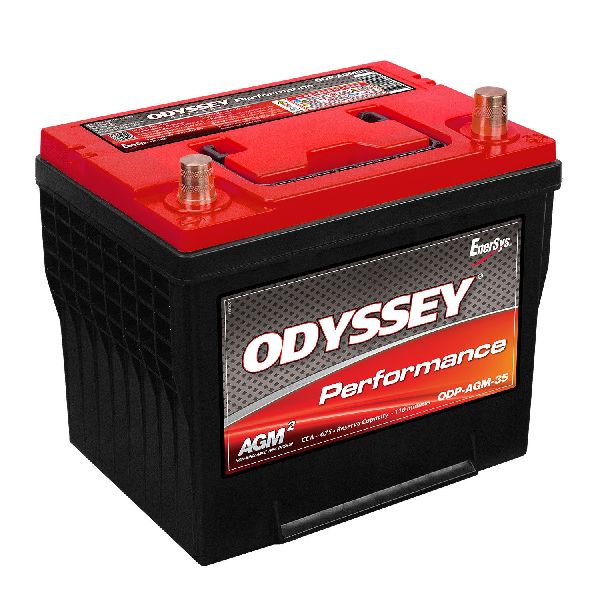
- Battery — A weak or failing battery is a common cause of low voltage, which can trigger random communication codes.
Trusted brands: Interstate, DieHard, Duralast
OEM price range: $200-$300
Aftermarket price range: $150-$250 - Intelligent Power Distribution Module (IPDM)
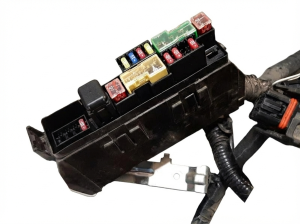
(OEM #284B7-1KJ0F, 284B7-1KJ1E)— The IPDM is a central hub for power and communication. An internal failure, sometimes due to water ingress, can disrupt the entire CAN network.
Trusted brands: Nissan OE
OEM price range: $400-$600
Aftermarket price range: $200-$400
Related Codes That Often Appear With This One
- U1000 — U1000 is a general CAN communication failure code, while U1001 is more specific to the ECM losing communication. They often appear together, indicating a network-wide problem.
- C1111 — This ABS code for 'Pump Motor Fault' can appear alongside U1001 if the ABS module itself is the source of the CAN bus disruption.
Technical Service Bulletins (TSBs) & Recalls
- NTB10-066A / NTB10-066B: SERVICE INFORMATION Related to communication codes U1000, U1001, U1002, U1010. This TSB instructs technicians to always diagnose communication codes first, before any other DTCs. It confirms that low battery voltage can set CAN codes and that power, ground, and CAN resistance should be checked before replacing any module.
- NTB13-027C: This bulletin provides helpful tips for CAN diagnosis, reinforcing that communication codes (U1000, U1001) must be diagnosed first. It notes that in a low voltage situation (<10V), different modules will stop communicating at different times.
Platform-Specific Known Issues
- Corroded Engine Bay Grounds: The primary ground points in the engine bay—from the negative battery terminal to the chassis and from the chassis to the engine/transmission—are highly susceptible to corrosion. Cleaning these points is the most common and effective fix for U1001 codes on the Juke and similar Nissans.
- Wiring Harness Chafe: The wiring harness loom, particularly in the area around and under the air filter box, can rub against the chassis or other components. This can wear through the insulation on a CAN wire and cause an intermittent short to ground, which is a common cause of U1001.
Mechanic-Grade Diagnostic Values
- CAN Bus Resistance — expected: ~60 Ω between Pin 6 (CAN-H) and Pin 14 (CAN-L) at the DLC with battery disconnected.. Failure: A reading of ~120 Ω indicates an open circuit or one terminating module is offline. A reading of ~0 Ω indicates a short between the CAN lines.
- CAN High Voltage (Key On, Engine Off) — expected: Switches between 2.5V (recessive) and 3.5V (dominant).. Failure: Stuck high, stuck low, or not reaching the correct peak voltage.
- CAN Low Voltage (Key On, Engine Off) — expected: Switches between 2.5V (recessive) and 1.5V (dominant).. Failure: Stuck high, stuck low, or not reaching the correct valley voltage.
- Minimum System Voltage — expected: Above 12.4V with engine off, 13.5V-14.5V with engine running.. Failure: Nissan TSBs note that when system voltage drops below 10V, modules can begin to shut down and stop communicating, triggering U-codes.
Scan Tool Commands That Help
- Nissan CONSULT: CAN Diagnosis (Self Diagnosis) — This is the primary function used to poll the entire network and see a list of all modules. It will show which specific modules are communicating and which are not, which is essential for isolating the source of the U1001 code.
- Nissan CONSULT or equivalent professional scanner: Key Registration / NATS Immobilizer Functions — If the ECM has been replaced, the keys must be re-registered to the new module. Failure to do so can result in a no-start condition accompanied by a U1001 code because the BCM/IPDM cannot validate the ECM.
Wiring & Ground Locations
- Main Engine Grounds — Key locations include F6 (top front of engine) and F9 (top rear of engine). These are multi-wire ground points bolted directly to the engine block or cylinder head.. The ECM and other critical engine bay modules rely on these grounds. Corrosion or looseness here is a primary cause of CAN communication faults.
- Chassis/Body Grounds — Key locations include E104 (left end of dash, near driver's kick panel) and B31 (base of the right 'C' pillar). Another important ground is located on the chassis near the brake fluid reservoir.. The BCM, ABS module, and other interior modules use these points. A bad body ground can disrupt the entire network.
- OBD-II DLC Connector — Under the driver's side dashboard.. This is the main diagnostic port. Pin 6 is CAN-H and Pin 14 is CAN-L. All network-wide voltage and resistance tests are performed here.
- TCM Power/Ground Pins — At the Transmission Control Module connector.. In a documented diagnostic case, a technician verified grounds at pins 41 and 42, and power at pins 45, 46, 47, and 48 before condemning the TCM.
Real Owner Repair Stories
- Automotive Diagnostics & Programming YouTube Channel (Nissan Juke (year not specified)) — U1000 CAN communication fault codes, 'dirty' CAN bus signal on oscilloscope.
❌ Tried (didn't work) Initial visual inspection of wiring.
✅ What actually fixed it The technician used an oscilloscope to monitor the CAN signal while disconnecting modules one by one. When the Transmission Control Module (TCM) was unplugged, the CAN signal returned to a clean waveform. The TCM was internally faulty and flooding the network with corrupt data. Replacing the TCM resolved the issue. - Car Hospital YouTube Channel (2015 Nissan Sunny (similar platform and wiring)) — U1001 and U1000 codes, intermittent no-start, a specific 10A fuse would blow intermittently.
❌ Tried (didn't work) Customer was likely replacing the fuse repeatedly.
✅ What actually fixed it A technician removed the air filter box and inspected the wiring harness underneath. A wire from a previous, improper repair was found with damaged insulation, causing it to intermittently short to ground. Properly repairing and insulating the damaged wire fixed the short and cleared the codes. - Car Hospital YouTube Channel (Nissan Sunny (similar platform)) — Car would stall while driving, U1000/U1001 codes present.
❌ Tried (didn't work) Checking fuses, checking main ground connections at the battery and engine.
✅ What actually fixed it Upon inspecting wiring under the dashboard, the technician discovered a non-factory relay had been spliced into a main body ground wire. This improper modification was causing an unstable ground for the network. Removing the relay and restoring the ground wire to its original configuration permanently fixed the problem.
"I Checked Everything" — The Actual Cause
- The electrical equivalent of a 'smoke test clean' scenario is when all wiring, grounds, and fuses test good with a multimeter, yet the fault persists. In a documented case on a Nissan Juke, the wiring and grounds to the Transmission Control Module (TCM) were confirmed to be good, but the U1000/U1001 codes remained. The actual cause was an internal failure within the TCM, which was generating electrical 'noise' and corrupting the entire CAN network. This type of fault can only be found with an oscilloscope by observing the data signal, or by disconnecting modules one by one to see which one restores network stability.
OEM Part Supersession History
284B7-1KJ0F→284B7-1KJ1E— Part revision or update by the manufacturer.
Heads up: Part number 284B7-1KJ1E is specified for 2011-2013 models with automatic transmission and keyless ignition. While it may fit other years, using the wrong IPDM for the vehicle's specific options (e.g., manual vs. automatic) can cause communication issues. Always verify the part number against the vehicle's VIN.
Model Year Variations Within This Range
- 2011-2014: The Intelligent Power Distribution Module (IPDM) part number can vary based on vehicle options. For example, part number 284B7-1KJ1E is specified for 2011-2013 models equipped with an automatic transmission and keyless ignition. Models with a manual transmission or standard key may use a different IPDM. Installing the incorrect IPDM can lead to CAN bus errors.
Helpful Videos

Used OEM Parts in Stock
New Aftermarket Parts Available


The information in this article is provided for general reference and educational purposes only. Vehicle specifications, procedures, and part compatibility can vary by production date, trim level, and region. Always consult your vehicle's factory service manual and verify part numbers before purchasing or performing repairs. Safety-critical components such as airbags, seat belts, and braking systems should be installed by a qualified professional.
- Nissan JUKE:
- 🎬 Helpful Videos
- 🛍️ Shop This Part
- What's Unique About the 2011-2014 Nissan JUKE
- Diagnostic Flowchart
- Symptoms You May Notice
- Most Likely Causes
- Rare But Worth Checking
- Diagnosis Steps
- Parts You'll Likely Need
- Related Codes That Often Appear With This One
- Technical Service Bulletins (TSBs) & Recalls
- Platform-Specific Known Issues
- Mechanic-Grade Diagnostic Values
- Scan Tool Commands That Help
- Wiring & Ground Locations
- Real Owner Repair Stories
- "I Checked Everything" — The Actual Cause
- OEM Part Supersession History
- Model Year Variations Within This Range
- 🎟️ Get 5% Off