

U1001 on 2008-2013 Infiniti G37: CAN Communication Failure Causes and Fixes
The U1001 code on a 2008-2013 Infiniti G37 indicates a CAN communication network failure, most often related to the Engine Control Module (ECM). This is almost always an electrical issue. Common causes include poor ground connections, low battery voltage, or a failing control module, frequently the ABS actuator or Body Control Module (BCM), which can be damaged by water from clogged sunroof drains.
- U1001 on a G37 is a network communication error, not a specific mechanical part failure.
- Before any expensive repairs, fully charge and test the battery and clean all major ground connections.
- The most probable cause specific to the G37 is a water-damaged Body Control Module (BCM) due to clogged sunroof drains. Check the passenger floor for dampness.
- Diagnosing this code properly requires an advanced scan tool that can poll all vehicle modules to see which one is offline.
- Do not immediately replace the ECM; it is usually the messenger reporting the fault, not the cause.
What's Unique About the 2008-2013 Infiniti G37

The Infiniti G37's V36 platform has a known vulnerability where clogged sunroof drains can cause water to leak into the passenger-side footwell, directly onto the Body Control Module (BCM). A water-damaged BCM is a very common cause of widespread CAN communication failures, including the U1001 code. Additionally, these vehicles are sensitive to low battery voltage and poor ground connections, which can easily trigger network-related fault codes, a fact noted in official Infiniti service bulletins.
Diagnostic Flowchart

Tap your situation to follow the diagnostic path that matches what you're seeing on this vehicle.
Symptoms You May Notice

- Multiple warning lights on the dashboard, most commonly 'VDC OFF' and 'SLIP'.
- Check Engine Light is illuminated.
- Transmission may be stuck in a single gear (limp mode).
- Instrument cluster gauges may behave erratically or stop working.
- Trip computer and MPG data resetting with every engine start.
- No-start or no-crank condition in severe cases.
- Erratic behavior from power windows, locks, or key fob functions if the BCM is the cause.
- Alarm going off randomly.
- Replacing only the ECM without diagnosing the network. The U1001 code is often logged by the ECM, but the fault usually lies elsewhere in the CAN network, such as a bad ground or a different faulty module. This is confirmed by Infiniti TSB ITB10-029A.
- Replacing brake pads or sensors for VDC/SLIP lights. While worn pads or low fluid can cause these lights, if they are accompanied by a U1001 code, the root cause is almost certainly a network communication issue, not the brake components themselves. 🎬 Watch: Troubleshooting VDC and SLIP lights on your G37.
Most Likely Causes

- Failing or Water-Damaged Body Control Module (BCM) 🔴 High Probability Clogged sunroof drains are a well-documented issue on the G37, causing water to leak directly onto the BCM located in the passenger footwell, leading to corrosion and failure. Owners on forums frequently report a cascade of electrical issues after heavy rain.
How to confirm: Check for dampness, water stains, or corrosion on the carpet and around the BCM in the passenger-side kick panel area. Use an advanced scan tool to check for communication with the BCM. Symptoms like non-functional windows, locks, and interior lights strongly point to the BCM.
Typical fix: Remove, dry, and clean the BCM and its connectors. If corrosion is severe, the BCM must be replaced and the new module programmed to the vehicle's keys. The source of the water leak (usually sunroof drains) must also be repaired. 🎬 Watch: How to fix the common G37 sunroof drain leak. Some owners have had success drying the BCM in rice to absorb moisture.
Est. part cost: $150-$400 for a used BCM, $600+ for a new one. Example part numbers include 284B1-JK62A (for early models) and 284B1-1VV0C, but the exact part is VIN-specific. - Poor Ground Connections 🟡 Medium Probability Infiniti/Nissan vehicles are known to be sensitive to ground issues. Corrosion on main battery, engine block, or chassis grounds can create electrical noise and disrupt CAN communication.
How to confirm: Visually inspect the main ground straps. Key locations include: the negative battery terminal, a point on the wheel well near the battery, the engine block corner near the intake, and another point on the driver's side wheel well. Disassemble, clean all contact points with a wire brush until they are shiny, and re-secure them.
Typical fix: Clean or replace corroded ground wires/straps. Some owners install aftermarket grounding kits as a preventative measure. 🎬 See this step-by-step tutorial for installing a G37 grounding kit.
Est. part cost: $10-$50 for cleaning supplies or new straps. - Low Battery Voltage or Failing Alternator 🟡 Medium Probability Infiniti's service information explicitly states that low battery voltage can trigger CAN communication DTCs. As a battery weakens, it may provide enough power to crank the engine but not enough to keep all modules online consistently, causing network glitches.
How to confirm: Test the battery voltage with a multimeter. A healthy battery should read ~12.6V with the engine off and ~14.0-14.7V with the engine running.
Typical fix: Replace the battery and/or alternator if they fail testing.
Est. part cost: $150-$300 for a battery, $300-$600 for an alternator. - Failing ABS Actuator / Control Module ⚪ Low Probability The ABS module is a critical node on the CAN network. Internal failure of this module can disrupt the entire network, causing U1001 and other codes.
How to confirm: Use an advanced scan tool to see if the ABS module is failing to communicate. Check for specific ABS codes like C1109, C1110, or C1111. A mechanic may also check the CAN resistance at the module's connector.
Typical fix: Replace the ABS actuator and control module assembly. This often requires programming to the vehicle's VIN. Example part numbers include 47660-1NL7D and 47660-1NM0A, but the correct part varies by year and options.
Est. part cost: $400-$1200+ for a new assembly. - Damaged Wiring Harness ⚪ Low Probability Improper installation of aftermarket electronics (like stereos or remote starters) can damage the CAN wiring. Wires can also chafe or be damaged by rodents. One owner traced a U1001 code to a single wire that was not properly secured after previous work.
How to confirm: Visually inspect harnesses connected to the ECM, BCM, and ABS module for any signs of damage, chafing, or unprofessional splicing. A CAN bus resistance check at the OBD-II port should read approximately 60 ohms.
Typical fix: Repair the damaged section of the wiring harness.
Est. part cost: $5-$100 for wiring repair supplies.
Rare But Worth Checking
- Failing Engine Control Module (ECM): While the U1001 code points to a communication issue *related* to the ECM, the ECM itself can be the source of the failure, though this is less common than wiring or other modules causing the problem.
- Blown Fuse in IPDM: A blown fuse for a critical module in the Intelligent Power Distribution Module (IPDM), located near the battery, can take a module offline and trigger a U1001 code.
Diagnosis Steps
- Check Battery and Charging System: Use a multimeter to ensure battery voltage is above 12.4V with the engine off and 14.0-14.7V while running. Low voltage is a very common cause and is noted in official Infiniti TSBs.
- Perform a Full System Scan: Use an advanced OBD-II scanner capable of communicating with all modules (BCM, ABS, TCM, etc.). Note which modules are not responding and which ones are logging the U1001 code.
- Inspect for Water Intrusion: Pull back the carpet on the passenger side and inspect the BCM and its connectors for any signs of moisture or corrosion. This is a known G37 weak point and a high-probability cause.
- Inspect Ground Connections: Locate, remove, and clean the main battery ground, chassis grounds (especially on the wheel wells near the battery and strut tower), and engine block ground points. Ensure all connections are clean and tight.
- Check for Blown Fuses: Inspect fuses in the cabin fuse box and especially in the IPDM (Intelligent Power Distribution Module) next to the battery.
- Perform CAN Resistance Test: With the battery disconnected, measure the resistance between Pin 6 (CAN-H) and Pin 14 (CAN-L) at the OBD-II port. A healthy network should read approximately 60 ohms. A reading of 120 ohms indicates an open circuit or that one of the two terminating resistors is offline. A reading near 0 ohms indicates a short between the CAN lines.
- Isolate the Faulty Module: If the resistance is 120 ohms, the fault is likely one of the two terminating modules (ECM or IPDM) or a break in the wiring to one of them. You can disconnect modules one by one (starting with the most likely culprits like the BCM or ABS module) and re-test the resistance to see if it changes. The module that, when disconnected, corrects the resistance is likely the faulty one.
Parts You'll Likely Need
- Body Control Module (BCM) — Extremely common point of failure on the G37 due to water damage from clogged sunroof drains, causing widespread CAN network issues.
Trusted brands: Infiniti (OEM)
OEM price range: $600-$800
Aftermarket price range: $150-$400 (Used/Remanufactured) - ABS Actuator and Control Unit Assembly
(OEM #47660-1NC7A (example, match to vehicle))— Internal failure of this module can bring down the CAN network, triggering the U1001 code and ABS/VDC/SLIP lights.
Trusted brands: Infiniti (OEM), Bosch
OEM price range: $1000-$2000+
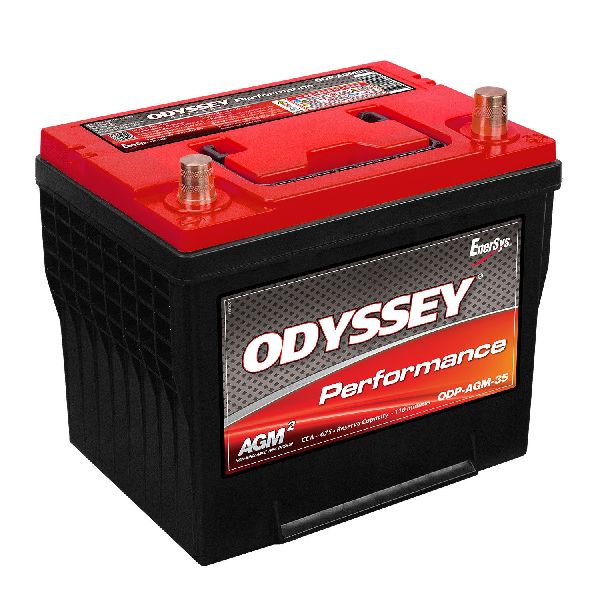
Aftermarket price range: $400-$800 (Remanufactured) - Battery — Low system voltage from a weak or failing battery is a primary trigger for CAN communication codes on this platform.
Trusted brands: Interstate, DieHard, Duralast
OEM price range: $200-$300
Aftermarket price range: $150-$250
Related Codes That Often Appear With This One
- U1000 — U1000 is a general CAN Communication Circuit Malfunction code. It is very common to see U1000 and U1001 together, as they both indicate a problem on the vehicle's communication network.
- C1109 — This code often indicates a battery voltage issue detected by the ABS control unit. Since low voltage is a primary cause of CAN communication failures, seeing C1109 alongside U1001 points strongly toward a battery or charging system problem.
- P0500 — This code indicates a Vehicle Speed Sensor (VSS) malfunction. The VSS signal is shared across the CAN network. If the ABS module (which processes wheel speed data) goes offline, the ECM may log a P0500 because it is no longer receiving the speed signal.
Technical Service Bulletins (TSBs) & Recalls
- Provides official service guidelines for diagnosing CAN communication codes like U1000 and U1001. It advises technicians to always diagnose these codes first and confirms that the module reporting the code is often not the source of the fault. It also states that low battery voltage can trigger CAN DTCs and gives instructions for checking CAN resistance.
Platform-Specific Known Issues
- Self-Inflicted CAN Failure from Mirror Wiring: In a thread on MyG37.com, an owner triggered U1000 and U1001 codes, along with VDC/SLIP lights, after accidentally shorting two wires for the homelink mirror while installing a radar detector. This highlights how even minor, seemingly unrelated electrical work can disrupt the entire CAN network.
- Trip Computer Resetting as a Key Symptom: A frequently mentioned symptom in owner forums, tied directly to the U1000/U1001 codes, is the trip computer and fuel economy data resetting to zero with every engine start. This often accompanies the VDC and SLIP warning lights.
Mechanic-Grade Diagnostic Values
- CAN Bus Resistance at OBD-II Port — expected: ~60 Ω (battery disconnected). Failure: 120 Ω indicates an open circuit or a missing terminating resistor. ~0 Ω indicates a short between CAN H and CAN L lines.
- CAN Bus Voltage (Key ON, Engine OFF) — expected: CAN-H: ~2.6V, CAN-L: ~2.4V. Failure: Significant deviation from these voltages, such as one line being at 0V or battery voltage, indicates a short to ground or power. A user reported CAN-H at 7.5V due to a fault.
- Resistance at a terminating module's CAN pins — expected: ~120 Ω (module disconnected, battery disconnected). Failure: A reading significantly different from 120 Ω suggests the module's internal terminating resistor has failed.
Scan Tool Commands That Help
- Infiniti CONSULT-III / CONSULT-III plus: CAN Diagnosis Support Monitor — This is the primary dealer-level tool for diagnosing CAN issues. It creates a visual map (V-CAN diagram) of all modules on the network and shows which ones are not communicating, which is far more effective than a generic OBD-II scanner.
- Infiniti CONSULT-III / CONSULT-III plus: Self-Diagnostic Results — After running the CAN Diagnosis Support Monitor, this function allows the technician to check for DTCs within each individual module. This helps determine if a non-communicating module has internal fault codes that could explain its failure.
- Infiniti CONSULT-III / CONSULT-III plus: ECU/TCM Reprogramming — In some cases, shift quality issues or communication lags can be resolved by reprogramming the ECM and TCM with updated software, as outlined in service bulletin ITB12-027a. This is performed after confirming no hardware faults exist.
Wiring & Ground Locations

- BCM Connectors M118, M119, M120, M121, M122, M123 — Body Control Module (BCM) located in the passenger side kick panel area.. These are the main connectors for the BCM. Water intrusion from clogged sunroof drains frequently causes corrosion on these connectors, disrupting CAN signals and power/ground to the BCM, a primary cause of U1001.
- Main Ground Points — Key ground locations are on the passenger and driver side strut towers/wheel wells, on the engine block near the intake, and the main battery ground cable connection to the chassis.. Corrosion at these critical ground points introduces resistance and electrical noise into the system, which is a known cause of CAN communication errors on Nissan/Infiniti vehicles.
- OBD-II Connector Pins 6 & 14 — Under the driver's side dashboard.. Pin 6 is CAN-H and Pin 14 is CAN-L. These are the primary test points for measuring the overall health of the CAN bus network with a multimeter (resistance) or oscilloscope (voltage waveforms).
Real Owner Repair Stories
- MyG37 forum user (2009 G37X Coupe) — VDC and SLIP lights on, trip computer resetting on every start, codes U1000 and U1001.
❌ Tried (didn't work) Replacing rear brake pads., Disconnecting and reconnecting the battery.
✅ What actually fixed it The issue was self-inflicted. The owner shorted two wires in the auto-dimming mirror harness while hardwiring a radar detector, which blew an interior fuse. Replacing the 10A fuse in the driver's kick panel restored most functions, but the CAN codes remained until the wiring was properly repaired and the system was reset. This highlights the sensitivity of the CAN system to shorts anywhere in the vehicle. - Reddit user in r/G37 (Unknown year G37) — Codes P1564 (ASCD Steering Switch) and U1001, cruise control and dome light not working.
❌ Tried (didn't work) Ignoring the code as it did not illuminate the check engine light initially.
✅ What actually fixed it Another user with the same codes reported that the ultimate fix was replacing a broken clock spring (also known as a steering angle sensor assembly). A faulty clock spring can interrupt communication from steering wheel controls and, more importantly, disrupt the CAN bus signals that pass through it, causing a U1001 code. - Infiniti Scene forum user (2004 Infiniti FX35 (similar platform)) — U1000 and U1001 codes after hard driving, transmission stuck in gear, gear display blank.
❌ Tried (didn't work) Restarting the car (cleared symptoms temporarily but not the code).
✅ What actually fixed it The suggested and often successful fix for these transient communication errors is to disconnect the battery, then unplug the ECM and TCM connectors. Spraying the contact points on both the modules and the harness connectors with electrical contact cleaner and reassembling removes slight corrosion or moisture that can disrupt the network.
OEM Part Supersession History
284B1-JK62A→284B1-1NC0A, among others— Part revision and update for early model year G37s (approx. 2008-2009).
Heads up: When replacing a BCM, it is critical to use a part from the same vehicle type (sedan vs. coupe) and ideally the same transmission type (manual vs. auto). Using a BCM from an automatic car in a manual car can result in a no-start condition where the dash prompts to 'press brake' instead of 'press clutch'.284B1-1NC5C→284B1-1NV7E— Part revision for later model year G37s (approx. 2010+).
Heads up: While part numbers can be superseded, the most important factor is ensuring the donor BCM comes from a vehicle with the same body style (sedan/coupe) to ensure feature compatibility. Reprogramming of keys is always required after replacement.
Model Year Variations Within This Range
- 2010-2013: The G37 received a facelift for the 2010 model year. This included revised front and rear fascias, new headlights, and interior updates. The interior changes included a new gauge cluster color scheme (white instead of red/blue) and a revised center console design. While the core CAN architecture remained the same, BCM part numbers changed, and the navigation system was updated to a higher resolution screen. These changes mean that some interior electronic components are not interchangeable between pre-2010 and 2010+ models.
Helpful Videos
Used OEM Parts in Stock


New Aftermarket Parts Available


The information in this article is provided for general reference and educational purposes only. Vehicle specifications, procedures, and part compatibility can vary by production date, trim level, and region. Always consult your vehicle's factory service manual and verify part numbers before purchasing or performing repairs. Safety-critical components such as airbags, seat belts, and braking systems should be installed by a qualified professional.
- Infiniti G37:
- 🎬 Helpful Videos
- 🛍️ Shop This Part
- What's Unique About the 2008-2013 Infiniti G37
- Diagnostic Flowchart
- Symptoms You May Notice
- Most Likely Causes
- Rare But Worth Checking
- Diagnosis Steps
- Parts You'll Likely Need
- Related Codes That Often Appear With This One
- Technical Service Bulletins (TSBs) & Recalls
- Platform-Specific Known Issues
- Mechanic-Grade Diagnostic Values
- Scan Tool Commands That Help
- Wiring & Ground Locations
- Real Owner Repair Stories
- OEM Part Supersession History
- Model Year Variations Within This Range
- 🎟️ Get 5% Off