

U1001 on 2005-2008 Infiniti G35: CAN Communication Failure Causes and Fixes
The U1001 code on a 2005-2008 Infiniti G35 indicates a CAN communication network failure. The most common causes are bad electrical grounds, low battery voltage, or a failing control module. Start by cleaning all major ground points near the battery, on the engine, and chassis, and ensure the battery is fully charged and healthy. Water intrusion into the IPDM is also a frequent culprit.
- U1001 is a serious network communication code, not a simple sensor failure.
- Before spending any money, fully charge your battery and meticulously clean all major engine and body ground connections.
- Proper diagnosis requires an advanced scan tool to identify which module is offline.
- Do not automatically replace the ECM; it is often just the messenger reporting a problem elsewhere on the network.
- This is a difficult DIY repair without the right diagnostic tools and electrical knowledge; professional help is strongly recommended.
What's Unique About the 2005-2008 Infiniti G35

On the Infiniti G35 and related Nissan platforms, CAN communication codes like U1001 are notoriously sensitive to electrical system health. Forum discussions and mechanic videos frequently point to poor or corroded ground connections as the number one culprit, more so than on many other vehicles. Specific, problematic ground points mentioned by owners include those near the battery, on the engine block, and one near the brake fluid reservoir. 🎬 Watch: How I fixed my U1000 and U1001 ground problems The factory battery ground is a known weak point. Additionally, the design of the battery compartment allows water to drain onto the Intelligent Power Distribution Module (IPDM), causing corrosion and failure, which disrupts the entire CAN bus. This makes checking grounds and for water intrusion in the IPDM area essential first steps.
Diagnostic Flowchart
Tap your situation to follow the diagnostic path that matches what you're seeing on this vehicle.
Generation note: The 2005-2008 range covers two G35 generations: the first-gen V35 (2005-2006 sedan, 2005-2007 coupe) and the second-gen V36 (2007-2008 sedan). While the underlying cause is a CAN network failure on both, module locations, wiring harnesses, and specific ground points differ. The V36 has a more complex electrical system, with the IPDM being a more integrated component. However, the primary causes like bad grounds, low voltage, and IPDM water intrusion are common to both generations.
Symptoms You May Notice
- Multiple warning lights on the dashboard, such as Check Engine, VDC, SLIP, and ABS.
- Transmission stuck in one gear or shifting erratically (limp mode).
- Instrument cluster gauges behaving erratically or not working (e.g., speedometer/tachometer at zero).
- Engine cranks but does not start, or a complete no-crank, no-start condition.
- Cooling fans running constantly even when the engine is cold (a classic sign of IPDM failure).
- Trip computer and other display information resetting with every ignition cycle.
- Replacing the ECM first without proper diagnosis. A U1001 code stored in the ECM often means the ECM is working correctly and is simply reporting 🎬 Watch: DIY fix for ECM to transmission communication codes that it can't hear from another module. Infiniti TSB ITB10-029A specifically warns against this.
- Replacing sensors like camshaft or crankshaft position sensors. While these can cause drivability issues and VDC/SLIP lights, they do not typically cause a network-wide communication failure code like U1001 on their own.
- Replacing brake components for VDC/SLIP lights. When U1001 is present, the lights are a symptom of the network failure, not a primary brake system fault.
Most Likely Causes

- Loose or Corroded Ground Wires 🔴 High Probability Infiniti/Nissan vehicles of this era are known to be sensitive to ground issues. The main battery ground and various engine/body grounds can corrode over time, creating high resistance and disrupting module communication. Specific trouble spots mentioned by owners are grounds on the engine block, near the battery/strut tower, and by the brake fluid reservoir.
How to confirm: Visually inspect the main battery ground cable and other major ground points on the engine block and chassis. Use a multimeter to check for voltage drops between the negative battery terminal and the chassis/engine. A reading of more than 0.1-0.2 volts indicates a poor ground.
Typical fix: Disconnect the battery, then unbolt, clean all contact surfaces of the ground wires and connection points with a wire brush until they are shiny, and re-secure them tightly. Applying dielectric grease can prevent future corrosion. Some owners create additional grounding points to improve reliability.
Est. part cost: $0-$20 - Low Battery Voltage or Failing Alternator 🟡 Medium Probability Control modules require a stable voltage to operate. A weak or dying battery can cause voltage drops during startup that lead to temporary communication glitches and trigger a U1001 code. This is a very common trigger on these platforms.
How to confirm: Test the battery voltage with the car off (should be >12.4V) and while running (should be 13.5V-14.5V). Most auto parts stores can perform a load test on your battery for free. A user on G35Driver traced their issue to a bad battery despite it showing acceptable voltage.
Typical fix: Replace the battery if it fails a load test. If the charging voltage is low, the alternator likely needs replacement.
Est. part cost: $150-$400 - Failing Intelligent Power Distribution Module (IPDM) 🟡 Medium Probability The IPDM is located in the battery compartment, which has a drain hole that frequently clogs with debris. This causes water to accumulate and submerge the IPDM, leading to corrosion and internal short circuits that take down the entire CAN network.
How to confirm: Remove the battery and plastic cowls to access the IPDM. Inspect the module and its connectors for any signs of white or green corrosion, or moisture. If the area is wet or corroded, the IPDM is highly suspect.
Typical fix: Replace the faulty IPDM. The connectors should be cleaned with electronic contact cleaner. Crucially, the clogged drain hole at the bottom of the battery compartment must be cleared to prevent a repeat failure. 🎬 See this walkthrough on how to fix IPDM issues
Est. part cost: $150-$500 - Failing Control Module (ABS, TCM, BCM) 🟡 Medium Probability
How to confirm: This requires an advanced scan tool to perform a network test and see which module is not communicating. If a specific module is offline (e.g., ABS, TCM), and its power and ground connections are confirmed to be good, the module itself is the likely failure point. The ABS module is a frequently cited point of failure.
Typical fix: Replace the faulty module. Note that some modules, like the ECM, may require programming by a dealer or specialized shop to work with your vehicle's keys and options.
Est. part cost: $200-$1000+ - Damaged CAN Wiring Harness ⚪ Low Probability
How to confirm: Visually inspect the wiring harnesses between the major control modules for any signs of chafing, rodent damage, or corrosion, especially where the harness passes through the firewall or near the engine. A user on a Nissan forum found a frayed CAN wire in the main harness.
Typical fix: Repair the damaged section of wire. This can be a time-consuming process of tracing and splicing wires.
Est. part cost: $10-$100
Rare But Worth Checking
- Aftermarket Modifications: Improperly installed aftermarket electronics (stereos, alarms, remote starters) can interfere with the CAN bus. A user on a G37 forum traced their U1001 code to a short they created while hardwiring a radar detector. Heavily modified cars without a proper ECU tune can also sometimes trigger communication codes due to unexpected data.
- Unrelated Component Failure: Sometimes a failing component that is monitored by a module can cause that module to drop off the network. Forum users have reported issues like low brake fluid or bad brake pads causing an ABS module fault that then leads to a U1001 code. A faulty accelerator pedal or throttle body that has been replaced but not relearned can also cause this.
Diagnosis Steps
- Check and charge the battery. Ensure it has at least 12.4 volts and can pass a load test. A weak battery is a primary suspect.
- With the engine running, check the alternator output. It should be between 13.5 and 14.5 volts.
- Disconnect the battery. Locate and clean the main ground points: the negative battery terminal to chassis, main engine block grounds, and the smaller grounds in the engine bay (e.g., near brake fluid reservoir).
- Inspect the Intelligent Power Distribution Module (IPDM) located in the battery compartment. Check for signs of water intrusion or corrosion on the module and its connectors. Clear the compartment drain hole.
- Reconnect the battery and clear the codes. If the code returns, proceed to the next step.
- Connect an advanced, bi-directional scan tool (like Autel or the dealer's CONSULT tool) and perform a full network test to see which modules are offline.
Parts You'll Likely Need

- Intelligent Power Distribution Module (IPDM)
(OEM #284B7-AL51A (example, verify by VIN))— Due to its vulnerable location in the battery compartment, the IPDM is highly susceptible to water damage from a clogged drain, causing widespread CAN communication failure.
Trusted brands: Nissan (OEM)
OEM price range: $250-$500
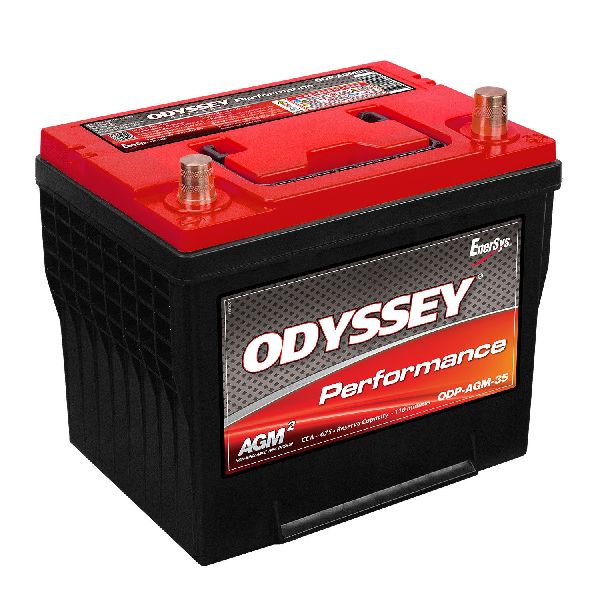
Aftermarket price range: $150-$300 (Used/Remanufactured) - Battery — A weak battery is a very common cause of transient communication codes on this platform due to low voltage during cranking.
Trusted brands: Interstate, DieHard, Duralast
OEM price range: $200-$300
Aftermarket price range: $150-$250 - Engine Control Module (ECM) — If all wiring, grounds, and other modules are confirmed to be good, the ECM itself can fail internally, causing it to stop communicating. This is less common than other causes.
Trusted brands: Hitachi (OEM), Remanufactured OEM
OEM price range: $800-$1200
Aftermarket price range: $300-$600 (Remanufactured)
Related Codes That Often Appear With This One
- U1000 — U1000 is a general CAN communication failure code. U1001 is more specific, often pointing to a communication issue related to the ECM. They frequently appear together as they both indicate a problem on the vehicle's communication network.
- P0300 (Random Misfire) — If the ECM is having communication issues, it may not be able to properly control ignition timing or fuel injection, leading to misfires. A Reddit user with a 350Z experienced this combination when their car was losing power on the highway.
- C1109, C1110, C1136 — These are ABS/VDC control unit codes, often related to battery voltage issues or internal controller failure. Seeing them with U1001 strongly points towards a power supply problem or a faulty ABS module dragging down the network.
Technical Service Bulletins (TSBs) & Recalls
- ITB10-029A: This TSB provides service information for diagnosing CAN communication codes like U1000 and U1001. It advises technicians to always diagnose these codes first, notes that a module reporting the code is often working correctly, and stresses the importance of checking power, ground, and CAN resistance at a suspect module before replacing it.
Platform-Specific Known Issues
- The factory grounding system is a known weak point. Many owners install aftermarket grounding kits or upgrade the main battery-to-chassis ground to prevent electrical issues.
- The battery compartment drain clogs easily, leading to water damage to the IPDM. This is a very common and well-documented failure pattern.
- Some owners have traced the issue to needing to perform an 'Idle Air Volume Learning' or 'Accelerator Pedal Released Position Learning' procedure after replacing a throttle body or pedal, which can otherwise cause communication faults.
Mechanic-Grade Diagnostic Values
- CAN Bus Network Resistance — expected: Approximately 60 Ω. Failure: A reading of 120 Ω indicates a missing termination resistor or an open in the circuit. A reading significantly lower than 60 Ω (e.g., 40 Ω) suggests an extra termination resistor or a shorted module.
- Terminating Module Resistance — expected: Approximately 120 Ω. Failure: An open loop (OL) or significantly different reading when measuring a disconnected terminating module (like the ECM or IPDM) indicates the internal resistor has failed.
- CAN High (CAN-H) Voltage to Ground (KOEO) — expected: Approximately 2.5V (idle), pulses to 3.5V (dominant). Failure: Stuck high, stuck low, or abnormal idle voltage (e.g., 1.5V) can indicate a short or open on the line. An oscilloscope is the best tool for this measurement.
- CAN Low (CAN-L) Voltage to Ground (KOEO) — expected: Approximately 2.5V (idle), pulses to 1.5V (dominant). Failure: Stuck high, stuck low, or abnormal idle voltage (e.g., 0.9V) can indicate a short or open on the line. An oscilloscope is the best tool for this measurement.
Hidden / Shadow Codes Worth Checking
- N/A (Function-based): Infiniti/Nissan does not use 'shadow codes' in the same way as some German brands. Instead, the dealer-level CONSULT tool provides a 'CAN Diag Support Monitor' or 'V-CAN' screen. This is a matrix display showing which modules are successfully transmitting (TX) and receiving (RX) signals on the network. A 'NG' (No Good) or blank space in this matrix is the equivalent of a hidden code, pinpointing the exact module or part of the network that is offline, which is not visible with standard OBD-II readers. (see via Infiniti CONSULT-II or CONSULT-III plus diagnostic tool.)
Scan Tool Commands That Help

- Infiniti CONSULT-II / CONSULT-III plus: CAN Diagnosis Support Monitor — This is the primary function to use when a U1001 code is present. It provides a live network map of all CAN modules and shows which specific module has stopped communicating, guiding the diagnostic process.
- Infiniti CONSULT-II / CONSULT-III plus: Self Diagnosis (All Systems) — Run this to get a complete list of all DTCs from every module. This helps determine which module is logging the U1001 code and what other related codes are present, which can help identify the root cause (e.g., an ABS module logging a voltage code alongside the U1001).
- Infiniti CONSULT-II / CONSULT-III plus: Idle Air Volume Learn (IAVL) — This, along with other learn/reset procedures, is often required after replacing and reprogramming a major control module like the ECM to ensure proper engine operation.
Wiring & Ground Locations
- CAN Bus Terminating Resistors — The two 120Ω terminating resistors are typically located inside the Engine Control Module (ECM) and the Intelligent Power Distribution Module (IPDM).. The entire CAN network relies on having exactly two of these resistors. If a module containing a resistor fails or is disconnected, the total network resistance will change from 60Ω to 120Ω, causing communication to become unreliable.
- Primary Transmission Ground — Located on the top middle of the engine's front timing chain cover. Two wires are landed on this point, one of which is the main ground for the transmission.. A poor ground for the Transmission Control Module (TCM) can cause it to drop off the CAN network, leading other modules like the ECM to log a U1001 code.
- Engine Room Grounds (E17, E43) — These are major grounding points located in the engine compartment, typically on the chassis rails or strut towers. Service manual diagrams show their general location.. These points provide the ground path for numerous modules and sensors in the engine bay, including the IPDM and ECM. Corrosion here is a very common cause of network codes.
- Instrument Panel Grounds (M30, M66) — These are ground distribution points located behind the instrument cluster and on the right side of the dash, respectively.. These ground the Body Control Module (BCM), combination meter, and A/V unit. A fault at these points can cause those specific modules to fail and bring down the network.
Real Owner Repair Stories
- MyG37 Forum User (2009 Infiniti G37x (sister platform with identical CAN architecture)) — VDC and SLIP lights on, trip computer resets on every start, codes U1000 and U1001.
❌ Tried (didn't work) Checking brake fluid, Visual inspection of fuses in interior fuse box.
✅ What actually fixed it The owner had shorted the wires in the powered rearview mirror while attempting to hardwire a radar detector. This blew a 10A fuse located in the fuse panel next to the battery, which resolved the issue once replaced. - YouTube Channel 'Just Dip'n' (Nissan Skyline 350GT (V36 platform, same as 2007-2008 G35 Sedan)) — Multiple warning lights, no-start condition, codes U1000 and U1001 in ECM, ABS, and other modules.
❌ Tried (didn't work) Initial visual inspection of modules.
✅ What actually fixed it The root cause was a corroded CAN bus wire. A clogged body drain passage located behind the brake booster had caused water to pool and rot the wiring harness that passed through the area. Repairing the broken/corroded wire fixed the communication failure. - Pico Technology Forum User (Professional Technician) (2008 Infiniti G35X) — No speedometer, VDC/SLIP lights on, no A/C control, no communication with ABS, A/V, and SIR modules. Code U1000 present.
❌ Tried (didn't work) The dealer had already replaced the ECM, ABS module, IPDM, A/C amp, and three wiring harnesses without fixing the issue.
✅ What actually fixed it The technician systematically disconnected modules while monitoring CAN line resistance to ground. They found that the seat module and steering angle sensor module were shorted on the CAN Low side, while the IPDM and A/V module were shorted on the CAN High side. Replacing these faulty modules was the required fix.
"I Checked Everything" — The Actual Cause
- While not a smoke test, a common diagnostic dead-end involves checking all major modules (ECM, TCM, BCM) and finding they are powered, grounded, and appear functional. In one documented case, the actual cause was a corroded CAN wire hidden in a harness behind the brake booster. The corrosion was caused by a clogged body drain, a location not typically associated with a primary module failure, causing technicians to miss it on initial inspection.
When the Usual Fixes Don't Work
- In several documented cases, the most common fixes (battery, grounds) did not resolve the U1001 code. One owner on a G37 forum ultimately traced their issue to a blown 10A fuse for the mirror/homelink system, which they had shorted while installing a radar detector. In another professional diagnostic case on a 2008 G35, after a dealer had already replaced the ECM, IPDM, and multiple harnesses, the true cause was found to be internal shorts within the driver's seat module and A/V control unit that were dragging the entire network down. These instances highlight that on a complex CAN system, the fault can originate from an unexpected and seemingly unrelated component.
Model Year Variations Within This Range
- 2005-2006 (V35 Sedan) / 2005-2007 (V35 Coupe): These models are part of the first generation (V35). The OBD-II port uses Pin 6 for CAN High and Pin 14 for CAN Low (for 2004.5 and newer models). They primarily use the VQ35DE engine (including the 'Rev-Up' version on later 6MT models).
- 2007-2008 (V36 Sedan): The 2007-2008 G35 sedan is the second generation (V36) and features a major redesign with different electronics, interior, and the VQ35HR engine. The IPDM is a different part number (e.g., 284B7-JK000 for the sedan vs. a 284B7-prefix part for the coupe) and is more integrated. While the root causes are similar, module locations and specific wiring will differ from the V35 generation.
- 2005 (and earlier): Models made before the mid-2004 refresh may have a different CAN pinout at the OBD-II port. Some sources indicate these early models use Pin 3 (Red wire) for CAN Low and Pin 6 (Blue wire) for CAN High, with Pin 14 being empty. This is a critical difference for anyone attempting to diagnose using the DLC.
Helpful Videos


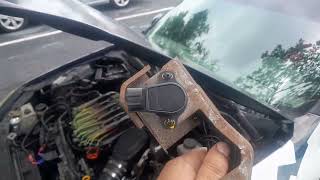
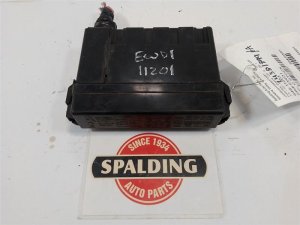
Used OEM Parts in Stock


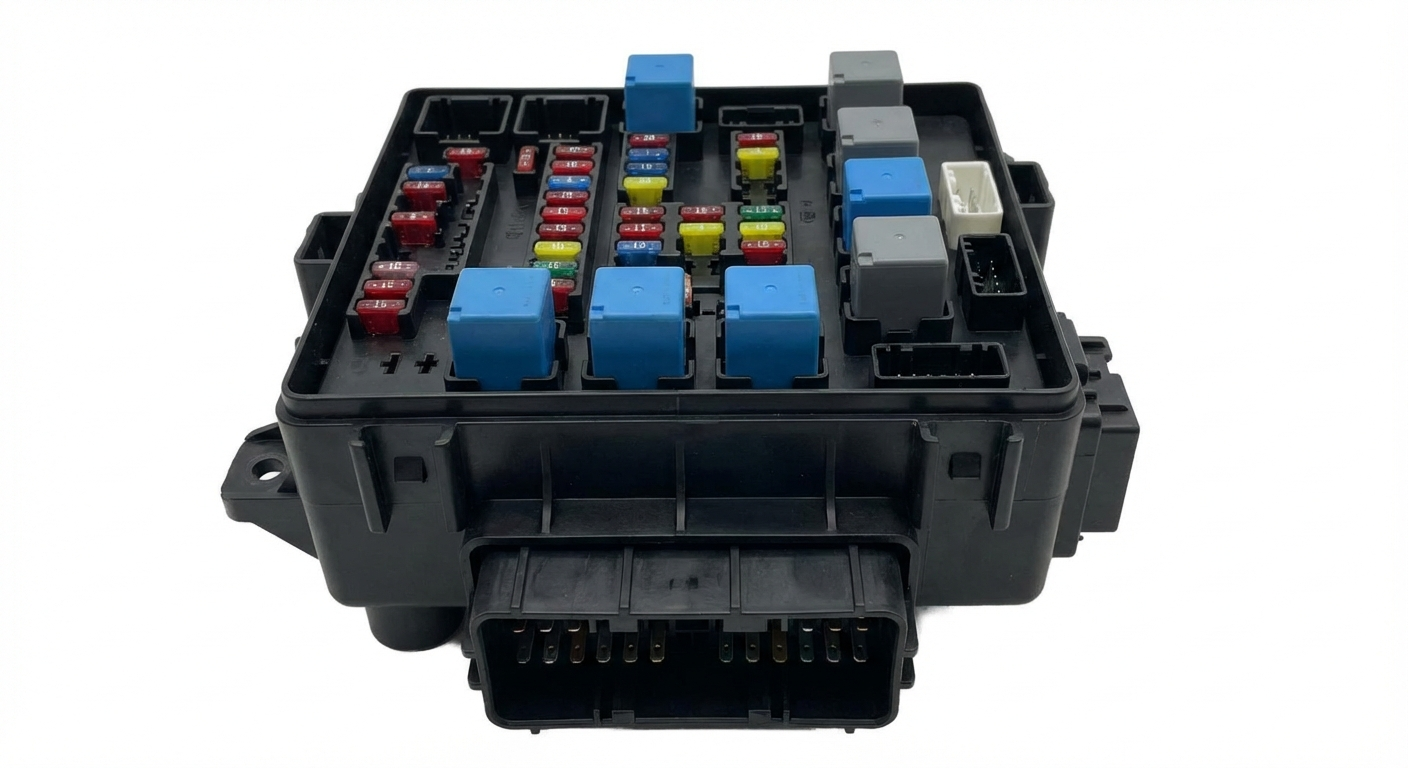


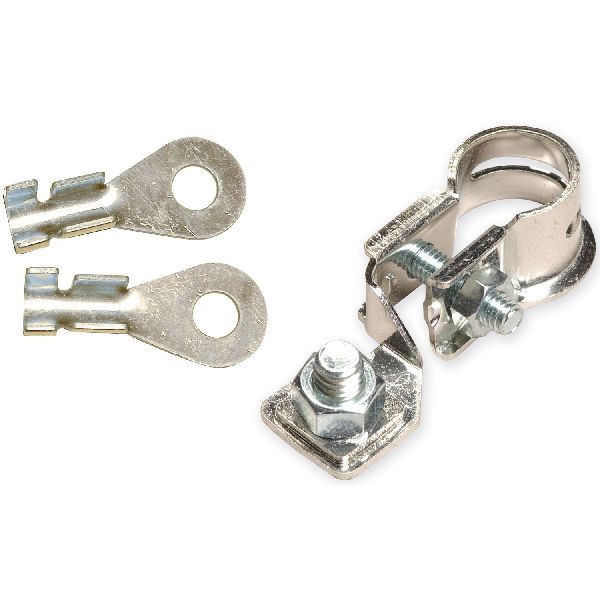
New Aftermarket Parts Available


The information in this article is provided for general reference and educational purposes only. Vehicle specifications, procedures, and part compatibility can vary by production date, trim level, and region. Always consult your vehicle's factory service manual and verify part numbers before purchasing or performing repairs. Safety-critical components such as airbags, seat belts, and braking systems should be installed by a qualified professional.
- Infiniti G35:
- 🎬 Helpful Videos
- 🛍️ Shop This Part
- What's Unique About the 2005-2008 Infiniti G35
- Diagnostic Flowchart
- Symptoms You May Notice
- Most Likely Causes
- Rare But Worth Checking
- Diagnosis Steps
- Parts You'll Likely Need
- Related Codes That Often Appear With This One
- Technical Service Bulletins (TSBs) & Recalls
- Platform-Specific Known Issues
- Mechanic-Grade Diagnostic Values
- Hidden / Shadow Codes Worth Checking
- Scan Tool Commands That Help
- Wiring & Ground Locations
- Real Owner Repair Stories
- "I Checked Everything" — The Actual Cause
- When the Usual Fixes Don't Work
- Model Year Variations Within This Range
- 🎟️ Get 5% Off