

U1000 on 2006-2016 Volvo S80: Diagnosing and Fixing Communication Failures
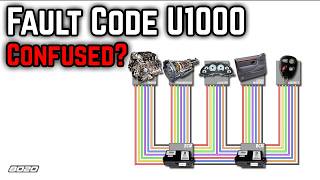
U1000 indicates a network communication failure on your Volvo S80. The most common causes are a failing Central Electronic Module (CEM) or a weak/failing battery. Always test the battery and charging system before suspecting the more expensive CEM, as low voltage is a frequent trigger for communication faults on this platform.
- U1000 means there is a communication breakdown between electronic modules in your S80.
- Before suspecting expensive components, always test your battery and charging system first, as low voltage is a common cause.
- The most likely culprit on a 2006-2016 S80 is a failing Central Electronic Module (CEM).
- Diagnosing this code properly requires a Volvo-specific scan tool; a generic code reader is not sufficient.
- Repairing a faulty CEM typically involves sending it to a specialist for rebuilding and cloning, which is more cost-effective than a new dealer part.
What's Unique About the 2006-2016 Volvo S80
On many vehicles, a U1000 code is frequently traced to simple wiring or ground issues. While those are possible on the S80, this platform's electronic architecture is heavily reliant on the Central Electronic Module (CEM) as a primary gateway. This specific module is a known failure point on Volvos of this era, often due to internal solder joint fractures from heat and age. As a result, a U1000 code on an S80 is much more likely to be caused by a failing CEM than on other manufacturers' vehicles. Another key factor is the platform's sensitivity to voltage; a battery that is merely weak, not dead, can cause modules to fail their startup sequence, triggering communication codes.
Symptoms You May Notice
- Multiple, random warning lights on the instrument cluster (ABS, Brake, SRS, Check Engine).
- Instrument cluster gauges (speedometer, tachometer) stop working intermittently or permanently.
- Electrical features fail randomly, such as power windows, radio, wipers, or climate control.
- Message on the display like "Engine System Service Required" or "Brake Failure, Stop Safely".
- The engine cranks but does not start, sometimes showing a dash (-) where the gear indicator should be.
- The transmission shifts harshly or gets stuck in limp mode.
- Complete loss of communication with the vehicle using a diagnostic scanner.
- Wipers or headlights turn on by themselves and may not turn off.
- Replacing individual modules like the ABS or transmission controller. While another module *can* fail and disrupt the network, the U1000 code often signifies a broader network problem, and the CEM is the most common single point of failure.
- Ignoring a weak battery. Because the car may still crank, many overlook the battery as the source of complex electronic faults, but voltage sensitivity is a key characteristic of this platform.
Most Likely Causes
- Failing Central Electronic Module (CEM) 🔴 High Probability The CEM on this platform is known to fail from heat stress, leading to internal cracks in solder joints and disrupting network communication. Water intrusion from clogged sunroof drains can also corrode the CEM, which is located under the dashboard.
How to confirm: Use a Volvo-specific scanner (VIDA) to check for communication with the CEM. If the CEM is unresponsive or has stored multiple communication fault codes (e.g., CEM-1A5F, CEM-E001), it is the likely culprit. Technicians may use a hairdryer to gently heat the CEM and see if symptoms appear, indicating a heat-related internal failure.
Typical fix: The CEM must be repaired by a specialist service that can rebuild the board (like XeMODeX or Module Repair Pro), or replaced. A new or used module requires vehicle-specific programming (cloning) to work, as it stores key and immobilizer data.
Est. part cost: $350-$800 for a repair service, $1200-$2000 for a new dealer-programmed unit. - Weak or Failing Battery 🟡 Medium Probability Modern Volvos are very sensitive to voltage. A battery that provides enough power to crank the engine may still drop below the necessary voltage (~12.0V) for all modules to initialize correctly, causing communication timeouts and codes like U1000.
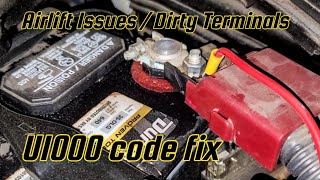
How to confirm: Test the battery with a digital multimeter or electronic tester. A healthy, resting battery should be at ~12.6V. Check the voltage during cranking; if it drops below 10.5V, the battery is weak and should be replaced. Also check for corroded battery terminals, which can cause similar issues.
Typical fix: Replace the battery and clean the terminals thoroughly. Ensure the new one is properly registered to the vehicle if it has a Battery Monitoring System (BMS).
Est. part cost: $150-$300 - Faulty Alternator ⚪ Low Probability Alternator failure is a common concern on higher-mileage S80s of this generation.
How to confirm: With the engine running, test the voltage at the battery terminals. A healthy alternator should produce between 13.5V and 14.5V. If the voltage is low, high, or fluctuating wildly, the alternator or its voltage regulator is likely failing.
Typical fix: Replace the alternator.
Est. part cost: $300-$700 - Corroded Wiring or Ground Connections ⚪ Low Probability Water intrusion from clogged sunroof drains is a known issue that can lead to corrosion of wiring harnesses and modules in the cabin, including the CEM.
How to confirm: Visually inspect the main battery terminals, chassis ground straps, and the large connectors at the CEM itself for any signs of green or white corrosion or looseness. Check the floor and under the dash for signs of moisture.
Typical fix: Clean the corroded terminals with a wire brush and contact cleaner. Tighten any loose connections. Repair or replace damaged wiring sections. Unclog sunroof drains to prevent recurrence.
Est. part cost: $5-$50 for cleaning supplies or small wiring repairs.
Rare But Worth Checking
- Faulty ABS Module: A failing ABS module can sometimes disrupt the CAN bus and cause a U1000 code, often accompanied by an "Anti-skid service required" message.
- Clogged Sunroof Drains: This is less a direct cause and more a catalyst for other failures. Clogged drains allow water to leak into the cabin, directly onto the CEM and other electronics, causing corrosion and failure.
Diagnosis Steps
- Check Battery and Charging System: Start with the simplest and most common cause. Test the battery's resting (~12.6V) and cranking voltage (should stay above 10.5V). With the engine running, verify the alternator is charging correctly (13.5V-14.5V). Clean any corrosion from battery terminals.
- Perform a Full System Scan: Use a Volvo-specific diagnostic tool (like VIDA with a DiCE interface) to scan all modules. A generic OBD-II reader is insufficient as it cannot communicate with the CEM and other body modules. Note which modules are not responding.
- Check for Related Codes: Look for other 'U' codes or specific CEM codes like CEM-E001 or CEM-1Axx, which confirm a communication breakdown.
- Inspect for Water Intrusion: Check for dampness in the front footwells or headliner, a classic sign of clogged sunroof drains. If wet, this significantly increases the likelihood of a corroded CEM or wiring.
- Inspect CEM Connections: Locate the Central Electronic Module (on P3 models, it's typically under the passenger side dashboard). Disconnect the battery first. Then, unplug the CEM connectors and inspect for corrosion, moisture, or bent pins. Taking a photo of the relays before removal is recommended for easier reassembly.
- Inspect Grounds: Check the main battery ground and engine-to-chassis ground straps for tightness and corrosion.
- Test CAN Bus Network (Professional): A technician can test the CAN bus resistance at the OBD-II port (should be ~60 Ohms with the battery disconnected) and check for signal activity with an oscilloscope to verify network integrity.
- Isolate the Faulty Module: If the CEM is suspected, the most definitive test is to send it to a specialized repair service (like XeMODeX) for bench testing or to swap it with a known-good, properly programmed unit.
Parts You'll Likely Need
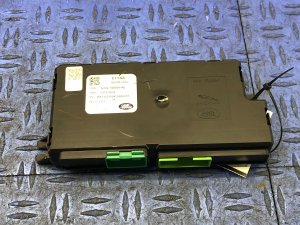
- Central Electronic Module (CEM)
(OEM #Varies by year/options (e.g., 31282122, 31334435). Always verify by VIN.)— This module is the most common point of failure causing network-wide communication loss on this platform.
Trusted brands: Volvo (OEM), Services like XeMODeX or Module Repair Pro offer repair/rebuild.
OEM price range: $1200-$2000 (requires dealer programming)
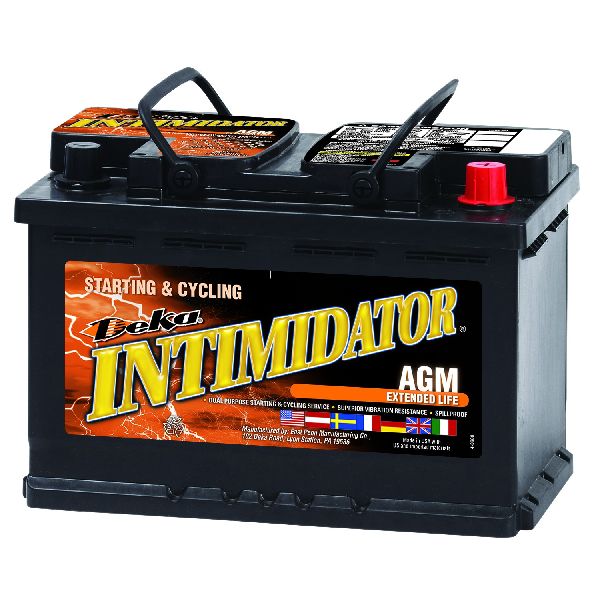
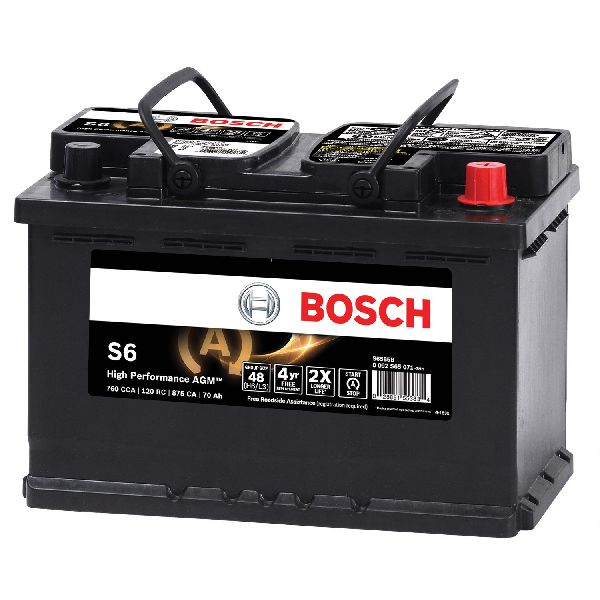
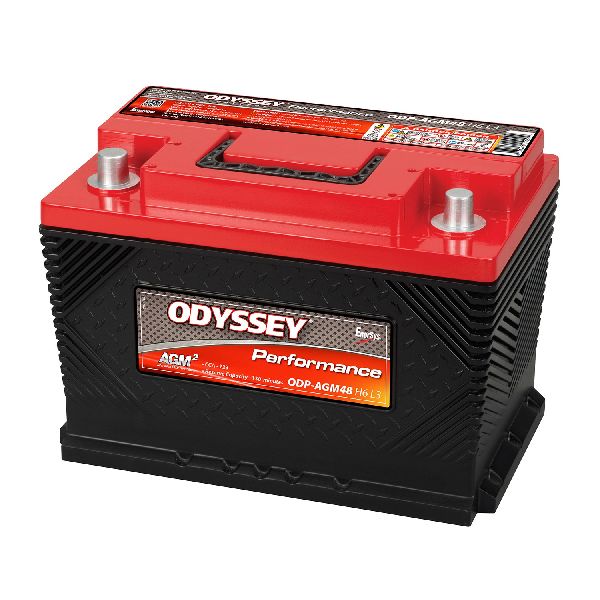
Aftermarket price range: $350-$800 (for a rebuild/cloning service) - Car Battery — Low system voltage from a weak battery is a frequent trigger for communication fault codes.
Trusted brands: Interstate, Bosch, DieHard, Volvo (OEM AGM)
OEM price range: $250-$400
Aftermarket price range: $150-$300
Related Codes That Often Appear With This One
- CEM-1A5F — A Volvo-specific code for 'Communication with BCM control module signal missing', directly pointing to a CAN bus communication failure originating from or involving the CEM.
- CEM-E001 — This is a Volvo-specific code indicating a control module communication fault, directly related to the U1000 network failure.
- U0xxx codes — Other U-codes (e.g., U0100 - Lost Communication with ECM, U0101 - Lost Communication with TCM) often accompany U1000 and can help pinpoint which modules are offline.
Technical Service Bulletins (TSBs) & Recalls
- NHTSA Recall 13V377000: A 2013 recall for 2014 S80s where the CEM software could cause wipers, turn signals, and high beams to fail.
- NHTSA Recall 12V415000: A 2012 recall for 2013 S80s where a CEM software error prevented the TPMS from working correctly.
- NHTSA Campaign ID 09V483000: Recall for 2008-2010 S80s where a CEM software issue could prevent the fuel pump from starting.
Platform-Specific Known Issues
- The Central Electronic Module (CEM) in P3 platform Volvos is known to be susceptible to failure from heat and vibration, causing intermittent and eventually permanent communication faults across the CAN bus network.
- Volvo issued multiple recalls and service bulletins for S80 models involving software upgrades for the CEM to fix various electrical issues, highlighting the module's critical and complex role.
- Clogged sunroof drains are a notorious problem, allowing water to leak directly into the cabin and damage the CEM and other electronics located under the dash.
Mechanic-Grade Diagnostic Values
- CAN Bus Network Resistance — expected: ~60 Ohms. Failure: A reading of ~120 Ohms indicates one of the two terminating resistors is offline (or an open circuit exists). A reading near 0 Ohms indicates a short circuit between the CAN High and CAN Low wires.
- CAN Bus Voltage (Key On, Engine Off) — expected: CAN High (Pin 6 to ground): ~2.6V to 3.5V. CAN Low (Pin 14 to ground): ~1.5V to 2.4V.. Failure: Voltages that are stuck at 0V, battery voltage, or are identical on both lines indicate a short to ground, short to power, or short between the lines.
- CAN Line to Ground Resistance — expected: Mega-ohms or Open Circuit (OL). Failure: Any low resistance reading indicates a short to ground on either the CAN High or CAN Low line.
Hidden / Shadow Codes Worth Checking
- CEM-DF03 to CEM-DF16: These are Volvo-specific DTCs indicating a CAN bus electrical fault (short to ground or 12V). DF03-DF06 refer to the low-speed network, while DF13-DF16 refer to the high-speed network. They are much more specific than a generic U1000 code. (see via A Volvo-specific diagnostic tool, such as VIDA/DiCE, is required to read these codes from the Central Electronic Module (CEM).)
- UEM-0004: This code for 'Siren Communication Fault' specifically points to a problem with the alarm module. If this code is present alongside network issues, the alarm siren module is a prime suspect. (see via Requires a Volvo-specific scanner like VIDA to read codes from the Upper Electronic Module (UEM).)
Scan Tool Commands That Help
- Volvo VIDA: CEM Reload — This function is used to download software to the Central Electronic Module. It is required when a new CEM is installed or if an existing CEM's software is suspected to be corrupt. It is a dealer/specialist level function.
- Volvo VIDA: Network Graph / Fault Trace — This is the primary diagnostic screen in VIDA. It displays a graphical representation of all control modules on the network. Modules that are not communicating will be flagged (often in red or orange), immediately showing the technician which part of the network has failed.
- Volvo VIDA: Advanced Test — This function allows a technician to test communication with individual control units to see if they are responsive before attempting a software download or further diagnosis.
Wiring & Ground Locations
- CEM (Central Electronic Module) — On P3 platform models like the 2006-2016 S80, the CEM is typically located behind the glove box on the passenger side.. This is the central hub for network communication. Physical inspection for corrosion from water leaks (clogged sunroof drains) or loose connectors is a critical diagnostic step.
- G1 / G2 / G3 / G4 — These are primary engine bay ground points. For a 2009 S80: G1 is at the right front of the engine, G2 and G3 are at the left front of the engine, and G4 is at the lower left front of the engine.. Poor engine or module grounds are a common cause of communication codes. These points provide the ground path for critical modules like the ECM. Corrosion or looseness here can disrupt the entire network.
- Alarm Siren Module (SAM) — Located in the front passenger-side wheel well, ahead of the wheel and behind the fender liner.. This module is on the CAN bus and is a known failure point. Its internal battery can leak, corroding the circuit board and disrupting network communication, which can trigger a U1000 code.
Real Owner Repair Stories
- Consensus from multiple Volvo forums and repair sites (P3 Platform Volvos (S80, XC70, etc.) 2007-2016) — Intermittent no-start with a dash (-) for the gear indicator, multiple random warning lights (ABS, Brake, SRS), gauges stop working, transmission clunks into limp mode.
❌ Tried (didn't work) Replacing the battery without confirming it was bad, replacing individual modules like the ABS controller without a full network diagnosis.
✅ What actually fixed it In a high number of documented cases, the root cause was a failed Central Electronic Module (CEM) due to internal heat stress or water damage. The fix was either having the original CEM repaired and rebuilt by a specialist service or having its data cloned to a matching used unit. - Volvo Owners Club Forum / FCP Euro Technical Articles (P2/P3 Platform Volvos (S80, V70, etc.)) — "Alarm System Service Required" message, sunroof stops working, intermittent electrical faults, possible battery drain.
❌ Tried (didn't work) Pulling the alarm fuse, which can disable other features like the sunroof.
✅ What actually fixed it The internal battery in the alarm siren module had leaked and corroded the circuit board. Replacing the entire alarm siren module resolved the communication fault (UEM-0004) and cleared the associated network issues.
Model Year Variations Within This Range
- 2007-2010: Early P3 platform S80 models used a specific CEM made by Delphi with a "flat end-connector" style. When sourcing a used part for cloning, it is critical to match it to this specific hardware generation.
- 2009+: Later P3 models used a different microprocessor in the CEM (e.g., Renesas R5F6424 / R5F6425 starting around 2009), distinct from the earlier M30882F processor. This makes part number and model year matching absolutely essential when replacing or cloning the CEM.
Diagnostic Flowchart
Other Known Issues on This Vehicle
Issues unrelated to this code that are worth knowing about as an owner of this generation:
- Excessive Oil Consumption (3.2L SI6 Engine) 🔴 High — Common on early 3.2L engines, often due to piston ring design. Can manifest after 60,000 miles. (Ref: Volvo issued technical journals addressing oil consumption tests, but no widespread recall.)
- Power Steering Pump/Reservoir Hose Failure 🟠 Medium — Hoses can burst or the pump can fail, leading to a sudden loss of power steering. More common on earlier models of the generation. (Ref: NHTSA Recall 10V052000 for 2007-2009 models due to an incorrectly routed return hose.)
- Clogged Sunroof Drains 🟠 Medium — Very common if not preventatively maintained. Debris clogs the drain tubes, causing water to back up and leak into the cabin, often damaging electronics.
- Worn Front Control Arm Bushings 🟡 Low — Bushings are a common wear item, leading to squeaking or knocking noises over bumps and potential alignment issues.
- Starter Motor Fuse Blowing (Start/Stop Function) 🟠 Medium — Affected a specific range of 2016 models with the automatic start/stop feature, potentially preventing the car from restarting. (Ref: NHTSA Recall 15V555000.)
Used vs. New Parts: Buying Guide for This Vehicle
When a used part is the smart pick: For the Central Electronic Module (CEM), using a second-hand part is a very common and cost-effective strategy. However, it is NOT plug-and-play. The data from your original, faulty CEM (containing immobilizer, key, and vehicle configuration data) MUST be professionally cloned to the donor unit.
Donor-vehicle mileage cap: roughly under 150000 miles for the part to have meaningful remaining life.
What to inspect on the donor part:
- The part number on the donor CEM must EXACTLY match the part number on your original CEM.
- Visually inspect the donor unit for any signs of water damage, corrosion on the pins, or physical damage to the case.
- Source the part from a vehicle that was not involved in a flood or fire.
- Ensure the seller guarantees the part is functional, as it cannot be fully tested without being programmed to a vehicle.
OEM-only on this vehicle (don't cheap out):
- New Central Electronic Module (CEM): If buying new, it must be a Genuine Volvo part and requires programming by a dealer or specialist with a VIDA subscription.
Aftermarket brands forum-validated for this vehicle:
- XeMODeX: Widely cited as a reputable source for CEM repair and cloning services.
- Module Repair Pro: Another service mentioned for CEM repairs.
- Velectronix: Offers cloning services, specifically mentioning the early P3 Delphi CEMs.
Brands owners have reported issues with on this vehicle:
- No-name, unverified electronics repair services without a warranty or significant positive reviews.
Real Owner Stories
Aggregated from forums and TSBs cited above. Mileages and costs reflect what owners reported in those sources.
2008-2010 Volvo S80
Symptoms: The fuel pump would not start, leading to a no-start condition.
What fixed it: CEM software update per NHTSA Campaign ID 09V483000.
Source hint: NHTSA Campaign ID 09V483000
High-mileage Volvo S80 — ~150000 miles
Symptoms: Intermittent crank-no-start, a dash (-) displayed for the gear indicator, and non-functional gauges.
What fixed it: Checking battery voltage during cranking to ensure it stays above 10.5V before replacing the CEM.
Source hint: volvoXC.com - Thread: 'CEM Failure?' (Feb 2018)
Volvo S80
Symptoms: A 'Christmas tree' of dashboard lights and a complete no-start condition.
What fixed it: Sending the CEM to a specialized repair service like XeMODeX for a rebuild.
Source hint: matthewsvolvosite.com
Volvo S80
Symptoms: ABS and brake warning lights, the clock resetting itself, DIM failure, and a no-start condition that was temporarily fixed by disconnecting the battery.
What fixed it: Replacing or repairing the CEM (noting that a used unit cannot be swapped without programming).
Source hint: volvoforums.com - Thread: 'CEM failure' (Jan 2015)
Related OBD-II Codes
Frequently Asked Questions
My 2014 S80 has failing wipers and turn signals; is there a recall for this?
Can I swap a used CEM from another S80 into my car to fix the U1000 code?
Why does my S80 show a dash (-) in the gear indicator and refuse to start?
Is there a recall for the TPMS not working on my 2013 S80?
Could my S80's sunroof be related to the U1000 communication code?
My 2009 S80 won't start; could this be the fuel pump or the CEM?
Helpful Videos







Used OEM Parts in Stock



New Aftermarket Parts Available


The information in this article is provided for general reference and educational purposes only. Vehicle specifications, procedures, and part compatibility can vary by production date, trim level, and region. Always consult your vehicle's factory service manual and verify part numbers before purchasing or performing repairs. Safety-critical components such as airbags, seat belts, and braking systems should be installed by a qualified professional.
- Volvo S80:
- 🎬 Helpful Videos
- 🛍️ Shop This Part
- What's Unique About the 2006-2016 Volvo S80
- Symptoms You May Notice
- Most Likely Causes
- Rare But Worth Checking
- Diagnosis Steps
- Parts You'll Likely Need
- Related Codes That Often Appear With This One
- Technical Service Bulletins (TSBs) & Recalls
- Platform-Specific Known Issues
- Mechanic-Grade Diagnostic Values
- Hidden / Shadow Codes Worth Checking
- Scan Tool Commands That Help
- Wiring & Ground Locations
- Real Owner Repair Stories
- Model Year Variations Within This Range
- Diagnostic Flowchart
- Other Known Issues on This Vehicle
- Used vs. New Parts: Buying Guide for This Vehicle
- Real Owner Stories
- 2008-2010 Volvo S80
- High-mileage Volvo S80 — ~150000 miles
- Volvo S80
- Volvo S80
- Related OBD-II Codes
- Frequently Asked Questions
- 🎟️ Get 5% Off