

U1000 on 2012-2016 Nissan NV: CAN Communication Fault Causes and Fixes
Code U1000 on a 2012-2016 Nissan NV means there's a communication breakdown on the vehicle's internal network (CAN bus). The most common causes are bad ground connections, corroded wiring, a weak battery, or a faulty module pulling the network down. It is rarely the module that stores the code; diagnosis involves finding which module is offline or where the wiring fault exists.
- U1000 is a network code, not a component code. The problem is a loss of communication.
- Do not replace the module that has the U1000 code stored. The problem is almost always elsewhere.
- Always start diagnosis by checking the battery and cleaning all major ground connections. This simple step fixes a surprising number of cases.
- Diagnosing a U1000 code requires a process of elimination and is difficult without a professional scan tool that can show which modules are offline.
- On the Nissan NV specifically, be aware of TSB NTB13106E, which points to the audio and Around View Monitor systems as a potential cause.
What's Unique About the 2012-2016 Nissan NV

For the Nissan NV, this generic communication code has specific documented causes. A notable Technical Service Bulletin (NTB13106E) directly links the U1000 code to issues with the Around View Monitor (AVM) and Audio/Navigation unit, which may not be a common trigger on other Nissan models. Additionally, like many Nissans from this era, the NV is highly susceptible to poor or corroded ground connections, which are a frequent and well-documented source of CAN bus problems. The NV shares its F-Alpha platform with the Nissan Titan, which also frequently suffers from U1000 codes related to grounding and module failures. A critical component to check is the Intelligent Power Distribution Module (IPDM), a smart fuse/relay box that powers many other modules; its failure or corrosion within it is a common cause of network issues on these trucks.
Diagnostic Flowchart

Tap your situation to follow the diagnostic path that matches what you're seeing on this vehicle.
Symptoms You May Notice
- Check Engine Light is on
- ABS, VDC, or Slip warning lights are illuminated
- No-start or intermittent starting condition
- Inability for a standard OBD-II scanner to communicate with the vehicle or read the VIN
- Electrical glitches, such as the radio, navigation system, or power windows malfunctioning
- Transmission may enter a 'limp mode' or fail to shift correctly
- Instrument cluster gauges behaving erratically or not working
- A/C system may not function correctly
- Replacing the control module that stored the U1000 code. TSB NTB10066A explicitly states that the module reporting the code is typically operating normally. The fault lies with a module it cannot hear from or the network itself.
Most Likely Causes

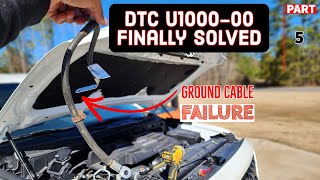
- Poor Ground Connections 🔴 High Probability Nissan TSBs and extensive owner reports confirm that corroded or loose ground points are a primary cause for communication codes across their lineup, including the NV. These grounds are essential for stable module operation, and even a small amount of resistance can disrupt the sensitive CAN signals. The main battery ground cable is a known failure point. 🎬 See how a faulty battery ground cable triggers this code.
How to confirm: Locate the main ground points. Key locations include the negative battery cable to the body, the main engine block ground strap, and smaller grounds on the chassis near control modules. Inspect for green or white corrosion, rust, or looseness. Clean the contact points with a wire brush and ensure they are tight.
Typical fix: Clean and secure all relevant ground connections. This often resolves the issue with no parts cost. Applying dielectric grease can help prevent future corrosion.
Est. part cost: $0-$10 - Damaged or Corroded Wiring/Connectors 🔴 High Probability The CAN wiring harness can be subject to chafing against brackets or the frame, moisture intrusion (especially at connectors low on the vehicle), or rodent damage. This can lead to an open circuit, a short to ground, or a short between the CAN High and Low wires.
How to confirm: Visually inspect the wiring harnesses leading to the non-communicating module. Look for chafing, melting, or green crust at connectors. Check for power and ground at the module's connector. Use a multimeter to check for continuity and resistance on the CAN High and CAN Low wires.
Typical fix: Repair the damaged section of wire or replace the corroded connector pigtail. Nissan offers a harness repair program and parts.
Est. part cost: $10-$50 - Weak or Failing Battery 🟡 Medium Probability Low system voltage during engine cranking can cause temporary communication glitches between modules, logging a U1000 code that may not indicate a permanent fault. This is especially true for batteries older than 5 years.
How to confirm: Test the battery with a digital load tester. A simple voltage check is not sufficient, as a weak battery can show 12V at rest but drop excessively under load. Ensure terminals are clean and tight.
Typical fix: Charge or replace the battery. Many owners report the U1000 code disappearing and not returning after a battery replacement.
Est. part cost: $150-$300 - Faulty Control Module 🟡 Medium Probability
How to confirm: This is a process of elimination. If the battery, grounds, and all wiring to the offline module are confirmed to be good, the module itself is the likely culprit. A professional scan tool can help identify which module is not responding. A common failure point is the ABS module, which can cause a U1000 in other modules when it fails.
Typical fix: Replace the failed module (e.g., ABS module, BCM, TCM). The new module will likely require programming by a dealer or qualified shop using a tool like Nissan's CONSULT.
Est. part cost: $300-$1500+ - Audio/Navigation or Around View Monitor (AVM) Unit Fault ⚪ Low Probability TSB NTB13106E specifically identifies issues with the AVM control unit or audio/nav system configuration as a potential cause for a U1000 code on the Nissan NV. Symptoms can include erratic audio volume.
How to confirm: If symptoms align with the TSB (e.g., erratic audio volume), a dealer can check the configuration of the audio/navigation unit using their proprietary CONSULT scan tool. The TSB outlines the diagnostic steps for a technician to follow.
Typical fix: Correct the unit's configuration or replace the faulty AVM or audio control unit as per the TSB.
Est. part cost: $400-$2000
Rare But Worth Checking
- Aftermarket Electronics Interference: Improperly installed aftermarket stereos, alarms, or remote starters can tap into the CAN bus incorrectly and disrupt communication, causing a U1000 code. This can introduce noise or incorrect resistance to the network.
- Blown Fuses: A blown fuse for a specific control module will prevent it from powering on and communicating, causing other modules to log a U1000 code. Always check fuses for related systems (BCM, TCM, ABS) in the interior and under-hood fuse boxes. A missing high-level fuse like 'Ignition 2' can prevent the CAN diagnostic monitor from working correctly.
- Faulty Intelligent Power Distribution Module (IPDM): The IPDM is more than a fuse box; it's a control module that powers up other modules. Internal corrosion or a failing ECM relay inside the IPDM can cut power to critical modules, causing a widespread CAN failure and a U1000 code. The original white-colored IPDMs are known to fail and were superseded by a more reliable black version.
Diagnosis Steps
- Check Battery Health: Start by ensuring the battery is fully charged and passes a load test. A voltage drop during startup is a common trigger. Clean any corrosion from the battery terminals.
- Scan All Modules: Use a professional-grade scan tool to perform a 'network test' or 'module roll call' to see which modules are communicating and which are not. The module that is NOT responding is the primary suspect.
- Inspect Grounds: Visually inspect and clean the main battery-to-chassis ground, engine-to-chassis ground, and any grounds near the non-communicating module. These are known weak points on Nissans.
- Check Fuses: Inspect all fuses related to the non-communicating module in both the under-hood (IPDM) and interior fuse panels. Pay special attention to main fuses like 'Ignition 1', 'Ignition 2', and 'Elec B' as they power multiple modules.
- Inspect Wiring: Visually inspect the wiring harness and connector for the suspect module. Look for any signs of physical damage, chafing, melting, or corrosion. Pay attention to areas where the harness may rub against the frame or engine components.
- Test the CAN Circuit: With the battery disconnected and the vehicle 'asleep' (wait 10-15 mins), use a multimeter to check for resistance between the CAN High (Pin 6) and CAN Low (Pin 14) terminals at the OBD-II port. A healthy network should read approximately 60 ohms. A reading of 120 ohms suggests an open circuit or a faulty terminating resistor (often in the ECM or BCM). A reading below 60 ohms suggests a short between the CAN wires or a faulty module.
- Isolate the Faulty Module: If wiring seems intact, try unplugging modules one by one (starting with the suspect one) to see if network communication is restored to the other modules. If unplugging a specific module brings the rest of the network back online (e.g., resistance returns to 60 ohms), that module is likely faulty and pulling the network down.
Parts You'll Likely Need
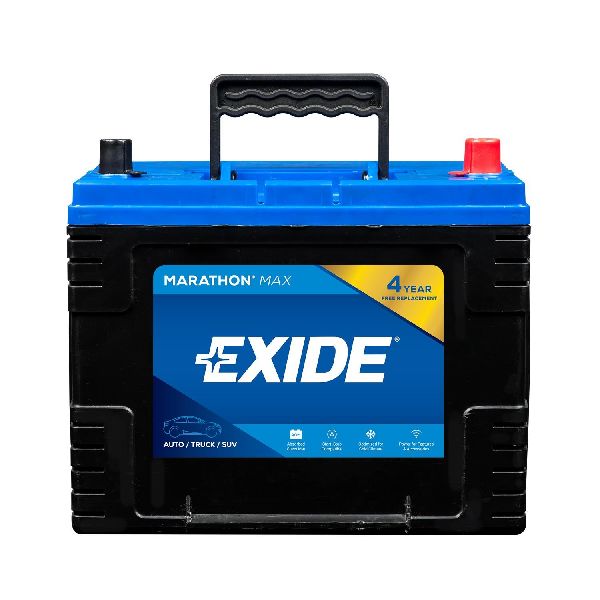
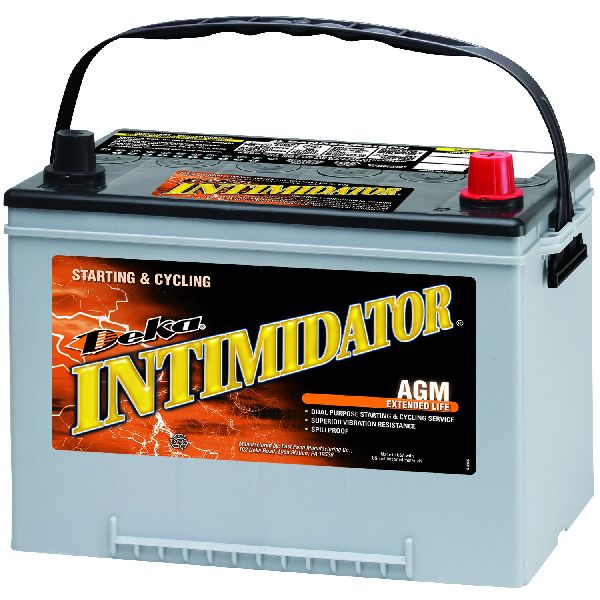
- Battery — A weak battery is a common cause of spurious communication codes during startup.
Trusted brands: Interstate, DieHard, Duralast
OEM price range: $200-$350
Aftermarket price range: $150-$300 - ABS Control Module
(OEM #e.g., 47660-1PA0A, 47660-9SF1A, 47660-9SM0A)— The ABS module is a frequent point of failure on many vehicles, and when it goes offline, it will cause other modules to store a U1000 code.
Trusted brands: Nissan (OEM), Bosch (OEM supplier)
OEM price range: $900-$1400
Aftermarket price range: $400-$800 (Remanufactured) - Intelligent Power Distribution Module (IPDM)
(OEM #e.g., 284B7-1PA0A, 284B6-1PA0A)— This 'smart fuse box' is a known failure point. Internal corrosion or relay failure can cut power to essential modules, bringing down the CAN network. The original white-cased modules are particularly prone to failure.
Trusted brands: Nissan (OEM)
OEM price range: $300-$500
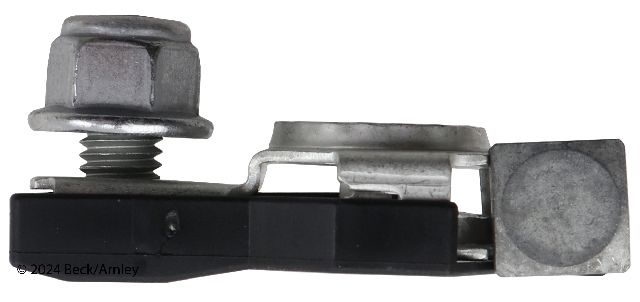
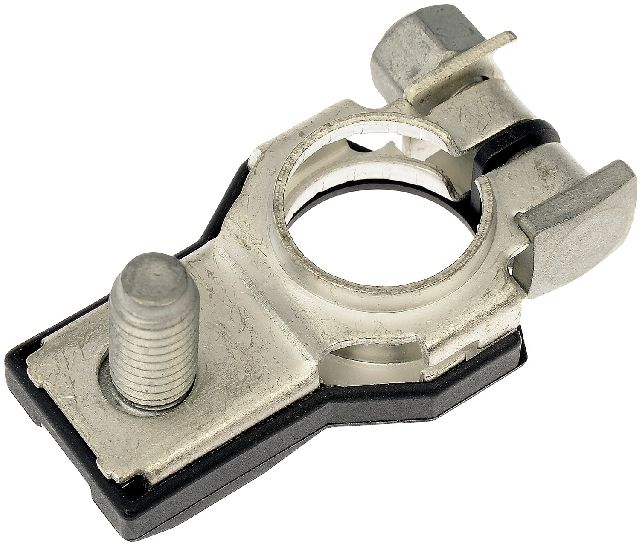
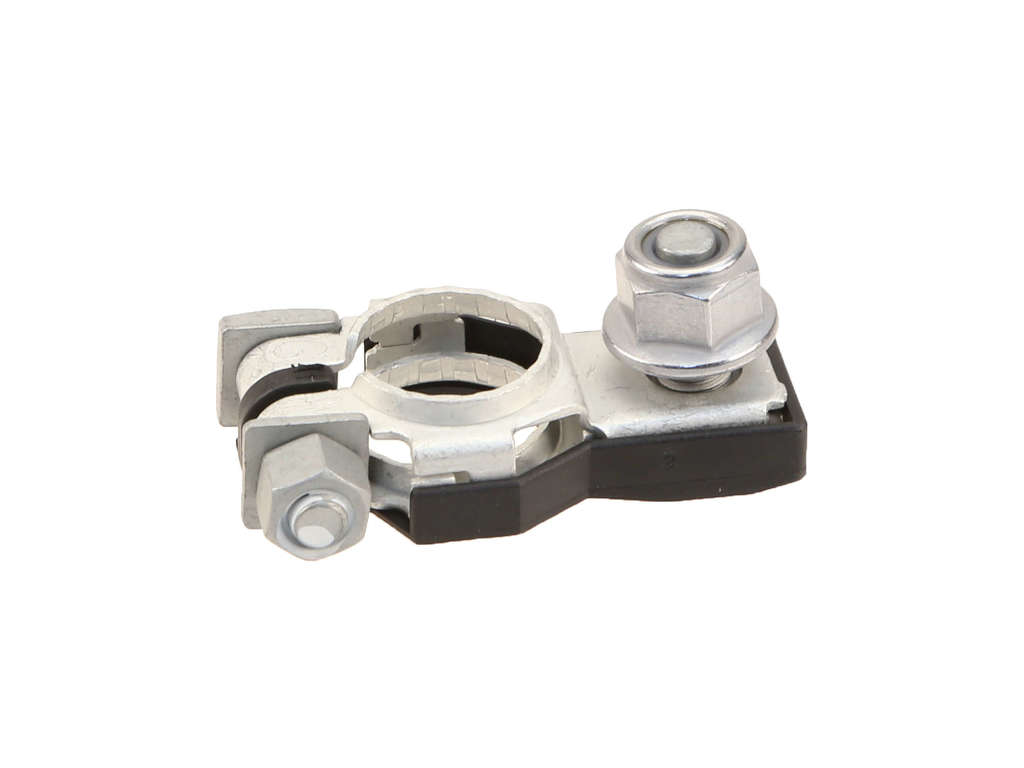
Aftermarket price range: $150-$300 (Used) - Battery Ground Cable
(OEM #e.g., 24080-1PE0A, 24080-1PD0A)— The factory ground cables can corrode internally or at the chassis connection point, creating high resistance that disrupts module communication.
Trusted brands: Nissan (OEM)
OEM price range: $75-$120
Aftermarket price range: $30-$60
Related Codes That Often Appear With This One
- U1001, U1002, U1010 — These are also CAN communication codes. TSB NTB10066A groups them with U1000 as related network faults, with U1010 often indicating an internal module error.
- C-codes (e.g., C1130, C1101) — If the ABS module is the one that has failed and gone offline, the ECM will store a U1000, and the ABS system will have its own internal fault codes. A U1000 stored in the ABS module itself points to a communication problem it is having with another module.
Technical Service Bulletins (TSBs) & Recalls
- NTB13106E: Addresses U1000 codes related to the Audio/Nav/AVM unit configuration and behavior.
- NTB10066A: General diagnostic guidelines for U1000, U1001, U1002, and U1010, emphasizing that the module storing the code is usually not the one that has failed.
- NTB10-145B: Provides a specific repair flow chart for when U1000 is the only code stored in the ABS/VDC control unit.
Platform-Specific Known Issues
- Per TSB NTB13106E, issues with the Around View Monitor (AVM) or Audio/Navigation unit, such as incorrect configuration or internal faults, can cause a U1000 code to be stored.
- Grounding points are a well-known weak spot. Owners on forums frequently report fixing U1000 codes by finding and cleaning corroded grounds on the engine block, chassis, or behind the dashboard.
- The ABS module is a common failure point. When it fails, it often stops communicating, leading the ECM and other modules to store a U1000 code.
Mechanic-Grade Diagnostic Values
- CAN Bus Resistance (Battery Disconnected) — expected: ~60 Ω between CAN-H (Pin 6) and CAN-L (Pin 14) at the DLC.. Failure: 120 Ω indicates an open circuit or one missing terminating resistor. <60 Ω indicates a short or faulty module.
- CAN Bus Voltage (Key On, Engine Off, No Active Data) — expected: CAN-H and CAN-L should both be around 2.5V with respect to ground.. Failure: Voltages that are stuck high (e.g., 9-10V) or low (0V) indicate a short to power or ground, either in the wiring or within a module.
- Terminating Module Resistance — expected: ~120 Ω at the module's connector pins (measured with module disconnected).. Failure: A reading significantly different from 120 Ω indicates a faulty internal terminating resistor. Terminating modules are typically the ECM and BCM/IPDM.
- Voltage at MAF Sensor Connector (Brown Wire) — expected: Should be within 0.5V of battery voltage with the ignition on.. Failure: Low voltage (e.g., 5-6V) can indicate a failing ECM relay within the IPDM, which can cause network-wide issues.
Scan Tool Commands That Help
- Nissan CONSULT-III / CONSULT-III Plus: CAN Diag Support Monitor — This is the primary function used to perform a 'network roll call'. It shows which modules are actively communicating on the CAN bus and which are not responding, quickly identifying the source of the communication loss.
- Manual Procedure (No Scan Tool): IPDM Auto Active Test (Self-Test) — Used to verify if the IPDM's internal CPU and relays are functional. By pressing the driver's door jamb switch 10-20 times and cycling the key, the IPDM will cycle outputs like wipers, lights, and the A/C compressor clutch. If this test runs, it confirms the IPDM has power and basic functionality.
Wiring & Ground Locations

- IPDM E/R (Intelligent Power Distribution Module Engine Room) — Located in the engine bay on the driver's side, near the battery. It is the main under-hood fuse and relay box.. This is a common failure point. It's not just a fuse box; it's a control module that powers other modules. Corrosion inside or failure of its internal ECM relay can cause a U1000 code throughout the vehicle.
- Main Engine Ground — The negative battery cable bolts directly to the engine block.. Corrosion or looseness at this primary ground point can cause system-wide voltage drops, triggering communication codes.
- Terminating Resistors — Not separate parts, but resistors located inside the two modules at either end of the CAN bus. On a Nissan NV, these are typically the ECM and the BCM or IPDM.. The entire network relies on having two 120-ohm resistors in parallel to create the required 60-ohm bus resistance. If a terminating module fails, the resistance will jump to 120 ohms, causing communication instability.
Real Owner Repair Stories
- Reddit user on a similar Nissan platform (Nissan 350Z (shares CAN architecture principles)) — No-crank, no-start. Horn and wipers activated on their own with key ON. U1000 active in BCM, IPDM and Immobilizer not detected by scan tool.
❌ Tried (didn't work) Checking CAN resistance (was 60 ohms), checking CAN voltage (was abnormal), replacing camshaft and crankshaft sensors.
✅ What actually fixed it The root cause was a faulty Intelligent Power Distribution Module (IPDM). The IPDM sits in an area with poor drainage, leading to water intrusion and corrosion on the internal board and fuse contacts. Replacing the entire IPDM resolved the no-start and communication issues. - YouTube repair channel (Infiniti G35 (shares CAN architecture principles)) — U1000 code, Check Engine Light, Airlift suspension controller not powering on, heavy corrosion on negative battery terminal.
❌ Tried (didn't work) Initially just replacing the oxygen sensor for a separate code.
✅ What actually fixed it The heavy corrosion on the battery terminal and post was causing a poor ground connection and voltage drop. Thoroughly cleaning the battery post and terminal with a wire brush and baking soda, then applying a protective coating, restored proper power and resolved the communication issues.
OEM Part Supersession History
White-colored IPDM modules→Black-colored IPDM modules— The original white IPDM units were known for a high failure rate, often due to internal corrosion or relay failure.
Helpful Videos

Used OEM Parts in Stock


New Aftermarket Parts Available


The information in this article is provided for general reference and educational purposes only. Vehicle specifications, procedures, and part compatibility can vary by production date, trim level, and region. Always consult your vehicle's factory service manual and verify part numbers before purchasing or performing repairs. Safety-critical components such as airbags, seat belts, and braking systems should be installed by a qualified professional.
- Nissan NV:
- 🎬 Helpful Videos
- 🛍️ Shop This Part
- What's Unique About the 2012-2016 Nissan NV
- Diagnostic Flowchart
- Symptoms You May Notice
- Most Likely Causes
- Rare But Worth Checking
- Diagnosis Steps
- Parts You'll Likely Need
- Related Codes That Often Appear With This One
- Technical Service Bulletins (TSBs) & Recalls
- Platform-Specific Known Issues
- Mechanic-Grade Diagnostic Values
- Scan Tool Commands That Help
- Wiring & Ground Locations
- Real Owner Repair Stories
- OEM Part Supersession History
- 🎟️ Get 5% Off