

U1000 on 2013-2016 Nissan Altima: CAN Communication Failure Causes and Fixes
On a 2013-2016 Altima, code U1000 indicates a communication network failure. The most likely causes are poor battery/ground connections or a faulty Body Control Module (BCM). Start by checking battery terminals and all major ground straps, especially the main ground points near the battery and on the engine block. If symptoms are severe (blinking lights, clicking relays, no-start), a BCM replacement is a known fix per a Nissan TSB specifically for the 2013 model year.
- U1000 is a network communication error, not a specific component failure.
- Always check the battery, fuses, and all major ground connections first; this is the simplest and a very common fix.
- On the 2013 Altima specifically, severe electrical symptoms (blinking lights, clicking) with a U1000 code point directly to a known issue with the Body Control Module (BCM).
- Do not replace the module that reports the code; it's almost always a symptom, not the cause.
- Proper diagnosis requires a professional scan tool; this is not a code for beginner DIY diagnostics.
What's Unique About the 2013-2016 Nissan ALTIMA

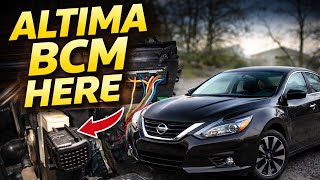
For the fifth-generation (L33) Altima, the U1000 code is frequently linked to specific, documented issues. A Technical Service Bulletin (TSB NTB13023A) for the 2013 model directly points to a faulty Body Control Module (BCM) 🎬 Watch: How to actually locate the BCM on your Altima. as the root cause when accompanied by severe electrical symptoms like blinking dash lights and clicking relays. Furthermore, Nissans of this era are notoriously sensitive to poor ground connections, which can easily trigger network communication faults like U1000. Forum discussions and mechanic reports repeatedly emphasize checking and cleaning the main battery-to-chassis ground and engine block grounds as a primary, and often successful, first step.
Diagnostic Flowchart
Tap your situation to follow the diagnostic path that matches what you're seeing on this vehicle.
Symptoms You May Notice
- Check Engine Light is on
- Brake and charge warning lamps may blink continuously
- Audible clicking from relays under the dash or in the engine bay
- Engine stalling, hesitation, or lack of power
- Vehicle fails to start or has a long crank time
- Erratic behavior from electrical components (e.g., audio system, power windows, dashboard lights)
- Transmission stuck in Park or entering limp mode
- Aftermarket accessories (like remote start or alarm systems) may malfunction or cause the issue
- Replacing the module that stored the U1000 code. Nissan TSB NTB10066A and ITB10-029a clearly state this module is usually working correctly and the fault is elsewhere on the network.
- Replacing the ECM without checking for simpler causes like grounds, fuses, or a faulty BCM first.
Most Likely Causes

- Faulty Body Control Module (BCM) 🔴 High Probability A specific Nissan TSB (NTB13023A) identifies a faulty BCM as the cause for U1000, especially on 2013 models, when accompanied by blinking dash lights and clicking relays. Forum users have confirmed this fix for these specific symptoms.
How to confirm: Confirm with a professional scan tool that can communicate with the BCM. Observe for symptoms described in TSB NTB13023A. If the BCM is offline and these symptoms are present, it is highly suspect. Diagnosis by a qualified technician is recommended.
Typical fix: Replace the Body Control Module (BCM) and program the new unit to the vehicle's options and keys.
Est. part cost: $250-$450 - Poor Ground Connections or Weak Battery 🔴 High Probability Nissan TSBs and extensive forum discussions point to corroded or loose ground points as a very common cause for CAN communication issues on this platform. Key locations mentioned by owners include the main ground strap from the battery negative terminal to the chassis, grounds on the engine block, and grounds under the dash. Low battery voltage can also trigger communication faults.
How to confirm: Perform a voltage drop test on the battery and charging system. Visually inspect and physically check the main battery ground, engine-to-chassis grounds, and the ground points for the ECM and BCM for corrosion or looseness. A voltage drop of more than 0.2V across a ground connection under load indicates a problem.
Typical fix: Disconnect the battery. Remove, wire brush, and clean all corrosion from ground points and battery terminals until they are shiny. Re-secure all connections tightly. Applying dielectric grease can prevent future corrosion. Replace the battery if it fails a load test.
Est. part cost: $0-$200 - CAN Communication Harness Open or Short 🟡 Medium Probability Wiring can become damaged over time from vibration, heat, rodent intrusion, or from poorly installed aftermarket accessories like alarms or remote starters. A break-in was reported to trigger the code, suggesting damage to wiring in the passenger compartment.
How to confirm: This requires advanced diagnostics using a multimeter to check for continuity and resistance on the CAN bus wires. The resistance between CAN High (Pin 6) and CAN Low (Pin 14) at the DLC should be approximately 60 ohms (with the battery disconnected). A reading of 120 ohms indicates a missing terminating resistor or a break in the wiring. A reading near 0 ohms indicates a short circuit.
Typical fix: Locate the damaged section of the wiring harness and repair or replace it. This can be very labor-intensive.
Est. part cost: $5-$500 - Blown Fuse ⚪ Low Probability An electrical short in a related component can blow a fuse that powers a critical control module (like the ECM, BCM, or TCM), taking it offline and causing a U1000 code. One owner reported a blown 'ENG CONT' fuse was the culprit for a no-start and U1000 code.
How to confirm: Check fuses related to control modules, particularly any labeled 'ENG CONT', 'BCM', or 'TCM' in the fuse box under the hood and inside the cabin.
Typical fix: Replace the blown fuse. If it blows again immediately, there is an underlying short circuit that must be diagnosed.
Est. part cost: $1-$5
Rare But Worth Checking
- Faulty ECM or TCM: While the BCM is a more common culprit on this platform, the Engine Control Module (ECM) or Transmission Control Module (TCM) can also fail and disrupt the network.
- Incorrect Part Installed: As noted in TSB NTB14004, installing an incorrect part (in that case, for the airbag system) can trigger a U1000 code. This highlights the importance of using correct OEM part numbers.
- Water Intrusion in ECM/TCM: There are documented cases, particularly after driving in heavy rain, where water has entered and damaged the ECM or TCM, which are located near each other in the engine bay on some models. This causes immediate communication failure and a no-start condition.
Diagnosis Steps
- Check Battery Health: Ensure the battery voltage is above 12.4V and that terminals are clean and tight. A weak or failing battery is a very common cause of communication codes.
- Inspect All Fuses: Check fuses in both the engine bay (IPDM E/R) and interior fuse panels, paying close attention to any related to the ECM, BCM, or TCM.
- Inspect Ground Connections: This is a critical step for Nissans. Disconnect the battery. Locate, remove, clean, and tighten the main negative battery cable ground to the chassis, the engine-to-chassis grounds, and any visible body grounds near the BCM (under the dash) and ECM (engine bay).
- Perform a Full Network Scan: Use a professional-grade scan tool (not a basic code reader) to perform a 'network test' or 'module roll call'. Note which modules are 'present' and which are 'not communicating'. This is the most important diagnostic step to narrow down the problem.
- Consult TSBs: Check for any TSBs that apply to the specific non-communicating module. For example, if the BCM is offline and you have blinking lights, TSB NTB13023A is your primary guide.
- Test CAN Bus Resistance: If multiple modules are offline, disconnect the negative battery terminal. Measure the resistance between Pin 6 (CAN High) and Pin 14 (CAN Low) on the OBD-II port. A healthy network should read approximately 60 ohms. 🎬 Watch a pro troubleshoot the CAN bus and resistance readings. A reading of 120 ohms indicates an open in the circuit or a terminating module is disconnected. A reading near 0 ohms indicates a short circuit between the two CAN wires.
- Isolate the Fault: If the resistance is incorrect, you must begin unplugging modules one by one until the resistance returns to a normal value to identify the faulty module or wiring section. Start with the modules identified as 'not communicating' in your network scan. This is an advanced step best left to professionals.
Parts You'll Likely Need

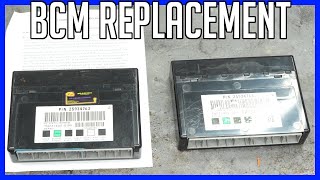
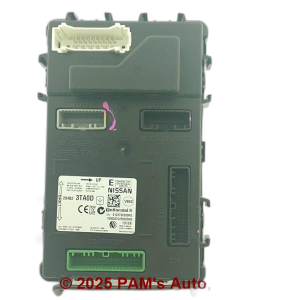
- Body Control Module (BCM)
(OEM #284B1-3TA1C)— Specifically identified in TSB NTB13023A as the fix for U1000 on the 2013 Altima when specific symptoms (blinking lights, clicking relays) are present. This part number may have been superseded; always verify with a dealer using your VIN.
Trusted brands: Nissan (OEM)
OEM price range: $350-$450
Aftermarket price range: $250-$350
Related Codes That Often Appear With This One
- P2103 — This throttle actuator control motor circuit code is specifically mentioned alongside U1000 in TSB NTB13023A, pointing strongly to a faulty BCM.
- U0100 — This code means 'Lost Communication with ECM/PCM'. It is often seen with U1000 and indicates the Engine Control Module is the specific module that has dropped off the network, reinforcing the need to check powers and grounds to the ECM.
Technical Service Bulletins (TSBs) & Recalls
- NTB13023A: Links U1000 and P2103 to a faulty BCM on 2013 models.
- NTB10066A: Explains that U1000 indicates an external communication error, not a failure of the reporting module.
- NTB14004: Warns that incorrect parts can cause U1000.
- NTB13106E: Mentions U1000 can be present with audio system configuration issues.
- NTB10-145B: Provides a diagnostic flowchart for when U1000 is stored in the ABS/VDC control unit.
- NTB13-027C: Offers a general network diagnostic flowchart for CAN communication codes.
Platform-Specific Known Issues
- TSB NTB13023A notes that on 2013 Altimas, a faulty BCM can cause U1000 and P2103, with symptoms of continuously blinking brake/charge lamps and clicking relays. The fix is to replace the BCM.
- TSB NTB10066A provides general guidance that a module reporting U1000 is typically operating normally and the fault is external to that module on the CAN network.
- TSB NTB14004 warns that installing an incorrect part during other repairs can inadvertently cause a U1000 DTC to appear.
- Owners on forums frequently report that cleaning the ground connection point where the negative battery cable bolts to the chassis is a common and effective fix for intermittent U1000 codes and other electrical gremlins.
Mechanic-Grade Diagnostic Values

- CAN Bus Resistance — expected: ~60 Ohms. Failure: 120 Ohms indicates an open circuit or missing terminating resistor. ~0 Ohms indicates a short between CAN High and Low wires.
- CAN High Voltage — expected: 2.5V - 3.0V. Failure: Voltage outside this range indicates a bus problem. A common reference is 2.7V.
- CAN Low Voltage — expected: 2.0V - 2.5V. Failure: Voltage outside this range indicates a bus problem. A common reference is 2.3V.
- Control Module Internal Resistance — expected: 28k - 50k Ohms. Failure: A reading outside this range suggests an internal module fault.
Hidden / Shadow Codes Worth Checking
- U1001: Lost Communication with ECM. This code is specific to OBD2-related communication failures from the Engine Control Module. (see via Appears on professional scan tools like Nissan CONSULT when the ECM is the specific module that has dropped off the network.)
- U1002: CAN Communication Line Error. Similar to U1000, but is set based on a tighter (shorter) timing specification for the communication loss. (see via Visible with a Nissan CONSULT or other advanced scan tool. Indicates a more intermittent or brief communication loss.)
- U1010: Control Module (Internal Error). Unlike other U-codes that point to network issues, this code indicates the module itself has an internal processing fault. (see via Set by a module that fails its own internal self-check. Diagnosed with Nissan CONSULT.)
Scan Tool Commands That Help

- Nissan CONSULT-III plus: CAN Diag Support Monitor / V-CAN Screen — This is the primary first step. It performs a 'module roll call' to create a visual map of the CAN network, showing which modules are communicating (green) and which are not (red/orange), pinpointing the source of the communication loss.
- Nissan CONSULT-III plus: Active Test — After identifying a potentially faulty module or circuit, Active Tests allow the technician to command specific components (like relays, solenoids, or lights) to function, verifying the integrity of the component and its wiring harness separately from the module's automated control.
- Nissan CONSULT-III plus: TCM/BCM Configuration — This is a mandatory step after replacing a BCM or TCM. The function writes vehicle-specific data (like VIN, key information, and option configurations) to the new module. Failure to perform this step will result in a no-start or malfunctioning systems.
Wiring & Ground Locations
- Main Battery Ground — The main negative battery cable (OEM P/N: 24080-JA10A) connects from the negative battery terminal to the vehicle chassis near the battery, and then continues to a bolt on the transmission case.. Corrosion or looseness at either of these two points is a very common cause of widespread, intermittent electrical issues and CAN communication codes on Nissans.
- E15, E204, E9 — These are ground points located in the engine compartment, typically on the lower left side, responsible for grounding various engine components and sensors.. A faulty ground at one of these points can cause the ECM or other critical engine bay modules to lose their reference ground, disrupting CAN communication.
- Terminating Resistors — The CAN network has two 120-ohm terminating resistors. On this platform, they are located within two different modules. One is typically the ECM, and the other can be either the BCM or the IPDM E/R (Intelligent Power Distribution Module Engine Room).. A technician must consult the specific vehicle's service manual to know which module contains the second resistor. Trying to diagnose a 120-ohm reading without knowing which module to check is a common point of failure in diagnosis.
Real Owner Repair Stories
- Auto Repair Procedures YouTube Channel (Nissan Altima (year not specified, but relevant L33 generation symptoms)) — No start, died while driving, U1000 code present.
❌ Tried (didn't work) Initial diagnosis was inconclusive without checking all power sources.
✅ What actually fixed it A blown 'ENG CONT' fuse was identified as the likely culprit, which was preventing the engine control module from powering on and communicating. - Auto Tech Diagnostics & Programming YouTube Channel (2020 Nissan Altima (newer model, but demonstrates a key failure pattern)) — Stuck in park, AWD error, multiple warning lights, U1000 and U0102 (Lost Comms with AWD module) codes.
❌ Tried (didn't work) Disconnecting all modules on the affected circuit did not clear the short to ground.
✅ What actually fixed it The root cause was a blown fuse #40. The short circuit blowing the fuse was suspected to be the AWD control unit itself, located on the rear differential, which likely suffered water damage after the owner drove through deep puddles. This shows how an external factor can cause a short, blowing a fuse and taking a module offline.
OEM Part Supersession History
284B1-3TA1C→Unknown, likely multiple revisions.— Standard part updates for reliability and feature changes.
Heads up: BCM part numbers are highly specific to VIN, year, and options. A BCM from another vehicle, even if the part number is close, will likely not work or will cause features to fail. For example, part 284B1-JA03D was superseded by several other 'JA' series parts. Always provide a VIN to the dealer to get the exact correct part for the specific vehicle.N/A→N/A— Corrosion/Damage
Heads up: The main battery ground cable, Nissan P/N 24080-JA10A, is a common failure point due to corrosion. Replacing this cable with the OEM part is a known fix for various electrical issues that can trigger a U1000 code.
Model Year Variations Within This Range
- 2013-2016: The location of the second CAN bus terminating resistor can be in either the Body Control Module (BCM) or the IPDM E/R (Intelligent Power Distribution Module). Technicians must consult the service manual for the specific vehicle they are working on to know which module to test, as misidentifying the terminating module will lead to an incorrect diagnosis.
- 2013 only: TSB NTB13023A specifically calls out a faulty Body Control Module (BCM) as the cause for U1000 when accompanied by blinking lights and clicking relays for the 2013 model year. While this can occur on other years, the TSB is explicit for 2013.
Helpful Videos

We Have This Part in Stock





The information in this article is provided for general reference and educational purposes only. Vehicle specifications, procedures, and part compatibility can vary by production date, trim level, and region. Always consult your vehicle's factory service manual and verify part numbers before purchasing or performing repairs. Safety-critical components such as airbags, seat belts, and braking systems should be installed by a qualified professional.
- Nissan ALTIMA:
- 🎬 Helpful Videos
- 🛍️ Shop This Part
- What's Unique About the 2013-2016 Nissan ALTIMA
- Diagnostic Flowchart
- Symptoms You May Notice
- Most Likely Causes
- Rare But Worth Checking
- Diagnosis Steps
- Parts You'll Likely Need
- Related Codes That Often Appear With This One
- Technical Service Bulletins (TSBs) & Recalls
- Platform-Specific Known Issues
- Mechanic-Grade Diagnostic Values
- Hidden / Shadow Codes Worth Checking
- Scan Tool Commands That Help
- Wiring & Ground Locations
- Real Owner Repair Stories
- OEM Part Supersession History
- Model Year Variations Within This Range
- 🎟️ Get 5% Off