

OBD-II Code U0565: Invalid Data Received From a Driver Assistance Camera or Sensor
The Ultimate 2026 Guide to Meaning, Diagnosis, and Repair
- Code U0565 indicates a critical safety sensor is transmitting invalid data, immediately disabling safety features like Adaptive Cruise Control and Pre-Collision Assist.
- On 2021-2024 Ford and Lincoln models, a known software glitch triggers this code; resolve it with a 0.3-hour dealer software update per TSB 25-2104 rather than replacing a $500+ camera.
- Diagnose the Ford software glitch by confirming the exact code combination: U0565:86 in the IPMA, U2018:51 in the CMR, and the strict absence of code U3000.
- While the vehicle remains mechanically safe to drive, the deactivation of Automatic Emergency Braking increases collision risk, requiring heightened driver vigilance until repaired.
- Always verify the 12V battery rests above 12.4V and check for manufacturer TSBs before authorizing any ADAS hardware replacement exceeding $1,000.
What Does U0565 Mean?
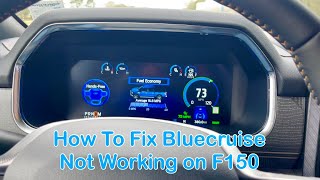
The trouble code U0565 signifies that a control module in your vehicle, typically the Image Processing Module A (IPMA), is receiving data from a critical camera or sensor that it deems illogical or corrupt. For safety, the system shuts down the associated Advanced Driver-Assistance Systems (ADAS). This fault is frequently linked to the forward-facing camera used for adaptive cruise control or the rear camera module responsible for processing image data 🎬 Watch: How to fix BlueCruise and driver assist on Ford F150s. for systems like Ford's BlueCruise.
Technical definition: The official SAE/ISO J2012 definition for U0565 is "Invalid Data Received From Camera Module - Rear" or, in some vehicle contexts, "Invalid Data Received From Cruise Control Front Distance Range Sensor". This indicates a control module has received data from a specified camera or sensor that it considers invalid. The code is often appended with a Failure Type Code, like U0565:86, where ':86' means 'Signal Invalid', pointing to illogical data rather than a complete loss of communication.
Can I Drive With U0565?
Yes, But With Caution. Yes, the vehicle is mechanically safe to drive. However, the deactivation of critical safety features like Pre-Collision Assist and Adaptive Cruise Control significantly increases your risk in emergency situations. These systems are designed to prevent or lessen the severity of frontal collisions. Driving without them requires heightened driver attention, as the vehicle's automatic safety net is offline until the fault is repaired.
Common Causes
- Software or Firmware Glitch (Very Common) — On modern vehicles, particularly 2021-2024 Ford and Lincoln models, the most frequent cause is a software bug. This happens after a failed or incomplete over-the-air (OTA) update creates a version mismatch between modules, or if dealer programming is interrupted.
- Low Vehicle Battery Voltage or Poor Grounds (Common) — Modern ADAS modules are extremely sensitive to voltage. A weak 12V battery or a high-resistance ground connection causes unpredictable communication errors, interrupts software updates, and triggers this code.
- Damaged or Corroded Wiring/Connectors (Common) — The wiring harness to the camera or sensor module is damaged, pinched, or corroded. 🎬 See this walkthrough for repairing Ford blind spot system malfunctions. This is common for backup cameras exposed to weather or for the coaxial cable at the IPMA module behind the rearview mirror.
- Sensor or Camera Misalignment (Common) — A minor parking lot bump, windshield replacement, or hitting a large pothole misaligns a camera or radar sensor bracket. This changes the sensor's field of view, causing the data it sends to be flagged as invalid.
- Faulty Camera or Sensor Module (Less Common) — The camera or sensor unit itself fails internally. A hardware fault, like a failed image sensor or internal electrical failure, prevents the module from sending valid data. This is the primary cause if software updates fail to resolve the issue.
- Incompatible Aftermarket Modifications (Rare) — Installing aftermarket parts like custom grilles, light bars, or license plate brackets physically blocks the camera's or radar's line of sight. Incompatible electronic devices also disrupt the vehicle's CAN bus communication network.
- Faulty Receiving Control Module (e.g., IPMA) (Very Rare) — It is extremely rare for the module that sets the code (like the IPMA) to be the cause. It is almost always an issue with the incoming data. Replacing the IPMA for a U0565 code without exhaustive testing is a common and expensive misdiagnosis.
Symptoms
- Advanced Driver-Assistance Systems (ADAS) Inoperative — Features like Adaptive Cruise Control, BlueCruise, Lane Centering, or Pre-Collision Assist will not activate or will shut off unexpectedly.
- Warning Messages on Instrument Cluster — You will see messages such as "Pre-Collision Assist Not Available," "Driver Monitor Camera Fault," "Front Sensor Not Aligned," or "Lane Assist cannot be turned on."
- Backup Camera Malfunction — When the vehicle is in reverse, the infotainment screen is blank, flickers, shows a distorted image, or displays a "Camera Not Detected" message.
- Standard Cruise Control Inoperative — On some vehicles, the fault is severe enough to disable not only the adaptive (radar-based) cruise control but also the basic, standard cruise control function.
Diagnostic Flowchart
Tap your situation to follow the diagnostic path that matches what you're seeing on this code.
Common Fixes & Costs
- Module Software Update (per TSB)
— Parts: $0, Labor: $0 - $250, ~0.4 hr book time
(Professional)
Ford/Lincoln (Software): OEM - Replace 12V Battery — Parts: $150 - $300, Labor: $0 - $100, ~0.5 hr book time (DIY)
- Sensor/Camera Alignment and Calibration — Parts: $0 - $50, Labor: $250 - $600, ~1.5 hr book time (Professional)
- Repair Damaged Wiring or Connector — Parts: $20 - $150, Labor: $150 - $500, ~2 hr book time (Intermediate)
- Replace Camera or Sensor Module
— Parts: $400 - $1,500, Labor: $200 - $500, ~1.5 hr book time
(Professional)
Ford F-150 (2021-2024) Rear Camera: OEM
Ford F-150 (2021-2023) Front Radar: OEM
Nissan Rogue (2021-2024) Front Radar: OEM
DIY vs Professional
- Module Software Update — Beginner:
Tools: Manufacturer-specific diagnostic tool (e.g., Ford FDRS), stable power supply. - Replace Camera or Sensor Module — Beginner:
Tools: Trim tools, socket set, professional diagnostic tool, ADAS calibration frame/targets. - Repair Damaged Wiring or Connector — Beginner:
Tools: Multimeter, wire strippers, soldering iron/crimp connectors, heat shrink tubing, wiring diagram. - Replace 12V Battery — Beginner:
Tools: Basic hand tools (socket set), battery terminal cleaner. - Sensor/Camera Alignment and Calibration — Beginner:
Tools: ADAS calibration frame, laser measurement tools, OEM targets, professional scan tool.
Used vs. New Parts: Buying Guide
When a used part is worth it: For ADAS components like cameras and radar sensors, buying used is almost never recommended. The risk of purchasing a part with the same internal fault, an incompatible software version, or hidden damage from a prior accident is very high. The cost of professional installation and mandatory calibration often exceeds the price of the part itself.
Donor-vehicle mileage cap: roughly under 20000 miles for the part to have meaningful remaining life.
Donor quality checklist:
- Verify the exact OEM part number, including any supersessions. Incompatible software renders the part useless.
- Obtain the donor vehicle's VIN to check its history for accidents or floods.
- Avoid parts from vehicles with significant collision damage, even if the part itself looks intact.
Decision logic:
- If The part is a critical ADAS camera or radar sensor. → Buy a new OEM part. The cost savings of a used part are not worth the immense safety and reliability risks.
- If The fix is a known software issue (like the Ford TSB). → Do not buy any part. The correct repair is a software update to the existing module.
- If The part is a simple wiring pigtail or connector. → A used connector from a reputable salvage yard is acceptable if a new one is unavailable.
Warranty tradeoff: Used parts typically have a 30-90 day warranty at best, which does not cover the significant labor and calibration costs if the part fails. New OEM parts installed by a dealer are covered by a 1-2 year warranty on both the part and labor.
Worst-case if a used part fails: $800 - $2000 (Cost to pay for labor and calibration a second time after a used part is found to be faulty).
What Happens If You Wait — Timeline
- Immediate: Code U0565 is set. A warning light illuminates on the dash, and a message like 'Pre-Collision Assist Not Available' appears. Critical ADAS functions are disabled. (MPG impact: 0%% · Added cost: $0)
- First Drive: The driver experiences increased workload and risk. A moment of inattention that the system would have corrected for results in an accident. The vehicle is mechanically sound but its primary active safety net is gone. (MPG impact: 0%% · Added cost: $500 - $5,000+ (Potential insurance deductible from a minor accident that ADAS could have prevented).)
- 1-6 months: The statistical risk of an at-fault collision continues to be significantly higher than in a fully functional vehicle. A driver becomes accustomed to the warnings and ignores them, leading to complacency. (MPG impact: 0%% · Added cost: $2,500 - $20,000+ (Potential cost of a moderate to severe accident, plus increased insurance premiums for years).)
- 6+ months: Operating a vehicle with a known, disabled safety system leads to a potential claim denial from an insurance company in certain circumstances. The initial fault masks other developing issues within the ADAS network. (MPG impact: 0%% · Added cost: Potentially unlimited (Liability in a major accident, plus ongoing elevated insurance costs and potential for non-coverage of repairs).)
Cost of Not Fixing It
- Immediate: Loss of critical safety features like Pre-Collision Assist (Automatic Emergency Braking) and Adaptive Cruise Control. The vehicle's ability to automatically prevent or mitigate a frontal collision is gone. (Added cost: N/A)
- 0-6 months: Significantly increased risk of collision. A moment of driver inattention that the ADAS system would have compensated for results in an accident. (Added cost: $500 - $20,000+ (Potential cost of insurance deductible, repairs, or liability from an accident that ADAS could have prevented).)
- 6+ months: Continued high risk of accidents. Potential for related diagnostic trouble codes to be masked by the initial fault. Increased liability in the event of an accident. (Added cost: $500 - $20,000+ (Ongoing risk and potential for higher insurance premiums after an at-fault accident).)
Diagnosis Steps
- Read All Trouble Codes with an Advanced Scanner
Use an OBD-II scanner that reads manufacturer-specific codes from all modules (BCM, IPMA, CMR), not just a basic engine code reader. Note the exact code (e.g., U0565:86) and any other stored codes. The presence or absence of codes like U2018 or U3000 is critical for diagnosis.
Tools: Advanced OBD-II Scanner (e.g., FORScan, professional-grade tool) (Beginner) - Check for Technical Service Bulletins (TSBs)
Search online for TSBs related to your vehicle's make, model, year, and the U0565 code. Manufacturers like Ford have released multiple bulletins (e.g., TSB 25-2104) for known software issues, providing a direct and often warranty-covered repair path.
Tools: Internet access (Beginner) - Inspect the Battery and Charging System
Ensure the vehicle's 12V battery is fully charged and healthy. The battery must be above 12.4V at rest. Low voltage causes unpredictable electronic faults. Have the battery load tested before proceeding.
Tools: Multimeter, Battery Tester (Beginner) - [PRO TIP] Live Data PID Analysis
Using a professional scan tool, monitor live data PIDs related to the camera module. For the Ford software issue, check the Battery State of Charge (BATT_SOC) PID, which must be 50% or higher before attempting to reprogram. When the fault is active, PIDs for camera status show 'Fault' or 'Invalid'.
Tools: Advanced OBD-II Scanner (e.g., FORScan, Ford FDRS) (Advanced) - Visually Inspect Wiring and Connectors
Thoroughly inspect the wiring harness leading to the relevant camera/sensor. Look for chafing, pinching, corrosion, or loose connections. Perform a "wiggle test" on connectors while monitoring live data if possible.
Tools: Flashlight, Trim removal tools (Intermediate) - [PRO TIP] Reference Voltage & Ground Integrity Test
Disconnect the connector at the suspect camera/sensor module. With the key on, use a multimeter to check for reference voltage at the power pin (typically 12.0V ± 0.5V). Then, check the resistance between the ground pin and a known good chassis ground. The reading must be less than 5 ohms.
Tools: Multimeter, Wiring diagram (Advanced) - [PRO TIP] CAN Bus Network Health Check
If multiple communication codes are present, check the health of the CAN bus. With the battery disconnected, measure the resistance between the CAN High and CAN Low pins at the OBD-II port. A healthy network reads approximately 60 Ohms.
Tools: Multimeter, Wiring diagram (Advanced) - Perform Software Update/Reprogramming
If a TSB points to a software issue, the specified module must be reprogrammed using a dealer-level scan tool. This is the most common fix for many Ford/Lincoln vehicles and must be done by a dealer or a highly-equipped independent shop.
Tools: Manufacturer-specific diagnostic tool (e.g., Ford FDRS), Battery power supply (Professional) - Replace and Calibrate Component
If all software, wiring, and network checks pass, the camera or sensor module itself is faulty. This is confirmed if a U3000 'Internal Electronic Failure' code is present. After replacement, the new module must be programmed and calibrated using specialized equipment.
Tools: Professional diagnostic tools, Calibration equipment (Professional)
When This Code Triggers (Freeze-Frame Conditions)
- Vehicle Speed: 45-65 mph (Highway driving, ADAS features like adaptive cruise control or lane-keeping are typically active or monitoring.)
- Engine RPM: 1500-2500 RPM (Steady state cruise, not during heavy acceleration or deceleration.)
- Engine Coolant Temp: 185-210°F (Vehicle is at normal operating temperature; the fault is not typically related to cold-start conditions.)
- 12V System Voltage: 13.5-14.5V (Engine running, alternator charging. A voltage drop indicates an underlying electrical issue contributing to the communication fault.)
Related Codes
- U2018:51 — This is the primary companion code for the Ford/Lincoln software glitch. U0565:86 is set in the IPMA (the victim module), while U2018:51 ('Not Programmed') is set in the CMR (the causal module). Seeing these two codes together confirms the TSB issue.
- U3000 — This code means 'Internal Electronic Failure'. If U0565 and U2018 are present but U3000 is NOT in the CMR, the problem is the software glitch. If U3000 IS present, the CMR module has a hardware failure and requires replacement.
- U0100 — This code means 'Lost Communication With ECM/PCM'. Seeing this alongside U0565 points towards a broader network problem like a failing gateway module, a major wiring harness issue, or a low battery condition.
- C1001 — Codes like C1001 relate to 'Vision Sensor Misalignment'. Seeing a C-code related to alignment alongside U0565 strongly suggests the sensor has been physically knocked out of position and requires mechanical adjustment and electronic calibration.
Climate & Environmental Factors
- High Humidity: High ambient humidity leads to moisture intrusion into connectors and electronic modules. This moisture promotes corrosion on electrical pins, increasing electrical resistance and causing intermittent or distorted data signals.
- Temperature Swings: Rapid changes in temperature cause condensation to form inside sealed modules or camera housings. This trapped moisture leads to corrosion and short-circuit issues, causing intermittent electronic failures.
How to Talk to a Mechanic About This Code
Say this: "I have a U0565 code on my [Vehicle Make, Model, Year] and the driver assistance features are disabled. I'd like to schedule a diagnostic appointment. Based on my research, especially for my vehicle, this is often related to a software issue covered by a TSB, so I'd like to start by checking for any available software updates for the camera modules before exploring hardware replacement."
This immediately signals that you are an informed customer. It directs the technician toward the most common and least expensive fix (a software update), preventing them from immediately quoting a costly and likely unnecessary hardware replacement. Mentioning the TSB shows you've done your homework.
Avoid saying:
- 'My cruise control isn't working.' (Too vague, invites a broad and expensive diagnostic process.)
- 'Just fix the warning light.' (This leads to them replacing parts until the light goes out, which is inefficient and costly.)
- 'A guy online said to replace the camera.' (This undermines the technician's diagnostic process and leads them down the wrong path.)
Questions to ask before authorizing the repair:
- Did you check for Technical Service Bulletins related to code U0565 for my specific VIN?
- Can you confirm the exact codes found? Specifically, if you found U0565:86 in the IPMA and U2018:51 in the CMR, and confirmed the ABSENCE of a U3000 code?
- If you are recommending a hardware replacement, can you explain why the software update specified in the TSB is not the correct repair in this case?
- Is a sensor or camera calibration included in this repair estimate, and is it required?
Where to Take It: Dealer vs Independent vs Chain
- Dealer:
Best and often only choice for the common Ford/Lincoln software issue. For other makes or out-of-warranty vehicles, a specialized independent shop is a strong alternative.
Best for: Vehicles under the new vehicle warranty., Diagnosing the common Ford/Lincoln software glitch, as they have exclusive access to the required FDRS tool and TSB procedures., Complex ADAS issues that require module programming and calibration.
Downsides: Highest labor rates., May still misdiagnose the issue if the technician is not familiar with the specific TSB, potentially quoting unnecessary hardware. (Typical cost: +50% vs. baseline) - Independent Shop:
A good choice for non-software issues, but only if the shop is confirmed to have modern ADAS calibration equipment and trained technicians.
Best for: Out-of-warranty vehicles where the issue is suspected to be wiring, a bad battery, or a non-software related hardware failure., Shops that specifically advertise and are equipped for ADAS service and calibration.
Downsides: Most independent shops lack the proprietary tools (like Ford's FDRS) to perform required software updates., Quality and expertise in ADAS repair vary widely; requires careful vetting. (Typical cost: +0% vs. baseline) - Chain Shop:
AVOID for diagnosing or repairing code U0565. Their business model is not suited for this type of specialized electronic work.
Best for: Confirming the health of the 12V battery.
Downsides: Almost never equipped to diagnose or repair complex electronic or ADAS-related codes., High risk of incorrect diagnosis and being sold unnecessary parts. (Typical cost: -10% vs. baseline)
When to Walk Away From the Repair
If the estimated repair cost for an out-of-warranty ADAS fault exceeds 30-40% of the vehicle's current market value, carefully consider your options. Since these are safety features, simply ignoring the fix is not recommended.
- Car worth $35000, fix is $250: Fix it. This is a minor cost to restore critical safety features on a valuable vehicle.
- Car worth $18000, fix is $2800: Borderline. This is a significant repair cost. Get a second opinion to confirm the diagnosis before proceeding. Explore if a specialized ADAS shop can perform the repair for less than the dealer.
- Car worth $8000, fix is $3000: Walk away. The repair cost is nearly 40% of the vehicle's value. It is not economical to repair this fault. Sell the vehicle as-is.
What Scan Tool You Need for This Code
Minimum: A scanner that reads manufacturer-specific codes from all vehicle modules (IPMA, CMR, BCM), not just generic engine codes.
A basic $20 scanner only checks the engine module and will not see the 'U' codes stored in the body or chassis modules, making it useless for this issue. You need to see the full code, like U0565:86, and any companion codes like U2018:51 to properly diagnose the problem.
Budget: FORScan with compatible OBD2 adapter (~$80) — For Ford/Lincoln owners, this is the best budget option. It reads the manufacturer-specific codes from all modules (IPMA, CMR) to confirm the TSB software glitch pattern. It cannot perform the software update, but provides the necessary diagnostic proof to take to a dealer.
Mid-range: Autel MaxiCOM MK808S / Foxwell NT710 (~$350) — These scanners read codes from all modules on a wide range of makes and models. They display live data from the camera modules and perform some service functions. They cannot perform the dealer-level software reprogramming or ADAS calibration.
Professional: Autel MaxiSys MS906 Pro / Launch X431 Series (~$1200-2500) — These are professional-grade tools with extensive bidirectional controls and full diagnostic capabilities. Crucially, when paired with the appropriate ADAS calibration frame, they perform the mandatory camera/sensor calibration after a hardware replacement. They still cannot perform the proprietary Ford software update required by the TSB.
Rent vs buy: For a one-time diagnosis, buying a midrange scanner is cheaper than paying a dealer's diagnostic fee. However, since the most common fix requires a dealer visit anyway, your best bet is to arm yourself with the knowledge from this guide rather than buying a tool. Do not rent a basic parts store scanner, as it will not read the necessary codes.
How to Clear the Code After You Fix It
- Perform repair (e.g., software update, wiring repair, component replacement).
- If a component was replaced or alignment was affected, perform mandatory ADAS calibration.
- Using a compatible OBD-II scan tool, clear the DTC from the specific module (e.g., IPMA) and then perform a vehicle-wide code clear.
- Perform the ADAS function verification drive cycle.
Drive cycle (~20 minutes): After clearing the code, start the vehicle and allow it to idle for 2 minutes. Drive for 15-20 minutes in conditions that allow the ADAS system to activate. This typically means driving on a well-marked highway at speeds above 40 mph to allow the forward camera to recognize lane markings and other vehicles. Activate and test the affected features to confirm they are functioning.
Readiness monitors affected: Comprehensive Component Monitor
Before emissions retest: drive at least 50 miles to fully set monitors.
Watch out for:
- Simply clearing the code without fixing the root cause results in the code returning almost immediately.
- Forgetting to perform the mandatory ADAS calibration after replacing a camera, sensor, or windshield causes the code to persist.
- Not using a battery maintainer during a software update corrupts the module and causes the fault.
Will This Fail Emissions / State Inspection?
No — by itself this code doesn't fail OBD inspection (but it can keep readiness monitors from setting, which causes a separate fail).
- California: While a 'U' code for a safety system is not an automatic emissions failure itself, any illuminated Malfunction Indicator Lamp (MIL) on the dashboard causes the vehicle to fail the visual portion of the smog check.
- New York: The NYS vehicle safety inspection checks for the proper operation of safety equipment. An illuminated warning light for a critical system like pre-collision assist results in a safety inspection failure.
- Texas: In counties requiring vehicle safety inspections, any illuminated warning light related to primary safety systems is grounds for failure at the discretion of the inspector.
Most Commonly Affected Vehicles
- Ford F-150 (2021-2024) — Extremely common due to a software glitch in the Camera Module - Rear (CMR) that disables BlueCruise. Ford TSB 25-2104 provides the fix: a dealer-performed software update.
- Ford Mustang Mach-E (2021-2024) — Highly susceptible to this code, often triggered by a failed Over-The-Air (OTA) update. The fix is a dealer reprogram of the CMR per TSB 25-2104.
- Ford Expedition (2022-2024) — Shares the same ADAS platform and software fault as the F-150, leading to inoperative BlueCruise. The issue is addressed by TSB 25-2104.
- Lincoln Navigator (2022-2024) — Experiences the identical software-driven U0565 fault, disabling BlueCruise. The fix is a CMR software update per Lincoln TSB 25-2104.
- Ford F-150 Lightning (2022-2024) — Affected by the software issue documented in Ford's TSBs. If software updates fail, the camera likely has an internal electrical fault requiring replacement.
- Lincoln Corsair (2023-2024) — Models with BlueCruise are included in TSB 25-2104 for the U0565/U2018 software issue, requiring a CMR reprogram at a dealer.
- Nissan Rogue, Altima, Kicks, Sentra (2018-2024) — These models experience disabled ADAS features due to a "Front Radar Obstruction" warning. This is frequently caused by minor impacts bending the delicate sensor bracket.
- Subaru Various with EyeSight (2015-2024) — Subaru's EyeSight system is sensitive to windshield issues. A non-OEM windshield or improper installation causes communication or calibration faults similar to U0565.
Manufacturer-Specific Notes
- Ford / Lincoln: On 2021-2024 models with BlueCruise, code U0565:86 in the IPMA is almost always caused by a software glitch in the Camera Module - Rear (CMR), which stores code U2018:51. The fix is defined in TSB 25-2104. The repair is to reprogram the CMR, not replace hardware. Confirm the absence of code U3000 in the CMR before proceeding.
- Nissan: On many modern Nissans, the front radar sensor is mounted on a delicate bracket. Even a minor bump that leaves no visible damage on the bumper bends this bracket, causing a 'Front Radar Obstruction' message. Dealers quote very high repair costs ($2,500-$3,000) for replacing both the sensor and bracket.
- BMW: Data communication and calibration loss issues are common after a 12V battery is replaced or goes dead without a power maintainer. This triggers a cascade of warnings for cameras and sensors that are functionally fine but have lost their configuration. The fix is to re-register the battery and perform a vehicle-wide recalibration.
- General Motors (GM): A similar code is triggered by an issue with the 'Video Processing Module' (VPM). Diagnosis involves checking for specific serial data line integrity between the camera and the VPM. A poor connection at the multi-pin camera connector is a common point of failure.
Real Owner Stories
2022 Ford Mustang Mach-E: The Common Software Fix
BlueCruise and Lane Centering stopped working, with a 'Driver Monitor Camera Fault' message appearing on the dash. The code appeared shortly after an over-the-air software update.
What they tried:
- Owner cleared codes with a basic scanner, but the fault returned immediately.
- A dealer initially quoted $3,500 to replace the Image Processing Module (IPMA), citing the U0565 code.
Outcome: Owner insisted the dealer check for TSBs. The dealer found TSB 25-2104, which identified the specific code pattern (U0565:86 in IPMA, U2018:51 in CMR). They reprogrammed the Camera Module - Rear (CMR) in under an hour. The repair was covered under warranty and all ADAS features were restored.
Lesson: For 2021+ Ford/Lincoln vehicles, if BlueCruise fails with code U0565, it is almost certainly the software glitch. Insist the dealer follows TSB 25-2104 and checks for the specific U0565/U2018 code combination before authorizing any hardware replacement.
2023 Ford F-150 Lightning: When the Software Fix Fails
A 2023 F-150 Lariat displayed a 'Driver Facing Camera fault' message, disabling BlueCruise and Lane Centering. The truck stored code U0565:86-2F.
What they tried:
- The owner took the vehicle to a competent workshop that used the official Ford FDRS tool to perform all available module software updates, including the one specified in the TSB.
- Despite the updates, the U0565 code remained and the features were still inoperative.
Outcome: After the software fix failed, the workshop diagnosed a hardware issue. They found the Camera Module - Rear (CMR) had an internal electrical fault. The CMR itself was replaced, which resolved the code and restored all functions.
Lesson: While the software update is the first and most likely fix, it is not guaranteed. If a dealer performs the TSB reprogram and the code persists, the camera module itself has a hardware failure and requires replacement.
2021 Nissan Rogue: The Minor Bump, Major Bill
Owner's ADAS features became unavailable after a minor front-end bump in a parking lot that left no visible damage on the bumper cover.
What they tried:
- Restarting the car and cleaning the front radar emblem did not clear the 'Front Radar Obstruction' warning.
- An independent shop without ADAS equipment read a 'U' code but could not diagnose it further.
Outcome: The Nissan dealer diagnosed that the minor impact had bent the delicate metal bracket holding the front radar sensor by a few millimeters. This misalignment was enough to make the sensor's data invalid. The dealer quoted over $2,500 to replace the radar sensor, the bracket, and perform the mandatory ADAS calibration.
Lesson: On many modern vehicles, especially Nissans, ADAS sensors are mounted on fragile brackets. Even a minor impact leads to a very expensive repair due to the need for sensor replacement and calibration. Always have ADAS alignment checked after any front-end contact.
How to Prevent This Code From Triggering
- Keep Sensors and Cameras Clean (Weekly or as needed) — Dirt, road grime, ice, or snow obstructs the view of cameras and radar sensors, causing them to report invalid data. Gently wipe sensors with a soft microfiber cloth and mild soap.
- Apply a Protective Film to Exposed Lenses (Once) — Applying a small, custom-cut piece of clear paint protection film (PPF) to exposed front or side camera lenses protects them from rock chips and debris that crack the lens and necessitate a costly replacement.
- Maintain a Healthy 12V Battery (Test annually after 3 years) — ADAS modules are highly sensitive to low voltage. A weak battery causes data corruption, communication errors, and failed software updates. Ensuring your battery is healthy prevents unpredictable electronic faults.
- Insist on ADAS Calibration After Certain Repairs (After specific services) — Always demand and verify that a full ADAS calibration is performed after any windshield replacement, suspension work, wheel alignment, or collision repair. Even a 1-degree misalignment disables safety systems.
- Avoid Incompatible Aftermarket Grilles/Bumpers (During vehicle modification) — Aftermarket grilles or bumpers not specifically designed and tested for ADAS compatibility block or interfere with radar signals, causing persistent faults. Always use OEM or certified ADAS-compliant parts.
Frequently Asked Questions
Can I fix code U0565 myself?
A DIY fix is possible only if the cause is a dirty sensor, a loose connector, or a weak battery. However, the most common cause on affected vehicles is a software glitch requiring a dealer's proprietary diagnostic tool to update the module.
What is the biggest misdiagnosis for U0565?
The most common and expensive mistake is replacing hardware unnecessarily. On affected Ford/Lincoln models, do not replace the IPMA or the Camera Module (CMR) without first attempting the software update specified in TSB 25-2104. One owner was quoted $3,500 for an unneeded IPMA replacement.
What is TSB 25-2104?
TSB 25-2104 is a Technical Service Bulletin from Ford providing the official repair procedure for the software glitch causing code U0565 on 2021-2024 Ford and Lincoln vehicles. It instructs technicians to reprogram the Camera Module - Rear (CMR) instead of replacing parts.
Why did this code appear after an Over-The-Air (OTA) update?
An OTA update often fails to install completely, creating a software version mismatch between different computer modules. This communication conflict directly causes the 'Invalid Data' fault. Ford acknowledges this specific trigger in multiple service messages.
Will clearing the code fix it?
You can clear the code with a scanner, but it returns immediately if the underlying fault is not corrected. Clearing the code is a diagnostic step, not a repair.
What's the difference between U0565 and U0565:86?
U0565 is the general fault code. The ':86' is a Failure Type Code meaning 'Signal Invalid', telling a technician that the module is receiving data, but the data is illogical or irrational.
My dealer wants to replace a module. What should I ask?
Before authorizing an expensive hardware replacement, ask the shop to confirm they checked for TSBs like Ford TSB 25-2104. Next, ask if they found the exact diagnostic code pattern: U0565:86 in the IPMA, U2018:51 in the CMR, and the strict absence of code U3000. If this specific pattern is present, the official fix is a software update, not new hardware.
Can a weak 12V battery really cause this code?
Yes. Advanced electronic modules require a stable voltage to communicate properly. A weak or failing battery causes data dropouts, communication errors, and causes software updates to fail, directly leading to the U0565 code.
Key Takeaways
- Code U0565 indicates a critical safety sensor is transmitting invalid data, immediately disabling safety features like Adaptive Cruise Control and Pre-Collision Assist.
- On 2021-2024 Ford and Lincoln models, a known software glitch triggers this code; resolve it with a 0.3-hour dealer software update per TSB 25-2104 rather than replacing a $500+ camera.
- Diagnose the Ford software glitch by confirming the exact code combination: U0565:86 in the IPMA, U2018:51 in the CMR, and the strict absence of code U3000.
- While the vehicle remains mechanically safe to drive, the deactivation of Automatic Emergency Braking increases collision risk, requiring heightened driver vigilance until repaired.
- Always verify the 12V battery rests above 12.4V and check for manufacturer TSBs before authorizing any ADAS hardware replacement exceeding $1,000.
Helpful Videos

The information in this article is provided for general reference and educational purposes only. Vehicle specifications, procedures, and part compatibility can vary by production date, trim level, and region. Always consult your vehicle's factory service manual and verify part numbers before purchasing or performing repairs. Safety-critical components such as airbags, seat belts, and braking systems should be installed by a qualified professional.
- 🎬 Helpful Videos
- What Does U0565 Mean?
- Can I Drive With U0565?
- Common Causes
- Symptoms
- Diagnostic Flowchart
- Common Fixes & Costs
- DIY vs Professional
- Used vs. New Parts: Buying Guide
- What Happens If You Wait — Timeline
- Cost of Not Fixing It
- Diagnosis Steps
- When This Code Triggers (Freeze-Frame Conditions)
- Related Codes
- Climate & Environmental Factors
- How to Talk to a Mechanic About This Code
- Where to Take It: Dealer vs Independent vs Chain
- When to Walk Away From the Repair
- What Scan Tool You Need for This Code
- How to Clear the Code After You Fix It
- Will This Fail Emissions / State Inspection?
- Most Commonly Affected Vehicles
- Manufacturer-Specific Notes
- Real Owner Stories
- 2022 Ford Mustang Mach-E: The Common Software Fix
- 2023 Ford F-150 Lightning: When the Software Fix Fails
- 2021 Nissan Rogue: The Minor Bump, Major Bill
- How to Prevent This Code From Triggering
- Frequently Asked Questions
- Can I fix code U0565 myself?
- What is the biggest misdiagnosis for U0565?
- What is TSB 25-2104?
- Why did this code appear after an Over-The-Air (OTA) update?
- Will clearing the code fix it?
- What's the difference between U0565 and U0565:86?
- My dealer wants to replace a module. What should I ask?
- Can a weak 12V battery really cause this code?
- Key Takeaways
- 🎟️ Get 5% Off