

OBD-II Code U0512: Invalid Data From Seat Control Module 'D'
The Ultimate 2026 Guide to Meaning, Diagnosis, and Repair
- Code U0512 indicates Seat Control Module 'D' is transmitting corrupt data, which immediately disables the vehicle's airbag system and power seat functions.
- Inspect the wiring harness and connectors directly under the affected seat first, as physical damage or corrosion here causes over 80% of U0512 faults.
- Never replace the $400+ seat control module without first verifying it receives at least 12.0V of power and has a ground resistance below 0.5 ohms.
- Do not drive the vehicle until repaired; a disabled Supplemental Restraint System (SRS) means airbags will not deploy in a collision.
What Does U0512 Mean?
U0512 means the vehicle's primary computers received scrambled or implausible data from Seat Control Module 'D'. This module manages power seat adjustments, memory settings, and seat position data for the airbag system. Because the airbag system relies on precise seat position data to deploy safely, this communication error forces the SRS to shut down as a precaution.
Technical definition: Invalid Data Received From Seat Control Module D. The Controller Area Network (CAN bus) received corrupted or incorrectly formatted messages from seat module 'D'. The module is communicating, but its data falls outside expected parameters.
Can I Drive With U0512?
Yes, But With Caution. Yes, the vehicle's engine and transmission will operate normally. However, this fault code indicates the Supplemental Restraint System (SRS) is disabled. In a collision, the airbags WILL NOT DEPLOY, posing a severe and immediate safety risk.
Common Causes
- Damaged Under-Seat Wiring or Connectors (Very Common) — The wiring harness under the seat is the primary cause. Wires pinch, chafe, or break from seat movement. Items stored under the seat snag wires and dislodge connectors.
- Water Intrusion and Connector Corrosion (Common) — Spilled drinks or moisture from wet carpets seep into under-seat connectors. This causes corrosion (green/white crust) on the pins, creating high resistance and corrupting data signals.
- Low Battery Voltage or Poor Ground (Common) — Control modules require stable voltage and a solid ground. A weak battery, loose terminal, or corroded chassis ground wire causes modules to operate erratically and transmit garbled data.
- Seat Removal Without Emulator (Common) — Removing a seat containing airbag components creates an open circuit, triggering SRS faults. The system requires a 2.2-ohm resistor emulator plug to simulate the seat's presence and keep the SRS functional.
- Faulty Seat Control Module (SCM) 🎬 Watch this walkthrough on replacing a faulty seat control module. (Less Common) — The module itself fails internally due to cracked circuit boards, voltage regulator failure, or corrupted memory, forcing it to broadcast invalid data.
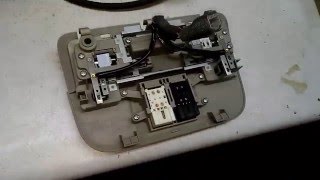
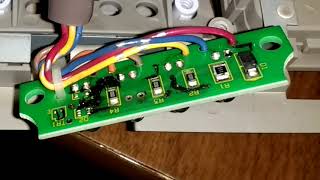
- Cracked Solder Joints on Related Components (Less Common) — On specific vehicles (e.g., Subaru), the fault lies in connected components like the overhead passenger airbag indicator. Cracked solder joints create high resistance interpreted as a data fault.
- CAN Bus Network Fault (Rare) — A short or open circuit in the twisted pair CAN wiring corrupts all communication, falsely implicating the seat module.
Symptoms
- Airbag or SRS Warning Light is On — The main airbag system illuminates a warning light because it lacks reliable seat position data. The system disables itself as a result.
- Power Seat Functions Fail — The seat refuses to move forward, backward, up, down, or recline. The physical switches are completely unresponsive.
- Seat Memory and Climate Functions Fail — Memory recall buttons, seat heaters, and ventilators become inoperative because they rely on the same faulty module.
- Seat-Specific Dash Warning — The instrument cluster displays messages like 'Seat Adjuster Malfunction' or an icon of a seat with an exclamation point.
- Erratic Seat Movement — A short circuit causes the seat to move autonomously or behave unpredictably when buttons are pressed.
Diagnostic Flowchart
Tap your situation to follow the diagnostic path that matches what you're seeing on this code.
Common Fixes & Costs
- Repair Damaged Wiring or Connectors
— Parts: $10-$75, Labor: $150-$450, ~1.5 hr book time
(Intermediate)
: OEM KU2Z-14S411-FA (Alt: Motorcraft KU2Z-14S411-FA) - Clean Corroded Ground Connection — Parts: $1-$5, Labor: $75-$150, ~0.8 hr book time (DIY)
- Replace Seat Control Module and Program
— Parts: $400-$900, Labor: $150-$300, ~1.5 hr book time
(Professional)
: OEM FU5Z-14C724-A (Alt: Dorman 601-704) - Repair Faulty Overhead Airbag Indicator (Subaru) — Parts: $1-$5, Labor: $150-$300, ~1.5 hr book time (DIY)
- Reprogram or Recalibrate Seat Control Module — Parts: $0, Labor: $125-$250, ~1.0 hr book time (Professional)
Used vs. New Parts: Buying Guide
When a used part is worth it: For vehicles over 10 years old, a used Seat Control Module from a reputable dismantler is a cost-effective option if the part number matches exactly. Do not use used wiring pigtails due to the risk of inheriting identical wire fatigue.
Donor-vehicle mileage cap: roughly under 100000 miles for the part to have meaningful remaining life.
Donor quality checklist:
- Verify the part number on the module is an exact match. Superseded numbers frequently fail to communicate.
- Source parts from dry climates to eliminate corrosion risks.
- Ensure the donor vehicle has no flood or fire history.
- Require a minimum 30-day warranty for used electronics.
Decision logic:
- If The part requires programming or VIN-locking to the vehicle (common on Ford, Jaguar, BMW) → Buy new or professionally refurbished. A used module is often unprogrammable by independent shops.
- If The vehicle is less than 8 years old and the part is under $400 new → Buy new for the warranty and guaranteed compatibility.
- If The part is 'plug-and-play' with no programming required (older GM, Mercedes) → Buy used if the part number matches exactly.
Warranty tradeoff: Used parts offer a 30-90 day replacement warranty (no labor). New aftermarket parts carry a 1-year warranty. New OEM parts provide a 1-2 year warranty.
Worst-case if a used part fails: $200-$500 if a used module fails, requiring repeat diagnosis and labor.
What Happens If You Wait — Timeline
- Immediate (First Key-On): SRS module detects invalid data during its self-test. The airbag warning light illuminates, and the SRS system disables as a fail-safe. (MPG impact: 0%% · Added cost: $0 (but immediate, critical loss of safety))
- Immediate to 1 week: All functions controlled by the module (power adjustments, memory, heating/cooling) fail, preventing a safe driving position. (MPG impact: 0%% · Added cost: $0 (functional inconvenience))
- 1-6 months: Continued driving with a wiring short or moisture intrusion leads to further corrosion, blowing fuses or damaging the module's internal circuitry. (MPG impact: 0%% · Added cost: $150 - $900 (cost of a new module if the original becomes unrepairable))
- 6+ months: Ignoring a network-wide issue (e.g., CAN bus short) causes data corruption affecting other modules, leading to a complex diagnostic nightmare. (MPG impact: 0%% · Added cost: $500 - $2500+ (cost to diagnose and replace other affected control modules))
Cost of Not Fixing It
- Immediate: A disabled Supplemental Restraint System (SRS). In a collision, the airbags will not deploy, dramatically increasing the risk of serious injury or death. (Added cost: N/A (Safety Risk))
- 0-3 Months: Loss of all functions for the affected seat, including power adjustments, memory, and heating/cooling features. This is a major inconvenience and prevents achieving a safe driving position. (Added cost: $0)
- 3+ Months: If the root cause is a network-wide short, it eventually causes data corruption or failure in other critical control modules, leading to complex and expensive repairs. (Added cost: $500 - $2500+)
Diagnosis Steps
- Scan All Modules
Use an advanced, bi-directional OBD-II scanner to read codes from all vehicle modules (Body, Chassis, SRS, Network). Basic scanners cannot see 'U' codes. Record all codes; related codes provide critical diagnostic context.
Tools: Advanced Bi-Directional OBD-II Scanner (Beginner) - Visually Inspect Under the Seat
Move the seat to its highest and furthest positions. Use a flashlight to identify disconnected plugs, pinched wires, jammed mechanisms, or green/white corrosion on connectors.
Tools: Flashlight (Beginner) - Perform a 'Wiggle Test'
With the ignition on (engine off), have an assistant operate the seat controls. Gently wiggle the main wiring harness and connectors under the seat. If functions temporarily restore, you have located the loose connection or broken wire.
Tools: Assistant (Beginner) - Check Fuses
Locate all fuses related to power seats, seat modules, and SRS in the owner's manual. Test them with a multimeter. A blown fuse indicates a direct short circuit in the wiring.
Tools: Owner's Manual, Fuse Puller, Multimeter (Beginner) - Verify Module Power and Ground Integrity
Using a wiring diagram, identify the power and ground pins on the module's connector. With the engine off, verify the power pin receives 12.0V - 12.6V. Disconnect the battery and measure resistance between the ground pin and a clean chassis point; it must be under 0.5 Ω. High resistance or low voltage causes the module to transmit corrupt data.
Tools: Multimeter, Vehicle-Specific Wiring Diagram (Intermediate) - Check CAN Bus Network Resistance
Disconnect the 12V battery. Measure resistance between Pin 6 (CAN-H) and Pin 14 (CAN-L) at the OBD-II port. A healthy network reads 60 Ω. A reading of 120 Ω means a terminating resistor is offline. A reading near 0 Ω indicates a short between the two CAN wires.
Tools: Multimeter (Advanced) - Check CAN Bus Network Voltage
Reconnect the battery and turn the ignition ON. Check voltage between Pin 6 (CAN-H) and ground; it should be ~2.6V. Check voltage between Pin 14 (CAN-L) and ground; it should be ~2.4V. Identical voltages (e.g., both 2.5V or 0V) indicate a short to power, ground, or between wires.
Tools: Multimeter (Advanced) - Isolate the Module
If network tests fail, disconnect Seat Control Module 'D' and repeat the CAN bus resistance test at the OBD-II port. If the reading returns to 60 Ω, the module is shorted internally. If the fault remains, the wiring harness is damaged.
Tools: Basic Hand Tools, Multimeter (Advanced) - Analyze Live Data PIDs
View the live data stream from the Seat Control Module. Look for illogical values. If the 'Seat Track Position' PID reads 'Error' or -100% and ignores manual seat movement, the module is confirmed to be sending invalid data.
Tools: Advanced Bi-Directional OBD-II Scanner (Advanced)
When This Code Triggers (Freeze-Frame Conditions)
- System State: Key-On, Engine Off (KOEO) or Key-On, Engine Running (KOER) (Communication codes set during the initial network 'handshake' when all modules report their status at startup.)
- Battery Voltage: 11.8V - 12.5V (KOEO) or 13.5V - 14.8V (KOER) (The code triggers if system voltage drops during startup or operation, causing the module to send garbled data.)
- Seat Adjustment Status: During or Immediately After Adjustment (The fault logs when the seat is moving, as the module actively transmits position data that other modules monitor.)
- Vehicle State: Stationary (Network communication faults depend on the electrical state of the network itself, not engine load or vehicle speed.)
Related Codes
- U01xx (e.g., U0159) — U0512 means the module sends invalid data. A U01xx code means a module is completely offline. For U01xx, check power and ground first. For U0512, check signal integrity and wiring damage first.
- B-prefix codes (e.g., B0012, B0022) — U0512 is a network code set by other modules. A 'B' code is set by a module about its direct circuits. The airbag module sets B0022 because it received invalid seat data (U0512) and disabled the circuit.
- U-prefix codes for other seat modules (e.g., U024B, U024C) — Functionally identical to U0512 but point to different seat modules. Use a wiring diagram to target the correct component.
- P0512 — Unrelated. P0512 is a Powertrain code for 'Starter Request Circuit Malfunction'. It has nothing to do with seats or network communication.
Climate & Environmental Factors
- High Humidity: Accelerates corrosion on electrical connectors and circuit boards. Moisture ingress causes short circuits and high resistance, leading to corrupted data signals.
- Cold Weather: Low temperatures make plastic connectors and wire insulation brittle, increasing the risk of physical damage. Cold also reduces battery voltage, causing modules to operate erratically during startup.
- Water Intrusion: Direct water exposure from spills or open windows saturates under-seat connectors. This causes severe corrosion and immediate electrical failure.
How to Talk to a Mechanic About This Code
Say this: "I have an airbag warning light and a U0512 code, which points to 'Invalid Data from Seat Control Module D'. I'd like to book a diagnostic appointment. Please start by inspecting the wiring and connectors under the seat, as I understand that's the most common cause."
This directs the technician to check the simplest, most likely, and cheapest-to-fix causes first, before assuming the expensive control module has failed.
Avoid saying:
- 'My airbag light is on, can you just fix it?'
- 'I think I need a new seat computer.'
- 'Just do whatever you think is best.'
Questions to ask before authorizing the repair:
- Did you find a specific fault in the wiring, like a broken wire or corroded pin, or was it just a loose connector?
- If recommending a module replacement, did you verify the module receives correct power and has a good ground connection?
- Does the replacement module require programming to my vehicle's VIN, and is that cost included in the quote?
- What is the warranty on this specific repair, including parts and labor?
Where to Take It: Dealer vs Independent vs Chain
- Dealer:
A strong choice if the fix requires brand-specific software for programming, but expensive for simple wiring issues.
Best for: Vehicles under warranty., Repairs covered by a Technical Service Bulletin (TSB)., Complex module programming required on newer vehicles.
Downsides: Highest labor rates., Defaults to expensive module replacement instead of wiring repair. (Typical cost: +50% vs. baseline) - Independent Shop:
Best overall fit. An independent shop with strong electrical diagnostic skills handles the most common causes of U0512 cost-effectively.
Best for: Out-of-warranty vehicles., Diagnosing and repairing common wiring and connector faults., Vehicles where the fix is a known pattern failure.
Downsides: Diagnostic skill varies; look for ASE certifications in electrical work., Lacks the latest tools to program new modules for all makes. (Typical cost: +0% vs. baseline) - Chain Shop:
AVOID. This requires diagnostic expertise that is not the focus of chain shops.
Best for: Simple maintenance like oil changes or tires.
Downsides: Technicians lack specialized training for complex network diagnostics., High pressure to sell parts leads to unnecessary module replacements. (Typical cost: -10% vs. baseline)
When to Walk Away From the Repair
If the repair cost exceeds 50% of the car's private-party value, consider not fixing it. However, because U0512 represents a critical safety failure, this threshold is often higher.
- Car worth $4000, fix is $2200: Walk away. The repair cost is over half the car's value. Sell 'as-is' with full disclosure of the airbag fault.
- Car worth $12000, fix is $1200: Fix it. The cost is 10% of the vehicle's value and restores a critical safety system.
- Car worth $3000, fix is $450: Fix it. Even on a low-value car, this repair is a small percentage of its worth and makes it safe to drive.
What Scan Tool You Need for This Code
Minimum: A scan tool that reads and clears codes from the Supplemental Restraint System (SRS) / Airbag module.
A standard $20 engine code reader cannot see 'U' codes. These network codes are stored in the SRS or Body Control Module (BCM). You cannot diagnose the problem or clear the light without an SRS-capable scanner.
Budget: BlueDriver Pro (~$100) — Connects to a smartphone via Bluetooth to read and clear SRS/airbag codes for most major brands, providing essential diagnostic info and the ability to turn off the light.
Mid-range: Foxwell NT510 Elite (~$180) — A handheld scanner providing dealer-level diagnostics for one chosen car brand. It reads SRS codes, views live data from the seat module, and performs bi-directional tests.
Professional: Autel MaxiCOM MK808S (~$380) — A diagnostic tablet offering all-system scanning, extensive live data, and bi-directional control. Essential for professional diagnosis and capable of module programming.
Rent vs buy: Auto parts store rental scanners are basic engine-only readers and fail to read airbag lights. You must buy an SRS-capable scanner or pay for professional diagnosis.
How to Clear the Code After You Fix It
- Ensure all under-seat connectors are secure.
- Reconnect the 12V battery if disconnected for repair.
- Use an SRS-capable OBD-II scan tool to read and clear the fault codes from the SRS/Body Control Module.
- Cycle the ignition off, then on, and wait 30 seconds to verify the airbag light remains off.
Drive cycle (~10 minutes): U codes do not require a specific drive cycle. The system performs a self-test at every key-on. After clearing the code, a 10-minute drive with two key cycles confirms the repair.
Readiness monitors affected: None. This is a Body/Network code and does not affect engine emissions readiness monitors required for smog checks.
Watch out for:
- Using a basic engine-only code reader that cannot access or clear SRS/Body codes.
- Disconnecting the battery, which fails to clear this 'hard fault' from the SRS module's memory.
- Clearing the code without fixing the root cause; the code returns immediately upon the next key cycle.
Will This Fail Emissions / State Inspection?
No — by itself this code doesn't fail OBD inspection (but it can keep readiness monitors from setting, which causes a separate fail).
- California: Will NOT fail. A CA smog check only fails for an illuminated Check Engine Light. Airbag lights do not affect emissions.
- New York: Will NOT fail, but receives an advisory. An illuminated airbag light passes the safety inspection but is noted on the report.
- Texas: Will NOT fail. The airbag system is not inspected for Texas safety certifications.
- Virginia / Pennsylvania: WILL FAIL. In states with strict comprehensive safety inspections, an illuminated airbag warning light is an automatic failure.
Most Commonly Affected Vehicles
- Ford F-150, Explorer, Expedition (2015-2020) — Subject to TSB 19-2390 for intermittent multi-contour seat functions. Caused by terminal fretting at the seat module connector. The fix replaces the connector pigtail (Part No. KU2Z-14S411-FA).
- Chevrolet / GMC Silverado, Sierra, Tahoe, Yukon (2007-2014) — Covered by TSB #08-09-41-002H for intermittent airbag lights. Caused by poor terminal tension or faulty Connector Position Assurance (CPA) clips on SRS connectors.
- Subaru Outback, Legacy (2005-2009) — Airbag lights are frequently caused by cracked solder joints on the overhead passenger airbag indicator light circuit board. Re-soldering the joints fixes the issue.
- BMW Various (G-chassis: 3, 5, 7, X3, X5) (2017-2021) — Service bulletin SIB 72 04 17 addresses false passenger occupancy warnings caused by moisture or a poor ground connection for the CIS mat.
- Toyota Sienna (2021-Present) — Removing second-row seats sets SRS codes due to side airbags. The open circuit requires a 2.2-ohm resistor emulator plug to keep the airbag system functional.
- Chrysler / Dodge Pacifica, Grand Caravan (2017-Present) — The Occupant Classification System (OCS) requires a 'Zero Point Weight' recalibration with a professional scan tool if the seat is removed or sensors lose their baseline.
- Honda Pilot, Odyssey (2003-2012) — The passenger airbag 'OFF' indicator light assembly fails, setting high-resistance codes interpreted as a communication fault by other modules.
- Lincoln / Jaguar LS / S-Type (2000-2003) — Driver Seat Module (DSM) failure is common. Replacement modules require programming to the vehicle's VIN by a dealer to function.
Manufacturer-Specific Notes
- Ford / Lincoln: Modern Fords suffer 'terminal fretting' in the main seat module connector (TSB 19-2390). The fix replaces the connector pigtail (Part No. KU2Z-14S411-FA) and solders the connections.
- General Motors (GM): GM vehicles suffer poor pin tension in connectors (TSB 08-09-41-002H). Technicians use special tools to test and tighten internal female pins to resolve intermittent communication faults.
- Subaru: On 2000s models, the root cause is often cracked solder joints on the overhead passenger airbag indicator light's circuit board, not the seat itself.
- Chrysler / Dodge / Jeep: The Occupant Classification System (OCS) loses calibration easily. A 'Zero Point Weight' recalibration using a dealer-level scan tool clears related SRS and communication faults.
Real Owner Stories
2002 Jaguar XJR - Power Seat Failure
The driver's power seat return function stopped working, leaving the seat reclined. The owner suspected a faulty switch or module.
What they tried:
- Consulted Jaguar owner forums and found it was a recurring issue.
- Swapped the driver's side and passenger's side seat control modules. The seat function returned to the driver's side, confirming the module was the problem.
- Mailed the faulty module to a forum specialist for repair.
Outcome: The specialist repaired the corroded circuit board on the module. After reinstallation, power seat functions were fully restored. The repair was significantly cheaper than a new module.
Lesson: For older luxury cars, owner forums are invaluable for diagnosing quirky failures. Specialists offer targeted, affordable repairs for common module failures, avoiding the high cost of new parts.
2014 Honda Odyssey - Intermittent Airbag Light
The SRS/airbag warning light came on intermittently and eventually stayed on.
What they tried:
- Inspected the wiring connectors under both front seats based on forum advice.
- Disconnected and re-seated all accessible connectors under the driver's seat to ensure a solid connection.
Outcome: Unplugging and replugging the under-seat connectors resolved the fault. The cause was a loose connection from items stored under the seat.
Lesson: Always start with the simplest fix. A thorough visual inspection and re-seating of under-seat connectors solves the problem for free before spending money on diagnostics.
2014 Mercedes-Benz E350 - Seat Disconnected During Work
The passenger seat was disconnected for other work. Turning the ignition on triggered an SRS warning light that remained after reconnecting the seat.
What they tried:
- Reconnected the passenger seat harness.
- Used an SRS-capable scan tool to read codes from the Supplemental Restraint System module.
- Used the scanner's 'Erase' function to clear the stored fault codes.
Outcome: Clearing the stored codes with the scan tool immediately removed the airbag light and dash warning message.
Lesson: If you disconnect an airbag-equipped seat, do NOT turn on the ignition. Doing so logs a 'hard code' that requires an SRS-capable scan tool to erase after reconnection.
How to Prevent This Code From Triggering
- Keep the area under the seats completely clear. (Daily habit) — Prevents objects from snagging or disconnecting the sensitive wiring harness, the #1 cause of this fault.
- Apply dielectric grease to under-seat connectors. (Once every 3-5 years) — Creates a moisture-proof barrier preventing pin corrosion from humidity or spills. Corrosion creates high resistance, corrupting data signals.
- Clean battery terminals and check chassis grounds. (Annually) — Ensures modules receive stable voltage and a solid ground path. Poor connections cause voltage drops leading to corrupt data.
- Be cautious with interior detailing. (During cleaning) — Avoids spraying water or cleaning solutions around the base of the seats, preventing corrosion or short circuits in electrical connectors.
- Perform manufacturer software updates. (During scheduled dealer service) — Fixes software bugs that cause communication glitches and trigger invalid data codes.
Frequently Asked Questions
Can I just clear the U0512 code?
You can clear the code with a scanner, but it returns instantly if the underlying electrical problem remains. This is a 'hard fault' that the vehicle's self-test runs continuously upon startup.
What are common misdiagnosis mistakes with U0512?
The most common mistake is replacing the expensive seat control module without exhaustively checking the wiring and ground connection under the seat. Another pitfall is ignoring manufacturer TSBs, which often point to specific, cheaper fixes.
My seat was removed for cleaning and now the airbag light is on. Why?
Modern seats contain airbags and occupant sensors. Unplugging the seat creates an open circuit, forcing the SRS module to disable the entire airbag system for safety. To fix this while the seat is out, install a 2.2-ohm bypass resistor to simulate the airbag's presence.
Is it safe to drive with the airbag light on?
No, it is not safe. The airbag warning light indicates the entire Supplemental Restraint System (SRS) is disabled as a fail-safe. In an accident, none of the vehicle's airbags will deploy.
Why is it called Seat Control Module 'D'?
The Society of Automotive Engineers (SAE) uses letters (A, B, C, D) to standardize naming for modules with similar functions. 'D' does not automatically mean 'driver'; it is simply a unique identifier. Consult the vehicle's service manual to determine which physical module 'D' corresponds to.
Can a weak battery cause code U0512?
Yes. Control modules require stable voltage to function correctly. A weak battery providing below 12.0V during startup causes modules to malfunction and send corrupt data, triggering a U0512 code.
Could something I stored under the seat have caused this?
Absolutely. A water bottle, umbrella, or other object rolling around easily snags a wire or breaks a plastic connector. This physical damage to the harness is a leading cause of this code.
Key Takeaways
- Code U0512 indicates Seat Control Module 'D' is transmitting corrupt data, which immediately disables the vehicle's airbag system and power seat functions.
- Inspect the wiring harness and connectors directly under the affected seat first, as physical damage or corrosion here causes over 80% of U0512 faults.
- Never replace the $400+ seat control module without first verifying it receives at least 12.0V of power and has a ground resistance below 0.5 ohms.
- Do not drive the vehicle until repaired; a disabled Supplemental Restraint System (SRS) means airbags will not deploy in a collision.
Helpful Videos





The information in this article is provided for general reference and educational purposes only. Vehicle specifications, procedures, and part compatibility can vary by production date, trim level, and region. Always consult your vehicle's factory service manual and verify part numbers before purchasing or performing repairs. Safety-critical components such as airbags, seat belts, and braking systems should be installed by a qualified professional.
- 🎬 Helpful Videos
- What Does U0512 Mean?
- Can I Drive With U0512?
- Common Causes
- Symptoms
- Diagnostic Flowchart
- Common Fixes & Costs
- Used vs. New Parts: Buying Guide
- What Happens If You Wait — Timeline
- Cost of Not Fixing It
- Diagnosis Steps
- When This Code Triggers (Freeze-Frame Conditions)
- Related Codes
- Climate & Environmental Factors
- How to Talk to a Mechanic About This Code
- Where to Take It: Dealer vs Independent vs Chain
- When to Walk Away From the Repair
- What Scan Tool You Need for This Code
- How to Clear the Code After You Fix It
- Will This Fail Emissions / State Inspection?
- Most Commonly Affected Vehicles
- Manufacturer-Specific Notes
- Real Owner Stories
- 2002 Jaguar XJR - Power Seat Failure
- 2014 Honda Odyssey - Intermittent Airbag Light
- 2014 Mercedes-Benz E350 - Seat Disconnected During Work
- How to Prevent This Code From Triggering
- Frequently Asked Questions
- Can I just clear the U0512 code?
- What are common misdiagnosis mistakes with U0512?
- My seat was removed for cleaning and now the airbag light is on. Why?
- Is it safe to drive with the airbag light on?
- Why is it called Seat Control Module 'D'?
- Can a weak battery cause code U0512?
- Could something I stored under the seat have caused this?
- Key Takeaways
- 🎟️ Get 5% Off