

OBD-II Code U0463: Invalid Fuel Level Data
What U0463 means, why it triggers, and how to fix it
- U0463 is a communication error code triggered when the vehicle's computer receives invalid or impossible data from the fuel level sensor.
- The most obvious symptom is a fuel gauge stuck on full or empty, accompanied by an illuminated Check Engine Light.
- Replacing a faulty fuel level sensor costs between $320 and $800, but always test the wiring harness and ground connection first to avoid unnecessary parts replacement.
- You can drive with this code, but you must track your mileage manually using the trip odometer to prevent running out of gas and destroying a $1,000 fuel pump.
What Does U0463 Mean?
U0463 means your car's main computer is receiving impossible data from the fuel level sensor module. The information about your gas level is lost or corrupted. It frequently appears alongside P0463, 🎬 Watch: Understanding the causes and fixes for P0463 high input which pinpoints a specific electrical open circuit or high voltage fault in the sensor.
Technical definition: Invalid Data Received From Fuel Level Sensor Module. This U-code indicates a control module (like the PCM or BCM) lost communication with or received implausible data from the fuel level monitor. The code triggers when the data falls outside the expected 0.5V to 4.5V range or remains statically fixed.
Can I Drive With U0463?
Yes, But With Caution. Yes, but you have no reliable way to know your fuel level. The primary risk is running out of gas, which strands you and causes premature fuel pump failure—a $500 to $1,500 repair. The fuel pump relies on submerged gasoline for cooling and lubrication. Track your mileage with the trip odometer and keep the tank topped off until you fix the issue.
Common Causes
- Faulty Fuel Level Sensor (Sending Unit) (Very Common) — The sensor is a variable resistor with a float arm inside the gas tank. Over time, the internal contacts wear out, corrode, or the float arm physically sticks. This causes the sensor to send erratic, open-circuit (high voltage), or static signals.
- Damaged or Corroded Wiring and Connectors (Common) — Road debris, moisture, or rodents damage the wiring harness between the fuel tank and the computer. The main connector on top of the fuel pump module frequently corrodes from road salt, creating high resistance or an open circuit.
- Poor Ground Connection (Common) — The fuel level sensor circuit requires a solid chassis ground for accurate readings. A loose, rusted, or broken ground wire causes high resistance and an out-of-spec voltage signal.
- Incompatible Aftermarket Fuel Pump Assembly (Less Common) — Many cheap aftermarket fuel pump assemblies use fuel level sensors with incorrect resistance ranges. The module works but sends data the car's computer interprets as invalid, causing a persistent U0463 code immediately after installation.
- Instrument Cluster or Control Module Fault (Rare) — The Instrument Cluster, Body Control Module (BCM), or Powertrain Control Module (PCM) interprets the sensor's signal. A software glitch or internal hardware failure causes the module to misread valid data. This requires dealer-level diagnostics.
Symptoms
- Inaccurate or Erratic Fuel Gauge — The fuel gauge is stuck on Full, stuck on Empty, or jumps around randomly. This is the most direct and noticeable symptom.
- Check Engine Light is On — The vehicle's main computer illuminates the Check Engine Light to alert the driver of the data fault.
- Running Out of Gas Unexpectedly — Because the fuel gauge reads incorrectly (often stuck on Full), the driver runs out of fuel without warning.
- Low Fuel Light Stays On — Even with a full tank, the low fuel warning light stays illuminated because the computer receives an empty signal.
- 'Distance to Empty' Display is Blank — The trip computer's range calculation displays dashes (---) because it lacks valid fuel level data.
Diagnostic Flowchart
Tap your situation to follow the diagnostic path that matches what you're seeing on this code.
Common Fixes & Costs
- Replace the Fuel Level Sensor Only
— Parts: $70-$200, Labor: $250-$600, ~2.5 hr book time
(DIY)
Dodge Ram 1500 (2011-2017): OEM 68141873AA (Alt: Mopar W0133-1936564)
Subaru Outback/Legacy (Saddle Tank): OEM Main: 42081SC012, Sub: 42081AE05A (Alt: 42081AL00A) - Replace the Entire Fuel Pump Assembly
— Parts: $200-$900, Labor: $275-$1000, ~2.5 hr book time
(Intermediate)
Ford F-150 (Varies by year/engine): OEM 9L3Z-9H307-D, FL3Z-9H307-H (Alt: Motorcraft PFS-488, Delphi, TruGrade D5341008)
Dodge Ram 1500 (Varies by year/engine): OEM 68399001AB, 68409160AD (Alt: Bosch, Denso, Delphi) - Repair Damaged Wiring or Connector — Parts: $10-$50, Labor: $100-$300, ~1.5 hr book time (Intermediate)
- Use a Quality Fuel System Cleaner — Parts: $10-$25, Labor: $0, ~0.1 hr book time (Beginner)
- Replace the Body Control Module (BCM) — Parts: $250-$800, Labor: $100-$300, ~2 hr book time (Professional)
Used vs. New Parts: Buying Guide
When a used part is worth it: A used part makes sense for older vehicles (over 150,000 miles) on a tight budget, provided you are only replacing the sensor and not the entire pump assembly.
Donor-vehicle mileage cap: roughly under 80000 miles for the part to have meaningful remaining life.
Donor quality checklist:
- Verify the donor vehicle was not scrapped due to electrical issues.
- Match the part number exactly to ensure the correct resistance range.
- Inspect the electrical connector for corrosion before purchasing.
Decision logic:
- If Vehicle is less than 8 years old or has under 80,000 miles → Buy a new OEM or high-quality aftermarket part.
- If Vehicle is over 10 years old and budget is a primary concern → A used part from a reputable salvage yard is an acceptable risk.
- If The part is the entire fuel pump assembly → Buy new. The fuel pump motor is a wear item with an unknown remaining lifespan on a used part.
Warranty tradeoff: Used parts carry a 30-90 day warranty covering only the part. New aftermarket parts offer 1-year to lifetime warranties.
Worst-case if a used part fails: $400-$1000 if a used part fails, requiring repeat labor and a second replacement part.
What Happens If You Wait — Timeline
- 0-4 weeks: Code U0463 appears. Fuel gauge is stuck or erratic. No performance symptoms. (MPG impact: 0%% · Added cost: $0)
- 1-3 months: Driver runs the tank dry due to the faulty gauge. The fuel pump ingests air and overheats. (MPG impact: 0%% · Added cost: $75-$200 for a tow service.)
- 3-6 months: Repeatedly running the tank low causes cumulative heat damage. The pump motor weakens, causing hard starting. (MPG impact: 0-5%% · Added cost: $200-$500 in wasted fuel and initial pump damage.)
- 6+ months: The fuel pump fails completely from overheating. The vehicle will not start. (MPG impact: N/A (vehicle won't run)% · Added cost: $800-$1500 for a new fuel pump assembly.)
Cost of Not Fixing It
- Immediate: Risk of being stranded. With an unreliable fuel gauge, you run out of fuel unexpectedly. (Added cost: $75-$200 for a tow.)
- 0-3 months: Premature fuel pump failure. Repeatedly running the tank dry causes the fuel pump to overheat and lose lubrication. (Added cost: $700-$1500)
- 3+ months: Clogged fuel system components. Running the tank low pulls sediment into the fuel filter and injectors. (Added cost: $200-$500)
Diagnosis Steps
- Scan for All Trouble Codes
Use an OBD-II scanner to confirm U0463. Check for related codes like P0460, P0461, P0462, or P0463, which pinpoint the exact electrical fault (e.g., high voltage, low voltage, or erratic performance).
Tools: OBD-II Scanner (Beginner) - Analyze Live Data
Use an advanced scan tool to view the 'Fuel Level Sensor Voltage' or 'Fuel Level Percentage' PID. Rock the vehicle side-to-side to slosh fuel. If the value is fixed at 5V or 100%, or doesn't fluctuate, you have a hard sensor or wiring fault.
Tools: Advanced OBD-II Scanner (Intermediate) - Visually Inspect Wiring and Connectors
Inspect the wiring harness connecting to the fuel pump assembly under the vehicle. Look for chewed wires, chafing, or green corrosion on the connector pins. The main connector on the fuel pump module is a primary failure point.
Tools: Flashlight, Jack and Jack Stands (Beginner) - Check the Ground Wire
Locate the ground wire for the fuel tank or fuel pump assembly using a repair manual. Ensure it is clean, tight, and rust-free. A bad ground is the easiest fix for high circuit resistance.
Tools: Wrenches, Wire Brush (Intermediate) - Test Circuit Voltage
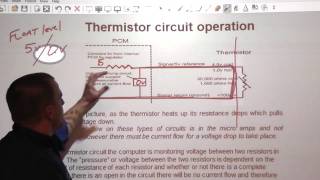
Check the voltage on the signal wire at the fuel pump connector with a multimeter (key on, engine off). A normal signal operates between 0.5V (empty) and 4.5V (full). A reading stuck at 5V or higher confirms an open circuit.
Tools: Multimeter, Vehicle-Specific Wiring Diagram (Intermediate) - Perform Sensor Sweep Test
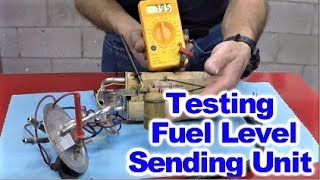
Remove the fuel pump assembly. Connect a multimeter to the sensor's pins to measure resistance. Move the float arm slowly from empty to full. The resistance must change smoothly. Erratic jumps or an infinite (OL) reading confirms a dead sensor. Verify against OEM specs (e.g., newer GM is 40-250 Ω, newer Ford is 16-158 Ω).
Tools: Multimeter, Basic Hand Tools, Manufacturer Service Manual (Advanced) - Test the Control Module
If the sensor and wiring test perfectly, back-probe the connector at the BCM or PCM. Ensure the module receives the exact signal sent from the sensor. If the signal arrives intact but the code persists, the module requires replacement or reprogramming.
Tools: Multimeter, Advanced Scan Tool, Wiring Diagram (Advanced)
When This Code Triggers (Freeze-Frame Conditions)
- Engine Coolant Temp: 180-200°F (The engine is at normal operating temperature.)
- RPM: 1500-2500 (The code sets during steady-state cruising, not during idle or heavy acceleration.)
- Fuel Level: 15-85% (The fault is detected when the fuel level is not at extreme full or empty points, as the PCM expects rational changes.)
- Vehicle Speed: 35-55 mph (The fault registers after consistent driving at city or highway speeds.)
Related Codes
- P0463 — Fuel Level Sensor Circuit High Input. U0463 is the network error; P0463 is the specific electrical reason. It sets when the PCM detects a voltage signal above 4.5 volts, indicating an open circuit or failed sensor.
- P0462 — Fuel Level Sensor Circuit Low Input. Indicates a short to ground in the signal circuit, causing voltage near zero and an empty gauge reading. This unbelievable data triggers U0463.
- P0461 — Fuel Level Sensor Circuit Range/Performance. Sets when the sensor's signal is erratic or stuck. This erratic data leads directly to a U0463 code.
- P2068 — Fuel Level Sensor 'B' Circuit High. Functionally identical to P0463 but applies to vehicles with two sensors in a saddle-style tank. If you have both codes, test both sensors.
Climate & Environmental Factors
- Road Salt (Winter Climates): Road salt penetrates wiring harnesses and electrical connectors for the fuel pump module. This corrosion creates high resistance or an open circuit, directly causing the high voltage signal associated with this code.
- High Humidity: Moisture accelerates corrosion on exposed or poorly sealed connectors and ground points, leading to high-resistance faults.
How to Talk to a Mechanic About This Code
Say this: "I have a U0463 code and my fuel gauge is erratic. Before replacing the whole fuel pump assembly, please test the fuel level sensor circuit, including the wiring, ground, and connector, to pinpoint the exact failure."
This directs the technician to perform a proper diagnosis to isolate the fault, preventing unnecessary parts replacement and saving you money.
Avoid saying:
- 'My gas gauge is broken, just replace the fuel pump.'
- 'My check engine light is on, can you look at it?'
- 'Just fix whatever's wrong.'
Questions to ask before authorizing the repair:
- Did you test the sensor's resistance and wiring continuity, or are you just recommending a full assembly replacement?
- If the sensor is bad, is it available as a separate part for my vehicle?
- What is the warranty on the recommended parts and labor?
Where to Take It: Dealer vs Independent vs Chain
- Dealer:
Recommended only if the issue is a control module or the vehicle is under warranty.
Best for: Vehicles under warranty., Complex cases involving module communication errors., Repairs requiring vehicle-specific software updates.
Downsides: Highest labor rates., Defaults to replacing the entire fuel pump assembly even if the sensor is available separately. (Typical cost: +50% vs. baseline) - Independent Shop:
Best fit for most out-of-warranty vehicles. They easily diagnose and repair the sensor or wiring at a lower cost.
Best for: Out-of-warranty vehicles., Straightforward sensor or wiring repairs.
Downsides: Quality varies; check ASE certifications., Lacks expensive diagnostic software for complex module issues. (Typical cost: +0% vs. baseline) - Chain Shop:
Use with caution. Acceptable for basic diagnosis, but avoid for tank-dropping repairs.
Best for: Simple wiring or connector repairs.
Downsides: Technician skill varies dramatically., Lacks experience for dropping the fuel tank., High pressure to upsell full fuel pump assemblies. (Typical cost: -10% vs. baseline)
When to Walk Away From the Repair
If the estimated repair cost exceeds 40-50% of your car's private-party value, consider selling or trading it in.
- Car worth $3500, fix is $1500: Walk away. The repair cost is nearly half the car's value.
- Car worth $15000, fix is $1200: Fix it. The repair cost is well below the threshold.
- Car worth $5000, fix is $800: Borderline. Get a second opinion to confirm the diagnosis and cost before proceeding.
What Scan Tool You Need for This Code
Minimum: An OBD-II scanner that reads and graphs live data, specifically the 'Fuel Level' PID.
A basic $20 code reader only shows the U0463 code. It cannot show live voltage data from the sensor to confirm if the signal is stuck high or erratic.
Budget: BlueDriver Pro or Foxwell NT301 (~$100) — Displays live data streams. Watch the 'Fuel Level %' or 'Fuel Sensor Voltage' to see if it behaves erratically.
Mid-range: Innova 5610 or Autel AL619 (~$150) — Offers robust live data graphing and extensive PID coverage for accurate sensor testing.
Professional: Autel MaxiCOM MK808S (~$500) — Provides full bidirectional control and access to all vehicle modules, necessary if you suspect a BCM fault.
Rent vs buy: AutoZone and O'Reilly Auto Parts offer free loaner tools. This is a free way to confirm the code and check live data before committing to a repair.
How to Clear the Code After You Fix It
- Reconnect the battery if disconnected.
- Use an OBD-II scan tool to manually erase the trouble codes.
- Perform a complete drive cycle to run readiness monitors.
Drive cycle (~30 minutes): Start with a cold engine. Idle for 3 minutes. Drive for 15 minutes in mixed city and highway conditions (over 40 mph). Let the vehicle sit with the engine off for 10 minutes. This verifies the repair and resets readiness monitors.
Readiness monitors affected: Evaporative (EVAP) System, Fuel System Monitor
Before emissions retest: drive at least 100 miles to fully set monitors.
Watch out for:
- Disconnecting the battery clears the code but resets all OBD-II readiness monitors, causing an automatic emissions test failure.
- The code returns immediately if the underlying electrical fault remains.
- Having less than 15% or more than 85% fuel in the tank prevents the EVAP readiness monitors from running.
Will This Fail Emissions / State Inspection?
Yes — this code typically fails an OBD-II emissions inspection.
- California: An illuminated Check Engine Light results in an automatic smog test failure. You must complete a full drive cycle after repairs.
- New York: An active U0463 code causes the vehicle to fail the OBD-II emissions inspection.
- Texas: In the 17 counties requiring emissions testing, an active Check Engine Light triggers an automatic failure.
Most Commonly Affected Vehicles
- Dodge Ram 1500, Charger, Magnum (2008-2018) — Prone to setting U1403 (Implausible Fuel Level Signal) along with P0463. The issue is often a communication failure between the Instrument Cluster, Front Control Module, and PCM.
- Ford F-150 (2018-2022) — TSB SSM 50841 points to intermittent connection issues at the Fuel Pump Control Module (FPCM) connector or a poor ground at location G401 as the primary cause.
- Subaru Outback, Forester, Impreza (1997-2014) — These vehicles use a saddle-style tank with two level sensors wired in series. A failure in either the main or sub-sensor creates an open circuit for the entire system.
- Chevrolet / GMC Silverado, Sierra, Tahoe, Suburban (1997-2005) — The resistive material on the fuel level sending unit wears out or fails from sulfur deposits. Try a PEA-based fuel system cleaner before replacing the sensor.
- Nissan Rogue, Altima, Sentra, Versa (2002-2022) — TSB NTB22-026 specifically states to replace only the sensor, not the entire fuel pump assembly, to fix P0463 and save on repair costs.
- Hyundai Tucson, Santa Fe, Elantra (2007-2020) — On saddle tank models, a failure in either the main or sub sensor causes codes P0463 and P2068. Replace both sensors simultaneously.
- Kia Forte, Sorento, Optima (2013-2020) — Shares platforms with Hyundai, experiencing identical failures of the fuel level sensor integrated into the fuel pump module.
- Volkswagen Tiguan, Taos, Atlas (2019-2024) — VW issued TSB VIN4APIN20240410 acknowledging P0463 and complaints of the fuel gauge not reading full after a fill-up, confirming a high failure rate for the sensor.
- Honda Civic, CR-V, Accord (2016-2023) — Triggered by a faulty fuel gauge sending unit or an open circuit in the wiring. The gauge control module within the instrument cluster is a secondary failure point.
Manufacturer-Specific Notes
- General Motors: Sulfur buildup coats the sending unit's resistor card. A TSB suggests using a PEA-based fuel system cleaner (like Techron) as a first-step fix before replacing parts.
- Subaru: AWD models use a saddle-shaped tank with two sensors wired in series. A failure in one sensor disables the entire system. A warranty extension covers the low-pressure fuel pump for 15 years/150,000 miles on many 2017-2020 models.
- Chrysler/Dodge/Ram: The sensor signal routes through the Instrument Panel Cluster or Front Control Module before reaching the PCM. Communication breakdowns trigger U1403/U1411 codes even if the sensor is perfectly fine.
- Nissan: TSB NTB22-026 explicitly instructs technicians to replace only the fuel level sensor, not the entire fuel pump assembly. Warranty claims for full assemblies are rejected.
- Volkswagen: On the electric ID.4, P0463 indicates a fault in the high-voltage battery's state-of-charge monitoring system, requiring a specialized EV technician.
- Ford: On 2018-2022 F-150s, fuel system codes stem from a poor connection at the Fuel Pump Control Module (FPCM) or its ground point (G401). Check this external connector before dropping the tank.
Real Owner Stories
2015 Subaru Outback with P0463
The fuel gauge dropped to 'E' with a flashing fuel light and a check engine light.
Outcome: Repairing the damaged wires restored the fuel gauge and cleared the code. No parts replacement was necessary.
Lesson: Always visually inspect the wiring before replacing parts, especially on vehicles with dual saddle tanks.
2007 Dodge Ram 1500 with P0463
The check engine light illuminated, and the fuel gauge stuck on empty despite a half-full tank.
Outcome: The aftermarket sensor had the wrong resistance range. The owner had to drop the tank a second time to install an OEM-spec part.
Lesson: Cheap aftermarket sending units often have incorrect resistance ranges. Verify OEM specs before installation.
2006 GMC Envoy with P0463
The fuel gauge dropped to 'E' intermittently. A shop replaced the fuel pump assembly.
Outcome: The dealer installed the correct sensor, resolving the issue.
Lesson: Verify that the replacement fuel pump assembly explicitly includes the fuel level sending unit, as some are sold without it.
How to Prevent This Code From Triggering
- Keep the fuel tank at least 1/4 full (Always) — Submerged gasoline cools and lubricates the electric fuel pump. Running near empty causes overheating and damages the integrated level sensor.
- Use Top Tier gasoline (Every fill-up) — Top Tier fuels contain detergents that prevent sulfur buildup on the fuel level sensor's delicate resistor contacts.
- Inspect underbody wiring (During oil changes) — Catches corrosion on the fuel pump module connector before it causes a complete signal failure.
- Use a fuel stabilizer (Before storing a vehicle for 3+ months) — Prevents gasoline from degrading into varnish that sticks the fuel level float or coats the sensor's resistor.
Frequently Asked Questions
What is the difference between a U-code and a P-code?
P-codes relate to engine and emissions circuits, while U-codes indicate network communication errors. U0463 means bad data is on the network, while P0463 identifies the specific electrical fault (high voltage) causing it.
Can a fuel additive like Techron fix a U0463 code?
On older GM vehicles, a PEA-based additive like Chevron Techron cleans sulfur deposits off the sensor. For $15, it is a worthwhile first step before an expensive repair. However, it will not fix a broken wire or electrically failed sensor.
Why did my fuel gauge get stuck on full after filling up?
The 'high input' from a related P0463 code means the sensor circuit is open, sending maximum voltage (typically 5V). The car's computer interprets this 5V signal as a full tank. The gauge gets stuck there because the open circuit prevents the signal from changing.
Does U0463 mean I need to replace my fuel pump?
Not always. On many vehicles, especially Nissans and Hyundais, you can buy the fuel level sensor separately for a much cheaper repair. Always diagnose the wiring and ground connections first to rule out a simple electrical fault.
What is a common misdiagnosis for U0463?
The most common mistake is replacing the entire fuel pump assembly without testing the circuit. The actual fault is often a corroded ground wire or a damaged connector. Another pitfall is installing a cheap aftermarket pump with the wrong resistance range, causing the code to return immediately.
I replaced the fuel level sensor, but the code came back. What now?
Verify the replacement part has the exact OEM resistance range. Next, re-inspect the wiring harness and connectors for intermittent shorts or corrosion. Finally, suspect a software issue in the instrument cluster or PCM, requiring dealer-level diagnostics.
I ran out of gas, and now I have a U0463 code. Did I break the fuel pump?
Running the tank completely dry causes the electric fuel pump to overheat, as it relies on gasoline for cooling. This heat damage destroys the pump's motor or the integrated fuel level sensor electronics. If this happens, you must replace the entire fuel pump assembly.
Key Takeaways
- U0463 is a communication error code triggered when the vehicle's computer receives invalid or impossible data from the fuel level sensor.
- The most obvious symptom is a fuel gauge stuck on full or empty, accompanied by an illuminated Check Engine Light.
- Replacing a faulty fuel level sensor costs between $320 and $800, but always test the wiring harness and ground connection first to avoid unnecessary parts replacement.
- You can drive with this code, but you must track your mileage manually using the trip odometer to prevent running out of gas and destroying a $1,000 fuel pump.
Helpful Videos


The information in this article is provided for general reference and educational purposes only. Vehicle specifications, procedures, and part compatibility can vary by production date, trim level, and region. Always consult your vehicle's factory service manual and verify part numbers before purchasing or performing repairs. Safety-critical components such as airbags, seat belts, and braking systems should be installed by a qualified professional.
- 🎬 Helpful Videos
- What Does U0463 Mean?
- Can I Drive With U0463?
- Common Causes
- Symptoms
- Diagnostic Flowchart
- Common Fixes & Costs
- Used vs. New Parts: Buying Guide
- What Happens If You Wait — Timeline
- Cost of Not Fixing It
- Diagnosis Steps
- When This Code Triggers (Freeze-Frame Conditions)
- Related Codes
- Climate & Environmental Factors
- How to Talk to a Mechanic About This Code
- Where to Take It: Dealer vs Independent vs Chain
- When to Walk Away From the Repair
- What Scan Tool You Need for This Code
- How to Clear the Code After You Fix It
- Will This Fail Emissions / State Inspection?
- Most Commonly Affected Vehicles
- Manufacturer-Specific Notes
- Real Owner Stories
- 2015 Subaru Outback with P0463
- 2007 Dodge Ram 1500 with P0463
- 2006 GMC Envoy with P0463
- How to Prevent This Code From Triggering
- Frequently Asked Questions
- What is the difference between a U-code and a P-code?
- Can a fuel additive like Techron fix a U0463 code?
- Why did my fuel gauge get stuck on full after filling up?
- Does U0463 mean I need to replace my fuel pump?
- What is a common misdiagnosis for U0463?
- I replaced the fuel level sensor, but the code came back. What now?
- I ran out of gas, and now I have a U0463 code. Did I break the fuel pump?
- Key Takeaways
- 🎟️ Get 5% Off