

U0442 on 2011-2023 Dodge Charger: Invalid Data from ECM/PCM 'B' Causes and Fixes
This code indicates a network communication problem, not a specific bad part. The most common causes on a Dodge Charger are a weak battery, corroded wiring at the BCM or Star Connector (behind the glove box), or a faulty Body Control Module (BCM). Start by testing the battery before attempting more complex wiring diagnostics.
- U0442 is a network problem, not a single part failure. Do not replace any expensive modules until you have performed a full diagnosis.
- Always start by testing the vehicle's battery. A weak battery is the #1 cause of this code on a Dodge Charger.
- The next most likely cause is a poor connection or wiring damage at the Star Connector or Body Control Module (BCM), both located behind the glove box.
- This code is often accompanied by other 'U' (communication) codes. The pattern of these codes is key to finding the faulty module or circuit.
- Repairing this code is complex and requires tools beyond a basic OBD-II reader. Professional diagnosis is strongly recommended.
What's Unique About the 2011-2023 Dodge Charger
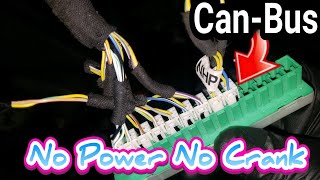
The Dodge Charger's electrical system is highly sensitive to voltage, and many owners report that a weak or failing battery is a primary cause of random network communication codes like U0442. The system uses a central 'Star Connector' (also known as a CAN bus hub or junction block) as a communication hub, located behind the glove box. 🎬 Watch: Diagnosing CAN bus network faults and star connector issues This connector is a known weak point where a single loose or corroded pin can disrupt the entire network. Because so many modules are interconnected through gateways like the Body Control Module (BCM), a fault in one (like the BCM or ABS module) can create a cascade of communication errors across the entire vehicle, making diagnosis complex.
Generation note: The 2011-2023 range covers the Dodge Charger (LD) platform, which received a major facelift in 2015. This update included significant changes to the interior electronics, dashboard, and control modules (like the BCM). While the underlying causes (wiring, modules, battery) are similar, specific module locations and wiring connectors may differ between the 2011-2014 and 2015-2023 model years. For example, BCM part numbers are different for the pre- and post-facelift cars.
Symptoms You May Notice
- Check Engine Light is on
- Multiple warning lights illuminating simultaneously (ABS, Airbag, Traction Control)
- Transmission shifting erratically, delaying shifts, or entering 'limp mode' (stuck in one gear)
- Intermittent loss of throttle response or a 'dead pedal' feeling
- Cruise control is inoperative
- HVAC (heating and air conditioning) system stops working
- Backup camera displays a blue or black screen
- Instrument cluster gauges behaving erratically or going dead
- Vehicle may not start or crank
- Wipers or power windows acting erratically
- Replacing the PCM without proper diagnosis. While the code mentions 'PCM B', the issue is often with the wiring leading to it or another module on the network, not the PCM itself.
- Replacing the Transmission Control Module (TCM). While transmission symptoms are common, they are often a result of the TCM not receiving valid data from the PCM/BCM, rather than a fault within the TCM itself.
Most Likely Causes
- Weak or Failing Battery 🔴 High Probability The Charger's complex network of modules is highly sensitive to voltage. A battery that provides low or unstable voltage during startup can cause modules to initialize improperly and send corrupt data, triggering a flood of communication codes.
How to confirm: Test the battery with a multimeter or a professional battery tester. A healthy, resting battery should be at ~12.6V. During cranking, voltage should not drop below 10V. With the engine running, voltage should be ~13.7V to 14.7V. Any significant drop during cranking or inconsistent voltage points to a bad battery or failing alternator.
Typical fix: Replace the battery. Ensure the new battery meets or exceeds OEM specifications for Cold Cranking Amps (CCA). After replacement, clear all codes and perform a drive cycle.
Est. part cost: $150-$350 - Wiring or Connector Issue at BCM/Star Connector 🟡 Medium Probability The Body Control Module (BCM) and the CAN bus Star Connector are located behind the glove box. This area can be disturbed during cabin air filter changes or aftermarket stereo/alarm installations. Forum users report that hitting the glove box area can sometimes temporarily fix the issue, indicating a loose connection. A single bad connection in the Star Connector can take down the entire network, as it functions like a string of Christmas lights.
How to confirm: Visually inspect the connectors going into the BCM and the Star Connector hub behind the glove compartment. Look for loose pins, corrosion, or signs of wire tampering. Unplugging and reseating the connectors can sometimes resolve the issue. A wiggle test on the harness while monitoring network status with a scan tool can help pinpoint an intermittent connection.
Typical fix: Repair the damaged wiring or clean and secure the corroded/loose connectors. Applying dielectric grease can help prevent future corrosion.
Est. part cost: $10-$100 for wiring repair supplies - Faulty Body Control Module (BCM) 🟡 Medium Probability The BCM acts as a central gateway for many of the vehicle's networks. An internal failure can cause it to send invalid data, disrupting communication and triggering the U0442 code in the PCM.
How to confirm: This is difficult to confirm without professional tools. A diagnostic scan may show multiple codes originating from or pointing to the BCM (like U0140). A technician can try to isolate the BCM from the network to see if communication among other modules is restored.
Typical fix: Replace the Body Control Module. The new module must be programmed to the vehicle's VIN and configuration using a compatible scan tool. Example part numbers include 68242014AE for a 2015 Charger and 68277389AC for a 2016 model.
Est. part cost: $200-$600 for the part, plus programming fees. - PCM Software Glitch ⚪ Low Probability Manufacturers occasionally release software updates to fix communication bugs between modules. TSB 18-012-22 for the 2021 Charger addresses numerous communication DTCs with a PCM update, showing this is a known fix for similar issues.
How to confirm: A Dodge dealership or a well-equipped independent shop can check if your vehicle's PCM has a pending software update using the VIN.
Typical fix: Reprogram (or 'flash') the Powertrain Control Module (PCM) with the latest software version.
Est. part cost: $0 under warranty, or $100-$250 at a dealer/shop
Rare But Worth Checking
- Faulty ABS Module: The ABS module is a critical node on the high-speed CAN bus. If it fails internally, it can broadcast corrupt data or stop communicating, causing communication codes in other modules. This is worth investigating if you also have persistent ABS and traction control warnings and codes like C2116 (Pump Motor Fault) or C2200.
- Interference from Aftermarket Electronics: A poorly installed remote starter, alarm, or audio system that is improperly tapped into the CAN bus wiring can introduce electrical noise and corrupt data signals, leading to this code. It's recommended to disconnect any such devices as a primary diagnostic step.
Diagnosis Steps
- Check Battery Health: Start with the simplest and most common cause. Test the battery voltage at rest (>12.2V), during cranking (>10V), and while running (13.7-14.7V). Ensure terminals are clean and tight. A weak battery is a known cause of network issues on these cars.
- Perform a Full System Scan: Use a high-quality scanner capable of reading codes from all modules (BCM, PCM, ABS, TCM, etc.). Note all communication ('U') codes present. The pattern of codes can help identify the source of the fault.
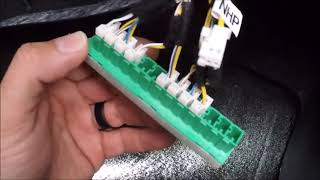
- Inspect Main Connectors: Disconnect the battery. Visually inspect the connectors at the Powertrain Control Module (PCM) and the Body Control Module (BCM) and Star Connector behind the glove box. 🎬 Watch: How to locate the Star Connector in your vehicle Look for any signs of corrosion, moisture, or bent/damaged pins. Reseat the connectors firmly.
- Check for TSBs: Ask a dealership or use an online service to check for any Technical Service Bulletins (TSBs) related to communication issues or PCM software updates for your specific year and model. TSB 18-012-22 is an example for newer models.
- Isolate the Fault (Advanced): This step is best left to a professional. It involves using wiring diagrams to measure CAN bus resistance (should be ~60 ohms with battery disconnected) and voltages (CAN High and CAN Low should both be ~2.5V with key on, engine off). Modules can then be disconnected one at a time to see if the network communication is restored, identifying the faulty component.
Parts You'll Likely Need
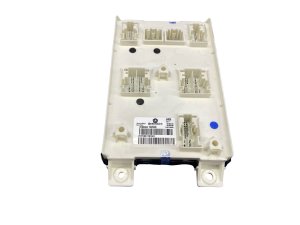
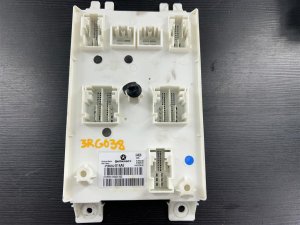
- Body Control Module (BCM) — The BCM is a common failure point that can disrupt the entire CAN network, causing this code. Replacement is often the fix after wiring and battery issues are ruled out.
Trusted brands: Mopar (OEM)
OEM price range: $300-$600
Related Codes That Often Appear With This One
- U0140 — 'Lost Communication With Body Control Module'. This code often appears with U0442 and strongly suggests the problem lies with the BCM or its wiring/connectors.
- U0100 — 'Lost Communication With ECM/PCM'. This is a more general communication failure code that can be logged by other modules (like the TCM or ABS) when they can't hear from the main engine computer, often due to the same underlying network fault.
- U0001 — 'High Speed CAN Communication Bus'. This indicates a general fault on the main communication network, which is the root cause of the invalid data reported by U0442.
Technical Service Bulletins (TSBs) & Recalls
- TSB 18-012-22: Addresses various communication Diagnostic Trouble Codes (DTCs) for 2021 model year vehicles with a PCM software update.
- NHTSA RECALL 16V-240 (FCA S27): Addresses the confusing electronic shifter on 2012-2014 Chargers, which involves a software update to the vehicle's control modules. While not directly for U0442, it shows a history of module software updates to fix core operational issues.
Platform-Specific Known Issues
- Star Connector (CAN Bus Hub) Location: The primary CAN bus junction, known as the Star Connector, is located behind the glove box, often clipped to the dash support structure. It is a long, multi-pin connector where many module communication lines meet. It is a common point of failure due to loose connections or corrosion.
- BCM Location: The main Body Control Module (BCM) is also located behind the glove box assembly. Access requires removing the glove box door and liner.
Mechanic-Grade Diagnostic Values
- CAN C Bus Resistance — expected: 53.5 to 67 Ohms (ideally ~60 Ohms) between Pin 6 (CAN High) and Pin 14 (CAN Low) of the OBD-II port with the battery disconnected.. Failure: A reading of ~120 Ohms indicates an open in one of the two terminating resistors (or the wiring to it). A reading near 0 Ohms indicates a short between the CAN High and Low wires.
- CAN C Bus Voltage (Key On, Engine Off) — expected: CAN High (Pin 6) should average ~2.6V and CAN Low (Pin 14) should average ~2.4V when measured with a multimeter. Both lines should hover around a 2.5V base.. Failure: A voltage of 0V on both lines indicates a loss of power or a short to ground. A voltage stuck high (e.g., 5V or 12V) indicates a short to power. An oscilloscope is required to see the actual data signal, which should show CAN High sweeping up to ~3.5V and CAN Low sweeping down to ~1.5V.
Scan Tool Commands That Help
- wiTECH (Dealer Tool), AlfaOBD, Appcar DiagFCA: Proxy Alignment (PROXI) / Restore Vehicle Configuration — This procedure is mandatory after replacing a major network module like the BCM, ABS module, or Radio/RF Hub. It synchronizes the configuration data across all modules on the network. Failure to perform a Proxy Alignment after replacing a module will cause a flashing odometer and a flood of 'U' codes, including U0442, because the modules have a configuration mismatch.
Wiring & Ground Locations
- Star Connector (Diagnostic CAN-C Connector) — Located behind the glove box, often a white connector block where multiple pairs of CAN wires converge.. This is the central hub for the high-speed CAN bus. A single loose pin, corrosion from a water leak, or damage from a previous repair in this connector can take down the entire network, causing invalid data codes.
- G902A / G902B — Main interior ground points located in the driver and passenger side kick panel areas, near the base of the A-pillars.. These are primary ground points for multiple interior modules, including the BCM. A loose or corroded ground here can cause floating voltages and data corruption, leading to network communication codes.
- Battery Ground to Chassis — In the trunk, near the battery. A large cable connects the negative battery terminal to a stud on the vehicle's chassis.. A loose or corroded main chassis ground is a very common failure point on these vehicles. It can cause intermittent and widespread electrical issues, including module communication faults, as the entire vehicle's electrical system reference is compromised.
Real Owner Repair Stories
- Forum user reports (2013 Dodge Charger Pursuit) — Multiple 'U' codes, unresponsive TCM, ABS and IPC communication loss.
❌ Tried (didn't work) Replacing the TCM, Replacing the PCM
✅ What actually fixed it The final diagnosis pointed to a faulty ABS module that was disrupting the CAN bus. The user also noted that having the wrong VIN programmed in the PCM was causing additional ABS codes. - YouTube Repair Video (2016 Dodge Charger SRT 392) — Sudden loss of power, multiple warning lights, flickering interior lights.
❌ Tried (didn't work) Initial inspection of battery terminals seemed okay.
✅ What actually fixed it The main ground cable from the negative battery terminal to the chassis in the trunk was extremely loose. Tightening the ground connection and repairing nearby wires that had melted from the arcing resolved all electrical issues. - Forum user reports (2006 Dodge Charger R/T) — Vehicle would intermittently go into limp mode, gauges would die, all dash lights would come on, no throttle response, and no-start condition.
❌ Tried (didn't work) Clearing codes (they would return).
✅ What actually fixed it The user found that disconnecting the battery for 10 minutes would temporarily restore function. The root cause was identified as a wiring/grounding issue, with a focus on cleaning all main ground points under the hood and checking module connections.
OEM Part Supersession History
Various→Various— BCM part numbers are highly specific to the model year and the vehicle's option content (e.g., Police Package, AWD, premium lighting). A part number for a 2015 will not work in a 2018, and vice-versa.
Heads up: It is critical to match the part number exactly or use a dealer-verified superseded part number for the vehicle's specific VIN. Installing an incorrect or used BCM without performing a 'Proxy Alignment' will result in a no-start condition or a cascade of communication faults.
Model Year Variations Within This Range
- 2011-2014 vs 2015-2023: The 2015 facelift introduced a completely different BCM with different connector layouts and additional diagnostic circuits. Swapping a newer BCM into an older car is a complex custom job requiring significant re-pinning and programming with tools like AlfaOBD.
Diagnostic Flowchart
Other Known Issues on This Vehicle
Issues unrelated to this code that are worth knowing about as an owner of this generation:
- HEMI V8 (5.7L) Lifter/Camshaft Failure 🔴 High — Common on 2011-2016 models, particularly around 80,000-120,000 miles. Often starts as a 'HEMI tick' and can lead to misfires (P030X codes) and catastrophic engine damage if ignored.
- Uconnect 8.4-inch Screen Delamination 🟠 Medium — Widespread on 2017-2020 models. The adhesive between the digitizer and LCD fails, causing bubbles and 'ghost touches' that can randomly change settings or make calls. (Ref: Multiple internal STAR cases and TSBs exist, but no widespread recall has been issued. (e.g., S2108000130))
- Water Pump Failure (3.6L Pentastar & 5.7L HEMI) 🟠 Medium — Can occur on both primary engines. Symptoms include coolant leaks from the front of the engine, a whining noise, or overheating at idle.
- Electronic 'Monostable' Shifter Confusion (2012-2014) 🔴 High — Affected 2012-2014 models. The shifter design was unintuitive, leading to drivers exiting the vehicle without it being in Park, causing rollaway incidents. (Ref: NHTSA Recall 16V-240 (FCA Campaign S27))
- Alternator Failure (Early 7th Gen) 🔴 High — Particularly noted on 2011-2014 models. Failure can be sudden, causing a complete loss of electrical power while driving. A recall was issued for some models. (Ref: Chrysler Recall P60 (NHTSA 14V-634))
Used vs. New Parts: Buying Guide for This Vehicle
When a used part is the smart pick: Used modules like the BCM, ABS Module, Radio, and Blind Spot Sensors can be a cost-effective option, BUT only if you have access to a scan tool capable of programming (like wiTECH or AlfaOBD) or are using a service that can pre-program the module to your VIN.
Donor-vehicle mileage cap: roughly under 150000 miles for the part to have meaningful remaining life.
What to inspect on the donor part:
- Verify the part number on the used module is an exact match or a known compatible replacement for your original part.
- Inspect connectors for any bent, corroded, or pushed-out pins.
- Avoid parts from flood-damaged or heavy-collision vehicles.
- For Blind Spot Modules, check for cracks in the housing where water could enter.
OEM-only on this vehicle (don't cheap out):
- Powertrain Control Module (PCM): Due to security (immobilizer) and complex VIN programming, using a new OEM part from a dealer is the most reliable path.
- Body Control Module (BCM): While used BCMs can work, they absolutely require programming. If you cannot program it yourself, buying a new or remanufactured unit that is pre-programmed to your VIN is strongly recommended to avoid creating more problems.
Aftermarket brands forum-validated for this vehicle:
- For batteries, brands like Interstate, Odyssey, and OEM Mopar are frequently recommended by owners.
- For module repair services, companies like XeMODeX are known for rebuilding ABS modules.
Brands owners have reported issues with on this vehicle:
- Non-CANbus compliant LED bulbs: Avoid cheap, unbranded LED bulbs that do not explicitly state they are 'CANbus compatible' or 'Error Free', as they are a known source of network interference.
Real Owner Stories
Aggregated from forums and TSBs cited above. Mileages and costs reflect what owners reported in those sources.
2013 Dodge Charger
Symptoms: Electrical haywire issues and symptoms of a CAN bus failure.
What fixed it: Inspecting and addressing the Star Connector located under the glove box.
Source hint: https://www.chargerforums.com/threads/2013-dodge-charger-electrical-haywire-issues.426214/
2018 Ram 1500 Limited — 63000 miles
Symptoms: Uconnect 8.4 screen delaminating.
What fixed it: Replacement of the Uconnect screen assembly.
Source hint: https://www.ramforum.com/threads/uconnect-8-4-screen-delaminating-2018-ram-1500-limited-63k.173873/
Related OBD-II Codes
Frequently Asked Questions
Does TSB 18-012-22 apply to my 2021 Dodge Charger if I have communication codes?
I have a 2013 Charger with a confusing electronic shifter; is there a recall for this?
Where is the BCM located on my 2015 Dodge Charger?
Can hitting the dashboard near the glove box really fix a U0442 code?
What is the 'Star Connector' I keep hearing about in Charger forums?
Will a weak battery cause my Charger to throw multiple warning lights like ABS and Airbag?
Helpful Videos
We Have This Part in Stock





The information in this article is provided for general reference and educational purposes only. Vehicle specifications, procedures, and part compatibility can vary by production date, trim level, and region. Always consult your vehicle's factory service manual and verify part numbers before purchasing or performing repairs. Safety-critical components such as airbags, seat belts, and braking systems should be installed by a qualified professional.
- Dodge Charger:
- 🎬 Helpful Videos
- 🛍️ Shop This Part
- What's Unique About the 2011-2023 Dodge Charger
- Symptoms You May Notice
- Most Likely Causes
- Rare But Worth Checking
- Diagnosis Steps
- Parts You'll Likely Need
- Related Codes That Often Appear With This One
- Technical Service Bulletins (TSBs) & Recalls
- Platform-Specific Known Issues
- Mechanic-Grade Diagnostic Values
- Scan Tool Commands That Help
- Wiring & Ground Locations
- Real Owner Repair Stories
- OEM Part Supersession History
- Model Year Variations Within This Range
- Diagnostic Flowchart
- Other Known Issues on This Vehicle
- Used vs. New Parts: Buying Guide for This Vehicle
- Real Owner Stories
- 2013 Dodge Charger
- 2018 Ram 1500 Limited — 63000 miles
- Related OBD-II Codes
- Frequently Asked Questions
- 🎟️ Get 5% Off