

OBD-II Code U0433: Invalid Data from Front Distance Sensor
What U0433 means, why it triggers, and how to fix it
- Code U0433 disables critical safety features, including adaptive cruise control and automatic emergency braking, due to invalid radar data.
- Over 50% of U0433 triggers stem from a dirty, iced-over, or physically misaligned front radar sensor in the grille.
- You can safely drive the vehicle, but the lack of collision avoidance systems increases your risk of a preventable rear-end accident.
- Always scan all vehicle modules; on Jeeps, this code often points to a $300 yaw rate sensor under the console, not the front radar.
- Replacing the sensor requires a mandatory ADAS calibration, adding $250 to $600 to the final repair bill.
What Does U0433 Mean?

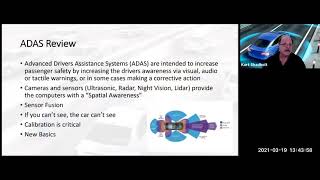
Code U0433 means your car's main computer received an illogical or nonsensical signal from the front-facing radar or camera sensor. This sensor drives Advanced Driver-Assistance Systems (ADAS) like adaptive cruise control and collision warnings. When data is 'invalid,' the computer deactivates these systems as a fail-safe to prevent dangerous errors, such as unexpected braking.
Technical definition: Invalid Data Received From Front Distance Range Sensor. A control module, typically the Body Control Module (BCM) or ADAS module, received data from the forward-looking sensor that fell outside expected parameters. The receiving module logs the fault because it cannot trust the incoming information.
Can I Drive With U0433?
Yes, But With Caution. You can safely drive the vehicle, but critical safety features like adaptive cruise control, forward collision warning, and automatic emergency braking are disabled. This significantly increases collision risk during sudden traffic stops or unintentional lane departures. Get this diagnosed promptly to restore full safety functionality.
Common Causes

- Environmental Obstruction (Snow, Ice, Mud) (Very Common) — A physical layer of snow, ice, thick mud, or heavy rain blocks the radar sensor's 'view'. This overwhelms the signal, causing the sensor to send corrupt data. This is the most frequent real-world trigger and usually resolves once the sensor is cleaned. 🎬 Watch: Tips for keeping your car's safety sensors clean.
- Damaged or Misaligned Front Sensor (Very Common) — The sensor, typically a radar unit in the front grille, is exposed to road debris and impacts. A cracked housing, internal electronic damage, or a bent mounting bracket from a minor collision causes the sensor to read inaccurately, triggering the code.
- Weak or Failing Battery (Common) — A weak battery causes low voltage drops to sensitive electronic modules. This voltage instability forces modules to malfunction and broadcast invalid data across the network, triggering a U0433 code even if the sensor itself is perfectly fine.
- Wiring Harness or Connector Issues (Common) — Wires leading to the front sensor frequently suffer damage from road debris, vibration, or improper repairs. The electrical connector is highly susceptible to moisture and road salt, leading to corroded pins that disrupt the sensitive data signal.
- Software or Calibration Issues (Less Common) — The control module requires a manufacturer software update to fix known firmware bugs. Alternatively, the sensor lost its calibration after a wheel alignment, windshield replacement, or suspension work, rendering its data invalid.
- Faulty Control Module (Less Common) — The module receiving the sensor's data (ADAS, BCM, or PCM) suffered an internal hardware failure. Moisture damage, blown internal circuits, or corrupted memory prevents it from processing the sensor's signal.
- Aftermarket Accessory Interference (Rare) — Improperly installed aftermarket accessories, such as large metal grille guards, bull bars, or certain LED headlights, introduce physical obstruction or electrical noise. This corrupts the sensor's signal on the CAN bus network.
Symptoms

- Adaptive Cruise Control (ACC) Unavailable — The adaptive cruise control system disables entirely. You cannot set a cruising speed or following distance, and a warning message displays on the dashboard.
- Forward Collision Warning (FCW) Light On — The dashboard warning light for the pre-collision or collision avoidance system illuminates, indicating the automatic braking system is offline.
- Stability Control (ESC/VSA) Light On — The Electronic Stability Control or Vehicle Stability Assist warning light illuminates, as these systems rely on front sensor data to anticipate vehicle dynamics.
- Parking Assist Warnings — A 'Parking Assist Unavailable' message appears, or the distance markers on the backup/front camera display vanish. 🎬 See how to fix common front radar obstruction warnings.
- Intermittent or Erratic Warnings (also visible on scanner) — Warning lights and messages appear and disappear randomly. This points directly to a loose electrical connection or a sensor on the verge of complete failure.
Diagnostic Flowchart
Tap your situation to follow the diagnostic path that matches what you're seeing on this code.
Common Fixes & Costs
- Clean Front Sensor or Remove Obstruction — Parts: $0, Labor: $0-$50, ~0.1 hr book time (DIY)
- Repair Wiring Harness or Clean Connector — Parts: $10-$50, Labor: $100-$300, ~1.5 hr book time (Intermediate)
- Replace Front Distance Range Sensor
— Parts: $300-$2,200, Labor: $300-$600 (includes mandatory calibration), ~3.5 hr book time
(Professional)
: OEM ['KD7J-67-XA1', 'D11B-67-XD0B', 'KA1F67Y90C'] (Alt: Aftermarket options are limited; OEM is strongly recommended. Bosch and Denso are major suppliers.)
: OEM ['FL3T-9G768-AJ', 'H1BT-9G768-AF', 'ML3T-9G768-AL'] (Alt: Standard Motor Products (e.g., CCD18) and remanufactured units are available.)
: OEM ['36801-TNY-A03', '36931-TLA-A21', '36801-TLA-A04'] (Alt: Bosch supplies OEM versions; aftermarket quality varies significantly.) - Software Update and/or Sensor Recalibration — Parts: $0, Labor: $250-$600, ~2.0 hr book time (Professional)
- Replace Control Module (BCM, ADAS, etc.) — Parts: $600-$1,200, Labor: $250-$550 (includes mandatory programming), ~2.5 hr book time (Professional)
Used vs. New Parts: Buying Guide
When a used part is worth it: Buying a used front distance sensor is not recommended due to its critical safety function and the high cost of calibration if the used part fails. Only consider it for vehicles over 150k miles where a new OEM part is cost-prohibitive.
Donor-vehicle mileage cap: roughly under 80000 miles for the part to have meaningful remaining life.
Donor quality checklist:
- Verify the donor vehicle was not in a front-end collision, which causes hidden impact damage to the sensor.
- Match the part number exactly. Superseded numbers have different software and fail to communicate.
- Obtain the part from a reputable salvage yard with a return policy.
Decision logic:
- If The part requires calibration → Buy a new OEM part to avoid paying a $300-$600 calibration fee twice if the used part is faulty.
- If Vehicle is less than 10 years old or has under 100K miles → Buy new. The safety risk and potential for wasted labor costs outweigh the savings.
- If A new OEM part costs over $1,500 and an aftermarket option is unavailable → A used part from a non-collision donor is a calculated risk, but budget for a potential second repair.
Warranty tradeoff: Used parts offer a 30-90 day warranty on the part only. New aftermarket parts offer a 1-year warranty. New OEM parts carry a 1-year warranty, extended if installed by a dealer.
Worst-case if a used part fails: $500-$1200. This represents the non-refundable cost of initial labor and calibration if the used sensor is dead on arrival.
What Happens If You Wait — Timeline
- Immediate: The code sets, and a warning light appears. Critical safety features like Automatic Emergency Braking (AEB) and Adaptive Cruise Control (ACC) disable completely. (MPG impact: 0%% · Added cost: $0)
- 0-6 months: The primary cost is the significantly increased risk of an at-fault collision. Driver behavior fails to adapt to the sudden loss of automated safety features. (MPG impact: 0%% · Added cost: $500 - $100,000+ (Cost of an accident, including deductibles and liability).)
- Ongoing: If the root cause is moisture intrusion, corrosion slowly travels up the wiring harness, permanently damaging the control module's connector pins. (MPG impact: 0%% · Added cost: $800 - $1,750 (Cost to replace a damaged control module).)
- Long-term: Driving with a misaligned but partially active sensor causes unexpected 'ghost braking' or a failure to brake, making vehicle behavior dangerously unpredictable. (MPG impact: 0%% · Added cost: Incalculable (Cost of an accident caused by unpredictable vehicle behavior).)
Cost of Not Fixing It
- Immediate: Advanced safety features like Automatic Emergency Braking and Adaptive Cruise Control disable. The vehicle will not automatically brake for obstacles. (Added cost: $0)
- 0-6 Months: Significantly increased risk of a rear-end collision. Driver over-reliance on disabled systems leads to dangerous inattention. (Added cost: Potential cost of an at-fault accident, ranging from $500 to $100,000+.)
- 6+ Months: Continued operation normalizes a high-risk driving condition. The primary cost remains the elevated risk of a preventable accident. (Added cost: Same as above; the cost is event-based rather than a predictable wear-and-tear expense.)
Diagnosis Steps

- Visually Inspect the Front Sensor and Mounting
Locate the front distance sensor in the lower grille, behind the emblem, or near the rearview mirror. Look for physical damage, cracks, or heavy obstruction from dirt, ice, or road debris. Gently clean the sensor surface. Verify the mounting bracket is perfectly straight and secure.
Tools: Flashlight, Soft Cloth (Beginner) - Read All Trouble Codes from All Modules
Use a high-quality OBD-II scanner to read codes from all vehicle modules (ABS, BCM, ADAS). Note any communication ('U') codes, manufacturer-specific codes, or faults in related systems like ABS. Record freeze frame data to identify the vehicle's state when the fault occurred.
Tools: Advanced OBD-II Scanner (Beginner) - Inspect the Wiring and Connectors
Trace the wiring harness from the sensor backward. Look for pinched, frayed, or melted wires. Unplug the connector at the sensor and inspect the pins for green/white corrosion, moisture, or bent terminals. Perform a wiggle test on the harness while monitoring live data to spot intermittent shorts.
Tools: Flashlight (Intermediate) - Check for Power and Ground at the Sensor Connector
With the ignition on, use a multimeter to verify power and ground at the sensor's electrical connector based on the wiring diagram. The power supply must be a stable 9-16 Volts. The ground pin must show near-zero resistance to the chassis.
Tools: Multimeter, Vehicle-Specific Wiring Diagram (Intermediate) - Analyze Live Sensor Data
Access the live data stream from the Front Distance Range Sensor using a bi-directional scan tool. With the vehicle stationary and a clear path ahead, the distance reading must be stable at its maximum value. Erratic or fluctuating readings indicate a faulty sensor or severe interference.
Tools: Advanced Bi-Directional Scan Tool (Advanced) - Check CAN Bus Network Integrity (Resistance)
Disconnect the battery. Set a multimeter to Ohms and measure resistance between the CAN High and CAN Low pins at the DLC (pins 6 and 14) or sensor connector. A healthy high-speed CAN bus reads exactly 60 Ohms. A 120-Ohm reading indicates an open circuit; near 0 Ohms indicates a short.
Tools: Multimeter (Advanced) - Analyze CAN Bus Signal Voltage
With the ignition on, measure the voltage on the CAN lines. CAN High averages 2.6V to 3.5V; CAN Low averages 1.5V to 2.4V. If both wires show identical voltage, they are shorted together. If one line reads 0V, it is shorted to ground.
Tools: Multimeter, Oscilloscope (recommended) (Advanced) - Module Communication and Data Packet Test
Attempt to communicate directly with the Front Distance Range Sensor module using a bi-directional scanner. If the scan tool cannot establish communication with the module, the module itself or its primary CAN wiring has failed.
Tools: Advanced Bi-Directional Scan Tool (Advanced) - Check Sensor Internal Resistance
Unplug the sensor connector. Measure resistance between the CAN High pin and Ground pin on the sensor itself, then CAN Low and Ground. Both must show mega-ohms (MΩ) or an open circuit. Low resistance confirms an internal short, meaning the sensor is dead.
Tools: Multimeter (Advanced) - Perform Sensor Recalibration
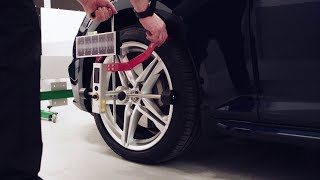
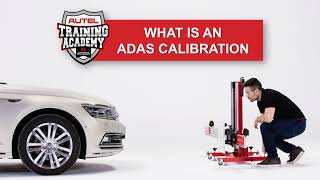
If you install a new sensor, replace the windshield, or adjust the vehicle's alignment, you must recalibrate the ADAS system. This requires specialized targets and software to teach the sensor the 'straight ahead' position. This is strictly a professional-level procedure.
Tools: ADAS Calibration Kit, Advanced Scan Tool (Professional)
When This Code Triggers (Freeze-Frame Conditions)
- Vehicle Speed: 40-70 mph (Steady highway driving, often with adaptive cruise control engaged.)
- Engine RPM: 1500-2500 RPM (Corresponds to steady cruising speed in a top gear.)
- System Voltage: 13.5-14.5V (Normal charging system voltage; a value below 12V indicates a battery or alternator issue as the root cause.)
- Outside Temperature: Any (Faults are highly common in extreme conditions (heavy rain, snow, fog) that physically block the sensor.)
Related Codes
- U0100 — 'Lost Communication With ECM/PCM.' If U0433 appears with U0100, it indicates a widespread network problem like damaged CAN bus wiring. If U0433 appears alone, the fault isolates to the front sensor circuit.
- U0121 — 'Lost Communication With ABS Control Module.' The ADAS system relies on wheel speed data. If the ABS module has a fault, it sends bad data that the ADAS module rejects, causing U0433.
- U0432 — 'Invalid Data Received From Multi-axis Acceleration Sensor.' U0433 relates to distance, while U0432 relates to yaw/rotation. On Jeeps, a U0432 fault is the root cause of a U0433 code.
- U0420 — 'Invalid Data Received From Power Steering Control Module.' A fault in the steering angle sensor cascades and causes the Image Processing Module to report invalid data, logging U0433.
Climate & Environmental Factors
- Snow, Ice, and Mud: A physical layer of snow, ice, or mud blocks the radar sensor's view, triggering a 'Sensor Blocked' warning and logging U0433. This temporary condition resolves immediately after cleaning the grille.
- Heavy Rain or Fog: Severe precipitation or dense fog interferes with millimeter-wave radar signals, causing the system to temporarily shut down as a precaution. The system restores itself once weather improves.
- Road Salt and Humidity (Corrosion): In regions with heavy road salt, moisture penetrates the sensor's electrical connector. This corrodes the pins, degrades the data signal, and causes a persistent U0433 fault requiring connector replacement.
- Extreme Heat or Sun Glare: Intense sun glare reflecting off large, flat surfaces (like a chrome tanker truck) temporarily blinds camera-based sensors, leading to erratic behavior or a temporary fault code.
How to Talk to a Mechanic About This Code
Say this: "I have a U0433 code and my ADAS warning lights are on. I need a diagnostic to determine if the cause is the sensor, wiring, alignment, or another module. Please provide an estimate for the diagnosis first."
This signals you understand the code has multiple causes beyond a bad sensor. It forces the shop to perform a proper diagnosis instead of immediately quoting a $1,500 sensor replacement.
Avoid saying:
- 'My cruise control isn't working, can you fix it?'
- 'My collision warning light is on, just replace the sensor.'
- 'Just do whatever it takes to get the light off.'
Questions to ask before authorizing the repair:
- What was the specific point of failure found during the diagnosis?
- If the sensor needs replacement, does your quote include the mandatory ADAS calibration?
- Can you provide a written estimate that includes parts, labor, and the calibration fee?
- What is the warranty on the parts and the calibration work?
Where to Take It: Dealer vs Independent vs Chain
- Dealer:
Recommended. The dealer is the safest choice due to the specialized equipment and software required for ADAS calibration.
Best for: Vehicles under warranty., Complex manufacturer-specific issues (e.g., Jeep yaw sensor, Ford software updates)., Ensuring access to OEM-certified calibration equipment.
Downsides: Highest labor rates, typically 1.5-2x more than independent shops., Defaults to expensive module replacement when a software update suffices. (Typical cost: +50% vs. baseline) - Independent Shop:
Recommended with caution. Only use an independent shop if you confirm they have a dedicated ADAS calibration bay and OEM-compliant scan tools.
Best for: Out-of-warranty vehicles where the shop is a certified ADAS specialist., Basic diagnostic steps like checking wiring or physical obstructions.
Downsides: Most general independent shops lack expensive ADAS calibration equipment., Quality varies greatly; you must verify they are ADAS-certified. (Typical cost: +0% vs. baseline) - Chain Shop:
AVOID. Chain shops cannot handle the diagnostic complexity or mandatory calibration requirements for a U0433 code.
Best for: Simple tasks like cleaning the sensor face.
Downsides: Never equipped for ADAS calibration or complex electrical diagnostics., High risk of misdiagnosis and being sold unnecessary parts. (Typical cost: -10% vs. baseline)
When to Walk Away From the Repair
If the total estimated repair cost (diagnostics, parts, labor, calibration) exceeds 40-50% of your car's current private-party value, consider selling or trading it in.
- Car worth $5000, fix is $2500: Walk away. The repair cost is 50% of the car's value. Put the money toward a replacement vehicle.
- Car worth $20000, fix is $1800: Fix it. The repair cost is 9% of the car's value and restores critical safety functions.
- Car worth $8000, fix is $2200: Borderline. At 28% of the vehicle's value, get a second opinion from another certified ADAS shop before proceeding.
What Scan Tool You Need for This Code

Minimum: A scanner that reads codes from ALL vehicle modules, including ADAS, ABS, and BCM. A basic engine-only reader will not see a U0433 code.
A $20 scanner only reads generic powertrain ('P') codes. U0433 is a network ('U') code stored in a different module. Without an all-system scanner, you cannot see the code or related faults.
Budget: BlueDriver Pro (~$100) — Confirms the presence of U0433 and reads codes from other modules. It views live data and freeze frame data for initial diagnosis, but cannot perform calibrations.
Mid-range: Foxwell NT510 Elite (~$180) — Provides all-system diagnostics and bi-directional control. This allows you to command components to test function, distinguishing between a wiring problem and a failed sensor. It does not perform calibrations.
Professional: Autel MaxiCOM MK808S (~$450) — Offers full all-system diagnostics and robust bi-directional controls. It performs basic ADAS initializations, making it a powerful tool for advanced DIY diagnosis.
Rent vs buy: For a one-time check, auto parts stores offer free all-system code reading. If you plan to do your own maintenance, buying the BlueDriver Pro is a worthwhile investment. Advanced DIYers benefit from a mid-range bi-directional tool.
How to Clear the Code After You Fix It
- Ensure all physical repairs (sensor replacement, wiring fix) are complete.
- Reconnect the battery if it was disconnected.
- Use a professional-grade OBD-II scan tool to clear the U0433 fault code from the ADAS or BCM module.
- Perform mandatory static or dynamic calibration procedures as specified by the manufacturer.
Drive cycle (~20 minutes): After clearing the code, drive the vehicle for 15-20 minutes on a highway with clear lane markings at a steady speed above 45 mph. This allows the system to self-test and verify sensor alignment. Some manufacturers only require an ignition cycle.
Readiness monitors affected: This is a network ('U') code and does not affect emissions-related readiness monitors like Catalyst or O2 sensors.
Before emissions retest: drive at least 50 miles to fully set monitors.
Watch out for:
- Clearing the code without performing mandatory calibration causes the code to return immediately.
- Using a basic code reader that only scans the engine computer (PCM) fails to clear the fault stored in the ADAS module.
- If the root cause was temporary (e.g., snow), the code clears on its own, but a persistent code indicates a hard fault requiring repair.
Will This Fail Emissions / State Inspection?
Yes — this code typically fails an OBD-II emissions inspection.
- California: U0433 is not a direct emissions code, but the BAR-OIS inspection system checks for trouble codes. An active ADAS warning light causes failure at the technician's discretion.
- New York: New York's annual inspection includes safety components. Any illuminated malfunction indicator on the dashboard is grounds for an automatic failure of the safety inspection.
- Texas: In counties requiring emissions testing, the inspection includes an OBD-II scan. A U-code that triggers a warning light results in a failed inspection.
Most Commonly Affected Vehicles
- Mazda All models with i-ACTIVSENSE (Mazda3, CX-5, etc.) (2014-2021) — Frequently caused by a dirty windshield blocking the laser sensor, triggering a 'Clean Windshield' message. OEM replacement radar sensors often exceed $2,000.
- Ford F-150 (2015-2023) — Frequently caused by sensor misalignment after minor impacts. Some Fords use U0433 to indicate a gear shift (PRNDL) display error, requiring a Ford-specific scanner to verify.
- Honda Models with Honda Sensing (Accord, CR-V, Clarity) (2016-2022) — Triggered by issues with the front radar or windshield camera. A blocked sensor is the most common cause in poor weather. Calibration costs range from $350 to $1,000.
- Jeep Wrangler, Grand Cherokee (2012-2018) — CRITICAL: On Jeeps, U0433 often means 'System Failure' related to Vehicle Dynamics Control. The faulty part is usually the yaw rate sensor under the center console, not the front radar.
- Toyota Yaris (2019-2020) — On newer Yaris models, U0433 is a secondary code caused by a primary fault in the steering angle sensor (code U0420).
- Lexus RX (2016-2022) — A weak battery is a known cause on these models. The voltage drop creates spurious data from electronic modules, triggering the code.
- BMW 5 Series (2017-2023) — These models experience software glitches in the driver assistance modules (KAFAS/SAS) that cause this code. A dealer-level software update is the required fix.
- Mercedes-Benz E-Class (2017-2022) — Linked to faulty ride height sensors in the adaptive suspension system. The ADAS module rejects conflicting height data and logs U0433.
Manufacturer-Specific Notes
- Mazda: Mazda uses a windshield-mounted laser sensor (Lidar). U0433 is commonly caused by a dirty windshield, prompting a 'Smart City Brake Support: Clean Windshield' message.
- Ford: On some Fords, U0433 means 'Invalid Data Received From Gear Shift Control Module'. You must use a Ford-specific scan tool to verify the code's true meaning.
- General Motors (Chevy, GMC, Cadillac): GM front radar brackets are highly sensitive to minor impacts. After replacement, these vehicles require a 'dynamic calibration,' involving driving at specific speeds for 30 minutes.
- Jeep: The U0433 code definition is often 'System Failure' pointing to the Vehicle Dynamics Control (VDC) system. The root cause is a faulty yaw rate sensor, not the front radar.
Real Owner Stories
2018 Honda CR-V with intermittent warnings
The owner reported intermittent 'Collision Mitigation System Problem' and 'Adaptive Cruise Control Problem' warnings. The plastic cover over the front radar sensor had popped off and was reinstalled.
Outcome: The warnings cleared on their own after a few drive cycles, proving the system reset itself once the physical obstruction was fixed.
Lesson: If a temporary obstruction causes the U0433 code, the system often resets and clears the warnings after a few drive cycles. Wait a short period before paying for diagnostics.
2012 Mazda CX-5 with multiple electrical issues
The vehicle exhibited jerky braking sensations, and the SCBS, TPMS, and traction control lights illuminated. The issue began after the owner drained the battery by leaving a lamp on.
Outcome: The root cause was a low voltage issue cascading into multiple system faults. Replacing the weak battery permanently resolved all codes.
Lesson: A low battery causes a cascade of seemingly unrelated error codes, including U0433. Always verify battery health before diagnosing complex sensor issues.
2020 Toyota Tacoma in winter conditions
While driving in whiteout snow, a 'Front Radar Sensor Blocked' message appeared. The owner cleared the message, but it reappeared every few seconds.
Outcome: This is normal behavior. The constant warnings ensure the driver knows safety systems are offline. The fix was pulling over and wiping snow off the Toyota emblem.
Lesson: Environmental conditions are the most common temporary cause for this code. The system functions as designed by disabling itself when blinded. Simply clean the sensor.
2018 Honda Accord sensor theft
Thieves stole the front radar sensor from the vehicle's lower grille.
Outcome: To prevent future theft, the owner installed a custom wire mesh over the grille and secured the new sensor with heavy-duty zip ties and security screws.
Lesson: Front radar sensors are high-theft items due to their $1,000+ replacement cost. Consider preventative measures like security screws if you park in high-risk areas.
How to Prevent This Code From Triggering
- Regularly clean the front sensor area (During car washes or every few weeks) — Gently cleaning the sensor face removes dirt, bugs, and road grime that block the radar signal and trigger temporary faults.
- Inspect and protect wiring harnesses (During oil changes) — Visually checking the sensor's wiring for fraying or rodent damage prevents wires from shorting out. Securing loose wires with cable ties stops vibration wear.
- Apply dielectric grease to the sensor connector (Once, or if the connector is ever unplugged) — Dielectric grease on the connector's seal prevents moisture and road salt from reaching the electrical pins, eliminating the primary cause of corrosion.
- Install a sensor guard or security device (One-time installation) — In high-theft areas, installing a stainless steel guard or security screws makes it significantly harder for thieves to steal the expensive radar sensor.
- Avoid non-specified bumper repairs or paint (During any bodywork) — Thick body filler or metallic paint over the sensor area blocks the radar signal. OEM procedures prohibit repairs directly in front of the sensor.
Frequently Asked Questions
Can a bad battery cause a U0433 code?
Yes. A weak battery provides insufficient voltage to sensitive electronic modules, causing them to send corrupt data. Always verify battery health before diving into complex diagnostics.
Will the U0433 code clear itself?
If the cause is temporary—like ice blocking the sensor—the code clears on its own after a few drive cycles. However, hardware faults or calibration issues require professional repair and a scan tool reset.
What are common misdiagnosis pitfalls for U0433?
The biggest pitfall is immediately replacing the front sensor. The code is often a symptom of another issue, like a bad yaw sensor on a Jeep or a weak battery on a Lexus. Always diagnose related codes first.
Why is ADAS calibration so expensive and is it really necessary?
ADAS calibration costs $250 to $600 because it requires a controlled environment, specialized targets, and trained technicians. It is mandatory after sensor replacement or wheel alignment. An uncalibrated sensor causes dangerous, unpredictable braking.
Why is the front radar sensor part so expensive for some cars?
OEM radar sensors are highly complex miniature radar systems built to exacting standards. While aftermarket options exist, OEM parts for brands like Mazda often exceed $2,000. Dealer markups and limited third-party availability drive up the price.
Do I need to go to the dealer to fix a U0433 code?
Often, yes. Independent shops handle wiring repairs or simple cleaning, but sensor replacement requires specialized ADAS calibration equipment. Module replacement and software updates are also typically dealer-level jobs.
Can I replace the front radar sensor myself?
You can physically unbolt the old sensor and install a new one, but you cannot complete the job at home. The new sensor requires professional calibration with specific targets to function safely. Attempting to use an uncalibrated system is dangerous.
Key Takeaways
- Code U0433 disables critical safety features, including adaptive cruise control and automatic emergency braking, due to invalid radar data.
- Over 50% of U0433 triggers stem from a dirty, iced-over, or physically misaligned front radar sensor in the grille.
- You can safely drive the vehicle, but the lack of collision avoidance systems increases your risk of a preventable rear-end accident.
- Always scan all vehicle modules; on Jeeps, this code often points to a $300 yaw rate sensor under the console, not the front radar.
- Replacing the sensor requires a mandatory ADAS calibration, adding $250 to $600 to the final repair bill.
Helpful Videos


The information in this article is provided for general reference and educational purposes only. Vehicle specifications, procedures, and part compatibility can vary by production date, trim level, and region. Always consult your vehicle's factory service manual and verify part numbers before purchasing or performing repairs. Safety-critical components such as airbags, seat belts, and braking systems should be installed by a qualified professional.
- 🎬 Helpful Videos
- What Does U0433 Mean?
- Can I Drive With U0433?
- Common Causes
- Symptoms
- Diagnostic Flowchart
- Common Fixes & Costs
- Used vs. New Parts: Buying Guide
- What Happens If You Wait — Timeline
- Cost of Not Fixing It
- Diagnosis Steps
- When This Code Triggers (Freeze-Frame Conditions)
- Related Codes
- Climate & Environmental Factors
- How to Talk to a Mechanic About This Code
- Where to Take It: Dealer vs Independent vs Chain
- When to Walk Away From the Repair
- What Scan Tool You Need for This Code
- How to Clear the Code After You Fix It
- Will This Fail Emissions / State Inspection?
- Most Commonly Affected Vehicles
- Manufacturer-Specific Notes
- Real Owner Stories
- 2018 Honda CR-V with intermittent warnings
- 2012 Mazda CX-5 with multiple electrical issues
- 2020 Toyota Tacoma in winter conditions
- 2018 Honda Accord sensor theft
- How to Prevent This Code From Triggering
- Frequently Asked Questions
- Can a bad battery cause a U0433 code?
- Will the U0433 code clear itself?
- What are common misdiagnosis pitfalls for U0433?
- Why is ADAS calibration so expensive and is it really necessary?
- Why is the front radar sensor part so expensive for some cars?
- Do I need to go to the dealer to fix a U0433 code?
- Can I replace the front radar sensor myself?
- Key Takeaways
- 🎟️ Get 5% Off