

U0422 on 2014-2016 Ford Transit Connect 2.5L: A/C and Temp Display Fixes
On a 2014-2016 Transit Connect with the 2.5L engine, code U0422 almost always points to a faulty Ambient Air Temperature (AAT) sensor or its wiring. This causes the A/C to stop working and the outside temp display to be wrong, often showing -40°F. The fix is usually a new sensor and connector pigtail, costing around $30-$60 for parts. This is a well-documented issue covered by Ford TSB 16-0054.
- U0422 on a 2014-2016 Transit Connect is almost never a bad Body Control Module, despite the code's definition.
- The primary symptoms are a non-working A/C and a wildly inaccurate outside temperature reading on the dash, often stuck at -40°F.
- The most common and effective fix is to replace both the Ambient Air Temperature (AAT) sensor and its electrical connector pigtail.
- Always check for codes P0073 and P0074, as their presence makes the diagnosis of a faulty AAT sensor circuit almost certain.
- The issue is common enough that Ford issued a Technical Service Bulletin (TSB 16-0054) for it.
What's Unique About the 2014-2016 Ford TRANSIT CONNECT
This is a well-documented issue for the 2014-2016 Transit Connect with the 2.5L engine. Ford issued Technical Service Bulletin (TSB) 16-0054 specifically for this problem. The root cause is typically not the expensive Body Control Module, but rather a failure of the inexpensive Ambient Air Temperature (AAT) sensor or its connector. The faulty sensor sends an impossibly low temperature reading (like -40°F) to the BCM, which then passes this invalid data along. 🎬 Watch: Understanding the U0422 code and how to fix it. The vehicle's logic then disables the A/C compressor to prevent damage from operating in what it perceives as extreme cold, and the U0422 code is set.
Diagnostic Flowchart
Tap your situation to follow the diagnostic path that matches what you're seeing on this vehicle.
Symptoms You May Notice
- Air conditioning (A/C) is inoperative or does not blow cold air.
- Ambient air temperature display on the message center is inaccurate, often showing a very low number like -40°F.
- Check Engine Light may be illuminated.
- Recharging the A/C system. Many owners might assume the A/C is low on refrigerant when it stops working, but in this case, the system is electronically disabled by the faulty temperature reading.
- Replacing the Body Control Module (BCM). This is an expensive and unnecessary repair, as the BCM is typically functioning correctly and just relaying the invalid data it received.
Most Likely Causes
- Faulty Ambient Air Temperature (AAT) Sensor 🔴 High Probability The sensor and its connector are exposed to the elements behind the front grille, making them susceptible to moisture and corrosion, which is the subject of a specific Ford TSB.
How to confirm: Check the ambient temperature reading on the dashboard or with a scan tool. If it shows an illogical value (e.g., -40°F on a warm day), the sensor is the prime suspect. You can also test the sensor's resistance with a multimeter to see if it corresponds to the actual ambient temperature.
Typical fix: Replace the Ambient Air Temperature sensor and the connector pigtail. The TSB specifically advises replacing both the sensor and its connector.
Est. part cost: $20-$40 - Damaged AAT Sensor Wiring or Connector 🟡 Medium Probability The connector's location behind the front bumper makes it vulnerable to road debris and water intrusion, leading to corrosion or physical damage to the pins and wires. Owners report finding green/white corrosion on the connector pins.
How to confirm: Visually inspect the AAT sensor connector and its wiring for any signs of green/white corrosion, broken wires, or loose pins. Perform a continuity test on the wiring between the sensor and the BCM if a visual inspection is inconclusive.
Typical fix: Replace the connector pigtail. Ford's TSB for this issue recommends cutting out the old connector and splicing in a new one. The part number for the pigtail kit is AU2Z-14S411-AGB, which has been superseded by AU2Z-14S411-AGC.
Est. part cost: $15-$25
Rare But Worth Checking
- Faulty Body Control Module (BCM): While the code directly names the BCM, it is rarely the actual cause of the problem for this specific vehicle and symptom set. The BCM is usually just reporting the bad data it received from the AAT sensor. Only consider replacing the BCM after definitively ruling out the AAT sensor and its wiring.
Diagnosis Steps
- Scan the vehicle for all DTCs in the PCM and BCM. Note if U0422 is present alongside P0073 or P0074, as this strongly points to the AAT circuit.
- Observe the ambient air temperature reading on the instrument cluster display. If it is clearly incorrect (e.g., -40°F), the AAT sensor circuit is the problem area.
- Locate the AAT sensor. On the Transit Connect, it is found behind the front bumper cover, on the driver's side, mounted next to the lower grille opening.
- To access the sensor, you may need to remove the plastic front splash guard from under the bumper. This is typically held on by several T30 Torx screws and plastic push-pins.
- Visually inspect the AAT sensor and its electrical connector for corrosion, damage, or loose wires.
- If a visual fault is found, replace the AAT sensor (Motorcraft part DY1160 / OEM part AU5Z-12A647-B) and the connector pigtail (AU2Z-14S411-AGB or its successor AU2Z-14S411-AGC).
- If no visual fault is found, use a multimeter to check for proper voltage and ground at the connector.
- After the repair, clear all DTCs. Some owners report needing to disconnect the battery for a period (e.g., overnight) to fully reset all modules and restore A/C function.
Parts You'll Likely Need
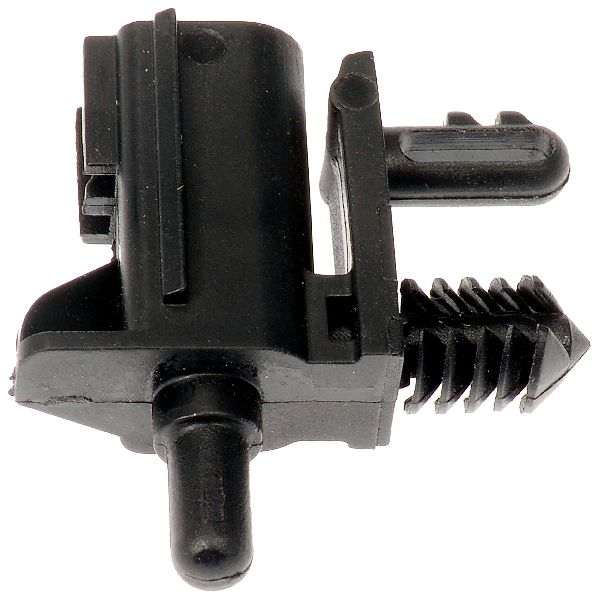
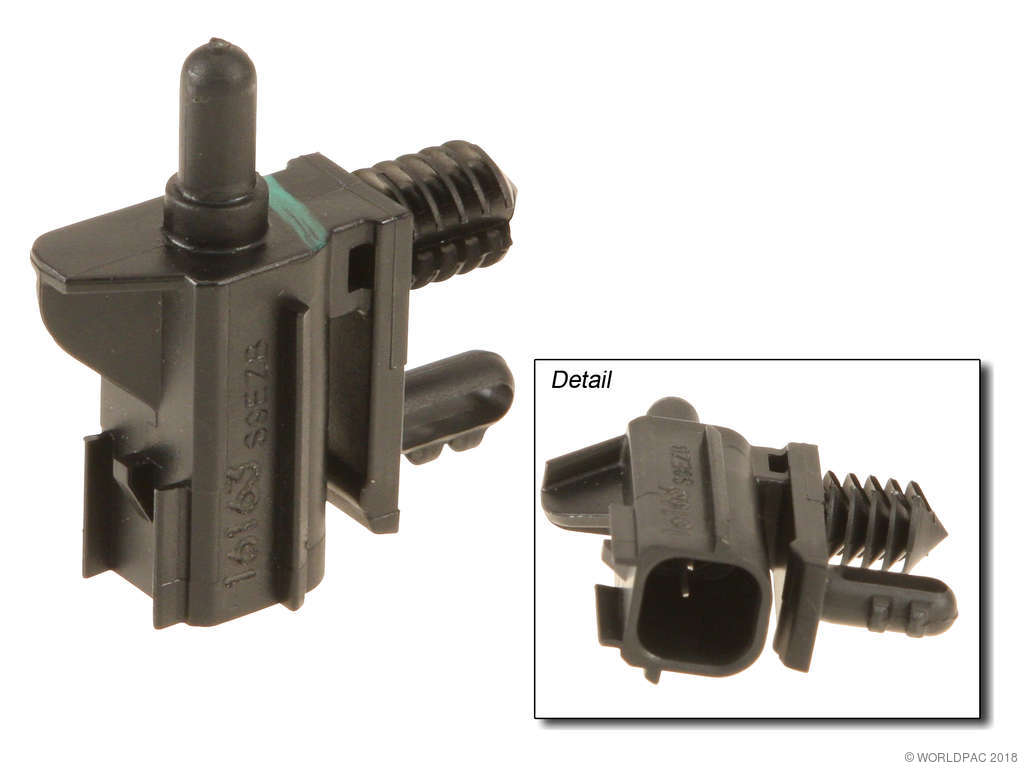
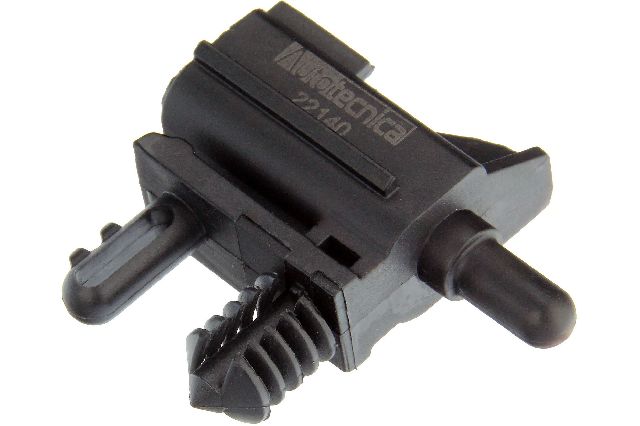
- Ambient Air Temperature Sensor
(OEM #AU5Z-12A647-B)— This sensor fails, providing an incorrect reading to the BCM, which is the root cause of the U0422 code and associated symptoms on this vehicle.
Trusted brands: Motorcraft (as part DY1160), Duralast, Standard Motor Products
OEM price range: $25-$40
Aftermarket price range: $15-$30 - AAT Sensor Connector Pigtail
(OEM #AU2Z-14S411-AGB)— The original connector is prone to corrosion and failure. TSB 16-0054 recommends replacing the connector along with the sensor to ensure a lasting repair. This part has been superseded by AU2Z-14S411-AGC.
Trusted brands: Motorcraft, Dorman
OEM price range: $20-$35
Aftermarket price range: $10-$25
Related Codes That Often Appear With This One
- P0073 — This code means 'Ambient Air Temperature Sensor Circuit High Input'. It often appears with U0422 because a failed sensor or open circuit causes the signal voltage to go high, which is the root cause of the invalid data.
- P0074 — This code means 'Ambient Air Temperature Sensor Circuit Intermittent'. It can be stored if the sensor or its wiring has a loose connection, causing the temperature reading to fluctuate wildly before failing completely.
Technical Service Bulletins (TSBs) & Recalls
- 16-0054 / TSB160054: 2.5L - Air conditioning (A/C) inoperative and/or message center ambient air temperature display inaccurate - DTCS P0073, P0074, and/or U0422.
Platform-Specific Known Issues
- Ford Technical Service Bulletin 16-0054: Ford issued TSB 16-0054 for 2014-2016 Transit Connects with the 2.5L engine, addressing an inoperative A/C and inaccurate temperature display accompanied by DTCs P0073, P0074, and/or U0422. The prescribed fix is to replace the AAT sensor and its connector.
- Real-World Repair Story: An owner on the Ford Transit Forum with a 2015 Transit Connect experienced the classic symptoms of a -40°F temperature reading and no A/C. Another user guided them through the repair, confirming the sensor location behind the bumper cover 🎬 See this video for a quick fix on Transit Connect A/C. on the driver's side. The fix involved removing the under-engine splash shields, replacing the sensor (Motorcraft DY1160), and disconnecting the battery overnight to reset the system. This successfully restored the correct temperature reading and A/C function.
Mechanic-Grade Diagnostic Values
- AAT Sensor Resistance vs. Temperature — expected: The sensor is a thermistor, so its resistance changes with temperature. Approximate values: 9.8 kΩ at -40°C (-40°F), ~2.0-3.0 kΩ at room temperature (25°C/77°F).. Failure: An open circuit (infinite resistance) or short circuit (zero resistance) indicates a failed sensor. Also, if heating the sensor with a hairdryer does not cause the resistance to drop smoothly, the sensor is bad. 🎬 Watch: How to test and replace your ambient temperature sensor.
- AAT Sensor Circuit Voltage — expected: The circuit typically uses a 5V reference from the BCM or Instrument Panel Cluster (IPC). The signal wire voltage will vary based on temperature. A very high voltage (near 5V) or very low voltage (near 0V) when the sensor is plugged in suggests a circuit or sensor fault.. Failure: A reading near 5V often corresponds to DTC P0073 (Circuit High), indicating an open circuit or unplugged sensor. A reading near 0V may indicate a short to ground.
Hidden / Shadow Codes Worth Checking
- U0422:XX-XX: Professional scan tools like Ford IDS or FORScan may show a two-byte suffix after the main DTC. For example, a user on a forum reported 'U0422:68-0B' on a Transit Custom. These suffixes provide more specific details about the nature of the 'Invalid Data' fault, such as whether it's an electrical failure, a signal plausibility failure, or a calibration issue. (see via Requires a higher-level scan tool like Ford IDS or a capable aftermarket tool like FORScan. Basic OBD-II readers will typically only show the U0422 portion.)
Scan Tool Commands That Help
- Ford IDS: Reset the keep alive memory (KAM) — TSB 16-0054 specifically instructs technicians to perform a KAM reset as part of the diagnostic process after checking for the initial fault. This clears learned values and can help determine if the fault is hard or intermittent.
- Ford IDS: Programmable Module Installation (PMI) — This is used when replacing the Body Control Module (BCM). It copies the configuration data from the old module and writes it to the new one. This is critical if the BCM is misdiagnosed as the fault and replaced.
- FORScan: BCM Parameter Modification (e.g., tire size) — This is a CAUTIONARY note. Users have reported that modifying BCM parameters with FORScan can trigger a persistent U0422 code that cannot be cleared, even if there are no other symptoms. This is a known software-related quirk.
Wiring & Ground Locations
- AAT Sensor Wires — At the AAT sensor connector behind the front bumper, driver's side.. These are the two wires that carry the temperature signal. On other Ford models of the same era, common wire colors for this circuit are Yellow/Green and Yellow/Violet. Checking for voltage, ground, and continuity on these specific wires is key to diagnosis.
- Ground Point G203 (example) — On the similar first-generation Transit Connect, a key interior ground (G203) was located under the passenger side kick panel. Ground locations for the 2014-2016 model are detailed in the Body and Equipment Mounting Manual.. A poor ground connection for the Body Control Module can cause a variety of communication errors, including U0422. While not the most likely cause for this specific symptom set, it's a possibility if the AAT sensor and wiring check out.
Real Owner Repair Stories
- Raster Burn Blog (2015 Ford Transit Connect) — Outside temperature display fluctuated wildly, often reading -20°F, causing the A/C to refuse to operate.
✅ What actually fixed it The owner replaced the AAT sensor located behind the driver's side of the front bumper. The part number on the failed sensor was AU5T-12A647-AC. After replacement, it took about 20 minutes of driving for the temperature display to update to the correct reading and for A/C function to be restored.
When the Usual Fixes Don't Work
- While the overwhelming majority of U0422 cases on this vehicle are caused by the AAT sensor/wiring, there is a notable exception documented by users of the FORScan diagnostic tool. If a user has recently modified their Body Control Module (BCM) settings—for example, to change tire size parameters—it can trigger a persistent U0422 code that will not clear via normal methods. In this specific scenario, the code is a software artifact and does not indicate a hardware fault with the AAT sensor. The A/C and temperature display will typically function normally. The resolution is often to restore the BCM's original 'As-Built' data.
OEM Part Supersession History
AU2Z-14S411-AGA, AU2Z-14S411-AGB→AU2Z-14S411-AGC— Standard part revision to improve durability or correct a known issue with the original connector design, likely related to moisture intrusion.
Heads up: The new part is a direct replacement. This pigtail is also sold under service numbers like WPT-1089 and WPT-1548.
Helpful Videos
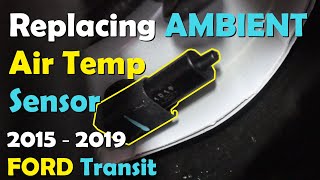
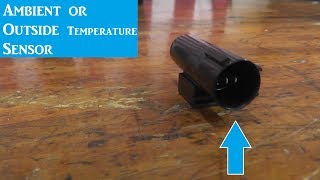

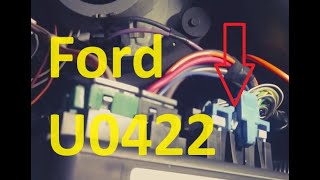
We Have This Part in Stock


The information in this article is provided for general reference and educational purposes only. Vehicle specifications, procedures, and part compatibility can vary by production date, trim level, and region. Always consult your vehicle's factory service manual and verify part numbers before purchasing or performing repairs. Safety-critical components such as airbags, seat belts, and braking systems should be installed by a qualified professional.
- Ford TRANSIT CONNECT:
- 🎬 Helpful Videos
- 🛍️ Shop This Part
- What's Unique About the 2014-2016 Ford TRANSIT CONNECT
- Diagnostic Flowchart
- Symptoms You May Notice
- Most Likely Causes
- Rare But Worth Checking
- Diagnosis Steps
- Parts You'll Likely Need
- Related Codes That Often Appear With This One
- Technical Service Bulletins (TSBs) & Recalls
- Platform-Specific Known Issues
- Mechanic-Grade Diagnostic Values
- Hidden / Shadow Codes Worth Checking
- Scan Tool Commands That Help
- Wiring & Ground Locations
- Real Owner Repair Stories
- When the Usual Fixes Don't Work
- OEM Part Supersession History
- 🎟️ Get 5% Off