

U0416 on 2017 Honda CR-V: VSA & Driver Assist Fault Causes and Fixes
On a 2017 Honda CR-V, code U0416 usually appears with a cascade of dashboard warning lights after a battery replacement or jump-start. The fix is often as simple as clearing the codes or performing a software update at the dealership as specified in a Technical Service Bulletin. Hard part failure is less common.
- U0416 on a 2017 CR-V almost always means a temporary communication glitch with the Vehicle Stability Assist (VSA) system, not a major mechanical failure.
- Before panicking about the numerous warning lights, check if the battery has been recently replaced, jumped, or died. If so, the fix is likely just clearing the codes or driving the car for a few minutes.
- If codes return, the next most likely cause is outdated software. A Honda dealer can check for and apply updates per TSB A17-064.
- Do not immediately assume expensive parts like the VSA modulator have failed. This is a last resort after software and electrical checks are complete.
- Driving with this code is possible, but your primary safety systems (VSA, ABS, ACC, CMBS) will be offline.
What's Unique About the 2017-2017 Honda CR-V

The 2017 CR-V was the first model year of the fifth generation, which introduced the Honda Sensing suite of advanced driver-assistance systems (ADAS) as standard on EX and higher trims. Features like Adaptive Cruise Control (ACC) and Collision Mitigation Braking System (CMBS) are deeply integrated with the Vehicle Stability Assist (VSA) module. This tight integration makes the system particularly sensitive to software glitches and voltage irregularities, which is why this code is frequently triggered by simple battery events or outdated module software, as acknowledged by Honda in service bulletins.
Diagnostic Flowchart

Tap your situation to follow the diagnostic path that matches what you're seeing on this vehicle.
Symptoms You May Notice

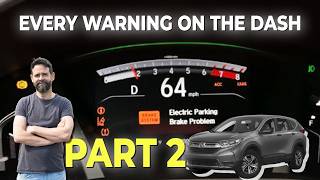
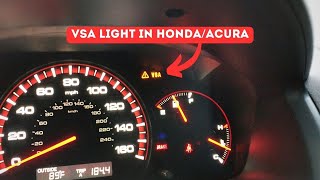
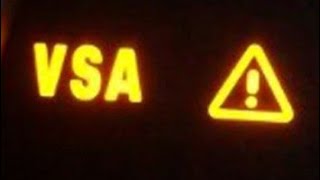
- Multiple warning lights on the instrument cluster, including VSA, ABS, Brake System, Adaptive Cruise Control (ACC), Lane Keeping Assist (LKAS), and Collision Mitigation Braking System (CMBS)
- Electric Power Steering (EPS) warning light with heavy or difficult steering
- Adaptive Cruise Control (ACC) is inoperative
- Vehicle speed fluctuates when ACC is set (as noted in TSB A17-064)
- Brake system warning message displayed
- Hill Start Assist warning message displayed
- A 'Radar Obstructed' message may appear sporadically, as noted in TSB A17-064
- Replacing ABS wheel speed sensors. While a faulty sensor can trigger ABS/VSA lights, the U0416 code specifically points to a communication problem with the central VSA control module, not a peripheral sensor.
- Unnecessarily replacing the battery. While a low/faulty battery is a primary trigger, if the battery tests healthy but the codes persist after clearing, the root cause is likely software or the VSA module itself, not the battery.
Most Likely Causes
- Recent Battery Disconnection, Jump-Start, or Low Voltage 🔴 High Probability Honda TSB ATS161223 explicitly states that disconnecting, jumping, or replacing the battery can set U0416-68 and U0416-92 due to a software bug that prevents the codes from clearing on their own. The sensitive electronics in the ADAS system are susceptible to voltage fluctuations, and even the official owner's manual notes that VSA and other indicators may come on after a jump-start. 🎬 Watch: How to reset dash lights after a battery disconnect.
How to confirm: Check if the issue appeared immediately after a battery service or jump-start. Check the battery's state of charge and overall health. A healthy battery should read above 12.4V.
Typical fix: Clear the Diagnostic Trouble Codes (DTCs) using an OBD-II scanner. If the codes do not return after a short drive, no further action is needed. In some cases, simply driving the vehicle for a short distance allows the systems to re-initialize and clear the lights.
Est. part cost: $0 - Outdated Millimeter Wave Radar or VSA Software 🔴 High Probability Honda issued TSB A17-064 to address a software issue in the millimeter wave radar that can cause U0416 and other codes. Another TSB, 17-032, addresses a VSA software logic issue that can cause a parasitic battery drain of 350mA by preventing the module from entering 'sleep mode', leading to low voltage and related codes. This can happen if the electronic parking brake is applied within 3-4 seconds of shutting the vehicle off.
How to confirm: A Honda dealership can check the vehicle's VIN against their database for applicable service bulletins and software updates. An independent shop with access to OEM service information can do the same.
Typical fix: Update the control module software using the Honda Diagnostic System (i-HDS). This must be performed by a dealership or a qualified shop with the proper equipment. The update for TSB 17-032 also requires a VSA sensor neutral position memorization and a special TPMS calibration.
Est. part cost: $0 (if under warranty) or $150-$300 for labor - Faulty VSA Modulator-Control Unit ⚪ Low Probability While less common than software issues, the VSA modulator is the hardware responsible for the system's function. An internal failure can cause it to send invalid data, which is the direct definition of the U0416-68 fault. An owner complaint (ODI #11110015) also points towards a potential VSA system malfunction.
How to confirm: This is a diagnosis of exclusion. If the battery is healthy, all codes have been cleared, and all relevant software updates have been performed, but the code persists, the module itself is suspect. A technician can perform advanced diagnostics on the CAN bus network and the module's power/ground circuits.
Typical fix: Replace the VSA modulator-control unit. This is an expensive part and requires programming and calibration (VSA sensor neutral position memorization) with a Honda-specific scan tool after installation.
Est. part cost: $650-$1300
Rare But Worth Checking
- VSA Modulator Internal Component Failure (Repairable):
Diagnosis Steps
- Check the battery's voltage and terminal connections. Ensure the battery is fully charged (above 12.4V) and the terminals are clean and tight.
- If the battery was recently replaced, jumped, or disconnected, use an OBD-II scanner to clear all DTCs from all modules.
- Drive the vehicle for a few miles. Many owners report the lights clear on their own after a short drive as the systems re-initialize.
- If codes return, use a professional scan tool (like the Honda i-HDS) to read all codes from all modules, paying close attention to any codes accompanying U0416.
- Contact a Honda dealership with your VIN to check for open recalls or applicable Technical Service Bulletins, specifically A17-064, ATS161223, and 17-032.
- If a software update is indicated by a TSB, have the dealership or a qualified independent shop perform the update. This may cost between $150-$300.
- After a software update or module replacement, ensure the technician performs the required 'VSA sensor neutral position memorization' and any other specified calibrations (like for TPMS) as detailed in the TSBs.
- If no software updates are available and codes persist, a technician should perform a full diagnostic of the VSA system, including checking power, ground, and CAN bus communication lines to the VSA modulator.
- If all other possibilities are exhausted, the VSA modulator-control unit may need to be replaced.
Parts You'll Likely Need

- VSA Modulator-Control Unit
(OEM #57100-TLA-A95 (replaces 57100-TLB-A91, -A92, -A93, -A94 for FWD models))— This is the hardware component that is replaced if software updates and electrical diagnostics do not resolve the issue. It is the source of the 'invalid data' message.
Trusted brands: Honda (OEM)
OEM price range: $650 - $900
Aftermarket price range: Not commonly available, though remanufacturing services exist.
Related Codes That Often Appear With This One
- C0051-54 — Stands for 'Steering Angle Neutral Position Learning Incomplete'. TSB A17-064 and ATS161223 note that this code is commonly set alongside U0416 after a battery disconnection.
- U0418-68 — Indicates a failure with the Electric Brake Booster (ESB). An owner complaint (ODI #11110015) shows this code appearing with U0416, suggesting a related braking system communication fault.
- P0299 — Indicates turbocharger underboost. One owner complaint (ODI #11546276) reported this alongside U0416-68, though the technician noted the U-code was likely a separate software issue with the millimeter wave radar.
- U3000-49 — A generic control module internal electronic failure code. On some Honda models, this can appear with U0416 when the Electric Power Steering (EPS) module fails, causing a cascade of communication faults.
Technical Service Bulletins (TSBs) & Recalls

- A17-064: MID Displays ACC, CMBS, LKAS, RDM, Brake Warnings and Other Listed Symptoms.
- ATS161223: DTCs U0416-68 and U0416-92 Are Set After Disconnecting, Jumping, or Replacing the Battery.
- 17-032: Parasitic battery draw from VSA modulator (Vehicle will not start).
Platform-Specific Known Issues
- TSB A17-064 addresses a software bug in the millimeter wave radar that can cause U0416-68 and U0416-92, among other symptoms like fluctuating speed on ACC. The fix is a software update.
- TSB ATS161223 specifically calls out that U0416-68 and U0416-92 will set after a battery service due to a software bug and advises technicians to simply clear the codes if a battery event was the trigger. It warns this can lead to faulty troubleshooting if not considered.
- TSB 17-032 identifies a VSA software issue that can cause a parasitic battery drain of 350mA, which in turn can lead to low voltage conditions that trigger codes like U0416. The drain occurs if the electronic parking brake is applied too quickly after shutdown. The fix is a VSA software update, followed by sensor recalibration.
Mechanic-Grade Diagnostic Values
- Battery Voltage (at rest) — expected: > 12.4 Volts. Failure: A reading below 12.4V indicates a discharged or failing battery, a primary trigger for this code.
- Charging System Voltage (engine running) — expected: ~13.5 - 14.5 Volts. Failure: Voltage near battery level (~12V) and dropping indicates a faulty alternator, which can cause widespread electrical issues and communication codes.
- VSA Modulator Power Supply Voltage — expected: Battery Voltage. Failure: No voltage indicates an open in the power supply wire from the under-dash fuse box (e.g., from fuse B24).
- VSA Modulator Ground Circuit Continuity — expected: Continuity to ground (near 0 ohms). Failure: High resistance or an open circuit indicates a bad ground connection, which can cause the module to send invalid data.
Hidden / Shadow Codes Worth Checking
- U0416-68: Brake Actuator Malfunction. The '-68' suffix is defined as 'Event Information,' meaning the VSA module stored a DTC because of an event or missing functionality from another system, not an internal fault of the VSA module itself. This is often triggered by a voltage drop during a battery event. (see via Honda i-HDS or other professional-level scan tools that can read manufacturer-specific sub-codes.)
- U0416-92: Temporary Stop of Integrated Driver Support System (Rejected Control Request by VSA system). This indicates the VSA system actively rejected a command from a driver-assist system (like ACC), often due to conflicting data or a software glitch after a battery event. (see via Honda i-HDS or other professional-level scan tools that can read manufacturer-specific sub-codes.)
Scan Tool Commands That Help
- Honda i-HDS (Honda Diagnostic System): VSA Sensor Neutral Position Memorization — This procedure is required after replacing the VSA modulator-control unit, updating its software, or performing wheel alignment. It resets the baseline for the steering angle, yaw, and G-sensors. It can also be used to clear code C0051-54 which often appears with U0416. The procedure is found under the 'ADJUSTMENT' menu for the ABS/VSA system.
Wiring & Ground Locations
- VSA Modulator-Control Unit — Located in the engine bay, typically on the passenger side, with multiple brake lines attached to it.. This is the source of the code. Checking its connector for corrosion, and verifying power and ground at the connector pins is a key diagnostic step.
- Under-Dash Fuse/Relay Box — Located inside the cabin, under the driver's side dashboard.. This box contains fuses that power the VSA system, such as fuse No. B24 (7.5A). A blown fuse here will cut power to the module and cause communication faults.
- Ground Point (e.g., G401) — Various ground points are located throughout the chassis. G401 is related to the gauge cluster assembly, which displays the VSA warnings.. A poor ground connection for the VSA module or related components can cause fluctuating voltages and data corruption, triggering the U0416 code.
When the Usual Fixes Don't Work
- While many instances of U0416 are temporary software glitches caused by battery events, this is not always the case. The NHTSA complaint ODI #11110015 documents a 2017 CR-V where codes U0416-68 and U0418-68 (ESB Failure) were recorded following a significant braking system failure. This indicates that the code can, and does, point to a genuine, non-recoverable hardware malfunction in the VSA or related braking systems, which would not be fixed by simply clearing codes or a software update.
OEM Part Supersession History
57100-TLA-A91, -A92, -A93, -A94→57100-TLA-A95— Part revision and consolidation by the manufacturer.
Heads up: For AWD models only. These earlier part numbers have been replaced by the -A95 version.57100-TLB-A91, -A92, -A93, -A94→57100-TLB-A95— Part revision and consolidation by the manufacturer.
Heads up: For FWD models only. The part number in the Pass 2 JSON was for AWD; this is the correct supersession for FWD.
Model Year Variations Within This Range
- 2017: As the analysis is for a single model year (2017), there are no significant mid-year variations known to affect the diagnosis or repair of this specific trouble code.
Helpful Videos
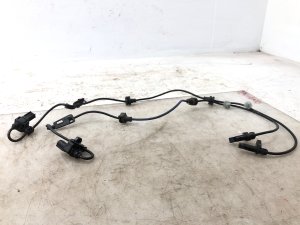
We Have This Part in Stock





The information in this article is provided for general reference and educational purposes only. Vehicle specifications, procedures, and part compatibility can vary by production date, trim level, and region. Always consult your vehicle's factory service manual and verify part numbers before purchasing or performing repairs. Safety-critical components such as airbags, seat belts, and braking systems should be installed by a qualified professional.
- Honda CR-V:
- 🎬 Helpful Videos
- 🛍️ Shop This Part
- What's Unique About the 2017-2017 Honda CR-V
- Diagnostic Flowchart
- Symptoms You May Notice
- Most Likely Causes
- Rare But Worth Checking
- Diagnosis Steps
- Parts You'll Likely Need
- Related Codes That Often Appear With This One
- Technical Service Bulletins (TSBs) & Recalls
- Platform-Specific Known Issues
- Mechanic-Grade Diagnostic Values
- Hidden / Shadow Codes Worth Checking
- Scan Tool Commands That Help
- Wiring & Ground Locations
- When the Usual Fixes Don't Work
- OEM Part Supersession History
- Model Year Variations Within This Range
- 🎟️ Get 5% Off