

U0416 on 2021 Dodge Challenger: ESP Implausible Data Causes and Fixes
This code means the vehicle's computer received illogical data from the Electronic Stability Program (ESP) module. The most common cause on a 2021 Challenger with the 3.6L engine is a software glitch requiring a PCM update from a dealer, as noted in FCA TSB 18-011-22. Other causes include faulty wheel speed sensors, low battery voltage, or wiring issues, often related to the CAN bus Star Connector.
- U0416 means the Electronic Stability Program (ESP) is sending illogical data over the vehicle's network.
- For the 2021 Challenger (especially with the 3.6L engine), the most probable cause is a software bug fixed by a dealer-installed PCM update per TSB 18-011-22.
- Other likely causes are a bad wheel speed sensor, a weak battery, or a damaged CAN bus wire.
- Driving is possible but stability control will be off, requiring extra caution.
- Diagnosis requires a professional scan tool due to the complex nature of network codes and the vehicle's Security Gateway Module.
What's Unique About the 2021-2021 Dodge CHALLENGER
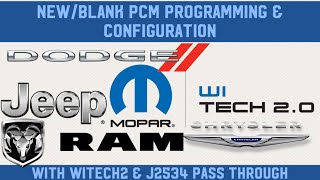
On the 2021 Dodge Challenger, U0416 is frequently part of a larger group of communication-related fault codes. Manufacturer technical service bulletins (TSBs) show this code often appears with numerous other 'Implausible Data' and 'Lost Communication' DTCs. This pattern, particularly on models with the 3.6L V6 engine built on or before October 14, 2021, strongly suggests the root cause is often not an individual sensor, but a broader software issue within the Powertrain Control Module (PCM) that requires a dealer-installed update to resolve communication conflicts 🎬 Watch: How to perform a PCM programming and software reflash. between modules.
Diagnostic Flowchart
Tap your situation to follow the diagnostic path that matches what you're seeing on this vehicle.
Symptoms You May Notice
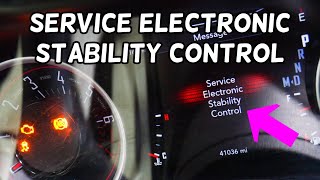
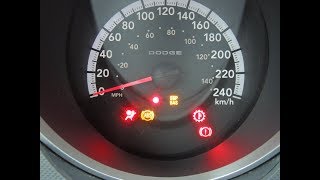
- Electronic Stability Control (ESC) or traction control warning light is illuminated on the dashboard.
- Message on the instrument cluster, such as 'Service Electronic Stability Control'.
- Loss of traction control and stability assist features.
- ABS or brake system warning light may also appear.
- Cruise control may become inoperative.
- In some cases with network-wide issues, the start/stop system may be disabled.
- Replacing the Powertrain Control Module (PCM) when only a software update is needed.
- Replacing the ABS/ESP module when a less expensive wheel speed sensor or wiring repair would have solved the issue.
Most Likely Causes
- Powertrain Control Module (PCM) Software Glitch 🔴 High Probability FCA issued TSB 18-011-22 for 2021 models with the 3.6L engine, which lists U0416 among many codes that can be resolved with a PCM software update. This applies to vehicles built on or before October 14, 2021.
How to confirm: A dealer or a shop with a subscription-based FCA scan tool (wiTECH) can check the current software calibration level against the latest available version specified in the TSB.
Typical fix: Reprogramming the PCM with the latest manufacturer software. The TSB specifies a battery charger must be connected to ensure voltage does not drop below 13.2 volts during the flash procedure.
Est. part cost: $0-$250 - Faulty Wheel Speed Sensor 🟡 Medium Probability Wheel speed sensors provide essential data to the ESP/ABS module. If one sensor sends erratic data due to internal failure, corrosion, or debris on the magnetic ring, the ESP module can broadcast this implausible information to the rest of the network.
How to confirm: Use a scan tool to monitor live data from all four wheel speed sensors while driving. The faulty sensor will show a reading that is erratic, drops to zero, or doesn't match the others. Visually inspect the sensor and its wiring for damage.
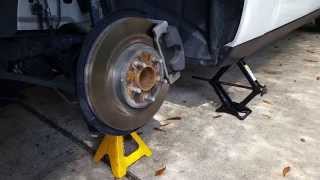
Typical fix: Replace the faulty wheel speed sensor. The rear sensors are often the same part for left and right.
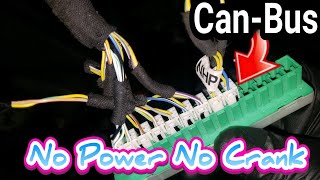
Est. part cost: $40-$100 - Wiring Harness Issue ⚪ Low Probability CAN bus wiring can be sensitive to electromagnetic interference or physical damage. Wires rubbing against chassis parts can cause intermittent data corruption. Diagnosis can involve checking the CAN bus 'Star Connector,' a central hub where many module communication wires meet, often located in the passenger footwell area.
How to confirm: Visually inspect the wiring harnesses leading to the ABS/ESP module and wheel speed sensors for any signs of chafing, melting, or corrosion. Advanced diagnosis involves checking for 60 ohms of resistance across the CAN high and low pins at the OBD-II port (with battery disconnected) and using an oscilloscope to check the signal at the Star Connector.
Typical fix: Repair or replace the damaged section of the wiring harness and secure it properly. If a single module is bringing the network down, it can be unplugged from the Star Connector to confirm the diagnosis.
Est. part cost: $10-$300
Rare But Worth Checking
- Failing ABS/ESP Control Module: While less common than software or sensor issues, the module itself can fail internally, causing it to send corrupt data. This is usually a last resort after other causes are ruled out.
- Low Battery Voltage or Post-Replacement Glitches: A weak or failing battery can cause unpredictable electronic issues and communication codes across various modules. A resting voltage below 12.4V is a warning sign. Sometimes, even after a correct battery replacement, modules like Uconnect can fail to re-initialize properly, causing a flood of communication errors. A drive cycle or a hard reset might be needed.
Diagnosis Steps
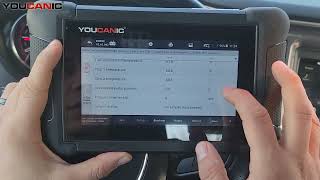
- Connect a professional-grade scan tool capable of communicating with all vehicle modules (not just the engine).
- Scan all modules for DTCs. Pay close attention to any other 'U' codes (communication), 'C' codes (chassis), or codes in the ABS/ESP module. A large number of 'U' codes points towards a software or network issue.
- Check for Technical Service Bulletins (TSBs) related to your vehicle's VIN. For 2021 3.6L models, TSB #18-011-22 is a key reference for a PCM software update.
- Check battery health. Ensure the battery has a resting voltage of at least 12.4V and performs well under load. Low voltage can cause spurious communication codes.
- Use the scan tool to view live data from the ESP system. Monitor all four wheel speed sensors, the steering angle sensor, and the yaw rate sensor to ensure their readings are logical while driving.
- If a sensor's data is erratic, inspect its wiring and connector for damage or corrosion before condemning the sensor itself.
- Inspect the main wiring harness to the ABS/ESP module for any signs of physical damage, chafing, or proximity to high-heat sources. Pay attention to the CAN bus Star Connector, which can be used to isolate problematic modules or circuits.
- If all sensors and wiring are good, and TSBs have been performed, the issue may be with the ABS/ESP module itself, which may require replacement and programming.
Parts You'll Likely Need
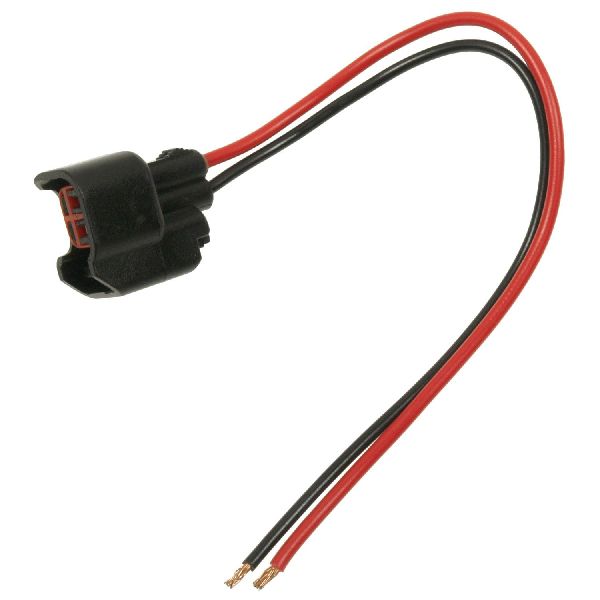
- Wheel Speed Sensor
(OEM #68569550AA (Rear, Left or Right))— These sensors provide the core data for the ESP system. A single faulty sensor can send implausible data that triggers this code.
Trusted brands: Mopar, Bosch, Standard Motor Products (SMP), Duralast
OEM price range: $70-$120
Aftermarket price range: $40-$80
Related Codes That Often Appear With This One
- U0402 — Implausible Data Received From TCM. Often appears with U0416 in TSB 18-011-22 related to PCM software updates.
- U0418 — Implausible Data Received From Brake System Control Module 1. Also related to the braking and stability systems and cited in the same TSBs.
- U0121 — Lost Communication With Anti-Lock Brake System (ABS) Control Module. This indicates a more severe communication breakdown, whereas U0416 indicates the data is present but illogical.
- U0140 — Lost Communication With Body Control Module. This code is also listed in TSB 18-011-22, indicating a widespread software-related communication issue.
Technical Service Bulletins (TSBs) & Recalls
- Bulletin #18-011-22 (also referenced as FCA TSB 18-011-22): Mentions U0416 - Implausible Data Received From ESP as one of many codes that can be resolved by a PCM software update on certain 2021 vehicles with the 3.6L engine.
Platform-Specific Known Issues
- A Technical Service Bulletin (TSB 18-011-22) for 2021 Dodge Challengers with the 3.6L engine (built on or before Oct 14, 2021) addresses a condition where the Malfunction Indicator Lamp (MIL) illuminates and sets U0416 along with a long list of other communication DTCs. The prescribed fix is to reprogram the PCM with updated software.
Mechanic-Grade Diagnostic Values
- Battery Voltage (Resting, Engine Off) — expected: 12.6V - 13.8V. Failure: Consistently below 12.4V indicates an undercharged or failing battery which can cause network communication faults.
- Battery Voltage (Engine Running) — expected: 13.8V - 14.4V. Failure: Above 14.6V suggests an overcharging alternator; below 13.8V suggests an undercharging condition. Both can cause module instability.
- Passive Wheel Speed Sensor Resistance — expected: Typically between 800 and 2,500 Ohms, but varies by manufacturer. Comparing readings between sensors on the same axle is a key diagnostic step.. Failure: An open circuit (OL) or a reading significantly different from the corresponding sensor on the other side of the vehicle indicates a failed sensor.
- Passive Wheel Speed Sensor AC Voltage Output — expected: At least 200mV AC when spinning the wheel at about one revolution per second.. Failure: No AC voltage generated while spinning the wheel points to a dead sensor or an issue with the tone ring.
Scan Tool Commands That Help
- wiTECH or equivalent professional FCA scan tool: Proxy Alignment (Proxi Configuration) — This procedure is required after replacing a major network module, such as the ABS/ESP module, PCM, or Body Control Module. It acts as a 'digital handshake,' allowing the new module to be recognized by all other modules on the vehicle's CAN bus network. Failure to perform a proxy alignment can cause a flood of communication DTCs, including U0416.
- wiTECH or equivalent professional FCA scan tool: ABS Initialization — After replacing the ABS/ESP module, this routine must be run to initialize the new ECU. The scan tool will guide the user to ensure the vehicle is on level ground with the wheels straight before proceeding.
Wiring & Ground Locations
- Star Connector (CAN Bus Junction) — Located behind the glove box/passenger side kick panel area. To access it, the glove box must be lowered and a trim panel underneath may need to be removed. It is a block where multiple pairs of CAN bus wires converge.. This is the central hub for CAN bus communication. A bad connection or corrosion here can disrupt the entire network. It's also a critical access point for advanced diagnostics, allowing a technician to isolate individual modules to see if one is bringing down the network.
- ABS/ESP Control Module — In the engine compartment on the driver's side, next to the windshield washer fluid reservoir. The electronic module is attached to the ABS hydraulic pump and valve body assembly.. This is the module sending the 'implausible data'. All wiring to and from this module, including its main power, ground, and CAN bus connections, are primary points of inspection for corrosion or damage.
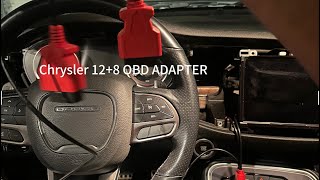
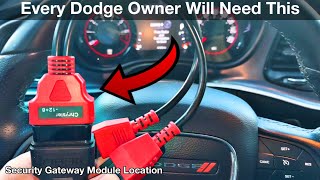
- Security Gateway Module (SGM) — For 2018+ models, it is located behind the main infotainment screen/radio. The dashboard trim and the screen must be removed to access it.. This module blocks unauthorized scan tools from performing bidirectional commands like a Proxy Alignment or clearing codes. A bypass cable (often called a 12+8 adapter) connected directly to the SGM is required for non-dealer tools to perform advanced diagnostics and resets.
- G100 / G101 (Primary Engine Compartment Grounds) — G100 is typically on the left front of the engine compartment, and G101 is on the right front. These are major ground points for many components.. A loose or corroded main ground can introduce electrical noise and voltage fluctuations across the entire vehicle, leading to random communication codes like U0416. Ensuring these connections are clean and tight is a fundamental step in diagnosing network faults.
OEM Part Supersession History
5154230AF→68569550AA— Part has been updated multiple times by the manufacturer. The 'AA' suffix indicates the newest revision.
Heads up: The part has gone through several revisions (5154230AA, AB, AC, AD, AE, AF). While older revisions may fit, it is best practice to use the latest specified part number (68569550AA) to ensure compatibility with the latest vehicle software and calibrations.
Model Year Variations Within This Range
- 2021 (built on or before October 14, 2021): Vehicles with the 3.6L engine built within this timeframe are subject to TSB 18-011-22, which calls for a PCM software update to resolve a flood of communication codes, including U0416. Vehicles built after this date should already have the updated software from the factory.
Helpful Videos

We Have This Part in Stock


The information in this article is provided for general reference and educational purposes only. Vehicle specifications, procedures, and part compatibility can vary by production date, trim level, and region. Always consult your vehicle's factory service manual and verify part numbers before purchasing or performing repairs. Safety-critical components such as airbags, seat belts, and braking systems should be installed by a qualified professional.
- Dodge CHALLENGER:
- 🎬 Helpful Videos
- 🛍️ Shop This Part
- What's Unique About the 2021-2021 Dodge CHALLENGER
- Diagnostic Flowchart
- Symptoms You May Notice
- Most Likely Causes
- Rare But Worth Checking
- Diagnosis Steps
- Parts You'll Likely Need
- Related Codes That Often Appear With This One
- Technical Service Bulletins (TSBs) & Recalls
- Platform-Specific Known Issues
- Mechanic-Grade Diagnostic Values
- Scan Tool Commands That Help
- Wiring & Ground Locations
- OEM Part Supersession History
- Model Year Variations Within This Range
- 🎟️ Get 5% Off