

U0415 on 2011-2022 Jeep Grand Cherokee: Invalid ABS Data Causes and Fixes
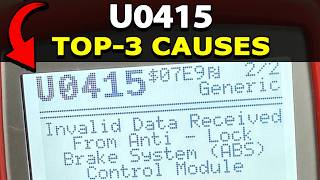
This code means the ABS module is sending faulty data over the vehicle's network. The most common causes are a failing wheel speed sensor, a weak battery, or a failing Drivetrain Control Module (DTCM) on 4x4 models. Expect to pay $150-$225 to replace a wheel speed sensor, which is a frequent fix.
- U0415 means the ABS module is sending bad data, which disables safety systems like ABS and stability control.
- Start your diagnosis with the easiest and most common causes: check the battery and have the wheel speed sensors tested.
- On 4x4 models, a faulty Drivetrain Control Module (DTCM) under the passenger seat is a known cause for this and other network codes.
- For 2018-2019 models, check if your vehicle is part of NHTSA recall 24V-838 for a faulty ABS module.
- Do not replace the expensive ABS module until all other possibilities (sensors, wiring, battery, DTCM) have been ruled out.
What's Unique About the 2011-2022 Jeep Grand Cherokee
On the WK2 Grand Cherokee, the U0415 code is often a symptom of a few well-known issues. One common culprit is a failing wheel speed sensor, which sends erratic signals that the ABS module then broadcasts as invalid data. Another known issue, particularly on 2018-2019 models, involves the ABS module itself, which was subject to recall 22V426000 (FCA #Z48) for falsely reading brake pressure. Additionally, many owners have found that a failing Drivetrain Control Module (DTCM), located under the driver's seat, can flood the network with bad data, causing this and other communication codes like U0403.
Generation note: The 2011-2022 model years primarily cover the fourth generation (WK2) Grand Cherokee. A new fifth-generation (WL) was introduced for 2021, but the WK2 was also sold through 2022 as the 'Grand Cherokee WK'. This guide focuses on the common WK2 platform.
Symptoms You May Notice
- ABS warning light is on
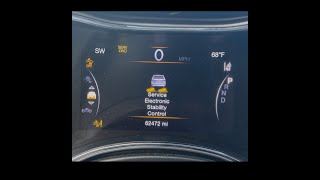
- Traction Control or Electronic Stability Control (ESC) light is on
- "Service 4WD" or "Service Antilock Brake System" message on the dash
- Check Engine Light is on
- Brakes may lock up during hard braking
- Brake pedal feels hard or unresponsive
- Inaccurate speedometer reading
- Vehicle may enter 'limp mode'
- Replacing the ABS module before thoroughly checking wheel speed sensors, wiring, battery voltage, and especially the DTCM on 4x4 models. The ABS module is expensive and often blamed incorrectly.
- Replacing the entire transfer case when only the DTCM has failed. Many shops may recommend a transfer case replacement when the issue is purely electronic with the control module.
- Replacing transmission components due to a "Service Transmission" message, when the root cause is invalid speed data from the ABS system.
Most Likely Causes
- Faulty Wheel Speed Sensor 🔴 High Probability Wheel speed sensors are exposed to the elements and can fail from contamination, damage, or age. An erratic signal from just one sensor can cause the ABS module to send invalid data across the network.
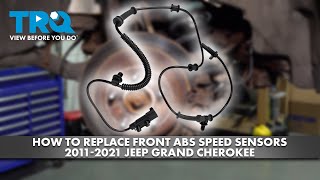
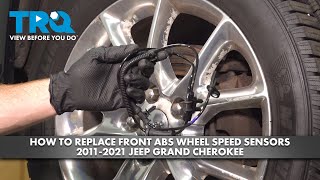
How to confirm: Use a scan tool to monitor live data from all four wheel speed sensors while driving. Look for a sensor whose reading drops out, is erratic, or doesn't match the others. A specific wheel speed sensor code 🎬 Watch this Jeep Grand Cherokee front speed sensor replacement, like C1014, often accompanies U0415 and points to the faulty sensor.
Typical fix: Replace the faulty wheel speed sensor and its wiring harness if damaged.
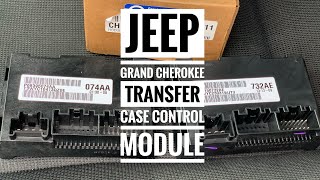
Est. part cost: $68-$98 - Failing Drivetrain Control Module (DTCM) 🔴 High Probability On 4x4 models, the DTCM (also called the Transfer Case Control Module) is located under the driver's seat and is a very common failure point. When it fails, it floods the CAN network with corrupt data, triggering U0415 and, most notably, U0403.
How to confirm: The presence of code U0403 alongside U0415 is a strong indicator. A scan tool may show communication errors with the DTCM. Owners often diagnose this by exclusion after checking sensors and wiring.
Typical fix: Replace the DTCM. It is a plug-and-play module located in a plastic compartment under the driver's seat. While often no programming is needed, some newer models may require a 'Transfer Case Learn' procedure with a capable scan tool.
Est. part cost: $85-$450 - Low Battery Voltage or Poor Grounds 🟡 Medium Probability Modern Jeeps have many electronic modules that are sensitive to low voltage. An aging battery or corroded ground connection can cause widespread communication errors across the CAN bus network, leading to codes like U0415.
How to confirm: Test the battery with a multimeter; a resting voltage below 12.4V is a sign of a weak battery. Check the alternator output when running (should be 13.5-14.5V). Inspect and clean the main battery and chassis ground connections.
Typical fix: Replace the weak battery and/or clean or repair the faulty ground connections.
Est. part cost: $150-$350 - Damaged Wiring or Connectors 🟡 Medium Probability Wiring to the wheel speed sensors or the ABS module itself can be damaged by road debris, corrosion, or chafing against suspension components. The main ABS module connector can also get grease or moisture inside, causing issues.
How to confirm: Visually inspect the wiring harnesses leading to each wheel speed sensor and the main connector at the ABS module. Look for frayed wires, corrosion in the connectors, or physical damage. Test for continuity with a multimeter.
Typical fix: Repair the damaged section of the wiring harness or replace the affected connector.
Est. part cost: $20-$100 - Failing ABS Control Module ⚪ Low Probability Internal failure of the ABS module can cause it to send corrupt data. 2018-2019 models were recalled (NHTSA 22V426000, later superseded by 24V838000/FCA 94B) for a specific ABS module defect that caused incorrect pressure readings and could allow the vehicle to shift out of Park without the brake being applied.
How to confirm: This is typically a diagnosis of exclusion. If all sensors, wiring, DTCM, and power/ground connections are confirmed to be good, the module itself is the likely culprit. A professional scan tool may also show internal fault codes for the module.
Typical fix: Replace the ABS module. The new module will require programming to the vehicle's VIN.
Est. part cost: $400-$800
Rare But Worth Checking
- Damaged ABS Tone Ring: The tone ring, which the wheel speed sensor reads, can become cracked, rusted, or covered in debris, causing an erratic signal. This is less common than sensor failure but should be inspected when the sensor is replaced.
Diagnosis Steps
- Perform a full system scan with an advanced OBD-II scanner to capture all active and stored codes from all modules. Pay close attention to whether code U0403 is also present.
- Check battery health and system voltage. Ensure the battery has a full charge (above 12.4V at rest) and the alternator is charging correctly (13.5-14.5V when running).
- If U0403 is present, prioritize inspecting the Drivetrain Control Module (DTCM) under the driver's seat. Check its connections and consider it the most likely cause.
- Using the scanner's live data function, monitor the output from all four wheel speed sensors while driving. The readings should be smooth and consistent with each other. A sensor that reads 0, is erratic, or lags behind the others is faulty.
- If a specific wheel speed sensor is suspect, raise the vehicle and visually inspect the sensor, its wiring, and the connector for any signs of physical damage, corrosion, or debris.
- Inspect the ABS tone ring on the corresponding wheel hub/axle for cracks, missing teeth, or heavy rust/debris.
- If all sensors and tone rings appear good, inspect the main wiring harness connector at the ABS module for corrosion or loose pins.
- If no other cause can be found, the issue may be the ABS module itself. Check for any open recalls related to the ABS module for your vehicle's year.
Parts You'll Likely Need
- Drivetrain Control Module (DTCM)
(OEM #68252122AD (example, verify by VIN))— A very common failure point on 4x4 models that causes network communication chaos, leading to U0415 and U0403. It's a plug-and-play part located under the driver's seat.
Trusted brands: Mopar, Dorman
OEM price range: $300-$450
Aftermarket price range: $85-$200 - ABS Wheel Speed Sensor
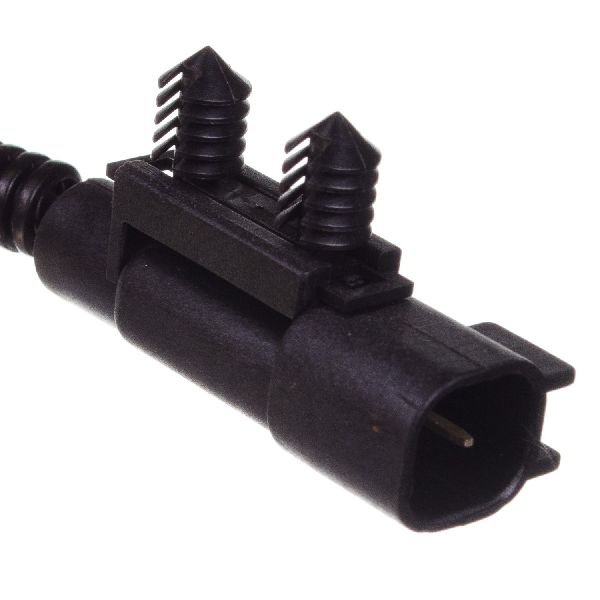
(OEM #56041308AA, 68424418AD (examples, varies by year/axle, verify by VIN))— This is the most common sensor failure that leads to the ABS module sending invalid data. They are exposed to harsh conditions and wear out over time.
Trusted brands: Mopar, Bosch, NTK, Standard Motor Products
OEM price range: $100-$180
Aftermarket price range: $60-$100 - ABS Control Module
(OEM #68262200AA (example, verify by VIN))— If wiring, sensors, and the DTCM are good, the module itself may have an internal fault. This is especially relevant for 2018-2019 models covered by recalls 22V426000 and 24V838000. Note that replacement modules require programming.
Trusted brands: Mopar
OEM price range: $600-$900
Aftermarket price range: $400-$600 (remanufactured)
Related Codes That Often Appear With This One
- U0403 — Implausible Data Received from Transfer Case Control Module. This is the most common companion code. If you see U0403 with U0415, the DTCM is the prime suspect.
- C1014, C1011, C100A — These are various wheel speed sensor circuit performance codes. They are very specific and can help pinpoint which sensor is causing the invalid data.
- U0126 — Lost Communication With Steering Angle Sensor. This often appears alongside ABS faults as the two systems work together for stability control.
Technical Service Bulletins (TSBs) & Recalls
- NHTSA Campaign Number: 24V838000 (Supersedes 22V426000) - Affects 2018-2019 Grand Cherokee and Durango models. A malfunction in the ABS module can cause brake lights to illuminate incorrectly, disable ABS/ESC, and allow the vehicle to shift out of Park without the brake pedal being applied.
Platform-Specific Known Issues
- DTCM Failure as the Root Cause: A very common scenario for WK2 owners involves the simultaneous appearance of "Service 4WD System" and "Service ESC" lights, along with codes U0415 and U0403. In the vast majority of these cases, the root cause is not the ABS system itself, but a failed Drivetrain Control Module (DTCM). This module, located under the driver's seat, fails internally and sends garbage data across the CAN bus, confusing other modules like the ABS controller. Replacing the DTCM is a well-documented fix that often resolves all related codes and warning lights instantly.
Mechanic-Grade Diagnostic Values
- CAN Bus Network Resistance — expected: ~60 Ohms. Failure: A reading of ~120 Ohms indicates an open terminating resistor. A reading near 0 Ohms indicates a short between CAN High and CAN Low wires.
- CAN High Voltage to Ground — expected: 2.5V - 3.5V. Failure: Voltage stuck high, low, or at 0V indicates a bus circuit fault.
- CAN Low Voltage to Ground — expected: 1.5V - 2.5V. Failure: Voltage stuck high, low, or at 0V indicates a bus circuit fault.
- Wheel Speed Sensor Internal Resistance — expected: 800 - 2,000 Ohms (for passive sensors). Failure: Infinite resistance (open circuit) or very low resistance (short circuit) indicates a failed sensor.
- Wheel Speed Sensor Supply Voltage — expected: 4.5 - 5.5 Volts (for active sensors). Failure: A reading below 4.0V points to a problem with the wiring or the ABS module's power supply to the sensor.
Hidden / Shadow Codes Worth Checking
- U0415-00: Implausible Data Received From ABS. The '-00' suffix is a Failure Type Code (FTC) used by Chrysler/Jeep's diagnostic tools (like wiTECH) to specify the nature of the fault. It confirms the issue is with the content of the data, not a loss of communication. (see via Dealer-level scan tools like Mopar wiTECH or high-end aftermarket scanners that support manufacturer-specific codes.)
- C2200: Anti-Lock Brake Module Internal. This code is a strong indicator that the ABS module itself has failed and is often seen with U0415 when the module is the root cause. (see via Most ABS-capable scan tools.)
Scan Tool Commands That Help
- Mopar wiTECH or equivalent: ABS Initialization — This routine must be performed after replacing the ABS module to configure it to the vehicle's specifications and clear VIN mismatch errors.
- Mopar wiTECH or equivalent: Restore Vehicle Configuration — Used to synchronize a new or used module with the vehicle's existing configuration stored in other modules like the BCM.
- Mopar wiTECH or equivalent: Clear VIN — A specialized function for programming used modules. It erases the VIN from a donor ABS module, allowing the technician to write the correct vehicle's VIN to it.
Wiring & Ground Locations
- ABS Module Ground — The main ground for the ABS module is typically located on the chassis frame rail near the module itself in the engine compartment. On a 2011 WK2, this is identified as G912.. A poor ground connection at this point can cause low voltage or electrical noise, leading to internal module miscalculations and the transmission of invalid data (U0415).
- ABS Module Connector — The main electrical connector plugs directly into the ABS hydraulic control unit (HCU) in the engine bay.. Pins for the CAN C bus (CAN High and CAN Low) are located here. Corrosion or backed-out pins in this connector can corrupt the data signals, causing the U0415 code.
- Star Connector (CAN Bus Junction) — The WK2 utilizes star connectors (also called CAN bus blocks or junctions) to branch the network wiring. One is often located behind the instrument cluster or in the driver-side footwell area.. A loose connection or corrosion within this junction block can disrupt communication between multiple modules, causing a flood of U-codes, including U0415.
Real Owner Repair Stories
- YouTube user comment on 'Ford Boss Me' video (2017 Jeep Grand Cherokee) — Service 4x4 light, traction control light on, vehicle went into a 'safety mode' in 4-wheel high gear.
❌ Tried (didn't work) Took it to a dealership, who quoted $5,600 for a new transfer case.
✅ What actually fixed it The owner replaced only the Drivetrain Control Module (DTCM), which she purchased for $113 on Amazon. This resolved all symptoms and warning lights. - Reddit user /u/AtlasAlex (2017 Jeep Grand Cherokee Overland, 50k miles) — Clicking noise when shifting from Park to Reverse, followed by "Service 4WD" light.
❌ Tried (didn't work) A dealership diagnosed it as needing a new transfer case and a new transfer case module for over $4,500.
✅ What actually fixed it The owner replaced only the Drivetrain Control Module (DTCM) with a new Mopar part. The problem was resolved and had not returned months later.
OEM Part Supersession History
5150733AE→68395074AA— Part update/revision for the Drivetrain Control Module (DTCM).
Heads up: While some Mopar sites suggest both parts may work for a 2015 model, the newer 'AA' revision is generally preferred. The primary difference relates to compatibility with different transfer case systems (Quadra-Trac I vs. Quadra-Trac II), so verifying by VIN is critical.
Model Year Variations Within This Range
- 2016+: In 2016, Jeep introduced Electric Power Steering (EPS) to the Grand Cherokee. This added another critical module to the CAN bus that relies on wheel speed data, potentially creating another module that could log a U0415 code.
- 2017+: The 2017 model year received a facelift with a new front fascia and some updated safety features. While core electronics are similar, wiring harnesses and module software may differ slightly from pre-facelift (2014-2016) models.
- 2018+: The Uconnect infotainment system was updated to support Apple CarPlay and Android Auto. This change in the head unit can affect CAN bus diagnostics, as the radio is a gateway module on some architectures.
Diagnostic Flowchart
Other Known Issues on This Vehicle
Issues unrelated to this code that are worth knowing about as an owner of this generation:
- Totally Integrated Power Module (TIPM) Failure 🔴 High — Most common on 2011-2013 models. Can cause a wide range of electrical gremlins, including engine stalling, fuel pump issues, and starter problems. (Ref: A class-action lawsuit led to an extended warranty and recall for the fuel pump relay portion of the TIPM on 2011-2013 models.)
- Quadra-Lift Air Suspension Failure 🟠 Medium — Common across all years with this option. Issues include leaking air springs, failing compressors, and faulty height sensors, leading to a sagging vehicle or a "Service Air Suspension" message.
- Delaminating Leather Dashboard 🟡 Low — Prevalent on higher trims (e.g., Overland, Summit) from 2011-2018. The leather bubbles and peels away from the dash substrate due to adhesive failure, especially in hot climates. (Ref: Jeep offered an extended warranty/goodwill program for this issue on some earlier models, but it is not a formal recall.)
- Cracked Cylinder Head (3.6L Pentastar V6) 🔴 High — Primarily affected the 2011-2013 model years. A defect in the left cylinder head could lead to a misfire (often P0302) and require head replacement. (Ref: Chrysler extended the warranty for the left cylinder head on affected 2011-2013 vehicles to 10 years/150,000 miles.)
- Shuddering/Hard Shifting 8-Speed Transmission 🟠 Medium — Some owners of 2014-2017 models with the 845RE transmission reported shuddering or harsh shifting. Software updates were released to address some of these complaints. (Ref: Various software update TSBs were issued by Chrysler to improve shift quality.)
Used vs. New Parts: Buying Guide for This Vehicle
When a used part is the smart pick: A used Drivetrain Control Module (DTCM) is an excellent choice. It's a common failure, the part is plug-and-play (no programming needed), and it's easily accessible under the driver's seat. A used ABS module can also be an option, but ONLY if you have access to a scan tool capable of performing the 'Clear VIN' and 'ABS Initialization' functions, as it must be programmed to your vehicle.
Donor-vehicle mileage cap: roughly under 100000 miles for the part to have meaningful remaining life.
What to inspect on the donor part:
- For a DTCM, ensure the part number matches your original or is a known supersession.
- Check connectors on any used module for signs of corrosion, bent pins, or water intrusion.
- Buy from a reputable salvage yard with a return policy in case the part is also faulty.
OEM-only on this vehicle (don't cheap out):
- ABS Wheel Speed Sensors: While many aftermarket brands exist, forum users frequently report having better luck and longevity with Mopar sensors, avoiding repeat failures.
Aftermarket brands forum-validated for this vehicle:
- Dorman (for DTCM): Dorman offers a widely available aftermarket version of the DTCM that is a cost-effective alternative to Mopar.
Brands owners have reported issues with on this vehicle:
- Generic/unbranded electrical sensors: Many owners report issues with cheap, unbranded wheel speed sensors from online marketplaces, which may fail quickly or provide inaccurate readings out of the box.
Real Owner Stories
Aggregated from forums and TSBs cited above. Mileages and costs reflect what owners reported in those sources.
2021 Jeep Grand Cherokee
Symptoms: 4x4 faults and warning lights with codes U0403, U0415, and C1403 present.
What fixed it: Replacement of the faulty Drivetrain Control Module (DTCM) located under the driver's seat.
Cost: $113-$113
Source hint: YouTube video titled '2022 Jeep Grand Cherokee - 4x4 Faults - U0403, U0415, C1403 - Easy Fix'
2018 Jeep Grand Cherokee
Symptoms: Brake lights illuminating incorrectly, disabled ABS/ESC, and the ability to shift out of Park without pressing the brake pedal.
What fixed it: ABS module replacement under NHTSA Campaign Number 24V838000.
Source hint: NHTSA Campaign Number: 24V838000 (Supersedes 22V426000)
Jeep Grand Cherokee WK2
Symptoms: Mechanical-sounding transfer case issues including binding and various warning lights.
What fixed it: Replacement of the electronic DTCM module rather than the mechanical transfer case.
Source hint: YouTube video titled 'WK2 - Common Problems Before You Buy' by an auto shop owner
Related OBD-II Codes
Frequently Asked Questions
Is there a recall for the ABS module on my 2018-2019 Jeep Grand Cherokee?
My dash shows 'Service 4WD' and 'Service ESC' along with U0415; is my transfer case failing?
Where is the Drivetrain Control Module (DTCM) located on a 2011-2022 Grand Cherokee?
Can a weak battery cause the U0415 code on my Jeep?
Does the 2011-2023 Dodge Durango have the same U0415 issues as the Grand Cherokee?
Helpful Videos


Used OEM Parts in Stock


New Aftermarket Parts Available

The information in this article is provided for general reference and educational purposes only. Vehicle specifications, procedures, and part compatibility can vary by production date, trim level, and region. Always consult your vehicle's factory service manual and verify part numbers before purchasing or performing repairs. Safety-critical components such as airbags, seat belts, and braking systems should be installed by a qualified professional.
- Jeep Grand Cherokee:
- 🎬 Helpful Videos
- 🛍️ Shop This Part
- What's Unique About the 2011-2022 Jeep Grand Cherokee
- Symptoms You May Notice
- Most Likely Causes
- Rare But Worth Checking
- Diagnosis Steps
- Parts You'll Likely Need
- Related Codes That Often Appear With This One
- Technical Service Bulletins (TSBs) & Recalls
- Platform-Specific Known Issues
- Mechanic-Grade Diagnostic Values
- Hidden / Shadow Codes Worth Checking
- Scan Tool Commands That Help
- Wiring & Ground Locations
- Real Owner Repair Stories
- OEM Part Supersession History
- Model Year Variations Within This Range
- Diagnostic Flowchart
- Other Known Issues on This Vehicle
- Used vs. New Parts: Buying Guide for This Vehicle
- Real Owner Stories
- 2021 Jeep Grand Cherokee
- 2018 Jeep Grand Cherokee
- Jeep Grand Cherokee WK2
- Related OBD-II Codes
- Frequently Asked Questions
- 🎟️ Get 5% Off