

U0415 on 2010-2017 GMC Terrain: Causes for Invalid Data from ABS
This code means the ABS module is sending bad data, often disabling StabiliTrak. The most common causes are surprisingly simple: low brake fluid or a corroded wiring connector (X411) located under the rear of the vehicle near the fuel tank. Check your brake fluid level first before attempting more complex repairs.
- First, check your brake fluid. This simple step could save you hundreds of dollars in diagnostic fees.
- U0415 is a serious code because it disables safety features like ABS and StabiliTrak. Drive with extra caution until it is fixed.
- This code is often caused by a wiring or connection issue, not an expensive module failure. A GM TSB specifically points to the X411 connector as a common problem area.
- If you have many other 'U' codes stored, the problem is almost certainly a network wiring issue, not a faulty ABS module.
- Do not replace any modules until all related wiring, connectors, and sensors have been thoroughly checked.
What's Unique About the 2010-2017 Gmc TERRAIN

On the first-generation GMC Terrain and its platform-mate, the Chevy Equinox, this code is frequently linked to specific, documented issues. A GM Technical Service Bulletin (TSB PIT5490B) points directly to low brake fluid causing this code during sharp turns or braking. Another critical TSB (PIT5427B) highlights a specific 16-pin electrical connector, known as X411, that is prone to corrosion. This connector is located under the rear of the vehicle, behind and to the left of the fuel tank, an area susceptible to moisture and road grime. These known issues mean you should check the brake fluid and that specific connector before suspecting a more expensive ABS module failure.
Diagnostic Flowchart
Tap your situation to follow the diagnostic path that matches what you're seeing on this vehicle.
Symptoms You May Notice
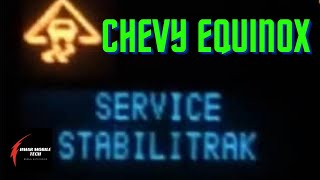
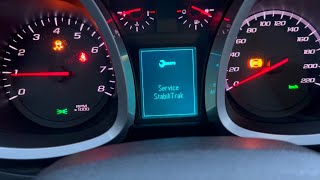
- "Service StabiliTrak" message on the dashboard
- ABS warning light is on
- Traction Control warning light is on
- ABS and Traction Control systems are disabled
- Cruise control may not work
- A "Service Trailer Brake" message may appear
- "Service All Wheel Drive" message may appear on AWD models
- Replacing the Powertrain Control Module (PCM) or Body Control Module (BCM). This code indicates a problem with the data *from* the ABS module, not the modules receiving it.
Most Likely Causes

- Low Brake Fluid Level 🔴 High Probability A GM Technical Service Bulletin (PIT5490B) specifically identifies this as a cause. During turns, acceleration, or braking, low fluid can slosh in the reservoir, momentarily tripping the level sensor. The EBCM sends this 'low level' data, which the Chassis Control Module flags as invalid, setting U0415 and often displaying a 'Service Trailer Brake' message.
How to confirm: Visually inspect the brake fluid level in the master cylinder reservoir. If it is near the 'MIN' line, this is the likely cause. A scan tool can also monitor the 'Brake Fluid Level Sensor' parameter, which will read 'Low' when the fault occurs.
Typical fix: Top off the brake fluid to the 'MAX' level using fresh DOT 3 fluid. It is critical to also inspect for the cause of the low fluid, such as worn brake pads or a leak in the brake system.
Est. part cost: $5-$15 for a bottle of DOT 3 brake fluid. - Corroded or Damaged X411 Connector 🔴 High Probability GM TSB #PIT5427B explicitly calls out the X411 connector as a point of failure for a wide range of communication codes, including U0415. Its location under the vehicle's rear, to the left of the fuel tank, exposes it to moisture and road salt, leading to terminal corrosion that disrupts network communication.
How to confirm: Locate the X411 connector under the rear of the vehicle. Disconnect it and inspect the pins and terminals for any signs of green or white corrosion, bent pins, or physical damage. A thorough visual inspection is the primary diagnostic step. TSB PIT5171C also notes that wires can break *inside* the insulation near this connector, requiring a pull test on the wires.
Typical fix: Clean the connector and pins thoroughly with electrical contact cleaner. If corrosion is severe or terminals are damaged, the affected terminals or the entire connector pigtail must be replaced. GM advises referring to bulletin 10-00-89-005 for wiring repair procedures.
Est. part cost: $20-$50 for a replacement connector pigtail and terminals. - Faulty Wheel Speed Sensor or Wiring 🟡 Medium Probability Wheel speed sensors and their wiring are exposed to the elements, making them susceptible to damage from road debris, moisture, and corrosion. A bad sensor can send irrational data to the ABS module, which then passes that bad data along the network, triggering U0415. On platform mates like the Cadillac SRX, failure of the magnetic encoder ring on the wheel bearing hub is a common cause of this.
How to confirm: Use a scan tool capable of reading live ABS data to monitor the speed of all four wheels while driving. A sensor that reads 0 mph, drops out, or reads erratically compared to the others is faulty. Also, visually inspect the sensor wiring for breaks or damage, particularly where it flexes near the suspension.
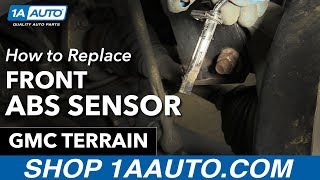
Typical fix: Replace the faulty wheel speed sensor and repair any damaged wiring. The sensor is often sold with the hub assembly. 🎬 See this walkthrough on how to replace a front ABS sensor.
Est. part cost: $30-$80 per sensor. OEM part numbers include ACDelco 84622323 (Front Left) and ACDelco 23348259 (Rear). - Failing ABS Control Module (EBCM) ⚪ Low Probability While less common, internal failure of the Electronic Brake Control Module (EBCM) can cause it to send corrupted data. This is more likely after all other causes have been ruled out.
How to confirm: This is typically a diagnosis of exclusion. If all wiring (including X411), connectors, sensors, and power/ground supplies to the module have been confirmed to be good, the module itself is the likely suspect. A high-end scan tool may be needed to attempt to communicate directly with the module and check for internal faults.
Typical fix: Replace the ABS control module. This often requires programming the new module to the vehicle's VIN. Used modules are available but may also require programming.
Est. part cost: $250-$600 for a remanufactured or used module, $600+ for a new OEM module. A new OEM module kit can be part number 84662982 or 22754644 depending on the year and options.
Rare But Worth Checking
- Low System Voltage: A weak battery or failing alternator can cause unpredictable behavior in various electronic modules, including the ABS module, leading to communication errors. Always ensure the battery is fully charged and the charging system is working correctly before diving into complex diagnostics.
- Internal Wire Break in Harness: TSB PIT5171C points out that sometimes the wires leading to the X411 connector can break *inside* the insulation, appearing visually intact but having no continuity. This can be caused by stress or rodent damage. A user on a Ford F-150 forum with the same U0415 code found a similar issue with a wire broken inside the harness under the back seat.
Diagnosis Steps
- Check Brake Fluid: Before anything else, check the brake fluid level in the master cylinder. If it's low, top it off with DOT 3 fluid and inspect for leaks or worn pads. This is the simplest potential fix, as documented in TSB PIT5490B.
- Scan for All Codes: Use an OBD-II scanner that can read codes from all modules (ABS, Chassis, etc.), not just the engine. Note all present codes, especially any C-codes for wheel speed sensors.
- Inspect Battery and Grounds: Ensure the battery is fully charged (12.4V+ with engine off) and terminals are clean. Check the main engine and chassis ground connections 🎬 Check this quick guide to find your ABS brake fuse location. for tightness and corrosion.
- Inspect the X411 Connector: Following TSB #PIT5427B, locate the X411 connector under the rear of the vehicle, behind and to the left of the fuel tank. Disconnect and carefully inspect for corrosion, moisture, or damaged pins. Clean or repair as necessary.
- Analyze Wheel Speed Sensor Data: Use a scan tool to view live data from all four wheel speed sensors while driving. Look for any sensor that provides an erratic, dropping, or inconsistent reading compared to the others.
- Inspect Sensor Wiring: Visually inspect the wiring leading to each wheel speed sensor for any signs of damage, fraying, or melting. Also, gently tug on the wires near the X411 connector to check for internal breaks as mentioned in TSB PIT5171C.
- Test ABS Module Power and Ground: If all else fails, use a multimeter and a wiring diagram to verify that the ABS module (EBCM) is receiving proper power and has a solid ground connection at its main connector.
- Suspect ABS Module: If all wiring, sensors, and power sources check out, the ABS module itself may be faulty. Professional diagnosis is recommended at this stage to confirm before replacement.
Parts You'll Likely Need

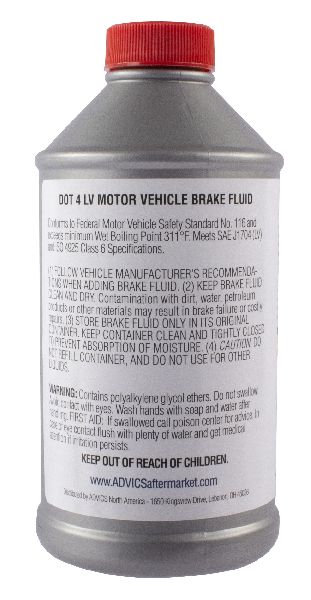
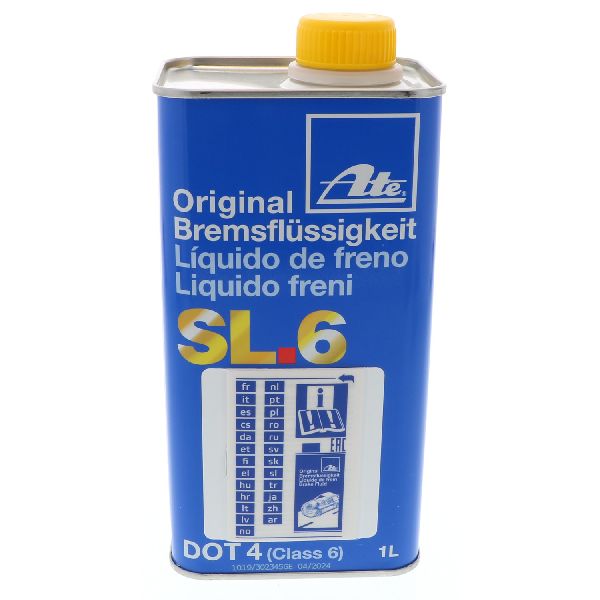
- Brake Fluid (DOT 3)
(OEM #ACDelco 19353461 (12 oz))— A low fluid level is a documented cause of this code on the Terrain per TSB PIT5490B.
Trusted brands: ACDelco, Prestone, Bosch
OEM price range: $10-$20
Aftermarket price range: $5-$15 - Wheel Speed Sensor
(OEM #ACDelco 84622323 (Front Left/Right); ACDelco 23348259 (Rear))— A failing wheel speed sensor can send irrational data, causing the ABS module to transmit invalid information. Often accompanied by specific C-codes.
Trusted brands: ACDelco, Dorman, Standard Motor Products (SMP)
OEM price range: $50-$90
Aftermarket price range: $30-$70 - Electronic Brake Control Module (EBCM)
(OEM #22754644 / 84662982 (Varies by year/options))— If all other components and wiring are verified to be good, the module itself may have failed internally.
Trusted brands: ACDelco (New/Reman), Cardone (Reman)
OEM price range: $600-$850
Aftermarket price range: $250-$500 (Remanufactured)
Related Codes That Often Appear With This One
- C0045, C0050 — These are codes for specific wheel speed sensor circuits (e.g., C0045 for Left Rear, C0050 for Right Rear). Their presence alongside U0415 strongly points to a wheel speed sensor, its wiring, or the associated wheel bearing/hub as the root cause.
- U0121 — This code means 'Lost Communication With Anti-Lock Brake System (ABS) Control Module'. While U0415 means the data is bad, U0121 means the data is missing entirely. They often appear together and point to a wiring, connector (like X411), or power issue to the ABS module, as noted in TSB #PIT5427B.
- U0074, U0077, U0100, U0101, U0125, U0126, U0140, U0432 — These are all various network communication codes. Seeing a large number of U-codes together with U0415 strongly suggests a systemic network problem, such as the corroded X411 connector mentioned in TSB #PIT5427B, rather than a single faulty module.
Technical Service Bulletins (TSBs) & Recalls
- PIT5427B: Lists a multitude of communication DTCs, including U0415, that can be caused by corrosion in the X411 connector located under the rear of the vehicle.
- PIT5490B: Specifically addresses DTC U0415 accompanied by a 'Service Trailer Brake' message, noting the cause can be a low brake fluid level that sloshes during vehicle movement.
- PIT5171C: Addresses various stability/ABS/AWD messages and communication codes, pointing to potential for wires to be broken *inside* the insulation near the X411 connector, sometimes due to rodent damage.
Platform-Specific Known Issues
- X411 Connector Corrosion: The location of the X411 connector under the rear of the vehicle makes it highly susceptible to water and salt intrusion, leading to corrosion that is a well-documented cause of U0415 and other network codes on the Terrain and Equinox.
- Brake Fluid Sloshing: A unique cause documented by GM (TSB PIT5490B) is that a brake fluid level that is low but not yet low enough to trigger a constant warning can slosh during driving maneuvers, causing the sensor to send an intermittent signal that other modules interpret as 'invalid data,' setting code U0415.
Mechanic-Grade Diagnostic Values
- Passive Wheel Speed Sensor Resistance — expected: 800 to 1400 ohms (varies by manufacturer, but this is a typical range). Failure: A reading that is open (infinite resistance) or shorted (very low resistance) indicates a faulty sensor.
- Passive Wheel Speed Sensor AC Voltage Output — expected: At least 0.25V AC when the wheel is spun by hand at about one-half revolution per second.. Failure: Voltage below the minimum threshold suggests a weak signal, which could be due to a faulty sensor, excessive air gap, or debris on the sensor tip.
- EBCM Module Power Supply Fuses — expected: Continuity (not blown). Failure: An open or blown fuse will cut power to the ABS system.
Scan Tool Commands That Help
- GM GDS2 (Global Diagnostic System 2): Module Diagnostics > Body Control Module > Control Functions — To perform bidirectional tests on components controlled by the BCM, which communicates with the EBCM. This can help verify if the BCM is receiving and acting on data correctly, indirectly testing the validity of the EBCM's output.
- GM GDS2 (Global Diagnostic System 2): Vehicle DTC Information > Display DTCs — To perform a full vehicle scan across all modules to see which other modules are flagging invalid data from the EBCM. This helps confirm the scope of the communication fault.
Wiring & Ground Locations

- EBCM (ABS Module) — Under the hood on the driver's side, beneath the under-hood fuse box.. This is the source of the 'invalid data'. Its connector and ground are primary points of inspection.
- X411 Connector — Under the rear of the vehicle, to the left of the fuel tank.. This is a major harness connector mentioned in TSBs that is highly susceptible to corrosion, causing communication issues between the rear wheel speed sensors and the EBCM.
- Fuse #13 (ABS Pump) — In the under-hood fuse box, a 40 Amp J-Case fuse.. Loss of power to the ABS pump can cause the EBCM to send invalid data.
- Fuse #16 (ABS Module) — In the under-hood fuse box, a 20 Amp Mini fuse.. This fuse provides primary power to the EBCM. A fault here will cause a total loss of communication or invalid data.
- G106 (Ground) — Below the EBCM.. This is a potential ground point for the ABS system. A poor ground connection can cause erratic module behavior and data corruption.
Real Owner Repair Stories
- equinoxforum.net user (2011 Chevy Equinox (platform mate)) — ABS, Service Stabilitrak, and AWD Off lights illuminated. Codes U0415, C0050, C0045 were present.
❌ Tried (didn't work) Replacing the right rear wheel speed sensor based on the C0050 code., Checking the X411 connector, which appeared clean.
✅ What actually fixed it The problem was ultimately traced to corrosion inside the connectors for BOTH the left and right rear wheel speed sensors at the wheels themselves. After cleaning both sensor connectors with electrical cleaner and applying dielectric grease, the codes were cleared and did not return.
Model Year Variations Within This Range
- 2010-2017: While the core issues (low brake fluid, X411 connector, wheel speed sensors) are consistent across the first generation, there were minor part number changes for the EBCM. For example, a 2011 model may use PN 20837392, while later models might use 84662982. However, the diagnostic approach remains the same. The 2016 facelift did not fundamentally change the ABS components or wiring related to this fault.
Helpful Videos
Used OEM Parts in Stock
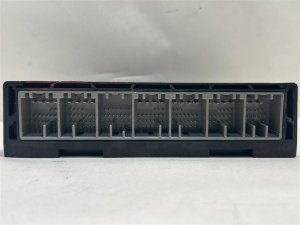
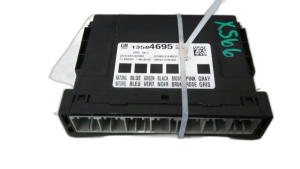


New Aftermarket Parts Available

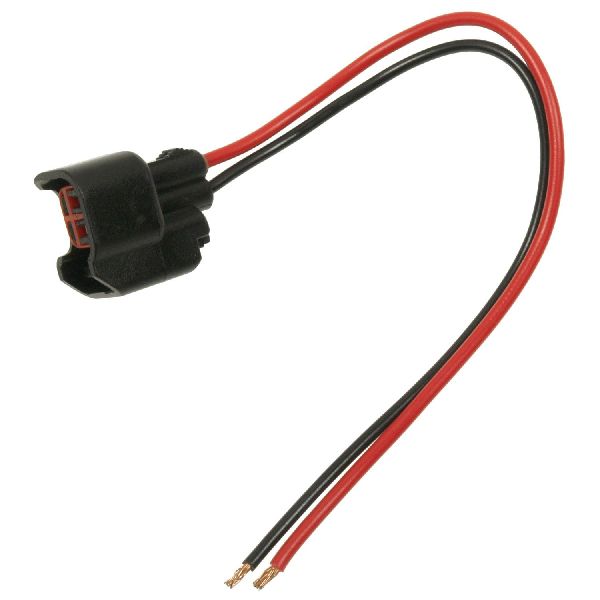

The information in this article is provided for general reference and educational purposes only. Vehicle specifications, procedures, and part compatibility can vary by production date, trim level, and region. Always consult your vehicle's factory service manual and verify part numbers before purchasing or performing repairs. Safety-critical components such as airbags, seat belts, and braking systems should be installed by a qualified professional.
- Gmc TERRAIN:
- 🎬 Helpful Videos
- 🛍️ Shop This Part
- What's Unique About the 2010-2017 Gmc TERRAIN
- Diagnostic Flowchart
- Symptoms You May Notice
- Most Likely Causes
- Rare But Worth Checking
- Diagnosis Steps
- Parts You'll Likely Need
- Related Codes That Often Appear With This One
- Technical Service Bulletins (TSBs) & Recalls
- Platform-Specific Known Issues
- Mechanic-Grade Diagnostic Values
- Scan Tool Commands That Help
- Wiring & Ground Locations
- Real Owner Repair Stories
- Model Year Variations Within This Range
- 🎟️ Get 5% Off