

U0415 on 2013-2020 Ford Fusion: ABS Data Fault Causes and Fixes
U0415 on a Ford Fusion means the Anti-Lock Brake (ABS) module is sending invalid data to other computers, most notably the Power Steering Control Module (PSCM), often causing a loss of power steering. The most common cause is a failing ABS module itself, a known issue on this platform. Ford even issued a TSB (ASI-44701) for 2013-2015 models about this specific scenario. Replacement is costly, with shop estimates ranging from $971 to over $2,000.
- U0415 on a Fusion means the ABS module is sending bad data, which critically affects braking, stability control, and power steering.
- Do not automatically replace the power steering rack; the fault is almost always rooted in the ABS system, even if steering is the main symptom.
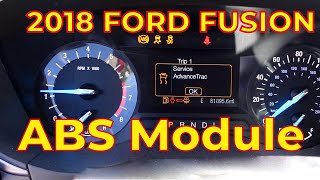
- The most common fix is replacing the entire ABS module and hydraulic unit, a costly repair that requires professional programming.
- Always check wiring, connectors, and battery voltage before condemning the expensive ABS module.
- This is a safety-critical fault; driving should be minimized until a proper diagnosis and repair can be performed.
What's Unique About the 2013-2020 Ford Fusion
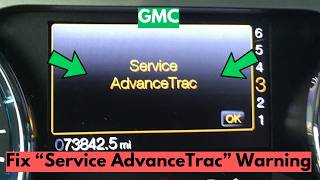
On the second-generation Ford Fusion (and its platform-mate, the Lincoln MKZ), this code has a specific and well-documented history of pointing to a failed ABS module. Ford issued a Technical Service Bulletin (TSB #ASI-44701) for 2013-2015 models where the Power Steering Control Module (PSCM) repeatedly logs code U0415. This often leads to a misdiagnosis focusing on the power steering system, when the actual problem is the ABS module sending faulty data *to* the steering module. Owner forums and Reddit are filled with threads from Fusion owners who experienced a sudden loss of power steering, saw "Service AdvanceTrac" warnings, and ultim 🎬 Watch this video on diagnosing the Service AdvanceTrac warningately traced the problem back to a faulty ABS module after the U0415 code was found.
Symptoms You May Notice
- ABS warning light on
- Traction control or Stability Control (AdvanceTrac) warning light on
- "Service AdvanceTrac" message in the instrument cluster
- Sudden loss of power steering assist, making the wheel very hard to turn [OWNER COMPLAINT]
- "Steering Assist Fault Service Required" message
- Spongy or unusual brake pedal feel [OWNER COMPLAINT]
- ABS system may not activate during hard braking, leading to wheel lockup
- Speedometer may behave erratically or drop to zero intermittently
- Replacing the power steering rack or Power Steering Control Module (PSCM). This is the most common misdiagnosis. Because the PSCM often logs the U0415 code and causes the most noticeable symptom (loss of steering assist), it is frequently blamed. However, TSB ASI-44701 specifically warns against this, as the PSCM is usually just the messenger reporting bad data from the ABS module.
Most Likely Causes
- Failing ABS Control Module 🔴 High Probability This is a widely documented failure on this platform. Internal electronic failure within the module causes it to broadcast corrupted data packets onto the CAN bus, triggering the U0415 code in other modules that rely on its data. Forum discussions and technician reports confirm this is the most frequent root cause.
How to confirm: After ruling out wiring and battery issues, a technician will use an advanced scan tool to monitor the live data stream from the ABS module. If the data is erratic, missing, or nonsensical despite good inputs from wheel speed sensors, the module is condemned. Often, the PSCM will log U0415 while the ABS module itself may have few or no codes.
Typical fix: Replace the ABS control module and hydraulic unit (HCU). The new module must be programmed to the vehicle's VIN using a tool like FORScan or Ford's IDS, followed by a scan tool-actuated brake bleed procedure.
Est. part cost: $575-$1500 - Wiring Harness or Connector Issue 🟡 Medium Probability The main harness connector at the ABS module is located in the engine bay, exposed to heat and moisture. Corrosion on the pins or breaks in the CAN bus wires can corrupt the signal. Additionally, wiring to the wheel speed sensors can be damaged by road debris or improper servicing.
How to confirm: Visually inspect the main connector at the ABS module for green/white corrosion or backed-out pins. Check the wiring harness for chafing, especially where it runs near the frame or engine components. Perform a continuity and resistance check on the CAN bus wires (typically a twisted pair) between the ABS module and the OBD-II port.
Typical fix: Repair the damaged section of the wiring harness or clean the connector pins with a specialized contact cleaner. In severe cases, the connector pigtail may need to be replaced.
Est. part cost: $20-$150 - Faulty Wheel Speed Sensor ⚪ Low Probability While less common than module failure for this specific code, a wheel speed sensor that sends a completely erratic signal (as opposed to no signal) can confuse the ABS module, causing it to output invalid data. This is more likely to set a specific wheel speed sensor code (C-series) alongside the U0415.
How to confirm: Use a scan tool to monitor the live speed readings from all four wheels simultaneously while driving. A sensor that is dropping out, reading erratically, or showing a speed wildly different from the others is faulty.
Typical fix: Replace the faulty wheel speed sensor and inspect the wiring pigtail for damage.
Est. part cost: $40-$90
Rare But Worth Checking
- Low Battery Voltage: Weak or failing batteries can cause a cascade of unpredictable communication errors between modules on modern vehicles. Before beginning complex diagnostics, always ensure the battery is fully charged (above 12.4V at rest) and the charging system is working correctly. A simple check can save hours of diagnostic time.
Diagnosis Steps
- Perform a full vehicle scan with a capable tool (like FORScan) to see which modules have stored the U0415 code and what other codes are present. Note which module is the primary source of the code.
- Check and confirm battery voltage is stable and the charging system is working correctly (above 13.5V when running). A weak battery is a common source of network errors.
- Visually inspect the main electrical connector at the ABS module (located on the driver's side of the engine bay) for any signs of corrosion, moisture, or pushed-out pins.
- Inspect the wiring harnesses leading to all four wheel speed sensors and the main harness to the ABS module for any chafing, melting, or physical damage. Pay close attention to areas where the harness may rub against the frame or suspension components.
- Use a high-end scan tool to view live data from all four wheel speed sensors while driving. Ensure they all read consistently and accurately. Any sensor that is erratic needs to be investigated further.
- If sensor and wiring inputs are good, the next step is to suspect the ABS module itself. This is the most common failure point for this code on this vehicle.
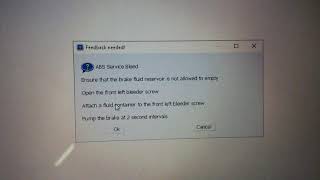
- If the ABS module is replaced, it will require programming (PMI - Programmable Module Installation) and configuration to the vehicle's VIN, as well as a scan tool-assisted brake bleed procedure to remove air from the new hydraulic unit. 🎬 See how to perform an ABS module brake bleed using FORScan
- Clear all codes and perform a thorough test drive, ensuring the fault does not return and that power steering, ABS, and AdvanceTrac functions are fully restored. [MANUFACTURER TSB]
Parts You'll Likely Need
- ABS Control Module and Hydraulic Assembly
(OEM #DG9Z-2C405-A, EG9Z-2C405-A, FG9Z-2C405-A (part numbers supersede; check with dealer for latest VIN-specific number))— This is the component most often responsible for generating the invalid data that triggers code U0415 on this platform.
Trusted brands: Motorcraft (OEM), Cardone (Remanufactured)
OEM price range: $800-$1500
Aftermarket price range: $575-$850
Related Codes That Often Appear With This One
- U0420 — This code means "Invalid Data Received From Power Steering Control Module". It can appear in the ABS module when the two modules are in conflict, essentially pointing fingers at each other over the bad data. Seeing U0415 in the PSCM and U0420 in the ABS module is a strong indicator of this specific fault scenario.
- C0022, C1012, C1277, C1963 — These are chassis codes related to the brake booster, ABS inlet, and steering systems. Their presence alongside U0415 points directly to a fault originating in the brake or stability control system. [OWNER COMPLAINT, OWNER COMPLAINT]
- U3000 — This is a generic 'Control Module' code. When seen with U0415, it reinforces the diagnosis of a failing electronic module, likely the ABS unit. [OWNER COMPLAINT]
- U0121 — This code means "Lost Communication With ABS Control Module". It's a more severe version of U0415, indicating the module isn't just sending bad data, but has dropped off the network entirely. This strongly points to a failed module or a major wiring/power issue.
Technical Service Bulletins (TSBs) & Recalls
- ASI-44701: Notes that the Power Steering Control Module (PSCM) on 2013-15 Fusions may exhibit a recurring U0415 code that clears but then returns. This is a key document that helps prevent misdiagnosis of a bad power steering rack.
Platform-Specific Known Issues
- A Ford Technical Service Bulletin (TSB #ASI-44701) was issued for 2013-2015 Ford Fusions where the Power Steering Control Module (PSCM) exhibits a U0415 code that returns shortly after being cleared. This TSB implicitly points to the ABS module as the root cause, cautioning technicians against unnecessarily replacing the power steering components.
Mechanic-Grade Diagnostic Values
- CAN Bus Network Resistance — expected: ~60 Ω. Failure: 120 Ω indicates an open in one terminating resistor or its wiring. 0 Ω indicates a short between CAN High and Low wires.
- CAN Bus Voltage (High-Speed CAN) — expected: CAN High: ~2.6V, CAN Low: ~2.4V. Failure: Voltages that are identical, stuck at 0V, or stuck at battery voltage indicate a short to each other, ground, or power.
- Passive Wheel Speed Sensor Resistance — expected: Typically 800-2500 Ω, but the key is that values should be nearly identical to a known-good sensor on the same vehicle.. Failure: A reading of OL (open circuit) or 0 Ω (short circuit), or a value that deviates significantly from other sensors on the car.
- Passive Wheel Speed Sensor AC Voltage Output — expected: Greater than 100mV (0.1V) AC. Failure: No AC voltage is generated when spinning the wheel, indicating a dead sensor.
Scan Tool Commands That Help
- Ford IDS / FORScan: Programmable Module Installation (PMI) — This is required when replacing the ABS module. It copies the vehicle-specific 'As-Built' data from the old module to the new one, or retrieves it from Ford's database via the VIN if the old module is unreadable.
- Ford IDS / FORScan: ABS Service Bleed — This is a mandatory step after replacing the ABS module/Hydraulic Control Unit (HCU). It cycles the internal ABS valves and pump to purge trapped air that cannot be removed with a standard manual brake bleed.
- Ford IDS / FORScan: Run Self-Test — Can be used during diagnosis to command the ABS module (and other modules) to check for internal faults, which can help confirm if the module itself is the source of the problem.
Wiring & Ground Locations
- ABS Module Fuses — In the engine compartment fuse box (driver's side). Fuse F25, and potentially three more fuses (F69, F82, F87) in a hidden compartment on the underside of that same fuse box.. A blown fuse will cause the ABS module to lose power, which can either cause a total loss of communication (U0121) or, if intermittent, could potentially cause invalid data codes like U0415.
- Connector C134 — Located by the lamp behind the front bumper on the driver's side.. This connector has been identified by an owner as a point of water intrusion, which caused widespread electrical issues. Corrosion or shorting in this connector could disrupt CAN bus signals that pass through it, leading to communication codes.
- CAN Bus Terminating Resistors — The High-Speed CAN bus has two 120 Ω terminating resistors. One is typically internal to the Powertrain Control Module (PCM), and the other is often in the Instrument Panel Cluster (IPC) or another major module.. The entire CAN bus relies on these two resistors to function. If one fails or its wiring is compromised, the total bus resistance will change from 60 Ω to 120 Ω, causing widespread communication errors, including U0415.
Real Owner Repair Stories
- Ford F-150 owner forum (similar Ford system) (2015 Ford F-150) — Instrument cluster going haywire, 'Hill Start Assist Not Available', 'Service AdvanceTrac', ABS light on, U0415 code.
❌ Tried (didn't work) Initial diagnosis pointed towards a faulty ABS control module.
✅ What actually fixed it Found a chafed wire for the front left wheel speed sensor where the tire had been rubbing against it, exposing copper. Repairing the wire resolved all issues. - Reddit user in /r/fordfusion (2015 Ford Fusion) — Loss of A/C, passenger windows, passenger mirror, and external temperature display.
❌ Tried (didn't work) Diagnostic check showed potential water intrusion in multiple connectors.
✅ What actually fixed it The shop found water inside connector C134 (near driver side front bumper). They dried the connector and applied dielectric grease, which fixed all problems. - YouTube repair video (2017 Ford Fusion) — Intermittent ABS light since 65k miles, strange ABS activation sounds on dry pavement.
✅ What actually fixed it The code indicated a fault with the front right wheel speed sensor. The owner replaced both the wheel speed sensor and the wheel bearing/hub assembly (which contains the magnetic tone ring). This permanently fixed the issue.
"I Checked Everything" — The Actual Cause
- On a similar GM platform, a U0415 code was disabling the power steering. All modules and primary wiring seemed okay. The root cause was found to be a damaged (pinched) wire for a rear wheel speed sensor from a previous wheel hub replacement. The wire wasn't completely severed, so it sent erratic data instead of no data, confusing the ABS module and causing it to send invalid data downstream to the power steering module. The fix was a new $50 wheel speed sensor harness, not the multi-thousand dollar steering rack or ABS module.
OEM Part Supersession History
DG9Z-2C405-A / DG9Z-2C215-D→EG9Z-2C405-A / EG9Z-2C215-A— Part revisions for improved reliability or manufacturing changes.
Heads up: Part numbers for the ABS module and hydraulic unit are complex and often sold as an assembly. Using the wrong part number, even if it physically fits, can lead to VIN mismatch errors and non-functional systems. Always confirm the latest superseded part number with a Ford dealer using the vehicle's VIN before ordering.
Model Year Variations Within This Range
- 2013-2020: The exact fuses used for the ABS module can vary by year and options. For example, fuse F82 in the under-hood fuse box may not be present on all models.
- 2017-2020 (Post-facelift): Vehicles from 2017 onward feature different infotainment and network architecture (e.g., SYNC 3). While the U0415 fault remains common, wiring diagrams and the specific CAN bus designation (e.g., HS3 CAN) may differ from earlier 2013-2016 models, which is important for advanced wiring diagnostics.
Diagnostic Flowchart
Other Known Issues on This Vehicle
Issues unrelated to this code that are worth knowing about as an owner of this generation:
- 1.5L/2.0L EcoBoost Coolant Intrusion 🔴 High — Common on 2014-2019 models. Can occur at various mileages, often leading to engine replacement. (Ref: TSB 20-2100, TSB 19-2139, Customer Satisfaction Program 21N12.)
- Shifter Cable Bushing Degradation 🔴 High — Widespread on 2013-2016 models, leading to a vehicle that may not be in the gear selected (rollaway risk). (Ref: NHTSA Recall 22V471000 (Ford 22S43).)
- Faulty Door Latches 🟠 Medium — Common across many Ford models of this era, can result in doors not closing securely or opening while driving. (Ref: Multiple recalls issued, e.g., 20S30.)
- Cracked Flexplate/Driveplate (2.5L Engine) 🟠 Medium — A known issue on the base 2.5L engine, causing a rattling or knocking noise from the transmission bellhousing area.
- Leaking Front Brake Hoses 🔴 High — A recall was issued for some model years due to rubber hoses that could rupture, causing a sudden loss of brake fluid and braking ability. (Ref: NHTSA Recall 20V193000.)
Used vs. New Parts: Buying Guide for This Vehicle
When a used part is the smart pick: A used ABS module from a salvage yard is a cost-effective option ONLY if you have access to Ford's IDS software or an advanced aftermarket tool like FORScan. The module is VIN-locked and requires a 'Programmable Module Installation' (PMI) to function in a new vehicle. Without the ability to perform this programming, a used part is useless.
Donor-vehicle mileage cap: roughly under 100000 miles for the part to have meaningful remaining life.
What to inspect on the donor part:
- Part number MUST be an exact match to the original unit.
- Inspect the electrical connector pins for any signs of corrosion, bending, or moisture.
- Source the part from a vehicle with no reported ABS or electrical issues and no major collision damage.
- Ask for the VIN of the donor car, as it may be needed to retrieve 'As-Built' data if the PMI process fails.
OEM-only on this vehicle (don't cheap out):
- ABS Control Module/Hydraulic Unit. Due to the critical VIN programming (PMI) and safety function, using a new or used OEM (Motorcraft) part is strongly recommended over a generic remanufactured unit with uncertain programming compatibility.
Aftermarket brands forum-validated for this vehicle:
- For related parts like wheel speed sensors: Standard Motor Products (SMP), TRQ, and other reputable brands are generally considered reliable.
Brands owners have reported issues with on this vehicle:
- Unknown, no-name brands for the ABS module itself, as they are highly unlikely to be programmable to the vehicle.
Real Owner Stories
Aggregated from forums and TSBs cited above. Mileages and costs reflect what owners reported in those sources.
2013 Ford Fusion
Symptoms: Power steering issues; FORScan logs showed U0415 in the PSCM and U0420 in the ABS module, illustrating a two-way communication fault.
What fixed it: Replacement of the ABS module.
Source hint: Reddit r/fordfusion - 2013 Fusion - Power steering issues
2013 Ford Fusion
Symptoms: A cascade of warning lights including ABS, traction control, hill start assist, and airbag issues; scan log showed U0415 in the PSCM as a 'Previously Set DTC'.
What fixed it: Diagnosis pointed to an intermittent fault in the ABS module communication.
Source hint: Reddit r/fordfusion - 2013 Ford Fusion abs, traction control, hill start assist, airbag issue.
Related OBD-II Codes
Frequently Asked Questions
My 2013 Ford Fusion is losing power steering and showing U0415. Does TSB #ASI-44701 apply to me?
Can a bad battery cause the 'Service AdvanceTrac' and U0415 errors on my Fusion?
I'm seeing U0415 and my speedometer is dropping to zero. Is this related to the ABS module?
If I replace the ABS module myself to fix the U0415 code, what extra steps are needed?
Is the U0415 issue limited only to the Ford Fusion?
Helpful Videos

We Have This Part in Stock



The information in this article is provided for general reference and educational purposes only. Vehicle specifications, procedures, and part compatibility can vary by production date, trim level, and region. Always consult your vehicle's factory service manual and verify part numbers before purchasing or performing repairs. Safety-critical components such as airbags, seat belts, and braking systems should be installed by a qualified professional.
- Ford Fusion:
- 🎬 Helpful Videos
- 🛍️ Shop This Part
- What's Unique About the 2013-2020 Ford Fusion
- Symptoms You May Notice
- Most Likely Causes
- Rare But Worth Checking
- Diagnosis Steps
- Parts You'll Likely Need
- Related Codes That Often Appear With This One
- Technical Service Bulletins (TSBs) & Recalls
- Platform-Specific Known Issues
- Mechanic-Grade Diagnostic Values
- Scan Tool Commands That Help
- Wiring & Ground Locations
- Real Owner Repair Stories
- "I Checked Everything" — The Actual Cause
- OEM Part Supersession History
- Model Year Variations Within This Range
- Diagnostic Flowchart
- Other Known Issues on This Vehicle
- Used vs. New Parts: Buying Guide for This Vehicle
- Real Owner Stories
- 2013 Ford Fusion
- 2013 Ford Fusion
- Related OBD-II Codes
- Frequently Asked Questions
- 🎟️ Get 5% Off