

U0415 on 2015-2020 Cadillac Escalade: Invalid ABS Data Causes and Fixes
On a 2015-2020 Escalade, code U0415 is most often caused by damaged wiring under the sill plates or behind the instrument panel, as noted in GM service bulletins. Before suspecting the expensive ABS module, check the brake fluid level and inspect these specific wiring harnesses, as water intrusion and chafing are extremely common.
- For a 2015-2020 Escalade, U0415 strongly points to a wiring issue, not necessarily a bad ABS module.
- Always check the brake fluid level first, as it's a simple fix documented in a TSB.
- The two most likely locations for wiring damage are under the front door sill plates and behind the left side of the instrument panel.
- Do not replace the expensive EBCM until these known wiring chafe points have been thoroughly inspected and ruled out.
- This code disables important safety features; address it promptly.
What's Unique About the 2015-2020 Cadillac ESCALADE

Unlike many vehicles where a U-code might point directly to a failed module, on the fourth-generation Cadillac Escalade and its platform mates, U0415 is very frequently a wiring problem. GM has issued multiple Technical Service Bulletins (TSBs) that pinpoint specific locations where the vehicle's wiring harness is prone to chafing and damage—namely under the door sill plates and behind the instrument panel. These areas are vulnerable to water intrusion from clogged drains or poorly sealed body plugs, and the wiring can be disturbed during the installation of accessories like illuminated sill plates. Another TSB also links this code to something as simple as low brake fluid causing erratic sensor readings during turns or hard braking.
Diagnostic Flowchart

Tap your situation to follow the diagnostic path that matches what you're seeing on this vehicle.
Symptoms You May Notice
- ABS warning light is on
- StabiliTrak or Traction Control warning light is on
- "Service StabiliTrak" message in the driver information center
- "Service Trailer Brake" message in the driver information center
- Cruise control may be inoperative
- Steering may feel heavy or power steering assist may be reduced
- Wipers may be inoperative (as noted in TSB PIT5288G)
- Potential for a dead battery if a short circuit is the cause (as noted in TSB PIT5288G)
- Replacing the Electronic Brake Control Module (EBCM) / ABS module without first thoroughly inspecting the wiring harnesses under the sill plates and in the dash. The wiring is a much more common and cheaper failure point on this specific vehicle platform.
Most Likely Causes

- Damaged Wiring Harness Under Sill Plates 🔴 High Probability As documented in TSB #PIT5457D, the 'Communication Enable circuit 5986' running along the floor can become damaged. This area is prone to water intrusion from outside the vehicle, and the harness can be damaged by foot traffic or during installation of accessories like illuminated sill plates.
How to confirm: Remove the driver and passenger sill plates and carefully peel back the carpet. Inspect the entire length of the wiring harness for any signs of chafing, corrosion (especially green or white powder), or broken wires. Pay close attention to splice J365 located under the passenger front sill plate.
Typical fix: Repair the damaged section of circuit 5986. This involves cutting out the bad section, splicing in a new piece of wire using moisture-proof connectors (like Duraseal splice sleeves), and protecting it with heat shrink and loom.
Est. part cost: $10-$30 - Pinched Wiring Harness in Instrument Panel 🔴 High Probability TSB #PIT5288H points to a condition where the main dash harness can be pinched between the left I/P dash mounting bracket and the body, right above the parking brake pedal area. This can happen during vehicle assembly.
How to confirm: From under the dash, inspect the wiring harness near the left I/P mounting bracket. The TSB notes it can be difficult to see, but check if the harness can move freely away from the bracket.
Typical fix: Loosen the left I/P dash mounting bracket bolts to create space. Free the pinched harness, open the loom, and repair any crushed or broken wires individually. Reroute the harness to prevent it from being pinched again.
Est. part cost: $5-$25 - Low Brake Fluid Level 🟡 Medium Probability TSB #PIT5490B explains that during hard braking, acceleration, or turns, low fluid can slosh in the reservoir and momentarily trigger the low-level sensor. The Chassis Control Module sees this intermittent signal from the EBCM as invalid data and sets U0415.
How to confirm: Visually check the brake fluid level in the master cylinder reservoir. With a scan tool (like GDS2), monitor the EBCM data parameter 'Brake Fluid Level Sensor' to see if it reads 'Low' while driving or at rest.
Typical fix: Top off the brake fluid to the 'MAX' line using the correct DOT fluid. It is critical to also inspect the entire brake system for leaks or worn pads to determine why the fluid was low in the first place.
Est. part cost: $5-$15 - Failing Electronic Brake Control Module (EBCM) ⚪ Low Probability
How to confirm: This should only be suspected after all wiring, connections, and fluid levels have been thoroughly inspected and confirmed to be good. Diagnosis requires a high-end scan tool to check for internal module faults after ruling out all external inputs and wiring.
Typical fix: Replace the EBCM. The new module will require programming to the vehicle's VIN and specific configuration (e.g., adaptive cruise control).
Est. part cost: $400-$800
Rare But Worth Checking
- Poor Power or Ground to EBCM: A weak battery, failing alternator, or corroded ground connection can cause low voltage, making modules behave erratically and send invalid data. Always check battery health and main ground points as a preliminary step. A key ground for the EBCM is located on the frame rail under the driver's door.
- Faulty Steering Angle Sensor (SAS): The EBCM relies on data from the SAS for StabiliTrak functions. A failing SAS can send illogical data, which can cause other modules to flag the EBCM's data as invalid, setting U0415. An owner on a forum reported resolving U0415, U0428, and C0710 by replacing the SAS and performing a relearn procedure. A YouTube video confirms this fix on an Escalade by showing live data of a failed sensor.
Diagnosis Steps
- Check the brake fluid level in the master cylinder reservoir and top off if low. Inspect for leaks or worn pads.
- Scan all vehicle modules with a professional-grade scan tool and save all Diagnostic Trouble Codes (DTCs).
- Following TSB #PIT5457D, remove the driver and passenger front sill plates, pull back the carpet, and meticulously inspect the 'Communication Enable circuit 5986' for corrosion, chafing, or broken wires. Check splice J365 under the passenger sill plate.
- If no visible damage is found on circuit 5986, perform a loaded voltage test. TSB #PIT5457D recommends attaching a 194 bulb to the circuit at the EBCM connector and measuring voltage; it should remain above 11V.
- Following TSB #PIT5288H, inspect the wire harness on the left side of the instrument panel, checking for areas where it might be pinched against the metal dash bracket.
- Inspect the main electrical connector at the Electronic Brake Control Module (EBCM) for corrosion, moisture, or backed-out pins.
- Check battery voltage and the vehicle's charging system to rule out a power supply issue. Perform a voltage drop test on battery cables if a power issue is suspected.
- If other steering-related codes are present, investigate the Steering Angle Sensor (SAS) for proper operation and data output using a scan tool.
- If all wiring, connections, and fluid levels are confirmed to be in perfect condition, the EBCM itself may be faulty.
Parts You'll Likely Need

- Wiring Repair Supplies — Used to fix the common chafing/corrosion issues in the sill plate and instrument panel harnesses. Includes wire, butt connectors (Duraseal recommended), and Tesa tape.
Trusted brands: 3M, Kent Automotive
OEM price range: $10-$30
Aftermarket price range: $5-$20 - Electronic Brake Control Module (EBCM)
(OEM #84256780 (example, verify with VIN). Other numbers like 23380704 may apply depending on options.)— This is the part to replace if all wiring and fluid-related issues have been completely ruled out. The correct part number is critical and depends on options like adaptive cruise control and brake package (e.g., JD9).
Trusted brands: ACDelco
OEM price range: $600-$800
Aftermarket price range: $400-$600
Related Codes That Often Appear With This One
- U0077 — Often set alongside U0415, indicating a general High Speed Communication Bus failure, which is consistent with the wiring issues described in TSBs #PIT5288G and #PIT5457C.
- U0121 — Indicates 'Lost Communication With Anti-Lock Brake System (ABS) Control Module'. This can appear with U0415 if the connection on a communication line (like circuit 5986) is so poor that communication is lost entirely, not just corrupted.
- U0126 — Indicates 'Lost Communication With Steering Angle Sensor Module'. This module's data is critical for the EBCM, and communication faults often cascade, as noted in TSB #PIT5288G.
- C0710 — Relates to the Steering Angle Sensor signal. A forum user reported this code appeared with U0415 and was resolved by replacing the SAS, indicating a direct relationship.
Technical Service Bulletins (TSBs) & Recalls
- PIT5288H: Addresses various communication DTCs, including U0415, caused by a pinched wire harness in the left instrument panel.
- PIT5457D: Addresses various communication DTCs, including U0415, caused by an open, damaged, or corroded 'Communication Enable circuit 5986' under the sill plates.
- PIT5490B: Addresses DTC U0415 with a 'Service Trailer Brake' message caused by a low brake fluid level.
Platform-Specific Known Issues
- TSB #PIT5457D documents a known issue with the Communication Enable circuit (5986) under the driver and passenger sill plates getting damaged, causing loss of communication with the EBCM and other modules.
- TSB #PIT5288H identifies a potential for the wire harness in the
Mechanic-Grade Diagnostic Values
- High-Speed GMLAN Bus Resistance — expected: 60 Ohms (Ω) +/- 5Ω. Failure: A reading of ~120Ω indicates an open in the bus or one of the two terminating resistors. A reading significantly below 60Ω indicates the CAN High and Low wires are shorted together.
- High-Speed GMLAN Bus Voltage (Key-On, Engine-Off) — expected: GMLAN High (Pin 6 at DLC): ~2.66 Volts. GMLAN Low (Pin 14 at DLC): ~2.34 Volts.. Failure: Voltages that are stuck high, low, or do not mirror each other during communication indicate a bus fault.
- EBCM Ground Circuit Resistance — expected: < 5.0 milliohms (mΩ). Failure: High resistance on the ground circuit can cause intermittent module operation and communication faults.
Hidden / Shadow Codes Worth Checking
- U0415:71: The ':71' is a symptom byte indicating 'Invalid Serial Data Received'. This provides a more specific fault type than the base U0415 code alone. (see via Professional-grade scan tools like the GM GDS2/Tech2 will display these symptom bytes.)
Scan Tool Commands That Help
- GDS2: EBCM Data Display > 'Brake Fluid Level Sensor' — Use this to confirm the low brake fluid cause documented in TSB #PIT5490B. The parameter will read 'OK' or 'Low', helping to verify if fluid slosh is triggering the code intermittently.
- GDS2 / ACDelco TDS: Replace and Program ECU > K17 Electronic Brake Control Module — This function is required after installing a new EBCM. It programs the vehicle's VIN and specific configuration into the new module to ensure it communicates correctly with other systems. Failure to program will result in continued communication errors.
- GDS2: Steering Angle Sensor Module > Steering Angle Sensor Relearn — This procedure is necessary after replacing the Steering Angle Sensor (SAS) to calibrate the new sensor's center position. This should be performed if the SAS is replaced to fix a U0415 code.
Wiring & Ground Locations

- EBCM Ground (G110 on similar platforms) — Located on the outside of the frame rail, directly beneath the driver's side door.. This is the primary ground for the Electronic Brake Control Module. A poor connection here due to rust or looseness is a known cause of ABS communication faults and can mimic a failed module.
- BCM / Dash Ground — Inside the cab, beside the front left speaker near the A-pillar. Requires removing the A-pillar trim and pulling up the dash trim for access.. The Body Control Module (BCM) is a central communication hub. A poor ground for the BCM can cause widespread communication codes, including U0415, as it may corrupt data being sent to or from the EBCM.
- EBCM Connector — At the Electronic Brake Control Module, which is part of the ABS pump assembly in the engine bay, typically on the driver's side.. This is the main 38-pin electrical connection to the module. All power, ground, and communication lines pass through here. Inspecting for backed-out pins or corrosion is a critical step.
Real Owner Repair Stories
- YouTube channel 'Fault Code with Hamza' (Cadillac Escalade (year not specified, but same generation)) — ABS and StabiliTrak lights on, codes U0415:71 and U0428:71 (Invalid Data from Steering Angle Sensor).
❌ Tried (didn't work) The technician immediately suspected the Steering Angle Sensor based on the codes.
✅ What actually fixed it The technician used a scan tool to view live data and confirmed the Steering Wheel Angle value was stuck at 0 degrees when turning the wheel. He replaced the Steering Angle Sensor, cleared the codes, and verified the new sensor was reporting angle changes correctly, which resolved all codes and warning lights.
OEM Part Supersession History
23380704→N/A, but applies to early models— Part for early-generation models (approx. 2014-2016).
Heads up: This part number is listed for 2015-2016 models but may not be compatible with later years that have different features or brake systems. Always verify with VIN.84329995→84401914— Updated part for later model years.
Heads up: Part 84401914 is noted to include the modulator valve on 2019 vehicles, indicating a potential design change. Using the wrong module will result in programming failure or malfunction.
Model Year Variations Within This Range
- 2015 (early build): Early 2015 models were equipped with a 6-speed (6L90E) automatic transmission.
- 2015.5 (interim) - 2017: A mid-year update introduced the 8-speed (8L90E) automatic transmission, Surround View camera system, and an updated Cadillac crest logo. These are sometimes referred to as '2015i' models.
- 2018-2020: The 10-speed (10L80) automatic transmission was introduced, replacing the 8-speed. This may coincide with different EBCM part numbers and software calibrations.
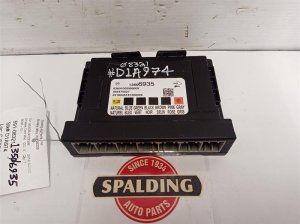
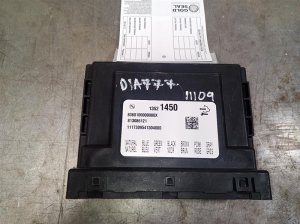
We Have This Part in Stock



The information in this article is provided for general reference and educational purposes only. Vehicle specifications, procedures, and part compatibility can vary by production date, trim level, and region. Always consult your vehicle's factory service manual and verify part numbers before purchasing or performing repairs. Safety-critical components such as airbags, seat belts, and braking systems should be installed by a qualified professional.
- Cadillac ESCALADE:
- 🛍️ Shop This Part
- What's Unique About the 2015-2020 Cadillac ESCALADE
- Diagnostic Flowchart
- Symptoms You May Notice
- Most Likely Causes
- Rare But Worth Checking
- Diagnosis Steps
- Parts You'll Likely Need
- Related Codes That Often Appear With This One
- Technical Service Bulletins (TSBs) & Recalls
- Platform-Specific Known Issues
- Mechanic-Grade Diagnostic Values
- Hidden / Shadow Codes Worth Checking
- Scan Tool Commands That Help
- Wiring & Ground Locations
- Real Owner Repair Stories
- OEM Part Supersession History
- Model Year Variations Within This Range
- 🎟️ Get 5% Off