

U0415 on 2013-2017 Buick Regal: Causes for Invalid ABS Data and Steering Faults
On a 2013-2017 Buick Regal, code U0415 is most often caused by a software glitch in the Power Steering Control Module (PSCM). The fix is typically reprogramming the module at a dealership, which costs around $150-$300. Another common cause is metallic debris on a wheel bearing's magnetic ring, which requires cleaning or hub replacement. Low battery voltage is also a frequent trigger.
- U0415 on a 2013-2017 Regal almost always points to a problem that results in reduced power steering assist.
- Do not immediately assume the ABS module is bad. The most likely cause is a software glitch in the Power Steering Control Module that requires reprogramming.
- The second most likely cause is debris on a wheel bearing's magnetic ring, which can be diagnosed by checking for wheel speed sensor codes.
- This is not a DIY-friendly repair for most people, as it involves critical safety systems and requires dealer-level scan tools for proper diagnosis and programming.
- Always check for TSBs before authorizing expensive repairs, as the fix may be a simple and relatively inexpensive software update.
What's Unique About the 2013-2017 Buick REGAL
For this specific generation of Buick Regal and its Epsilon II platform mates (like the Malibu and LaCrosse), the U0415 code is strongly linked to a loss of power steering assist. General Motors has issued specific Technical Service Bulletins (TSBs) acknowledging that this communication code is a direct trigger for the 'Steering Assist Is Reduced' message on the dashboard. The most common causes are not a failed ABS module, but rather a software anomaly requiring a reflash of the steering module or physical debris on a wheel hub's magnetic encoder ring.
Diagnostic Flowchart
Tap your situation to follow the diagnostic path that matches what you're seeing on this vehicle.
Symptoms You May Notice
- "Steering Assist Is Reduced" message in the driver information center
- Significantly increased effort required to turn the steering wheel
- ABS warning light illuminated
- Traction Control or StabiliTrak warning light illuminated
- The vehicle may feel like it's pulling to one side (if related to a bad steering angle sensor calibration).
- Warning message may appear intermittently, especially on a cold start.
- Replacing the Power Steering Control Module when it only needs reprogramming.
- Replacing the ABS module when the actual fault is debris on a wheel bearing hub or a software glitch in the steering module.
- Replacing the steering rack/gear when the issue is electronic (software, sensor, or wiring).
Most Likely Causes
- Power Steering Control Module (PSCM) Software Anomaly 🔴 High Probability Documented in GM Technical Service Bulletin #19-NA-182, this is a known software glitch for this platform and its mates (LaCrosse, XTS, Impala, Malibu).
How to confirm: A GM-compatible scan tool will show U0415 stored in the PSCM, often alongside C056D. A dealer can check if the vehicle's calibration matches the latest software version available on TIS2WEB.
Typical fix: Reprogram the Power Steering Control Module (PSCM) with the latest software. No parts are required for this repair. The bulletin stresses the importance of maintaining stable battery voltage during the procedure.
Est. part cost: $0 - Debris on Wheel Bearing Magnetic Encoder Ring 🔴 High Probability A GM document (PIC5428) notes that ferrous metallic debris can stick to the magnetic ring on the wheel bearing hub, which provides the wheel speed signal. This corrupts the signal sent to the ABS module, which then sends invalid data to other modules, triggering U0415 in the PSCM.
How to confirm: Scan the ABS module (EBCM) for wheel speed sensor codes (e.g., C0035-C0050). Visually inspect the inboard side of the wheel bearing/hub assembly for metallic shavings or rust buildup on the magnetic ring.
Typical fix: In many cases, the debris can be carefully cleaned off with a dry nylon soft bristle brush. If the debris cannot be removed or the encoder ring is damaged, the entire wheel bearing and hub assembly is replaced.
Est. part cost: $100-$250 - Incorrect Steering Angle Sensor Alignment Procedure 🟡 Medium Probability Documented in GM TSB #PI0800A, performing a steering angle sensor alignment incorrectly can cause U0415 (with fault byte 75) and C0544 (with fault byte 5A) to set and not clear.
How to confirm: This issue will appear immediately after a front-end alignment or steering component replacement. The codes will be present and will not clear with a standard scan tool. The car may pull to one side as speed increases.
Typical fix: The Power Steering Control Module must be flashed to a different software version using the 'Replace and Reprogram' option in SPS, followed by a correct steering end-stop learn procedure. This special procedure is required to clear the persistent codes.
Est. part cost: $0 - Failing ABS Control Module (EBCM) ⚪ Low Probability
How to confirm: This is a diagnosis of exclusion. If reprogramming the PSCM and inspecting wheel hubs doesn't solve the issue, and all wiring is confirmed to be good, the ABS module itself is the likely culprit.
Typical fix: Replace the ABS control module. The new module must be professionally programmed to the vehicle's VIN.
Est. part cost: $430-$1100
Rare But Worth Checking
- Wiring Harness or Connector Fault: A damaged wire or corroded connector pin between the ABS module, a wheel speed sensor, or the PSCM can corrupt the data signal. This is less common than software or hub issues but should be checked before replacing expensive modules. TSB PI1294B specifically calls out checking the G111 ground and the F3UB fuse connection for tightness and corrosion on the Regal.
- Low Battery Voltage: A weak or failing battery is a very common cause of the 'Steering Assist is Reduced' message across many GM vehicles. The electric power steering system is sensitive to voltage drops and will enter a protective mode. Ensure the battery is fully charged and healthy before proceeding with complex diagnostics.
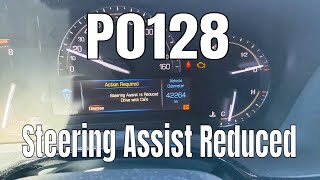
- Faulty Engine Thermostat or Coolant Temp Sensor: An invalid coolant temperature signal can cause the PSCM to receive faulty data and trigger a U0415 or U0401 code, leading to reduced steering assist. The steering module uses coolant temp to compensate for grease thickness in cold weather. This is often accompanied by engine code P0128. 🎬 Watch: How a faulty thermostat triggers steering assist warnings.
Diagnosis Steps
- Scan all vehicle modules with a professional-grade scan tool. Note all codes, especially in the EBCM (ABS) and PSCM (Power Steering), and record any specific fault bytes.
- Check for Technical Service Bulletins. If symptoms match TSB #19-NA-182, #PI0800A, or #20-NA-113, follow the recommended procedure to reprogram the Power Steering Control Module.
- Verify battery health. Test the battery and charging system to ensure voltage is stable and above 12.4 volts at rest. A weak battery is a common trigger.
- If wheel speed sensor codes (C0035-C0050) are present, inspect the corresponding wheel bearing hub's magnetic encoder ring for metallic debris. Clean with a soft nylon brush if necessary.
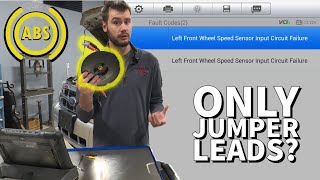
- If no debris is found, use the scan tool to monitor live data from all four wheel speed sensors while driving. Look for any sensor that drops out or shows an erratic reading. 🎬 See this guide on how to test wheel speed sensors.
- Inspect grounds and fuses. Specifically check the G111 ground connection and the 100A F3UB fuse for tightness and corrosion as per TSB PI1294B.
- If all other possibilities have been exhausted, the ABS control module is the most likely remaining point of failure.
Parts You'll Likely Need
- Power Steering Control Module Reprogramming — This is a software fix, not a part. It's the most common solution per GM TSBs for a software anomaly causing the fault.
OEM price range: $150-$300 (Labor)
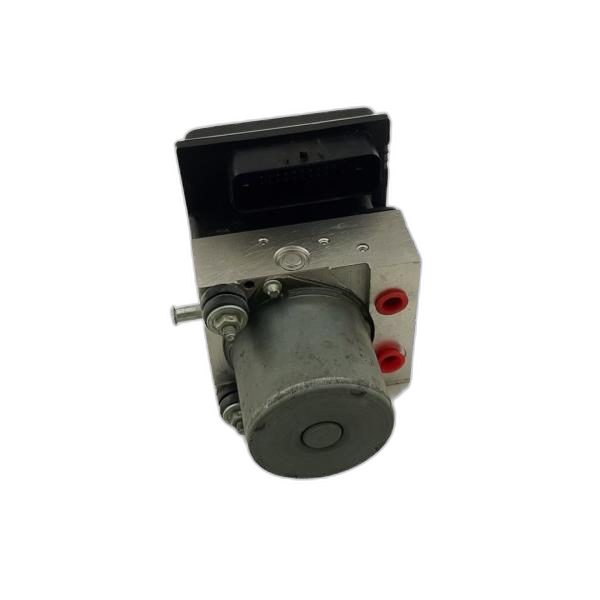
Aftermarket price range: N/A - ABS Control Module
(OEM #23383119)— If the module itself has failed internally, it will need to be replaced and programmed. This is a less common but possible cause.
Trusted brands: ACDelco
OEM price range: $430-$780
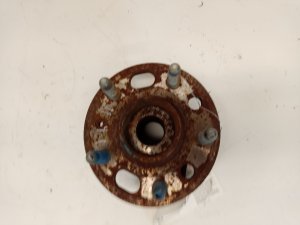
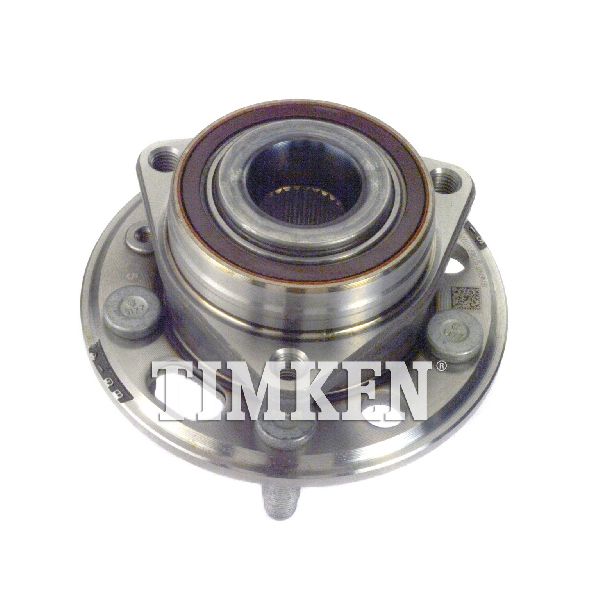
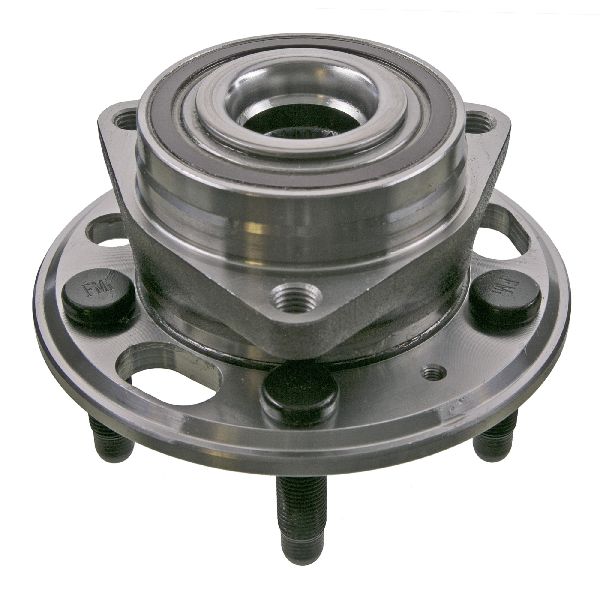
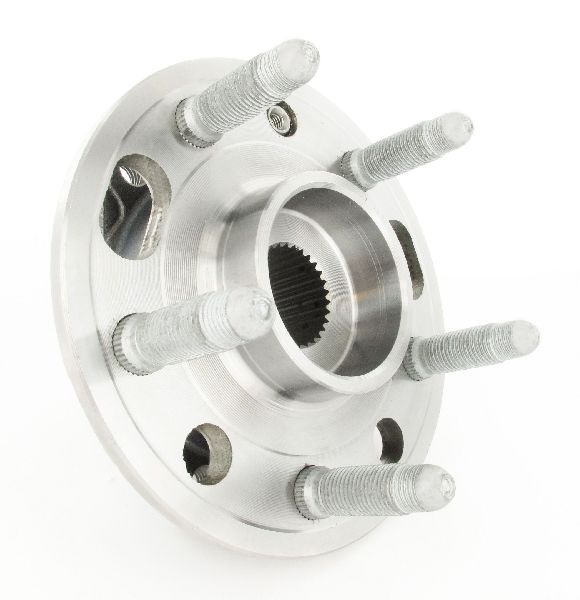
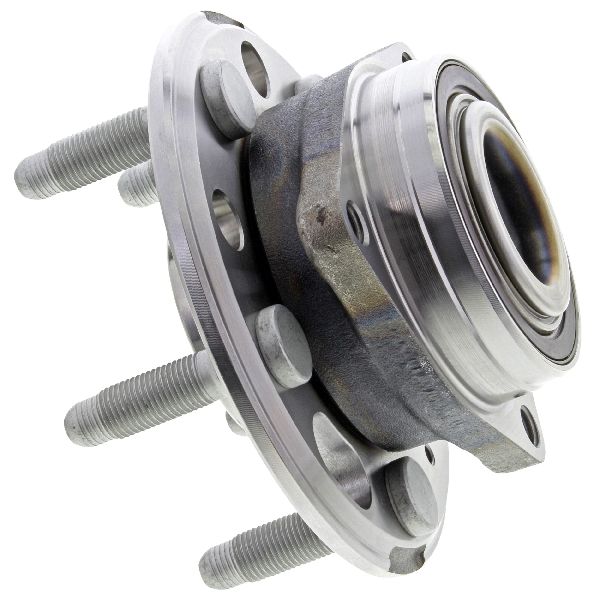
Aftermarket price range: $200-$500 (Remanufactured) - Wheel Bearing and Hub Assembly — The magnetic encoder ring for the wheel speed sensor is integrated into the hub. Debris on this ring or a failure of the ring itself requires replacing the entire assembly. 🎬 Watch: Diagnosing wheel bearing codes and performing the replacement.
Trusted brands: ACDelco, Timken, MOOG
OEM price range: $200-$350
Aftermarket price range: $100-$200
Related Codes That Often Appear With This One
- C056D — This code, for 'Electronic Control Unit Hardware,' is often set in the PSCM along with U0415 due to the same software anomaly, as noted in TSB 19-NA-182.
- C0544 — This code, for 'Steering Wheel Angle Sensor,' is often set with U0415 (specifically with fault byte 75) when an alignment procedure is performed incorrectly, as noted in TSB PI0800A.
- C0035 - C0050 — These are wheel speed sensor circuit codes. Their presence in the ABS module strongly points to a problem with a specific wheel hub assembly's magnetic encoder ring or its wiring, which is the root cause of the invalid data.
Technical Service Bulletins (TSBs) & Recalls
- 19-NA-182: Provides repair information for 'Steering Assist Is Reduced' message with DTCs C056D or U0415 by reprogramming the PSCM.
- PI0800A: Details the special procedure to re-flash the PSCM when DTCs C0544 and U0415 are set and will not clear after an incorrect alignment procedure.
- 20-NA-113: Explains a PSCM calibration error that keeps DTCs 'current' instead of moving to 'history', requiring a PSCM re-flash to correct.
- PIC5428: Provides a diagnostic aid for cleaning metallic debris from wheel speed sensor magnetic encoder rings when DTCs C0035-C0050 are present.
- PI1294B: Recommends inspecting the G111 ground and a specific high-amperage fuse for connection issues when power steering faults occur.
Platform-Specific Known Issues
- TSB #19-NA-182 directly addresses the 'Steering Assist Is Reduced' message accompanied by codes U0415 and C056D, identifying a software anomaly as the cause and reprogramming the PSCM as the fix.
- TSB #PI0800A identifies that an incorrectly performed steering angle sensor alignment can cause U0415 and C0544 to become permanently set, requiring a special reprogramming procedure to resolve.
- TSB #20-NA-113 explains a PSCM calibration error that prevents DTCs like U0415 from transitioning to 'history' after the root cause (like a dead battery) is fixed, causing the warning message to persist at every startup until the PSCM is reprogrammed.
Mechanic-Grade Diagnostic Values
- High-Speed GMLAN Bus Resistance — expected: 60 Ohms (+/- 5 Ohms). Failure: A reading of 120 Ohms indicates an open in the circuit or a missing terminating resistor (one of the modules). A reading significantly less than 60 Ohms indicates the CAN High and CAN Low wires are shorted together.
- High-Speed GMLAN Bus Voltage (Key On) — expected: CAN High (Pin 6 at DLC): ~2.6V. CAN Low (Pin 14 at DLC): ~2.4V.. Failure: Voltages that are the same may indicate a short between the two lines. 0V on both may indicate a short to ground.
- Power Steering Control Module (PSCM) Ground Resistance — expected: < 5 mΩ. Failure: High resistance on the ground circuit can cause intermittent module operation and communication faults.
Hidden / Shadow Codes Worth Checking
- U0415 with Symptom Byte 71: Indicates 'Invalid Data Received from ECM/PCM'. On some GM platforms, this points specifically to an issue where the PSCM is getting bad data from the Engine Control Module, which can be triggered by an unrelated engine sensor fault, like a faulty coolant temperature sensor setting a P0128 code. (see via GM GDS2 or a professional scan tool capable of reading manufacturer-specific symptom bytes.)
- U0415 with Symptom Byte 75: Indicates 'Incorrect Installation Learned'. This byte is specifically called out in TSB PI0800A and occurs when a steering angle sensor alignment/learn procedure is performed incorrectly, causing persistent codes that cannot be cleared normally. (see via GM GDS2 or a professional scan tool capable of reading manufacturer-specific symptom bytes.)
Scan Tool Commands That Help
- GDS2 (GM Global Diagnostic System 2): Power Steering Control Module > Programming — Used with GM's SPS (Service Programming System) to flash the PSCM with updated software to correct known glitches as described in TSBs #19-NA-182 and #20-NA-113.
- GDS2 (GM Global Diagnostic System 2): Power Steering Control Module > Setup — This function must be run after programming or replacing the PSCM to configure it to the specific vehicle and learn sensor values.
- GDS2 (GM Global Diagnostic System 2): Power Steering Control Module > Output Controls — Allows a technician to command the variable-effort steering solenoid valve to increase or decrease voltage, helping to diagnose if the electrical part of the rack and pinion is responding correctly to commands from the module.
Wiring & Ground Locations
- G111 — On the 2013-2017 Regal, this ground is located on the engine itself, on the ignition control module bracket at the right front of the engine. Note: This location differs from older Regal models.. TSB PI1294B identifies this as a critical ground for the power steering system. A loose or corroded G111 can cause low voltage or signal interference to the PSCM, triggering communication codes like U0415.
- PSCM Connector X1 — On the Power Steering Control Module, which is part of the electric power steering assist motor on the steering rack.. This 12-pin connector contains the High Speed GMLAN serial data lines (Pins 3, 4, 5, 6), the serial data communication enable circuit (Pin 2), and battery positive voltage (Pin 1). A fault at any of these pins can cause code U0415.
- Main Engine Ground — The main, large-gauge negative battery cable bolts to the lower center front of the engine block. A smaller ground wire connects from the negative terminal to the chassis/body near the battery.. The entire electrical system, including the sensitive control modules for steering and brakes, relies on a solid engine and body ground. A poor connection here can cause widespread, intermittent electronic issues.
Real Owner Repair Stories
- YouTube channel 'Flat Rate Mechanic' (GM Vehicle (specific model not a Regal, but demonstrates a known cross-platform issue)) — Steering Assist Reduced message, check engine light.
❌ Tried (didn't work) Initial diagnosis focused on the power steering system itself.
✅ What actually fixed it The root cause was a P0128 code (Engine Coolant Below Regulated Temperature) from a faulty thermostat. The PSCM uses coolant temperature data to adjust steering effort for grease viscosity. When the ECM sent invalid temperature data (due to the P0128 fault), the PSCM set a U0415 with symptom byte 71 ('Invalid Data from ECM') and disabled assist. Replacing the thermostat resolved both the P0128 and the U0415 codes.
OEM Part Supersession History
12635717→24267940— This is a Generator Control Module (GCM) for 2013 Regal models with eAssist. Part was updated/superseded.
Heads up: Using the wrong GCM version can cause communication issues on the CAN bus.
Model Year Variations Within This Range
- 2014-2017: The 2014 model year introduced a significant facelift. The standard engine became the 2.0L Turbo (259 hp), replacing the previous standard eAssist powertrain, which became optional. All-Wheel Drive (AWD) also became an option, which uses a different electric power steering system ('Power, variable assist, electric'). These changes mean that diagnosing U0415 on a 2014+ model requires correctly identifying whether it is FWD, AWD, or eAssist, as the modules and wiring may differ.
Helpful Videos
Used OEM Parts in Stock



New Aftermarket Parts Available


The information in this article is provided for general reference and educational purposes only. Vehicle specifications, procedures, and part compatibility can vary by production date, trim level, and region. Always consult your vehicle's factory service manual and verify part numbers before purchasing or performing repairs. Safety-critical components such as airbags, seat belts, and braking systems should be installed by a qualified professional.
- Buick REGAL:
- 🎬 Helpful Videos
- 🛍️ Shop This Part
- What's Unique About the 2013-2017 Buick REGAL
- Diagnostic Flowchart
- Symptoms You May Notice
- Most Likely Causes
- Rare But Worth Checking
- Diagnosis Steps
- Parts You'll Likely Need
- Related Codes That Often Appear With This One
- Technical Service Bulletins (TSBs) & Recalls
- Platform-Specific Known Issues
- Mechanic-Grade Diagnostic Values
- Hidden / Shadow Codes Worth Checking
- Scan Tool Commands That Help
- Wiring & Ground Locations
- Real Owner Repair Stories
- OEM Part Supersession History
- Model Year Variations Within This Range
- 🎟️ Get 5% Off