

U0412 on 2019 Chrysler Pacifica Hybrid: Causes and Fixes for Invalid BECM Data
On a 2019 Pacifica Hybrid, code U0412 indicates invalid data from the Battery Energy Control Module (BECM). This is most often a software issue fixed by a multi-module dealer update per TSBs. If not software, it could be a weak 12V battery, a faulty BECM, or a wiring problem. The code is often intermittent and can be a precursor to a full high-voltage battery replacement if seen with code P0BBE. This is a complex, high-voltage system repair best left to professionals.
- U0412 on a 2019 Pacifica Hybrid is a network code specifically pointing to a problem with data from the Battery Energy Control Module (BECM).
- The most common and first recommended fix is to have a Chrysler dealer check for and apply any available software updates for the hybrid control modules.
- This is not a DIY repair. It involves the high-voltage system and requires proprietary diagnostic and programming tools.
- The issue can affect vehicle features like cruise control and charging, so it should be addressed promptly.
- Note if other codes, especially P0BBE, are present, as this could indicate a more serious issue with the high-voltage battery pack itself.
What's Unique About the 2019-2019 Chrysler PACIFICA

The Chrysler Pacifica Hybrid has a sophisticated electrical architecture managing its plug-in hybrid system. Code U0412 is specific to this complex network and points directly to a data integrity problem with the high-voltage battery's control unit. Unlike a simple sensor code, this network fault often stems from software glitches unique to the platform, as evidenced by multiple Technical Service Bulletins (TSBs) requiring coordinated reprogramming of the HCP, AHCP, PCM, ABS, and EBBM modules. Owner experiences frequently link this code to recall-related software updates. Forum discussions reveal that while U0412 by itself is a frustrating issue with no single fix, its appearance alongside code P0BBE often results in a complete high-voltage battery replacement under warranty, a process that can leave owners without their vehicle for over a month.
Diagnostic Flowchart

Tap your situation to follow the diagnostic path that matches what you're seeing on this vehicle.
Symptoms You May Notice

- Check Engine Light (Malfunction Indicator Lamp) is on.
- "Service Engine" or "Service Hybrid System" message on the dash.
- Problems with the Adaptive Cruise Control (ACC). [ODI #11695390]
- Vehicle may not charge when plugged in, or may not charge beyond 98%.
- The code may appear intermittently and clear itself after several drive cycles. [ODI #11676038, 1, 12]
- Vehicle may fail a state emissions (smog) test due to a permanent fault code that won't clear.
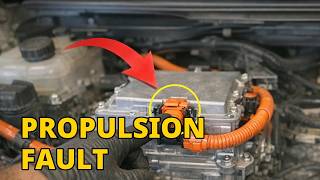
- A bump or shudder may be felt when the gasoline engine starts. 🎬 See why your Pacifica Hybrid might suddenly lose propulsion power.
- Vehicle may not start in extremely cold temperatures (-30°C / -22°F).
- Replacing other control modules (like the PCM or TCM) without confirming the invalid data is originating from the BECM.
- Performing only a single module software update instead of the required multi-module flash described in TSBs.
- Replacing the entire high-voltage battery pack for a U0412 code alone, when the issue might be resolved with a comprehensive software update or a new 12V battery.
Most Likely Causes

- Software requires an update 🔴 High Probability Chrysler has issued multiple TSBs and RRTs (Rapid Response Transmittals) to fix communication bugs between the various hybrid control modules. TSB 08-013-21 specifically notes that a coordinated software update is required to resolve this and other codes that prevent the vehicle from passing state emissions tests.
How to confirm: A Chrysler dealer must check the vehicle's VIN against their service database (DealerCONNECT) for open campaigns or required software flashes for the HCP, AHCP, PCM, ABS, and EBBM.
Typical fix: Reprogramming the Hybrid Control Processor (HCP), Auxiliary Hybrid Control Processor (AHCP), Powertrain Control Module (PCM), Anti-Lock Brake System (ABS), and Electronic Brake Booster Module (EBBM) with the latest available software.
Est. part cost: $0-$450 - Failing Battery Energy Control Module (BECM) 🟡 Medium Probability The BECM can fail internally, causing it to send corrupted data over the CAN bus. This module is integrated into the high-voltage battery pack and is not typically serviced separately.
How to confirm: After ruling out software and wiring, a technician can use a bidirectional scan tool to monitor live data from the BECM. Inconsistent or missing data points to an internal module fault. This diagnosis is often made in conjunction with other codes like P0BBE.
Typical fix: Replacement of the entire high-voltage battery pack assembly, which contains the BECM. This is a major repair that requires programming the new module to the vehicle.
Est. part cost: $700-$15000 - Low 12V Battery Voltage Medium-low Probability Like many modern vehicles, low voltage from the conventional 12V auxiliary battery can cause unpredictable communication errors between various electronic modules. In Pacificas, a failing 12V battery has been shown to cause a cascade of issues, including shifter errors and disabled start/stop systems, which are all symptoms of network instability.
How to confirm: Test the health and state of charge of the 12V auxiliary battery, ensuring it is disconnected from the vehicle for an accurate reading. Voltage should be above 12.4V with the vehicle off.
Typical fix: Recharge or replace the 12V auxiliary battery.
Est. part cost: $200-$571 - Wiring or Connector Issue ⚪ Low Probability Wiring harnesses, especially those under the vehicle, can be subject to moisture and corrosion, leading to high resistance and distorted signals.
How to confirm: Visually inspect the wiring and connectors going to the high-voltage battery and BECM. A multimeter can be used to check for continuity and resistance in the CAN bus wiring.
Typical fix: Repairing the damaged wire or cleaning/replacing the corroded connector.
Est. part cost: $10-$200
Diagnosis Steps
- Connect a professional, dealer-level scan tool (like wiTECH) to read codes from ALL vehicle modules.
- Check and verify the health of the 12V auxiliary battery. A weak 12V battery is a known cause of various electronic faults. Charge or replace if necessary.
- Using the VIN, check the DealerCONNECT service portal for any open recalls or Technical Service Bulletins (TSBs), specifically TSB #08-114-22 and RRT 21-017 (TSB 08-013-21).
- If a software update is available, perform the flash on ALL required modules as specified by the TSB (HCP, AHCP, PCM, ABS, EBBM). This is the most common solution and must be done first.
- Clear all DTCs after reprogramming and perform a drive cycle to see if the code returns.
- If the code returns, inspect the wiring harness and connectors to the high-voltage battery pack and BECM for any signs of corrosion, moisture, or physical damage.
- Use the scan tool to monitor the live data stream from the BECM. Look for erratic, missing, or illogical values that would confirm it is sending bad data.
- If software is current, the 12V battery is healthy, and wiring is intact, the issue is likely internal to the high-voltage battery pack (BECM or cell failure). Consult with the dealer's STAR (technical assistance) team, as a full HV battery replacement is the probable next step.
Parts You'll Likely Need
- High-Voltage Battery Pack Assembly
(OEM #68429967AD, 68429967AB, 68394027AG, 68429967AE)— The BECM is integrated into the battery pack. If software and wiring checks fail, and especially if code P0BBE is present, the entire HV battery assembly is typically replaced as a single unit.
Trusted brands: Mopar (OEM)
OEM price range: $15000-$17000
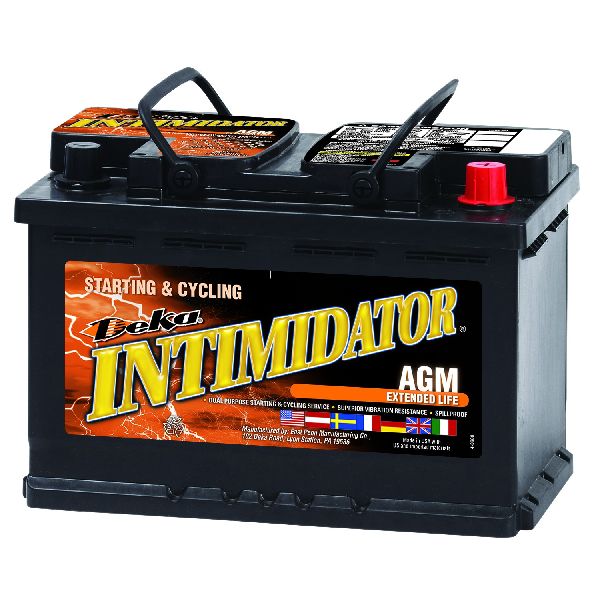
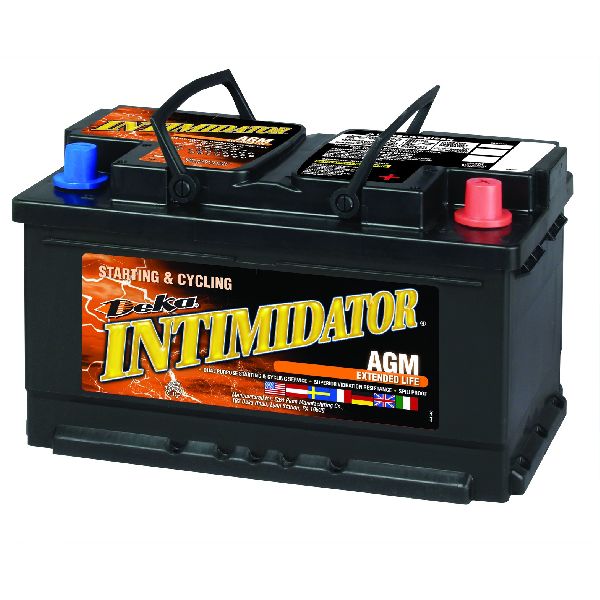
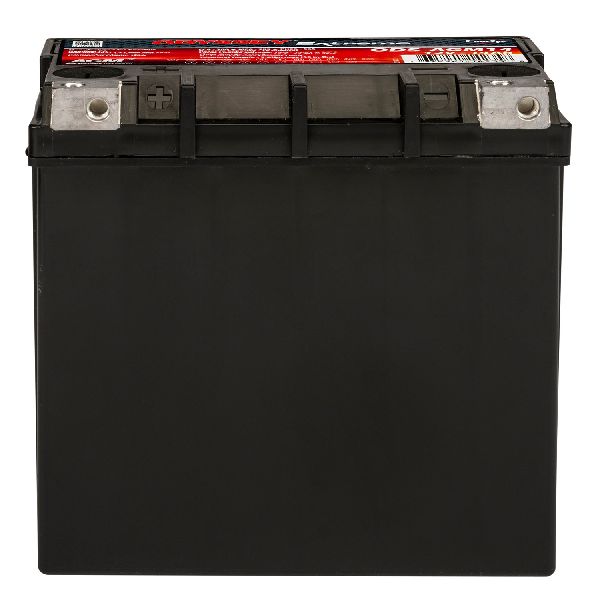
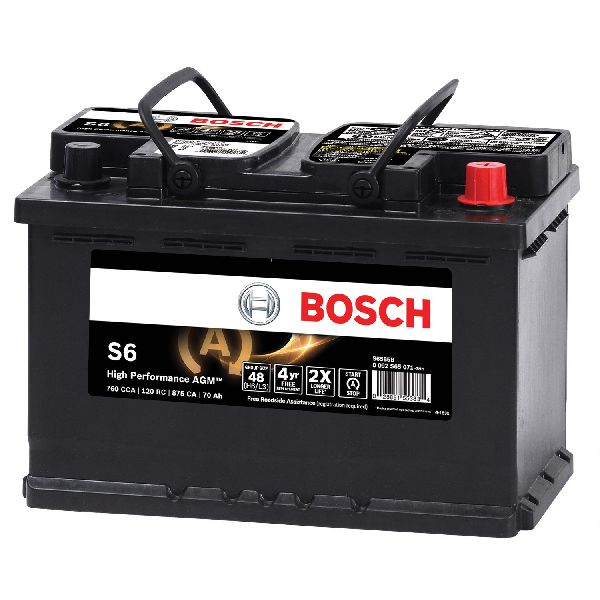
Aftermarket price range: Not Available - 12V Auxiliary Battery — A weak or failing 12V battery can cause a wide range of communication faults on the CAN network, including U0412. This is a common and relatively inexpensive part to rule out first.
Trusted brands: Mopar (OEM), Duralast, DieHard
OEM price range: $300-$571
Aftermarket price range: $200-$400
Related Codes That Often Appear With This One
- U0111-00 — This code means 'Lost Communication With Battery Energy Control Module'. It often appears with U0412 because if communication is lost entirely, any data received prior may be flagged as invalid. It is explicitly listed in TSBs 08-114-22 and 08-013-21. [TSB #08-114-22, 3]
- P0BBE — 'Hybrid Battery Pack Voltage Variation'. This code is frequently discussed in owner forums alongside U0412. Its presence strongly increases the likelihood that the entire high-voltage battery pack has failed and will require replacement.
- P1625-00 — 'Park Pawl System Failure'. This code was listed alongside U0412 in TSB 08-114-22 and TSB 08-013-21, indicating that communication errors from the battery system can impact the transmission and its related safety mechanisms. [TSB #08-114-22, 3]
- P2797-00 — 'Auxiliary Transmission Fluid Pump Performance'. Also listed in TSB 08-013-21, suggesting the BECM data issue can affect the performance of the transmission's auxiliary pump.
Technical Service Bulletins (TSBs) & Recalls
- 08-114-22: Lists U0412-00 'Invalid Data Received From Battery Energy Control Module-A' as a possible DTC related to the electrical system. [TSB #08-114-22]
- 08-013-21 (RRT 21-017): An earlier and more detailed bulletin that addresses U0412-00 via a software update for the Hybrid Control Processor (HCP), Auxiliary Hybrid Control Processor (AHCP), PCM, ABS, and EBBM to fix smog check failures and other symptoms.
- 18-004-21 (RRT 21-014): A related bulletin for the Powertrain Control Module (PCM) that also requires updates to the HCP, AHCP, ABS, and EBBM to be effective, highlighting the interconnected nature of these module flashes.
Platform-Specific Known Issues
- A known issue documented in TSB #08-013-21 (RRT 21-017) involves a software problem that can cause U0412 and other codes to set, preventing the vehicle from passing a state emissions test. The fix is a comprehensive software update to five different control modules.
- Owner complaints to the NHTSA confirm this code can appear intermittently and affect the functionality of the Adaptive Cruise Control system. [ODI #11695390]
- Forum discussions among ow
Mechanic-Grade Diagnostic Values
- CAN Bus Network Resistance — expected: Approximately 60 Ohms. Failure: A reading of 120 Ohms indicates an open circuit in one of the two terminating resistors. A reading significantly lower than 60 Ohms indicates a short between the CAN High and CAN Low wires. An open circuit (O.L.) indicates a break in the wiring between the test point and the main bus.
- CAN Bus Voltage (Active) — expected: CAN High (Pin 6 to ground) should be ~2.6V. CAN Low (Pin 14 to ground) should be ~2.4V.. Failure: Voltages that are stuck high, stuck low, or do not mirror each other indicate a bus fault, short to power, or short to ground.
- System Voltage During Module Flashing — expected: 13.2 Volts to 13.5 Volts. Failure: Voltage dropping below 13.2V or climbing above 13.5V during a software update can cause the flash to fail and potentially corrupt the module.
Scan Tool Commands That Help
- wiTECH or equivalent dealer-level scan tool: BECM-A Bidirectional Test — This function is used after verifying software is up to date and wiring is intact. It actively commands the BECM to perform self-tests. A failure of the bidirectional test strongly indicates an internal module fault, condemning the BECM.
Wiring & Ground Locations
- High-Voltage Battery / BECM Assembly — Under the vehicle floor, located between the driver and front passenger seats.. This is the physical location of the Battery Energy Control Module (BECM), which is the source of the invalid data. Access is required for connector inspection or HV battery replacement.
- Manual Service Disconnect (MSD) — On the floor between the front two seats, under a small access cover in the carpet.. This disconnect must be removed to de-energize the high-voltage system before any service is performed on the HV battery, its connectors, or the BECM. Technicians must wait at least 5 minutes after removal for the system to fully discharge.
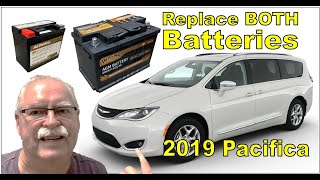
- 12V Main and Auxiliary Batteries — Under the hood in the engine compartment, located beneath a large plastic air duct on the driver's side.. A failing 12V battery is a common cause of network communication codes. This is their physical location for testing or replacement. The non-hybrid has one large battery, while the hybrid with engine start/stop has a large main and a smaller auxiliary battery.
- Secure Gateway Module (SGW) — Mounted behind the center stack, behind the heater control panel and shifter area.. The SGW controls access to the vehicle's diagnostic networks. Technicians need to connect to it (or use a bypass cable) to perform advanced diagnostics and reprogramming with aftermarket tools, though the dealer wiTECH tool communicates through it.
Real Owner Repair Stories
- Reddit user in r/pacificahybrid (2018 Chrysler Pacifica Hybrid with 72,000 miles) — Check engine light with only code U0412 present.
❌ Tried (didn't work) The code would come and go on its own after a few drive cycles, making it difficult to diagnose.
✅ What actually fixed it The vehicle was at the dealership for two weeks while they consulted with the manufacturer's engineering team ('STAR'). The owner was told this could lead to a warranty-covered high-voltage battery replacement. Another user confirmed that U0412 by itself has no definitive fix, but when it appears with code P0BBE, a battery replacement is the common outcome, with repair times ranging from two weeks to two months.
"I Checked Everything" — The Actual Cause
- A common pattern for code U0412 is that standard diagnostic procedures do not lead to a direct fix. Technicians will follow TSBs and perform software updates, and check the 12V battery, finding both to be 'clean'. However, the U0412 code often returns intermittently. In these cases, the actual root cause is frequently a latent internal fault within the Battery Energy Control Module (BECM) that does not yet manifest as a hard failure. The issue persists until either another, more definitive code like P0BBE appears, or the BECM fails a bidirectional test, ultimately leading to the replacement of the entire high-voltage battery pack.
When the Usual Fixes Don't Work
- While official service bulletins point to software updates as the primary fix for U0412, real-world owner experiences indicate this is often not a permanent solution. Multiple owners report the code returning weeks or months after a software flash, sometimes following a related recall service. This suggests that while the software update is a necessary first step, the code can also be an early symptom of an impending hardware failure within the high-voltage battery pack (BECM), which the software update alone cannot resolve. The intermittent nature of the code often leads to a prolonged diagnostic process until a more severe fault, like P0BBE, confirms the need for battery replacement.
Helpful Videos
Used OEM Parts in Stock

New Aftermarket Parts Available


The information in this article is provided for general reference and educational purposes only. Vehicle specifications, procedures, and part compatibility can vary by production date, trim level, and region. Always consult your vehicle's factory service manual and verify part numbers before purchasing or performing repairs. Safety-critical components such as airbags, seat belts, and braking systems should be installed by a qualified professional.
- Chrysler PACIFICA:
- 🎬 Helpful Videos
- 🛍️ Shop This Part
- What's Unique About the 2019-2019 Chrysler PACIFICA
- Diagnostic Flowchart
- Symptoms You May Notice
- Most Likely Causes
- Diagnosis Steps
- Parts You'll Likely Need
- Related Codes That Often Appear With This One
- Technical Service Bulletins (TSBs) & Recalls
- Platform-Specific Known Issues
- Mechanic-Grade Diagnostic Values
- Scan Tool Commands That Help
- Wiring & Ground Locations
- Real Owner Repair Stories
- "I Checked Everything" — The Actual Cause
- When the Usual Fixes Don't Work
- 🎟️ Get 5% Off