

U0405 on 2021 Dodge Challenger: Causes for Invalid Cruise Control Data
On a 2021 Dodge Challenger, code U0405 indicates invalid data from the cruise control module. This is typically a network communication problem, not a faulty cruise control module itself. The issue is often related to a software glitch addressed by a PCM reflash (TSB 18-011-22), a wiring fault, or a problem with a related system like the ABS/ESP module.
- U0405 on a 2021 Challenger means "Invalid Data Received From Cruise Control Module" and points to a communication network problem.
- Do not immediately assume the cruise control module is bad; the root cause is often a software bug, a wiring issue, or a fault in a related system like the ABS/ESP.
- This code is often accompanied by other 'U' codes, which strongly indicates a wider network fault. Check for TSBs before starting repairs.
- Diagnosis requires a professional scan tool to read all modules and is not a simple DIY fix.
- Common fixes include a software update, wiring repair, or replacing a component that provides data to the cruise system, such as a wheel speed sensor.
What's Unique About the 2021-2021 Dodge CHALLENGER
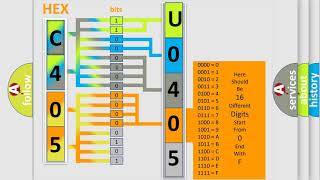
On the 2021 Dodge Challenger, the cruise control system is not a standalone feature; it's deeply integrated with the ABS, Electronic Stability Program (ESP), and transmission controls. A manufacturer Technical Service Bulletin (TSB 18-011-22) for the 2021 Challenger with the 3.6L engine specifically addresses U0405 appearing alongside a host of other communication codes, pointing towards a broader network issue that can be resolved with a PCM software update. 🎬 Watch: A quick explanation of the U0405 fault code. This interconnectedness means a fault in a seemingly unrelated system, like a wheel speed sensor feeding bad data to the ABS module, can trigger this specific cruise control data code.
Diagnostic Flowchart
Tap your situation to follow the diagnostic path that matches what you're seeing on this vehicle.
Symptoms You May Notice
- Cruise control cannot be engaged or set.
- Cruise control disengages unexpectedly.
- Check Engine Light is illuminated.
- Warning light for the Electronic Stability Control (ESC) or ABS may be on.
- Cruise control indicator lamp may stay on continuously.
- "ACC Unavailable" or similar message on the instrument cluster for vehicles with Adaptive Cruise Control.
- Replacing the cruise control switches on the steering wheel.
- Replacing the Cruise Control Module without first diagnosing the CAN network and checking for software updates per TSB #18-011-22.
Most Likely Causes
- CAN Bus Network Fault 🔴 High Probability Modern vehicles have complex wiring harnesses. A short, open, or high resistance in the CAN bus wiring can corrupt data signals between modules. This can be caused by chafing, moisture intrusion at a connector, or pin damage.
How to confirm: A technician will use a multimeter to test the CAN high and low circuits for proper resistance (should be ~60 ohms between pins 6 and 14 at the OBD-II port with the battery disconnected) and check for shorts to power or ground. An oscilloscope may be used for advanced signal integrity analysis.
Typical fix: Repairing the damaged section of the wiring harness or cleaning/repairing a corroded connector.
Est. part cost: $5-$50 - Software Glitch Requiring a Module Update 🟡 Medium Probability Manufacturers often release software updates to fix communication bugs. TSB #18-011-22 specifically applies to 2021 Challengers with the 3.6L engine and involves reprogramming the PCM to fix a condition where U0405 and many other U-codes can be set.
How to confirm: A dealership or qualified shop must check for available software updates for the Powertrain Control Module (PCM) using the vehicle's VIN. The presence of TSB #18-011-22 makes this a primary diagnostic step.
Typical fix: Flashing the PCM with the latest manufacturer software. This must be done with a battery charger connected to ensure stable voltage.
Est. part cost: $0 - Faulty ABS or ESP Module 🟡 Medium Probability The cruise control system relies on vehicle speed data, which originates from the wheel speed sensors and is processed by the ABS/ESP module. A fault in this module can send invalid data across the network, triggering codes in other modules.
How to confirm: A scan tool will be used to check for codes specifically in the ABS/ESP module. TSB #18-011-22 lists code U0416 (Implausible Data Received From ESP) alongside U0405, making this a strong possibility.
Typical fix: Diagnosing the ABS/ESP system, which may lead to replacing a wheel speed sensor, the module itself, or addressing a wiring issue to the module.
Est. part cost: $150-$700 - Failing Cruise Control Module (CCM) ⚪ Low Probability While the module that sends the data can fail, it's less common than a wiring or software issue. On vehicles with Adaptive Cruise Control (ACC), this is the ACC module. Internal failure can cause it to send corrupt data.
How to confirm: After all other possibilities (wiring, software, related modules) have been ruled out, the CCM is tested directly. This is usually the last step in diagnosis.
Typical fix: Replacement and possibly programming of the Cruise Control Module.
Est. part cost: $200-$500
Rare But Worth Checking
- Low Battery Voltage or Poor Ground: Weak batteries or corroded ground connections can cause a wide range of unpredictable electronic issues and communication codes across the entire vehicle. It's a simple and important check before diving into complex diagnostics.
- Faulty Clockspring: The clockspring is a rotary electrical connector in the steering column that allows the steering wheel to turn while maintaining a connection for the airbag and steering wheel-mounted controls, including cruise control buttons. A failure in the clockspring can interrupt the signals from the cruise control switches, which could potentially be misinterpreted as a module data fault by the network.
Diagnosis Steps
- Perform a full vehicle scan with a professional-grade tool (like wiTECH) to capture all codes from all modules, not just the PCM.
- Check for any Technical Service Bulletins (TSBs), especially #18-011-22 for 3.6L models, that relate to the stored codes.
- Verify battery voltage is stable (above 13.2V when running diagnostics/flashing) and check the condition of the main power and ground connections.
- With the battery disconnected, check the CAN bus terminating resistance. It should measure approximately 60 Ohms between Pin 6 (CAN-H) and Pin 14 (CAN-L) of the OBD-II diagnostic connector. A reading of 120 Ohms suggests a break in the circuit or a faulty terminating resistor in a module.
- Inspect the wiring harness and connectors for the Cruise Control Module, ABS/ESP module, and PCM for any visible signs of damage, corrosion, or looseness.
- If TSB #18-011-22 applies, perform the PCM reflash procedure as the primary fix.
- Use the scan tool to monitor live data from the Cruise Control Module and compare it with data from related modules (like wheel speed sensors) to identify the implausible signal.
- If wiring and software are confirmed to be good, follow diagnostic procedures for the module identified as the source of the bad data (e.g., the ABS/ESP module).
- Only consider replacing the Cruise Control Module after all other potential causes have been definitively ruled out.
Parts You'll Likely Need
- ABS/ESP Control Module
(OEM #68258644AA, 68399772AF (or superseding 68399772AG))— This module processes wheel speed and stability data crucial for cruise control operation. TSB evidence suggests it's a common source of the network fault that triggers U0405.
Trusted brands: Mopar, Bosch
OEM price range: $250-$700
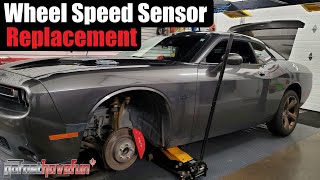
Aftermarket price range: $300-$600 - Wheel Speed Sensor — A faulty wheel speed sensor can feed bad data to the ABS/ESP module, which then sends invalid data to the rest of the car, causing this code.
Trusted brands: Mopar, Standard Motor Products, Delphi
OEM price range: $80-$150
Aftermarket price range: $40-$90
Related Codes That Often Appear With This One
- U0416 — This code for 'Implausible Data Received From ESP' is cited in the same TSB and points to the stability control system as a likely source of the network issue.
- U0402 — 'Implausible Data Received From TCM.' Also listed in TSB #18-011-22, indicating a widespread communication problem involving the transmission module.
- U0418 — 'Implausible Data Received From Brake System Control Module.' Another code from TSB #18-011-22, reinforcing the link between the cruise control fault and the brake/stability systems.
- U0140 — 'Lost Communication With Body Control Module.' Also listed in TSB #18-011-22, suggesting a significant network-wide communication failure that a PCM reflash aims to correct.
Technical Service Bulletins (TSBs) & Recalls
- Bulletin #18-011-22: Specifically for 2021 Challengers with the 3.6L engine built on or before Oct 14, 2021. It addresses a Malfunction Indicator Lamp (MIL) with numerous communication DTCs, including U0405. The fix is to reprogram the PCM.
Platform-Specific Known Issues
- TSB for PCM Software Update (3.6L Engine): A Technical Service Bulletin (#18-011-22) issued for the 2021 Dodge Challenger with the 3.6L engine notes that U0405 may be stored along with a large group of other communication codes (U0101, U0140, U0402, U0416, U0418, etc.). The prescribed fix is to reprogram the Powertrain Control Module (PCM) with the latest available software, indicating a known logic flaw rather than a hardware failure.
Mechanic-Grade Diagnostic Values
- CAN C Bus Resistance — expected: ~60 Ω (Ohms) between Pin 6 (CAN-H) and Pin 14 (CAN-L) at the OBD-II port with battery disconnected.. Failure: A reading of ~120 Ω indicates an open in the circuit or a missing terminating resistor. A reading near 0 Ω indicates a short between the CAN High and Low wires.
- CAN C High Voltage (Key On, Engine Off) — expected: ~2.6 V (Volts) when measured with a multimeter.. Failure: Significant deviation from 2.5-3.5V, or voltage above 6.0V, indicates a short to power or ground.
- CAN C Low Voltage (Key On, Engine Off) — expected: ~2.4 V (Volts) when measured with a multimeter.. Failure: Significant deviation from 1.5-2.5V indicates a short to power or ground.
- Voltage Drop at Ground Point — expected: < 0.4 V (Volts) between the negative battery terminal and the component's ground point with the engine running.. Failure: A voltage drop of 0.4V or more indicates high resistance in the ground circuit, which can cause module communication errors.
Hidden / Shadow Codes Worth Checking
- Symptom Byte 0x08: This Fault Type Byte (FTB), often seen on advanced scan tools, indicates a 'Bus Signal / Message Failure'. It specifies that the U0405 code is not due to a simple electrical short or open, but rather a problem with the content or timing of the data message itself, reinforcing the 'Invalid Data' definition. (see via A professional scan tool like wiTECH that can display full DTC information including the symptom byte/FTB.)
Scan Tool Commands That Help
- wiTECH 2.0: View Topology / Network Map — This is the first step to visualize the entire vehicle network. It shows which modules are communicating, which have DTCs, and which are offline. For U0405, it helps identify if other modules on the same CAN C bus (e.g., ABS, TCM) also have faults.
- wiTECH 2.0: Bidirectional Controls — After checking for codes, a technician can use bidirectional controls to command the cruise control system to perform actions (like 'Set') while monitoring live data to see if the module responds and if other modules receive the command. This helps isolate whether the CCM is sending data at all.
- wiTECH 2.0: Restore Vehicle Configuration — If a module has been replaced or is suspected of having corrupt configuration data, this function can be used to re-align the module with the vehicle's factory settings. This can sometimes resolve communication mismatches.
Wiring & Ground Locations
- STAR Connector (CAN C Hub) — Located behind a panel underneath the passenger side glove box. It serves as a central hub where the CAN bus wires from multiple modules connect.. This is a critical diagnostic point. If the entire CAN C network is down, a technician can disconnect modules one by one from this connector to isolate the faulty module or wiring branch that is bringing the network down. The cruise control module is on this network.
- Main Body Grounds — There are multiple factory ground points bolted to the chassis throughout the vehicle, often found behind kick panels or in the engine bay near the strut towers. They look like bolts with multiple wires attached.. A corroded or loose ground connection for the Cruise Control Module, ABS module, or PCM can cause a voltage drop and lead to corrupt data and communication codes like U0405. A voltage drop test is required to verify ground integrity.
- Adaptive Cruise Control (ACC) Module — For vehicles equipped with ACC, the module/sensor is typically located in the front lower grille or behind the front bumper, offset to one side.. This module is exposed to the elements and minor front-end impacts. Damage to the module, its connector, or even dirt/ice blocking its view can cause it to send invalid data, triggering U0405.
Real Owner Repair Stories
- YouTube channel 'Rob D. Mechanic' (Ram Truck (similar Chrysler CAN architecture)) — Intermittent loss of communication with multiple modules on the same network after driving for a specific distance (33 miles).
❌ Tried (didn't work) Checking wiring harnesses for chafing., Testing terminating resistance of the network (read 60 ohms, appearing normal)., Individually disconnecting modules to find the culprit.
✅ What actually fixed it The STAR connector itself was faulty. A capacitor inside the connector would go out of spec after the network became busy during driving, causing the entire network to crash. Replacing the STAR connector resolved the issue.
Model Year Variations Within This Range
- 2021 models built on or before Oct 14, 2021: These vehicles with the 3.6L engine are specifically called out in TSB #18-011-22. The fix is a PCM software update, suggesting that vehicles built after this date likely came from the factory with the updated software, making a software glitch a less likely cause for them.
Helpful Videos
![How To Test CAN BUS With A Multimeter [CAN Bus Resistance Check] Mechanic Mindset](https://img.youtube.com/vi/JPE42HSJxAk/mqdefault.jpg)

Used OEM Parts in Stock

New Aftermarket Parts Available


The information in this article is provided for general reference and educational purposes only. Vehicle specifications, procedures, and part compatibility can vary by production date, trim level, and region. Always consult your vehicle's factory service manual and verify part numbers before purchasing or performing repairs. Safety-critical components such as airbags, seat belts, and braking systems should be installed by a qualified professional.
- Dodge CHALLENGER:
- 🎬 Helpful Videos
- 🛍️ Shop This Part
- What's Unique About the 2021-2021 Dodge CHALLENGER
- Diagnostic Flowchart
- Symptoms You May Notice
- Most Likely Causes
- Rare But Worth Checking
- Diagnosis Steps
- Parts You'll Likely Need
- Related Codes That Often Appear With This One
- Technical Service Bulletins (TSBs) & Recalls
- Platform-Specific Known Issues
- Mechanic-Grade Diagnostic Values
- Hidden / Shadow Codes Worth Checking
- Scan Tool Commands That Help
- Wiring & Ground Locations
- Real Owner Repair Stories
- Model Year Variations Within This Range
- 🎟️ Get 5% Off