

OBD-II Code U0405: Invalid Data Received From Cruise Control Module
The Ultimate 2026 Guide to Diagnosing and Fixing U0405
- Code U0405 disables your cruise control because the Powertrain Control Module (PCM) received corrupt data from the Cruise Control Module (CCM).
- The vehicle remains mechanically safe to drive, but you immediately lose critical safety features like Adaptive Cruise Control and Pre-Collision Assist.
- Check for Technical Service Bulletins (TSBs) and inspect the front bumper radar sensor for physical damage before spending $800+ on a new module.
- Replacing an Adaptive Cruise Control module requires professional ADAS calibration, adding $250 to $500 to the final repair bill.
What Does U0405 Mean?

The U0405 code triggers when the Powertrain Control Module (PCM) receives illogical or corrupt data from the Cruise Control Module (CCM) over the vehicle's CAN bus network. To prevent unsafe acceleration or braking, the main computer immediately disables the cruise control system until valid communication is restored.
Technical definition: SAE/OBD-II defines U0405 as "Invalid Data Received From Cruise Control Module (CCM)". The invalid data results from a checksum error, an out-of-range value, or a message missing its expected timeframe.
Can I Drive With U0405?
Yes, But With Caution. Yes, your car is mechanically safe to drive. However, the cruise control system and critical safety features like Adaptive Cruise Control (ACC), Pre-Collision Assist, and Forward Collision Warning are completely disabled. You must manually control your speed and braking at all times, as the vehicle will not automatically maintain following distances or detect stationary objects.
Common Causes

- Damaged Wiring or Corroded Connectors (Very Common) — The wiring harness and connectors leading to the front-mounted adaptive cruise radar are highly exposed to moisture, road salt, and debris. Corrosion or physical damage from minor front-end impacts corrupts the data signal.
- Outdated or Corrupted Module Software (Common) — Firmware within the module frequently becomes corrupted due to voltage spikes or failed over-the-air updates. Manufacturers issue Technical Service Bulletins (TSBs) with software updates to patch these specific communication bugs.
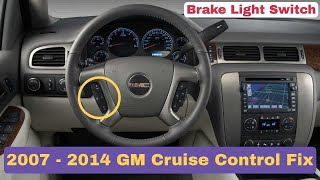
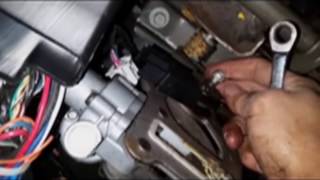
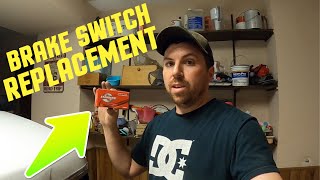
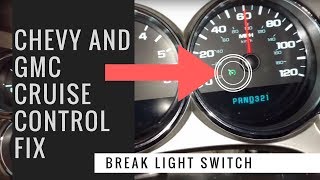
- Faulty Brake Light Switch (Common) — The cruise control system relies on the brake light switch to disengage. A faulty switch sends erratic pedal position data, which the system interprets as invalid, disabling cruise control. This is exceptionally common on 2007-2014 GM vehicles.
- Faulty Cruise Control Module (CCM/ACC) (Common) — The module itself fails internally due to moisture intrusion, cracked solder joints from vibration, or microprocessor failure.
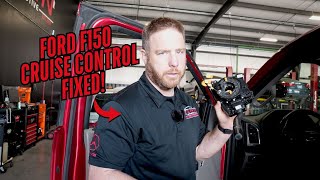
- Faulty Clock Spring or Steering Switch (Less Common) — A failing clock spring or worn steering wheel buttons interrupt or scramble the electrical signals sent when you attempt to set your cruising speed.
- Low or Unstable Battery Voltage (Less Common) — Control modules require a stable 12.0-14.8V to communicate. A weak battery or failing alternator causes voltage drops that corrupt data packets on the CAN bus.
- Missing Module Calibration (Rare) — If the ACC module was recently replaced or the vehicle was in a collision, the module requires precise physical alignment and electronic ADAS calibration. Without it, the system rejects the module's data.
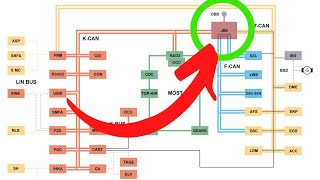
- CAN Bus Network Fault (Rare) — A short or open circuit elsewhere on the CAN bus network, or electrical interference from another failing module (like the ABS), corrupts all network communications.
Symptoms

- Cruise Control Will Not Engage — You cannot set or maintain any speed using the cruise control. The system remains completely inactive.
- Advanced Safety Systems Disabled — Features sharing the radar or camera sensor, such as Pre-Collision Braking, Forward Collision Warning, and Lane Keep Assist, shut down simultaneously.
- Warning Lights Illuminated — The instrument cluster displays a Check Engine Light, a flashing cruise control indicator, or specific messages like 'Check Adaptive Cruise Control System' or 'Front Sensor Blocked'.
- Cruise Control Engages then Immediately Disengages — The system works for a split second before a 'Cruise Control Canceled' message appears, indicating an intermittent data fault.
- Invalid Data PID in Scan Tool (scan-tool only — no driver-felt sign) — Live data from the PCM or BCM displays an 'Invalid Data' parameter originating from the CCM/ACC module.
Diagnostic Flowchart
Tap your situation to follow the diagnostic path that matches what you're seeing on this code.
Common Fixes & Costs
- Repairing Damaged Wiring or Cleaning Connectors — Parts: $10-$30, Labor: $150-$300, ~1.5 hr book time (Intermediate)
- Updating Module Software (TSB) — Parts: $0, Labor: $120-$250, ~1.0 hr book time (Professional)
- Replacing a Faulty Brake Light Switch — Parts: $15-$50, Labor: $60-$150, ~0.8 hr book time (Beginner)
- Replacing and Calibrating the Adaptive Cruise Control (ACC) Module — Parts: $500-$1,200, Labor: $300-$800 (includes programming and ADAS calibration), ~3.5 hr book time (Professional)
- Replacing a Faulty Clock Spring — Parts: $150-$400, Labor: $200-$400, ~1.8 hr book time (Intermediate)
Used vs. New Parts: Buying Guide
When a used part is worth it: For a standard (non-adaptive) cruise control module, a used part from an accident-free vehicle is cost-effective. For Adaptive Cruise Control (ACC) modules, a used part is highly risky and only makes sense if you have access to professional tools for VIN programming and calibration.
Donor-vehicle mileage cap: roughly under 60000 miles for the part to have meaningful remaining life.
Donor quality checklist:
- Match the part number exactly, including hardware/software revision numbers.
- Avoid modules from flood-damaged or front-end collision vehicles.
- Verify if the module is 'unlocked' or contains the donor car's VIN.
Decision logic:
- If The fix is a software update (TSB exists) → Pay for the dealer software flash.
- If Part is an Adaptive Cruise Control (ACC) module → Strongly favor a new OEM part. Used modules retain the original VIN and require specialized 'cloning' services, negating any savings.
- If Part is a simple, non-adaptive cruise module costing >$500 new → A used part is a reasonable gamble if the part number is an exact match.
Warranty tradeoff: Used parts typically have a 30-90 day warranty covering the part only. New OEM parts installed by a dealer carry a 1-2 year warranty on parts and labor.
Worst-case if a used part fails: $500-$1000 if a used ACC module cannot be programmed, requiring repeat labor for diagnosis and installation of a new part.
What Happens If You Wait — Timeline
- Immediate: Cruise control and associated advanced safety systems (Pre-Collision Assist, Adaptive Cruise) are immediately disabled. A warning light appears on the dash. (MPG impact: 0%% · Added cost: $0)
- 0-12 months: The driver must remain fully attentive, increasing the risk of a rear-end collision if accustomed to automatic braking. There is no direct mechanical damage to the car. (MPG impact: 0%% · Added cost: Variable cost of an at-fault accident.)
- At next state inspection: If the U0405 code triggers the Check Engine Light, the vehicle automatically fails the OBD-II portion of a state emissions or safety inspection. (MPG impact: 0%% · Added cost: $50-$200 in inspection re-test fees and potential fines.)
- Long-term (12+ months): If the root cause is an unaddressed wiring short or water intrusion, corrosion worsens, potentially destroying the costly ACC module or affecting other circuits. (MPG impact: 0%% · Added cost: $800-$2,000+ if the module fails due to prolonged exposure to the initial fault.)
Cost of Not Fixing It
- Immediate: Loss of cruise control and related advanced safety features. This increases driver workload and raises the risk of a collision. (Added cost: $0)
- Within 1 year: Guaranteed failure of state OBD-II emissions/safety inspection if the Check Engine Light is on. This prevents legal vehicle registration renewal. (Added cost: $200+ in fines and re-inspection fees.)
- Long-term: No direct mechanical damage occurs. The primary long-term cost is the ongoing safety risk from disabled driver aids. (Added cost: Variable cost of an at-fault accident.)
Diagnosis Steps
- Scan for All DTCs from All Modules
Use a professional-grade OBD-II scanner to access all vehicle modules. Record U0405 and any sub-codes (e.g., U0405-83). Note codes from the ABS or BCM, as a faulty wheel speed sensor (U0415) causes U0405 as a secondary symptom.
Tools: Advanced Bi-Directional OBD-II Scanner (Beginner) - Check for Technical Service Bulletins (TSBs)
Search manufacturer TSBs for your specific year, make, and model. Automakers frequently release software updates to patch known communication bugs that trigger U0405, saving hours of diagnostic labor.
Tools: Internet access (Beginner) - Perform a Detailed Visual Inspection
Locate the front-mounted radar sensor. Inspect the mounting bracket for impact damage. Unplug the connector and check for green/white corrosion, bent pins, or water intrusion. Trace the wiring harness for chafing or breaks.
Tools: Flashlight, inspection mirror (Intermediate) - Check Battery and Charging System Health
Confirm the battery holds at least 12.4 volts with the engine off. With the engine running, verify alternator output is stable between 13.5 and 14.5 volts. Unstable voltage corrupts CAN bus data.
Tools: Multimeter (Beginner) - Verify Power and Ground at the Module Connector
Identify the power and ground pins on the CCM connector using a wiring diagram. Perform a voltage drop test with the circuit loaded. Ground pin voltage drop must be under 0.1V; power pin drop must be under 0.2V.
Tools: Multimeter, vehicle-specific wiring diagram (Advanced) - Test Brake and Cruise Control Switches
Monitor the cruise control buttons ('Set', 'Resume', 'Cancel') and brake pedal switch using the scanner's live data. If a button press fails to register or shows the wrong state, the switch pack or clock spring is faulty.
Tools: Advanced Bi-Directional OBD-II Scanner (Intermediate) - [PRO TIP] Check CAN Bus Termination Resistance
Disconnect the negative battery terminal. Measure resistance between Pin 6 (CAN High) and Pin 14 (CAN Low) at the OBD-II port. A healthy network reads 60 Ω. A 120 Ω reading means a terminating resistor (often inside the CCM) is offline.
Tools: Multimeter (Advanced) - [PRO TIP] Analyze CAN Bus Signal with an Oscilloscope
Connect an oscilloscope to CAN High and CAN Low. A healthy signal shows clean, mirrored square waves. During communication, CAN High toggles to 3.5V and CAN Low toggles to 1.5V. Look for rounded signals or voltage spikes.
Tools: Automotive Oscilloscope (Professional)
When This Code Triggers (Freeze-Frame Conditions)
- Vehicle Speed: 40-70 mph (Highway driving, when the driver attempts to engage the cruise control system.)
- Engine RPM: 1500-2500 RPM (Steady state cruise or light acceleration.)
- Engine Load: 25-50% (Indicates the engine is maintaining speed on a level road.)
- Battery Voltage: 13.5-14.5V (Engine running. Used to rule out a momentary voltage drop as the root cause.)
Related Codes
- U0104 — 'Lost Communication With Cruise Control Module'. U0104 means the module is completely offline (loss of power/ground). U0405 means the module is online but sending corrupt data. Diagnose power circuits first if U0104 is present.
- U0415 — 'Invalid Data Received From Anti-Lock Brake System'. Cruise control requires accurate wheel speed data. If both codes are present, the fault is in the ABS system. Fix U0415 first.
- U0073 — 'Control Module Communication Bus A Off'. This indicates the entire CAN bus is down. This is the root cause of U0405; diagnosis must focus on finding the network-wide short.
- C0049 — 'Brake Switch Circuit'. Indicates a problem with the brake pedal position sensor. A C0049 fault disables cruise control and triggers U0405. Diagnose the brake switch first.
Climate & Environmental Factors
- High Humidity & Heavy Rain: Moisture penetrates poorly sealed connectors, causing pin corrosion. This creates electrical resistance that corrupts data signals and triggers U0405.
- Cold Climates & Road Salt: Road salt is highly corrosive. Because the ACC module is mounted low in the front bumper, it is extremely vulnerable to salt spray, accelerating wiring and connector failure.
How to Talk to a Mechanic About This Code
Say this: "I have a U0405 code and my cruise control is not working. I'd like to schedule a diagnostic that starts with the basics: please check for any TSBs, inspect the wiring for the front radar sensor, and verify power and ground at the module before recommending a replacement."
This signals you are an informed customer. It directs the technician to follow a logical diagnostic path, starting with the least expensive failures (software, wiring), rather than immediately replacing the expensive ACC module.
Avoid saying:
- 'My cruise control is broken, just fix it.'
- 'My check engine light is on, can you look at it?'
- 'I think I need a new cruise control sensor.'
Questions to ask before authorizing the repair:
- Did you find any Technical Service Bulletins for this code on my vehicle?
- What were the results of the visual inspection on the sensor and wiring?
- If you are recommending a module replacement, what tests did you perform to condemn the old one?
- Does the estimate for replacing the module include the cost of programming and ADAS calibration?
Where to Take It: Dealer vs Independent vs Chain
- Dealer:
Recommended. The high likelihood of needing manufacturer-specific software updates or ADAS calibration makes the dealer a safe choice.
Best for: Vehicles under warranty., Fixes involving a known TSB or software update., Complex Adaptive Cruise Control (ACC) module replacement requiring specific programming and calibration.
Downsides: Typically the highest labor rates., May be less willing to diagnose complex wiring issues versus simply replacing the module. (Typical cost: +50% vs. baseline) - Independent Shop:
Good Alternative. A well-equipped independent shop can handle this, provided they can perform ADAS calibration for your vehicle model.
Best for: Out-of-warranty vehicles where the cause is likely wiring or a non-ADAS component., Shops specializing in diagnostics or specific vehicle makes.
Downsides: Must verify they have advanced diagnostic tools and ADAS calibration equipment., May not have access to the latest TSBs as quickly as a dealer. (Typical cost: +0% vs. baseline) - Chain Shop:
AVOID. This is an advanced diagnostic task. A chain shop will likely waste your time and money.
Best for: Unrelated basic services like oil changes or tires.
Downsides: Not equipped for advanced network diagnostics (U-codes)., Lack the tools or clean-room environment for ADAS calibration., High risk of misdiagnosis. (Typical cost: -10% vs. baseline)
When to Walk Away From the Repair
If the estimated repair cost exceeds 50% of the car's private-party value, seriously consider selling the car as-is or trading it in.
- Car worth $4000, fix is $2200: Walk away. The repair cost is over half the car's value.
- Car worth $15000, fix is $2200: Fix it. The cost is significant but well below the 50% threshold, and it restores important safety features.
- Car worth $7000, fix is $400: Fix it. A low-cost repair for a wiring issue is an easy decision.
What Scan Tool You Need for This Code

Minimum: A scanner that reads codes from ALL vehicle systems (ABS, SRS, BCM), not just the engine, and displays live data from the cruise control switches.
A $20 engine-only code reader is useless for U0405. The fault lies in the communication network. You must see codes from the Cruise Control and ABS modules to understand the problem.
Budget: BlueDriver Pro or Autel AP200 (~$100) — These Bluetooth dongles scan all vehicle modules and show live data, essential for checking cruise control button inputs.
Mid-range: Foxwell NT510 Elite or Innova 5610 (~$180) — These handheld scanners offer full-system diagnostics, live data graphing, and bidirectional tests to isolate faulty components.
Professional: Autel MaxiCOM MK808S or Launch X431 series (~$500-1200) — These professional tablets provide full bidirectional control, access manufacturer sub-codes, and perform the ADAS calibration procedures required after replacing an ACC module.
Rent vs buy: Renting a tool from a parts store is insufficient as they are basic engine code readers. You must buy an all-system scanner. If the fix requires calibration, you must go to a shop with a professional tool.
How to Clear the Code After You Fix It
- Ensure repair is complete and all connectors are secure.
- Use a compatible OBD-II scan tool to erase the DTCs from all modules.
- Disconnecting the battery is not a reliable method for clearing codes and erases readiness monitors.
Drive cycle (~30 minutes): After clearing the code, let the vehicle sit for 8 hours for a cold start. Idle for 2-3 minutes with electrical loads on. Drive for 15-20 minutes with a mix of city and highway speeds. Include steady driving at 55-60 mph for at least 5 minutes. Re-scan to confirm the code has not returned.
Readiness monitors affected: Comprehensive Component Monitor (CCM), CAN (Controller Area Network) Communication
Before emissions retest: drive at least 100 miles to fully set monitors.
Watch out for:
- Clearing the code without performing a drive cycle results in the code returning immediately upon using cruise control.
- Failing to fix the root cause causes the code to return persistently.
- Some 'permanent' DTCs require a dealer tool to clear after a software update.
Will This Fail Emissions / State Inspection?
Yes — this code typically fails an OBD-II emissions inspection.
- California: An active U0405 code that commands the Malfunction Indicator Lamp (MIL) on causes an automatic failure of the Smog Check.
- New York: Any active Diagnostic Trouble Code that illuminates the Check Engine Light is grounds for failure during the NYS DMV inspection.
- Texas: In counties requiring emissions testing, an active U0405 code that turns on the check engine light fails the OBD portion of the test.
Most Commonly Affected Vehicles

- Ford F-150, Super Duty (2018-2022) — The front-mounted ACC module is highly susceptible to damage from minor impacts and water intrusion. Misalignment after a small bump triggers this code.
- Chevrolet / GMC Silverado, Sierra, Tahoe, Yukon (2007-2014) — A faulty brake light switch is the most common cause for an inoperative cruise control system on these trucks. Check this inexpensive part before suspecting complex issues.
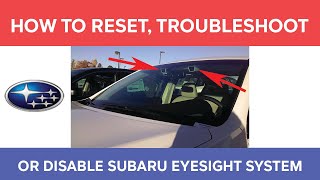
- Subaru Outback, Forester, Ascent (2019-2024) — Communication codes relate to the EyeSight stereo camera system. A dirty windshield or camera misalignment after windshield replacement triggers U0405.
- Mazda CX-5, Mazda3, Mazda6 (2017-2023) — The Dynamic Stability Control (DSC) module logs U0405 when the forward-facing camera's view is obstructed by dirt, fog, or heavy glare.
- Honda CR-V, Accord, Civic (2017-2022) — A 'Check ACC System' message points to a fault in the grille radar sensor. Calibration is mandatory after any collision repair or windshield replacement.
- Hyundai / Kia Elantra, Kona, Sorento (2020-2023) — Owners report 'Check Forward Safety System' warnings traced to physical damage or wiring issues at the forward radar sensor connector.
- Jaguar XF, F-Pace (2010-2017) — U0405 is a well-documented issue pointing directly to an internal hardware failure of the Adaptive Cruise Control module itself.
- BMW F-Series & G-Series (2012-2020) — Failures are frequently traced to broken or corroded wires in the specific sub-bus harness (S-CAN) leading to the vulnerable front bumper ACC sensor.
Manufacturer-Specific Notes
- Ford: On 2015 F-150s, a safety recall (15S29) addresses ACC modules misidentifying large reflective trucks as being in the lane, causing unexpected braking. The fix is a software update. On 2018-2019 models, SSM 48042 points to a loss of power at the ABS module causing an inoperative ACC.
- Mazda: Mazda refers to the cruise control module as the 'Vehicle Control Module (V/C-Module)'. U0405 is frequently set when the forward camera's view is temporarily obscured by glare or fog.
- General Motors (GM): For 2007-2014 trucks and SUVs, the most common cause of a dead cruise control system is a faulty brake light switch. Always check this $20 part before diagnosing complex modules.
- Subaru: On EyeSight-equipped vehicles, U0405 relates to the stereo cameras. Windshield replacement requires camera recalibration. Many issues are resolved by a dealer software update rather than hardware replacement.
Real Owner Stories
2020 Ford F-150 Platinum with 'Pre-Collision Assist Unavailable' Message
At 104k miles, the adaptive cruise control stopped working, accompanied by a 'Pre-Collision Assist Unavailable' warning.
Outcome: The module required replacement because the physical damage prevented secure mounting, followed by a mandatory ADAS calibration procedure.
Lesson: For front-mounted radar sensors, even a minor bump causes misalignment or physical damage that leads to a U0405 code. Always perform a thorough visual inspection first.
2015 Ford F-150 with Multiple Warning Lights, including ABS
The instrument cluster displayed 'Service AdvanceTrac' and the ABS light was on. Initially, only a U0415 (Invalid Data from ABS) code was present.
Outcome: The tire had rubbed through the wheel speed sensor wiring. Replacing the ABS harness resolved the issue and cleared all warning lights, including the secondary cruise control faults.
Lesson: A U0405 code is often a secondary result of a fault in another system. If ABS-related codes like U0415 are present, diagnose the ABS issue first.
2021 Dodge Charger with U0405 after Radio Issues
The cruise control became inoperative, and a U0405 code was stored alongside unrelated Uconnect infotainment glitches.
Outcome: The dealership found TSB #18-012-22 linking U0405 to a software glitch. A software update on the Powertrain Control Module (PCM) resolved the communication error.
Lesson: Always check for TSBs before starting any repair. A U0405 code with no obvious physical cause is often a software bug that requires a simple dealership reflash.
How to Prevent This Code From Triggering
- Periodically clean the front radar sensor (Monthly or as needed) — The ACC radar sensor can be blocked by dirt, bugs, or snow. Keeping it clean ensures a clear line of sight and prevents obstruction errors.
- Apply dielectric grease to the ACC module connector seal (During any service requiring connector removal) — Dielectric grease keeps moisture and road salt out, preventing the pin corrosion that causes high resistance and data corruption.
- Ensure battery terminals are clean and tight (Every oil change) — Corroded battery terminals cause unstable voltage. Modern control modules are highly sensitive to voltage fluctuations, which corrupt CAN bus data.
- Check for software updates during routine dealer service (Annually) — Manufacturers regularly release software updates to fix communication bugs. Updating preemptively fixes latent glitches before they trigger a U0405 code.
Frequently Asked Questions
What is the most common mistake when diagnosing U0405?
Immediately replacing the expensive cruise control module. Always rule out simpler causes first: check TSBs, verify battery voltage, inspect front bumper wiring, and test the brake light switch.
Can a bad clock spring cause a U0405 code?
Yes. The clock spring connects all steering wheel controls. If it fails, it corrupts signals from the cruise control buttons, triggering the code.
Will the U0405 code clear itself?
If the fault was temporary, the code moves to 'history' and the light turns off after a few drive cycles. An 'active' code indicates a hard fault requiring repair.
I saw U0405 is related to the airbag module. Is that correct?
No. U0405 specifically refers to the Cruise Control Module. Airbag issues trigger dedicated B-codes (Body) and a separate dashboard warning light.
What does a sub-code like U0405-83 mean on my Ford?
Manufacturer-specific sub-codes pinpoint the exact data error. For example, Ford's U0405-83 indicates a checksum error, pointing directly to a software glitch rather than a wiring break.
How much does it cost to fix code U0405?
Costs range from $100 for a brake light switch to $400 for wiring repairs. Replacing and calibrating an adaptive cruise control module costs $800 to over $2,000.
Can I fix U0405 myself?
You can visually inspect wiring, test the battery, and replace external components like a brake light switch. Module replacement requires professional ADAS calibration tools, meaning you must take it to a specialized shop.
Key Takeaways
- Code U0405 disables your cruise control because the Powertrain Control Module (PCM) received corrupt data from the Cruise Control Module (CCM).
- The vehicle remains mechanically safe to drive, but you immediately lose critical safety features like Adaptive Cruise Control and Pre-Collision Assist.
- Check for Technical Service Bulletins (TSBs) and inspect the front bumper radar sensor for physical damage before spending $800+ on a new module.
- Replacing an Adaptive Cruise Control module requires professional ADAS calibration, adding $250 to $500 to the final repair bill.
Helpful Videos




The information in this article is provided for general reference and educational purposes only. Vehicle specifications, procedures, and part compatibility can vary by production date, trim level, and region. Always consult your vehicle's factory service manual and verify part numbers before purchasing or performing repairs. Safety-critical components such as airbags, seat belts, and braking systems should be installed by a qualified professional.
- 🎬 Helpful Videos
- What Does U0405 Mean?
- Can I Drive With U0405?
- Common Causes
- Symptoms
- Diagnostic Flowchart
- Common Fixes & Costs
- Used vs. New Parts: Buying Guide
- What Happens If You Wait — Timeline
- Cost of Not Fixing It
- Diagnosis Steps
- When This Code Triggers (Freeze-Frame Conditions)
- Related Codes
- Climate & Environmental Factors
- How to Talk to a Mechanic About This Code
- Where to Take It: Dealer vs Independent vs Chain
- When to Walk Away From the Repair
- What Scan Tool You Need for This Code
- How to Clear the Code After You Fix It
- Will This Fail Emissions / State Inspection?
- Most Commonly Affected Vehicles
- Manufacturer-Specific Notes
- Real Owner Stories
- 2020 Ford F-150 Platinum with 'Pre-Collision Assist Unavailable' Message
- 2015 Ford F-150 with Multiple Warning Lights, including ABS
- 2021 Dodge Charger with U0405 after Radio Issues
- How to Prevent This Code From Triggering
- Frequently Asked Questions
- What is the most common mistake when diagnosing U0405?
- Can a bad clock spring cause a U0405 code?
- Will the U0405 code clear itself?
- I saw U0405 is related to the airbag module. Is that correct?
- What does a sub-code like U0405-83 mean on my Ford?
- How much does it cost to fix code U0405?
- Can I fix U0405 myself?
- Key Takeaways
- 🎟️ Get 5% Off