

U0401 on 2018-2025 Mazda CX-5: Invalid PCM Data Causes and Fixes
On a 2018-2025 Mazda CX-5, code U0401 almost always indicates a software issue within the Powertrain Control Module (PCM), especially when seen with code P061B. The most common fix is a PCM software update performed by a Mazda dealer, not a parts replacement.
- U0401 on a 2018-2025 Mazda CX-5 is a communication code, not a failed part in most cases.
- It is almost always accompanied by code P061B and causes serious driving issues like getting stuck in gear.
- The most common fix is a PCM software update from a Mazda dealer, as documented in multiple TSBs.
- Before seeking expensive diagnostics, check that your air filter box is secure and have your battery professionally tested.
- Do not replace the transmission (TCM) or ABS modules, as they are only reporting the error, not causing it.
What's Unique About the 2018-2025 Mazda CX-5

For the 2018-2025 Mazda CX-5, this code is very frequently linked to internal PCM software logic issues rather than a typical wiring or component failure. Mazda has issued multiple Technical Service Bulletins (TSBs) acknowledging that the PCM's software is overly sensitive, leading it to send invalid data under specific conditions, such as interrupted engine cranking or certain acceleration patterns. This makes a software update the most likely solution.
Diagnostic Flowchart

Tap your situation to follow the diagnostic path that matches what you're seeing on this vehicle.
Symptoms You May Notice

- Check Engine Light is on
- Transmission will not shift past 4th gear
- Lack of power or a surging sensation during acceleration
- Traction control or stability control warning lights may illuminate
- Vehicle may enter 'limp mode' with severely restricted speed
- Replacing the Transmission Control Module (TCM)
- Replacing the ABS control module
Most Likely Causes

- PCM Software/Calibration Issue 🔴 High Probability Mazda has issued multiple TSBs (e.g., SA-011-26, 01-015-18-3513a) for this exact issue, stating the PCM's torque calculation logic is too sensitive and can be triggered by events like releasing the brake pedal during cranking.
How to confirm: A Mazda dealer or a qualified independent shop with a Mazda-compatible scan tool can check the current PCM software version against the latest available calibration.
Typical fix: Reprogramming the PCM with the updated software provided by Mazda. This is often referred to as a 'reflash'.
Est. part cost: $0 - Weak or Failing Battery 🟡 Medium Probability TSB 01-015-18-3513a explicitly mentions that the code can be set when 'engine cranking is interrupted'. A weak battery can cause a voltage drop during startup, leading to interrupted cranking and causing modules to send or receive corrupt data.
How to confirm: Test the battery with a professional digital battery tester that measures voltage, Cold Cranking Amps (CCA), and internal health. A simple voltage test is often insufficient.
Typical fix: Replace the vehicle's 12V battery.
Est. part cost: $150-$300 - Improperly Seated Air Cleaner Assembly ⚪ Low Probability Mazda issued Service Alert SA-011-19a which notes that if the air cleaner assembly tabs are not properly attached (often after an air filter change), it can lead to a chain of events causing DTC P061B and various U-codes, including U0401.
How to confirm: Grasp the air cleaner assembly by hand and gently pull it toward the front of the vehicle. If it moves or feels loose, the attaching tabs are likely not seated correctly.
Typical fix: Properly reseat the air cleaner assembly, ensuring all three attaching tabs are securely locked in place.
Est. part cost: $0
Rare But Worth Checking
- CAN bus wiring issue: While less common than software issues on this platform, physical damage to the network wiring from corrosion, chafing, or rodent damage can corrupt messages between modules and trigger a U0401 code.
- Faulty Powertrain Control Module (PCM): This is a rare, last-resort diagnosis. The PCM itself could have an internal hardware failure, but this should only be considered after all software, battery, and wiring possibilities have been definitively ruled out.
Diagnosis Steps
- Scan all vehicle modules for stored trouble codes. Pay special attention to the presence of P061B, as it is key to this diagnosis.
- Check for relevant Technical Service Bulletins (TSBs) for your vehicle's specific VIN. TSBs SA-011-26, SA-011-19a, and 01-015-18-3513a are highly relevant.
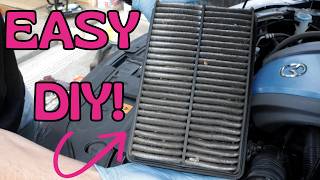
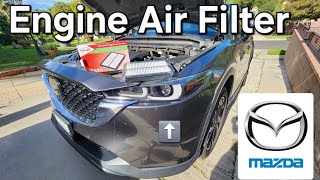
- Inspect the air cleaner assembly to ensure it is securely attached, 🎬 See how to properly seat the air filter and housing. as per TSB SA-011-19a.
- Perform a comprehensive test of the 12V battery and charging system. Low voltage during cranking is a known trigger.
- If the battery and air cleaner are good, the next step is to check the PCM's software version using a Mazda-specific scan tool.
- If the PCM software is outdated, have a Mazda dealer or qualified shop reprogram (reflash) the PCM to the latest calibration. This is the most common fix.
- If the problem persists after the software update, perform a visual inspection of the CAN bus wiring harness between the PCM, TCM, and ABS modules for any signs of damage, corrosion, or loose connections.
- Only after all other steps have been exhausted should a faulty PCM be considered.
Parts You'll Likely Need
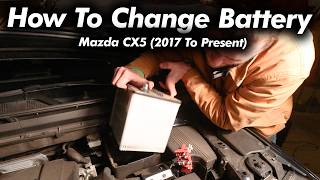
- 12V Battery — A weak battery causing a voltage drop during engine start-up is a known trigger for this communication code, as noted in TSB 01-015-18-3513a.
Trusted brands: Panasonic (OEM), Deka, Interstate
OEM price range: $250-$350
Aftermarket price range: $150-$250
Related Codes That Often Appear With This One
- P061B — This code for 'Internal Control Module Torque Calculation Performance' is almost always present with U0401 on this vehicle. Mazda TSBs SA-011-26, SA-011-19a, and 01-015-18-3513a directly link these codes to the same PCM software issue.
- U0442 — Stands for 'Invalid Data Received From ECM/PCM B'. This is also cited in TSBs SA-011-26 and 01-015-18-3513a as a companion code set by the TCM, reinforcing that the issue originates from the PCM.
- U0415 — Stands for 'Invalid Data Received from Anti-Lock Brake System Control Module'. This indicates the ABS module is also receiving bad data from the PCM, as noted in TSB SA-011-26.
Technical Service Bulletins (TSBs) & Recalls
- SA-011-26: Mentions check engine light with P061B, transmission not shifting past 4th gear, and various U codes including U0401.
- SA-011-19a: Supersedes a previous version, linking P061B, surging, transmission issues, and various U codes (U0401) to a potentially loose air cleaner assembly.
- SA-011-19: An earlier version of the service alert with similar details.
- 01-015-18-3513a: Details lack of power with DTCs P061B:00 and U0401:00 when engine cranking is interrupted, noting the cause is an overly sensitive PCM logic and the fix is a software update.
Platform-Specific Known Issues
- Mazda TSB 01-015-18-3513a identifies an overly sensitive PCM control logic that can set codes U0401 and P061B if engine cranking is interrupted, such as by releasing the brake pedal too soon. The fix is a PCM software update.
- Mazda Service Alert SA-011-19a links symptoms of surging, no shifts past 4th gear, and codes P061B and U0401 to a potentially improperly seated air cleaner assembly after service.
Mechanic-Grade Diagnostic Values
- CAN Bus Network Resistance — expected: Approximately 60 Ω. Failure: A reading of 120 Ω indicates one of the two terminating resistors is missing or the circuit is open. A reading near 0 Ω indicates a short between the CAN High and CAN Low wires.
- CAN Bus Voltage (Key On, Engine Off) — expected: Both CAN High and CAN Low lines should hover around 2.5V.. Failure: Voltages that are stuck high (near battery voltage) or low (near 0V) indicate a short to power or ground.
Hidden / Shadow Codes Worth Checking
- U0401:00: This is the full code, including the Failure Type Byte (FTB), as cited in Mazda TSBs. The ':00' specifies a 'Signal error from PCM', confirming the data itself is invalid, not just lost. (see via A professional scan tool that can read manufacturer-specific codes and their accompanying FTBs, such as the Mazda MDARS.)
- U0401:86: Another possible Failure Type Byte, indicating an invalid signal. (see via A professional scan tool capable of reading manufacturer-specific codes.)
Scan Tool Commands That Help
- Mazda MDARS (Mazda Diagnostic and Repair Software): Software Update / Module Reprogramming — This is the primary repair for this code when caused by the known software logic issue described in TSB 01-015/18. It flashes the PCM with an updated calibration file to correct the overly sensitive torque calculation logic.
- Mazda MDARS: Post-Reprogramming Procedure — After a successful PCM reflash, it is critical to clear all DTCs, turn the ignition off, exit the vehicle, lock the doors, and wait for at least ten minutes. Failure to do so can induce new communication DTCs with other modules, such as U2120:00 with the Forward Sensing Camera.
Wiring & Ground Locations
- HS-CAN Terminating Resistors — One 120 Ω resistor is internal to the Powertrain Control Module (PCM). The second 120 Ω resistor is internal to the instrument cluster.. A failure of either resistor or the wiring between them will cause the total network resistance to be incorrect (120 Ω instead of 60 Ω), leading to unstable communication and codes like U0401.
- OBD-II Data Link Connector — Under the driver's side dashboard, to the left of the steering column.. This is the primary access point for diagnostics. CAN High is on Pin 6 and CAN Low is on Pin 14, which is where network resistance and voltage measurements are typically taken.
- J/C C-53 — Unknown; this is a documented CAN bus junction connector in wiring diagrams, but its physical location in the vehicle harness is not easily found, even by some technicians.. If multiple modules are setting communication codes, a fault at a common junction point like this could be the cause. It represents a potential point of failure if software and battery issues are ruled out.
Real Owner Repair Stories
- Reddit user smitty2324 in r/MechanicAdvice (2016 Mazda CX-5 (Note: slightly outside the specified range, but highly relevant symptoms and codes)) — Check Engine Light with codes P061B and P2229, occurring right after startup.
❌ Tried (didn't work) A PCM software update, as recommended by a TSB, did NOT fix the issue., Cleaning the MAF sensor and plug., Cleaning the MAP sensor and plug.
✅ What actually fixed it The user was proceeding to inspect and clean the PCM electrical connections as the next step. The final resolution was not posted, but the story is valuable as it shows the official TSB software fix is not a 100% guaranteed solution and further electrical diagnosis may be needed.
OEM Part Supersession History
Various→Various— PCMs for this platform are frequently updated to accommodate software changes and hardware revisions. For example, older model PCMs have part numbers like PYXH-18-881C which replaced several previous versions.
Heads up: A used PCM, even from an identical vehicle, will NOT work. The module is programmed to the original vehicle's VIN and immobilizer system. A new or remanufactured PCM must be installed and then programmed to the specific vehicle using dealer-level tools like MDARS.
Model Year Variations Within This Range
- 2018: TSB 01-015/18, which addresses the sensitive PCM logic, specifically applies to 2018 CX-5 vehicles with VINs lower than JM3KF**432561 (produced before June 14, 2018). Vehicles produced after this date are expected to have the corrected software from the factory.
- 2018-2025: The diagnostic software required for PCM reprogramming is different from prior generations. These models require the Mazda Diagnostic and Repair Software (MDARS). Older models may have used the Mazda Modular Diagnostic System (M-MDS) or other J2534-based software.
Helpful Videos

The information in this article is provided for general reference and educational purposes only. Vehicle specifications, procedures, and part compatibility can vary by production date, trim level, and region. Always consult your vehicle's factory service manual and verify part numbers before purchasing or performing repairs. Safety-critical components such as airbags, seat belts, and braking systems should be installed by a qualified professional.
- Mazda CX-5:
- 🎬 Helpful Videos
- What's Unique About the 2018-2025 Mazda CX-5
- Diagnostic Flowchart
- Symptoms You May Notice
- Most Likely Causes
- Rare But Worth Checking
- Diagnosis Steps
- Parts You'll Likely Need
- Related Codes That Often Appear With This One
- Technical Service Bulletins (TSBs) & Recalls
- Platform-Specific Known Issues
- Mechanic-Grade Diagnostic Values
- Hidden / Shadow Codes Worth Checking
- Scan Tool Commands That Help
- Wiring & Ground Locations
- Real Owner Repair Stories
- OEM Part Supersession History
- Model Year Variations Within This Range
- 🎟️ Get 5% Off