

U0401 on 2014-2015 Jeep Cherokee: Causes of Implausible Data from ECM/PCM
On a 2014-2015 Jeep Cherokee, code U0401 almost always indicates a software problem within the Transmission Control Module (TCM). The most common and effective fix is a software update performed by a Jeep dealer, not a parts replacement. A weak battery is the second most likely cause.
- U0401 on a 2014-2015 Cherokee is primarily a software issue, not a mechanical failure.
- Before considering any expensive part replacements, verify the battery (both main and auxiliary) is healthy and check for available TCM/PCM software updates with a dealer.
- This issue is not unique to the Cherokee; other vehicles from Chrysler, Honda, and Land Rover using the ZF 9-speed transmission have experienced similar problems.
What's Unique About the 2014-2015 Jeep CHEROKEE

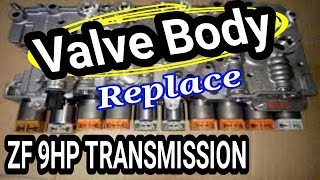
The 2014-2015 Jeep Cherokee (KL generation) was one of the first vehicles to feature the new ZF 9-speed (ZF 9HP48) automatic transmission. The initial software for the Transmission Control Module (TCM) was notoriously buggy, leading to numerous communication and performance issues, including setting code U0401. Consequently, Jeep issued multiple Technical Service Bulletins (TSBs) with software updates as the primary solution. After a software flash, a "Quick Learn" procedure is often required to allow the TCM to relearn clutch adaptive values.
Diagnostic Flowchart

Tap your situation to follow the diagnostic path that matches what you're seeing on this vehicle.
Symptoms You May Notice

- Harsh or erratic shifting.
- Transmission gets stuck in one gear (limp mode).
- Check Engine Light is on.
- Transmission warning light is on, sometimes with a "Service Transmission Now" message.
- Vehicle may stall or have difficulty starting.
- Traction control or stability control lights may illuminate.
- Vehicle may refuse to start.
- Random loss of power while driving.
- Replacing the entire transmission when only a software update is needed.
- Replacing individual transmission sensors without first checking for software updates or battery issues.
- Replacing the throttle body, as it can sometimes be incorrectly associated with communication errors.
Most Likely Causes

- Outdated Transmission Control Module (TCM) Software 🔴 High Probability As an early adopter of the ZF 9-speed transmission, the initial factory software had numerous documented bugs that were later corrected via updates. Multiple TSBs confirm a software reflash is the primary fix.
How to confirm: A Jeep dealer or a shop with an OEM-level tool (like wiTECH) can check the current software version against the latest available version referenced in TSBs.
Typical fix: Update the TCM and/or PCM software to the latest version. This is the fix specified in multiple manufacturer TSBs and confirmed by owner experiences.
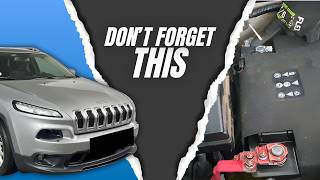
Est. part cost: $0 - Low Battery Voltage or Poor Electrical Connection 🟡 Medium Probability Modern control modules are highly sensitive to voltage. A weak main or auxiliary battery can cause communication glitches. Some Cherokees have a small auxiliary battery for the start/stop system, and its failure can cause widespread, seemingly unrelated electrical issues.
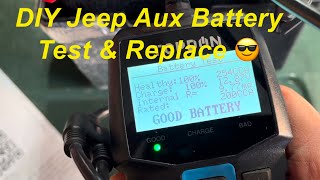
How to confirm: Test the battery with a multimeter; it should read above 12.4 volts with the engine off. Test the charging system. Inspect battery terminals and main ground straps for corrosion or looseness. If equipped, the auxiliary battery should also be load tested, as its failure is a known cause of electrical gremlins.
Typical fix: Replace the battery if it fails a load test. Clean or tighten all relevant electrical connections. If the auxiliary battery has failed, it must be replaced.
Est. part cost: $150-$350 - Faulty Transmission Control Module (TCM) ⚪ Low Probability While less common than software issues, hardware failure is possible. This is often the diagnosis if a software update for a related code like P0887 does not fix the issue.
How to confirm: This is a diagnosis of exclusion. If software updates and wiring/battery checks do not resolve the code, the module itself may be faulty. This requires professional diagnosis.
Typical fix: Replace the Transmission Control Module and program it to the vehicle using OEM tools.
Est. part cost: $500-$1000
Rare But Worth Checking
- CAN Bus Wiring Fault: A damaged or corroded wire in the communication network between the TCM and PCM can corrupt the data signal. This should be suspected if the code persists after a software update and the battery is known to be good.
- Faulty Powertrain Control Module (PCM): It is possible for the sending module (PCM) to be the source of the invalid data, but this is much less common than TCM software issues on this specific platform. PCM replacement can cost between $629 and $701.
Diagnosis Steps
- Scan all vehicle modules for stored trouble codes. Note U0401 and any other codes that are present.
- Crucially, check the battery first. Test the vehicle's main battery, auxiliary battery (if equipped), and charging system. Ensure voltage is stable and above 12.4V engine-off. A weak battery is a very common cause of communication codes.
- Check for any applicable Technical Service Bulletins (TSBs) for your vehicle's VIN. For the 2014-2015 Cherokee, TSBs #21-019-17, #2103315, #21-021-15, and #21-015-16 are highly relevant. TSBs like #21-016-16 also address these issues.
- If TSBs indicate a software update is available, have a dealer or qualified shop perform the TCM/PCM software flash. This is the most probable solution. Ensure they use a battery charger to maintain stable voltage (13.2-13.5V) during the flash.
- After a successful flash, a "Quick Learn" procedure must be performed using a tool like wiTECH to reset and learn the clutch adaptive values.
- If the code persists after the update, perform a thorough visual inspection of the wiring harness and connectors between the PCM and the TCM. Look for any signs of damage, corrosion, or loose pins.
- If all the above steps fail to resolve the issue, advanced diagnostics are required to test the CAN bus network and determine if the TCM or PCM has failed internally.
Parts You'll Likely Need
- Vehicle Battery — A weak or failing battery is a common cause of communication codes in modern vehicles by providing unstable voltage to the modules. This includes both the main and auxiliary batteries.
Trusted brands: Mopar, Interstate, DieHard
OEM price range: $200-$350
Aftermarket price range: $150-$250 - Transmission Control Module (TCM)
(OEM #68225514AB, 68249614AA)— In the rare case that software updates and electrical checks do not fix the issue, the TCM itself may have an internal hardware fault.
Trusted brands: Mopar
OEM price range: $500-$1000
Aftermarket price range: $400-$800
Related Codes That Often Appear With This One
- P0887 — Often cited in the same TSBs, indicating a related power control circuit issue in the TCM. It is frequently fixed by the same TCM software update.
- P061B — This internal torque calculation code is frequently grouped with U0401 in TSBs, pointing to a logic/software fault that requires a reflash.
- P1DAD — An input/output shaft correlation code that also points to internal transmission logic issues addressed by software updates.
- P0711 — A transmission fluid temperature sensor code that is also mentioned in TSBs alongside U0401, indicating the software update addresses a wide range of transmission parameters.
Technical Service Bulletins (TSBs) & Recalls
- 21-019-17 REV. A: Groups U0401 with other TCM codes related to back over prevention systems.
- 2103315: Explicitly states a software update is available to fix U0401 and other rationality codes.
- 21-021-15 REV-C: Lists U0401 as a code that can be addressed by a software update for the 9-speed transmission.
- 21-015-16: Mentions U0401 as one of several codes that may be found in TCM memory, addressed by software improvements.
- 21-016-16: Supersedes earlier bulletins for the 2014 model, involving reprogramming the TCM for various DTCs and shift quality improvements.
Platform-Specific Known Issues
- The 2014-2015 Jeep Cherokee is widely known for transmission problems related to the ZF 9-speed automatic, many of which were addressed by a series of software updates.
- Manufacturer TSBs #21-019-17, #2103315, #21-021-15, and #21-015-16 directly link code U0401 to software issues that require a flash update to the TCM.
- Failure of the small auxiliary battery (used for the Engine-Stop-Start system) is a known issue that can cause a cascade of seemingly unrelated electrical faults and communication codes.
Mechanic-Grade Diagnostic Values
- CAN Bus Resistance — expected: Approximately 60 Ω (with battery disconnected). Failure: A reading of 120 Ω may indicate a break in the circuit or a missing terminating resistor. A reading significantly lower than 60 Ω (e.g., 40 Ω) could suggest a third, unintended resistor on the network or a faulty module.
- CAN Bus Voltage (Key On, Engine Off) — expected: CAN High (Pin 6 at DLC) should fluctuate between 2.5V and 3.5V. CAN Low (Pin 14 at DLC) should fluctuate between 1.5V and 2.5V. The sum of CAN High and CAN Low should be ~5V.. Failure: Voltages that are stuck high or low, or a sum that does not equal 5V, indicate a short to power, short to ground, or a faulty module pulling the bus voltage down.
- Voltage during module flashing — expected: 13.2V to 13.5V. Failure: Dropping below 13.2V or climbing above 13.5V can interrupt the flash process and potentially corrupt the module.
Scan Tool Commands That Help
- wiTECH: TCM Quick Learn — This procedure is required after replacing the TCM, updating its software, or clearing the transmission's adaptive memory cells. It allows the TCM to relearn clutch fill times and pressure characteristics for smooth shifting.
- wiTECH: PROXI Configuration Alignment — This routine must be performed after replacing certain modules, like the TCM or Transfer Case Control Module, to ensure all modules on the network recognize the new component. Failure to do so can cause a flashing odometer and other communication errors.
- wiTECH: VIN Verification — After replacing and programming a new TCM, this function writes the vehicle's VIN to the module, pairing it to the car.
Wiring & Ground Locations
- Transmission Control Module (TCM) — The TCM for the ZF 9-speed transmission is located on the top of the transmission itself, under the engine air intake assembly.. This is the module setting the U0401 code. Its location makes its connectors and wiring susceptible to heat and vibration, which can lead to connection issues over time.
- G108 Ground — Located on the passenger side inner fender, near the power distribution block.. This ground point is shared by the TCM and Body Control Module (BCM). A poor connection here can cause intermittent communication faults between multiple critical modules.
- Transmission Harness Connector — Connects to the TCM on top of the transmission. The harness routes near hot exhaust components and can be prone to chafing or melting if not properly secured.. Damage to this harness is a direct cause of communication and power-related codes for the TCM, including U0401 and P0887.
- Star Connector (CAN Bus Junction) — Located behind the headlight switch/driver's side lower dash panel. It serves as a central hub for the CAN bus network.. Corrosion or a poor connection at this central point can disrupt communication across the entire network, causing multiple 'U' codes from various modules.
Real Owner Repair Stories
- Reddit user in r/Jeep (2015 Jeep Cherokee) — Vehicle goes into limp mode when shifting into 8th or 9th gear, displaying a "Service Transmission" message and setting codes P0887 and U0401. The issue could be avoided by using manual shift mode to keep the car in 7th gear or lower.
❌ Tried (didn't work) The user was still in the diagnostic phase but was trying to understand options beyond the initial fix.
✅ What actually fixed it The user's vehicle VIN fell under a recall for a software patch and wire harness inspection. The plan was to have the dealer perform this work, which is the manufacturer-prescribed fix for these exact symptoms and codes.
OEM Part Supersession History
Various (e.g., 68241131AA, 68241132AA, etc.)→68225514AB— Early TCMs had software/hardware issues related to the start/stop feature and overall transmission performance. TSB 21-002-15 specifically called for replacing these early modules with an updated part.
Heads up: Using an old, non-updated TCM from a salvage vehicle will likely re-introduce the original software-related problems. The latest part number should always be used.
Model Year Variations Within This Range
- 2014: The 2014 model year was the first to use the ZF 9-speed and had the most significant software issues. Multiple recalls and TSBs were issued specifically for 2014 models to address harsh shifting, sudden shifts to neutral, and communication codes.
- 2015: While still affected by software bugs, some running changes were made. TSB 21-002-15 notes that certain 2015 models built before September 29, 2014, may have specific faulty TCMs that need replacement, while later builds may only require a software flash.
Helpful Videos
![How to Perform Transmission Quicklearn on Chrysler, Dodge, Jeep, Ram [May Fix Hard Shifts!]](https://img.youtube.com/vi/BV-kVYyX-7M/mqdefault.jpg)

We Have This Part in Stock

The information in this article is provided for general reference and educational purposes only. Vehicle specifications, procedures, and part compatibility can vary by production date, trim level, and region. Always consult your vehicle's factory service manual and verify part numbers before purchasing or performing repairs. Safety-critical components such as airbags, seat belts, and braking systems should be installed by a qualified professional.
- Jeep CHEROKEE:
- 🎬 Helpful Videos
- 🛍️ Shop This Part
- What's Unique About the 2014-2015 Jeep CHEROKEE
- Diagnostic Flowchart
- Symptoms You May Notice
- Most Likely Causes
- Rare But Worth Checking
- Diagnosis Steps
- Parts You'll Likely Need
- Related Codes That Often Appear With This One
- Technical Service Bulletins (TSBs) & Recalls
- Platform-Specific Known Issues
- Mechanic-Grade Diagnostic Values
- Scan Tool Commands That Help
- Wiring & Ground Locations
- Real Owner Repair Stories
- OEM Part Supersession History
- Model Year Variations Within This Range
- 🎟️ Get 5% Off