

U0401 on 2017-2022 Honda CR-V: Invalid ECM Data Causes and Fixes
On a 2017-2022 Honda CR-V, code U0401 means a control module (like ABS or VSA) has received invalid data from the main Engine Control Module (ECM). This is often a network or software issue, not a failed ECM. Start by checking for other codes, verifying battery health (a known weak point), and ensuring all software is up to date before suspecting expensive hardware. Parasitic drains are a documented problem on this platform (TSB 17-032) and a frequent cause.
- U0401 on your CR-V means the main engine computer is sending confusing signals, not necessarily that it has failed.
- Before suspecting an expensive ECM replacement, always test the battery and check all major power and ground connections.
- A cascade of warning lights (VSA, ABS, Power Steering) is a very common symptom for this code on this vehicle.
- This is not a DIY-friendly repair. Diagnosis requires tools and knowledge of vehicle network systems.
- Check with a Honda dealer for any available ECM software updates, which can be a simple and effective fix.
What's Unique About the 2017-2022 Honda CR-V

For the 5th generation Honda CR-V, this code often appears alongside a cascade of other warning lights for systems like Vehicle Stability Assist (VSA), Hill Start Assist, and Brake Hold. While the code points to the ECM, the root cause is frequently not the ECM itself but rather underlying electrical issues or failing engine components. This platform is known for parasitic battery drains, as documented in Honda TSB 17-032, where the VSA module can fail to enter 'sleep mode' and drain the battery. A weak or dying battery is a very common trigger for this code, as are poor ground connections or other failing sensors that cause the ECM to send out confusing data. Most notably, failing fuel injectors on the 1.5L Turbo engine are a very common cause, leading to rich conditions (P0172) or misfires (P030x) that make the ECM broadcast invalid data, triggering the U0401 in other modules.
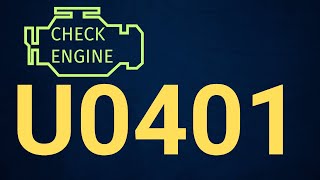
🎬 Watch: Overview of U0401 causes, symptoms, and potential fixesSymptoms You May Notice

- Multiple warning lights on the dashboard (Check Engine, VSA, ABS, Power Steering, Brake System), often described as a 'Christmas tree' of lights.
- Vehicle enters 'limp mode' with significantly reduced engine power.
- Failure of driver-assist systems like Brake Hold, Hill Start Assist, and Adaptive Cruise Control.
- Vehicle may refuse to start or have difficulty starting due to a dead or weak battery.
- Unpredictable transmission shifting.
- Horn may sound unexpectedly or steering wheel buttons may malfunction (if related to a wiring issue in the column).
- Replacing the ECM immediately without checking battery, grounds, or for software updates.
- Replacing the module that SET the code (e.g., the ABS or VSA module) instead of investigating the source of the invalid data (the ECM and its inputs).
- Replacing the battery without checking for a parasitic drain, leading to the new battery also failing prematurely.
Most Likely Causes

- Weak or Failing Battery / Parasitic Drain 🔴 High Probability The 2017-2019 CR-V is notorious for battery issues, including undersized factory batteries and parasitic drains, which were the subject of a class-action lawsuit. TSB 17-032 specifically identifies the VSA module failing to go to sleep as a cause for a 350mA drain, which is enough to kill a battery in days and cause widespread communication faults like U0401.
How to confirm: Test the battery's voltage and health with a multimeter or a dedicated battery tester. A healthy, fully charged battery should read approximately 12.4-12.6V with the engine off. Check for significant voltage drops during cranking. To confirm a parasitic drain, a multimeter can be used in-line with the negative battery cable to measure amperage draw after all modules should have gone to sleep (typically >30 minutes).
Typical fix: Replace the battery (often with a higher quality AGM type) and ensure terminals are clean. If a parasitic drain is confirmed, diagnose the source (starting with the VSA system per TSB 17-032) which may require a software update at the dealer.
Est. part cost: $150-$350 - Poor Ground Connections 🟡 Medium Probability Corroded or loose ground straps for the engine, body, or ECM can introduce electrical noise into the CAN bus, corrupting data signals. As vehicles age and are exposed to moisture and road salt, these connections can degrade.
How to confirm: Visually inspect all major ground straps for corrosion, tightness, and physical damage. Use a multimeter to check for low resistance (less than 0.1 Ω) between the ground points and the battery negative terminal.
Typical fix: Clean, tighten, or replace the faulty ground strap.
Est. part cost: $10-$50 - Corrupted ECM/PCM Software 🟡 Medium Probability Software glitches can cause the ECM to send data that other modules no longer recognize as valid. Honda has issued numerous software updates for this platform to fix a wide range of issues, including communication problems. TSB 19-051 for the related Accord shows Honda fixing a U0401 variant with a software flash.
How to confirm: This can only be confirmed by a Honda dealership or a qualified shop with access to Honda's HDS (Honda Diagnostic System) software to check the current software version against available updates.
Typical fix: Reflash or update the ECM/PCM and potentially other modules (like the VSA module) with the latest manufacturer calibration.
Est. part cost: $0 (if under warranty) - $200 (labor for update) - Faulty Sensor or Fuel Injector Input to ECM ⚪ Low Probability A failing sensor (e.g., crankshaft position, wheel speed) or a malfunctioning fuel injector can feed the ECM erroneous data. The ECM then broadcasts this invalid data, causing other modules to set the U0401 code. Failing fuel injectors are a known and widespread issue on the 1.5T engine, often causing a rich condition (P0172) or misfires (P030x) that precede the U0401 code. A Reddit user reported U0401-68 appeared after experiencing fuel injector problems.
How to confirm: Use an advanced scan tool to check for other trouble codes that point to a specific sensor or system (e.g., P030x for misfires, P0172 for rich condition). Live data monitoring can also reveal a sensor that is providing readings outside of its expected range. For injectors, a short-term fuel trim value significantly below 1.0 (e.g., 0.78) at idle indicates a rich condition, pointing to a leaking injector.
Typical fix: Diagnose and replace the specific sensor or component (e.g., fuel injector) that is failing.
Est. part cost: $50-$400 (depending on the sensor or injector)
Rare But Worth Checking
- Failing Engine Control Module (ECM/PCM): While the code definition points to the ECM, outright failure is less common than software or voltage issues. An NHTSA complaint (ODI #11628685) does mention a diagnosis of 'ecm failure' for this code. This should be the last resort after all other possibilities are exhausted.
- Damaged CAN Bus Wiring: Physical damage to the twisted-pair CAN bus wires from rodents, abrasion, or improper repairs can corrupt the data stream. This requires a meticulous visual inspection of the wiring harness and may require an oscilloscope to diagnose.
Diagnosis Steps
- Scan All Modules: Use a high-quality OBD-II scanner capable of reading codes from all vehicle modules (ABS, VSA, TCM, etc.). Note which module(s) are logging the U0401 code and what other codes are present.
- Check Battery and Charging System: This is the most critical first step for this vehicle. Test the battery's state of health, charge, and perform a load test. A healthy battery should be 12.4-12.6V with the engine off and charging voltage should be stable around 14.4V with the engine running. Ensure the alternator is providing stable voltage (typically 13.5-14.5V) when the engine is running.
- Check for Parasitic Drain: If the battery is weak or dies repeatedly, perform a parasitic draw test. Pay close attention to the VSA module as outlined in TSB 17-032.
- Inspect Power and Ground Connections: Visually inspect and verify the ECM/PCM power and ground circuits. Ensure all connections are clean, tight, and free of corrosion.
- Check for TSBs and Software Updates: Have a dealer or qualified shop check your VIN for any open campaigns, warranty extensions (like for fuel injectors or P0172), or available software updates for the ECM/PCM and VSA modules.
- Analyze Other DTCs: If other codes are present (e.g., for misfires P030x or rich condition P0172), diagnose and resolve those first, as they are the most likely root cause of the invalid data.
- Inspect CAN Bus Wiring: If no other cause is found, perform a visual inspection of the CAN bus wiring harnesses for any signs of damage, corrosion, or loose connections, especially at major junctions and module connectors. Check CAN bus resistance between pins 6 and 14 of the DLC with the battery disconnected; it should be approximately 60 ohms.
- Test the ECM: As a final step, if all other possibilities have been ruled out, the ECM itself may need to be tested by a specialist or replaced. This was the diagnosis in NHTSA complaint #11628685.
Parts You'll Likely Need

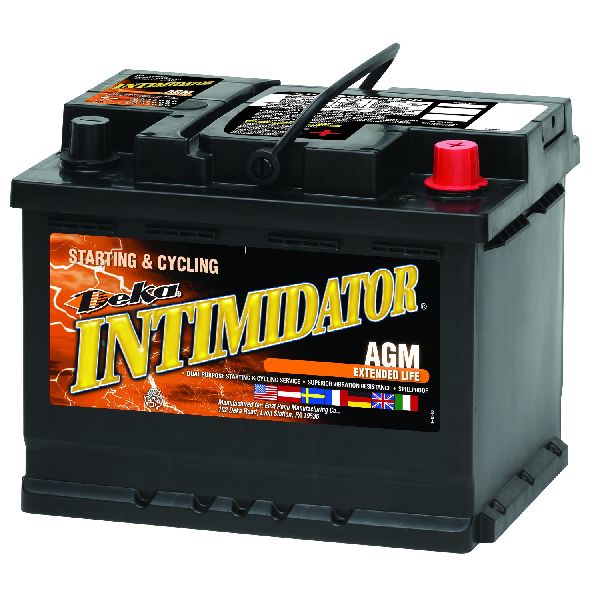
- Battery
(OEM #31500-TLA-EFB100M (EFB Type))— Low or unstable voltage from a weak or dying battery is a primary cause of communication errors on this platform, which is known for parasitic drain issues.
Trusted brands: Honda OEM (EFB), Optima YellowTop (AGM), X2Power (AGM), DieHard Platinum (AGM) - Fuel Injector Set — Failing fuel injectors are a very common root cause of engine issues (misfires, rich condition) that lead the ECM to broadcast invalid data, triggering U0401 in other modules. They are typically replaced as a set.
Trusted brands: Honda OEM
Related Codes That Often Appear With This One
- U0416-68 / U0416-F8 — These codes indicate a malfunction with the VSA (Vehicle Stability Assist) module. They often appear with U0401, as seen in owner forums, pointing towards a network-wide issue often originating from a battery or VSA module fault.
- P0300-P0304 — These misfire codes indicate an underlying engine problem. The misfires can cause the ECM to send erratic data over the CAN bus, triggering U0401 in other modules. A user on Reddit experienced P0304 alongside U0401-68, which was ultimately traced to faulty fuel injectors.
- P0172 — This code for 'System Too Rich' was seen with U0401 in an NHTSA complaint (ODI #11628685), suggesting a fuel system or sensor issue (like a failing injector or the known oil dilution problem) could be the underlying problem causing the ECM to send invalid data. Honda issued a warranty extension for this issue on 2017-18 models.
- P061B — This code for 'Internal Control Module Torque Calculation Performance' was seen with U0401 in an NHTSA complaint (ODI #11348697), indicating an internal processing error within the PCM.
- P0087 — This code for 'Fuel Rail/System Pressure - Too Low' can appear with U0401 when there is a fuel delivery problem. One owner reported this combination before the dealer diagnosed a faulty high-pressure fuel pump, which occurred after a low-pressure fuel pump recall was performed.
Technical Service Bulletins (TSBs) & Recalls

- TSB 17-032: Details a parasitic battery drain from the VSA modulator on 2017 CR-Vs, where the module fails to enter sleep mode, causing a dead battery. This low voltage condition is a primary trigger for network codes like U0401.
- TSB 19-039: Mentions that the PCM on 2019 CR-Vs may not return to sleep mode after an evaporative system check, causing the battery to discharge.
- TSB 19-051: Although for the related Honda Accord, this TSB shows a precedent for fixing a U0401-92 variant (related to Adaptive Cruise Control) with a PGM-FI software update, corroborating software glitches as a cause.
- TSB 18-114 / TSB 19-087: These bulletins involve software updates and potential A/C control unit replacement to address issues like misfires (P030x) and rich fuel conditions (P0172) that stem from the oil dilution problem. These underlying engine performance issues can cause the ECM to send invalid data, triggering U0401.
Platform-Specific Known Issues

- NHTSA Owner Complaint #11628685 for a 2019 CR-V reported codes P0172 and U0401-68, which were diagnosed as an ECM failure.
- NHTSA Owner Complaint #11348697 for a 2018 CR-V reported multiple warning lights and codes including U0401-68 and P061B, pointing to an internal ECM/PCM malfunction.
Mechanic-Grade Diagnostic Values
- CAN Bus Network Resistance — expected: Approximately 60 Ω. Failure: A reading of 120 Ω indicates a missing termination resistor or a break in the circuit. A reading significantly lower than 60 Ω (e.g., 40 Ω) suggests an extra termination resistor or a shorted module.
- Short-Term Fuel Trim (STFT) at Idle — expected: Close to 1.0 (or 0%). Failure: A value significantly below 1.0 (e.g., 0.78 or -22%) indicates the ECM is removing fuel to compensate for a rich condition, often caused by a leaking fuel injector.
- Battery Voltage (Engine Off) — expected: 12.4V - 12.6V. Failure: Below 12.4V indicates a discharged or failing battery, a primary cause of communication codes.
- Charging System Voltage (Engine Running) — expected: 13.5V - 14.5V. Failure: Voltage outside this range indicates an alternator or charging system fault, which can cause module communication errors.
Hidden / Shadow Codes Worth Checking
- U0401-68: This common suffix on Honda vehicles indicates an 'Event Information' or 'System Malfunction' failure. It specifies that the U0401 code was triggered by an event, such as the ECM receiving invalid data from a critical sensor (like a fuel rail pressure sensor or misfire detection) or experiencing a low voltage condition during startup. (see via Most comprehensive OBD-II scanners capable of reading manufacturer-specific codes can display this suffix. It is not a hidden code but provides crucial context.)
Scan Tool Commands That Help

- Honda Diagnostic System (HDS): ECM/PCM Reset — Use this function after replacing a related component (like fuel injectors or a sensor) or updating software. It clears all learned values, including fuel trims and idle parameters, forcing the ECM to relearn. This is more comprehensive than a standard DTC clear.
- Honda Diagnostic System (HDS): Replace ECM/PCM — This function is required when installing a new or used ECM. It allows the technician to write the vehicle's VIN to the module and, most importantly, register the immobilizer keys to the new ECM. Without this step, the vehicle will not start.
Wiring & Ground Locations

- G101 — On the left rear of the engine.. This is a primary ground point for multiple critical engine sensors and solenoids that provide data to the PCM, including the CKP sensor, knock sensor, and VTC oil control solenoid. A poor connection at G101 can corrupt the data from these sensors, causing the PCM to send invalid data over the CAN bus.
- Data Link Connector (DLC) Pins 6 & 14 — Under the driver's side dashboard.. These are the CAN High (Pin 6) and CAN Low (Pin 14) terminals. A technician can measure the network's overall resistance (should be ~60Ω) and check for bus voltage here to quickly assess the health of the entire communication network without accessing individual modules.
- A/C Compressor Clutch Harness — Near the front of the engine, by the A/C compressor.. There are owner reports and videos showing this wiring harness is susceptible to chafing and damage on this CR-V generation. While not directly a CAN bus wire, a short in a related system can introduce electrical noise or voltage fluctuations that disrupt module communication.
Real Owner Repair Stories
- Reddit user @keeksmilli (2018 Honda CR-V) — Dashboard lit up like a Christmas tree with multiple warning lights.
❌ Tried (didn't work) Initial diagnosis was unclear due to multiple codes.
✅ What actually fixed it Replacement of all fuel injectors. The user noted this is a common issue with the direct injection system. The dealer initially quoted $2,200 but covered it under a goodwill claim with Honda of America. - Reddit user @bluephotoshop (2018 Honda CR-V) — Infamous 'Christmas Lights Dashboard' issue, with over a dozen OBD-II codes present.
❌ Tried (didn't work) Disconnecting and reconnecting the battery would temporarily clear the lights, but they would return., Replacing the battery did not fix the issue.
✅ What actually fixed it Replacing a faulty fuel injector that was running too rich. The user noted that the specific code for the bad injector was a 'somewhat hidden clue' among the many other codes. - Reddit user @arrrbam (2018 Honda CR-V) — Dashboard lit up, car went into limp mode (won't exceed 2000 RPM). Codes P0087 (Fuel Rail Pressure Too Low) and U0401-68 (ECM Failure) were present.
❌ Tried (didn't work) The dealer performed the low-pressure fuel pump recall, but this did not solve the problem.
✅ What actually fixed it The dealer diagnosed a failed high-pressure fuel pump and fuel line, which resolved the issue. The owner disputed whether this should have been covered as part of the related fuel pump recall. - Reddit user @PoopSlinger23 (2018 Honda Odyssey EX-L, 77k miles (Same 3.5L engine family and electronics architecture)) — U0401-68 ECM Failure code along with P0304 (Cylinder 4 misfire) and a cascade of ABS/VSA/Power Steering lights.
❌ Tried (didn't work) Clearing the codes would only work temporarily.
✅ What actually fixed it The user swapped the ignition coil from cylinder 4 to 5, and the problem did not return, suggesting an intermittent coil or connection issue. However, they noted that Honda extended the warranty on the fuel injectors to 10 years/150k miles, acknowledging them as a primary cause for these symptoms. The advice given was to always diagnose P-codes (like misfires) before chasing U-codes (communication).
Model Year Variations Within This Range
- 2017-2018: These model years were specifically included in Honda's warranty extension for issues related to DTC P0172 (System Too Rich) and various misfire codes, which are known root causes for U0401. The fix often involves software updates and potentially replacing camshafts or rocker arm assemblies.
- 2020-2022: The CR-V received a mid-cycle refresh in 2020. While the core 1.5T powertrain remained, some electrical components and software calibrations may differ from the 2017-2019 models. For example, part numbers for wiring harnesses and battery sensors may have been updated.
Diagnostic Flowchart
Other Known Issues on This Vehicle
Issues unrelated to this code that are worth knowing about as an owner of this generation:
- Fuel Dilution of Engine Oil (1.5T Engine) 🔴 High — Very common, especially on 2017-2018 models and vehicles used for short trips in cold climates. Can lead to premature engine wear. (Ref: Honda addressed this with software updates (TSB 18-114, 19-087) and a warranty extension in some cases.)
- Parasitic Battery Drain 🔴 High — Common on 2017-2019 models. Can leave owners with a dead battery after the vehicle sits for a few days. (Ref: TSB 17-032 identifies the VSA module software as a specific cause. A class-action lawsuit was filed over this issue.)
- Intake Valve Carbon Buildup (1.5T Engine) 🟠 Medium — A common long-term issue for all direct-injection engines. Typically requires cleaning every 50,000-70,000 miles to prevent performance loss and misfires.
- Failing Fuel Injectors 🟠 Medium — Reports of fuel injector failure are not uncommon on the 1.5T engine, leading to misfires and poor performance. (Ref: Honda issued TSB 21-010 extending the warranty for injectors on some vehicles with the related 3.5L V6, but the issue is also known on the 1.5T.)
- Sticky or Noisy A/C Compressor Clutch Relay 🟡 Low — A known issue on older Honda generations that can also affect this one. The A/C relay can get stuck 'on', causing a parasitic drain. It's a cheap and easy part to replace. (Ref: TSB A11090M applied to 4th gen CR-Vs but the principle is the same.)
Used vs. New Parts: Buying Guide for This Vehicle
When a used part is the smart pick: For this repair, using a used part is generally not recommended for the primary electronic components. However, a used wiring harness from a reputable salvage yard can be a cost-effective solution if a section of your harness is physically damaged (e.g., by rodents or abrasion), provided it is from the exact same model and trim.
Donor-vehicle mileage cap: roughly under 60000 miles for the part to have meaningful remaining life.
What to inspect on the donor part:
- For a wiring harness, inspect for any cuts, melted sections, or brittle insulation.
- Ensure all connector pins are straight and free of corrosion.
- Verify the part number on the donor harness tag matches your original part if possible.
- Avoid parts from vehicles with flood or fire damage.
OEM-only on this vehicle (don't cheap out):
- Engine Control Module (ECM/PCM): While a used ECM can be programmed, the process is complex and requires specialized tools to handle the immobilizer. Given the labor and risk, a new, warrantied OEM part is the safest choice.
- Fuel Injectors: Given the high failure rate of the original injectors on the 1.5T engine, installing used injectors is a significant risk. Aftermarket options are not widely trusted for this specific component; OEM is strongly recommended.
Aftermarket brands forum-validated for this vehicle:
- Battery: Optima (YellowTop AGM), X2Power (AGM), DieHard (AGM), Interstate. Upgrading from the stock EFB battery to a quality AGM is a common and recommended fix to prevent voltage-related communication issues.
Brands owners have reported issues with on this vehicle:
- Fuel Injectors: Forum users generally advise against non-OEM fuel injectors for the 1.5T engine due to the precision required and the high labor cost of a repeat repair.
Real Owner Stories
Aggregated from forums and TSBs cited above. Mileages and costs reflect what owners reported in those sources.
2017 Honda CR-V — 120000 miles
Symptoms: The battery dies repeatedly. After replacing the battery, a cascade of warning lights appeared including Check Engine and VSA, with codes U0401-68, U0416-68, and P0303.
What fixed it: The owner identified a pattern of battery failure leading to multiple system codes, though the context suggests diagnosing the VSA parasitic drain (TSB 17-032) or underlying misfires.
Source hint: r/crv - '2017 Honda CR-V | Where to Start on Repairs' (April 2024)
2019 Honda CR-V
Symptoms: Owner reported codes P0172 and U0401-68 appearing together.
What fixed it: The issue was diagnosed as an ECM failure.
Source hint: NHTSA Owner Complaint #11628685
2018 Honda CR-V
Symptoms: Multiple warning lights and codes including U0401-68 and P061B.
What fixed it: Internal ECM/PCM malfunction.
Source hint: NHTSA Owner Complaint #11348697
2017 Honda CR-V
Symptoms: Vehicle entered limp mode with code U0401-68. The owner had prior issues with fuel injectors.
What fixed it: The owner noted the code appeared after experiencing fuel injector problems (logged as P219C).
Source hint: r/MechanicAdvice - 'U0401-68 code on 2017 crv' (Jan 2026)
Related OBD-II Codes
Frequently Asked Questions
My 2017 CR-V battery keeps dying and then shows U0401; does TSB 17-032 apply to this?
Can the 1.5T engine's fuel injector issues cause a U0401 code?
Is there a software update to fix U0401 on the 2017-2022 CR-V?
Why did my dashboard light up like a 'Christmas tree' with U0401?
Could a bad ground strap be the reason for U0401 on my CR-V?
Helpful Videos
Used OEM Parts in Stock


New Aftermarket Parts Available


The information in this article is provided for general reference and educational purposes only. Vehicle specifications, procedures, and part compatibility can vary by production date, trim level, and region. Always consult your vehicle's factory service manual and verify part numbers before purchasing or performing repairs. Safety-critical components such as airbags, seat belts, and braking systems should be installed by a qualified professional.
- Honda CR-V:
- 🎬 Helpful Videos
- 🛍️ Shop This Part
- What's Unique About the 2017-2022 Honda CR-V
- Symptoms You May Notice
- Most Likely Causes
- Rare But Worth Checking
- Diagnosis Steps
- Parts You'll Likely Need
- Related Codes That Often Appear With This One
- Technical Service Bulletins (TSBs) & Recalls
- Platform-Specific Known Issues
- Mechanic-Grade Diagnostic Values
- Hidden / Shadow Codes Worth Checking
- Scan Tool Commands That Help
- Wiring & Ground Locations
- Real Owner Repair Stories
- Model Year Variations Within This Range
- Diagnostic Flowchart
- Other Known Issues on This Vehicle
- Used vs. New Parts: Buying Guide for This Vehicle
- Real Owner Stories
- 2017 Honda CR-V — 120000 miles
- 2019 Honda CR-V
- 2018 Honda CR-V
- 2017 Honda CR-V
- Related OBD-II Codes
- Frequently Asked Questions
- 🎟️ Get 5% Off