

U0401 on 2013-2015 Dodge Dart: Implausible ECM/PCM Data Causes & Fixes
This code means the Engine Control Module (ECM) is sending invalid data to other computers in the car. On the Dart, this is often caused by a faulty electronic throttle body, an issue with the MultiAir valve system, a poor ground connection, or outdated ECM software that needs a dealer update per manufacturer bulletins.
- U0401 is a communication code; the real fault lies with the component or software causing the ECM to send bad data.
- Always check for other trouble codes first. They are the best clue to the root cause.
- For the Dodge Dart, the most likely causes are a needed PCM software update, a failing throttle body, or a fault in the MultiAir system.
- Do not replace the PCM unless all other possibilities have been ruled out.
- This code can cause serious drivability problems, so it should be diagnosed promptly.
What's Unique About the 2013-2015 Dodge DART

On the Dodge Dart, the U0401 code is frequently not a random network glitch but is specifically tied to known issues. Manufacturer Technical Service Bulletins (TSBs) directly link this code to problems with the MultiAir valve control system on the 1.4L and 2.4L engines. Additionally, owner complaints and mechanic reports often point to a failing electronic throttle body as a primary cause, which can put the car into limp mode. Poor ground connections are also a widely discussed issue on owner forums, leading to a variety of electrical faults including communication codes.
Diagnostic Flowchart

Tap your situation to follow the diagnostic path that matches what you're seeing on this vehicle.
Symptoms You May Notice

- Check Engine Light is on
- Electronic Throttle Control (ETC) warning light (a red lightning bolt) may illuminate or flash.
- Vehicle enters 'limp mode' with severely limited power and RPM
- Rough or unstable idle
- Vehicle may stall, be difficult to start, or experience a no-crank, no-start condition.
- Disabled traction or stability control systems.
- Grinding or clicking noise from the engine bay when the key is turned to the 'On' position, which can indicate the throttle body gears failing.
- AC blower motor may not turn on during the fault.
- Replacing the Transmission Control Module (TCM) or another module that is reporting the U0401 code. The U0401 code is logged by the module *receiving* the bad data, not the one sending it.
Most Likely Causes

- Outdated Powertrain Control Module (PCM) Software 🔴 High Probability Chrysler has issued multiple Technical Service Bulletins (TSBs) for this exact issue, indicating the original software logic was too sensitive or had flaws that could erroneously set U0401, often along with other codes.
How to confirm: A dealership or a professional shop with a compatible scan tool (like FCA's wiTECH) can check the current software calibration ID against the latest version available from the manufacturer by looking up the VIN.
Typical fix: The PCM needs to be 're-flashed' or updated with the newest software version. This is a dealer or specialty shop repair. The TSBs note that a stable battery charger (maintaining 13.2-13.5 volts) is critical during the flash process.
Est. part cost: $0 - Failing Electronic Throttle Body 🟡 Medium Probability The electronic throttle body is a common failure point on this platform, leading to the ETC warning light and limp mode. Its location on the back of the engine on the 2.4L makes it susceptible to heat and vibration. An owner complaint (NHTSA ODI #11138905) shows U0401 appearing with multiple throttle position sensor codes.
How to confirm: Scan for accompanying codes related to the throttle position sensor (like P2122, P2127, P0123, P0222). A key diagnostic step is to listen for a grinding/clicking noise from the throttle body with the key on, engine off. A mechanic can observe throttle plate response to pedal input using a scan tool.
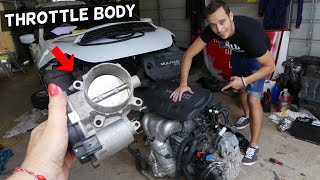
Typical fix: Replacement of the electronic throttle body assembly and gasket. 🎬 See this walkthrough on how to replace the throttle body. After replacement, a 'throttle relearn' procedure must be performed using a capable scan tool to calibrate the new part. Cleaning is often insufficient for an internal electronic failure.
Est. part cost: $80-$250 - MultiAir System Fault (1.4L & 2.4L Engines) 🟡 Medium Probability TSBs #18-023-16 and #18-022-17 REV. A directly link U0401 with codes for the oil supply solenoid valves (P106A, P106C) that control the MultiAir 'brick'. These failures can cause the ECM to broadcast invalid data about engine timing and valve lift.
How to confirm: Check for accompanying codes like P106A, P106B, P106C, or other P106x codes. Diagnosis involves checking oil pressure, using the correct oil type (critical for MultiAir), and testing the electrical circuits for the MultiAir solenoids.
Typical fix: The fix can range from a PCM software update as specified in the TSB to replacing the faulty oil supply solenoid or, in more severe cases, the entire MultiAir actuator assembly ('brick').
Est. part cost: $150-$1200 - Low Battery Voltage or Poor Ground Connection ⚪ Low Probability Like any modern car, the Dart's control modules are sensitive to voltage. Owners on forums frequently report that corroded or loose ground straps are a root cause of various electrical issues, including communication codes. A no-crank condition was traced to a corroded ground stud on the driver's side frame rail. A Reddit user reported a bad ground wire ultimately shorted out their fuse box, causing misfires and a U0401 code after many other parts were replaced.
How to confirm: Test the battery and alternator. Inspect the main ground points: one from the negative battery terminal to the chassis behind the driver's side wheel well, and another from the passenger side of the engine head to the strut tower. Look for a green, corroded ribbon-style cable. A proper ground connection should measure between 0.0 and 0.2 ohms.
Typical fix: Replace a weak battery, fix the charging system, or remove, clean, and tighten all main ground connections. Some owners add redundant ground wires to solve persistent issues. Ensure any replacement negative battery cables have the correct multi-point grounding design, as some aftermarket versions are incorrect and cause issues.
Est. part cost: $0-$250
Rare But Worth Checking
- Failed Powertrain Control Module (PCM): While rare, the PCM itself can fail. This should only be considered after all other possibilities, including software updates, sensor faults, and wiring/ground issues, have been exhaustively ruled out.
Diagnosis Steps
- Scan for all DTCs in all modules. Pay close attention to any other codes that accompany U0401, as they are critical clues to the root cause.
- Check for applicable Technical Service Bulletins (TSBs) for your vehicle's VIN. TSBs #18-023-16 and #18-022-17 REV. A are highly relevant and often recommend a software update as the first step.
- Test the battery and charging system. Ensure voltage is stable and above 12.4V with the engine off and that the alternator maintains 13.2-14.5V while running. Low voltage can cause numerous communication faults.
- Inspect all major ground connections. Check the battery-to-chassis ground behind the driver's side wheel well (G109) and the engine-to-chassis ground strap on the passenger side strut tower for corrosion and tightness. Clean them with a wire brush and apply dielectric grease. A good ground should measure less than 0.2 ohms.
- If throttle-related codes are present (or even if not), turn the key to 'On' (engine off) and listen for grinding or clicking from the throttle body area (back of the engine on 2.4L). This sound strongly indicates a failed throttle body.
- If MultiAir-related codes (P106x) are present, follow the diagnostic procedure in the relevant TSB, which may involve checking oil pressure and solenoid circuits before recommending a software update or actuator replacement. Use a bidirectional scanner to perform an 'active test' on each solenoid to listen for an audible click.
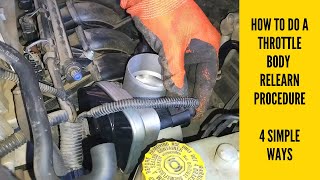
- If a new throttle body is installed, perform the 'throttle relearn' or 'ETC relearn' procedure. This can be done with a compatible scan tool or by using a manual 'pedal dance' procedure.
- If no other codes are present and all hardware/wiring checks out, the most likely cause is a software issue. Consult a dealer to verify if a PCM update is available and has been performed.
Parts You'll Likely Need
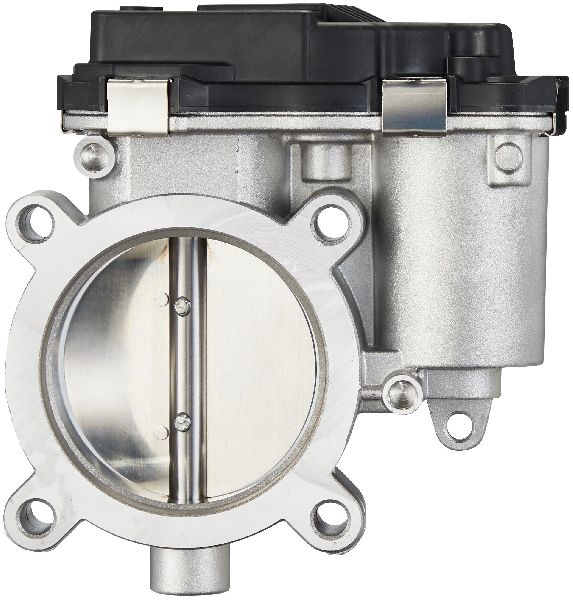
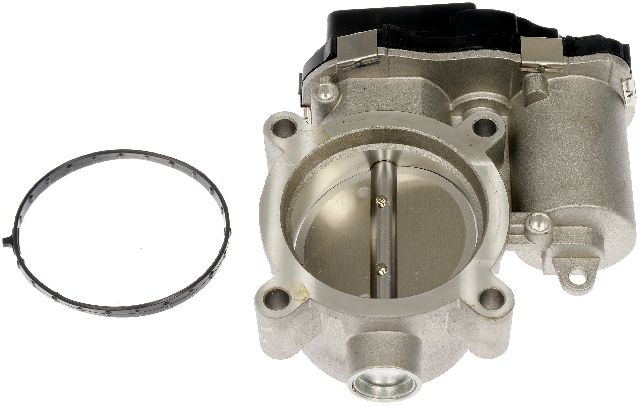
- Electronic Throttle Body
(OEM #4891970AB (superseded by 4891970AD) for 2.0L/2.4L engines; 4892945AA for 1.4L Turbo.)— A very common failure item that causes limp mode and sets U0401 along with other throttle-specific codes.
Trusted brands: Mopar, Standard Motor Products (SMP), Dorman
OEM price range: $200-$300
Aftermarket price range: $80-$180 - MultiAir Actuator Assembly — If MultiAir solenoid codes are present and software/oil pressure issues are ruled out, the entire actuator (or 'brick') may need replacement. This is the most expensive potential repair.
Trusted brands: Mopar
OEM price range: $1000-$1400
Aftermarket price range: $700-$1000
Related Codes That Often Appear With This One
- P106A / P106C — These codes for the Cylinder Oil Supply Solenoid Valve are directly mentioned in manufacturer TSBs #18-023-16 and #18-022-17 REV. A alongside U0401, pointing to a MultiAir system fault requiring a software update or mechanical repair.
- P0123, P2122, P2127, P0222 — These codes are all related to the throttle position sensor and accelerator pedal position sensor. Their presence with U0401 strongly suggests the root cause is a failing throttle body or pedal assembly, as seen in NHTSA complaint #11138905.
- P0118 — A Reddit user reported this Engine Coolant Temperature sensor code alongside U0401, indicating that a faulty sensor providing bad data to the ECM can be the root cause of the invalid data broadcast.
Technical Service Bulletins (TSBs) & Recalls
- 18-023-16 REV. A: For 2013-2015 Dart and 2015 Chrysler 200 with 2.4L engine. Links U0401 with MultiAir solenoid codes (P106A, P106C) and recommends a PCM software update.
- 18-022-17 REV. A: Supersedes a previous TSB, also for 2013-2015 Darts with 2.4L engines. Addresses U0401 along with a list of MultiAir codes and other system improvements via a PCM reflash.
Platform-Specific Known Issues
- TSB #18-023-16 and #18-022-17 REV. A: Chrysler identified an issue where U0401 would set along with codes P106A and P106C on 2.4L engines. The prescribed fix is a PCM software update.
Mechanic-Grade Diagnostic Values
- CAN Bus Network Resistance — expected: Approximately 60 Ω between CAN_H and CAN_L pins at the OBD-II port (with battery disconnected).. Failure: A reading of 120 Ω indicates an open circuit or a missing terminating resistor. A reading significantly lower than 60 Ω (e.g., ~40 Ω) can indicate an extra terminating resistor or a shorted module on the network.
- MultiAir / VVT Solenoid Coil Resistance — expected: Generally between 8 to 12 Ω.. Failure: A reading outside of this range, or an open (OL) or shorted (near 0 Ω) reading, indicates a failed solenoid coil.
- Main Ground Connection Resistance — expected: 0.0 to 0.2 Ω between the ground point stud and the negative battery terminal.. Failure: Any reading higher than 0.2 Ω indicates excessive resistance from corrosion or a poor connection that needs to be cleaned and re-secured.
- CAN Bus Voltage (Key On, Engine Off) — expected: Both CAN_H and CAN_L lines should hover around 2.5V (recessive state).. Failure: Voltages stuck high or low, or one line mirroring the other, indicate a short to power, short to ground, or short between the two CAN lines. A dominant state will show CAN_H near 3.5V and CAN_L near 1.5V.
Scan Tool Commands That Help
- wiTECH or equivalent professional scanner: PCM Reprogram/Flash — This is the primary repair step specified in TSBs #18-023-16 and #18-022-17 REV. A when U0401 is present with MultiAir codes like P106A/P106C.
- wiTECH or equivalent professional scanner: Throttle Relearn / ETC Relearn — This is a required calibration step after replacing the electronic throttle body to ensure the PCM learns the new part's closed, open, and partial positions.
- Autel or equivalent bidirectional scanner: Active Test for MultiAir Solenoids — To individually command each cylinder's MultiAir oil control solenoid to activate. The technician can then listen for an audible click from the engine to confirm the solenoid is mechanically functioning, helping to isolate a bad solenoid without disassembly.
Wiring & Ground Locations

- Engine to Chassis Ground — A braided strap typically located on the passenger side of the engine, connecting the engine head or block to the strut tower/firewall.. A poor engine ground can cause electrical noise and voltage discrepancies, disrupting sensor readings and leading the PCM to broadcast invalid data.
- G109 (Battery to Chassis Ground) — Located on the driver's side of the engine compartment, on the wheel well, where the negative battery cable connects to the chassis.. This is the primary ground point for the entire vehicle electrical system. Corrosion here can cause widespread issues, including module communication faults like U0401.
- Multi-Point Negative Battery Cable — The factory negative battery cable has a main connection at the terminal, a midway grounding point along the cable, and a final grounding point at the end.. Some aftermarket replacement cables for the 2013 Dart only have a single grounding point at the end. Owners have reported that using these incorrect cables causes electrical issues like flickering gauges and power loss, demonstrating the importance of the factory multi-point design for stable module operation.
Real Owner Repair Stories
- Reddit user in /r/dodgedart (2015 Dodge Dart SXT 2.4L) — Cylinder 4 misfire, car would shake hard and have no power when trying to drive, though it would idle fine.
❌ Tried (didn't work) Replacing all spark plugs, Replacing all ignition coils, Replacing the entire Multi-Air actuator assembly ('brick')
✅ What actually fixed it The car was taken to a dealer who found that a bad ground wire had shorted out the fuse box. Replacing the fuse box and repairing the ground wire resolved all symptoms.
"I Checked Everything" — The Actual Cause
- In one documented case, a 2.4L Dart with symptoms pointing towards a major engine issue (misfires, no power) had multiple expensive parts replaced, including the entire MultiAir actuator. The actual root cause was found by a dealer to be a bad ground wire that had shorted the main fuse box. This type of electrical fault would not be found by mechanical diagnostics or a smoke test, and demonstrates how a foundational electrical problem can set misleading, component-specific trouble codes.
OEM Part Supersession History
4891970AB, 4891970AC→4891970AD— Internal revision and improvement by the manufacturer.
Heads up: The parts are interchangeable; the newest version (AD) is the correct service replacement for the older versions on 2.0L/2.4L engines.
Model Year Variations Within This Range
- 2013: The 2013 model year received a significantly higher number of owner complaints, particularly regarding electrical, engine, and transmission issues, compared to the 2014-2016 models. Additionally, some aftermarket parts like negative battery cables may not be correct for the 2013 model, lacking a critical midway grounding point and causing electrical problems.
- 2014-2016: Starting in the 2014 model year, the 2.4L Tigershark engine became the standard or optional engine on more mainstream trims like the SXT and Limited, whereas it was primarily on the GT model in 2013. The 2.0L engine was relegated to the base SE model. This increases the likelihood of encountering MultiAir-related U0401 issues on a wider range of non-GT trims from these years.
Helpful Videos
Used OEM Parts in Stock


New Aftermarket Parts Available


The information in this article is provided for general reference and educational purposes only. Vehicle specifications, procedures, and part compatibility can vary by production date, trim level, and region. Always consult your vehicle's factory service manual and verify part numbers before purchasing or performing repairs. Safety-critical components such as airbags, seat belts, and braking systems should be installed by a qualified professional.
- Dodge DART:
- 🎬 Helpful Videos
- 🛍️ Shop This Part
- What's Unique About the 2013-2015 Dodge DART
- Diagnostic Flowchart
- Symptoms You May Notice
- Most Likely Causes
- Rare But Worth Checking
- Diagnosis Steps
- Parts You'll Likely Need
- Related Codes That Often Appear With This One
- Technical Service Bulletins (TSBs) & Recalls
- Platform-Specific Known Issues
- Mechanic-Grade Diagnostic Values
- Scan Tool Commands That Help
- Wiring & Ground Locations
- Real Owner Repair Stories
- "I Checked Everything" — The Actual Cause
- OEM Part Supersession History
- Model Year Variations Within This Range
- 🎟️ Get 5% Off