

U0401 on 2010-2012 Chrysler 300: Causes for Implausible Data from ECM/PCM
On a 2010-2012 Chrysler 300, code U0401 is most often caused by a software glitch in the Powertrain Control Module (PCM). The primary fix is a software update performed by a Chrysler dealer, as specified in Technical Service Bulletins (TSBs). This typically costs between $150 and $250. If the code appears with P0340, a faulty camshaft position sensor is also a strong possibility.
- For a 2010-2012 Chrysler 300, U0401 is most frequently a software problem, not a failed part.
- Before attempting any repairs, contact a Chrysler dealer with your VIN to check if TSB #18-068-15 (2010) or #18-067-15 (2011-12) applies to your car.
- A dealer visit is almost always necessary for the PCM software update, which is the most likely fix.
- If other codes like P0340 (Camshaft Sensor) are present, diagnose and fix them first, as they can be the root cause of the communication error.
What's Unique About the 2010-2012 Chrysler 300
The 2010-2012 Chrysler 300 range spans two different vehicle generations, and Chrysler has issued specific software updates to address this exact code for both. For the first-generation 2010 model, TSB #18-068-15 was released. For the second-generation 2011-2012 models, TSB #18-067-15 and its revision (REV A) were released. This strong documentation from the manufacturer makes a PCM software update the most likely and well-documented solution, which is a unique situation for a network code that can otherwise be difficult to diagnose. The TSBs specifically link U0401 to other codes like P0340 (Camshaft Sensor) and P0441 (EVAP), indicating the software update was designed to fix a logic flaw where these other issues would incorrectly trigger a network fault.
Diagnostic Flowchart
Tap your situation to follow the diagnostic path that matches what you're seeing on this vehicle.
Generation note: Yes, this range covers two generations. The 2010 model is the final year of the first generation (LX), while the 2011-2012 models are the beginning of the second generation (LD). Chrysler released separate Technical Service Bulletins for each generation to address this code, with TSB #18-068-15 for the 2010 and TSB #18-067-15 REV A for 2011-2012 models.
Symptoms You May Notice
- Check Engine Light (Malfunction Indicator Lamp) is on
- Vehicle may be hard to start or may not start at all
- Poor engine performance, such as rough idling, hesitation, or sudden loss of power
- Transmission shifting issues, like harsh shifts or getting stuck in one gear (Limp Mode)
- Traction control or other warning lights may illuminate
- Engine may stall unexpectedly, especially at low speeds or idle
- Tachometer may behave erratically, jumping or freezing
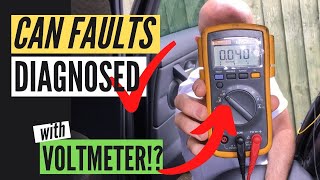
- Replacing the Transmission Control Module (TCM) or ABS module. These modules are often the ones *reporting* the U0401 code because they are receiving bad data, but they are rarely the source of the problem. The issue lies with the data coming *from* the PCM. 🎬 See this expert advice on fixing the U0401 trouble code.
Most Likely Causes
- Powertrain Control Module (PCM) Software Needs Update 🔴 High Probability Chrysler has released multiple Technical Service Bulletins (TSBs #18-068-15, #18-067-15, #18-067-15 REV A) specifically to correct this code with a software update. The TSBs explicitly state the update addresses U0401, often when it appears with P0340, P0441, and U0140, indicating a known software logic flaw.
How to confirm: Contact a Chrysler dealership with your VIN to see if these TSBs are open for your vehicle. The dealer's scan tool (wiTECH) can read the current software calibration ID and determine if the update has been applied.
Typical fix: The dealer will perform a PCM "reflash" or software update. This is a labor-only procedure that takes about an hour.
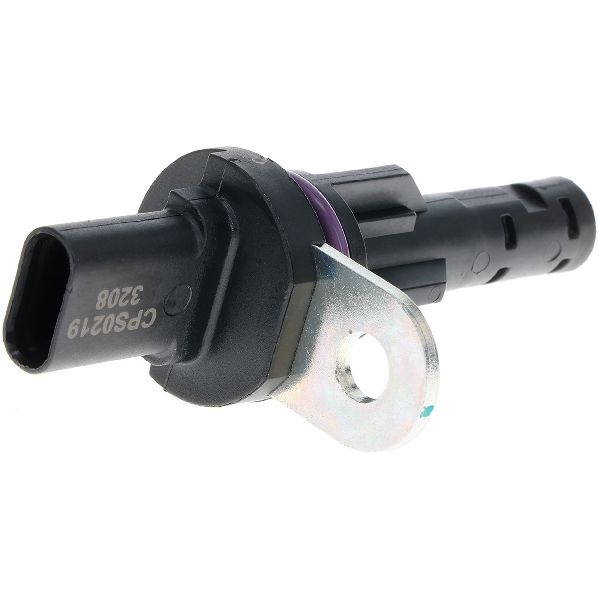
Est. part cost: $0 - Faulty Camshaft Position Sensor 🟡 Medium Probability TSBs #18-067-15 and its revision list U0401 alongside P0340 (Camshaft Position Sensor Circuit). A failing sensor can send erratic signals to the PCM. The PCM then broadcasts this corrupt data over the CAN bus network, triggering the U0401 code in other modules that rely on clean engine position data. The 3.6L V6 has four of these sensors, while the V8 has one.
How to confirm: Scan for code P0340, P0344, P0345, or P0349. If any are present with U0401, the camshaft position sensor is the primary suspect. Test the sensor's voltage and signal with a multimeter or oscilloscope according to factory specifications.
Typical fix: Replace the faulty camshaft position sensor. On the 3.6L V6, it's important to identify which of the four sensors has failed. 🎬 Watch: How to replace the camshaft position sensor on your Chrysler 300.
Est. part cost: $30-$80 - EVAP System Fault ⚪ Low Probability The same TSBs (#18-067-15 and revision) also link U0401 with P0441 (Evap Purge System Performance). This suggests a related software logic issue where an EVAP fault can be misinterpreted or bundled with the communication code, rather than the EVAP fault directly causing the U0401.
How to confirm: Check for code P0441. If present, diagnose the EVAP system by checking the gas cap, purge valve, and looking for vacuum leaks. However, if P0441 appears with U0401 and P0340, the TSB-recommended software update should be the first step.
Typical fix: Repair the specific EVAP system fault. If no physical fault is found, the PCM software update is the likely solution.
Est. part cost: $25-$70 - Low Battery Voltage or Charging System Issue ⚪ Low Probability Control modules require a stable voltage to communicate properly. Low voltage from a failing battery or alternator can cause data packets to become corrupted, leading to communication codes like U0401.
How to confirm: Test the battery voltage with the engine off (should be >12.4V) and while running (should be 13.7V-14.7V). Check battery terminals for corrosion and tightness.
Typical fix: Charge or replace the battery, clean terminals, or repair the charging system (alternator).
Est. part cost: $150-$350
Rare But Worth Checking
- Damaged Wiring Harness or Poor Connection: A communication code can always be caused by a physical network problem. Check the wiring and connectors to the PCM, TCM, and ABS module for chafing, corrosion, or loose pins, especially if the vehicle has been in an accident or had recent engine work.
- Failing Powertrain Control Module (PCM): While a software update is the most common fix, outright hardware failure of the PCM is possible, though rare. This is usually a last resort after all other possibilities, including software and wiring, have been exhausted. Symptoms could include a burnt smell from the module.
Diagnosis Steps
- Scan for all DTCs in all modules. Note which module is logging the U0401 code. Pay close attention to accompanying codes like P0340, P0441, or U0140.
- Contact a Chrysler dealer with your VIN to check for open TSBs. Specifically ask about TSB #18-068-15 (for 2010 models) or #18-067-15 REV A (for 2011-2012 models).
- If a TSB is applicable and the software update has not been performed, this is the most probable solution. Have the dealer reflash the PCM. This should be done before replacing any parts.
- If the PCM software is already up-to-date, proceed to diagnose any other stored codes first. If P0340 is present, test and likely replace the corresponding camshaft position sensor.
- If U0401 is the only code, check the battery and charging system to ensure stable voltage between 13.7V and 14.7V while running.
- Perform a thorough visual inspection of the main wiring harness to the PCM, TCM, and ABS module for any signs of damage, corrosion, or loose connections. Pay special attention to grounds.
- If all else fails and the code persists, the issue may be an internal failure of the PCM itself, which would require replacement and programming.
Parts You'll Likely Need
- Powertrain Control Module (PCM) Software Update — This is not a physical part, but a service. It is the most common fix documented by Chrysler in TSBs to resolve erroneous communication faults.
Trusted brands: Mopar (Dealer Service)
OEM price range: $150-$250
Aftermarket price range: N/A - Camshaft Position Sensor
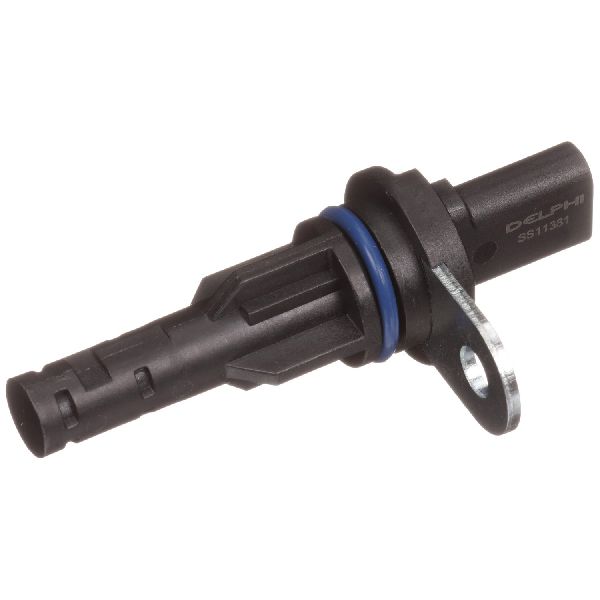
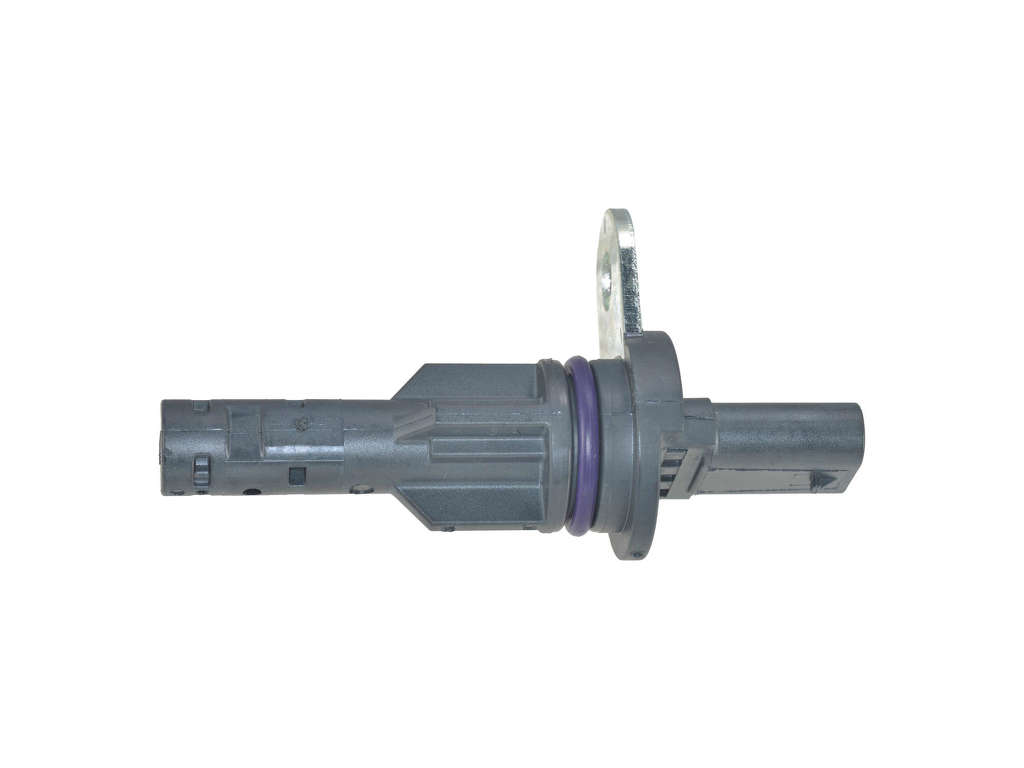
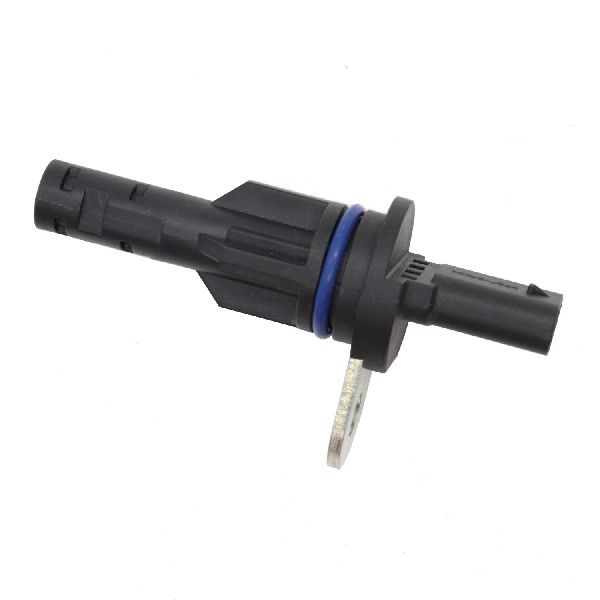
(OEM #05149141AF)— If code P0340 is also present, this sensor is the likely cause of the invalid data being sent to the PCM. This is the most common hardware failure associated with U0401 on this platform.
Trusted brands: Mopar, Bosch, NTK/NGK, Delphi
OEM price range: $60-$100
Aftermarket price range: $30-$80
Related Codes That Often Appear With This One
- P0340 — As cited in Chrysler TSB #18-067-15, a fault in the camshaft position sensor circuit can cause the PCM to send invalid data, triggering U0401 in other modules. This is a very common pairing.
- P0441 — Also cited in Chrysler TSB #18-067-15, an EVAP system performance issue can be flagged by the PCM at the same time as the communication fault, often due to the software logic flaw fixed by the TSB.
- U0140 — Cited in TSB #18-067-15 REV A, this code indicates a loss of communication with the Body Control Module (BCM), pointing to a wider network communication problem that is often software-related and addressed by the same PCM update.
Technical Service Bulletins (TSBs) & Recalls
- 18-068-15: Addresses MIL illumination with DTC U0401-00 for 2010 models, fixed by a software update.
- 18-067-15: Addresses MIL illumination with DTCs U0401, P0441, and P0340 for 2012 models, fixed by a software update.
- 18-067-15 REV A: Expands the previous TSB to include 2011 models and adds U0140 to the list of related DTCs. This is the most comprehensive TSB for the second-generation models.
Platform-Specific Known Issues
- TSB #18-068-15 for 2010 models notes that a PCM software update is available to fix DTC U0401-00.
- TSB #18-067-15 (and REV A) for 2011-2012 models identifies a PCM software update to address U0401 when it appears with other codes like P0340, P0441, and U0140.
Mechanic-Grade Diagnostic Values
- CAN Bus Network Resistance — expected: ~60 Ohms. Failure: A reading significantly different from 60 Ohms (e.g., over 100 Ohms or below 50 Ohms) indicates a problem with the wiring or a terminating resistor in one of the modules.
- 3.6L V6 Camshaft Position Sensor Voltage (at sensor connector) — expected: 5-volt supply from PCM. Signal wire should toggle between ~5 volts and 0 volts as the engine is manually rotated or a magnet is passed over the sensor tip.. Failure: No voltage on the supply wire, or a signal wire that is stuck high (5V) or low (0V) and does not change, indicates a failed sensor or wiring issue.
- CAN Bus Voltage (at DLC) — expected: CAN High (Pin 6) should be ~2.5-3.5V and CAN Low (Pin 14) should be ~1.5-2.5V, with a bias voltage of 2.5V.. Failure: Voltages outside these ranges or a bias voltage near zero can indicate a short or open in the network wiring.
Hidden / Shadow Codes Worth Checking
- U0401-00: This is a sub-code or 'event code' that is often seen on Chrysler vehicles with a dealer-level scan tool like wiTECH. The '-00' suffix doesn't drastically change the meaning but confirms the 'Implausible Data Received From ECM/PCM' fault is the specific event recorded. The TSBs for this vehicle specifically reference the U0401-00 code. (see via Chrysler wiTECH or other advanced professional scan tools.)
Scan Tool Commands That Help
- wiTECH (Chrysler Dealer Tool): View Network Topology / Bus Diagnostics — This function provides a visual map of all control modules on the CAN bus. It will show which modules are communicating (usually green) and which are not responding (usually red). For a U0401, this helps confirm if the PCM is online and if other modules are offline, which could point to a network-wide issue.
- wiTECH (Chrysler Dealer Tool): PCM Re-Flash / Software Update — This is the specific service function required to perform the fix outlined in TSBs #18-068-15 and #18-067-15 REV A. The tool connects to FCA's servers to download and install the updated software onto the PCM.
Wiring & Ground Locations
- Engine Block to Chassis Ground — There is a primary ground strap from the engine block (often near the alternator or starter) to the chassis frame rail on the passenger side.. A poor engine ground can create a voltage potential difference between modules, causing data corruption and communication errors. Ensuring this strap is clean and tight is a critical first step in diagnosing any network code.
- PCM Ground — The PCM itself is grounded through its wiring harness, which ultimately connects to chassis ground points. On the 2011+ models, a key ground point is G903, which serves many engine components.. The PCM requires a solid ground reference to send clean signals. If its own ground path is compromised, the data it transmits over the CAN bus can become unstable, directly causing a U0401 code.
- CAN Bus Wiring — The main CAN bus wires are a twisted pair (often White/Black for CAN High and White/Light Blue for CAN Low on older models) that run from the PCM to other major modules like the ABS controller and the TIPM/fuse box.. These wires are the physical data highway. Any damage, chafing, or corrosion on this twisted pair will directly interrupt communication and is a primary suspect if software and sensors are ruled out.
Real Owner Repair Stories
- 300cforums.com user (2011 Chrysler 300C) — Car would not shift past 2nd gear (limp mode), speedometer worked intermittently, parking brake light was on. This occurred after the car sat for 3 weeks and the battery went dead.
❌ Tried (didn't work) Recharging the battery initially did not solve the problem.
✅ What actually fixed it The owner disconnected the new, fully charged battery for 30 minutes to allow all modules to fully reset. After reconnecting the battery, all communication was restored and the car functioned normally. The underlying theory is that the extremely low voltage from the dead battery caused one or more modules on the CAN bus to get 'stuck' in a fault state that was not cleared by a simple recharge.
OEM Part Supersession History
05149141AE→05149141AF— Standard part revision, likely for improved durability or minor design changes.
Heads up: The parts are interchangeable. Using the latest revision (05149141AF) is recommended.
Model Year Variations Within This Range
- 2010: This model year is the last of the first generation (LX). It uses TSB #18-068-15 for the U0401 software fix. The CAN bus architecture and some module locations differ from the 2011+ models.
- 2011-2012: These are the first years of the second generation (LD). They use TSB #18-067-15 REV A for the software fix. This generation introduced the 3.6L Pentastar V6 with its dual camshaft position sensors per bank.
Helpful Videos

Used OEM Parts in Stock


New Aftermarket Parts Available


The information in this article is provided for general reference and educational purposes only. Vehicle specifications, procedures, and part compatibility can vary by production date, trim level, and region. Always consult your vehicle's factory service manual and verify part numbers before purchasing or performing repairs. Safety-critical components such as airbags, seat belts, and braking systems should be installed by a qualified professional.
- Chrysler 300:
- 🎬 Helpful Videos
- 🛍️ Shop This Part
- What's Unique About the 2010-2012 Chrysler 300
- Diagnostic Flowchart
- Symptoms You May Notice
- Most Likely Causes
- Rare But Worth Checking
- Diagnosis Steps
- Parts You'll Likely Need
- Related Codes That Often Appear With This One
- Technical Service Bulletins (TSBs) & Recalls
- Platform-Specific Known Issues
- Mechanic-Grade Diagnostic Values
- Hidden / Shadow Codes Worth Checking
- Scan Tool Commands That Help
- Wiring & Ground Locations
- Real Owner Repair Stories
- OEM Part Supersession History
- Model Year Variations Within This Range
- 🎟️ Get 5% Off