

Ultimate Guide to OBD-II Code U0301: Software Incompatibility with Engine Control Module (ECM)
The Most Comprehensive Resource for What U0301 Means, Why It Triggers, and How to Fix It
- U0301 indicates the software on your Engine Control Module (ECM) does not match the configuration expected by the rest of the vehicle's network.
- The most common trigger is a failed software update or replacing a module without performing a dealer-level reprogramming procedure.
- Fixing this code requires a J2534 Pass-Thru device and a $50-$200 manufacturer software subscription to reflash the ECM; it is not a DIY repair.
- Driving with U0301 causes persistent misfires that destroy a catalytic converter within months, adding $1,200 to $2,800 to your repair bill.
- Always diagnose network communication (U-codes) before replacing expensive hardware for performance issues (P-codes), as the software mismatch is often the root cause.
What Does U0301 Mean?

Code U0301 means your Engine Control Module (ECM) or Powertrain Control Module (PCM) has a critical software mismatch. The installed software does not match what the interconnected modules expect. This happens after a repair, a failed software update, or installing a new part without vehicle-specific programming.
Technical definition: The official SAE/OBD-II definition for U0301 is "Software Incompatibility With ECM/PCM". This indicates the Powertrain Control Module (PCM) detected an incorrect, incompatible, or corrupted software version during a reprogramming attempt or currently installed on the module.
Can I Drive With U0301?
Yes, But With Caution. You can drive the vehicle, but do not exceed short distances. You will experience poor engine performance, reduced fuel economy, and disabled safety systems like traction control. Driving with a flashing check engine light (misfire) dumps unburnt fuel into the exhaust, destroying the catalytic converter. This adds $800-$2500 to the repair bill. In severe cases, the engine will not start.
Common Causes

- Incorrect or Incomplete Software Update/Reflash (Very Common) — This is the primary cause. Interrupting a software update, using the wrong calibration file, or a programming tool failure triggers this code. This frequently happens during service at a repair shop or dealership.
- Replacement of the ECM/PCM with an Incorrect Part (Common) — Installing a used or new ECM from a different vehicle without programming it specifically to your car's Vehicle Identification Number (VIN) and factory options guarantees this code.
- Immobilizer or Security Data Mismatch (Common) — After replacing a module, failing to correctly pair the security data (VIN or anti-theft codes) between the ECM and the Body Control Module (BCM) prevents proper communication and sets U0301.
- Use of Aftermarket Tuning or Performance Software (Common) — Loading a non-factory 'tune' onto the ECM creates conflicts with other factory-installed control modules (like the TCM or BCM) that expect standard factory software parameters.
- Software Corruption from Voltage Issues (Less Common) — An incorrect jump-start, a failing alternator, or a bad battery creates a voltage spike that corrupts the ECM software. Attempting to program a module with voltage below 12.5V causes the flash to fail and corrupts the module.
- CAN Bus Network Fault (Less Common) — Damage to the CAN bus wiring (corrosion, short circuits, loose pins) causes corrupted data packets. The ECM interprets this garbled communication as a software incompatibility.
- Internal Failure of the ECM/PCM (Rare) — The ECM itself fails internally, causing its memory or software to become corrupted. This is a last resort diagnosis after eliminating all other possibilities.
Symptoms

- Check Engine Light is on — The Malfunction Indicator Lamp (MIL) illuminates immediately. It flashes if a severe misfire occurs.
- Poor Engine Performance — The engine runs rough, stalls, hesitates during acceleration, or enters a low-power 'limp-in' mode.
- No-Start Condition — If the security handshake between the ECM and immobilizer fails due to the software mismatch, the engine refuses to start.
- Other Electronic Systems Not Working — Features like cruise control, traction control, intelligent parking assist, or automatic climate control stop working or behave unpredictably.
- Reduced Fuel Economy — The engine runs inefficiently due to the software conflict, causing a noticeable drop in gas mileage.
- Erratic Dashboard Gauges or Warning Lights (also visible on scanner) — Multiple warning lights illuminate (ABS, Traction Control) and gauges behave erratically as modules lose proper communication with the ECM.
Diagnostic Flowchart
Tap your situation to follow the diagnostic path that matches what you're seeing on this code.
Common Fixes & Costs
- Reprogramming/Reflashing the ECM — Parts: $50-$150 (Manufacturer Software Subscription Fee), Labor: $150-$300, ~1.5 hr book time (Professional)
- Diagnostic Labor — Parts: $0, Labor: $100-$250, ~1 hr book time (Professional)
- Replacing and Programming a New ECM — Parts: $800-$1500, Labor: $150-$350, ~2.5 hr book time (Professional)
- Replacing and Programming a Used ECM — Parts: $200-$600, Labor: $150-$350, ~2.5 hr book time (Professional)
- CAN Bus Wiring/Connector Repair — Parts: $10-$100, Labor: $200-$600, ~2 hr book time (Advanced)
Used vs. New Parts: Buying Guide
When a used part is worth it: A used ECM is viable for older, high-mileage vehicles where a new OEM part is cost-prohibitive. The part number must be an exact match, sourced from a reputable supplier with a warranty.
Donor-vehicle mileage cap: roughly under 100000 miles for the part to have meaningful remaining life.
Donor quality checklist:
- Part number must be an EXACT match to the original.
- Purchase from a specialized auto electronics supplier, not a general junkyard.
- Ensure the supplier offers a 30-day warranty and clear return policy.
- Reject units with physical damage, corrosion, or water intrusion.
Decision logic:
- If Vehicle is under 8 years old or has low mileage (<80k) → Buy a new OEM or remanufactured unit for long-term reliability and warranty.
- If Budget is the primary concern and the vehicle is over 150k miles → Buy a tested, warranted used ECM, but professional programming is still required.
- If The original ECM failed due to an internal hardware fault → Buy a new or remanufactured unit to avoid inheriting another vehicle's hardware issues.
Warranty tradeoff: Used parts carry a 30-90 day functional warranty. Remanufactured units offer 1-year to limited lifetime warranties. New OEM parts carry a 12-month/12,000-mile warranty.
Worst-case if a used part fails: $300-$600 if the used part is faulty, covering repeat programming labor and diagnostic time.
What Happens If You Wait — Timeline
- Immediate: Check Engine Light illuminates. The vehicle automatically fails OBD-II emissions tests. No other noticeable symptoms. (MPG impact: 0-5%% · Added cost: $0)
- 0-2 months: Engine performance becomes erratic. Symptoms include rough idle, hesitation, and entry into 'limp mode'. Fuel economy drops. (MPG impact: 5-15%% · Added cost: $50-$150 in wasted fuel)
- 2-6 months: Persistent misfires dump unburnt fuel into the exhaust, overheating the catalytic converter. A rotten egg smell emits from the exhaust. (MPG impact: 10-20%% · Added cost: $200-$400 in wasted fuel, plus impending catalytic converter failure.)
- 6+ months: Catastrophic failure of the catalytic converter. The internal substrate melts, creating a major exhaust blockage. The engine stalls or fails to start. (MPG impact: >20%% · Added cost: $1200-$3000+ (Cost of new catalytic converter on top of the original ECM programming fix).)
Cost of Not Fixing It
- Immediate: Failed emissions test, unpredictable engine performance, and disabled safety systems (traction control). (Added cost: $0)
- 0-3 months: Consistent poor performance and a 5-15% drop in fuel economy. Persistent misfires dump unburnt fuel into the exhaust, overheating the catalytic converter. (Added cost: $50-$200 in wasted fuel)
- 3+ months: Catastrophic failure of the catalytic converter. The internal substrate melts, causing a major exhaust blockage and extreme power loss. (Added cost: $1200-$2800 for catalytic converter replacement.)
Diagnosis Steps
- Read All Trouble Codes from All Modules
Use an advanced OBD-II scanner capable of communicating with all vehicle modules. A basic code reader only sees the U0301 in the ECM. Note all active, pending, and history codes.
Tools: Professional-grade OBD-II Scanner (Beginner) - Verify Software and Calibration ID
Navigate to the ECM's module information screen on the scan tool. Record the software part numbers and calibration IDs. Compare this data to the factory-specified data for your VIN found in manufacturer service portals.
Tools: Professional-grade scan tool, Manufacturer data subscription (Advanced) - Check Vehicle Repair and Modification History
Review service records for recent module replacements, software updates, or installation of aftermarket performance tuners. U0301 almost always appears immediately after a repair or modification.
Tools: Service records, Owner interview (Beginner) - Verify Battery and Charging System Health
Check battery voltage with the engine off (>12.4V). Start the engine and check alternator output (13.5V-14.5V). A stable power supply is mandatory for diagnosis and reprogramming.
Tools: Multimeter (Beginner) - Inspect ECM Connectors and Harness
Visually inspect the wiring harness and connectors at the ECM. Look for physical damage, corrosion, moisture, or bent pins. A poor connection mimics a software fault.
Tools: Flashlight, Inspection mirror (Intermediate) - Advanced: CAN Bus Network Health Check (Resistance)
With the battery disconnected, measure resistance between Pin 6 (CAN High) and Pin 14 (CAN Low) on the OBD-II port. A healthy network reads 60 Ohms. 120 Ohms indicates an open circuit; near 0 Ohms indicates a short circuit.
Tools: Multimeter (Advanced) - Advanced: CAN Bus Health Check (Voltage)
With the key on (engine off), measure DC voltage. Pin 6 (CAN High) to ground fluctuates around 2.5-3.5V. Pin 14 (CAN Low) to ground fluctuates around 1.5-2.5V. Voltages outside these ranges indicate a short to ground or power.
Tools: Multimeter (Advanced) - Advanced: Monitor Live Data PIDs
Monitor Short-Term and Long-Term Fuel Trims (ideal is -10% to +10%), Engine RPM, Coolant Temperature, and MAF sensor readings. Illogical or stuck values indicate the ECM software is processing data incorrectly.
Tools: Professional-grade OBD-II Scanner (Advanced) - Attempt to Reprogram the ECM
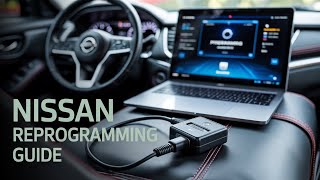
If a software mismatch is confirmed, reflash the ECM with the correct OEM software. This requires a J2534 Pass-Thru device, manufacturer software, and a stable 50A+ voltage maintainer connected to the battery.
Tools: J2534 Pass-Thru device, Laptop, Manufacturer software subscription, Battery voltage maintainer (Professional)
When This Code Triggers (Freeze-Frame Conditions)
- Fault Trigger: Key-On or Network Initialization (The U0301 code sets when the vehicle's control modules power up and perform a 'handshake' to verify software compatibility. It does not depend on specific engine operating conditions like RPM or load.)
- Battery Voltage: 11.5V - 12.5V (The check occurs during the initial power-up sequence before the engine starts and the alternator charges. Low battery voltage contributes to communication glitches misinterpreted as software issues.)
- Vehicle State: Stationary (The incompatibility is detected before the vehicle is put into gear, as part of the startup self-test procedure.)
- Related Data: Module Software/Calibration IDs (Freeze frame data includes the unique software and hardware identification numbers from the involved modules, highlighting the mismatched data.)
Related Codes
- U0300 — U0300 is a general 'Internal Control Module Software Incompatibility' code. U0301 specifically points to the ECM/PCM. If U0301 is present, focus diagnostics strictly on the engine computer.
- U0100 — U0100 means 'Lost Communication With ECM/PCM'. U0301 means modules communicate but disagree on software versions. U0100 indicates a dead ECM or severed wiring.
- U0302 — U0302 indicates 'Software Incompatibility with the Transmission Control Module (TCM)'. Harsh shifting points to U0302; engine performance issues point to U0301.
- P0606 — P0606 means 'ECM/PCM Processor Fault,' indicating internal hardware failure. U0301 points to a software issue. A P0606 module fails to communicate entirely; a U0301 module still communicates its incorrect software version.
Climate & Environmental Factors
- High Humidity / Water Intrusion: Moisture accelerates corrosion on ECM connectors and CAN bus junctions. This increases resistance, causing communication dropouts misinterpreted as a software fault.
- Extreme Cold: Low temperatures weaken failing batteries. Attempting to program a vehicle with insufficient voltage (<12.4V) causes a programming failure and software corruption.
- Vibration: Prolonged vibration cracks internal solder joints on the ECM's circuit board. This leads to memory corruption that manifests as a software incompatibility issue.
How to Talk to a Mechanic About This Code
Say this: "I have a U0301 code, which I understand is a software incompatibility with the ECM. I'd like to schedule a diagnostic to confirm the software and calibration versions on the module against the factory specs for my VIN. Please start by checking for TSBs and attempting a reflash with the latest OEM software before recommending an ECM replacement."
This signals you are an informed customer. It directs the shop toward a logical, cost-effective diagnostic path (software check and reflash first) and prevents them from immediately replacing the expensive ECM.
Avoid saying:
- 'My check engine light is on, can you look at it?' (Too vague, invites expensive diagnostics).
- 'Just fix whatever is wrong.' (Gives the shop a blank check).
- 'I think I need a new computer.' (Leads the shop to replace an expensive part without proper diagnosis).
Questions to ask before authorizing the repair:
- Did you verify the installed software/calibration ID on the ECM and does it match what the manufacturer specifies for this VIN?
- Before replacing the ECM, can we first attempt to reflash it with the correct OEM software?
- If the reflash fails, what is the warranty on the new/remanufactured ECM and the programming labor?
- Is there any chance this is a wiring or network issue? Have the CAN bus resistance and voltages been checked?
Where to Take It: Dealer vs Independent vs Chain
- Dealer:
A strong, safe choice. They have guaranteed access to the latest factory software and tools required to fix U0301.
Best for: Vehicles under warranty (powertrain or emissions)., Complex, manufacturer-specific software issues and security-related programming., When a Technical Service Bulletin (TSB) or recall is involved.
Downsides: Highest labor rates., Defaults to module replacement instead of attempting a reflash first. (Typical cost: +50% vs. baseline) - Independent Shop:
A good option IF you vet the shop properly. Ask directly: 'Do you have a J2534 Pass-Thru and an OEM subscription to reprogram my car?' If they hesitate, go to the dealer.
Best for: Out-of-warranty vehicles where cost is a factor., Shops that specialize in your vehicle's brand.
Downsides: Capabilities vary widely. You MUST verify they have a J2534 device and OEM software subscriptions., Lacks experience with very new models. (Typical cost: +0% vs. baseline) - Chain Shop:
AVOID. These shops cannot handle software-level diagnostics and repairs like U0301.
Best for: Simple, routine maintenance like oil changes, tires, and brakes.
Downsides: Technicians are not equipped or trained for module programming., High pressure to meet sales targets leads to misdiagnosis. (Typical cost: -10% vs. baseline)
When to Walk Away From the Repair
If the total estimated repair cost for the U0301 fix exceeds 50% of your car's current private-party market value, consider selling or trading it in.
- Car worth $4000, fix is $2000: Walk away. The repair cost is 50% of the vehicle's value. Cut your losses.
- Car worth $12000, fix is $1800: Fix it. The repair cost is 15% of the vehicle's value. This is a reasonable investment.
- Car worth $8000, fix is $300: Fix it immediately. A simple reflash is a low-cost repair that restores full value.
What Scan Tool You Need for This Code

Minimum: A tool that reads manufacturer-specific codes and displays Module Information, including Software/Calibration ID numbers.
A basic $20 code reader only shows 'U0301'. It cannot display the software version currently on the module, which is the exact data needed to diagnose a software mismatch.
Budget: OBDeleven (VAG, BMW, Toyota, Ford, MB models) (~$85) — For supported brands, it reads detailed module information, including the critical software version numbers needed to confirm a mismatch.
Mid-range: Autel MaxiCOM MK808S / Foxwell NT809 (~$340-450) — These full-tablet scanners reliably read software and calibration IDs from all modules and perform bidirectional controls. This is the sweet spot for a serious DIYer.
Professional: XTOOL D7 / Launch X431 Series (~$450-600) — These tools offer advanced functions like ECU coding and full bidirectional controls, providing extensive data for pro-level diagnostics.
Rent vs buy: Renting is not a viable option. Free loaner scanners at auto parts stores are basic code readers that cannot access module software information. You must buy a capable scanner or pay for a professional diagnosis.
How to Clear the Code After You Fix It
- Fix the underlying software issue by reprogramming the module.
- Use a professional-grade OBD-II scan tool to clear the U0301 code from the ECM.
- Perform a complete OBD-II drive cycle to run readiness monitors and confirm the fix.
Drive cycle (~30 minutes): 1) Cold start (coolant below 122°F), idle for 3 minutes. 2) Drive city routes for 15 minutes with several stops. 3) Drive 10 minutes at a steady highway speed (55-60 mph). 4) Cool down completely (8 hours) and repeat if monitors are not set.
Readiness monitors affected: Catalyst Monitor, Evaporative System Monitor, O2 Sensor Monitor
Before emissions retest: drive at least 100 miles to fully set monitors.
Watch out for:
- Clearing the code with a scanner fails; the code returns immediately if the software incompatibility remains.
- Disconnecting the battery does not clear this code and resets all readiness monitors, guaranteeing an emissions test failure.
- EVAP monitors require specific fuel levels (15-85%) to run and take multiple days to set.
Will This Fail Emissions / State Inspection?
Yes — this code typically fails an OBD-II emissions inspection.
- California: U0301 is an automatic smog check failure. California checks for Permanent DTCs (PDTCs), requiring a root cause fix and a full drive cycle (100-200 miles) to self-clear.
- New York: All 1996+ vehicles undergo OBD-II inspection. U0301 results in an automatic failure.
- Texas: In the 17 emissions-testing counties, U0301 causes an inspection failure. The vehicle cannot be registered until repaired and cleared.
Most Commonly Affected Vehicles
- Ford Various (F-150, Focus, Explorer) (2010-2024) — Ford vehicles are highly sensitive to module programming. U0301 appears after module replacements or incorrect updates. TSB 21-2065 requires a PCM reflash on 2018 F-150s to fix auto start-stop issues.
- Honda Civic, Insight, Accord Hybrid (2006-2018) — On hybrids, this code indicates a mismatch between the IMA battery module software and the main ECM software after a battery replacement. TSB 10-083 details the matching procedure.
- Toyota Various with Park Assist (Prius, Sienna) (2010-2024) — U0301 sets if the clearance warning ECU's stored information doesn't match the main engine ECU. This requires a 'Vehicle Information Initialization' via Techstream, not an ECM replacement.
- Hyundai/Kia Various (2012-2024) — Sets U0301 after ECM replacements. Campaign PI1805 involves an ECU software update to protect the engine, resolving related incompatibility codes.
- General Motors (GM) Various (Silverado, Equinox, Cruze) (2007-2024) — Requires specific programming via Techline Connect. Using a used module without a complete reflash to the target VIN guarantees this code. TSB 23-NA-042 addresses software updates to prevent incompatibility.
- Volkswagen/Audi Various (Golf, Jetta, A4, A6) (2011-2024) — On TDI models, U0301 appears after emissions software modifications (DPF delete), creating conflicts with other modules.
- Subaru Various (WRX, Forester, Outback) (2015-2024) — Sensitive to aftermarket tuning. U0301 appears if a non-OEM tune is incompatible with other modules. Recall WRE-21 involves an ECM software update to prevent issues.
- Chrysler/Dodge/Jeep Various (2011-2024) — Related to 'Proxy Alignment'. Replacing any module requires a proxy alignment with a scan tool to sync the network. Failure to do so results in U0301.
Manufacturer-Specific Notes
- Ford: This code strongly indicates the wrong calibration file was loaded. Using the official Ford Diagnostic & Repair System (FDRS) is mandatory to resolve it.
- Toyota/Lexus: In vehicles with Simple Intelligent Parking Assist, the parking assist ECU triggers U0301 if it detects a mismatch with the engine ECU. The fix is a system re-initialization via Techstream.
- Honda: For Civic and Accord Hybrids, U0301 is a classic symptom of an IMA battery replacement without updating the Battery Control Module (BCM) and PCM software.
- General Motors (GM): GM uses ACDelco TDS for programming. Replacing one module requires checking for updates on others (TCM, BCM) to prevent incompatibility. Multiple TSBs address these anomalies.
- Hyundai/Kia: Campaign PI1805 updates ECU software to add knock sensor detection logic, which resolves underlying software incompatibilities triggering U0301.
Real Owner Stories
2015 Chrysler 200 with flashing odometer after radio replacement
Owner replaced a failed factory radio with a used OEM upgrade. The new radio worked, but the odometer began flashing and a U0301 code appeared.
What they tried:
- Disconnecting the battery for 15 minutes, which did not solve the issue.
Outcome: The issue was a 'Proxy Alignment' failure. The BCM did not recognize the VIN from the new radio. The fix required a 'Proxy Alignment' procedure using a capable scan tool to sync all modules.
Lesson: On Chrysler/Dodge/Jeep vehicles, replacing unrelated modules like a radio requires a 'Proxy Alignment'. Failure to do this sets U-codes. A battery disconnect will not fix it.
2005 Renault Megane with escalating electronic issues
Car had intermittent throttle calibration errors, progressing to a no-start condition with a U0301 code.
What they tried:
- Replaced the throttle body and pedal assembly, which provided temporary fixes.
- Sent the ECU for repair, which worked for a year before problems returned.
Outcome: The root cause was ECU software corruption ('bit rot') from age. A specialized shop reflashed the original ECU with fresh factory software, permanently clearing the U0301 code.
Lesson: For older vehicles with mysterious electronic faults, consider software corruption. Before replacing an expensive ECU, ask a shop to reflash the existing module with fresh factory software.
Audi A6 3.0 TDI with U0301 after emissions modification
After a DPF 'delete' software modification, the glow plug light blinked and the car set a U0301 code.
What they tried:
- The initial software modification caused the incompatibility code.
- The tuner applied a second patch to disable the U0301 diagnostic check within the software.
Outcome: Removing the U0301 code via another software patch resolved the warning light, allowing the car to drive normally.
Lesson: Aftermarket tuning for emissions modifications frequently causes U0301. The new software conflicts with modules expecting stock signals. The fix requires further software patching from the tuner.
How to Prevent This Code From Triggering
- Use a high-quality battery voltage maintainer during any service or programming. (Any time the key is on with the engine off for extended periods.) — A voltage drop below 12.5V during programming corrupts the module's software. A dedicated 50-100A programming power supply is required for flashing.
- Follow proper jump-starting and battery replacement procedures. (When jump-starting or replacing the battery.) — Incorrectly connecting jumper cables causes severe voltage spikes that instantly destroy sensitive electronics and corrupt ECM memory.
- Verify shop qualifications before allowing module programming. (Before any major electronic repair.) — Programming requires a J2534 Pass-Thru device and an active OEM subscription. An unqualified shop attempting a flash permanently 'bricks' the module.
- Keep electrical connectors clean and secure. (During routine inspections.) — Corrosion on ECM connectors creates high resistance, leading to garbled data misinterpreted as a software fault. Applying dielectric grease prevents this.
- Consider a periodic software 'refresh' for older vehicles. (Once per decade.) — Solid-state memory suffers from 'bit rot' over long periods. Reflashing existing modules with the latest software resolves hidden corruption in older vehicles.
Frequently Asked Questions
Can I fix U0301 myself?
No, fixing U0301 is not a DIY job. It requires a J2534 Pass-Thru device and a manufacturer-specific software subscription to reprogram the vehicle's computer. Take the vehicle to a qualified shop or dealership.
Will U0301 go away on its own?
No, this code will not resolve itself. It indicates a permanent software mismatch that requires correcting. You must reprogram the module with the correct software version for the vehicle's specific VIN.
Can a bad battery cause a U0301 code?
Yes, indirectly. Low voltage during a programming attempt or voltage spikes from improper jump-starting corrupts the ECM's software, triggering U0301. It also appears after a battery replacement if power loss causes a temporary communication glitch.
What is the difference between 'coding' and 'programming'?
Programming (flashing) replaces the entire operating software of a module with a new version. Coding changes specific parameters within existing software, like updating an injector flow rate. U0301 is strictly a programming issue.
What is a common misdiagnosis for U0301?
A common mistake is replacing the expensive ECM without confirming a software mismatch using an advanced scan tool. Faulty CAN network wiring or a bad ground connection triggers this code and must be ruled out first.
My car has a U0301 and a misfire code (like P0301). Should I replace the spark plugs and coils first?
No. The U0301 software incompatibility causes the ECM to command incorrect ignition timing, resulting in the misfire. Reprogramming the ECM with the correct software usually resolves the misfire codes simultaneously.
Can a bad ground cause a U0301 code?
Yes. A poor ground connection for the ECM causes erratic behavior and communication errors between modules. The system interprets this unstable communication as a software incompatibility, setting a U0301.
Key Takeaways
- U0301 indicates the software on your Engine Control Module (ECM) does not match the configuration expected by the rest of the vehicle's network.
- The most common trigger is a failed software update or replacing a module without performing a dealer-level reprogramming procedure.
- Fixing this code requires a J2534 Pass-Thru device and a $50-$200 manufacturer software subscription to reflash the ECM; it is not a DIY repair.
- Driving with U0301 causes persistent misfires that destroy a catalytic converter within months, adding $1,200 to $2,800 to your repair bill.
- Always diagnose network communication (U-codes) before replacing expensive hardware for performance issues (P-codes), as the software mismatch is often the root cause.
Helpful Videos

The information in this article is provided for general reference and educational purposes only. Vehicle specifications, procedures, and part compatibility can vary by production date, trim level, and region. Always consult your vehicle's factory service manual and verify part numbers before purchasing or performing repairs. Safety-critical components such as airbags, seat belts, and braking systems should be installed by a qualified professional.
- 🎬 Helpful Videos
- What Does U0301 Mean?
- Can I Drive With U0301?
- Common Causes
- Symptoms
- Diagnostic Flowchart
- Common Fixes & Costs
- Used vs. New Parts: Buying Guide
- What Happens If You Wait — Timeline
- Cost of Not Fixing It
- Diagnosis Steps
- When This Code Triggers (Freeze-Frame Conditions)
- Related Codes
- Climate & Environmental Factors
- How to Talk to a Mechanic About This Code
- Where to Take It: Dealer vs Independent vs Chain
- When to Walk Away From the Repair
- What Scan Tool You Need for This Code
- How to Clear the Code After You Fix It
- Will This Fail Emissions / State Inspection?
- Most Commonly Affected Vehicles
- Manufacturer-Specific Notes
- Real Owner Stories
- 2015 Chrysler 200 with flashing odometer after radio replacement
- 2005 Renault Megane with escalating electronic issues
- Audi A6 3.0 TDI with U0301 after emissions modification
- How to Prevent This Code From Triggering
- Frequently Asked Questions
- Can I fix U0301 myself?
- Will U0301 go away on its own?
- Can a bad battery cause a U0301 code?
- What is the difference between 'coding' and 'programming'?
- What is a common misdiagnosis for U0301?
- My car has a U0301 and a misfire code (like P0301). Should I replace the spark plugs and coils first?
- Can a bad ground cause a U0301 code?
- Key Takeaways
- 🎟️ Get 5% Off