

U0299 on 2019 Jeep Cherokee: Lost Communication With DC-DC Converter Fixes
This code indicates a loss of communication with the secondary DC-to-DC converter, often related to the Engine Start-Stop (ESS) system. The most common causes are faulty wiring, a failed DC-to-DC converter module located under the passenger seat, or a software issue requiring a PCM update as outlined in manufacturer bulletins.
- U0299 means the computer has lost communication with the secondary DC-to-DC converter (located under the passenger seat), primarily affecting the Engine Start-Stop system.
- Before replacing any parts, check if your vehicle needs a PCM software update as specified in TSB 18-077-22 Rev. A, as this is a known fix.
- If a software update doesn't solve it, the most likely causes are a failed DC-to-DC converter module, bad wiring to the module, or a failing main/auxiliary battery.
- Diagnosis of this network code is complex and best left to a professional with the right diagnostic tools to check CAN bus signals and module communication.
What's Unique About the 2019-2019 Jeep CHEROKEE
The 2019 Jeep Cherokee (KL generation) utilizes a sophisticated electrical system to support features like Engine Start-Stop (ESS). This involves a main battery and a smaller auxiliary battery, with the DC-to-DC Converter 'B' module tasked with keeping the auxiliary battery properly charged and managing power distribution when the engine stops. The module is physically located under the front passenger seat. The presence of a specific code for the 'B' module (U0299) and related TSBs mentioning multiple converter communication codes (U0599, U059A) points to a complex, multi-part system where network faults can be common. These issues are often linked to software logic, prompting manufacturer updates to the main computer.
Diagnostic Flowchart
Tap your situation to follow the diagnostic path that matches what you're seeing on this vehicle.
Symptoms You May Notice
- Check Engine Light (Malfunction Indicator Lamp) is on
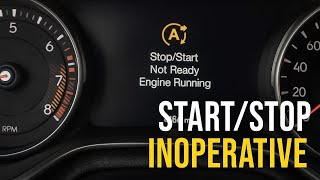
- "Service Start/Stop System" or "Start/Stop Unavailable" message on the dashboard
- Engine Start-Stop (ESS) system does not function
- Battery warning light may be illuminated
- Potential for erratic operation of electrical accessories like lights or infotainment
- In some cases, a 'ping' or chime may sound when the warning message appears on the dash
- Replacing the alternator when the charging system light is on, without first diagnosing the communication network.
- Replacing only the auxiliary battery for the ESS system without testing the main battery; a weak main battery can cause the new auxiliary battery to fail prematurely.
- Replacing the DC-DC converter module without first checking for available PCM software updates.
Most Likely Causes
- Software/Firmware Glitch in the Powertrain Control Module (PCM) 🔴 High Probability Jeep has issued Technical Service Bulletin TSB 18-077-22 Rev. A, which explicitly lists U0299 as a code that can be resolved by reprogramming the PCM. This indicates the original software logic may be too sensitive to minor network fluctuations or has flawed logic for managing the ESS charging system.
How to confirm: A Jeep dealership or a qualified shop with access to FCA's wiTECH software can check the current PCM software version against the latest available version cited in the TSB.
Typical fix: Reprogramming (flashing) the PCM with the updated software.
Est. part cost: $0 (if under warranty) or $100-$250 (dealer labor) - Faulty DC-to-DC Converter Module 'B' 🟡 Medium Probability The module, located under the front passenger seat, can fail internally due to component fatigue or solder joint cracks, causing it to stop communicating on the vehicle's network. Forum users have confirmed replacement of this specific part resolved the U0299 code.
How to confirm: After verifying wiring and power/ground to the module under the passenger seat, a technician would use an advanced scan tool to attempt to communicate directly with it. If there is no response, the module is condemned.
Typical fix: Replacement of the DC-to-DC Converter Module 'B'.
Est. part cost: $200-$400 - Wiring or Connector Issues 🟡 Medium Probability The wiring harness to the module under the passenger seat can become damaged from moisture, corrosion, or physical stress (e.g., items pushed under the seat). A poor connection at the module or at a network junction (star connector) can interrupt CAN bus signals.
How to confirm: Visually inspect the wiring harness and connectors leading to the DC-to-DC converter. Check for chafing, breaks, or corroded pins. A multimeter would be used to check for continuity, proper voltage (approx. 12V), good ground (<0.1 Ω), and correct CAN bus voltages (approx. 2.5V on each line when idle).
Typical fix: Repairing the damaged section of the harness or cleaning/replacing the affected connector.
Est. part cost: $10-$100 - Weak or Failing 12V Main or Auxiliary Battery ⚪ Low Probability Low system voltage from a weak main or auxiliary battery can cause various electronic modules to drop off the communication network, triggering codes like U0299. The ESS system is particularly sensitive to the health of both batteries.
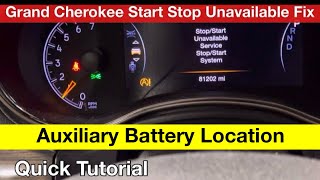
How to confirm: Test both the main 12V AGM battery and the smaller auxiliary battery (often an AUX14 AGM type) 🎬 Watch: How to locate and replace the auxiliary battery with a professional digital battery tester that can measure cold cranking amps (CCA) and overall health.
Typical fix: Replace the weak battery or both batteries at the same time, as an old battery can damage a new one in a dual-battery system.
Est. part cost: $150-$350 per battery
Rare But Worth Checking
- Faulty Intelligent Battery Sensor (IBS):
Diagnosis Steps
- Connect a professional OBD-II scanner capable of reading manufacturer-specific codes from all vehicle modules.
- Scan for all DTCs and note any other communication codes present, especially those listed in TSB 18-077-22 Rev. A.
- Perform a comprehensive load test of both the main 12V battery and the auxiliary battery to ensure they are providing stable voltage and have adequate capacity.
- Check for available software updates for the Powertrain Control Module (PCM). If an update related to TSB 18-077-22 is available, perform the flash update.
- If the code persists, locate the DC-to-DC Converter Module 'B' under the front passenger seat.
- Visually inspect the module's electrical connector and wiring harness for any signs of damage, corrosion, or loose connections.
- Using a multimeter and wiring diagram, verify that the module is receiving proper power (B+) and ground. Check for ~12V at the power pin and less than 0.1 ohms of resistance on the ground pin.
- With the key on, check the CAN C bus wires at the module connector. Voltage should be approximately 2.5V on both CAN High and CAN Low lines.
- With an advanced scan tool, attempt to communicate directly with the DC-to-DC Converter Module 'B'. If there is no communication and the wiring/power is confirmed to be good, the module has likely failed.
- If the module is communicating but setting faults, follow the specific diagnostic procedures for those faults.
Parts You'll Likely Need
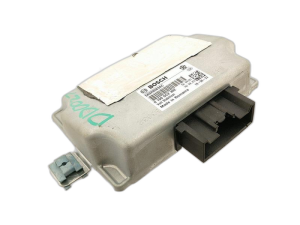
- DC-to-DC Converter Module
(OEM #68403282AB (or superseding numbers like 68403282AC, 68403282AD))— If wiring and software are ruled out, the module itself is the most likely point of failure, causing the loss of communication. This is a confirmed fix by owners.
Trusted brands: Mopar
OEM price range: $300-$500
Aftermarket price range: $200-$400
Related Codes That Often Appear With This One
- U0599 — This code indicates 'Invalid Data Received From DC to DC Converter Control Module A', suggesting a wider communication problem with the vehicle's converter system. It is also listed in TSB 18-077-22.
- U059A — Similar to U0599, this code for 'Invalid Data Received From DC to DC C...' points to a network-wide issue with the DC-to-DC converters. It is also listed in TSB 18-077-22.
- P06EF — This code for 'Engine Restart Performance' is often associated with failures in the Engine Start-Stop system, which relies on the DC-to-DC converter. It is also mentioned in TSB 18-077-22.
- B21DD — System Voltage Below Threshold. This code often appears alongside communication faults when a weak battery is the root cause.
Technical Service Bulletins (TSBs) & Recalls
- 18-077-22 Rev. A: Flash: Powertrain Control Module (PCM) Updates, which lists U0299 as one of several DTCs that can be resolved by reprogramming the PCM on 3.2L models 🎬 Watch: Common fixes and TSB details for Jeep start-stop issues
Platform-Specific Known Issues
- TSB for PCM Software Update: TSB 18-077-22 Rev. A indicates that a PCM software update is a primary fix for a group of DTCs including U0299, specifically on 2019 Cherokees with the 3.2L V6 engine and ESS. This should always be the first check before replacing hardware.
- Module Location and Failure: The DC-to-DC Converter 'B' is located under the front passenger seat. An owner on jeepcherokeeclub.com reported that after a dealer flashed the PCM per the TSB without success, replacing the module (Part No. 68403282AB) ultimately fixed the U0299 code and restored ESS function.
Mechanic-Grade Diagnostic Values
- CAN Bus Network Resistance — expected: ~60 Ω. Failure: A reading of ~120 Ω indicates an open circuit or a problem with one of the two terminating resistors. A reading significantly lower than 60 Ω suggests a short between the CAN high and low lines.
- CAN High (CAN-C +) Voltage — expected: 2.5V to 3.5V (Key On, Engine Off). Failure: Voltage outside this range indicates a short to power or ground, or a faulty module pulling the voltage down.
- CAN Low (CAN-C -) Voltage — expected: 1.5V to 2.5V (Key On, Engine Off). Failure: Voltage outside this range indicates a short to power or ground, or a faulty module pulling the voltage down.
- Battery Charging Voltage (Main and Auxiliary) — expected: ~13.6V to 14.6V (Engine Running). Failure: Voltage below ~13.0V while running indicates a lack of charging. On this dual-battery system, it's critical to check both batteries. If one is charging and the other is not, it points to a fault in the control system (IBS, DC-DC Converter) rather than the alternator.
Scan Tool Commands That Help
- wiTECH: Reprogram PCM — Used to apply the software update specified in TSB 18-077-22 Rev. A, which is the primary recommended fix for code U0299 before hardware replacement.
- wiTECH: Proxy Configuration Alignment — This routine is necessary after replacing certain modules (like the BCM) to ensure all modules on the network recognize the new component and can communicate correctly. It may be required if the DC-DC converter or related modules are replaced.
- wiTECH: View Network Topology — This function provides a visual map of all modules on the CAN bus and shows which ones are communicating and which are not. For U0299, it would visually confirm that the DC-to-DC Converter 'B' is offline.
- Manual Reset: Intelligent Battery Sensor (IBS) Reset — If a faulty IBS is suspected of sending bad data and causing ESS issues, a hard reset can be attempted. Disconnecting the small electrical connector on the IBS for 10-15 minutes can force it to reboot and relearn the battery parameters, potentially clearing software glitches.
Wiring & Ground Locations
- Star Connector (CAN Bus Hub) — Underneath the passenger side dashboard, below the glove box. It is typically a green plastic block where multiple CAN bus wire pairs converge.. This is a central diagnostic point for the CAN network. A poor connection here can cause communication failures for multiple modules. Technicians can use it to isolate sections of the network for testing.
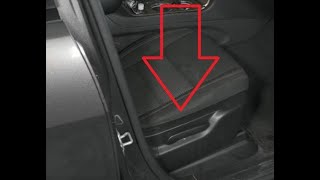
- DC-to-DC Converter 'B' / Power Inverter Module (PIM) — Under the front passenger seat.. This is the physical location of the module that has lost communication. The wiring harness and connector at this location are primary suspects for damage or corrosion.
- Ground G906A — On the passenger side front frame rail.. A known issue documented in FCA communications is corrosion at this specific ground point, which can cause intermittent ESS failure and related electrical faults. Cleaning and tightening this ground is a common fix.
Real Owner Repair Stories
- Reddit user on r/GrandCherokee (2019 Jeep Grand Cherokee 3.6L (similar ESS dual-battery system)) — Car would not start. After replacing both main and auxiliary batteries, the no-start issue returned.
❌ Tried (didn't work) Replacing both the main and auxiliary batteries.
✅ What actually fixed it The user diagnosed that the main battery was not being charged (reading 12.6V while running) while the auxiliary battery was receiving a charge (14.6V). This observation points the root cause away from the batteries themselves and toward the charging control system (DC-DC converter or related wiring/logic) that is supposed to charge the main battery. The final repair was not posted, but the diagnosis is critical. - YouTube channel AutoTechMike (Jeep with dual-battery system) — No start, no power to dash, multiple electrical issues after a new battery was installed.
❌ Tried (didn't work) Replacing the main and auxiliary batteries.
✅ What actually fixed it A blown main bus fuse located on the positive battery terminal assembly was discovered. This fuse physically disconnected the main battery from the vehicle's primary fuse box, causing the car to run solely off the auxiliary battery until it was depleted. Replacing the blown bus fuse restored power and allowed the vehicle to start and charge correctly.
"I Checked Everything" — The Actual Cause
- A vehicle may present with a no-start and communication codes after a battery replacement. Technicians may test the new batteries and alternator, finding them to be good. The hidden cause can be a blown high-amperage bus fuse on the positive battery terminal assembly. This fuse can blow during a battery change if terminals are handled incorrectly. This failure prevents the main battery from powering the vehicle or receiving a charge, but it can be easily missed during a standard diagnostic flow that assumes the main battery connection is intact.
When the Usual Fixes Don't Work
- While replacing weak or old batteries is a common fix for ESS-related issues, it is not a guaranteed solution. In some cases, owners have replaced both the main and auxiliary batteries only to have the problem return. A documented case showed that even with new batteries, the main battery was not receiving a charge while the engine was running, indicating the fault was within the vehicle's charging control system (DC-DC converter, IBS, or wiring) and not the batteries themselves. This highlights the importance of verifying charging voltage at both batteries after replacement to confirm the root cause has been addressed.
OEM Part Supersession History
68371295AA→68371295AB— This is a ground strap for models with the ESS system. Part revisions often involve improvements in material or design to enhance durability and conductivity.
Helpful Videos
We Have This Part in Stock

The information in this article is provided for general reference and educational purposes only. Vehicle specifications, procedures, and part compatibility can vary by production date, trim level, and region. Always consult your vehicle's factory service manual and verify part numbers before purchasing or performing repairs. Safety-critical components such as airbags, seat belts, and braking systems should be installed by a qualified professional.
- Jeep CHEROKEE:
- 🎬 Helpful Videos
- 🛍️ Shop This Part
- What's Unique About the 2019-2019 Jeep CHEROKEE
- Diagnostic Flowchart
- Symptoms You May Notice
- Most Likely Causes
- Rare But Worth Checking
- Diagnosis Steps
- Parts You'll Likely Need
- Related Codes That Often Appear With This One
- Technical Service Bulletins (TSBs) & Recalls
- Platform-Specific Known Issues
- Mechanic-Grade Diagnostic Values
- Scan Tool Commands That Help
- Wiring & Ground Locations
- Real Owner Repair Stories
- "I Checked Everything" — The Actual Cause
- When the Usual Fixes Don't Work
- OEM Part Supersession History
- 🎟️ Get 5% Off