

U0293 on 2013-2018 Ford C-MAX: Lost Communication with Hybrid Module Causes and Fixes
This code means a critical hybrid system module is not communicating. On the C-MAX, this is almost always a fault related to the Battery Energy Control Module (BECM), also known as the SOBDM-C in diagnostic tools. The cause is often a failed BECM module itself or a wiring/connector issue at the high-voltage battery. A key vehicle-specific issue is a TSB warning *against* using dielectric grease on the module connector, as it can induce this code.
- U0293 on a Ford C-MAX is a serious code indicating a communication failure with a key hybrid battery module, often leading to a no-start or 'Stop Safely Now' warning.
- The most common cause is a wiring or connector issue at the SOBDM-C/BECM module located inside the high-voltage battery pack.
- DO NOT apply dielectric grease to the SOBDM-C connector; a Ford TSB explicitly warns this can cause the fault.
- Due to the extreme danger of the high-voltage system, diagnosis and repair should be left to a qualified professional with experience in hybrid vehicles.
- If the module itself has failed, it is an expensive repair requiring significant labor to access and replacement part programming.
What's Unique About the 2013-2018 Ford C-MAX

The Ford C-MAX, Fusion, and MKZ hybrids of this era share a complex networked system. The U0293 code is particularly critical because it points to a failure in the heart of the hybrid system—the BECM inside the high-voltage battery pack. A unique and counter-intuitive issue for these Fords, as highlighted in TSB SSM 47649, is that improper servicing—specifically the use of dielectric grease on the SOBDM-C/BECM module connectors—can cause this communication failure by interfering with the low-voltage data signals.
Diagnostic Flowchart

Tap your situation to follow the diagnostic path that matches what you're seeing on this vehicle.
Symptoms You May Notice

- "Stop Safely Now" message on the instrument cluster
- Vehicle will not start or 'go ready'
- Illuminated Malfunction Indicator Lamp (Check Engine Light) and/or wrench light
- Hybrid system warning lights
- Multiple, seemingly unrelated warning messages, such as 'AdvanceTrac Fault' or a false 'Engine Coolant Overheat' reading.
- High-voltage battery gauge on the dash may read 0% or show no reading, even if the battery is charged.
- Loss of all hybrid-specific functions.
- Replacing the Powertrain Control Module (PCM) without verifying the network. 'U' codes indicate a communication problem. The fault lies with the module that is *not* communicating (the BECM), not necessarily the module that is *reporting* the fault (like the PCM or GWM).
Most Likely Causes

- Failed Battery Energy Control Module (BECM) 🔴 High Probability The BECM is a complex electronic module located inside the high-voltage battery assembly where it is subject to thermal stress. It is a widely documented failure point on the C-MAX and its platform mates (Fusion/MKZ Hybrid), leading to U0293 and a no-start condition.
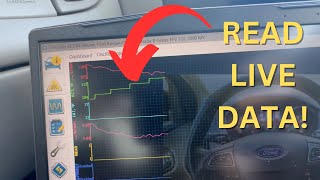
How to confirm: After confirming the wiring, connectors, and power/ground to the module are good, the BECM itself is condemned. This requires advanced diagnostics with a scan tool capable of network testing (like FORScan 🎬 Watch: How to use FORScan for advanced Ford diagnostics or Ford's FDRS) to verify it is the module that is offline.
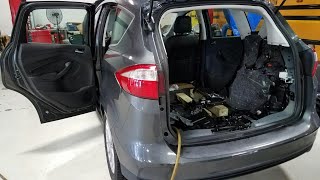
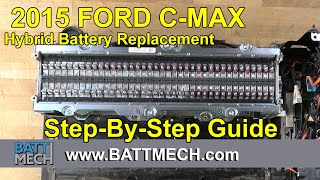
Typical fix: Replace the BECM. This requires removing and opening the high-voltage battery pack. 🎬 See this step-by-step guide for replacing the battery module The new module must be programmed to the vehicle's VIN and configuration using Ford's diagnostic software.
Est. part cost: $600-$900 - Connector or Wiring Fault at BECM/SOBDM-C Module 🟡 Medium Probability The module is located within the HV battery assembly, and its connectors are sensitive. TSB SSM 47649 explicitly warns that using dielectric grease can impede the low-voltage data signals and cause this code. Harness wires can also chafe or pins can back out, particularly on Energi models near the battery cover plate.
How to confirm: After de-energizing the high-voltage system, visually inspect the BECM connector for corrosion, backed-out pins, or physical damage. Check for the presence of grease; if found, it must be thoroughly cleaned with a dedicated electrical contact cleaner. Check for continuity on the CAN bus wires (often labeled VDB04 and VDB05 in diagrams) from the connector back to the Gateway Module.
Typical fix: Thoroughly clean the connector pins and terminals. If the connector or wiring is damaged, a pigtail or harness section may need to be replaced.
Est. part cost: $20-$150 - Low or Faulty 12V Battery ⚪ Low Probability While a low 12V battery can cause a cascade of communication codes on any modern vehicle, for U0293 on the C-MAX it is less often the root cause and more likely a secondary symptom of the car not starting and draining the battery. Some early models had issues with modules not powering down correctly, leading to battery drain.
How to confirm: Test the 12V battery with a digital multimeter or a dedicated battery tester. A healthy battery should show approximately 12.6V when the vehicle is off and should maintain voltage under load. If the car won't start, the 12V battery may be discharged but not necessarily faulty.
Typical fix: Charge or replace the 12V battery. Ensure all connections are clean and tight. If U0293 persists with a known-good 12V battery, this is not the root cause. A Battery Monitoring System (BMS) reset may be required using a tool like FORScan.
Est. part cost: $150-$250
Rare But Worth Checking
- Gateway Module (GWM) Software Glitch: While more commonly documented on other Ford hybrid models like the F-150, a software issue in the main gateway module can sometimes trigger spurious communication codes across the network. TSB 15B04 for the C-MAX involved reprogramming the GWM to fix power-down issues, indicating its role in network stability.
Diagnosis Steps
- PROFESSIONAL DIAGNOSIS IS STRONGLY RECOMMENDED DUE TO HIGH-VOLTAGE DANGER.
- Scan for all DTCs in all modules using a quality scan tool (FORScan or Ford FDRS is recommended). Note which module(s) are reporting U0293. The key is to identify which modules are *not* communicating (e.g., SOBDM-C/BECM).
- Check the state of the 12V battery. Ensure it is fully charged and healthy before proceeding to eliminate it as a variable.
- Perform a CAN bus resistance check at the DLC (OBD-II port). With the 12V battery disconnected, measure resistance between Pin 6 (CAN-H) and Pin 14 (CAN-L). A healthy HS-CAN bus should read approximately 60 Ω. A reading of 120 Ω suggests a break in the bus or a missing terminating resistor. A reading of ~40 Ω could indicate an unusual bus configuration or fault.
- Follow the manufacturer's procedure to de-energize the high-voltage system. This is a critical safety step and typically involves a service disconnect plug.
- Locate the Battery Energy Control Module (BECM) within the high-voltage battery assembly. This requires removing the battery from the vehicle and opening its case.
- Inspect the module's electrical connector (C4237a) and the surrounding harness for any signs of damage, corrosion, or moisture intrusion. On Energi models, pay close attention to potential wire chafing near the traction battery cover plate. 🎬 Watch: Locating the SOBDM and battery fan components
- Per TSB SSM 47649, check for the presence of dielectric grease. If found, thoroughly clean the connector and module pins with a dedicated electronics cleaner and compressed air.
- With the connector disconnected, check for power, ground, and CAN bus network continuity at the harness using a digital multimeter and vehicle-specific wiring diagrams. A specific pinpoint test involves checking for >10 volts at the BECM harness connector with the ignition on.
- If wiring, power, and ground are all confirmed good, the BECM is the most likely culprit.
- After repair, the high-voltage system must be re-energized. If the BECM was replaced, it must be programmed to the vehicle using Ford's FDRS software via the Programmable Module Installation (PMI) procedure.
Parts You'll Likely Need
- Battery Energy Control Module (BECM)
(OEM #DG98-10B687-MC (example, verify by VIN))— This module is the 'Hybrid Powertrain Control Module' that has lost communication. It is a common failure item. An eBay listing confirms this part number for 2013-2015 models.
Trusted brands: Motorcraft
OEM price range: $600-$900 - Connector Pigtail — If the connector at the module is corroded or damaged from moisture or improper servicing, replacing the connector pigtail is necessary to ensure a solid connection.
Trusted brands: Motorcraft
OEM price range: $50-$150
Aftermarket price range: $20-$70
Related Codes That Often Appear With This One
- P0AA6 — This code for 'Hybrid Battery Voltage System Isolation Fault' is explicitly mentioned alongside U0293 in TSB SSM 47649. A communication loss with the battery module can trigger fault detection in the high-voltage isolation monitoring system.
- P1A10 — This code indicates a 'Hybrid Powertrain Control Module - Battery Disabled' state. It often appears with U0293 as the loss of communication forces the system to disable the high-voltage battery as a safety measure.
- P0A0A — This code for 'High Voltage System Interlock Circuit' is mentioned in TSB 17-0015 for the C-MAX Energi and can be triggered by wiring chafe issues that may also disrupt CAN bus communication.
Technical Service Bulletins (TSBs) & Recalls
- SSM 47649: Notes that using dielectric grease on SOBDM-C module connectors can cause U0293 and P0AA6 codes.
- TSB 17-0015 (Energi): Details a potential wiring chafe point near the HV battery that can cause communication-related DTCs like P0A0A.
- TSB 15B04: Describes a software update for multiple modules (including GWM and PCM) to correct issues where modules fail to power down, causing 12V battery drain and potential communication faults.
Platform-Specific Known Issues
- Technical Service Bulletin SSM 47649 specifically warns technicians NOT to use electrical/dielectric grease on the SOBDM-C module connectors for 2013 models. The bulletin states this practice may induce communication concerns and trigger codes U0293 and P0AA6.
- The BECM is a known failure point across the C-MAX, Fusion Hybrid, and MKZ Hybrid lineup, often presenting with the 'Stop Safely Now' message and requiring a costly replacement that involves opening the HV battery pack.
Mechanic-Grade Diagnostic Values
- HS-CAN Bus Resistance — expected: Approximately 60 Ω. Failure: A reading of ~120 Ω indicates an open in the bus or one of the two terminating resistors is not connected. A reading significantly different from 60 Ω (e.g., 40 Ω) can indicate an unusual fault or non-standard configuration.
- Voltage at BECM connector C4237a (harness side) to ground — expected: Greater than 10 volts. Failure: Voltage less than 10 volts indicates a problem with the power supply to the module, requiring tracing the circuit back from the connector.
- HS-CAN Bus Voltage (Oscilloscope) — expected: Idle at ~2.5V. During communication, CAN High (Pin 6) pulses to ~3.5V and CAN Low (Pin 14) pulses to ~1.5V.. Failure: No voltage, stuck voltage, or malformed waveforms indicate a bus problem, short, or faulty transceiver. A multimeter is not suitable for this measurement.
Hidden / Shadow Codes Worth Checking
- U3012, P0B37 (in BECM): Control Module Internal Memory Function Performance, Hybrid/EV Battery Pack Cell Voltage Unstable. These codes can accompany U0293, pointing more specifically to an internal BECM fault. (see via Ford IDS/FDRS or advanced scan tool like FORScan. Mentioned in TSB 17-0015 for the Energi model.)
- P0A0A (in SOBDM-C): High Voltage System Interlock Circuit. This code points to a potential wiring issue, such as a chafe, that could be the root cause of the communication loss. (see via Ford IDS/FDRS or advanced scan tool like FORScan. Mentioned in TSB 17-0015 for the Energi model.)
Scan Tool Commands That Help
- Ford FDRS/IDS: Programmable Module Installation (PMI) — This is a mandatory procedure after installing a new BECM. It configures the new module to the vehicle's specific VIN and options.
- Ford FDRS/IDS, FORScan: Module Software Update / Coordinated Reflash — Per TSB 15B04, multiple modules (PCM, GWM, IPC, etc.) may require a software update to fix network stability issues that could lead to communication faults or 12V battery drain.
- Ford FDRS/IDS, FORScan: BMS Reset — After replacing the 12V battery, this function should be run to inform the vehicle's charging system of the new battery's state of health, preventing over/under charging.
Wiring & Ground Locations
- BECM Connector C4237a — On the Battery Energy Control Module, located inside the high voltage battery assembly on the left side.. This is the primary data and power connector for the module that has lost communication. All voltage, ground, and CAN bus tests are performed at this connector.
- HS-CAN Wires VDB04 / VDB05 — These are the circuit identifiers for the HS-CAN+ and HS-CAN- wires running to the SOBDM-C (BECM) in Ford wiring diagrams.. These are the specific data lines that have lost communication. They must be tested for continuity, shorts to power, and shorts to ground.
- G307 — Located at the left 'D' pillar.. This is a ground point for the Rear Junction Box (RJB), which is involved in the power distribution for various rear-body modules, including those related to the HV battery system.
- TSB 17-0015 Chafe Point — On C-MAX Energi models, a potential chafe point for low voltage wiring exists near connector C4002, between the traction battery cover plate and the battery itself.. While specific to the Energi TSB, a wiring chafe in this area could easily affect the CAN bus wires, causing an intermittent or total loss of communication. It represents a known weak spot in harness routing in that area.
OEM Part Supersession History
DG98-10B687-MC→Multiple revisions exist— Part updates and revisions over the model years.
Heads up: Multiple part numbers exist for the BECM across the 2013-2018 range, including DG98-10B687-MC, FG9Z-10B687-A (replaces DG9Z-10B687-A), FM58-10B687-ME, and L1MZ-10B687-C. It is critical to verify the correct part number by VIN, as modules for Hybrid vs. Energi models or different years may not be interchangeable.
Model Year Variations Within This Range
- 2013: Early 2013 models were subject to more TSBs and potential issues. TSB 15B04 required a wiring inspection for vehicles built on or before 6/3/2013, in addition to software updates, to fix module power-down issues. Forum discussions suggest early models may have had more transmission issues as well.
- 2016-2018: Mid-2016 saw the introduction of the much-improved Sync 3 infotainment system, replacing the older Sync 2. 2017 models received minor exterior changes and optional safety features like BLIS. While not directly related to U0293, these changes can help identify the vehicle's specific build.
Helpful Videos
We Have This Part in Stock


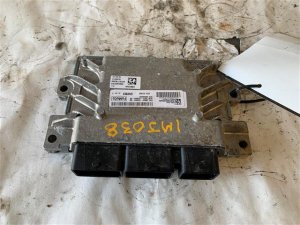



The information in this article is provided for general reference and educational purposes only. Vehicle specifications, procedures, and part compatibility can vary by production date, trim level, and region. Always consult your vehicle's factory service manual and verify part numbers before purchasing or performing repairs. Safety-critical components such as airbags, seat belts, and braking systems should be installed by a qualified professional.
- Ford C-MAX:
- 🎬 Helpful Videos
- 🛍️ Shop This Part
- What's Unique About the 2013-2018 Ford C-MAX
- Diagnostic Flowchart
- Symptoms You May Notice
- Most Likely Causes
- Rare But Worth Checking
- Diagnosis Steps
- Parts You'll Likely Need
- Related Codes That Often Appear With This One
- Technical Service Bulletins (TSBs) & Recalls
- Platform-Specific Known Issues
- Mechanic-Grade Diagnostic Values
- Hidden / Shadow Codes Worth Checking
- Scan Tool Commands That Help
- Wiring & Ground Locations
- OEM Part Supersession History
- Model Year Variations Within This Range
- 🎟️ Get 5% Off