

OBD-II Code U0293: Lost Communication With Hybrid Powertrain Control Module
What U0293 means, why it triggers, and how to fix it
- Code U0293 indicates a total communication failure with the Hybrid Powertrain Control Module (HPCM), immediately disabling the vehicle or forcing it into a severe 20-mph limp mode.
- Always test the 12-volt auxiliary battery first; a voltage drop below 9.6V during cranking is the #1 cause of this $1,000+ false alarm.
- Stop DIY diagnosis and tow the car to a hybrid-certified shop if the 12V battery and fuses test perfectly, as CAN bus testing requires an oscilloscope and high-voltage safety gear.
- Check for manufacturer Technical Service Bulletins (TSBs) before replacing parts; for example, 2023 Ford F-150 Hybrids fix this exact code with a simple Gateway Module software update.
What Does U0293 Mean?

The U0293 code means your vehicle's main computer lost its connection to the Hybrid Powertrain Control Module (HPCM). This module is the brain of the hybrid system, managing the high-voltage battery, electric motors, and charging functions. When this communication link breaks, the hybrid system cannot operate, leading to serious drivability problems, a dashboard lit up with multiple warnings, and messages like 'Stop Safely Now'.
Technical definition: The official SAE/OBD-II definition for U0293 is "Lost Communication With Hybrid Powertrain Control Module." This indicates the serial data link (typically a Controller Area Network or CAN bus) between the HPCM and other essential modules interrupted for a predetermined amount of time (often just 0.5 seconds). Another module on the network (like the ECM, Gateway, or Body Control Module) sets the code when it expects data from the HPCM but receives nothing.
Can I Drive With U0293?
No — Do Not Drive. Driving is highly dangerous and not recommended. This code indicates a critical failure in the hybrid system's communication network. The vehicle enters a 'limp mode' with severely reduced power, shuts down unexpectedly while driving, or fails to start entirely. Attempting to drive poses a significant safety risk as the car becomes immobile without warning.
Common Causes

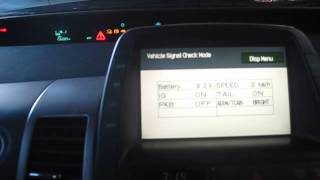
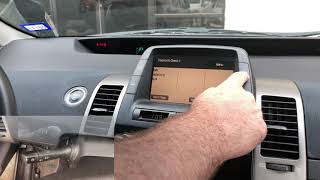
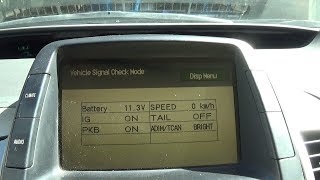
- Low or Unstable 12-Volt Battery Voltage (Very Common) — A weak, failing, or recently replaced 12-volt battery causes widespread electronic issues. Control modules require a stable voltage (above 10.5V under load) to operate correctly and drop off the communication network if the voltage dips too low during startup, triggering a flood of U-codes. 🎬 See how to quickly check your Prius 12v battery voltage.
- Faulty Wiring or Damaged Connectors (Very Common) — The wires and connectors linking the HPCM to the vehicle's CAN bus are highly susceptible to corrosion from moisture and road salt, physical damage from debris, or pins backing out of connectors. This physical break in the circuit is a primary cause of communication loss.
- Failed Hybrid Powertrain Control Module (HPCM) (Common) — The HPCM itself fails due to internal electronic component degradation, thermal stress, or manufacturing defects. When its internal microcontrollers or communication chips die, it permanently stops sending or receiving data on the network.
- Corrupted or Outdated HPCM Software (Common) — Software glitches, often caused by a sudden power loss during an update or a jump-start, stop the module from communicating. Manufacturers frequently release Technical Service Bulletins (TSBs) with software updates to patch these known communication bugs.
- Faulty Power or Ground Circuit to the HPCM (Less Common) — The HPCM requires a clean power supply and a solid ground connection to function. A broken wire, corroded ground point on the chassis or engine block, or a blown fuse prevents the module from powering on, making communication impossible.
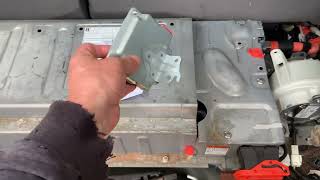
- Failed Hybrid Battery Voltage Sensor (Less Common) — On specific vehicles, particularly Toyota Prius models, a faulty hybrid battery voltage sensor (or corrosion on its connector) disrupts data flow. Because this sensor reports directly to the HPCM, its failure forces the HPCM to shut down communication defensively. 🎬 Watch: Troubleshooting a Prius with U0293 and voltage circuit issues.
- Interference from another Faulty Module (Rare) — A completely unrelated module sharing the same CAN bus fails and 'floods' the network with garbage data or shorts the bus lines. This blocks all other modules from communicating. For example, a shorted A/C compressor clutch on a Chevy Volt brings down the entire network.
- Accidental Short Circuit During Maintenance (Rare) — Accidentally touching a metal tool between the 12V battery's positive terminal and a grounded part (like the hybrid battery's metal case) creates a massive voltage spike. This instantly damages the sensitive communication circuits in one or more modules.
Symptoms
- Hybrid System Warning Light and 'Stop Safely Now' Message — The most immediate symptom is the illumination of the main hybrid system warning light, accompanied by an instrument cluster message instructing you to stop the vehicle safely.
- Vehicle Won't Start or Enter 'Ready' Mode — The car refuses to power on or enter the 'ready' state required for driving. You experience a no-start or an intermittent no-crank condition where dash lights illuminate but the engine remains dead.
- Reduced Power or 'Limp Mode' — To protect the powertrain, the vehicle enters a fail-safe mode with severely limited acceleration and speed, relying solely on the gasoline engine if it runs at all.
- Loss of EV-Only Mode and Regenerative Braking — The ability to drive on pure electric power disables entirely, and regenerative braking ceases to function, resulting in a firmer or heavier brake pedal feel.
- Multiple, Unrelated Warning Lights — Because network communication is down, you see a 'Christmas tree' effect on your dashboard, with ABS, traction control, power steering, and check engine lights illuminating simultaneously.
- Engine Cooling Fan Runs Continuously — As a fail-safe measure, the engine's main cooling fan runs at full speed whenever the ignition is on, quickly draining the 12V battery if the car isn't running.
Diagnostic Flowchart
Tap your situation to follow the diagnostic path that matches what you're seeing on this code.
Common Fixes & Costs
- Replacing the 12-Volt Auxiliary Battery
— Parts: $150-$300, Labor: $50-$100, ~0.5 hr book time
(DIY)
Ford Fusion/C-MAX Hybrid: OEM Motorcraft BAGM-47-H5 / BAGM-48-H6 (Alt: Duralast Platinum AGM, DieHard Platinum AGM (Group H5 or H6))
Toyota Prius: OEM Toyota TrueStart 28800-21181 (varies by year) (Alt: Optima Batteries DS46B24R, Duralast Platinum AGM (Group S46B24R)) - Repairing Damaged Wiring or Connectors — Parts: $10-$50, Labor: $150-$400, ~2.5 hr book time (Intermediate)
- Reprogramming (Re-flashing) the HPCM or Gateway Module — Parts: $0, Labor: $150-$300, ~1.2 hr book time (Professional)
- Replacing the Hybrid Powertrain Control Module (HPCM/BECM)
— Parts: $600-$1,500, Labor: $300-$900, ~3.5 hr book time
(Professional)
Ford Fusion / C-MAX Hybrid (BECM): OEM FG9Z-10B687-A (replaces DG9Z-10B687-A), DG98-10B687-MD. Part must be matched to vehicle. (Alt: Primarily available as refurbished OEM units from specialty suppliers.)
Toyota Prius (Power Management Control ECU): OEM Part numbers are highly specific to year and model. Examples for Gen 3 include 89681-47181, 89681-47300. Must match original part number. (Alt: Denso (OEM manufacturer) offers some replacements. Also available as refurbished OEM units.) - Replacing an Interfering Module on the CAN Bus — Parts: $200-$1,000, Labor: $150-$500, ~2 hr book time (Professional)
Used vs. New Parts: Buying Guide
When a used part is worth it: A used HPCM/BECM is a cost-effective option for older, high-mileage vehicles where the cost of a new OEM part is prohibitive. It makes sense only if the seller provides a warranty and has a good return policy.
Donor-vehicle mileage cap: roughly under 100000 miles for the part to have meaningful remaining life.
Donor quality checklist:
- Ensure the part number matches your original module exactly; superseded numbers are often incompatible.
- Buy from a reputable dismantler who verifies the donor vehicle was not scrapped due to flood, fire, or a similar electrical failure.
- Visually inspect the module for any signs of corrosion on the pins, case damage, or a burnt smell.
Decision logic:
- If The vehicle is under 8 years old or has low mileage → Buy a new or remanufactured OEM part to ensure longevity and compatibility.
- If The vehicle is over 10 years old and budget is the primary concern → A used part from a trusted source is a viable option, but be aware of the risks.
- If The used part requires programming that is only available through the dealer → Factor in the cost of dealer programming ($150-$300+) and confirm they are willing to program a customer-supplied used part, as many refuse.
Warranty tradeoff: Used parts typically come with a 30-90 day warranty, covering only the part itself, not labor. New OEM parts installed by a dealer carry a 1-2 year warranty on both parts and labor. Remanufactured units offer a 1-year to limited lifetime warranty.
Worst-case if a used part fails: $500-$1200 if the used module is faulty or incompatible, requiring repeat labor for installation, removal, and programming attempts.
What Happens If You Wait — Timeline
- 0-4 weeks: Intermittent 'No Start' or 'Stop Safely Now' message, especially during cold starts. The code appears and then clears on its own. Vehicle operates normally otherwise. (Added cost: $0-$150 (Potential towing fee).)
- 1-3 months: The code becomes persistent and the Check Engine/Hybrid Warning lights stay on. The vehicle frequently enters 'limp mode' with reduced power. Fail-safe measures, like the engine fan running continuously, activate, straining the 12V battery. (Added cost: $200-$500 (Premature failure of the 12V battery due to constant drain).)
- 3-6 months: The vehicle consistently fails to start or enter 'Ready' mode. The underlying issue, if it's a wiring short or a module flooding the network, continues to stress the entire CAN bus system. (Added cost: $300+ (Guaranteed towing, plus diagnostic fees for a hard-to-find electrical fault).)
- 6+ months: Ignoring a persistent network fault leads to cascading failures. The electrical noise or shorts from the initial faulty component causes permanent damage to the sensitive communication circuits in other modules on the same network, like the main Engine Control Module (ECM) or Body Control Module (BCM). (Added cost: $1500-$3000+ (Cost of the original HPCM repair PLUS the cost of replacing a now-damaged ECM or other control unit).)
Cost of Not Fixing It
- Immediate: Vehicle fails to start, shuts down while driving, or operates in a severe 'limp mode'. This poses an extreme and immediate safety risk. (Added cost: Potential towing fees ($100-$300) and risk of an accident.)
- Short-Term (days to weeks): Continued attempts to start or drive place stress on the 12V battery, leading to its premature failure if the engine cooling fan runs constantly as a fail-safe. (Added cost: $200-$500 for a new 12V battery and registration.)
- Long-Term (weeks to months): Ignoring a network communication issue masks other developing problems. If the root cause is a wiring short or a module flooding the network, it causes electrical damage to other connected control units over time. (Added cost: $500-$2500+ if other modules like the ECM or BCM are damaged.)
Diagnosis Steps

- Check the 12-Volt Battery and Fuses
Before any complex diagnosis, ensure the 12-volt auxiliary battery is healthy. Use a multimeter to test its voltage. A healthy battery at rest reads 12.6V-12.8V. Perform a load test; the voltage must not drop below 9.6V while cranking. A weak battery is the primary cause of communication codes. Next, inspect all fuses related to the powertrain and hybrid system (often labeled HEV, ECU-IG, or similar).
Tools: Multimeter, Automotive Battery Load Tester, Fuse puller (Beginner) - Perform a Full System Code Scan
Use a high-quality OBD-II scanner capable of reading codes from all vehicle modules (Engine, Hybrid, ABS, BCM, etc.). Note all present codes and which module reports the U0293 code. If multiple modules report lost communication with the HPCM, the HPCM or its wiring is the definitive culprit.
Tools: Hybrid-capable OBD-II Scanner (Beginner) - Visually Inspect Wiring and Connectors
Thoroughly examine the wiring harness leading to the Hybrid Powertrain Control Module. Look for chafing, rodent damage, corrosion on connector pins, or loose connections. Pay close attention to ground straps on the engine block and chassis, as a bad ground is a frequent hidden cause.
Tools: Flashlight, Inspection mirror (Intermediate) - Check CAN Bus Resistance
With the 12V battery disconnected, use a multimeter to measure the resistance between Pin 6 (CAN High) and Pin 14 (CAN Low) at the OBD-II port. A healthy network reads approximately 60 Ohms. A reading of 120 Ohms suggests a broken wire or missing terminating resistor. A reading near 0 Ohms indicates a short circuit between the two CAN lines.
Tools: Multimeter (Advanced) - Check CAN Bus Voltages
With the 12V battery reconnected and the vehicle in the 'ON' position (not 'Ready'), measure the voltage at the OBD-II port. Pin 6 (CAN High) should read approximately 2.6V to ground, and Pin 14 (CAN Low) should read approximately 2.4V to ground. Significant deviations confirm a short to power or ground on one of the lines.
Tools: Multimeter (Advanced) - Verify Power and Ground at the HPCM
Using a vehicle-specific wiring diagram, identify the power and ground pins on the HPCM's main connector. With the connector unplugged and the key on, check for battery voltage (11V-14V) at the power supply pin. With the key off, check for continuity to ground on the ground pins (resistance under 1 Ohm). A lack of power or ground means the module cannot turn on.
Tools: Multimeter, Vehicle-specific wiring diagram (Advanced) - Analyze Scan Tool Network Data
Because U0293 indicates a communication loss, you cannot read live data from the HPCM. Instead, use an advanced scan tool's network test function to 'ping' each module. A 'No Response' or 'Offline' status for the HPCM confirms it is dead on the network.
Tools: Advanced diagnostic scan tool (Advanced) - Isolate the Faulty Module
If CAN bus resistance or voltage readings are incorrect, isolate the HPCM to see if it causes the short. Disconnect the HPCM and re-measure the CAN bus resistance at the OBD-II port. If the resistance returns to a normal 120 Ohms, the HPCM is shorted internally.
Tools: Advanced diagnostic scan tool, Wiring diagram (Professional) - Use an Oscilloscope for Final Diagnosis
For intermittent issues, an oscilloscope is the ultimate diagnostic tool. A healthy CAN bus signal shows a clean, mirrored square wave pattern on the CAN High and Low lines. A distorted pattern, noise, or a flat line confirms a communication problem and pinpoints the exact electrical fault.
Tools: Oscilloscope, Wiring diagram (Professional)
When This Code Triggers (Freeze-Frame Conditions)
- Vehicle State: Key ON, Engine OFF or During Startup (The fault is detected immediately upon vehicle startup when all modules are expected to report their status on the network.)
- 12V Battery Voltage: 9.5V - 11.5V (The code triggers during or immediately after an engine crank, especially if the 12V battery is weak and voltage drops significantly.)
- Time Since Startup: < 1 second (Communication loss is a time-critical fault; a module failing to communicate for as little as 0.5 seconds sets the code.)
- Ambient Temperature: Varies (often extreme cold or heat) (Extreme temperatures exacerbate existing issues, causing hairline cracks in solder joints or corroded wires to lose contact, triggering the fault.)
Related Codes
- U0100 — Lost Communication With ECM/PCM. This code often appears with U0293. If the Body Control Module logs both U0100 and U0293, it can't talk to either the engine or hybrid controller. If the ECM logs U0293, it specifically can't hear the hybrid module. The module that most other modules complain about is the source of the problem.
- P0A1D — Hybrid Powertrain Control Module. This code indicates an internal electronic or hardware fault within the HPCM itself; the module failed its own self-test. This internal failure is the direct cause of the communication loss. If you see P0A1D, the HPCM almost certainly requires replacement.
- P1A43 — Hybrid Powertrain Control Module - Communication Circuit (Ford). This manufacturer-specific code points directly to a fault in the communication wiring or circuit for the HPCM. Seeing them together strongly suggests a wiring or software issue specific to the HPCM's network connection.
- P3000 — Battery Control System. Indicates a fault within the high-voltage battery system itself. A failing battery module causes erratic behavior in the Battery ECU, leading to a communication shutdown as a protective measure.
Climate & Environmental Factors
- High Humidity / Road Salt: Moisture and salt accelerate corrosion on wiring connectors, ground points, and module pins, especially for components mounted underneath the vehicle. This corrosion increases resistance or creates opens in the circuit, disrupting communication.
- Extreme Cold: Cold temperatures cause metal contacts within aging connectors or previously damaged wires to contract, turning a poor, intermittent connection into a hard failure. A vehicle works fine in the afternoon but fails to start and shows a U0293 code on a cold morning.
How to Talk to a Mechanic About This Code
Say this: "I have a U0293 code, 'Lost Communication with Hybrid Powertrain Control Module,' and the car won't start. I'd like to schedule a diagnostic. Please start by testing the 12-volt battery under load and checking the HPCM's main power and ground circuits before assuming the module itself has failed."
This signals you understand the code and that the most common causes are simple electrical issues, not a catastrophic module failure. It directs the technician to follow a logical, cost-effective diagnostic path and prevents them from immediately quoting the most expensive repair.
Avoid saying:
- 'My hybrid car won't start, can you fix it?'
- 'The dashboard is lit up like a Christmas tree.'
- 'Just replace whatever is broken.'
Questions to ask before authorizing the repair:
- Did the 12-volt battery pass a load test?
- Did you check for power and ground at the HPCM connector, and what were the voltage/resistance readings?
- What was the CAN bus resistance at the OBD-II port?
- Are there any Technical Service Bulletins (TSBs) for this code on my vehicle?
- If the HPCM needs to be replaced, does your estimate include the necessary VIN programming and system initialization?
Where to Take It: Dealer vs Independent vs Chain
- Dealer:
Recommended. The dealer has guaranteed access to the correct diagnostic tools (Techstream, FDRS), TSBs, and programming capabilities essential for this code.
Best for: Vehicles under warranty., Repairs requiring manufacturer-specific software updates (e.g., Ford TSB 24-2008)., Complex module replacement and programming.
Downsides: Highest labor rates., May default to replacing a module when a wiring repair or software flash is sufficient. (Typical cost: +50% vs. baseline) - Independent Shop:
Good Alternative, IF they are a hybrid specialist. Vet the shop by asking if they have OEM-level scan tools and experience with network communication codes.
Best for: Out-of-warranty vehicles where cost is a major factor., Diagnosing common faults like bad 12V batteries or wiring issues.
Downsides: Shop must specialize in hybrid vehicles and invest in high-level diagnostic tools and training., A general mechanic lacks the specific knowledge for CAN bus or high-voltage system diagnosis. (Typical cost: +0% vs. baseline) - Chain Shop:
AVOID. This code is far outside the scope of a typical chain repair shop.
Best for: Simple 12-volt battery replacement (and only if they can properly register the new battery).
Downsides: Technicians are generally not equipped or trained for high-voltage systems or complex network diagnostics., High risk of misdiagnosis and being sold unnecessary parts. (Typical cost: -10% vs. baseline)
When to Walk Away From the Repair
If the estimated repair cost for the U0293 fault exceeds 50% of the car's private-party value, you should seriously consider selling the vehicle as-is or for scrap.
- Car worth $8000, fix is $2200: Fix it. The repair cost is significant but well below the 50% threshold.
- Car worth $4500, fix is $2200: Borderline. At nearly 50% of the car's value, get a second opinion. If the diagnosis is confirmed, consider selling it 'as-is' to a specialist or trading it in.
- Car worth $3000, fix is $2200: Walk away. The repair cost is over 70% of the vehicle's value. It is not an economically sound repair.
What Scan Tool You Need for This Code

Minimum: A scanner that can read codes from ALL vehicle modules (Engine, ABS, Airbag, Hybrid Controller, etc.).
A cheap, engine-only code reader is useless for U0293. This is a network code, so you must be able to see which modules are online and which one is reporting the fault. Without an all-system scan, you are flying blind.
Budget: BlueDriver Pro Scan Tool (~$100) — Performs a full-system scan to identify which modules are reporting communication errors. It reads and clears codes from the hybrid system, ABS, and others, which is the minimum required to start a proper diagnosis.
Mid-range: Foxwell NT510 Elite (~$180) — Provides manufacturer-specific diagnostics for one chosen brand (e.g., Toyota, Ford). It reads hybrid-specific live data and performs some bi-directional tests (active tests) to help isolate faulty components.
Professional: Autel MaxiCOM MK808S/MK808BT Pro (~$450-550) — Offers OE-level, all-system diagnostics with full bi-directional control (active tests) to command modules and verify functionality. It performs network topology mapping and has advanced data graphing, making it much easier to diagnose complex CAN bus failures.
Rent vs buy: For a one-time U0293 code, paying for a professional diagnosis is more effective than buying a tool. While AutoZone's loaner tool program exists, their basic scanners are often not capable of the all-module scan required for this code. Buy a scanner only if you plan to do regular, in-depth DIY repairs.
How to Clear the Code After You Fix It
- Ensure all repairs are complete and the 12V battery is reconnected and fully charged.
- Use a compatible OBD-II scan tool to perform a 'Clear All Codes' function.
- Perform a complete OBD-II drive cycle to allow all readiness monitors to run.
- Re-scan the vehicle to confirm U0293 and any related codes have not returned.
Drive cycle (~30 minutes): A generic drive cycle includes a cold start (sitting for 8+ hours), a few minutes of idling, followed by a mix of city driving (stop-and-go) and steady highway-speed driving (e.g., 15 minutes at 55 mph). The goal is to warm the vehicle to normal operating temperature and hold it there under various loads.
Readiness monitors affected: Comprehensive Component Monitor, Misfire Monitor, Catalyst Monitor, Oxygen Sensor Monitor
Before emissions retest: drive at least 100 miles to fully set monitors.
Watch out for:
- Simply disconnecting the 12V battery clears the code, but it also resets all readiness monitors, guaranteeing an emissions test failure due to 'Not Ready' status.
- The code returns immediately if the root cause (e.g., bad wiring, faulty module) is not properly repaired.
- Some vehicles require a specific drive cycle procedure detailed in the owner's manual to set all monitors.
Will This Fail Emissions / State Inspection?
Yes — this code typically fails an OBD-II emissions inspection.
- California: A U0293 code is an automatic failure. After repair, the vehicle must complete a full drive cycle to set all required readiness monitors before it can be re-tested. A vehicle with 'Not Ready' monitors is rejected.
- New York: Any active check engine light, including for a U0293 code, results in an automatic emissions inspection failure. Clearing the code right before the test leads to failure due to unset readiness monitors.
- Texas: In counties requiring emissions testing, an active U0293 code causes an automatic failure of the OBD-II test. Texas allows for one or two 'Not Ready' monitors depending on vehicle age, but clearing codes resets more than that, leading to a failure.
Most Commonly Affected Vehicles
- Ford C-MAX / Fusion Hybrid (2013-2020) — A very common failure of the Battery Energy Control Module (BECM), located inside the high-voltage battery. Ford TSB SSM 47649 warns that using dielectric grease on the BECM connector causes this code by impeding low-voltage signals. A recall (23S33) was issued for 2019-2020 Fusion Energi models for a separate BECM issue causing power loss or fire.
- Ford F-150 Hybrid (2023-2023) — A known issue addressed by TSB 24-2008 involves an intermittent no-start and U0293 code caused by a software glitch in the Gateway Module (GWM). The fix is a dealer-installed software update, not a hardware replacement.
- Toyota Prius (Gen 2 & 3) (2004-2015) — On Gen 2 models, this points to a failure in the Power Management Control ECU. On Gen 3 models, issues with the hybrid battery voltage sensor or corrosion on its connector are frequent culprits. Gen 3 models are also known for EGR and head gasket issues, which lead to electrical problems if coolant leaks occur.
- Chevrolet Volt (2016-2019) — Caused by damaged wiring harnesses. In well-documented cases, the failure of an unrelated component on the CAN bus, such as the AC compressor clutch relay, shorts the network and prevents the HPCM from communicating.
- Hyundai Sonata Hybrid (2011-2015) — Presents with a 'Safely Stop and Do Not Drive' warning. In addition to wiring or module failure, cases are traced to a faulty electronic oil pump control unit for the transmission, which disrupts CAN communication and triggers U0293.
- BMW ActiveHybrid 3/5/7 Series (2012-2015) — Triggered by corrosion on electrical connector pins, particularly on modules located in areas susceptible to moisture. Symptoms are more frequent during cold weather as temperature changes affect the integrity of a poor connection.
- Chevrolet Malibu Hybrid (2012-2014) — This code appears after replacing the 12-volt battery if modules do not re-initialize correctly. It is also related to the Generator Control Module, which is part of the high-voltage battery assembly on these eAssist models.
- Toyota Prius Plug-in (2012-2015) — Issues arise from accidental short circuits during maintenance, such as dropping a tool between the 12V positive terminal and the grounded hybrid battery case, damaging sensitive communication circuits within the Power Management Control ECU.
- General Motors Hybrid Trucks/SUVs (Tahoe, Yukon) (2008-2013) — On these two-mode hybrid trucks, intermittent U-codes are frequently traced to a poor or corroded engine block ground strap. The torque of the engine causes a momentary loss of ground, disrupting module communication.
Manufacturer-Specific Notes
- Ford: Per TSB SSM 47649, technicians are warned NOT to apply dielectric grease to the Battery Energy Control Module (BECM) connector on C-MAX and Fusion hybrids. The grease interferes with low-voltage data signals and directly causes a U0293 code. Safety Recall 23S33 was also issued for 2019-2020 Fusion Energi models for a BECM issue causing power loss or fire.
- Toyota: Toyota refers to the HPCM as the 'Power Management Control ECU' or 'Hybrid Vehicle Control ECU'. On many Prius models, a failing hybrid battery voltage sensor causes communication codes like U0293, even if the main control module itself is perfectly fine.
- General Motors (Chevrolet): On GM hybrids like the Tahoe trucks and early Volts, intermittent U-codes trace to non-obvious sources. A poor ground connection on the engine block or a failing AC compressor clutch relay disrupts the entire CAN bus, leading to a U0293 code even though the HPCM is healthy.
- Hyundai / Kia: On Sonata and Optima hybrids, U0293 relates to the electronic transmission oil pump or its control unit. A failure in this system disrupts network communication, causing the HPCM to go offline and trigger the code.
Real Owner Stories
2014 Ford Fusion Energi with ~150k miles
Vehicle would not start and displayed the 'Stop Safely Now' message, along with wrench and red battery warning lights. The owner had recently charged the 12V battery after it died.
What they tried:
- Charged the 12V battery.
- Attempted to use Forscan to reset the battery age, but the BECM module could not be found.
- The primary code found was U0111 (Lost Communication With Battery Energy Control Module A), which is functionally similar to U0293 in this context.
Outcome: The owner suspected a failed BECM, a common issue on these vehicles. Another user with a similar issue on a 2014 Fusion was quoted $1,050 by a dealership for a BECM replacement. That owner considered using a $90 part from a salvage yard but ran into issues with programming and the yard refusing to sell the module separately from the main battery.
Lesson: On Ford Fusion/C-MAX hybrids, a no-start with communication codes points directly to the BECM. While a weak 12V battery causes similar symptoms and must be tested first, a persistent communication loss with the BECM requires module replacement, which is a costly, professional-level repair.
2012 Toyota Prius with ~170k miles
The U0293 code appeared after the owner had the car detailed. The car seemed to run normally.
What they tried:
- The owner disconnected the 12V battery, which cleared the code temporarily.
Outcome: Other owners in the forum immediately suggested the 12V auxiliary battery was the likely culprit, advising a load test. A weak 12V battery is a very common cause of random communication codes on Priuses, as modules fail to initialize correctly with low voltage. The detailing process, involving open doors and interior lights, was the final straw for an already weak battery.
Lesson: Always suspect the 12V battery when a U0293 code appears intermittently or after an event that drains the battery (like detailing or leaving lights on). Before suspecting the expensive hybrid ECU, perform a load test on the 12V battery; it's the most common and cheapest fix.
2006 Toyota Prius with recurring U0293
The car would not go into 'Ready' mode, and the U0293 code kept returning even after replacing the main hybrid ECU with a pre-programmed unit.
What they tried:
- Replaced the Hybrid ECU (Power Management Control ECU).
- The code returned several weeks later.
Outcome: The owner correctly suspected that something else caused the issue, not the ECU itself. In a similar case with a Prius throwing multiple communication codes (including U0293 and P0A1D), the ultimate root cause was discovered to be a broken spark plug and faulty ignition coils causing engine misfires. The electrical noise and instability from the misfires disrupted the CAN bus network, leading to the communication codes.
Lesson: A U0293 code doesn't always mean the hybrid module or its direct wiring is the problem. A completely separate system (like the ignition system) fails in a way that electrically interferes with the CAN bus, causing communication codes as a secondary symptom. This highlights the importance of checking all other engine-related codes.
How to Prevent This Code From Triggering
- Annually test the 12-volt auxiliary battery. (Annually, especially after 3 years of service.) — A weak or failing 12V battery is the single most common cause of spurious electronic faults and communication codes like U0293. Modules require stable voltage to operate; low voltage on startup causes them to drop off the network.
- Keep battery terminals and chassis ground points clean. (Inspect every 1-2 years.) — Corrosion on battery terminals or the main chassis ground strap increases resistance, causing voltage drops that mimic a failing battery. This prevents modules from receiving the stable power they need to communicate properly.
- Check for and install vehicle software updates. (During routine dealer service or if symptoms arise.) — Manufacturers frequently release Technical Service Bulletins (TSBs) with software updates to fix known communication bugs. For example, Ford TSB 24-2008 for the 2023 F-150 Hybrid directly addresses a U0293 code with a Gateway Module software update.
- Ensure proper wiring practices are used for all repairs. (During any electrical service.) — CAN bus communication relies on a physically sound network. Using twisted-pair wiring, ensuring solid connections, and avoiding shorts are critical. The majority of communication problems stem from poor wiring or incorrect termination.
- Periodically inspect the hybrid battery cooling system. (As per manufacturer's schedule (e.g., check/clean filter).) — Overheating damages the high-voltage battery and its internal control modules (like the BECM in a Ford). Ensuring cooling fans are clean and air paths are unobstructed helps prevent heat-related electronic failures that lead to communication loss.
Frequently Asked Questions
What is the most common misdiagnosis for U0293?
The most common mistake is immediately replacing the expensive Hybrid Powertrain Control Module. The actual cause is often much simpler and cheaper, such as a weak 12V battery, a corroded ground wire, or a blown fuse. Always perform a full diagnostic workup starting with the 12V battery.
Why did I get a U0293 code on my non-hybrid car?
This is a 'ghost code' indicating a module on your car's communication network failed and is disrupting the entire bus. The diagnostic tool interprets the garbage data as a failure to communicate with a hybrid module that doesn't exist on your vehicle. The root cause is almost always a wiring short or a different, unrelated module failing electrically.
Can a bad ground wire really cause such a serious code?
Yes, absolutely. Control modules are sensitive electronic devices requiring a stable voltage and a clean ground reference to communicate. A loose, corroded, or broken ground wire creates a floating voltage, causing the module to shut down and drop off the network.
Can I reset the U0293 code myself?
You can clear the code with an OBD-II scanner, but it returns immediately if the underlying communication problem remains. Simply resetting the code does not solve a hardware or network failure.
Is fixing a U0293 code expensive?
Repair costs range from $50 for a simple fuse or ground cleaning to over $2,000. If the Hybrid Powertrain Control Module requires replacement, expect to pay $600-$1,500 for the part plus $300-$900 for installation and VIN programming.
Why did this code appear right after I replaced my 12V battery?
When power disconnects and reconnects, modules sometimes fail to 'wake up' or initialize in the correct sequence, causing a temporary communication fault. It also happens if the new battery is not fully charged or if the terminals are loose, causing a momentary voltage drop.
Why are there so many 'U' codes appearing at once?
Simultaneous U-codes strongly indicate a network-wide failure rather than a single module failure. This points to a problem with the CAN bus wiring itself, a faulty Gateway Module, or a single 'rogue' module disrupting communication for all others.
Key Takeaways
- Code U0293 indicates a total communication failure with the Hybrid Powertrain Control Module (HPCM), immediately disabling the vehicle or forcing it into a severe 20-mph limp mode.
- Always test the 12-volt auxiliary battery first; a voltage drop below 9.6V during cranking is the #1 cause of this $1,000+ false alarm.
- Stop DIY diagnosis and tow the car to a hybrid-certified shop if the 12V battery and fuses test perfectly, as CAN bus testing requires an oscilloscope and high-voltage safety gear.
- Check for manufacturer Technical Service Bulletins (TSBs) before replacing parts; for example, 2023 Ford F-150 Hybrids fix this exact code with a simple Gateway Module software update.
Helpful Videos
![How To Test CAN BUS With A Multimeter [CAN Bus Resistance Check] Mechanic Mindset](https://img.youtube.com/vi/JPE42HSJxAk/mqdefault.jpg)

The information in this article is provided for general reference and educational purposes only. Vehicle specifications, procedures, and part compatibility can vary by production date, trim level, and region. Always consult your vehicle's factory service manual and verify part numbers before purchasing or performing repairs. Safety-critical components such as airbags, seat belts, and braking systems should be installed by a qualified professional.
- 🎬 Helpful Videos
- What Does U0293 Mean?
- Can I Drive With U0293?
- Common Causes
- Symptoms
- Diagnostic Flowchart
- Common Fixes & Costs
- Used vs. New Parts: Buying Guide
- What Happens If You Wait — Timeline
- Cost of Not Fixing It
- Diagnosis Steps
- When This Code Triggers (Freeze-Frame Conditions)
- Related Codes
- Climate & Environmental Factors
- How to Talk to a Mechanic About This Code
- Where to Take It: Dealer vs Independent vs Chain
- When to Walk Away From the Repair
- What Scan Tool You Need for This Code
- How to Clear the Code After You Fix It
- Will This Fail Emissions / State Inspection?
- Most Commonly Affected Vehicles
- Manufacturer-Specific Notes
- Real Owner Stories
- 2014 Ford Fusion Energi with ~150k miles
- 2012 Toyota Prius with ~170k miles
- 2006 Toyota Prius with recurring U0293
- How to Prevent This Code From Triggering
- Frequently Asked Questions
- What is the most common misdiagnosis for U0293?
- Why did I get a U0293 code on my non-hybrid car?
- Can a bad ground wire really cause such a serious code?
- Can I reset the U0293 code myself?
- Is fixing a U0293 code expensive?
- Why did this code appear right after I replaced my 12V battery?
- Why are there so many 'U' codes appearing at once?
- Key Takeaways
- 🎟️ Get 5% Off