

U0268 on 2017-2018 Chevrolet Volt: Side Object Detection Communication Failure Fixes
This code means the vehicle has lost communication with the passenger-side blind spot sensor, disabling the 'Side Blind Zone Alert' system. The most common cause is a failed sensor module in the rear bumper, often due to water intrusion or physical damage. The fix typically involves replacing the module and requires removing the rear bumper cover and programming the new part.
- U0268 on a 2017-2018 Volt means the passenger-side blind spot radar sensor has stopped communicating.
- The most common fix is to replace the failed sensor module, which is located inside the rear bumper cover.
- Water damage and corrosion are the primary reasons for module failure; always inspect the wiring connector for damage as well.
- This is not a simple DIY repair, as the new module requires professional programming to work.
- Before extensive diagnosis, check that the module hasn't simply come loose from its mounting bracket inside the bumper.
What's Unique About the 2017-2018 Chevrolet VOLT
On the second-generation Volt, like many modern GM vehicles built on the D2XX platform, the side object detection modules are placed in the rear bumper corners. This location makes them vulnerable to moisture from road spray, corrosion, and minor impacts that can damage the module, its connector, or its mounting bracket. A Reddit user with a 2017 Volt noted their sensor had simply fallen out of its bracket inside the bumper, causing a fault. While the issue is common across many GM models, the Volt's compact packaging and specific bumper design dictate the repair process.
Diagnostic Flowchart
Tap your situation to follow the diagnostic path that matches what you're seeing on this vehicle.
Symptoms You May Notice
- "Service Side Detection System" or "Service Driver Assist" message on the driver information center (DIC).
- Side Blind Zone Alert system is inoperative; the amber warning light in the passenger-side mirror will not illuminate for vehicles in the blind spot.
- Rear Cross-Traffic Alert system is inoperative.
- The amber alert symbol in the mirror may light up during vehicle startup but will not function while driving, or it may stay illuminated constantly.
- In some cases, the warning may appear as "Side detection temporarily unavailable", which can be caused by temporary blockages like snow or heavy rain, but if persistent, indicates a hardware fault.
- Replacing the Active Safety Control Module. This main module is rarely the cause of a single-sensor communication failure. Diagnosis should always start at the non-communicating peripheral module.
- Replacing the module without programming. A new module will not function until it is programmed to the vehicle using GM's Service Programming System (SPS).
Most Likely Causes
- Failed Side Object Detection Module (Passenger Side) 🔴 High Probability The module's location in the rear bumper corner exposes it to water, road salt, and debris. The module housing can crack, allowing moisture to penetrate and corrode the internal radar circuit board, causing it to swell and fail.
How to confirm: After removing the rear bumper cover, visually inspect the module for signs of swelling, cracking, or corrosion around the connector. A professional scan tool will also show the module as 'offline' or 'not communicating'.
Typical fix: Replace the passenger-side Side Object Detection Module. The new module must be programmed by a dealer or a qualified shop with access to GM's Service Programming System (SPS).
Est. part cost: $130-$230 - Damaged Wiring or Corroded Connector 🟡 Medium Probability The same moisture and debris that damages the module can also corrode the pins in its electrical connector, leading to poor contact and communication loss. The wiring harness in this area is also susceptible to damage from minor rear-end impacts or chafing.
How to confirm: With the module disconnected, inspect the connector pins for green or white powder (corrosion) or physical damage. Check the harness for chafing or breaks, especially where it passes through the body. A multimeter can be used to check for power, ground, and continuity on the CAN bus wires at the connector.
Typical fix: If corrosion is severe, the connector must be replaced with a new pigtail (e.g., ACDelco PT2712), which is spliced into the existing harness. Damaged wires must be repaired with solder and heat shrink.
Est. part cost: $25-$60 for a connector pigtail. - Broken or Misaligned Module Mounting Bracket ⚪ Low Probability A minor bumper impact can break the plastic bracket that is heat-staked to the bumper fascia, causing the module to become misaligned or rattle inside the bumper. If the module isn't aimed correctly, the system may disable itself over time and display a service message, even without setting a communication DTC.
How to confirm: Visually inspect the module's mounting bracket for cracks or damage. A rattling sound from the bumper corner can also be a clue. Gently pull on the bracket to see if the heat stakes have broken loose from the fascia.
Typical fix: If the bracket is broken, it may need to be repaired or replaced. In some cases, the module simply needs to be securely clipped back into its bracket. Per TSB PIT5622B, after fixing the mount, the module may learn its new position over a week of driving. To clear the fault immediately, the module must be replaced and programmed.
Est. part cost: $25-$50 for a new bracket.
Rare But Worth Checking
- Faulty Diagnostic Tool (MDI Cable): GM Technical Service Bulletin PIT5441C warns technicians that a faulty diagnostic interface cable (MDI) can sometimes generate false U-codes, including U0268. This is a problem with the mechanic's tool, not the car, but can lead to misdiagnosis if not ruled out. The object detection bus uses pins 3 and 11 on the DLC, which can expose a fault in a technician's cable.
Diagnosis Steps
- Scan the vehicle with a professional-grade tool to confirm U0268 is active in the Active Safety Control Module.
- Verify that the scan tool cannot establish communication with the 'Right Side Object Detection Module'.
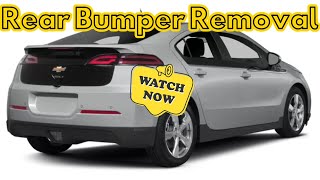
- Turn the vehicle off and gain access to the rear bumper internals. This requires removing the rear fascia.
- Locate the passenger-side object detection module in the corner of the bumper.
- Inspect the module's mounting bracket to ensure it is secure and not broken or detached from the fascia.
- Disconnect the electrical connector and inspect both the module's pins and the connector harness for any signs of corrosion (green/white powder), water intrusion, or backed-out pins.
- If no damage is visible, use a multimeter to check for proper power (approx. 12V) and ground (less than 5 ohms to chassis ground) at the connector with the key on.
- Check the two CAN bus wires for continuity back to the main harness and check for short to power or ground.
- If power, ground, and wiring are confirmed good, the module itself has likely failed due to internal failure.
- Replace the failed module, ensuring the new part is correctly programmed and calibrated using GM-specific diagnostic software.
Parts You'll Likely Need
- Side Object Detection Module (Right/Passenger)
(OEM #84440528)— This is the radar sensor module that most commonly fails due to its location and susceptibility to moisture damage. This part number supersedes previous versions 22971841 and 23133813.
Trusted brands: ACDelco, GM Genuine
OEM price range: $130-$230
Aftermarket price range: $90-$150 - Wiring Harness Connector Pigtail
(OEM #19300189)— If the module fails due to corrosion, the electrical connector is often damaged as well and must be replaced to ensure a lasting repair. Note: Part number 19300189 is listed by GM as a remanufactured power steering gear, which is incorrect in this context. The correct pigtail part number may vary, but a common cross-reference is ACDelco PT2712. Always verify the connector style before ordering.
Trusted brands: ACDelco
OEM price range: $40-$60
Aftermarket price range: $25-$40
Related Codes That Often Appear With This One
- U0269 — This is the corresponding 'Lost Communication' code for the driver-side ('Module A') Side Object Detection Module. If both codes are present, it may point to a more widespread wiring or power/ground issue affecting both sensors, or a complete failure of the shared data bus.
Technical Service Bulletins (TSBs) & Recalls
- PIT5441C: Advises technicians that false object detection system codes (including U0268) can be caused by a faulty diagnostic MDI cable, rather than a vehicle fault.
- PIT5622B: Describes a condition where a misaligned or broken module mounting bracket can cause a 'Side Detection System Unavailable' message, sometimes without setting a DTC. It notes that after fixing the bracket, the system may take a week of driving to re-learn, or the module can be replaced and programmed for an immediate fix.
Mechanic-Grade Diagnostic Values
- Object Detection CAN Bus Resistance — expected: 60 Ohms. Failure: A reading of 120 Ohms indicates an open circuit or a missing terminating resistor (likely the disconnected/failed module). A reading significantly less than 60 Ohms (e.g., near 0) indicates a short between the CAN high and low wires.
- CAN Bus Voltage (Key On, Multimeter) — expected: CAN High: ~2.7V, CAN Low: ~2.3V. Failure: Voltages that are stuck high, low, or at 0V indicate a short to power, short to ground, or an open circuit.
- Module Connector Power and Ground — expected: Pin 8: Battery Voltage (~12V), Pin 7: Good Ground (< 5 Ohms to chassis). Failure: No voltage on Pin 8 or high resistance on Pin 7 indicates a problem in the wiring harness leading to the module, not the module itself.
Hidden / Shadow Codes Worth Checking
- U18A6: Lost Communication With Right Object Detection Control Module On Dedicated Bus 1 (see via This code is not set in the main Active Safety Control Module, but rather in the *left* (driver's side) object detection module. It can only be seen by using a scan tool like GDS2 to read codes from the left-side module specifically. Its presence strongly confirms the fault is with the right-side module or its dedicated wiring, as the left module is online but cannot see its counterpart.)
Scan Tool Commands That Help
- GDS2 (Global Diagnostic System 2): Module Programming / Setup New Module — This function is mandatory after replacing a Side Object Detection Module. It is accessed through GDS2, which connects to the GM Service Programming System (SPS) to download the correct software and vehicle-specific calibration, then programs it to the new module. Without this step, the new module will not communicate with the vehicle.
Wiring & Ground Locations
- Side Object Detection Module Connector (Passenger Side) — Inside the rear bumper cover, at the right (passenger-side) corner.. This 8-pin connector is the single interface for the module. Pin 8 is power, Pin 7 is ground, and two other pins are for the dedicated object detection CAN bus. Corrosion or damage here is a primary cause of code U0268.
- Rear Body Ground Point (e.g., G401/G402) — Exact location on the Volt is not specified in public documents, but typically found on the frame rail inside the rear wheel well or behind the bumper structure.. While the module has a ground wire in its harness, that wire must eventually terminate at a solid chassis ground. A loose or corroded main ground point in the rear of the vehicle could cause intermittent issues for multiple components, including the object detection system.
OEM Part Supersession History
22971841, 23133813→84440528— Part revision and improvement, likely for better sealing against moisture.
Heads up: While the new part number is the correct replacement, an edge case exists where it may not program correctly if the module on the opposite side of the vehicle is a much older revision. In this rare case, both modules may need to be replaced as a pair.
Helpful Videos
We Have This Part in Stock


The information in this article is provided for general reference and educational purposes only. Vehicle specifications, procedures, and part compatibility can vary by production date, trim level, and region. Always consult your vehicle's factory service manual and verify part numbers before purchasing or performing repairs. Safety-critical components such as airbags, seat belts, and braking systems should be installed by a qualified professional.
- Chevrolet VOLT:
- 🎬 Helpful Videos
- 🛍️ Shop This Part
- What's Unique About the 2017-2018 Chevrolet VOLT
- Diagnostic Flowchart
- Symptoms You May Notice
- Most Likely Causes
- Rare But Worth Checking
- Diagnosis Steps
- Parts You'll Likely Need
- Related Codes That Often Appear With This One
- Technical Service Bulletins (TSBs) & Recalls
- Mechanic-Grade Diagnostic Values
- Hidden / Shadow Codes Worth Checking
- Scan Tool Commands That Help
- Wiring & Ground Locations
- OEM Part Supersession History
- 🎟️ Get 5% Off