

U0268 on 2013-2018 Cadillac XTS: Lost Communication With Rear Object Detection Module
This code indicates a communication failure with a rear object detection module, part of your blind spot and rear cross-traffic alert system. The most common causes are a corroded or damaged module/connector in the rear bumper or, unusually, a faulty diagnostic scan tool cable creating a false code. Replacement requires calibration.
- U0268 on your XTS means a rear driver-assist radar module has stopped communicating, disabling your blind spot and rear cross-traffic alerts.
- The most common cause is corrosion of the module or its connector, which are located in the rear bumper corners. GM has a TSB (18-NA-192) that details a sealing procedure to prevent this.
- Before replacing parts, be aware that a GM service bulletin (PIT5441C) indicates this code can be falsely triggered by a technician's faulty diagnostic tool.
- Repair involves accessing the module, inspecting for corrosion, and likely replacing the module and/or its connector. The new module MUST be calibrated with a professional scan tool to function correctly.
What's Unique About the 2013-2018 Cadillac XTS
For the Cadillac XTS and other GM vehicles of this era, there is a unique diagnostic wrinkle. A Technical Service Bulletin (TSB PIT5441C) warns that the code can be falsely triggered by a faulty diagnostic tool (GM's MDI) or its cable. Beyond that, the physical location of the radar modules in the rear bumper makes them highly susceptible to moisture and salt corrosion, a common failure point on these vehicles. GM later issued TSB 18-NA-192 acknowledging water intrusion and providing a specific sealing procedure for the module bracket to prevent repeat failures, confirming a vulnerability in the original design.
Diagnostic Flowchart
Tap your situation to follow the diagnostic path that matches what you're seeing on this vehicle.
Symptoms You May Notice
- "Service Driver Assist" or "Service Active Safety" message on the dashboard
- Side Blind Zone Alert system is inoperative
- Rear Cross Traffic Alert system is inoperative
- Warning lights in the side mirrors do not illuminate when a vehicle is in the blind spot
- In some cases, the blind spot warning lights in the side mirrors may stay illuminated continuously
- Replacing a rear radar module without first checking for the false code possibility mentioned in TSB PIT5441C, especially if the code appeared during a shop visit.
- Replacing the module without also replacing the corroded connector pigtail, leading to a repeat failure.
- Failing to perform the 'Side Blind Zone Alert Module Learn' procedure after replacement, resulting in a non-functional system even with new parts.
Most Likely Causes
- Corroded or Damaged Rear Radar Module or Connector 🔴 High Probability The modules are located in the rear bumper corners, exposing them to road salt, moisture, and debris kicked up by the tires. Water can leak past the rear fascia-to-body seal and pool around the module and its connector, leading to severe corrosion of the module's pins and the connector pigtail. TSB 18-NA-192 was issued to address this specific water intrusion path.
How to confirm: Visually inspect the module and its connector by accessing the area behind the rear bumper cover. Look for green or white corrosion, swollen plastic, broken pins, or signs of water staining on the module and surrounding bracket.
Typical fix: Replace the failed radar module and repair or replace the connector pigtail if it is also corroded. Apply a bead of sealant (e.g., Kent Automotive High-Tack) around the module bracket as per TSB 18-NA-192 to prevent future water intrusion. The new module must be calibrated.
Est. part cost: $250-$500 - Damaged Wiring Harness 🟡 Medium Probability The wiring harness running to the rear bumper can be damaged from minor rear-end impacts, improper repairs, or chafing against the vehicle body or bumper structure. The wires leading to the module connector are a common point of failure.
How to confirm: Perform a continuity and resistance test on the CAN bus and power/ground wires between the Active Safety Control Module and the affected rear radar module connector. Check for opens, shorts to ground, or shorts to power.
Typical fix: Repair the specific broken or shorted wires in the harness. This often involves splicing in a new section of wire or replacing a terminal.
Est. part cost: $10-$50 - Faulty Active Safety Control Module ⚪ Low Probability
How to confirm: This is a diagnosis of exclusion. If the modules, wiring, and connectors are all confirmed to be good, the control module itself may be the issue. Requires advanced diagnostics with a GM-specific scan tool to confirm.
Typical fix: Replace and program the Active Safety Control Module.
Est. part cost: $300-$600
Rare But Worth Checking
- Faulty Diagnostic Scan Tool or Cable: A GM Technical Service Bulletin (PIT5441C) states that this code can be falsely set by a problem in the MDI (Multiple Diagnostic Interface) tool used by technicians. If the code only appears during a professional diagnosis, the tool itself should be suspected before replacing vehicle parts.
- Incorrect Part Installed: The left (driver side) and right (passenger side) rear object detection modules often have different part numbers and are not interchangeable. Installing the wrong module on a given side will result in a communication failure and set this code. Always verify the part number is correct for the specific location.
Diagnosis Steps
- Verify if the code was present before a diagnostic scan or if it appeared during the scan. If it only appeared during the scan, suspect the diagnostic tool itself per TSB PIT5441C.
- If the code is persistent, connect a professional scan tool to determine which specific rear radar module is not communicating (left or right).
- Gain access to the non-communicating module behind the rear bumper cover. This typically requires partial or full removal of the rear bumper fascia. 🎬 Watch: How to safely remove the rear bumper cover.
- Visually inspect the module and its electrical connector for any signs of physical damage, water intrusion, or corrosion. Pay close attention to the pins inside the connector.
- If corrosion is found, disconnect the module and inspect the connector pins on both the harness side and the module side for damage. A corroded pigtail must be replaced.
- If no visible damage is found, use a multimeter to check for proper power, ground, and network continuity at the module's connector. Check the CAN bus wires for correct resistance (should be ~60 ohms across the pair).
- If wiring, power, and ground are confirmed good, verify that the correct part number for the specific side (LH or RH) is installed.
- If all the above checks pass, the radar module itself is the most likely culprit.
- After replacing the module (and pigtail if needed), a 'Side Blind Zone Alert Module Learn' procedure must be performed using a compatible scan tool to restore full system functionality. This calibration process often involves driving the vehicle under specific conditions.
Parts You'll Likely Need
- Side Blind Zone Alert Sensor / Rear Object Detection Module
(OEM #84612459 (Supersedes 20968741, 22902467, 22960642, 84512065). Note: Part numbers can be specific to Left/Right and may vary. Always verify with VIN.)— This module is the most common failure point, typically due to corrosion from its location in the rear bumper.
Trusted brands: ACDelco (GM Genuine), Dorman
OEM price range: $300-$450
Aftermarket price range: $200-$350 - Blind Spot Sensor Connector Pigtail
(OEM #Varies, e.g., ACDelco PT2720)— Often the connector corrodes along with the module itself and must be cut out and spliced in to ensure a good connection to the new part.
Trusted brands: ACDelco, Dorman, Standard Motor Products
OEM price range: $40-$70
Aftermarket price range: $25-$50 - Sealant
(OEM #Kent Automotive High-Tack P10200 or equivalent)— Recommended by TSB 18-NA-192 to seal the module mounting bracket to the body to prevent future water intrusion.
Trusted brands: Kent Automotive, 3M
OEM price range: $20-$40
Aftermarket price range: $15-$30
Related Codes That Often Appear With This One
- U0269 — This code is for the other rear object detection module. It's common to see both if there's a shared wiring problem or if both modules have failed due to similar environmental exposure.
- U0075 — This is a general 'Control Module Communication Bus 'B' Off' code. It can be set along with more specific codes like U0268 when a major network disruption occurs. The TSB also groups these codes together.
Technical Service Bulletins (TSBs) & Recalls
- PIT5441C: Mentions that U0268 and other related codes can be falsely set by a faulty MDI (Multiple Diagnostic Interface) or its cable during diagnosis, and advises technicians to check their equipment.
- 18-NA-192: Addresses customer complaints of the 'Service Driver Assist' message due to water intrusion into the side blind zone alert modules. It provides a detailed procedure for applying sealant to the module mounting bracket to prevent water from leaking behind it, which is the root cause of the corrosion.
Platform-Specific Known Issues
- Owner Experience with Corrosion Failure: A user on CadillacForums.com with a 2014 XTS reported the 'Service Driver Assist' message and code U0268. Upon removing the rear bumper cover, they discovered the driver's side module and connector were heavily corroded with green and white buildup. Replacing the module and the connector pigtail resolved the issue. They emphasized that bumper removal was tedious and that the new module fixed the problem immediately, even before the official calibration was performed (though calibration is still required for long-term accuracy).
Mechanic-Grade Diagnostic Values
- CAN Bus Network Resistance — expected: ~60 Ohms. Failure: A reading of ~120 Ohms indicates an open in the circuit or one of the two terminating resistors is not seen. A reading near 0 Ohms indicates a short between the CAN High and CAN Low wires.
- CAN High Voltage to Ground — expected: ~2.6V (average). Failure: Significant deviation from 2.6V can indicate a short to power or ground. The voltage should actively fluctuate between 2.5V and 3.5V, visible on an oscilloscope.
- CAN Low Voltage to Ground — expected: ~2.4V (average). Failure: Significant deviation from 2.4V can indicate a short to power or ground. The voltage should actively fluctuate between 1.5V and 2.5V, visible on an oscilloscope.
Hidden / Shadow Codes Worth Checking
- B172E or B172F: These codes relate to the driver's seat Haptic Feedback Motor circuit. While not directly for the radar module, a fault in the haptic seat (which vibrates for lane departure/blind spot warnings) can also trigger a general 'Service Driver Assist' message, creating diagnostic confusion. (see via A professional scan tool like the GM GDS2 is needed to read codes from the Memory Seat Module (MSM) or Active Safety Control Module (ASCM).)
Scan Tool Commands That Help
- GM GDS2 or equivalent professional scan tool: Side Blind Zone Alert Module Learn — This procedure is mandatory after replacing a side object detection module. It calibrates the new module to the vehicle. The procedure requires driving the vehicle at speeds over 35 mph (56 km/h) for 10-30 minutes in typical traffic until the scan tool reports the status as 'Learned'.
- GM GDS2 or equivalent professional scan tool: Module Diagnostics / Control Functions — Allows a technician to view live data from the Active Safety Control Module and other related modules. It can also be used to perform bidirectional tests, such as commanding the haptic seat motors to vibrate, which can help differentiate a radar issue from a haptic seat issue when a 'Service Driver Assist' message is present.
Wiring & Ground Locations
- G401 — Located in the left side of the luggage compartment (trunk).. This is a primary ground distribution point for many components in the rear of the vehicle. A loose or corroded G401 could cause intermittent power or communication issues for the rear object detection modules.
- Side Object Sensor Module Connector — Behind the rear bumper fascia, at each corner of the vehicle, plugged into the radar module.. This 8-pin connector is the direct interface for the module. Key pins to test are power, ground, and the twisted pair of CAN bus wires (CAN High and CAN Low). Corrosion on these specific pins is the most common cause of failure.
- Active Safety Control Module — Located on the left side of the luggage compartment (trunk).. This is the main control unit that communicates with the rear radar modules. All wiring from the rear modules ultimately routes back to this controller.
Real Owner Repair Stories
- Reddit user in r/Cadillac (Cadillac XTS (year not specified)) — 'Service Driver Assist' message on the dash. The haptic seat feedback for lane departure stopped working, and the car would beep instead.
❌ Tried (didn't work) Checking vehicle menus for settings.
✅ What actually fixed it The issue was identified as a failure in the haptic seat vibrators, not the radar modules themselves. The 'Service Driver Assist' message can be triggered by either system. Replacing the seat vibrators resolved the warning message and restored the haptic feedback function.
OEM Part Supersession History
20968741, 22902467, 22960642, 84512065→84612459— Standard part evolution for design improvements, reliability updates, or manufacturing changes.
Heads up: While GM part catalogs list 84612459 for both Left and Right positions, some earlier modules had distinct part numbers for each side. It is critical to verify the correct part for the specific side being replaced. Furthermore, a GM bulletin (PIT5782C) for newer vehicles notes that on some models, if only one module is replaced, it may fail to program. The fix in that specific case was to replace both modules at the same time. While this TSB is for newer models, it highlights a potential software/hardware compatibility issue when mixing old and new parts.
Helpful Videos
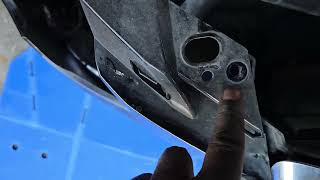

We Have This Part in Stock


The information in this article is provided for general reference and educational purposes only. Vehicle specifications, procedures, and part compatibility can vary by production date, trim level, and region. Always consult your vehicle's factory service manual and verify part numbers before purchasing or performing repairs. Safety-critical components such as airbags, seat belts, and braking systems should be installed by a qualified professional.
- Cadillac XTS:
- 🎬 Helpful Videos
- 🛍️ Shop This Part
- What's Unique About the 2013-2018 Cadillac XTS
- Diagnostic Flowchart
- Symptoms You May Notice
- Most Likely Causes
- Rare But Worth Checking
- Diagnosis Steps
- Parts You'll Likely Need
- Related Codes That Often Appear With This One
- Technical Service Bulletins (TSBs) & Recalls
- Platform-Specific Known Issues
- Mechanic-Grade Diagnostic Values
- Hidden / Shadow Codes Worth Checking
- Scan Tool Commands That Help
- Wiring & Ground Locations
- Real Owner Repair Stories
- OEM Part Supersession History
- 🎟️ Get 5% Off