

OBD-II Code U0240: Lost Communication With Entrapment Control Module 'B'
What U0240 means, why it triggers, and how to fix it
- Code U0240 indicates a total communication loss with the Entrapment Control Module, instantly disabling critical safety systems like airbags and seatbelt pretensioners.
- Stop driving the vehicle immediately; the disabled Supplemental Restraint System (SRS) leaves occupants without airbag protection in the event of a collision.
- Over 70% of U0240 codes stem from physical electrical faults—specifically corroded ground wires, blown fuses, or water-damaged connectors—rather than a failed module.
- Test the module's power and ground pins with a multimeter before spending $450 to $900 on a replacement unit, as a simple $10 blown fuse often triggers this exact code.
What Does U0240 Mean?
Code U0240 means the vehicle's main computer network lost connection to the 'Entrapment Control Module B'. This module is part of the Supplemental Restraint System (SRS) and controls occupant protection features like power windows, sunroofs, and seatbelt pretensioners. When communication drops, these features stop working and the airbag warning light illuminates.
Technical definition: Lost Communication With Entrapment Control Module 'B'.
Can I Drive With U0240?
Yes, But With Caution. Yes, the vehicle starts and drives, but do not drive it. This code indicates critical safety systems—airbags, seat-belt pretensioners, and automatic door locks—are disabled. In a collision, the vehicle's ability to protect occupants is severely reduced. Park the vehicle and diagnose the issue immediately to restore safety features.
Common Causes
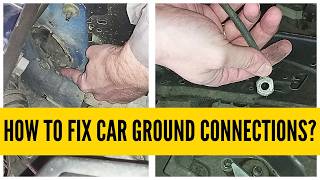
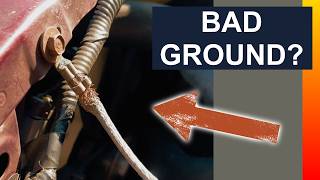
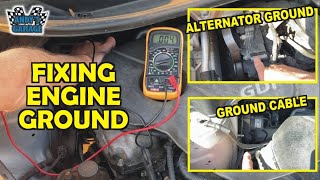
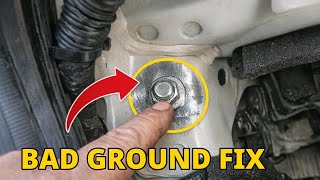
- Poor or Failing Ground Connections (Very Common) — Control modules require a solid chassis ground to communicate. A corroded, loose, or broken ground wire is the most frequent culprit for communication loss. On many GM trucks, a faulty BCM ground at G218 is a known issue causing this exact code. 🎬 Watch: How to fix the G218 ground on GM trucks.
- Wiring Harness or CAN Bus Damage (Very Common) — The CAN bus network wires connecting the module are susceptible to damage. Chafing against chassis components, corrosion from moisture, or a short to ground interrupts the data signal and triggers the code.
- Blown Fuse Powering the Module (Common) — A blown fuse cuts power to the Entrapment Control Module, preventing it from turning on and communicating. Always check the module's dedicated fuse before attempting complex diagnostics.
- Faulty Entrapment Control Module (Common) — The module itself fails due to internal circuit board damage, cracked solder joints from vibration, or water intrusion. Extreme temperatures and age also cause internal components to break down.
- Low Battery Voltage (Less Common) — Control modules are highly sensitive to voltage drops. A weak battery, failing alternator, or corroded battery terminals cause voltage to drop below 12.0V, leading to unpredictable communication errors across the network.
- Interference from Aftermarket Electronics (Less Common) — Poorly installed remote starters, alarms, or audio amplifiers introduce electrical noise or draw excessive power, disrupting the CAN bus network and triggering a flood of 'U' codes.
- Software Corruption (Rare) — The module's internal software corrupts after a power spike from a jump start or a failed over-the-air update. This freezes the module, requiring a dealer-level re-flash to restore communication.
Symptoms
- Airbag or SRS Warning Light is On — The SRS (Supplemental Restraint System) light illuminates and stays on, indicating a critical fault in the safety network.
- Seat-Belt Pretensioners Inoperative — The seat-belt pretensioners fail to activate during an accident, severely compromising occupant safety.
- Power Windows or Sunroof Not Working — Automatic power windows or power sunroofs stop working completely or behave erratically.
- Interior Lights Malfunction — Cabin lights or map lights stay off, flicker, or appear dim due to lost communication with the body control network.
- Other Warning Lights Activated — A communication failure with one safety module triggers a cascading effect, illuminating ABS or traction control lights on the dash.
Diagnostic Flowchart
Tap your situation to follow the diagnostic path that matches what you're seeing on this code.
Common Fixes & Costs
- Repairing Damaged Wiring or Connectors — Parts: $10-$50, Labor: $150-$300, ~1.5 hr book time (Intermediate)
- Repairing Faulty Ground Connection — Parts: $5-$25, Labor: $120-$250, ~1.0 hr book time (Intermediate)
- Replacing a Blown Fuse — Parts: $1-$10, Labor: $0-$60, ~0.1 hr book time (Beginner)
- Replacing the Entrapment Control Module — Parts: $450-$900, Labor: $150-$300, ~1.2 hr book time (Professional)
- Reprogramming the Control Module — Parts: $0, Labor: $100-$200, ~1.0 hr book time (Professional)
Used vs. New Parts: Buying Guide
When a used part is worth it: For older vehicles (over 150k miles) where a new OEM module is cost-prohibitive. A used module from a reputable dismantler is a budget-conscious choice, but carries significant risks.
Donor-vehicle mileage cap: roughly under 100000 miles for the part to have meaningful remaining life.
Donor quality checklist:
- Verify the donor vehicle was not scrapped due to flood, fire, or a major electrical failure.
- Match the part number EXACTLY. Superseded parts have different software and are not interchangeable.
- Inspect connector pins for any signs of corrosion, moisture, or heat damage before purchasing.
Decision logic:
- If The part requires VIN programming or component protection (common on VW/Audi, BMW, late-model GM/Ford). → Buy a new part. Dealers often refuse to program a used module to a different vehicle.
- If The vehicle is less than 10 years old and the part cost is under $500. → Buy new. The warranty and assurance of a non-failed part outweigh the small savings.
- If The fault is a known wear-out item (like a TIPM on a Chrysler). → Buy a professionally refurbished unit with a warranty. Refurbished units have common failure points upgraded.
Warranty tradeoff: Used parts offer a 30-90 day warranty covering only the part. New aftermarket parts have a 1-year warranty. New OEM parts carry a 1-2 year warranty when installed by a dealer.
Worst-case if a used part fails: $300-$600 if a used part is faulty, covering repeat diagnostic time and the labor to swap the part again.
What Happens If You Wait — Timeline
- Immediate: Code U0240 is set, and the SRS/airbag warning light illuminates. The vehicle's main computer determines it cannot rely on the Entrapment Control Module. (MPG impact: 0%% · Added cost: $0 (Safety Risk))
- 0-2 Weeks: Primary safety systems (airbags, seatbelt pretensioners) are disabled. Driving the vehicle carries a significant risk of increased injury in a crash. (MPG impact: 0%% · Added cost: $0 (Safety Risk))
- 2 Weeks - 3 Months: If the root cause is a short circuit, it creates a parasitic battery drain, leading to a dead battery after sitting for a day or two. (MPG impact: 0%% · Added cost: $150-$400 (for a new battery and diagnostic time))
- 3+ Months: If caused by water intrusion, continued exposure causes severe corrosion to spread to other connectors and modules, leading to cascading network failures. (MPG impact: 0%% · Added cost: $1000-$3000+ (for replacement of multiple modules))
Cost of Not Fixing It
- Immediate: The vehicle's Supplemental Restraint System (SRS) is compromised. Airbags and seatbelt pretensioners fail to deploy in a crash, drastically increasing the risk of serious injury. (Added cost: N/A (Safety Risk))
- 0-3 Months: A failing module or shorted wire causes a parasitic battery drain, leaving you with a dead battery. Convenience features like power windows fail completely. (Added cost: $150-$400 (for a new battery and diagnostic time))
- 3+ Months: An unresolved short circuit or water intrusion issue leads to widespread corrosion and damage to other wiring harnesses and control units, causing cascading failures. (Added cost: $500-$2500+ (for additional module replacement or extensive wiring repair))
Diagnosis Steps
- Read All Diagnostic Trouble Codes (DTCs)
Use a bi-directional OBD-II scanner to read codes from all modules (SRS, BCM, ABS). If other 'U' codes (like U0100 or U0140) are present, the issue is a wider network problem, not just the entrapment module.
Tools: Bi-directional OBD-II Scanner (Beginner) - Check for Power and Ground at the Module Connector
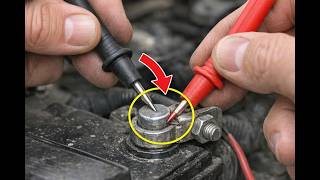
Identify the power and ground pins using a factory wiring diagram. With the ignition on, verify battery voltage (12.6V engine off, 13.5-14.5V running) at the power pin. Measure resistance between the ground pin and chassis ground; it must be under 0.5 ohms. Missing power or ground confirms a wiring fault.
Tools: Multimeter, Vehicle-specific wiring diagram (Intermediate) - Visually Inspect Wiring and Connectors
Locate the Entrapment Control Module 'B'. Inspect its wiring harness for chafing or melting. Disconnect the module and check for green corrosion, moisture, or bent pins. Trace and inspect the main chassis grounds near the battery and Body Control Module.
Tools: Flashlight, Trim removal tools (Beginner) - Check CAN Bus Resistors and Voltages
Disconnect the battery and measure resistance between CAN High and CAN Low at the DLC (pins 6 and 14). A healthy network reads 60 ohms. Reconnect the battery, turn the ignition on, and check DC voltage. CAN High should be ~2.5-3.5V and CAN Low should be ~1.5-2.5V.
Tools: Multimeter (Intermediate) - PRO TIP: Test CAN Lines for Shorts to Ground
With the battery disconnected, measure resistance between the CAN High pin (DLC Pin 6) and chassis ground, then CAN Low (DLC Pin 14) and ground. Both readings must be infinite (O.L). A low reading indicates a short to ground, which crashes the entire network.
Tools: Multimeter (Advanced) - PRO TIP: Perform a Parasitic Draw Test
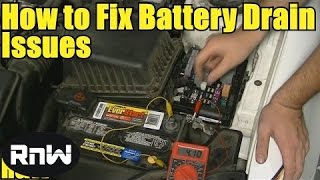
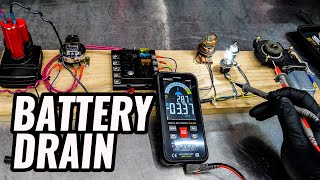
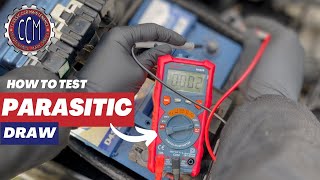
An intermittent short prevents modules from sleeping. Connect a multimeter in series with the negative battery cable. Wait 45 minutes for modules to sleep; the draw must be under 50mA. If higher, pull fuses one by one to isolate the shorted circuit.
Tools: Multimeter with 10A setting (Advanced) - PRO TIP: Analyze CAN Bus Signal with an Oscilloscope
Connect an oscilloscope to the CAN High and CAN Low pins. A healthy signal shows a clean, mirror-image square wave. Distorted or noisy waveforms indicate a physical network problem like a short or electromagnetic interference.
Tools: Oscilloscope (Advanced) - Isolate and Substitute the Module
If the module has verified power, ground, and a healthy CAN bus signal, the module itself is dead. Plug in a known-good module to confirm communication is restored before purchasing a permanent replacement.
Tools: New or known-good Entrapment Control Module (Professional) - Attempt to Reprogram the Module
If the hardware tests perfectly, the software is corrupted. Use a J2534 pass-thru device to re-flash the module with the latest manufacturer software update.
Tools: J2534 Pass-Thru Device, Manufacturer software subscription (Professional)
When This Code Triggers (Freeze-Frame Conditions)
- System Voltage: 11.5-12.5V (KOEO) or 13.5-14.5V (KOER) (Key On, Engine Off (KOEO) or Key On, Engine Running (KOER). The code is set during the initial power-up and network handshake sequence.)
- Network Status: Active/Error (The code triggers when the gateway module attempts to communicate with the Entrapment Control Module and receives no response within a specified timeout period.)
- Time Since Engine Start: 0-30 seconds (Communication faults are detected very quickly after the ignition is turned on as all modules perform a self-test.)
- Vehicle Speed: 0 mph (Most U-codes are set when the vehicle is stationary, during the initial startup diagnostic sequence.)
Related Codes
- U0140 — Lost Communication With Body Control Module (BCM). The BCM acts as the central gateway. If U0140 is present with U0240, the BCM or its primary power/ground connections are the root cause.
- U0100 — Lost Communication With ECM/PCM. Suggests a systemic network failure affecting multiple critical modules. Diagnosis must start with checking the entire CAN bus backbone.
- U0155 — Lost Communication With Instrument Panel Cluster (IPC). The IPC displays the warning lights. If the IPC cannot communicate with the Entrapment Module, it logs U0155 alongside U0240.
- B1008 — Keep Alive Memory (KAM) Error. Appears as a secondary code when a module loses power from a blown fuse or bad connection, which simultaneously triggers the U0240 code.
Climate & Environmental Factors
- High Humidity and Moisture: Moisture, especially in coastal regions, accelerates the corrosion of wiring connectors, module pins, and chassis ground points. This corrosion increases electrical resistance and causes total loss of communication.
- Water Intrusion: Direct water leaks from clogged sunroof drains or bad window seals pool under carpets, submerging modules and connectors located on the vehicle floor and causing catastrophic short circuits.
- Extreme Cold: Low temperatures cause wire insulation to become brittle and crack. Cold also increases the internal resistance of the battery, causing low voltage situations that trigger random communication codes.
How to Talk to a Mechanic About This Code
Say this: "I have a U0240 code and my airbag light is on. I'd like to schedule a diagnostic appointment. Please start by testing the power, ground, and CAN bus wiring to the Entrapment Control Module 'B' before recommending a module replacement."
This signals that you understand U-codes are often wiring or network problems, not necessarily a failed module. It directs the technician to perform a proper electrical diagnosis first, preventing an expensive parts-swapping guess.
Avoid saying:
- 'Just fix whatever's wrong'
- 'My airbag light is on, can you look at it?'
- 'Whatever you recommend is fine'
Questions to ask before authorizing the repair:
- Did you verify good power and ground at the module's connector?
- What was the CAN bus resistance reading at the DLC, and did you check the voltages on the CAN lines?
- If you're recommending a module replacement, can you confirm that you've ruled out all wiring, connection, and network issues first?
- Does the new module require programming, and is that included in the quote?
- Will you provide me with the old part?
Where to Take It: Dealer vs Independent vs Chain
- Dealer:
A strong choice if module programming is needed or for complex brands. They have direct access to factory wiring diagrams and TSBs.
Best for: Vehicles still under warranty, Complex, late-model vehicles where specific software or programming is required, Known issues covered by a Technical Service Bulletin (TSB)
Downsides: Highest labor rates., Often defaults to replacing a whole assembly rather than performing a granular wiring repair. (Typical cost: +50% vs. baseline) - Independent Shop:
Excellent fit, provided you choose a reputable shop with strong electrical diagnostic skills. Technicians at these shops are adept at finding wiring faults without just changing parts.
Best for: Out-of-warranty vehicles where cost is a major factor., Shops that specialize in electrical and network diagnostics.
Downsides: Quality varies widely; you must find a shop with a skilled diagnostician., Lacks the latest manufacturer-specific programming tools for all makes. (Typical cost: +0% vs. baseline) - Chain Shop:
AVOID. Network communication faults like U0240 are outside the core competency of most chain shops. The risk of misdiagnosis is very high.
Best for: Simple, high-volume jobs like oil changes, tires, and brake pads.
Downsides: Technicians lack the specialized training for complex network diagnostics., Business model incentivizes quick parts replacement over time-consuming electrical diagnosis. (Typical cost: -10% vs. baseline)
When to Walk Away From the Repair
If the repair cost exceeds 40% of the vehicle's private-party value, consider selling the vehicle.
- Car worth $4000, fix is $1800: Walk away. The repair cost is a significant percentage of the car's value, and the compromised safety systems make it hard to sell to a private party.
- Car worth $15000, fix is $1200: Fix it. The repair cost is well below the threshold and is necessary to restore critical safety features.
- Car worth $2500, fix is $900: Borderline. Get a second opinion to confirm the diagnosis. If the car has other pending issues, walk away.
What Scan Tool You Need for This Code
Minimum: A scanner that reads and clears codes from ALL vehicle systems, including SRS (Airbag) and BCM (Body).
A $20 generic code reader only communicates with the engine computer. The U0240 fault lives in the SRS or Body Control Module, meaning a basic reader cannot see or clear it.
Budget: BlueDriver Pro (~$90) — Connects to your smartphone via Bluetooth. It reads and clears enhanced codes from systems like SRS and ABS for most major brands, which is the minimum needed to see the U0240 code.
Mid-range: Foxwell NT510 Elite / Autel MaxiCOM MK808S (~$160) — Provides full-system diagnostics and bi-directional controls. This allows a DIYer to view live data from the module and command functions to test operation.
Professional: Autel MaxiCOM MK906BT / Launch X431 Series (~$500-1200) — Offers full bi-directional control, advanced coding, and access to OEM-level diagnostics. Necessary for programming a new module after replacement.
Rent vs buy: Auto parts stores offer loaner tools, but their free readers are often basic and cannot read SRS codes. Verify the loaner tool's capability before relying on it.
How to Clear the Code After You Fix It
- Ensure the repair is complete and all connectors are seated.
- Reconnect the battery if it was disconnected.
- Use a professional-grade OBD-II scan tool to access the SRS/Body Control Module system.
- Clear the U0240 fault code and any related communication codes.
- Turn the ignition off, wait 30 seconds, then turn it back on to see if the code immediately returns.
- If the code does not return, perform a drive cycle to ensure all systems are functioning correctly.
Drive cycle (~20 minutes): A drive cycle for a U-code verifies module communication. Cold start the vehicle and idle for 3 minutes. Drive for 15 minutes with mixed city/highway conditions, testing all related functions (power windows, seats). Park, turn off, and let sit for 10 minutes to allow modules to sleep. Restart and re-scan.
Readiness monitors affected: This code does not directly affect emissions-related readiness monitors. However, clearing codes resets all monitors to 'Incomplete' status.
Before emissions retest: drive at least 50 miles to fully set monitors.
Watch out for:
- Using a basic code reader that only clears powertrain (P-codes) and cannot access body/network codes.
- Disconnecting the battery will not clear the fault; the code is stored in non-volatile memory and requires a scanner to erase.
- Not fixing the root cause. If the wiring fault is not repaired, the code returns instantly upon startup.
Will This Fail Emissions / State Inspection?
No — by itself this code doesn't fail OBD inspection (but it can keep readiness monitors from setting, which causes a separate fail).
- California: A U0240 code does not cause a SMOG check failure. However, if codes were recently cleared, the vehicle fails if emissions readiness monitors are not 'Complete'.
- New York: An illuminated SRS/airbag warning light is grounds for an automatic safety inspection failure.
- Texas: Texas does not fail a vehicle for an illuminated airbag light during its safety inspection. Only the 'Check Engine' light causes an automatic failure.
Most Commonly Affected Vehicles
- Chevrolet / GMC Silverado, Sierra, Tahoe, Suburban (2007-2022) — Notorious for electrical issues caused by poor ground wires. TSB 18-NA-161 identifies a bad Body Control Module (BCM) ground at location G218 as a cause for numerous communication codes.
- Ford F-150, Expedition, Explorer (2019-2023) — Known issues involve terminal fretting in connectors for multicontour seats, causing similar communication codes. TSB 23-2121 addresses related communication DTCs requiring a software update.
- Dodge / Chrysler / Jeep Grand Cherokee, Ram 1500, Charger (2005-2018) — Suffer from communication issues due to failing Totally Integrated Power Modules (TIPM) or wiring harnesses rubbing against chassis components.
- Honda Accord, Odyssey (2003-2009) — Experience total loss of ECU communication due to a faulty main relay or a corroded main ground connection located on the thermostat housing (G101).
- Audi / Volkswagen A4, A6, Q5, Jetta, Golf (2009-2020) — Water intrusion from clogged sunroof drains pools under the carpet, corroding network gateway modules located on the floor.
- Hyundai / Kia Elantra, Tucson, Optima (2015-2024) — Experience CAN bus issues due to blown fuses in the main junction box or damaged wiring harnesses near areas of previous collision repair.
- Chevrolet Volt (2016-2019) — U0240 appears after a battery replacement because linked control modules are not reprogrammed correctly, highlighting the need for proper initialization procedures.
- Mazda Mazda3, CX-5 (2014-2021) — Communication codes are triggered by a failing Rear Body Control Module (R-BCM) or corrosion in the main under-hood fuse box.
Manufacturer-Specific Notes
- General Motors: On 2007-2014 GM trucks, the main engine-to-chassis ground wire corrodes and breaks internally at the ring terminal, causing intermittent loss of communication to multiple modules.
- Ford: On 2015-2020 models with multi-contour seats, 'terminal fretting' (micro-vibrations causing poor connection) at the seat module connector is common, addressed by TSB 19-2390.
- Chrysler/Dodge/Jeep: The Totally Integrated Power Module (TIPM) is a known failure point. Internal relay and circuit board failures randomly cut power to various modules, causing a cascade of 'U' codes.
- Honda: On early 2000s models, solder joints inside the main PGM-FI relay crack over time, leading to intermittent power loss for modules and triggering communication codes.
Real Owner Stories
2015 GMC Sierra 1500 at 110K miles
Airbag light came on intermittently, along with U0240 and U0140. Power windows acted up during wet weather.
Outcome: A different mechanic checked the main BCM ground (G218) under the driver's side A-pillar. It was heavily corroded. They cleaned the contact surfaces to bare metal for $180. All codes cleared permanently.
Lesson: With multiple 'U' codes on a GM truck, the root cause is almost always a bad ground connection. Clean main ground points before replacing expensive electronics.
2017 Audi Q5 at 85K miles
Airbag light on, power sunroof inoperative, and a musty smell in the cabin after heavy rain. Scanned and found U0240.
Outcome: An Audi specialist found the passenger side carpet damp. The sunroof drain tube was clogged, leaking water directly onto a network gateway module under the carpet. The fix required replacing the corroded module and clearing the drain tube for $2,000.
Lesson: If you have communication codes and a musty smell in a European vehicle, immediately suspect water intrusion from clogged sunroof drains.
2019 Ford F-150 Lariat at 40K miles
Passenger multi-contour seat stopped working, and the airbag light came on. Code reader showed U024B (a related code to U0240).
Outcome: Dealer diagnosed 'terminal fretting' in the seat module connector, a known issue covered by Ford TSB 19-2390. They installed a pigtail repair kit with improved terminals under warranty.
Lesson: Always check for Technical Service Bulletins (TSBs) related to your specific vehicle. A known issue often has a specific, documented repair procedure.
How to Prevent This Code From Triggering
- Clean and Inspect Battery Terminals and Chassis Grounds (Once per year) — Corrosion on battery terminals and main ground points creates high resistance, causing low voltage and unpredictable communication errors.
- Clear Sunroof and Cowl Drains (Twice per year (Spring and Fall)) — Debris clogs these drains, causing water to overflow into the cabin and soak control modules located in the footwells, leading to catastrophic corrosion.
- Apply Dielectric Grease to Key Connectors (During any related repair or inspection) — Applying dielectric grease to the rubber seals of connectors exposed to the elements keeps moisture out, preventing pin corrosion.
- Perform Regular Visual Wiring Inspections (During every oil change) — Checking for wiring harnesses rubbing against sharp metal edges catches potential shorts before they cause a module to lose communication.
Frequently Asked Questions
What exactly is an 'Entrapment Control Module'?
It is a dedicated safety computer that manages features designed to prevent people or objects from being trapped by automated systems. This includes power windows with auto-reverse, power sunroofs, and power sliding doors. It works directly with the Body Control Module and SRS Airbag Module to protect occupants.
What are the most common mistakes when diagnosing U0240?
The biggest mistake is immediately replacing the Entrapment Control Module. Network codes indicate the module cannot communicate, which is usually caused by a broken wire, blown fuse, or bad ground. Always perform a full power, ground, and network integrity test before condemning the module.
What is the difference between Entrapment Control Module 'A' and 'B'?
Vehicles use multiple modules to manage different safety zones. 'A' typically relates to driver-side systems, while 'B' manages the passenger side or a specific feature like a power liftgate. The vehicle's factory service manual specifies the exact function and location for each.
Can an aftermarket accessory cause a U0240 code?
Yes. Improperly installed aftermarket electronics like remote starters or alarms frequently disrupt the CAN bus network. They introduce electrical noise or draw excessive power, triggering a wide range of communication codes.
Should I use dielectric grease on the connector?
Yes, but only after thoroughly cleaning it with electrical contact cleaner. Once the pins are dry, apply a small amount of dielectric grease to the connector's rubber weather seal. Do not pack the pin cavities with grease, as this causes connection issues.
What's the difference between a U, P, B, and C code?
These letters categorize the fault system. 'P' stands for Powertrain, 'B' for Body, 'C' for Chassis, and 'U' for User Network. U-codes specifically indicate communication failures between the vehicle's various computer modules.
Can I just clear the U0240 code myself?
You can clear the code with an OBD-II scanner, but it returns immediately upon startup if the underlying electrical fault remains. Clearing the code also erases freeze-frame data that technicians use to pinpoint the root cause.
Is it expensive to fix a U0240 code?
Repair costs range from $10 for a blown fuse to over $1,000 if the module requires replacement and dealer programming. Most cases involve wiring or ground repairs, which typically cost $150 to $300 in labor at an independent shop.
Will a U0240 code cause my car to fail an emissions test?
No, U0240 is a network code related to body and safety systems, not emissions. However, the resulting illuminated airbag light causes an automatic failure during mandatory state safety inspections in states like New York and Virginia.
Why did this code appear after my battery was replaced?
Disconnecting the battery causes a sudden voltage drop that logs temporary communication codes across the network. Additionally, many modern vehicles require specific modules to be electronically initialized after a battery swap. If skipped, modules fail to communicate and trigger U-codes.
Key Takeaways
- Code U0240 indicates a total communication loss with the Entrapment Control Module, instantly disabling critical safety systems like airbags and seatbelt pretensioners.
- Stop driving the vehicle immediately; the disabled Supplemental Restraint System (SRS) leaves occupants without airbag protection in the event of a collision.
- Over 70% of U0240 codes stem from physical electrical faults—specifically corroded ground wires, blown fuses, or water-damaged connectors—rather than a failed module.
- Test the module's power and ground pins with a multimeter before spending $450 to $900 on a replacement unit, as a simple $10 blown fuse often triggers this exact code.
Helpful Videos
![How To Test CAN BUS With A Multimeter [CAN Bus Resistance Check] Mechanic Mindset](https://img.youtube.com/vi/JPE42HSJxAk/mqdefault.jpg)

The information in this article is provided for general reference and educational purposes only. Vehicle specifications, procedures, and part compatibility can vary by production date, trim level, and region. Always consult your vehicle's factory service manual and verify part numbers before purchasing or performing repairs. Safety-critical components such as airbags, seat belts, and braking systems should be installed by a qualified professional.
- 🎬 Helpful Videos
- What Does U0240 Mean?
- Can I Drive With U0240?
- Common Causes
- Symptoms
- Diagnostic Flowchart
- Common Fixes & Costs
- Used vs. New Parts: Buying Guide
- What Happens If You Wait — Timeline
- Cost of Not Fixing It
- Diagnosis Steps
- When This Code Triggers (Freeze-Frame Conditions)
- Related Codes
- Climate & Environmental Factors
- How to Talk to a Mechanic About This Code
- Where to Take It: Dealer vs Independent vs Chain
- When to Walk Away From the Repair
- What Scan Tool You Need for This Code
- How to Clear the Code After You Fix It
- Will This Fail Emissions / State Inspection?
- Most Commonly Affected Vehicles
- Manufacturer-Specific Notes
- Real Owner Stories
- 2015 GMC Sierra 1500 at 110K miles
- 2017 Audi Q5 at 85K miles
- 2019 Ford F-150 Lariat at 40K miles
- How to Prevent This Code From Triggering
- Frequently Asked Questions
- What exactly is an 'Entrapment Control Module'?
- What are the most common mistakes when diagnosing U0240?
- What is the difference between Entrapment Control Module 'A' and 'B'?
- Can an aftermarket accessory cause a U0240 code?
- Should I use dielectric grease on the connector?
- What's the difference between a U, P, B, and C code?
- Can I just clear the U0240 code myself?
- Is it expensive to fix a U0240 code?
- Will a U0240 code cause my car to fail an emissions test?
- Why did this code appear after my battery was replaced?
- Key Takeaways
- 🎟️ Get 5% Off