

OBD-II Code U0232: Lost Communication With Left Side Obstacle Detection Control Module
The Ultimate Guide to What U0232 Means, Why It Triggers, and How to Fix It for Good
- Code U0232 disables your vehicle's blind spot monitor and rear cross-traffic alert because the left-side radar module stopped communicating on the CAN bus network.
- Water intrusion behind the rear bumper causes over 80% of U0232 codes, leading to corroded connector pins or a shorted internal circuit board.
- You can safely drive with a U0232 code, but you must manually check your blind spots since the system will not warn you of approaching vehicles.
- Replacing a dead module costs $600 to $1,500 and requires professional software calibration; never install a new module without first verifying the wiring has 12V power and a solid ground.
What Does U0232 Mean?

U0232 means your car's main computer network lost connection to the left side obstacle detection control module. This module is a small radar unit, usually located behind the rear bumper on the driver's side. It acts as the 'brain' for your blind spot monitor and cross-traffic alert systems. When this module stops communicating on the vehicle's Controller Area Network (CAN) bus, those essential safety features disable, and a warning message appears on your dashboard.
Technical definition: The official SAE/OBD-II definition is "Lost Communication With Side Obstacle Detection Control Module 'A' (Left)". This indicates the module is not transmitting or receiving data on the vehicle's Controller Area Network (CAN) bus or a dedicated sub-network. The 'A' designates the left or 'master' module that controls the right-side 'slave' module.
Can I Drive With U0232?
Yes, But With Caution. Yes, but your Blind Spot Monitor (BSM) and Rear Cross-Traffic Alert (RCTA) systems are completely inoperative. This creates a significant safety blind spot, increasing the risk of a side-swipe or collision when changing lanes or backing up. While it won't cause mechanical damage, the disabled safety features require you to be extra vigilant. Do not drive for extended periods without these systems functioning as designed.
Common Causes

- Damaged or Corroded Wiring/Connectors (Very Common) — The module and its wiring sit in a vulnerable position behind the rear bumper, highly exposed to water, road salt, and dirt. Moisture intrusion is the number one cause, leading to corroded connector pins, broken wires, or loose connections that sever the communication link.
- Internal Module Failure (Common) — The module itself fails internally. This is often a secondary effect of water seeping past the seals and shorting out the electronic circuit board, or physical damage from a minor rear-end collision cracking the module's housing. Software corruption within the module also falls into this category.
- Loss of Power or Ground (Common) — Like any electronic part, the module needs a steady 12V power supply and a solid ground connection. A blown fuse, a corroded ground strap bolted to the chassis, or a break in the power wire causes the module to shut down and stop communicating.
- CAN Bus Network Fault (Less Common) — The issue is a fault on the overall CAN bus network rather than the module's specific wiring. A short or open in the network wiring elsewhere on the vehicle, or a failure of a different module on the same bus, prevents the side obstacle module from communicating.
- Low Battery Voltage or Charging System Fault (Less Common) — Modern vehicles are highly sensitive to system voltage. A weak or failing battery causes random communication codes as modules drop off the network during the voltage dip of engine startup. This appears as an intermittent U0232 that disappears after the vehicle runs for a while.
- Faulty Gateway Module (or BCM) (Rare) — The Gateway Module (or Body Control Module) acts as a central hub directing communication. If the gateway fails, it cuts off communication to the entire sub-network that the side obstacle module resides on, causing a U0232 code even if the module and its wiring are perfectly fine.
Symptoms

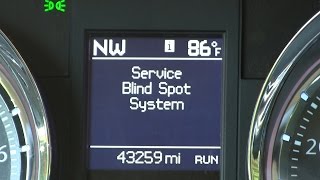
- "Blind Spot Monitor Unavailable" or "Service Side Detection System" Message — The most common and direct symptom is a warning message appearing on your dashboard's information screen, explicitly stating the system is offline.
- Blind Spot Warning Lights Inoperative or Stuck On — The small warning lights in your side mirrors will not light up when a car is in your blind spot. In some cases, the light stays illuminated constantly.
- Rear Cross-Traffic Alert Inoperative — When backing out of a parking spot, the system will not beep or provide a visual warning on the infotainment screen of approaching vehicles.
- Airbag or Other System Warning Lights — Because modern safety systems are interconnected, a fault in the side obstacle module sometimes triggers warning lights for the airbag (SRS) or other systems that rely on its data.
- Persistent or Intermittent Chime — Some vehicles produce a continuous or intermittent chime to alert the driver that a safety system has a fault.
Diagnostic Flowchart
Tap your situation to follow the diagnostic path that matches what you're seeing on this code.
Common Fixes & Costs
- Replace Left Side Obstacle Detection Module — Parts: $400-$1100, Labor: $200-$400 (includes programming/calibration), ~2.5 hr book time (Professional)
- Repair Damaged Wiring or Connector Pigtail — Parts: $50-$150 (for pigtail connector and supplies), Labor: $150-$350, ~2 hr book time (Intermediate)
- Replace Blown Fuse — Parts: $1-$5, Labor: $0, ~0.1 hr book time (DIY)
- Repair CAN Bus Network Wire — Parts: $20-$50 (for wire and connectors), Labor: $250-$500 (labor-intensive to trace), ~3.5 hr book time (Professional)
- Reprogram or Calibrate Module — Parts: $0, Labor: $150-$250, ~1.5 hr book time (Professional)
Used vs. New Parts: Buying Guide
When a used part is worth it: A used OEM module is a cost-effective option for older, out-of-warranty vehicles, especially if sourced from a low-mileage vehicle from a dry climate to minimize the risk of prior water damage. It is most sensible when the price is significantly lower than a new part and you have access to a shop capable of programming a used module, which some dealers refuse to do.
Donor-vehicle mileage cap: roughly under 60000 miles for the part to have meaningful remaining life.
Donor quality checklist:
- Verify the part number matches exactly, as modules are highly specific.
- Inspect the connector pins for any signs of green or white corrosion.
- Prefer sellers who guarantee the part is tested and functional, with a return policy.
- Avoid parts from vehicles involved in rear-end collisions.
Decision logic:
- If Vehicle is still under warranty → Always use a new OEM part installed by the dealer for a free, warrantied repair.
- If The cost of a new OEM part is under $500 and includes a warranty → Buy new to avoid the risk of a faulty used part and repeat labor costs.
- If The vehicle is over 100K miles and the new part cost is over $800 → A warrantied, tested used part from a reputable salvage yard is a reasonable choice, provided you confirm programming is possible.
Warranty tradeoff: Used parts typically offer a 30-90 day warranty, which does not cover labor. New aftermarket parts have a 1-year to limited lifetime warranty. New OEM parts installed by a dealer usually carry a 12-month/12,000-mile parts and labor warranty.
Worst-case if a used part fails: $300-$600 if a used part is faulty or cannot be programmed, requiring repeat labor for removal and installation of another part.
What Happens If You Wait — Timeline
- 0-1 month: Code U0232 is set, and the 'Service Blind Spot System' message appears. The BSM and RCTA systems are completely disabled. The fault is often intermittent at first, appearing only after rain or a car wash and then clearing. (MPG impact: 0%% · Added cost: $0 (but high safety risk from disabled features))
- 1-6 months: If caused by water intrusion, corrosion eats away at the connector pins and wire strands. The fault becomes permanent. The cost of repair is limited to a new connector pigtail ($50-$150) and labor, or a new module. (MPG impact: 0%% · Added cost: $200-$700 (Potential need for a new pigtail or module if not addressed))
- 6-12 months: Corrosion 'wicks' up the copper wiring under the insulation, traveling further up the vehicle's main wiring harness. A simple pigtail repair is no longer possible. The damage requires a significant section of the harness to be replaced, which is highly labor-intensive. (MPG impact: 0%% · Added cost: $500-$1500 (Cost escalates significantly as tracing and repairing a corroded harness is much more expensive than replacing a connector.))
- 12+ months: Severe corrosion on the CAN bus wires causes voltage drops or shorts that affect the entire network. This leads to other, unrelated modules logging communication faults, causing a cascade of difficult-to-diagnose electronic gremlins and unpredictable behavior from other systems. (MPG impact: 0%% · Added cost: $1500-$2500+ (Diagnosing multiple 'U' codes and replacing a major body harness is extremely expensive and time-consuming.))
Cost of Not Fixing It
- Immediate: Blind Spot Monitor and Rear Cross-Traffic Alert are inoperative. This creates a significant safety risk, increasing the chance of a collision during lane changes or while backing out of parking spaces. (Added cost: $0 (but high safety risk))
- 1-6 months: If the cause is water intrusion, continued exposure leads to corrosion spreading up the wiring harness, potentially requiring a much more expensive harness repair instead of just a connector pigtail. (Added cost: $500-$1500)
- 6+ months: Severe corrosion compromises the integrity of the CAN bus network, leading to intermittent communication failures of other modules on the same circuit, causing multiple, difficult-to-diagnose 'U' codes and unpredictable electronic behavior. (Added cost: $1000-$2500+)
Diagnosis Steps

- Read the Trouble Codes
Use a professional-grade OBD-II scanner to confirm U0232 is the active code. Note any other codes present. The presence of U0233 (right side) or other 'U' codes points toward a network-wide issue rather than an isolated module fault.
Tools: Professional OBD-II Scanner (Beginner) - Visually Inspect the Module and Wiring
Access the area behind the driver's side rear bumper cover. Locate the module (a small black box) and its wiring harness. Perform a thorough visual inspection for obvious signs of physical damage, a cracked module case, green/white corrosion on connector pins, or cut/chafed wires.
Tools: Trim removal tools, socket set (to remove bumper cover) (Intermediate) - Inspect the Fuses
Consult your owner's manual to locate the fuse for the 'Side Detection System' or 'Blind Spot Monitor'. Visually inspect the fuse and replace it if blown. A blown fuse often indicates a deeper problem like a shorted module or wire.
Tools: Fuse puller or needle-nose pliers (Beginner) - Check for Power and Ground at the Connector
Disconnect the module's electrical connector. With the ignition on, use a multimeter to test for battery voltage at the power pin; the reading should be 11V to 14V. Then, check for a good ground by measuring resistance between the ground pin and a clean chassis point; it should be less than 1.0 ohm. A reading of 12.0V ± 0.5V on power and near-zero resistance on ground is required.
Tools: Multimeter (Intermediate) - Test the CAN Bus Wires for Integrity
With the battery disconnected, check the communication (CAN bus) wires for continuity and shorts. Measure the resistance between the two CAN wires (CAN High and CAN Low) at the module connector. A healthy network with two terminating resistors reads approximately 60 ohms. A reading of 120 ohms suggests one of the two terminating resistors (often in another module) is offline or the circuit is open. Also, check for any short to ground on each individual CAN wire; the resistance should be infinite (OL).
Tools: Multimeter (Advanced) - PRO TIP: Perform a 'Wiggle Test'
If the fault is intermittent, it is caused by a loose pin or a partially broken wire. While monitoring the CAN bus resistance or voltage, carefully wiggle the wiring harness at the module connector, behind the bumper, and any other accessible points. A sudden change in your multimeter reading indicates you found the location of the intermittent fault.
Tools: Multimeter (Advanced) - Advanced: Check Live Data PIDs
Using a bi-directional scanner, access the live data stream for the Gateway or Body Control Module. Look for PIDs (Parameter IDs) related to network status, such as 'Left Side Obstacle Module Status'. A 'Not Available', 'Offline', or 'Fault' status confirms the communication loss. Limiting the number of PIDs on screen increases the data refresh rate, giving a more accurate real-time view of module communication attempts.
Tools: Professional Bi-Directional Scanner (Advanced) - PRO TIP: Scope the CAN Bus Signal
For a definitive diagnosis, use an oscilloscope to view the CAN bus signal at the module connector. A healthy CAN signal shows two distinct, mirror-image square waves. CAN High toggles between 2.5V and 3.5V, while CAN Low toggles between 2.5V and 1.5V. A flat line, distorted signal, or incorrect voltage levels definitively proves a communication network problem.
Tools: Automotive Oscilloscope (Professional) - Module Testing and Replacement
If all wiring, power, grounds, and CAN bus signals test good, the module itself is condemned. Replacing the module is the final step. IMPORTANT: A new module almost always requires programming and calibration by a dealer or a qualified shop using manufacturer-specific software to be recognized by the vehicle and aimed correctly.
Tools: Socket set, professional scan tool for programming/calibration (Professional)
When This Code Triggers (Freeze-Frame Conditions)
- Vehicle Speed: 15-70 mph (The system is active only above a minimum speed, so the fault is typically logged during city or highway driving, not at a standstill.)
- System Voltage: 13.5-14.5V (Fault is logged when the engine is running and the charging system is maintaining normal voltage. An intermittent fault is logged at startup if voltage drops below 11V.)
- Ignition Status: RUN (The code is set when the ignition is on and the master module fails its network self-test or check-in.)
- Outside Temperature: Any (While extreme heat sometimes causes intermittent issues, the fault is most often logged under normal operating temperatures, pointing to a hard failure rather than an environmental one.)
Related Codes
- U0233 — This is the identical fault but for the right-side module ('Module B' or 'Slave'). When U0232 and U0233 appear together, suspect a shared component like a fuse, a common power/ground splice, or a network-wide issue. If only U0232 is present, the fault is isolated to the left module or its dedicated wiring.
- U18A6 — This GM-specific code translates to 'Lost communication with right object detection control module on dedicated bus 1'. This code is set by the left module when it cannot communicate with the right module. If you have both U0232 and U18A6, it strongly points to a failure of the left ('master') module or the wiring between the two modules.
- C1AC2 — This Toyota-specific code means 'Slave Module Horizontal Axis Misalignment.' It is often a symptom of U0232, not a cause. When the master module loses communication (U0232), it logs this misalignment code because it can't verify the slave's position. You must resolve the U0232 communication fault first.
- B13F3:97 — This Ford-specific code is often found alongside U0232 and U0233 in the IPMA module on Expedition/Navigator models. It indicates a component or operation failure in the left side obstacle detection control module and is addressed by TSB 24-2028, pointing to corrosion or damage.
Climate & Environmental Factors
- Road Salt and Brine: This is the single largest environmental contributor. Salty water is highly corrosive and conductive, accelerating the degradation of wiring insulation, connector pins, and module seals. Vehicles in the 'Rust Belt' or coastal areas see significantly higher failure rates.
- High Humidity and Heavy Rain: In humid climates, moisture gets trapped behind the bumper cover, constantly exposing the module and connectors to water. Even without road salt, this leads to corrosion and water intrusion over time.
- Mud and Dirt Accumulation: Caked-on mud and dirt trap moisture against the components, preventing them from drying out and promoting corrosion. While a simple blockage causes a temporary 'sensor blocked' alert, the trapped moisture causes the U0232 electrical fault.
- Extreme Cold/Heat Cycles: Rapid temperature changes cause plastic housings and seals to expand and contract, creating micro-cracks over time that allow moisture to seep in. A persistent U0232 code indicates a hard fault, not a temporary condition.
How to Talk to a Mechanic About This Code
Say this: "I have a 'Service Blind Spot System' warning and a U0232 code. I need a diagnosis that starts with checking for power, ground, and CAN bus integrity at the left side obstacle detection module before condemning the module itself. Please check for corrosion or wiring damage at the connector behind the rear bumper."
This signals to the shop that you understand the code means 'lost communication' and that the problem is often in the wiring, not the expensive module. It directs them to perform a proper electrical diagnosis instead of immediately quoting a module replacement, preventing you from paying for a part you may not need.
Avoid saying:
- 'My blind spot light is on, can you fix it?'
- 'Just replace the blind spot sensor.'
- 'Do whatever you think is necessary.'
Questions to ask before authorizing the repair:
- Did you find 12-volt power and a good ground at the module's connector?
- What was the resistance reading on the CAN bus network at the connector? Was it 60 ohms?
- Is there any visible corrosion on the connector pins or damage to the wiring harness?
- If the module needs to be replaced, does the price include the necessary programming and calibration?
- Will you provide a warranty for both the part and the labor?
Where to Take It: Dealer vs Independent vs Chain
- Dealer:
Recommended if the vehicle is under warranty or if a known TSB applies. Also a safe, but expensive, choice for out-of-warranty vehicles to ensure correct programming and calibration of a new module.
Best for: Vehicles still under the original bumper-to-bumper warranty., Vehicles covered by a specific Technical Service Bulletin (TSB) for this issue., Complex cases where module programming and calibration with proprietary software is required.
Downsides: Highest labor rates and parts costs., More inclined to replace the entire module and harness assembly rather than attempting a more affordable wiring repair. (Typical cost: +50% vs. baseline) - Independent Shop:
An excellent choice for diagnosing the fault, especially if it's a wiring issue. Before authorizing a module replacement, confirm the shop has the capability to program and calibrate the new part for your specific vehicle.
Best for: Out-of-warranty vehicles where the cause is likely wiring or connector damage., Getting a second opinion on a dealer's recommendation to replace the module., Vehicles where the owner is cost-sensitive.
Downsides: Shop must have technicians skilled in electrical diagnosis and access to up-to-date wiring diagrams., May not have the expensive, manufacturer-specific tools to program or calibrate a new module, potentially requiring a trip to the dealer anyway. (Typical cost: +0% vs. baseline) - Chain Shop:
AVOID. This type of network communication fault is beyond the scope of most chain shops and requires a level of diagnostic expertise they typically do not possess.
Best for: Simple, unrelated services like oil changes or tire rotations.
Downsides: Technicians lack the specialized electrical diagnostic skills required for complex 'U' codes., High pressure to meet sales quotas leads to incorrect diagnoses and unnecessary parts replacement., Almost certainly will not have the tools for module programming and calibration. (Typical cost: -10% vs. baseline)
When to Walk Away From the Repair
If the total estimated repair cost for the U0232 fault exceeds 40-50% of your vehicle's current private-party market value, you should pause and seriously consider alternatives.
- Car worth $5000, fix is $2200: Walk away. The repair cost is too high relative to the car's value. The money for the repair is better put towards a replacement vehicle.
- Car worth $15000, fix is $1200: Fix it. The repair cost is a small fraction of the vehicle's value and restores a critical safety feature.
- Car worth $8000, fix is $3500: Borderline. Get a second opinion to confirm the diagnosis and cost. If the cost is firm, this is a tough call and depends on the vehicle's overall condition.
What Scan Tool You Need for This Code
Minimum: A scanner that can read codes from the Body Control Module (BCM) and other non-engine systems. Basic engine-only code readers will not see 'U' codes like U0232.
A cheap $20 scanner from a parts store typically only reads generic 'P' (powertrain) codes. U0232 is a network code stored in a different module. You need a tool that accesses the body and network modules to even see the code, let alone diagnose it.
Budget: BlueDriver Pro or Ancel BD310 (~$100) — These Bluetooth scanners connect to a smartphone app and read codes from multiple vehicle systems, including the BCM. They confirm the U0232 code is present and check for other related codes, which is the essential first step.
Mid-range: Innova 5610 or XTOOL D7 (~$350) — These tools offer bi-directional control, which is crucial for U0232. They allow you to actively command the module to respond, helping to determine if the module is dead or if the wiring is the problem. They also view live data streams from the network, which is a major step up in diagnostics.
Professional: Autel MaxiCOM MK808BT or Launch X431 series (~$500-1200) — Provides full professional-level diagnostics. These tools perform bi-directional tests, view network topology maps, and, most importantly for this code, perform the necessary programming and calibration on a new module after installation. Buying a new module without access to a tool like this is a waste of money.
How to Clear the Code After You Fix It
- Use a professional OBD-II scan tool to clear the U0232 code from all modules.
- Turn the ignition off and then on again.
- Perform the system's operational check by driving the vehicle above the BSM activation speed (typically 10-20 mph) and having another vehicle pass through the blind spot to verify the mirror light illuminates.
Drive cycle (~15 minutes): After clearing the code, a specific drive cycle is not usually required for the BSM system itself to become operational. The system performs a self-test upon startup. Drive the vehicle for 10-15 minutes, including speeds above 20 mph, to confirm the warning message does not return. If calibration was performed, a specific, more complex drive cycle is required by the manufacturer.
Readiness monitors affected: None directly, but clearing all DTCs resets all emissions readiness monitors.
Before emissions retest: drive at least 50 miles to fully set monitors.
Watch out for:
- Simply disconnecting the battery will not clear this code from all modules and does not resolve the issue.
- The code returns immediately if the root cause (wiring, power, or module failure) was not corrected or if a new module was not properly calibrated.
Will This Fail Emissions / State Inspection?
No — by itself this code doesn't fail OBD inspection (but it can keep readiness monitors from setting, which causes a separate fail).
- California: This code itself will not cause a smog check failure, as it is not related to emissions. However, if you clear the code with a scanner, it resets all OBD-II readiness monitors. You will then fail the test until a full drive cycle is completed to set the monitors to 'Ready'.
- New York: NYS inspection checks for illuminated warning lights. The 'Service Blind Spot System' message or a related warning light results in a safety inspection failure, even though it is not an emissions failure. If codes are cleared, readiness monitors must be set before passing the OBD-II portion of the test.
- Texas: In the 17 counties requiring emissions testing, the test is an OBD-II scan. A U0232 code does not directly fail the emissions test. However, an illuminated MIL (Check Engine Light) for any reason is an automatic failure. If the blind spot fault also triggers the MIL on your specific vehicle, it will fail.
Most Commonly Affected Vehicles
- GMC / Chevrolet / Cadillac Acadia, Traverse, Equinox, Escalade (2013-2017) — Extremely prone to water intrusion into the module and connector, causing heavy corrosion. GM issued service bulletin PI1112B, which recommends replacing both modules and the connecting harness as a complete kit due to the high failure rate of all components.
- Toyota Tacoma (2016-2018) — Subject to Technical Service Bulletin (T-SB-0063-19) for this code. The bulletin advises replacing both blind spot monitor sensors with updated, more reliable parts, as the originals were prone to internal failure. This repair is covered under the 36-month/36,000-mile basic warranty, but is not a recall.
- Ford F-150 / Expedition / Navigator (2018-2024) — On the F-150, the module is often integrated into the tail light assembly (BLIS). A cracked tail light lens is a common cause, allowing water to enter and destroy the module. For 2022-2024 Expedition/Navigator, TSB 24-2028 addresses U0232 caused by corrosion in the radar sensor harness connector and recommends installing new protective shields.
- Ram 1500/2500/3500 (2019-2022) — Owners frequently report "ParkSense Temporarily Unavailable" messages along with code U0232. The cause is often traced to faulty wiring or failed modules in the rear bumper, sometimes exacerbated by larger aftermarket tires interfering with sensor readings.
- Hyundai / Kia Santa Fe, Palisade, Telluride, Sorento (2019-2023) — Issues are commonly reported, often related to intermittent connections or internal module faults. Diagnosis follows standard procedures of checking power, ground, and CAN signals at the module located behind the rear bumper.
- Subaru Outback / Forester / Crosstrek (2015-2019) — Failures are frequently linked to moisture intrusion. The modules are located behind the rear bumper fascia. Replacement requires calibration with a Subaru-specific scan tool (Subaru Select Monitor) to ensure proper system function.
- Honda CR-V / Pilot / Accord (2016-2020) — This code is frequently seen on Honda models. The cause is typically a failed module due to its location behind the bumper cover, which exposes it to the elements. The fix is a direct replacement, which requires an aiming procedure to calibrate.
- Toyota / Lexus RAV4, Camry, ES350 (2019-2022) — On these models, the left (master) module's failure to communicate with the right (slave) module is a common trigger for U0232. Diagnostic procedures emphasize checking the CAN communication lines between the two modules first.
Manufacturer-Specific Notes
- General Motors (GMC, Chevrolet, Cadillac): GM is aware of water intrusion issues on many 2013-2017 SUVs. Technical Service Bulletin PI1112B advises replacing both modules and the connecting harness as a single kit, as corrosion often compromises all parts simultaneously. This is a TSB, not a recall; repairs are only free if the vehicle is under warranty.
- Toyota: For 2016-2018 Tacomas, Toyota issued TSB T-SB-0063-19. The official fix involves replacing both blind spot sensors with improved parts, as the originals were prone to internal failure. This is not a recall, and out-of-warranty repair costs at a dealer range from $600 to $1,200.
- Ford: On many F-150s, the module (SODL/SODR) is part of the tail light assembly itself. A cracked tail light lens is a very common entry point for water, which then travels down and destroys the module. For 2022-2024 Expedition/Navigator, TSB 24-2028 addresses U0232 caused by corrosion in the radar sensor harness connector and involves installing a new shield kit.
- Mazda: On some models, the left ('master') and right ('slave') modules are sold as a paired set. If the right module fails, you must also replace the left module at the same time for the system to be configured correctly. The workshop manual states configuration cannot be performed correctly if only the right module is replaced.
Real Owner Stories
2017 GMC Acadia with U0232 & U0233
Owner reported a "Service Side Detection System" message on the dash. Upon inspection, codes U0232 and U0233 were present, indicating both left and right modules lost communication.
What they tried:
- Initial diagnosis pointed toward a wiring issue since both modules failed simultaneously. A visual inspection behind the bumper revealed heavy green and white corrosion on the module connectors and the interconnect harness.
Outcome: Following GM Service Bulletin PI1112B, the technician replaced both the left and right modules and the specific harness that connects them as a kit (Part No. 84408339). After replacement and applying dielectric grease to the new connectors, the codes cleared and did not return.
Lesson: On certain GM SUVs, this is a known water intrusion issue. Don't just replace one module; inspect the wiring harness between them and the opposing module, as they often fail as a set. Always use dielectric grease on new connectors to prevent future corrosion.
2018 Toyota Tacoma with intermittent BSM warnings
The "Blind Spot Monitor Unavailable" message appeared intermittently, especially after driving in rain or getting a car wash. The code was U0232.
What they tried:
- The owner first tried thoroughly cleaning the rear bumper corners, as dirt and mud sometimes block the sensor and cause temporary issues. The problem persisted.
- The owner took the truck to the dealership, which identified the issue as a known problem covered by Toyota Technical Service Bulletin T-SB-0063-19.
Outcome: The dealership replaced both blind spot monitor sensors with updated, more reliable parts as instructed by the TSB. Since the vehicle was out of its 36,000-mile basic warranty, the owner paid $950 for the repair.
Lesson: For 2016-2018 Tacomas, this is a very common failure of the original sensors. Check if your vehicle falls under TSB T-SB-0063-19. If you are out of warranty, expect a costly repair, as it involves removing the bumper and replacing both sensors.
2019 Ford F-150 with U0232 after heavy rain
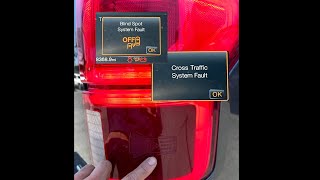
After heavy rain, the owner received "Blind Spot System Fault" and "Cross Traffic System Fault" messages. A FORScan tool revealed active codes U0232 and U0233.
What they tried:
- Based on forum advice, the owner suspected water intrusion into the tail light assembly, a known issue on F-150s where the blind spot module (SODL/SODR) is located.
- Upon removing the driver's side tail light, the owner found a small pool of water inside the housing and the module's connector was visibly wet and corroding.
Outcome: The owner disconnected the battery, removed the module, and thoroughly dried it and the connector with compressed air. After cleaning the connector pins and applying dielectric grease, the assembly was reinstalled. The codes cleared. The owner sealed the top of the tail light lens with silicone to prevent future leaks.
Lesson: On Ford F-150s, the blind spot module integrates with the tail light. A cracked or poorly sealed tail light lens is a direct path for water to destroy the expensive module. If you get this code, inspect your tail lights for moisture immediately.
2019 Toyota Camry with U0232 - A Wiring Problem
A 2019 Camry had the blind spot monitor warning light on with code U0232 stored. The system was completely inoperative.
What they tried:
- The technician first checked for power and ground at the left side module, which were both good. This ruled out a fuse or ground strap issue.
- The next step was to check the CAN bus communication wires between the left (master) and right (slave) modules.
- A visual inspection of the harness running across the rear bumper revealed two wires (one white, one pink) were damaged and broken.
Outcome: The technician repaired the two broken communication wires using weatherproof splices and wrapped the harness. After clearing the codes, the blind spot monitor system returned to normal operation.
Lesson: Don't immediately assume the module failed. U0232 means 'Lost Communication.' This is caused by a bad module OR a break in the communication wires. A simple wiring repair saves you from buying a $500+ module you don't need.
How to Prevent This Code From Triggering
- Apply Dielectric Grease to Connectors (Any time the rear bumper is removed or a connector is serviced.) — Dielectric grease is a non-conductive, waterproof sealant. Applying a small amount to the rubber seal of the electrical connector prevents moisture, road salt, and dirt from reaching the metal pins, which is the primary cause of the corrosion that leads to U0232.
- Routinely Clean Bumper Corners (During regular car washes, especially in winter.) — While a dirty surface won't cause a U0232 code, caked-on mud and road salt trap moisture against the bumper. This keeps the area saturated, promoting water intrusion past seals over time. Keeping the area clean allows it to dry out properly.
- Seal Housings and Clear Bumper Drains (Once per year, or after any rear-end body work.) — Visually inspect tail light housings for cracks and ensure rubber grommets in the rear body area are sealed. Additionally, clear the small drain holes at the bottom of the bumper cover. If clogged, the bumper holds water like a bucket, submerging the module and guaranteeing eventual failure.
Frequently Asked Questions
Can I just clean the sensor to fix code U0232?
No. While cleaning dirt or snow off the bumper resolves temporary 'sensor blocked' messages, it will not fix a U0232 communication code. This code indicates a hard electrical fault (bad wiring, no power, failed module), not a simple surface obstruction.
Will the U0232 code go away on its own?
Rarely. If the cause was a temporary voltage drop, the light might go off, but the code remains stored in history. A persistent U-code indicates a hardware or wiring fault that requires physical repair before the code stays cleared.
I replaced the module but the code came back. What did I miss?
This is a classic diagnostic trap. If a new module doesn't fix the issue, the root cause is an external wiring fault or missing power/ground. Furthermore, most new modules require professional programming and calibration to be recognized by the vehicle.
Can a weak car battery cause a U0232 code?
Yes. During engine cranking, a weak battery's voltage drops below the threshold required by sensitive electronic modules, causing them to temporarily shut down. If U0232 appears intermittently during cold starts, test your battery and charging system before replacing expensive modules.
Why did my airbag light come on with the blind spot fault?
Many modern safety systems are linked. The airbag system (SRS) uses data from the side obstacle sensors to optimize deployment strategy in a side-impact collision. When the sensor module goes offline, the SRS control module logs a fault as a precaution.
What does the 'A' in 'Module A' mean?
In OBD-II terminology for paired components, 'A' designates the primary, driver's side, or 'master' component. For this code, 'Module A' is the left-side sensor. In many vehicle designs, the left module acts as the master, controlling the right 'slave' module.
Is this problem covered by a recall?
Generally, no. While manufacturers issue Technical Service Bulletins (TSBs) for this issue, a TSB is just a repair instruction for dealers, not a mandated recall. The repair is only free if your vehicle is still under its original bumper-to-bumper warranty.
Key Takeaways
- Code U0232 disables your vehicle's blind spot monitor and rear cross-traffic alert because the left-side radar module stopped communicating on the CAN bus network.
- Water intrusion behind the rear bumper causes over 80% of U0232 codes, leading to corroded connector pins or a shorted internal circuit board.
- You can safely drive with a U0232 code, but you must manually check your blind spots since the system will not warn you of approaching vehicles.
- Replacing a dead module costs $600 to $1,500 and requires professional software calibration; never install a new module without first verifying the wiring has 12V power and a solid ground.
Helpful Videos

The information in this article is provided for general reference and educational purposes only. Vehicle specifications, procedures, and part compatibility can vary by production date, trim level, and region. Always consult your vehicle's factory service manual and verify part numbers before purchasing or performing repairs. Safety-critical components such as airbags, seat belts, and braking systems should be installed by a qualified professional.
- 🎬 Helpful Videos
- What Does U0232 Mean?
- Can I Drive With U0232?
- Common Causes
- Symptoms
- Diagnostic Flowchart
- Common Fixes & Costs
- Used vs. New Parts: Buying Guide
- What Happens If You Wait — Timeline
- Cost of Not Fixing It
- Diagnosis Steps
- When This Code Triggers (Freeze-Frame Conditions)
- Related Codes
- Climate & Environmental Factors
- How to Talk to a Mechanic About This Code
- Where to Take It: Dealer vs Independent vs Chain
- When to Walk Away From the Repair
- What Scan Tool You Need for This Code
- How to Clear the Code After You Fix It
- Will This Fail Emissions / State Inspection?
- Most Commonly Affected Vehicles
- Manufacturer-Specific Notes
- Real Owner Stories
- 2017 GMC Acadia with U0232 & U0233
- 2018 Toyota Tacoma with intermittent BSM warnings
- 2019 Ford F-150 with U0232 after heavy rain
- 2019 Toyota Camry with U0232 - A Wiring Problem
- How to Prevent This Code From Triggering
- Frequently Asked Questions
- Can I just clean the sensor to fix code U0232?
- Will the U0232 code go away on its own?
- I replaced the module but the code came back. What did I miss?
- Can a weak car battery cause a U0232 code?
- Why did my airbag light come on with the blind spot fault?
- What does the 'A' in 'Module A' mean?
- Is this problem covered by a recall?
- Key Takeaways
- 🎟️ Get 5% Off