

OBD-II Code U0231: Lost Communication With Rain Sensing Module
The Ultimate Guide to Diagnosing and Fixing U0231
- Code U0231 disables your automatic wipers and often your automatic headlights, forcing you to control both systems manually.
- Over 80% of U0231 codes triggered after a windshield replacement are caused by a missing, damaged, or improperly installed $20 sensor gel pad.
- Always scan for other 'U' codes before buying parts; if code U0140 is present, your Body Control Module (BCM) is offline and the rain sensor is not the root cause.
- Test the CAN bus network health with a multimeter by verifying 2.5V on the communication lines and exactly 60 Ohms of termination resistance at the OBD-II port.
- Replacing the rain sensor module requires a professional bi-directional scan tool to recalibrate the new unit to the BCM on most post-2010 vehicles.
What Does U0231 Mean?

Code U0231 signifies your vehicle's Body Control Module (BCM) lost its data connection to the rain sensing module. This optical sensor, mounted on the windshield behind the rearview mirror, detects moisture to control wiper speed. When this link breaks, automatic wipers disable, forcing manual control.
Technical definition: The SAE/ISO definition for U0231 is "Lost Communication With Rain Sensing Module". This network communication code indicates the rain sensing module is not transmitting or receiving data packets over the vehicle's Controller Area Network (CAN) or Local Interconnect Network (LIN) bus. The fault logs when the supervisory module (usually the BCM) fails to receive a signal from the sensor for a specified time period, typically 2 to 5 seconds.
Can I Drive With U0231?
Yes, But With Caution. Yes, the vehicle is mechanically safe to drive. However, losing automatic wipers forces manual control, increasing driver distraction in sudden downpours. If your automatic headlights are also affected, driving at dusk or through tunnels becomes a safety hazard.
Common Causes

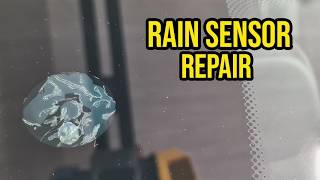
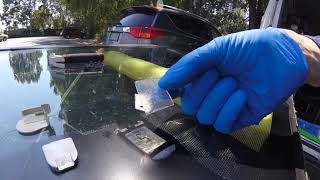
- Improper windshield replacement (Very Common) — This is the number one cause. If the specialized gel pad between the sensor and the new windshield is missing, reused, damaged, or has air bubbles, it disrupts the sensor's optical path. 🎬 Watch: How to replace a damaged rain sensor gel pad. This causes the module to report a fault and drop off the network.
- Wiring or connector issues (Common) — The wiring harness or electrical connector at the rain sensor corrodes, suffers water damage, or has pins pushed back. This severs the flow of power, ground, or critical data signals.
- Faulty rain sensor module (Common) — The sensor module itself fails due to an internal electronic fault, firmware corruption, or damage from moisture intrusion.
- Blown fuse (Less Common) — A blown fuse for the rain sensor or a related circuit cuts power to the module, causing it to immediately stop communicating.
- Low battery voltage (Less Common) — Modern vehicle modules are highly sensitive to voltage. A weak battery or failing alternator causes voltage drops during startup, forcing modules like the rain sensor to temporarily drop off the communication network.
- Software glitch or recalibration needed (Less Common) — After a battery disconnect or component replacement, the module loses its initialization. It requires recalibration with a diagnostic scan tool to restore communication. 🎬 See how to reset and recalibrate your rain sensor.
- Body Control Module (BCM) or network fault (Rare) — The fault lies with the BCM itself or a broader issue on the vehicle's data network, such as a shorted wire or faulty termination resistor affecting multiple modules.
Symptoms

- Automatic wipers do not work — The wipers will not turn on automatically in the 'Auto' setting when it rains. You must operate them manually.
- Wipers behave erratically — The wipers activate randomly when dry ('ghost wiping'), operate at the wrong speed, or get stuck in a single mode.
- Automatic headlights fail — Because the rain sensor is often integrated with the ambient light sensor, a fault in this unit causes the automatic headlights to stop working.
- Warning message on dash — A "Service Wiper System" message appears on the instrument cluster, or the Check Engine Light illuminates.
- No live data from rain sensor (scan-tool only — no driver-felt sign) — A diagnostic scan tool shows no live data stream available from the rain sensor module, confirming it is offline.
Diagnostic Flowchart
Tap your situation to follow the diagnostic path that matches what you're seeing on this code.
Common Fixes & Costs
- Replace the rain sensor gel pad — Parts: $10-$30, Labor: $75-$150, ~0.8 hr book time (DIY)
- Repair wiring or clean/replace connector — Parts: $10-$60, Labor: $150-$300, ~1.5 hr book time (Intermediate)
- Replace the rain sensor module — Parts: $80-$550, Labor: $150-$350, ~1.2 hr book time (Intermediate)
- Recalibrate or re-initialize the sensor/BCM — Parts: $0, Labor: $100-$200, ~1 hr book time (Professional)
- Replace the Body Control Module (BCM) — Parts: $300-$1200, Labor: $500-$1600, ~2.5 hr book time (Professional)
DIY vs Professional
- Replace the rain sensor gel pad — Beginner:
Tools: Trim removal tool, cleaning alcohol, lint-free cloths, new gel pad. - Repair wiring or clean/replace connector — Beginner:
Tools: Multimeter, trim removal tools, wire strippers, crimpers, heat shrink tubing, soldering iron (optional), vehicle-specific wiring diagram. - Replace the rain sensor module — Beginner:
Tools: Trim removal tool, screwdriver/socket set. - Recalibrate or re-initialize the sensor/BCM — Beginner:
Tools: OEM or high-end professional diagnostic scan tool (e.g., wiTECH for Chrysler/Jeep, IDS for Ford, ISTA for BMW).
Used vs. New Parts: Buying Guide
When a used part is worth it: Buying a used rain sensor module is a high-risk, low-reward option. It only makes sense if a new OEM part is prohibitively expensive and you are on a strict budget. The gel pad must always be purchased new.
Donor-vehicle mileage cap: roughly under 50000 miles for the part to have meaningful remaining life.
Donor quality checklist:
- Verify the part number matches exactly.
- Avoid sensors from vehicles with front-end collision damage.
- Ask for a photo of the sensor's optical surface to check for scratches.
- Understand that used electronic parts have a very short warranty.
Decision logic:
- If The problem is diagnosed as a faulty gel pad → Always buy a new gel pad. They are inexpensive and not reusable.
- If The sensor module is confirmed faulty and a new OEM part is < $250 → Buy new OEM. The reliability and warranty are worth the cost.
- If A new OEM part is > $400 and a reputable aftermarket brand is available → A new aftermarket part is a reasonable compromise between cost and reliability.
- If The vehicle is old, budget is the top priority, and you accept the risk of failure → A used part is considered, but factor in the cost of repeat labor if it fails.
Warranty tradeoff: Used parts often have a 30-day warranty at best. Aftermarket new parts typically carry a 1-year warranty. New OEM parts offer the best quality assurance.
Worst-case if a used part fails: $200-$400 if a used sensor fails shortly after installation, requiring a second diagnostic fee and repeat labor.
What Happens If You Wait — Timeline
- 0-1 month: The U0231 code sets, and automatic wiper/headlight functions disable. The driver must manually operate the wipers. (MPG impact: 0%% · Added cost: $0)
- 1-6 months: If the root cause is a short circuit in the wiring harness, it prevents other modules on the data bus from entering 'sleep' mode, leading to a parasitic battery drain. (MPG impact: 0%% · Added cost: $0-$250 (Cost of a new battery if the drain causes a no-start condition))
- 6-12 months: If the fault is due to water intrusion at the connector, ongoing corrosion damages the pins on the rain sensor module itself, requiring a full module replacement. (MPG impact: 0%% · Added cost: $150-$550 (Cost of a new battery plus a new sensor module))
- 12+ months: A persistent short on the CAN or LIN bus destabilizes the entire network, leading to other unrelated electronic gremlins or communication codes. (MPG impact: 0%% · Added cost: $200-$800+ (Combined cost of battery, diagnostics, and complex electrical repair))
Cost of Not Fixing It
- Immediate: Loss of automatic wiper and automatic headlight function. This increases driver distraction in changing weather. (Added cost: Negligible)
- 1-3 months: If the fault is caused by a short on the data bus, it prevents other modules from entering sleep mode, leading to a parasitic battery drain. (Added cost: $150-$400 (for a new battery and potential tow))
- 6+ months: No direct mechanical damage occurs. The primary cost remains the safety risk and the potential for an unpredictable dead battery. (Added cost: $150-$400+)
Diagnosis Steps

- Scan for All Diagnostic Trouble Codes (DTCs)
Using a full-system OBD-II scanner, read codes from all modules. Confirm U0231 is present. Multiple 'U' codes (e.g., U0232, U0233) point to a network-wide problem. A U0140 code points to a BCM failure.
Tools: OBD-II Scanner (with all-module capability) (Beginner) - Perform a Detailed Visual Inspection
Look closely at the sensor where it meets the windshield. Is the gel pad crystal clear? Air bubbles, a hazy appearance, or dirt/moisture are major red flags, especially after a windshield replacement.
Tools: Flashlight (Beginner) - Check Fuses
Consult the owner's manual to locate the fuse(s) for the Rain Sensor, Wiper System, and Body Control Module. Visually inspect each fuse and replace any that are blown.
Tools: Owner's Manual, Fuse Puller (Beginner) - Inspect the Electrical Connector and Harness
Remove the plastic trim covering the rain sensor. Disconnect the electrical connector. Inspect the pins for corrosion (green or white powder), moisture, or bent pins. Check nearby wiring for chafing.
Tools: Trim removal tool (Intermediate) - Test for Power and Ground at the Sensor
Using a multimeter and wiring diagram, test the sensor's connector (harness side). With the ignition on, verify battery voltage (12.0V-12.6V) on the power pin and excellent continuity to ground (< 1.0 ohm) on the ground pin. Lack of either points to a wiring or fuse issue.
Tools: Digital Multimeter, Vehicle Wiring Diagram (Advanced) - PRO TIP: Test LIN/CAN Bus Voltages
Check the communication line. For a single-wire LIN bus, voltage fluctuates between 1V and system voltage. For a two-wire CAN bus (ignition on, engine off), measure approximately 2.5V on both CAN High and CAN Low lines relative to ground. 0V indicates a short to ground; 12V indicates a short to power.
Tools: Digital Multimeter, Vehicle Wiring Diagram (Advanced) - PRO TIP: Check Network Termination Resistance
Disconnect the battery. At the OBD-II port or sensor connector, measure resistance between the CAN High and CAN Low pins. A healthy network reads exactly 60 Ohms. 120 Ohms indicates an open circuit; 0 Ohms indicates a short between the lines.
Tools: Digital Multimeter (Advanced) - Attempt Module Initialization
If wiring and voltages check out, use a professional scan tool to re-initialize or recalibrate the rain sensor. This function lives in the BCM's special functions menu. If the tool communicates and initializes the sensor, the code resolves.
Tools: Professional Scan Tool (Professional)
When This Code Triggers (Freeze-Frame Conditions)
- Module Voltage: 10-16V (The code sets when the ignition is on and module voltage is within the normal operating range.)
- Ignition Status: On / Run (The Body Control Module (BCM) performs a network check of other modules when the ignition is turned on.)
- Time Since Ignition On: 2-10 seconds (The fault logs shortly after startup when the supervisory module fails to receive a 'hello' message from the rain sensor.)
- Network Status: No Response from Rain Sensor (Freeze frame data for a 'U' code primarily indicates which module failed to communicate, rather than engine performance metrics.)
Related Codes
- B1370 — Indicates an internal circuit fault within the rain sensor itself. If you have both U0231 and B1370, the rain sensor module has failed and requires replacement.
- U0140 — Lost Communication With Body Control Module (BCM). If U0140 is present with U0231, stop diagnosing the rain sensor. The entire BCM is offline. Diagnose the BCM's main power, ground, and network connections first.
- U0232 / U0233 — Lost Communication With Side Obstacle Detection Modules. Multiple 'U' codes strongly suggest a shared network problem, not multiple individual component failures. Focus on the health of the entire CAN bus.
- U0155 — Lost Communication With Instrument Panel Cluster (IPC). If the rain sensor communicates through the IPC, a U0155 code causes a U0231. This indicates a problem with the instrument cluster acting as a gateway.
Climate & Environmental Factors
- Cold Weather / Frost: Frost or ice covering the sensor area blocks the optical path, preventing it from detecting actual rain. Extreme cold causes the sensor to trigger 'ghost wipes' on a dry windshield upon startup.
- High Humidity / Condensation: Condensation forming on the windshield directly over the sensor triggers the wipers even without rain. This is a common cause of intermittent 'ghost wiping'.
- Dirt, Debris, and Windshield Coatings: Dirt, dust, or dried salt spray obstructs the sensor's view. Aftermarket water-repellent windshield coatings interfere with the infrared light, leading to poor performance or non-operation.
- Gel Pad Aging: Exposure to heat and UV rays causes the sensor's gel pad to degrade, turn hazy, or separate from the glass. This disrupts the optical path and triggers a U0231 fault.
How to Talk to a Mechanic About This Code
Say this: "I have a U0231 code and my automatic wipers aren't working. I'd like to schedule a diagnostic. Can you please start by inspecting the rain sensor's gel pad and connector, and check for power, ground, and communication signals at the sensor before recommending a new module? Also, please let me know if any other communication codes are present."
This signals you know the common causes (gel pad, wiring) and prevents the shop from immediately quoting an expensive new sensor. Asking for electrical tests shows you understand proper diagnostic procedure.
Avoid saying:
- 'My auto wipers are broken, fix them.'
- 'My check engine light is on, can you look at it?'
- 'Just replace the rain sensor.'
Questions to ask before authorizing the repair:
- Did the code appear by itself, or were there other 'U' codes suggesting a network problem?
- Did you inspect the gel pad? Were there any air bubbles or signs of degradation?
- Did you confirm the sensor has 12-volt power and a good ground at the connector?
- If you are recommending a new sensor, will it require calibration, and is that included in the quote?
- Can you show me the old part?
Where to Take It: Dealer vs Independent vs Chain
- Dealer:
Recommended if a required sensor recalibration is confirmed or if initial diagnosis by an independent shop is inconclusive.
Best for: Vehicles under warranty., Complex cases involving multiple 'U' codes or suspected BCM failure., Vehicles known to require specific recalibration procedures after sensor replacement (e.g., BMW, Mercedes-Benz).
Downsides: Highest labor rates., Defaults to module replacement instead of nuanced wiring or connector repair. (Typical cost: +50% vs. baseline) - Independent Shop:
Best fit for most common U0231 scenarios. A good independent shop handles gel pad, wiring, and most sensor replacements effectively and affordably.
Best for: Out-of-warranty vehicles where the cause is likely a bad gel pad, wiring, or the sensor module itself., Shops with strong electrical and diagnostic reputations (look for ASE certifications).
Downsides: Lacks the latest OEM-specific scan tools for recalibration on all makes/models., Quality and diagnostic skill varies significantly between shops. (Typical cost: +0% vs. baseline) - Chain Shop:
AVOID for U0231 diagnosis. This code requires diagnostic skill beyond simple code reading.
Best for: Unrelated services like oil changes or tires.
Downsides: Not equipped for advanced network diagnostics., Technicians lack the specific expertise for communication codes and resort to guessing., High pressure to upsell leads to unnecessary recommendations. (Typical cost: -10% vs. baseline)
When to Walk Away From the Repair
If the estimated repair cost for the U0231 fault exceeds 40-50% of your car's current private-party value, pause and consider your options, especially if the car has other pending mechanical issues.
- Car worth $5000, fix is $350: Fix it. This is a relatively low-cost repair that improves safety and restores a key feature.
- Car worth $8000, fix is $1600: Borderline. This likely involves a BCM replacement. Get a second opinion from a trusted independent shop before proceeding.
- Car worth $3000, fix is $800: Consider walking away. The repair cost is a significant percentage of the car's value.
What Scan Tool You Need for This Code

Minimum: A scanner that reads codes from ALL vehicle modules, including the Body Control Module (BCM), not just a basic engine code reader.
A $20 engine-only code reader will not see the U0231 code, as it is stored in the BCM. You need a tool that performs a full-system scan to properly diagnose the issue.
Budget: BlueDriver Pro (~$100) — Connects to your smartphone via Bluetooth. It performs a full-system scan to read and clear BCM codes like U0231, and views live data from the BCM.
Mid-range: Foxwell NT710 / Autel MaxiCOM MK808S (~$250-400) — These tablet-style scanners offer full-system diagnostics plus bi-directional control. They include the 'Special Function' needed to re-initialize or recalibrate a rain sensor.
Professional: Autel MaxiSys MS906 Pro / TopDon Phoenix Lite 2 (~$600-1200) — Offers OE-level diagnostics, including advanced functions like ECU coding and module programming. These tools are essential for complex jobs like replacing and programming a BCM.
Rent vs buy: Most auto parts stores offer free code reading, but their tools may not scan the BCM. For a one-time fix, pay a shop's diagnostic fee. If you plan to do your own maintenance regularly, buying a mid-range scanner is a worthwhile investment.
How to Clear the Code After You Fix It
- Use an OBD-II scan tool to clear all DTCs from all modules.
- Turn the ignition completely off, then restart the vehicle.
- Perform a functional test of the automatic wipers.
- Perform a drive cycle to ensure the code does not return as 'pending' or 'current'.
Drive cycle (~20 minutes): A specific drive cycle is not required for this network code. A normal 20-minute drive confirms the fix. The key is to cycle the ignition off and on after the repair to force the BCM to re-scan the network.
Readiness monitors affected: None
Watch out for:
- Clearing the code without fixing the root cause (bad wiring, faulty gel pad) results in the code returning immediately.
- Forgetting to perform a required recalibration with a scan tool after replacing the sensor.
- Disconnecting the battery clears the code but is not sufficient for the system to re-initialize properly.
Will This Fail Emissions / State Inspection?
Yes — this code typically fails an OBD-II emissions inspection.
- California: A U0231 code causes an emissions test failure if it illuminates the Check Engine Light. A lit Check Engine Light is an automatic fail.
- New York: The NYS inspection includes an OBD-II scan. Any code that commands the Check Engine Light to turn on results in an inspection failure.
- Texas: In counties requiring emissions testing, a vehicle fails if the Check Engine Light is on. Non-functional wipers also fail the safety inspection.
Manufacturer-Specific Notes
- Jeep / Dodge / Chrysler / Ram: For FCA vehicles, always suspect the gel pad first after a windshield replacement (NHTSA 10244347). For certain 2022 models, a BCM software flash (TSB 08-153-22) is the prescribed fix for LIN bus faults.
- Mazda: Mazda uses suffix code U0231:68. Their diagnostic procedure dictates the problem is almost always in the single communication wire between the sensor and the Front Body Control Module (FBCM).
- Mitsubishi: Mitsubishi defines this as a "LIN timeout" code. Diagnostics focus entirely on testing the single LIN wire between the sensor and the ETACS-ECU for an open circuit or short.
- BMW: On many BMWs, the rain sensor MUST be re-initialized using diagnostic software after a windshield replacement or battery disconnect. Failing to do this causes the U0231 code to persist.
Real Owner Stories
2009 Land Rover Freelander 2 - Misdiagnosis
Automatic wipers stopped working, and an OBD reader showed code U0231. All other wiper functions worked correctly.
Outcome: The issue was not the sensor. The root cause was a wiring harness failure between the sensor and the BCM.
Lesson: Never assume the module itself failed. Code U0231 points to a problem in the connection path (wiring, connectors) rather than the component. Always test wiring for power, ground, and communication signals before replacing expensive modules.
2014 Ram 1500 - DIY Retrofit Challenge
An owner attempted to add factory rain-sensing wipers to a truck that didn't originally have them.
Outcome: The system failed to initialize. A forum expert noted that U0231 in this context points to a short to power, a short to ground, or a break in the LIN-bus communication wire.
Lesson: Retrofitting modern electronic features requires perfect wiring. Even with the right parts and software, wiring issues prevent initialization and trigger communication faults.
Dodge Charger SRT-8 - Intermittent Network Fault
A U0231 code logged, indicating the BCM was not receiving messages from the rain sensor module.
Outcome: If multiple modules log communication DTCs against the rain sensor, the sensor is replaced. If only one module logs the U0231 code, the problem is with the reporting module's ability to listen to the network.
Lesson: Pay close attention to which module logs the fault. If multiple modules can't see the rain sensor, the sensor or its direct wiring is the culprit.
Mazda with U0231:68 - Wiring Harness Focus
A Mazda vehicle logged code U0231:68, indicating a communication error between the Front Body Control Module (FBCM) and the rain sensor.
Outcome: Only after confirming the entire wiring harness is intact does the procedure suggest replacing the rain sensor.
Lesson: Manufacturer-specific DTCs focus heavily on wiring and connector integrity. A communication code is almost always a physical layer problem (wiring) rather than a component failure.
How to Prevent This Code From Triggering
- Insist on a new gel pad during every windshield replacement (At time of windshield service) — Reusing an old pad or installing a new one improperly disrupts the sensor's optical path, immediately triggering a U0231 code. Specifying a new pad prevents this issue.
- Periodically clean the windshield area over the sensor (Monthly or as needed) — Dirt, road grime, or salt spray obstructs the sensor's optical path, preventing it from detecting rain accurately. Keeping this glass clean ensures a clear view.
- Avoid hydrophobic coatings (like Rain-X) directly on the sensor area (During every car wash/detailing) — These coatings cause water to bead in ways the sensor isn't calibrated to detect, leading to poor performance. A clean, untreated glass surface is optimal.
- Apply dielectric grease to the sensor's electrical connector (Once, or whenever the connector is serviced) — Dielectric grease prevents moisture intrusion and corrosion, which causes open or shorted circuits on the power, ground, or data lines.
Frequently Asked Questions
Can I drive my car with a U0231 code?
Yes, it is mechanically safe to drive. However, your automatic wipers will not function, forcing you to control them manually. This increases driver distraction and can be a safety hazard in changing weather conditions.
My wipers stopped working right after my windshield was replaced. Is that the U0231 code?
Almost certainly. The technician likely reused the old gel pad or installed the new one incorrectly, trapping air bubbles. Contact the glass shop to request a proper reinstallation with a new pad.
What is a rain sensor gel pad and why is it so important?
The gel pad is a clear adhesive that optically couples the rain sensor to the windshield. It creates a perfect, bubble-free interface for the sensor's infrared light to pass through the glass. Without a perfect coupling, the sensor fails and logs a communication code.
What are common misdiagnosis mistakes for U0231?
The biggest mistake is replacing the expensive rain sensor module without first meticulously inspecting the gel pad and checking for other codes. If multiple 'U' codes are present, the problem is the network, not the sensor.
Can I reset the rain sensor myself?
Sometimes. Cycling the ignition several times or disconnecting the battery for 30 minutes forces a module reset on older vehicles. However, many modern cars require a specific recalibration procedure using a professional scan tool.
How much does it cost to fix U0231?
A replacement gel pad is the cheapest fix, around $10-$30 for the part. A new sensor module ranges from $80 to $550 depending on the vehicle. Professional diagnosis and labor typically add $125-$300 to the total cost.
Do I need a special tool to fix U0231?
For basic checks, you only need a flashlight and a multimeter. For the final fix on many modern cars, a professional bi-directional scan tool is required to recalibrate the new sensor or clear persistent codes.
My U0231 code is on but my automatic wipers seem to work fine. What's going on?
This indicates an intermittent or historic code caused by a temporary voltage drop. Clear the code with a scanner and monitor the system. If the code returns immediately, a hard fault requires diagnosis.
Key Takeaways
- Code U0231 disables your automatic wipers and often your automatic headlights, forcing you to control both systems manually.
- Over 80% of U0231 codes triggered after a windshield replacement are caused by a missing, damaged, or improperly installed $20 sensor gel pad.
- Always scan for other 'U' codes before buying parts; if code U0140 is present, your Body Control Module (BCM) is offline and the rain sensor is not the root cause.
- Test the CAN bus network health with a multimeter by verifying 2.5V on the communication lines and exactly 60 Ohms of termination resistance at the OBD-II port.
- Replacing the rain sensor module requires a professional bi-directional scan tool to recalibrate the new unit to the BCM on most post-2010 vehicles.
Helpful Videos

The information in this article is provided for general reference and educational purposes only. Vehicle specifications, procedures, and part compatibility can vary by production date, trim level, and region. Always consult your vehicle's factory service manual and verify part numbers before purchasing or performing repairs. Safety-critical components such as airbags, seat belts, and braking systems should be installed by a qualified professional.
- 🎬 Helpful Videos
- What Does U0231 Mean?
- Can I Drive With U0231?
- Common Causes
- Symptoms
- Diagnostic Flowchart
- Common Fixes & Costs
- DIY vs Professional
- Used vs. New Parts: Buying Guide
- What Happens If You Wait — Timeline
- Cost of Not Fixing It
- Diagnosis Steps
- When This Code Triggers (Freeze-Frame Conditions)
- Related Codes
- Climate & Environmental Factors
- How to Talk to a Mechanic About This Code
- Where to Take It: Dealer vs Independent vs Chain
- When to Walk Away From the Repair
- What Scan Tool You Need for This Code
- How to Clear the Code After You Fix It
- Will This Fail Emissions / State Inspection?
- Manufacturer-Specific Notes
- Real Owner Stories
- 2009 Land Rover Freelander 2 - Misdiagnosis
- 2014 Ram 1500 - DIY Retrofit Challenge
- Dodge Charger SRT-8 - Intermittent Network Fault
- Mazda with U0231:68 - Wiring Harness Focus
- How to Prevent This Code From Triggering
- Frequently Asked Questions
- Can I drive my car with a U0231 code?
- My wipers stopped working right after my windshield was replaced. Is that the U0231 code?
- What is a rain sensor gel pad and why is it so important?
- What are common misdiagnosis mistakes for U0231?
- Can I reset the rain sensor myself?
- How much does it cost to fix U0231?
- Do I need a special tool to fix U0231?
- My U0231 code is on but my automatic wipers seem to work fine. What's going on?
- Key Takeaways
- 🎟️ Get 5% Off