

U0230 on 2008-2013 Toyota Highlander: Power Back Door Communication Fault Causes & Fixes
On a 2008-2013 Highlander, code U0230 means the main computer has lost communication with the Power Back Door module. This is often caused by a faulty power liftgate latch (Part No. 69350-0E090) or related wiring and may be accompanied by a pop or clunk noise when the door tries to close. A fix often involves inspecting the latch and wiring, guided by Toyota's Technical Service Bulletin T-SB-0038-15.
- U0230 on a 2008-2013 Highlander points directly to a problem with the Power Back Door system.
- Listen for a 'pop' or 'clunk' from the latch when it closes; this is a key symptom mentioned in a Toyota TSB and points to a failing latch assembly.
- Before replacing expensive parts, always inspect the wiring harness that runs between the vehicle body and the liftgate for broken wires.
- This code is often seen with code B2222. If both are present, it strongly suggests a failure in the latch/motor assembly.
- The vehicle is safe to drive with this code, but you will have to operate the liftgate manually.
What's Unique About the 2008-2013 Toyota HIGHLANDER
For this specific generation of Highlander, the U0230 code is strongly associated with a known issue detailed in Toyota's Technical Service Bulletin (TSB) T-SB-0038-15. Unlike a generic communication code, on this vehicle it is frequently accompanied by physical symptoms like the power door reversing after closing, or a distinct 'pop' or 'clunk' noise from the latch area. This points technicians directly toward a potential mechanical or electro-mechanical failure in the latch mechanism, rather than just a simple wiring fault. The issue was common enough to be part of a class-action lawsuit filed against Toyota.
Diagnostic Flowchart
Tap your situation to follow the diagnostic path that matches what you're seeing on this vehicle.
Symptoms You May Notice
- Power back door will not open or close automatically.
- Power back door opens partially and then stops, sometimes with a warning beep.
- Power back door closes and then immediately reverses to the open position.
- A 'pop' or 'clunk' noise is heard from the latch area as the door attempts to close.
- The 'rear gate open' warning light may stay on the dashboard.
- Buttons on the key fob, dashboard, and liftgate itself for the power function are unresponsive.
- A single long, continuous beep is heard when trying to operate the liftgate, indicating a system malfunction.
- Replacing the power liftgate struts. While failing struts can cause the liftgate to not open or stay up, they do not typically cause a U0230 communication code on their own. The code points to an electrical/data problem.
- Assuming the entire liftgate motor assembly (the large actuator arm) has failed. While this part can fail, the TSB and owner reports for the U0230 code point more frequently to the latch mechanism located in the door itself.
Most Likely Causes
- Faulty Power Back Door Latch/Motor Assembly 🔴 High Probability TSB T-SB-0038-15 directly links the code to symptoms of a failing latch mechanism, suggesting it's a common failure point that can disrupt communication. The internal position sensor or motor within the latch fails, causing the ECU to lose track of the door's state, which triggers the communication fault.
How to confirm: Listen for a loud pop or clunk during the closing cycle. Inspect the latch for physical damage. If the door closes and reverses, the latch mechanism is a primary suspect. The presence of code B2222 alongside U0230 strongly points to the latch assembly.
Typical fix: Replacement of the power back door latch and motor assembly. The most commonly cited part number is 69350-0E090.
Est. part cost: $350-$515 (OEM) - Damaged Wiring Harness 🟡 Medium Probability The wiring that passes from the vehicle body to the liftgate is in a flexible rubber boot. Repeated opening and closing can cause wires to fatigue and break over time, leading to a loss of power, ground, or the CAN bus communication signals.
How to confirm: Peel back the rubber boot between the liftgate and the roof of the vehicle. Visually inspect the wires for any signs of cracking, fraying, or complete breaks. Test for continuity on the CAN bus (CANH/CANL) and power/ground wires at the Power Back Door ECU connector.
Typical fix: Repairing the broken wire(s) with butt connectors and heat shrink tubing. Toyota service literature sometimes advises against repairing CAN bus wires due to potential resistance changes, but it is a common DIY fix.
Est. part cost: $5-$50 - Faulty Power Back Door ECU ⚪ Low Probability While less common than mechanical or wiring failures, the control module itself can fail internally due to age, vibration, or moisture intrusion.
How to confirm: This is typically diagnosed by exclusion. If the latch, wiring, power, and grounds have all been confirmed to be good using a multimeter, the ECU is the likely culprit. A diagnostic scan tool may also show the module as completely unresponsive.
Typical fix: Replacement of the Power Back Door ECU. The replacement may require programming or initialization.
Est. part cost: $250-$600
Rare But Worth Checking
- Damaged or Bent Hinges/Struts: The TSB mentions that repeated interference with the door's closing path can damage hinges or struts. This misalignment can put stress on the latch and motor, indirectly causing the fault.
- Poor Ground Connection: A corroded or loose ground wire for the Power Back Door ECU can cause intermittent communication and operation issues. Always check ground points (typically a bolt to the chassis) in the rear cargo area during diagnosis.
- Power Back Door 'Off' Switch: A simple but common issue is the power back door main switch, located in the glove box, being accidentally turned off. This disables the system and can be mistaken for a fault.
Diagnosis Steps
- Check for and confirm the presence of the U0230 code, and note if B2222 is also present, using an OBD-II scanner capable of reading body codes.
- Check the simple things first: ensure the power back door switch in the glove box is turned ON.
- Attempt a system reset/initialization (see 'DIY & Owner Experiences' section below).
- Operate the power back door and listen carefully for any abnormal 'pop' or 'clunk' sounds as it latches, as described in TSB T-SB-0038-15.
- Observe the door's behavior: does it close fully and then reverse? This is a key symptom pointing to the latch assembly.
- Inspect the wiring harness inside the flexible rubber boot between the top of the liftgate and the vehicle body. Look for broken, chafed, or pinched wires.
- If wiring appears intact, use a multimeter to check for proper power (12V+) and ground (less than 0.1 Ω to chassis) at the Power Back Door ECU connector, located inside the liftgate panel.
- If power and ground are good, check the resistance of the CAN bus wires (CAN High and CAN Low) at the same connector. With the battery disconnected for at least a minute, they should measure approximately 60-120 ohms.
- If all wiring and connections are confirmed good, the fault is most likely within the power back door latch/motor assembly or the ECU itself. Given the TSB and high frequency of reports, the latch assembly (Part No. 69350-0E090) is the most probable failure point.
Parts You'll Likely Need
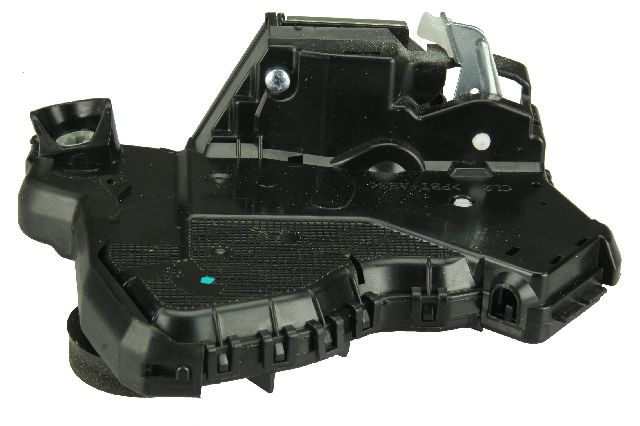
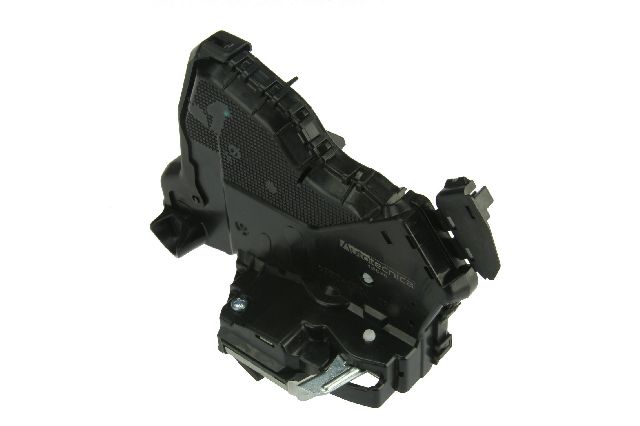
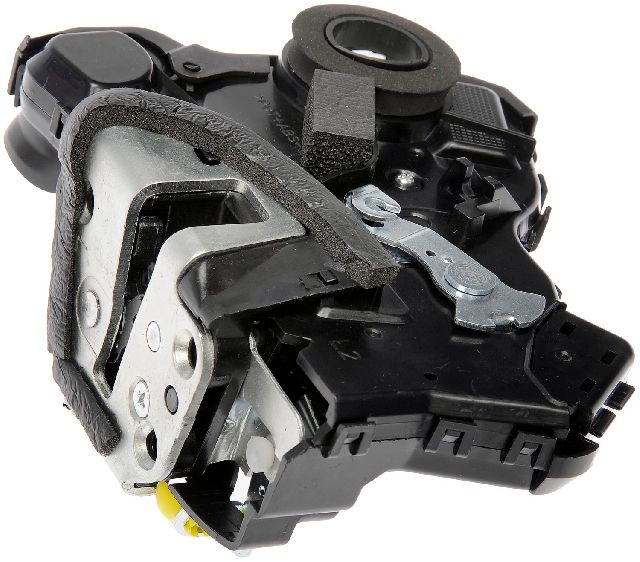
- Power Back Door Lock Actuator / Latch Assembly
(OEM #69350-0E090)— This is the most common point of failure according to Toyota's own service bulletin and numerous owner reports for this exact issue. The internal motor or position sensor fails, causing both mechanical symptoms (popping, reversing) and communication codes (U0230, B2222).
Trusted brands: Aisin, Genuine Toyota
OEM price range: $340-$515
Aftermarket price range: $150-$300
Related Codes That Often Appear With This One
- B2222 — This code is for a 'Back Door Closer (Power) Position Sensor Circuit' fault. It is explicitly mentioned alongside U0230 in TSB T-SB-0038-15. A mechanical latch/motor problem will often set both a specific sensor code (B2222) and a general communication loss code (U0230) as the main ECU loses contact with the malfunctioning module.
Technical Service Bulletins (TSBs) & Recalls
- T-SB-0038-15: Describes a condition where the Power Back Door may not close properly, may make a pop/clunk noise, and may set DTCs B2222 and/or U0230. This is the primary document for diagnosing this specific issue.
Platform-Specific Known Issues
- A class-action lawsuit was filed mentioning the failure of the power liftgate system on Highlander models (including the XU40 generation), citing that Toyota knew about the defect since at least 2010 but did not issue a recall.
- Toyota issued TSB T-SB-0038-15 (and its predecessor T-SB-0091-12) to address a condition where the Power Back Door does not close properly, reverses on its own, makes noise, and sets DTCs B2222 and/or U0230.
Mechanic-Grade Diagnostic Values
- CAN Bus Resistance — expected: Approximately 60 Ω. Failure: A reading of ~120 Ω indicates an open in the bus or one of the two terminating resistors has failed. A reading near 0 Ω indicates a short between CAN High and CAN Low wires.
- CAN Bus Voltage (at DLC pins 6 & 14) — expected: CAN High (Pin 6 to ground) should fluctuate between 2.5V and 3.5V. CAN Low (Pin 14 to ground) should fluctuate between 2.5V and 1.5V. With a standard multimeter, you may see an average of around 2.6V for CAN High and 2.4V for CAN Low.. Failure: Voltages that are stuck high, stuck low, or do not mirror each other indicate a bus fault, short to power, or short to ground.
- Power Back Door ECU Ground Resistance — expected: < 0.1 Ω. Failure: A higher resistance value indicates a poor ground connection, which can cause intermittent communication and operational failures.
- Power Back Door ECU Power Supply — expected: 12.0 - 12.6 V (Ignition ON). Failure: Low or no voltage indicates a problem with the power supply wire or fuse, preventing the ECU from operating.
Scan Tool Commands That Help
- Toyota Techstream: Data List / Power back door — To check if the main body ECU is receiving proper signals from the back door lock and handle switches. This helps differentiate between a switch failure and a module/network failure.
- Toyota Techstream: Utility / Customize / PSD & PBD operation — To view and record customized settings, such as a user-defined opening height, before replacing the Power Back Door ECU. These settings must be manually reprogrammed after replacement.
- Professional Scan Tool: Actuator Test / Bidirectional Control — To directly command the rear gate module to open or close. If the module does not respond to a direct command from the scan tool, it confirms a communication loss or an internal module failure, assuming power and ground are good.
Wiring & Ground Locations
- Power Back Door ECU — Located inside the liftgate itself, behind the main interior trim panel.. This is the module that has lost communication. All power, ground, and CAN bus tests must be performed at its connector to diagnose the fault.
- Rear Body Ground Points — There are OEM ground points on each side of the rear cargo area, about a foot up from the floor, accessible by removing the rear quarter panel trim.. The Power Back Door ECU and latch assembly rely on a solid chassis ground. A corroded or loose ground in this area is a potential cause for the communication fault.
- CAN Bus Wires (CANH/CANL) — These wires run from the Main Body ECU to the Power Back Door ECU, passing through the flexible rubber boot between the vehicle body and the liftgate. This boot is a common chafe/break point.. A break or short in either the CAN High or CAN Low wire will sever communication with the module, directly causing the U0230 code.
Real Owner Repair Stories
- Reddit user 'hazmattl' (2013 Toyota Highlander) — When pushing the button to open or close the rear hatch, it moves only an inch, beeps twice, and then reverses. After a few tries, it emits a continuous 5-second beep.
❌ Tried (didn't work) Holding the glove box button down for up to 15 seconds.
✅ What actually fixed it A specific manual initialization procedure: 1. Turn the power back door switch in the glove box to OFF. 2. Manually open the hatch all the way. 3. With the hatch fully open, press and hold the button on the rear latch until it beeps 4 times. 4. Turn the glove box switch back ON. The system should now operate normally. - Do It Yourself Dad on YouTube (commenter) (2013 Toyota Highlander) — Rear door would not open automatically.
❌ Tried (didn't work) Took it to a dealer, who diagnosed it as needing a new door lift assembly for $1,600.
✅ What actually fixed it The power back door switch in the glove box had been accidentally turned off. Turning it back on restored full function.
OEM Part Supersession History
Not specified→69350-0E090— This is the most commonly cited part number for the latch assembly for the 2008-2013 Highlander.
Heads up: This part number also fits some 2013-2016 RAV4 models, but is primarily associated with the Highlander for this specific fault.
Model Year Variations Within This Range
- 2011-2013: The Highlander received a facelift for the 2011 model year. While the power back door system and its related faults remained consistent, the Hybrid model received an upgraded 3.5L V6 engine, replacing the previous 3.3L V6.
- 2009-2013: Beginning in 2009, a 2.7L 4-cylinder engine option became available on non-hybrid, front-wheel-drive models. The V6 remained standard on AWD and optional on FWD models. The power back door system was an optional feature available across trims and engine types.
We Have This Part in Stock



The information in this article is provided for general reference and educational purposes only. Vehicle specifications, procedures, and part compatibility can vary by production date, trim level, and region. Always consult your vehicle's factory service manual and verify part numbers before purchasing or performing repairs. Safety-critical components such as airbags, seat belts, and braking systems should be installed by a qualified professional.
- Toyota HIGHLANDER:
- 🛍️ Shop This Part
- What's Unique About the 2008-2013 Toyota HIGHLANDER
- Diagnostic Flowchart
- Symptoms You May Notice
- Most Likely Causes
- Rare But Worth Checking
- Diagnosis Steps
- Parts You'll Likely Need
- Related Codes That Often Appear With This One
- Technical Service Bulletins (TSBs) & Recalls
- Platform-Specific Known Issues
- Mechanic-Grade Diagnostic Values
- Scan Tool Commands That Help
- Wiring & Ground Locations
- Real Owner Repair Stories
- OEM Part Supersession History
- Model Year Variations Within This Range
- 🎟️ Get 5% Off