

OBD-II Code U0216: Lost Communication With Door Switch 'B'
The Ultimate Guide to What U0216 Means, Why It Triggers, and How to Fix It for Good
- U0216 specifically identifies a communication failure with the rear-left door module, ruling out mechanical window or lock failures.
- Over 80% of U0216 codes stem from broken wires inside the flexible rubber boot between the rear-left door and the vehicle body.
- Driving with U0216 is generally safe, but FCA vehicles (Jeep, Dodge, Chrysler) risk a sudden no-start condition due to security system integration.
- Never replace the $500+ Body Control Module (BCM) before performing a 60-second 'wiggle test' on the door jamb harness to check for broken wires.
What Does U0216 Mean?

The U0216 code signifies the Body Control Module (BCM) lost its communication link with the rear-left door control module. OBD-II standards designate the rear-left (driver's side rear) module as 'Door Switch B'. This failure prevents the BCM from receiving status updates or sending commands to that specific door.
Technical definition: Lost Communication With Door Switch 'B'. The Body Control Module (BCM) sets this code when it fails to receive a supervised periodic 'state of health' (SOH) message from the rear-left door module within a specified timeframe.
Can I Drive With U0216?
Yes, But With Caution. Yes, you can drive the vehicle, but you lose control of power windows, locks, and mirrors on the rear-left door. The significant risk, particularly on Jeep, Chrysler, and Dodge models, is an intermittent no-start condition that occurs without warning. Driving with this fault does not cause cascading damage, but the immobilization risk makes it a high-priority repair.
Common Causes

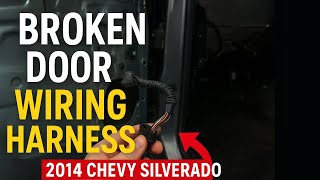
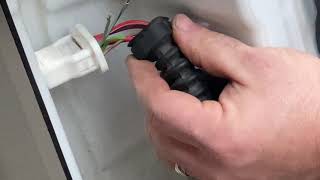
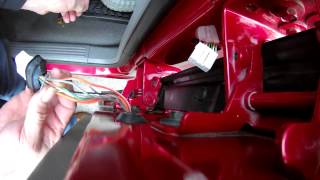
- Broken or Chafed Wires in Door Jamb (Very Common) — The wiring harness passing through the flexible rubber boot between the door and the body is the primary failure point. Constant stress from opening and closing the door fatigues the wires, causing them to break or chafe, resulting in an open or short circuit.
- Corroded or Loose Electrical Connectors (Common) — Electrical connectors at the door module or within the door jamb corrode from moisture or vibrate loose over time. This creates high resistance that interrupts communication. GM vehicles frequently suffer from fretting corrosion on these connector pins.
- Faulty Door Control Module or Switch Assembly (Common) — The electronic module inside the door panel fails due to internal electrical faults, moisture ingress, or physical wear. This component is often called the Rear Door Module (RDM) or Door Switch Assembly. 🎬 Watch: Troubleshooting and replacing a faulty door control module.
- Blown Fuse (Less Common) — A blown fuse for the door module cuts power and prevents communication. This indicates a short circuit elsewhere in the system that requires tracing and repair.
- Body Control Module (BCM) Software Glitch (Less Common) — On 2014-2016 Jeep Cherokees, a software glitch in the BCM triggers U0216, especially after a battery replacement. A dealer-performed software update and Proxy Alignment is the required fix.
- Water Intrusion into Control Modules (Less Common) — On Volkswagen models, the Comfort Control Module (CCM) sits under the driver's side carpet. Clogged sunroof drains flood this area, destroying the module and causing widespread communication failures.
- Faulty Body Control Module (BCM) (Rare) — An internal failure of the BCM itself is rare. Consider this a last resort only after exhaustively testing all wiring, connectors, fuses, and the door module.
- Improperly Manufactured Engine Control Module (ECM) (Rare) — A recall on 2005-2008 Toyota Corolla and Matrix models (1ZZ-FE engine) addresses factory ECMs prone to cracked circuit boards, leading to communication failures and no-start conditions.
Symptoms

- Dead Power Window and Locks on Rear-Left Door — The primary symptom is the complete loss of function for the power window and lock on the rear-left door.
- Incorrect 'Door Ajar' and Dome Light Operation — The dashboard incorrectly displays the affected door as open, or fails to register when it is. Consequently, interior dome lights remain on while driving or fail to illuminate when the door opens.
- Intermittent No-Start Condition — On Jeep, Dodge, and Chrysler models, the door module integrates with the security system. A communication loss prevents the vehicle from starting.
- Flashing Odometer — A flashing odometer on FCA vehicles indicates a proxy alignment issue, meaning the BCM lost its network configuration map.
Diagnostic Flowchart
Tap your situation to follow the diagnostic path that matches what you're seeing on this code.
Common Fixes & Costs
- Repairing Broken Wires in Door Jamb — Parts: $5-$25, Labor: $150-$300, ~1.5 hr book time (Intermediate)
- Cleaning or Reseating Connectors — Parts: $5-$15, Labor: $50-$100, ~0.5 hr book time (DIY)
- Replacing the Door Control Module/Switch — Parts: $50-$250, Labor: $75-$150, ~1.0 hr book time (DIY)
- BCM Software Update / Proxy Alignment — Parts: $0, Labor: $120-$250, ~1.2 hr book time (Professional)
- Replacing the Body Control Module (BCM) — Parts: $400-$700, Labor: $150-$300, ~1.8 hr book time (Professional)
DIY vs Professional
- Repairing Broken Wires in Door Jamb — Beginner:
Tools: Wire strippers, wire cutters, butt connectors, heat shrink tubing, heat gun, multimeter. - Cleaning or Reseating Connectors — Beginner:
Tools: Electrical contact cleaner, small brush, dielectric grease. - Replacing the Door Control Module/Switch — Beginner:
Tools: Trim removal tools, screwdriver set, socket set. - BCM Software Update / Proxy Alignment — Beginner:
Tools: OEM-level diagnostic scan tool (e.g., wiTECH for FCA). - Replacing the Body Control Module (BCM) — Beginner:
Tools: Socket set, screwdrivers, OEM-level diagnostic scan tool for programming.
Used vs. New Parts: Buying Guide
When a used part is worth it: For vehicles over 10 years old where a new OEM door module is prohibitively expensive. Ensure the part number matches exactly.
Donor-vehicle mileage cap: roughly under 100000 miles for the part to have meaningful remaining life.
Donor quality checklist:
- Verify the donor vehicle was not scrapped due to flood damage.
- Inspect connector pins for any signs of green or white corrosion.
- Match the OEM part number exactly to ensure software compatibility.
Decision logic:
- If The vehicle is less than 8 years old and the new part costs less than $150 → Buy new for the warranty and guaranteed compatibility.
- If The vehicle is over 10 years old and the repair is not critical → A used part is a cost-effective choice.
- If The replacement module requires professional programming → Factor in the $150 programming cost; a new part is a safer bet to avoid paying labor twice.
Warranty tradeoff: Used parts carry a 30-day warranty. New aftermarket parts offer 1-year warranties. New OEM parts carry a 1-2 year warranty.
Worst-case if a used part fails: $300 if a used module fails, requiring repeat labor and a second part purchase.
What Happens If You Wait — Timeline
- 0-1 month: Rear-left door functions fail. Incorrect 'door ajar' light illuminates. (MPG impact: 0%% · Added cost: $0)
- 1-3 months: The faulty door module fails to 'go to sleep', causing a parasitic battery drain. (MPG impact: 0%% · Added cost: $100-$250 for emergency jump-start services.)
- 3-6 months: Chronic parasitic drain deeply cycles the battery, significantly shortening its lifespan. Immobilization risk increases on FCA vehicles. (MPG impact: 0%% · Added cost: $150-$350 for a prematurely destroyed battery.)
- 6+ months: Constant strain from recharging a depleted battery destroys the alternator's voltage regulator. (MPG impact: 0%% · Added cost: $550-$1150 for a new battery and alternator.)
Cost of Not Fixing It
- 0-1 month: Inconvenience from non-functional door controls and potential for intermittent no-start. (Added cost: Negligible, unless a tow is required ($100-$250).)
- 1-6 months: A faulty door module creates a parasitic draw that prevents other modules from sleeping, draining the battery overnight. (Added cost: $150-$350 for a prematurely destroyed battery.)
- 6+ months: Chronically draining and recharging a battery puts significant strain on the alternator, leading to its failure. (Added cost: $400-$800 for alternator replacement.)
Diagnosis Steps

- Scan for All Codes
Use a professional-grade scan tool to read Body (B), Chassis (C), and Network (U) codes. Record U0216 and note if it is 'active' or 'history'. Multiple 'U' codes indicate a network-wide issue rather than an isolated door problem.
Tools: Professional Scan Tool (Beginner) - Inspect and Wiggle Test Door Jamb Wiring
With the ignition on, hold the window switch down while aggressively wiggling the flexible rubber boot between the rear-left door and the body. If the window moves momentarily, you have confirmed a broken wire inside that boot. Pull the boot back to visually locate the broken copper.
Tools: Flashlight, hands (Beginner) - Check Related Fuses
Locate all fuses related to the Body Control Module (BCM) and door control modules. Visually inspect each fuse and test the top test points with a multimeter for continuity.
Tools: Owner's manual, fuse puller, multimeter (Beginner) - Inspect Connectors for Corrosion
Remove the interior door panel to access the door control module. Unplug the electrical connector and inspect all pins for green or white corrosion, bent pins, or pushed-out terminals. Clean and apply dielectric grease.
Tools: Trim removal tools, screwdriver/socket set, dielectric grease (Intermediate) - Monitor Live Data PIDs
Access the BCM's live data stream with a scan tool. Look for the 'Rear Left Door Ajar' status. This value must toggle cleanly between 'Open' and 'Closed' as you move the door. A stuck status confirms the BCM is not receiving the signal.
Tools: Professional Scan Tool (Advanced) - Test for Power and Ground at the Module
Using a multimeter and wiring diagram, verify battery voltage and a solid ground at the door module's connector. Missing power or ground prevents the module from powering up to communicate.
Tools: Multimeter, vehicle-specific wiring diagram (Advanced) - Check CAN Bus Network Voltages
With the ignition on, measure the voltage of the two CAN bus wires at the module connector. A healthy active network shows approximately 2.6V on CAN High and 2.4V on CAN Low. Readings of 0V or 12V indicate a severe short circuit.
Tools: Multimeter, wiring diagram (Advanced) - Check Individual Wire Resistance
Disconnect the harness at the BCM and the door module. Measure the resistance of the suspect communication wire from end to end. A reading of 'OL' (Over Limit) confirms the wire is broken internally and requires replacement.
Tools: Multimeter, wiring diagram (Advanced)
When This Code Triggers (Freeze-Frame Conditions)
- Control Module Voltage: 11.5-14.0V (During module self-test at key-on or shortly after.)
- Vehicle Speed: 0 mph (Code sets when the vehicle is stationary as modules initialize.)
- Engine RPM: 0 or <800 RPM (Fault logs at key-on, engine-off, or immediately after starting.)
- Engine Coolant Temp: Ambient Temperature (Occurs during a cold start before the engine warms up.)
Related Codes
- U0217, U0218, U0219 — Indicates lost communication with other doors. Multiple simultaneous door codes point to a central issue like a faulty BCM or main CAN bus wiring fault, not individual door failures.
- U1220-87 / U1517-87 — On Jeep Cherokees, these codes strongly indicate the BCM software glitch is the root cause, requiring a software update per TSB 08-013-15.
- B1000-B1999 codes — Body codes related to the window or lock are symptom codes. The BCM sets them because it lost communication (U0216) and cannot verify the motor's status. Resolve U0216 first.
- U0073 — Means 'Control Module Communication Bus A Off'. This points to a critical failure of the entire vehicle network. U0216 is merely a symptom; diagnose U0073 first.
Climate & Environmental Factors
- Cold Climates: Low temperatures cause wire insulation to become brittle. The repeated stress of opening the door cracks the brittle wire inside the door jamb harness.
- Humid or Salt-Belt Climates: Exposure to high humidity and road salt accelerates corrosion on electrical connectors and exposed copper wiring, increasing resistance and dropping communication signals.
How to Talk to a Mechanic About This Code
Say this: "I have a U0216 code and the power functions on my rear-left door aren't working. Based on my research, the most common cause is broken wires in the door jamb, so I'd like you to start the diagnosis by inspecting the wiring in the rubber boot between the door and the body."
This directs the technician to the highest-probability, lowest-cost failure point and prevents them from immediately quoting an unnecessary module replacement.
Avoid saying:
- 'Just fix whatever's wrong'
- 'My check engine light is on, can you look at it?'
- 'My back door is acting weird'
Questions to ask before authorizing the repair:
- Did you perform a 'wiggle test' on the door jamb harness?
- If recommending a new module, did you test for proper power, ground, and CAN bus network voltages at the connector?
- Have you checked for any Technical Service Bulletins (TSBs) related to a software update for this code on my vehicle?
Where to Take It: Dealer vs Independent vs Chain
- Dealer:
Recommended only if a known software fix is required or the vehicle is under warranty.
Best for: Vehicles under warranty., Known manufacturer-specific software issues requiring proprietary scan tools (e.g., Jeep Proxy Alignment).
Downsides: Highest labor rates, often $150-$250/hour., May replace an entire door harness rather than perform a cost-effective wire repair. (Typical cost: +50% vs. baseline) - Independent Shop:
Best fit for most U0216 situations. An experienced auto electrician repairs broken wires far more affordably than a dealer.
Best for: Out-of-warranty vehicles where the cause is a wiring or component failure., Shops specializing in automotive electrical diagnosis.
Downsides: May lack the proprietary tools needed for dealer-specific software updates. (Typical cost: +0% vs. baseline) - Chain Shop:
Not recommended. The risk of misdiagnosis for a 'U' code is very high.
Best for: Routine maintenance like oil changes and brake pads.
Downsides: Technicians lack specialized training for complex network communication issues., Business model incentivizes quick parts replacement over detailed electrical diagnosis. (Typical cost: -10% vs. baseline)
When to Walk Away From the Repair
If the total estimated repair cost exceeds 40-50% of your car's private-party value, consider selling or trading it in.
- Car worth $4000, fix is $2000: Walk away. A $2000 repair for a BCM replacement on a $4000 car is a poor investment.
- Car worth $15000, fix is $250: Fix it. A $250 wire repair is a minor cost relative to the car's value.
- Car worth $2500, fix is $1200: Walk away. The repair cost is nearly half the vehicle's value.
What Scan Tool You Need for This Code
Minimum: A scanner that reads and clears codes from the Body Control Module (BCM). Basic $20 engine-only code readers will NOT work for U0216.
Basic scanners cannot see U0216 because it is stored in the BCM, not the Engine Control Unit (ECU). You need BCM access to view live door switch data.
Budget: BlueDriver Pro Scan Tool (~$90) — Connects via Bluetooth. Reads BCM codes and views live data to confirm if the computer registers the door opening and closing.
Mid-range: Foxwell NT510 Elite (~$250) — Offers bidirectional controls to send commands directly to the door module. If the scanner rolls the window down, the module is good and the switch is faulty.
Professional: Autel MaxiCOM MK808S (~$450) — Offers full bidirectional control and advanced functions, including the critical 'Proxy Alignment' procedure required for FCA vehicles.
Rent vs buy: Auto parts stores scan codes for free, but their tools rarely read BCM codes. Buying a budget pick like the BlueDriver is a necessary investment for electrical diagnosis.
How to Clear the Code After You Fix It
- Use an OBD-II scan tool to clear the code from the BCM.
- Alternatively, perform a 'soft reset' by disconnecting the negative battery terminal for 15 minutes.
- Operate all functions on the repaired door to confirm functionality.
Drive cycle (~20 minutes): Start the vehicle from a cold state. Let it idle for 3 minutes. Drive for 15 minutes in mixed conditions. Park, turn the vehicle off, and restart to ensure the code does not return as 'active'.
Readiness monitors affected: None
Before emissions retest: drive at least 50 miles to fully set monitors.
Watch out for:
- The code immediately returns if the broken wire was not properly spliced.
- Disconnecting the battery resets radio presets and the clock.
- Basic $20 code readers cannot access or clear codes from the Body Control Module.
Will This Fail Emissions / State Inspection?
No — by itself this code doesn't fail OBD inspection (but it can keep readiness monitors from setting, which causes a separate fail).
- California: A U0216 code by itself will NOT cause a smog check failure. The test fails vehicles for an illuminated Check Engine Light, which this code does not trigger.
- New York: The NYS inspection checks for the Check Engine Light. U0216 will not cause an emissions failure.
- Texas: The OBD-II test fails based on MIL status. A standalone U0216 code is not grounds for failure.
Most Commonly Affected Vehicles
- Jeep Cherokee (KL) (2014-2016) — Highly susceptible to a BCM software bug after battery replacement. TSB 08-013-15 requires a software update and 'Proxy Alignment' to fix no-start conditions.
- Chevrolet Silverado / Tahoe / Suburban (2007-2014) — Known for GMLAN network wiring problems, including chafed wires and fretting corrosion at inline connectors.
- Dodge / Ram Ram 1500/2500 (2009-2018) — Wiring issues near the Totally Integrated Power Module (TIPM) cause widespread communication failures, including U0216.
- Ford F-150 (2009-2014) — Failures are overwhelmingly traced to broken wires in the door jamb harness, a well-documented issue for this generation.
- Ford Crown Victoria / Lincoln Town Car (2003-2011) — The Door Module is a high-failure part, leading to inoperative switch panels and loss of window/lock functions.
- Toyota Corolla / Matrix (2005-2008) — A safety recall addresses improperly manufactured Engine Control Modules (ECMs) with cracking circuit boards that disrupt network communication.
- Volkswagen Jetta / Golf / Passat (2005-2015) — The Comfort Control Module (CCM) located under the driver's carpet is highly susceptible to water damage from clogged sunroof drains.
- Chevrolet Malibu (2016-2019) — Frequently reports U0216 traced back to broken wires in the door jamb or a faulty door switch module.
Manufacturer-Specific Notes

- Jeep / Chrysler / Dodge (FCA): A U0216 code appearing immediately after a battery replacement is a hallmark software glitch requiring a 'Proxy Alignment' procedure with a dealer-level scan tool. A flashing odometer is the primary visual symptom.
- General Motors (GM): Intermittent communication codes trace back to 'fretting corrosion' on module connector pins. Microscopic vibrations create insulating oxide debris. The fix is cleaning the connector and applying dielectric lubricant.
- Volkswagen: The Comfort Control Module (CCM) is notoriously placed under the driver's side carpet, making it extremely vulnerable to water damage from clogged sunroof drains or leaking windshield cowls.
Real Owner Stories
2015 Chevy Silverado 1500 at 110K miles
Rear driver's side door lock and window stopped working. 'Door ajar' light stayed on while driving.
What they tried:
- Replaced the door lock actuator.
- Replaced the window switch assembly.
- Pulled back the rubber boot in the door jamb and found three broken wires.
Outcome: Spliced the broken wires using heat-shrink butt connectors. Total cost was $10. All functions restored immediately.
Lesson: Always check the wiring in the door jamb first. It is the cheapest fix and the most common failure point.
2014 Jeep Cherokee Latitude at 75K miles
After replacing a dead battery, the vehicle intermittently refused to start. The odometer flashed constantly.
What they tried:
- Tested the new battery.
- Checked all related fuses.
- Local mechanic was unable to clear the codes.
Outcome: The owner found TSB 08-013-15 and took the vehicle to a dealership. The dealer performed a BCM software update and Proxy Alignment for $180, resolving the no-start condition.
Lesson: On FCA vehicles, communication codes appearing after a battery change indicate a software issue requiring dealer-level tools.
2008 VW Passat at 130K miles
Multiple electrical issues appeared simultaneously: U0216, dead power windows, and malfunctioning locks. The driver's side carpet felt damp.
What they tried:
- Suspected a bad BCM.
- Researched the Comfort Control Module (CCM) location.
Outcome: The owner found the CCM sitting in a pool of water due to a clogged sunroof drain. Replaced the CCM ($350 used) and cleared the drain. Total cost was $450.
Lesson: On VW/Audi models, multiple unrelated electrical faults strongly suggest water intrusion under the driver's seat.
How to Prevent This Code From Triggering
- Periodically lubricate the door jamb harness boot (Once per year) — Applying a silicone conditioner keeps the rubber supple, reducing strain on internal wires as the door opens, especially in cold weather.
- Apply dielectric grease to key connectors (When exposed during repairs) — Dielectric grease seals out moisture and oxygen, preventing the fretting corrosion that leads to communication failures.
- Clean sunroof and cowl drains regularly (Twice per year) — Clogged drains cause water to overflow into the interior, destroying floor-mounted control modules on VW and Audi vehicles.
- Avoid 't-taps' on network wires (During aftermarket installations) — T-taps damage CAN bus wires and create entry points for corrosion. Always solder and heat-shrink connections to maintain signal integrity.
Frequently Asked Questions
What does 'Door Switch B' mean?
'Door Switch B' is the standardized OBD-II name for the rear-left (driver's side rear) door module. The standard designations are: 'A' for driver's front, 'C' for passenger front, and 'D' for passenger rear.
What is the most common misdiagnosis for U0216?
The most common and costly mistake is replacing the Body Control Module (BCM) before exhaustively checking the wiring harness in the door jamb. Broken wires in the flexible rubber boot cause the vast majority of U0216 codes. Always perform a 'wiggle test' before condemning an expensive module.
What is a 'Proxy Alignment'?
A 'Proxy Alignment' is a network reset procedure for Fiat-Chrysler (FCA) vehicles. It forces the BCM to scan and verify communication with all modules. If a software glitch occurs after a battery change, this alignment restores the network map and clears persistent codes.
Can a low battery cause a U0216 code?
Yes. A weak battery causes system voltage to drop during cranking, disrupting communication between modules and setting temporary 'U' codes. If the code appeared after a jump-start, fully charge and test the battery before beginning other diagnostics.
Will the code clear itself if I fix the wire?
Yes, once the underlying electrical issue is resolved and communication is restored, the code moves to 'history' status. The warning light turns off after a few drive cycles, or you can clear it immediately with a scan tool. The fix is immediate upon restoring the connection.
Why would a door code prevent my car from starting?
In modern vehicles, the door module integrates with the anti-theft system. If the BCM cannot communicate with a door, the security system interprets this as a threat and immobilizes the engine. This no-start condition is highly documented on Jeep and Chrysler models.
Is it better to repair the broken wire or replace the whole harness?
For an isolated break, it is far more cost-effective to repair the specific wire using high-quality butt connectors and heat shrink tubing. Replacing an entire door harness is an expensive job only necessary for widespread damage.
What is a Comfort Control Module (CCM)?
On Volkswagen and Audi vehicles, the CCM is a centralized computer managing body features like power windows, locks, and the alarm system. A failure in this single module causes multiple systems to stop working simultaneously.
Key Takeaways
- U0216 specifically identifies a communication failure with the rear-left door module, ruling out mechanical window or lock failures.
- Over 80% of U0216 codes stem from broken wires inside the flexible rubber boot between the rear-left door and the vehicle body.
- Driving with U0216 is generally safe, but FCA vehicles (Jeep, Dodge, Chrysler) risk a sudden no-start condition due to security system integration.
- Never replace the $500+ Body Control Module (BCM) before performing a 60-second 'wiggle test' on the door jamb harness to check for broken wires.
Helpful Videos

The information in this article is provided for general reference and educational purposes only. Vehicle specifications, procedures, and part compatibility can vary by production date, trim level, and region. Always consult your vehicle's factory service manual and verify part numbers before purchasing or performing repairs. Safety-critical components such as airbags, seat belts, and braking systems should be installed by a qualified professional.
- 🎬 Helpful Videos
- What Does U0216 Mean?
- Can I Drive With U0216?
- Common Causes
- Symptoms
- Diagnostic Flowchart
- Common Fixes & Costs
- DIY vs Professional
- Used vs. New Parts: Buying Guide
- What Happens If You Wait — Timeline
- Cost of Not Fixing It
- Diagnosis Steps
- When This Code Triggers (Freeze-Frame Conditions)
- Related Codes
- Climate & Environmental Factors
- How to Talk to a Mechanic About This Code
- Where to Take It: Dealer vs Independent vs Chain
- When to Walk Away From the Repair
- What Scan Tool You Need for This Code
- How to Clear the Code After You Fix It
- Will This Fail Emissions / State Inspection?
- Most Commonly Affected Vehicles
- Manufacturer-Specific Notes
- Real Owner Stories
- 2015 Chevy Silverado 1500 at 110K miles
- 2014 Jeep Cherokee Latitude at 75K miles
- 2008 VW Passat at 130K miles
- How to Prevent This Code From Triggering
- Frequently Asked Questions
- What does 'Door Switch B' mean?
- What is the most common misdiagnosis for U0216?
- What is a 'Proxy Alignment'?
- Can a low battery cause a U0216 code?
- Will the code clear itself if I fix the wire?
- Why would a door code prevent my car from starting?
- Is it better to repair the broken wire or replace the whole harness?
- What is a Comfort Control Module (CCM)?
- Key Takeaways
- 🎟️ Get 5% Off