

OBD-II Code U0213: Lost Communication With Mirror Control Module
The Ultimate 2026 Guide to Diagnosing and Fixing U0213
- Broken or corroded wires inside the flexible rubber door jamb boot cause over 70% of U0213 communication failures.
- Test the door module fuse and verify battery voltage exceeds 12.4V before spending $300+ on a replacement mirror control module.
- Installing aftermarket tow mirrors on Ram or Ford trucks triggers this code immediately until the Body Control Module is reprogrammed to recognize them.
- If U0213 appears alongside other 'U' codes like U0140, stop diagnosing the mirror and test the main CAN bus network for a system-wide failure.
What Does U0213 Mean?

Code U0213 means your car's main computer network lost connection to the side mirror control module. When this dedicated mirror computer stops communicating, you instantly lose power adjustment, heating, auto-dimming, and memory seat mirror positions.
Technical definition: The SAE definition is 'Lost Communication With Mirror Control Module A'. This indicates the mirror module stopped responding on the Controller Area Network (CAN bus) or Local Interconnect Network (LIN bus). The 'A' designates the primary driver's side module, though it occasionally refers to the interior rearview mirror module.
Can I Drive With U0213?
Yes, But With Caution. You can drive the vehicle, but doing so creates significant safety risks. Without adjustable mirrors, blind spots increase significantly during lane changes, merging, and parking. Driving with non-functional mirrors is illegal in most jurisdictions and carries fines up to $250. Fix this promptly to restore safe visibility.
Common Causes

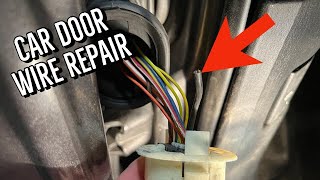
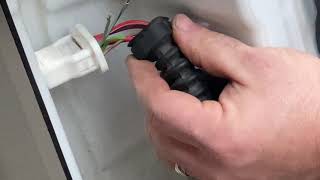
- Damaged Wiring or Poor Connections (Very Common) — Wires passing through the flexible rubber door jamb boot 🎬 Watch: How to repair broken wires in a door jamb. constantly bend. Over time, they fatigue and break, or connectors vibrate loose. This is the most frequent cause of communication loss.
- Water Intrusion and Connector Corrosion (Common) — Moisture leaking into the door panel or mirror housing reaches the module's electrical connector. This creates green or white corrosion on the pins, obstructing electrical signals.
- Blown Fuse or Power Supply Issue (Common) — The mirror control module requires a stable 12V power source and solid ground. A blown fuse (like F51 in Jeep Wranglers) or a corroded ground wire completely disables the module.
- Aftermarket Equipment Interference (Less Common) — Installing aftermarket tow mirrors, remote starters, or alarms disrupts the network. These devices often lack the correct internal circuitry, causing the vehicle to report a missing module.
- Software or Vehicle Configuration Glitch (Less Common) — On FCA vehicles (Dodge, Jeep, Ram), performing a 'Restore Vehicle Configuration' with a scan tool incorrectly activates the mirror module in the car's settings, triggering U0213 with no actual hardware fault.
- Faulty Mirror Control Module (MCM) (Less Common) — The electronic module itself fails due to internal short circuits, age-related component degradation, voltage spikes, or irreversible water damage.
- Rodent Damage (Uncommon) — Rodents chew through vehicle wiring, severing the delicate communication wires running to the doors and mirrors, causing an immediate open circuit.
- CAN Bus or LIN Bus Network Fault (Rare) — The problem lies within the entire vehicle communication network, not just the mirror circuit. Multiple 'U' codes for various modules indicate a wider network failure.
Symptoms
- Power mirrors cannot be adjusted — The switches on the door panel do not move the side mirrors in one or more directions.
- Heated mirror and auto-dimming functions are inoperative — The features that defrost, defog, or automatically dim the side or rearview mirrors do not turn on.
- Memory seat/mirror functions fail — The system cannot recall saved mirror positions linked to memory seat settings.
- Turn signal indicators or puddle lamps in mirror fail — Integrated turn signals or puddle lamps stop working because they are controlled by the offline module.
- Check Engine Light or other warning light is on (also visible on scanner) — The vehicle's main computer illuminates a warning light on the dashboard to alert you to the communication problem.
Diagnostic Flowchart

Tap your situation to follow the diagnostic path that matches what you're seeing on this code.
Common Fixes & Costs
- Repairing Broken Wires in Door Jamb — Parts: $10-$30, Labor: $150-$450, ~1.5 hr book time (Intermediate)
- Replacing a Blown Fuse — Parts: $1-$5, Labor: $0, ~0.1 hr book time (DIY)
- Cleaning Corroded Connectors — Parts: $5-$15, Labor: $50-$150, ~0.8 hr book time (DIY)
- Vehicle Re-Configuration / Software Update — Parts: $0, Labor: $100-$375, ~1 hr book time (Professional)
- Replacing the Mirror Control Module — Parts: $150-$600, Labor: $250-$850, ~1.2 hr book time (Professional)
- Diagnostic Service at a Shop — Parts: $0, Labor: $120-$265, ~1.5 hr book time (Professional)
Used vs. New Parts: Buying Guide
When a used part is worth it: For older vehicles (>10 years) where the cost of a new OEM Driver Door Module (DDM) is prohibitive. A used module from a reputable dismantler is a cost-effective solution if it comes with a short-term warranty.
Donor-vehicle mileage cap: roughly under 100000 miles for the part to have meaningful remaining life.
Donor quality checklist:
- Verify the donor vehicle was not involved in a flood or fire.
- Match the part number exactly, including any hardware/software version numbers.
- Inspect connector pins for any signs of corrosion or damage before purchasing.
- Purchase from a professional supplier that offers a warranty or return policy.
Decision logic:
- If The part requires VIN programming (most modern modules do) → Favor a new part, as many shops cannot program used modules, or buy from a specialist that sells it 'unlocked' or pre-programmed.
- If Vehicle is less than 8 years old and the part is under $400 new → Buy new for the longer warranty and guaranteed compatibility.
- If The problem is a simple mirror assembly (without an integrated module) → A used assembly is often a safe and economical choice.
Warranty tradeoff: Used parts typically have a 30-90 day warranty, covering only the part itself. New aftermarket parts offer 1-year to limited lifetime warranties. New OEM parts offer a 1-2 year warranty, often including labor if installed by a dealer.
Worst-case if a used part fails: $200-$500 if a used module fails after installation, requiring repeat labor costs for diagnosis and replacement.
What Happens If You Wait — Timeline
- Immediate: Code U0213 is set. Power mirror adjustment, heating, and memory functions are lost. A warning light appears on the dash. This creates an immediate safety risk due to large blind spots. (MPG impact: 0%% · Added cost: $0)
- 1 week - 3 months: Continued driving with a non-functional mirror increases the risk of a traffic citation, costing between $150 and $263. If the root cause is water intrusion, corrosion begins to form on connector pins. (MPG impact: 0%% · Added cost: $150-$263 in potential fines)
- 3 - 9 months: If caused by an unaddressed water leak, corrosion migrates from connector pins into the copper wiring (wicking) and damages the circuit board of the mirror or door control module. A simple wire repair is no longer possible. (MPG impact: 0%% · Added cost: $250-$850 (Cost of a new module))
- 9+ months: A severe, unresolved short-to-ground in the door harness introduces electrical noise onto the entire CAN network or sends voltage down a data line, damaging expensive modules like the Body Control Module (BCM). (MPG impact: 0%% · Added cost: $700-$2000+ (Cost to diagnose and replace a damaged BCM))
Cost of Not Fixing It
- Immediate: Significant safety hazard due to inability to adjust mirrors, creating large blind spots. Increased risk of accidents during lane changes, merging, and parking. (Added cost: $0 (direct), potential for accident costs)
- 0-3 months: Potential for traffic citations, as driving without functional mirrors is illegal in many areas. Failure of other door-related functions if the issue is a shared power, ground, or network wire. (Added cost: $50 - $250 (fines))
- 3+ months: An underlying wiring short or water intrusion issue worsens, potentially damaging expensive control modules like the BCM or causing a complete loss of the CAN/LIN data network. (Added cost: $500 - $2000+)
Diagnosis Steps

- Check for Related Codes
Use an advanced OBD-II scanner to read codes from all vehicle modules. A U0213 code by itself points to the mirror circuit. If you have a dozen other 'U' codes (like U0140, U0199), the problem is network-wide. Write down all codes.
Tools: Advanced OBD-II Scanner (Beginner) - Check the Fuses
Consult your owner's manual to locate the fuse box. Find the fuse labeled for mirrors, door modules, or body control. Visually inspect the fuse for a broken strip. If blown, replace it with a new fuse of the exact same amperage.
Tools: Fuse puller or small pliers (Beginner) - Perform a Harness Wiggle Test
With the system powered on and a scan tool monitoring communication status, gently wiggle the wiring harness at the door jamb boot. If communication drops in and out as you wiggle, you found the exact location of the wiring fault.
Tools: Advanced OBD-II Scanner (Intermediate) - Visually Inspect the Door Wiring Harness
Open the affected door and locate the black rubber boot between the door and the car's body. Gently pull it back and meticulously inspect the wires inside for breakage, chafing, or pinching.
Tools: Flashlight, trim tool (Beginner) - Inspect the Module Connector for Corrosion
Remove the door panel or mirror glass to access the module's connector. Unplug it and look for green/white corrosion or bent pins. Clean light corrosion with contact cleaner and a small brush.
Tools: Trim removal tools, contact cleaner, small brush (Intermediate) - Check for Power and Ground at the Module
Using a wiring diagram, identify the power and ground pins on the module's connector. With the key on, use a multimeter to verify battery voltage (~12.6V) at the power pin and good continuity (less than 1.0 ohm) to chassis ground. No power or ground means the module cannot turn on.
Tools: Multimeter, vehicle-specific wiring diagram (Intermediate) - Check Network Voltages with a Multimeter
For a CAN bus, with the key on, probe the two communication wires. CAN High should be ~2.7V and CAN Low should be ~2.3V. For a single-wire LIN bus, voltage toggles between ~12V and ~1V. Incorrect voltages point to a short or open in the network wiring.
Tools: Multimeter, vehicle-specific wiring diagram (Advanced) - Check CAN Bus Termination Resistance
Disconnect the battery. Access the CAN High and CAN Low wires at the DLC (Pins 6 and 14). Measure the resistance between them. A healthy CAN bus reads approximately 60 ohms. A reading of 120 ohms indicates a missing termination resistor or a break in a CAN line.
Tools: Multimeter (Advanced) - Isolate the Module with an Oscilloscope
Connect an oscilloscope to the communication line. A healthy CAN bus shows mirror-image voltage signals on the High and Low lines. If the line is flat or noisy, disconnect the mirror module. If the signal returns, the module itself is shorting the bus and requires replacement.
Tools: Oscilloscope, wiring diagram (Professional)
When This Code Triggers (Freeze-Frame Conditions)
- Ignition Status: Key On, Engine Running (Code is set shortly after startup during network initialization.)
- Battery Voltage: 11.5V - 14.5V (Module communication is tested when system voltage is within normal operating range.)
- Vehicle Speed: 0 mph (The initial communication check happens when the vehicle is stationary.)
- Module Status: No Communication (The Body Control Module (BCM) fails to receive a signal from the mirror module.)
Related Codes
- U0199 / U0200 - Lost Communication With Door Control Module 'A'/'B' — Mirror functions are integrated into the Driver Door Module (DDM). A U0199 code means the entire door module is offline.
- U0140 - Lost Communication With Body Control Module (BCM) — The BCM is the central hub for body electronics. If U0140 is present with U0213, the problem is with the BCM or the main CAN bus.
- B-prefix codes (e.g., B179B) — Body codes ('B' codes) indicate a fault reported by an online module. A 'U' code means the module isn't talking at all.
- U0214 - Lost Communication With Remote Function Actuation — The Remote Function Actuation (RFA) module handles keyless entry. It shares a network or power source with other body modules.
Climate & Environmental Factors
- High Humidity / Heavy Rain: Water is the primary catalyst for corrosion. In humid climates, moisture penetrates failing door seals and seeps into electrical connectors, leading to communication failures.
- Winter Conditions / Road Salt: Salt spray creates a highly conductive brine that dramatically accelerates the corrosion of copper wires and connector pins, especially in the door jamb harness.
- Extreme Cold: In very cold temperatures, wire insulation becomes brittle and cracks in high-flex areas like the door jamb. This creates entry points for moisture.
How to Talk to a Mechanic About This Code
Say this: "I have a U0213 code, which is 'Lost Communication with Mirror Control Module'. My power mirrors are not working. I've already checked the fuse. I'd like to schedule a diagnostic to test the wiring in the driver's door jamb and check for power, ground, and network signals at the module before we assume the module itself failed."
This signals you are an informed customer. It directs the technician to the most common, and cheapest, potential failures first (wiring/connections) instead of immediately quoting an expensive module replacement.
Avoid saying:
- 'My mirror is broken.'
- 'My check engine light is on, can you just fix it?'
- 'I think I need a new mirror computer.'
Questions to ask before authorizing the repair:
- What was the specific point of failure? Was it a broken wire, a corroded pin, or a lack of power?
- If you are recommending a module replacement, did you prove the wiring, power, and ground to the module are all good first?
- If the module needs programming, is that included in the quote?
- What is the warranty on this specific repair, including parts and labor?
Where to Take It: Dealer vs Independent vs Chain
- Dealer:
Recommended if the issue is a software glitch or requires programming a new module. Also a good choice for complex network diagnostics if an independent specialist isn't available.
Best for: Vehicles under warranty., Complex manufacturer-specific software issues or programming., When multiple 'U' codes point to a network-wide failure requiring proprietary diagnostic tools.
Downsides: Highest labor rates., Defaults to replacing an entire module or harness when a simpler wire repair suffices. (Typical cost: +50% vs. baseline) - Independent Shop:
Best fit for most U0213 scenarios. An experienced independent technician is familiar with finding and fixing broken door harness wires, the most common cause. They perform cost-effective wire repairs instead of full module replacements.
Best for: Out-of-warranty vehicles., Diagnosing and repairing common wiring failures, like broken wires in the door jamb., Vehicles with well-known U0213 issues (e.g., Ram trucks, Jeep Wranglers).
Downsides: Quality and expertise vary widely. Look for shops specializing in electrical diagnostics with ASE-certified technicians., Lacks the latest OEM-specific programming tools. (Typical cost: +0% vs. baseline) - Chain Shop:
AVOID. This type of communication network fault is beyond the scope of most chain shops. They are highly unlikely to correctly diagnose the root cause and will recommend unnecessary, expensive parts.
Best for: Simple, unrelated jobs like oil changes or tires.
Downsides: Technicians are not equipped or trained for complex electrical or network diagnostics., High pressure to sell parts leads to incorrect recommendations to replace expensive modules. (Typical cost: -10% vs. baseline)
When to Walk Away From the Repair
If the estimated repair cost for the U0213 fault exceeds 40-50% of your car's private-party value, you should pause and consider your options.
- Car worth $4000, fix is $1800: Walk away. The repair cost is too high relative to the car's value. This money is better put towards a replacement vehicle.
- Car worth $15000, fix is $800: Fix it. The repair cost is well within a reasonable threshold and restores a key safety feature.
- Car worth $3000, fix is $400: Borderline. This is a significant percentage of the car's value. If the car is otherwise reliable, the repair is worth it. If it has other pending issues, this is the time to sell.
What Scan Tool You Need for This Code
Minimum: A scanner that reads codes from the Body Control Module (BCM) and other non-engine systems. Basic engine-only code readers will NOT see 'U' codes.
A standard $20 OBD-II reader only communicates with the Engine Control Unit (ECU). Code U0213 is stored in the Body Control Module (BCM). Without a scanner that accesses the BCM, you won't know this code is present or clear it after a repair.
Budget: BlueDriver Pro (~$119) — Connects to your smartphone via Bluetooth. It reads and clears codes from all vehicle systems, including the BCM where U0213 is stored. It provides live data to see if the module is communicating intermittently.
Mid-range: Foxwell NT510 Elite (~$150) — A powerful handheld scanner offering full system diagnostics. Its key advantage is bidirectional control. This allows you to command the door module directly, determining if the module functions but isn't receiving messages, or if it's completely dead.
Professional: Autel MaxiCOM MK808 / MK906BT (~$500-1200) — Provides professional-level, OEM-style diagnostics. Critical for vehicle re-configuration (like on Ram trucks after adding tow mirrors) and programming new modules. If the fix requires a software update, a tool at this level is necessary.
Rent vs buy: For a one-time 'U' code diagnosis, buying a capable scanner makes sense. Free rental tools at auto parts stores are typically basic engine-only readers that cannot diagnose this code. A budget pick like the BlueDriver is a valuable tool for any modern car owner.
How to Clear the Code After You Fix It
- Ensure all repairs are complete and connectors are secure.
- Reconnect the battery if it was disconnected for the repair.
- Use an OBD-II scan tool to clear the U0213 code from the Body Control Module (BCM).
- Perform several key cycles, waiting 10 seconds between each cycle.
- Operate the mirror functions to confirm they are working.
Drive cycle (~30 minutes): A specific drive cycle is not required for a 'U' code. After clearing the code, start the vehicle and let it idle for 2-3 minutes to allow modules to communicate. Perform a 15-20 minute drive with mixed conditions. The code will not return if the fix was successful.
Readiness monitors affected: Not applicable for U-codes
Watch out for:
- Simply disconnecting the battery does not clear the code from the BCM's memory.
- The code returns immediately if the root cause (broken wire, bad module) is not fixed.
- Forgetting to reprogram a new module if required by the vehicle manufacturer.
Will This Fail Emissions / State Inspection?
Yes — this code typically fails an OBD-II emissions inspection.
- California: A U-code related to a safety system does not cause an emissions test failure itself, but if a Check Engine Light is commanded on, it fails. Non-functional mirrors cause a failure of the separate safety inspection.
- New York: NYS inspection includes both safety and emissions. A non-functional mirror is a direct failure of the safety inspection. If the U0213 code illuminates the check engine light, it fails the OBD-II emissions scan.
- Texas: In counties requiring emissions testing, an active 'U' code that turns on the Check Engine Light causes an automatic failure of the OBD-II test. Driving with defective mirrors is illegal and ticketable.
Most Commonly Affected Vehicles

- Ram 1500 / 2500 / 3500 (2014-2019) — Very common after installing aftermarket tow mirrors that lack the proper internal module. Also prone to broken wires in the driver's door harness.
- Jeep Wrangler (JL) (2018-2024) — Frequently occurs when removing factory doors or replacing the factory mirror with an aftermarket digital display. The F51 fuse is a common failure point.
- Dodge / Chrysler Grand Caravan / Town & Country (2008-2020) — On these minivans, U0213 means 'Left Power Sliding Door Control Circuit 1 Open', caused by failing wires in the sliding door harness, unrelated to mirrors.
- Ford F-150 / Explorer / Police Interceptor Utility (2013-2020) — Prone to communication codes due to poor terminal connections in door harness connectors, addressed in Ford TSB 14-0193.
- Chevrolet / GMC Silverado / Sierra / Tahoe / Suburban (2008-2018) — Corroded ground connections (especially the G218 ground point) and wiring harness issues are common culprits for 'U' codes on these trucks.
- Cadillac ATS, CTS (2013-2019) — Sets U0213 due to unseated pins or chafing in the main transmission harness connector, disrupting network communication for multiple modules.
- Hyundai / Kia Elantra / Sorento (2011-2020) — Often traced back to corroded connectors or an internal failure of the Driver's Door Module (DDM), which integrates mirror control functions.
- BMW 3-Series, 5-Series, X-models (2006-2017) — Mirrors are controlled via a LIN bus sub-network connected to the Footwell Module (FRM). A single broken LIN wire isolates the mirror and logs a communication fault.
Manufacturer-Specific Notes
- FCA (Dodge, Chrysler, Jeep, Ram): A software glitch sets code U0213 after a 'Restore Vehicle Configuration' is performed. The BCM incorrectly looks for a Combined Rear View Mirror Module (CRVMM) that isn't physically present.
- General Motors (Chevrolet, GMC, Cadillac): GM issued multiple service bulletins for water leaks into the A-pillar area. This moisture causes corrosion in the main X500 and X600 door harness connectors, leading to communication loss.
- Dodge: On older Dodge models, U0213 has a completely different definition: 'Fuel Level Sensor 1 - Circuit Short To Battery Or Open', entirely unrelated to the mirrors.
- Jeep / Chrysler (Minivans): On the Grand Caravan and Town & Country, U0213 is specifically defined as 'Left Power Sliding Door Control Circuit 1 Open', pointing to an issue with the sliding door wiring.
- Ford: Ford issued TSB 14-0193 for intermittent communication loss with various modules, traced to poor terminal connections in the A-pillar and door harness connectors.
- BMW: Uses a single-wire LIN bus to connect the Footwell Module (FRM) to mirrors. A single broken LIN wire causes the mirror to become unresponsive and logs a communication fault in the FRM.
Real Owner Stories
2016 Ram 2500 with aftermarket tow mirrors
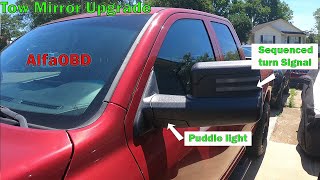
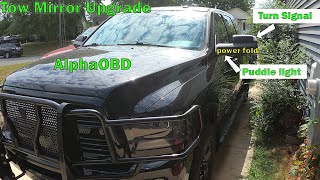
Owner installed aftermarket tow mirrors to gain features like puddle lights and power folding. After installation, the new features didn't work and code U0213 appeared along with U1009.
What they tried:
- Verified physical installation and connections.
- Used AlfaOBD software to change vehicle configuration settings in the Body Control Module (BCM).
- Enabled settings for 'Doors Folding Power Mirror Present', 'Doors Mirror Turn Signal Present', and 'Doors Tow Mirror Present'.
Outcome: After correctly setting the BCM configuration with AlfaOBD and a power cycle, the new mirror features worked and the communication codes resolved. The owner also needed the correct driver's door switch bank.
Lesson: When adding mirrors on modern trucks, a hardware swap is not enough. The vehicle's computer must be reprogrammed to recognize the new modules. Tools like AlfaOBD are essential for DIY upgrades on FCA vehicles.
2018 Jeep Wrangler JL with doors removed
Owner removed the vehicle's doors for off-road use. Upon reconnecting them later, the power mirrors were inoperative and code U0213 was present.
What they tried:
- Checked the main door wiring harness connector in the kick panel to ensure it was fully seated and locked.
- Inspected the fuse for the door modules (F51 in the fuse box).
- Attempted to clear the code with a basic OBD-II scanner.
Outcome: The code would not clear initially. After performing several key cycles, the Body Control Module re-established communication with the door module and the mirrors began working again. The code cleared on its own.
Lesson: On vehicles designed for door removal like the Jeep Wrangler, U0213 is an expected, temporary code when the door harness is disconnected. Verify the main connector is perfectly seated before suspecting a larger issue.
2012 Dodge Grand Caravan with ~110K miles
Code U0213 appeared, but the mirrors worked perfectly. However, the driver's side power sliding door would not operate.
What they tried:
- Researched the code for this specific vehicle and found it has a different meaning.
- Inspected the wiring harness that runs to the power sliding door, focusing on the flexible track at the bottom of the door.
- Found several broken wires within the harness track.
Outcome: The owner spliced the broken wires using solder and heat-shrink tubing. This restored function to the sliding door and cleared the U0213 code. The total cost was under $20 for wiring supplies.
Lesson: Always verify the specific definition of a code for your exact vehicle. On Chrysler/Dodge minivans, U0213 points to a 'Left Power Sliding Door Control Circuit 1 Open', a common failure due to broken wires.
How to Prevent This Code From Triggering
- Apply dielectric grease to door harness connectors (Once every 2-3 years, or whenever connectors are disconnected) — Dielectric grease is a non-conductive, silicone-based sealant that blocks moisture, oxygen, and road salt from reaching the metal pins of electrical connectors. This prevents corrosion that obstructs signals.
- Clean door and sunroof drain holes (Annually, especially after autumn) — Leaves and debris clog small drain holes at the bottom of doors and sunroofs. When clogged, water backs up and overflows inside the door panel, soaking wiring harnesses and control modules.
- Lubricate the door jamb wiring boot (Annually) — Applying a silicone-based lubricant to the outside of the rubber wiring boot keeps it flexible. This prevents the rubber from getting stiff and binding, reducing stress on internal wires as the door opens and closes.
- Install a protective wire loom or sleeve (During any wiring repair) — When repairing wires in high-movement areas like a door jamb, encasing the repair in a flexible plastic loom or braided sleeve adds an extra layer of protection against chafing, pinching, and future breaks.
Frequently Asked Questions
Can a low battery cause a U0213 code?
Yes, absolutely. A weak or failing battery causes low voltage across the vehicle's electrical system, leading to unpredictable behavior and random communication codes, including U0213. Always ensure your battery is fully charged (>12.4V) and healthy before starting complex diagnostics.
I replaced the mirror/module, but the code is still there. What now?
This happens often and usually means one of three things. First, the original problem was in the wiring or fuse, not the module. Second, the new module needs programming to the vehicle using a professional scan tool, or third, you installed an incompatible module.
My mirror works intermittently, but I keep getting the U0213 code. Why?
An intermittent U0213 code is a classic symptom of a poor connection or a breaking wire inside the door jamb. As the door opens and closes, the connection makes and breaks. It is also sometimes caused by a software glitch that falsely reports the code, common in FCA vehicles.
Can I fix the broken wires in the door jamb myself?
Yes, this is a possible DIY repair if you have wiring experience. The correct method is to solder in a new section of wire (matching gauge) and seal it with heat-shrink tubing. Using simple crimp connectors or twisting wires is not a reliable long-term fix and will fail again.
I just installed new mirrors and got this code. What should I do?
This is very common with aftermarket mirrors. The new mirror often lacks the specific module the truck expects, or has a pin mismatch. You must use a tool like AlfaOBD (for Ram trucks) to reconfigure the vehicle to accept the new mirrors or install a bypass resistor.
Is the Mirror Control Module the same as the Door Control Module?
It depends on the vehicle. On many modern cars, mirror control is integrated into the main Driver Door Module (DDM). On trucks with complex mirrors, it is a separate module attached to the back of the mirror assembly itself.
What is the difference between CAN bus and LIN bus?
CAN (Controller Area Network) is a high-speed, two-wire network for critical systems like the engine and brakes. LIN (Local Interconnect Network) is a slower, single-wire network used for less critical comfort items like mirrors and windows. LIN is simpler and cheaper to implement.
I took my doors off my Jeep and now have this code. How do I fix it?
This is normal. When you disconnect the door harness on a Jeep Wrangler, the Body Control Module loses communication with the mirror module. Once you reinstall the doors and reconnect the harness, the code clears on its own after a few drive cycles.
Key Takeaways
- Broken or corroded wires inside the flexible rubber door jamb boot cause over 70% of U0213 communication failures.
- Test the door module fuse and verify battery voltage exceeds 12.4V before spending $300+ on a replacement mirror control module.
- Installing aftermarket tow mirrors on Ram or Ford trucks triggers this code immediately until the Body Control Module is reprogrammed to recognize them.
- If U0213 appears alongside other 'U' codes like U0140, stop diagnosing the mirror and test the main CAN bus network for a system-wide failure.
Helpful Videos

The information in this article is provided for general reference and educational purposes only. Vehicle specifications, procedures, and part compatibility can vary by production date, trim level, and region. Always consult your vehicle's factory service manual and verify part numbers before purchasing or performing repairs. Safety-critical components such as airbags, seat belts, and braking systems should be installed by a qualified professional.
- 🎬 Helpful Videos
- What Does U0213 Mean?
- Can I Drive With U0213?
- Common Causes
- Symptoms
- Diagnostic Flowchart
- Common Fixes & Costs
- Used vs. New Parts: Buying Guide
- What Happens If You Wait — Timeline
- Cost of Not Fixing It
- Diagnosis Steps
- When This Code Triggers (Freeze-Frame Conditions)
- Related Codes
- Climate & Environmental Factors
- How to Talk to a Mechanic About This Code
- Where to Take It: Dealer vs Independent vs Chain
- When to Walk Away From the Repair
- What Scan Tool You Need for This Code
- How to Clear the Code After You Fix It
- Will This Fail Emissions / State Inspection?
- Most Commonly Affected Vehicles
- Manufacturer-Specific Notes
- Real Owner Stories
- 2016 Ram 2500 with aftermarket tow mirrors
- 2018 Jeep Wrangler JL with doors removed
- 2012 Dodge Grand Caravan with ~110K miles
- How to Prevent This Code From Triggering
- Frequently Asked Questions
- Can a low battery cause a U0213 code?
- I replaced the mirror/module, but the code is still there. What now?
- My mirror works intermittently, but I keep getting the U0213 code. Why?
- Can I fix the broken wires in the door jamb myself?
- I just installed new mirrors and got this code. What should I do?
- Is the Mirror Control Module the same as the Door Control Module?
- What is the difference between CAN bus and LIN bus?
- I took my doors off my Jeep and now have this code. How do I fix it?
- Key Takeaways
- 🎟️ Get 5% Off